By Kristi Niemeyer Editor | January 26, 2023 12:00 AM
On Sunday, a buck and doe casually made their way across Highway 93 by the stoplight at First Interstate Bank in Polson as motorists slowed down to let the two jaywalkers pass.
However, their days of strolling city streets, alleys and yards with impunity could be coming to an end. The Confederated Salish and Kootenai Tribal Wildlife Management Program has recently launched a trapping project – formally called an “urban deer reduction program” – within the Polson city limits.
According to a recent press release from CSKT’s Natural Resources Department, “Conflicts between deer and humans have become a prominent wildlife management concern, especially in urban and suburban areas.” The trapping program aims “to mitigate the impacts of deer conflicts and reduce complaints.”
While hunting is the primary and preferred wildlife management tool for curbing population growth, “there are laws and ordinances that prohibit the discharge of firearms in city limits.”
Polson City Manager Ed Meece says a trap was recently set up on the Polson Golf Course. “It was described to me as ‘a big box with curtains that the deer walks into’,” he said. “I’m surprised a deer would voluntarily enter one of these devices, but they aren’t known for their superior intellect either.”
Meat harvested from healthy deer carcasses will be donated to the Tribes’ Food Sovereignty Program, Elders Program, Silvia’s Store, Peoples Food Sovereignty Program, and directly to tribal members in need.
“A lot of elderly folks grew up on wild game and still depend on it,” says Stephanie Gillin, information and education program manager for the department.
The Wildlife Management Program is seeking landowners in urban areas surrounding Polson who are willing to allow trapping of deer on their lands. Those who wish to participate in this project as a landowner or tribal members in need of game meat are encouraged to contact Kaylie Durglo at the Tribal Wildlife Management Program at 406-883-2888 ext. 7284 or kaylie.durglo@cskt.org.
On Jan. 18 the Western Environmental Law Center filed alawsuiton behalf of three Montana-based organizations against a smattering of federal land and wildlife management agencies and officials. Their complaint? Euthanizing or relocating problem grizzly bears actively works against species recovery goals under the Endangered Species Act.
Animal activism organization WildEarth Guardians joined with Trap Free Montana and the Western Watersheds Project, an organization that denounces public-land livestock grazing, as plaintiffs in the suit, which was filed in Montana District Court. They mainly challenge activities of the United States Department of Agriculture’s Animal and Plant Health Inspection Service, commonly known as APHIS. The Wildlife Services branch of APHIS offers predator management assistance out of its state offices, largely for livestock producers.
Dalin Tidwell, director of the Montana state office, is among the defendants named in the suit…
A Weirdale-area man has been convicted of seven charges involving illegal trapping in a part of the Fort à la Corne forest that is set aside for use by the James Smith Cree Nation.
Lloyd Slonski could face over $11,000 in fines, along with the forfeiture of his snowmobile and all of his trapping gear if Crown Prosecutor Matthew Miazga is successful in his submission.
Lloyd Slonski has been convicted on seven charges relating to illegal trapping in the Fort à la Corne Forest. (File photo/paNOW)
“Fines in the past have not been sufficient. They’ve been imposed on four occasions in the past,” Miazga said in provincial court Monday afternoon.
He said Slonski’s past convictions showed a disregard for the law. He also submitted that the use of free-hanging neck snares by Slonski is an aggravating…
SMYRNA, Del. – The Delaware Department of Justice’s Division of Civil Rights & Public Trust has indicted 45-year-old former Delaware Correctional Officer and K9 handler Darrel Wiley on three charges, which includes a felony, for trapping a four-year-old K9 unit in his hot car, thus causing its death.
“We find these stories so viscerally disturbing not only because we care for the animals, but because we struggle to understand their abusers’ actions,” said Attorney General Jennings. “For most of us, to be human is to be humane. We all recognize that dogs are completely dependent on us and that owning one is a responsibility — above all else a responsibility to keep it safe. Children understand that fact. The law understands it, too. And figures of authority should understand it better than anyone.”
The division says that Wiley left K9 Lux in an official car for over four hours on a September day with a high over 80 degrees Fahrenheit. They say he found Lux dead when he returned to his car. On top of this, the Division says Wiley’s behavior is nothing new, having left Lux in the car several times between June and September 2022, including one event where Lux was left in the car for eight hours.
According to the American Veterinary Medical Associations, a parked car can increase over 40 degrees in just one hour on a day like the one where Lux died.
“Department of Correction K9s are valued members of our correctional family and the circumstances of K9 Lux’s death are deeply disturbing and unacceptable,” said Department of Correction Commissioner Monroe B. Hudson Jr. “The DOC maintains national best practice standards, implemented through excellent training and required certifications, to ensure that our K9s are used appropriately in our correctional facilities and that they receive the protection and care they deserve. In addition to the independent investigation sought by the DOC which resulted in today’s charges our Department has undertaken a comprehensive review of our K9 program to ensure that these teams across our facilities operate to the high standards of safety and security that we demand.”
Immediately after Lux’s death, the division says Wiley was put on administrative leave, started an internal investigation, and contacted Animal Welfare investigators to start their own investigation. They say Wiley is no longer works for the Department of Correction.
They say the grand jury indicted Wiley for one count each of Assault 1st Degree Against a Law Enforcement Animal, a Class D Felony; Cruelty to Animals, a Class A Misdemeanor; and Official Misconduct, a Class A Misdemeanor. According to the division, the indictment was secured by Deputy Attorney General Nicole Mozee of the Division of Civil Rights & Public Trust with support from Investigator Timothy Argoe.
RIVERDALE, Maryland, January 31, 2023 (ENS) –Wild birds and commercially raised chickens alike are dropping dead from bird flu by the millions across the United States. Red-tailed hawks and great horned owls in Wyoming, American and Canadian wild birds along the Atlantic coast and across the Midwest, and 58.2 million birds in commercial and backyard poultry flocks in 47 states have died in the past year, reports the USDA’s Animal and Plant Health Inspection Service.
That number of 58.2 million birds affected is way over the largest previous bird flu outbreak in the United States in 2015 that affected 50.5 million birds in just 21 states.
Domestic poultry that can be affected include chickens; turkeys; ring-necked pheasants; ducks; geese; common, Japanese…
Crews collect the traps using a line and grapple hook, which is thrown over the side of a patrol boat, then dragged across the ocean floor.
They’re looking for both traps that were intentionally placed in the ocean illegally as well as traps that have been abandoned but are still active, which is referred to as “ghost gear.”
“It’s a problem. It impacts resources greatly. We have no idea how much (illegal and ghost gear) is out there,” said Art Demsky, a DFO detachment commander.
STORY CONTINUES BELOW ADVERTISEMENT
“Gear gets lost and abandoned, and continues to fish everywhere around the coast and it’s harmful. Harmful to the environment and those that rely on the industry.”
Demsky said their operation is limited by the number of officers they have. They rely heavily on public tips to catch and remove illegal fishing and trapping.
Anyone that sees illegal activity is asked to contact the DFO’s observe, record, and report line at 1-800-465-4336.
Deploying an illegal trap can result in a fine of up to $500,000 under Canada’s Fisheries Act.
0:30Another B.C. moose tangled in fence rescued by passing family
The recommendation is based on the involvement of horses on three premises that attended events at two or more event centers in the area.
By: MTN News
Posted at 5:18 PM, Jan 31, 2023
and last updated 7:33 AM, Feb 01, 2023
HELENA – The Montana Department of Livestock (DOL) is recommending that horse owners and event coordinators limit travel and cancel events that bring horses from multiple sources following multiple confirmed cases of equine herpesvirus myeloencephalopathy (EHM) in Flathead County.
The DOL recommends these actions take place through Feb. 6, 2023. The recommendation is based on the involvement of horses on three premises that attended events at two or more event centers in the area. Several horses have been euthanized.
The date of the department’s recommendation spans 14 days which is one full incubation period (time from exposure to the development of clinical signs) of EHV-1 beyond the known travel history of involved horses.
DOL officials note if additional cases of EHV-1 are detected, this date will be extended.
According to DOL, five cases of EHV-1/EHM (three confirmed and two suspected) have been reported on three separate premises to date. Four of the confirmed and suspected cases have been euthanized due to the severity of the disease. The fifth animal is exhibiting mild clinical signs and is under quarantine.
Exposed horses from the affected premises are also subject to quarantine for 21 days beyond the last date of potential exposure.
The department reports that several of the affected horses had no travel history, but herd mates — who remain without symptoms — attended events where they were exposed and therefore, likely contributed to disease spread at their home locations and other equine events.
“Disease spread in apparently healthy horses is an important consideration in our recommendation for the cancellation of equine events,” said Montana State Veterinarian, Dr. Martin Zaluski.
Horse owners who have attended events in the Flathead Valley in recent weeks should monitor their animals for fever (temperature greater than 101.5˚ F) or development of any neurologic signs for two weeks after their last travel.
Neurologic signs can include incoordination, difficulty walking, weakness, paralysis, inability to stand, poor tail tone, and difficulty urinating. Horses infected with EHV-1 may also have respiratory signs such as cough, nasal discharge, lethargy, and decreased appetite.
Horse owners concerned about the health of their horses should contact their local veterinarian. Suspected cases of EHV-1/EHM should also be reported to the department. The Montana Department of Livestock can be reached at 406) 444-7323 or via email at livemail@mt.gov.
EHV-1 is a potentially serious disease of horses that can cause respiratory or neurologic disease in affected animals. The neurologic form of the disease — equine herpes myeloencephalopathy — is often fatal.
The disease is primarily spread through aerosol transmission by inhalation of droplets from coughing and snorting. Additionally, the virus can be viable for several weeks in the environment and spread indirectly between horses. Common water sources, feeders, tie-outs, and shared equipment and tack can all contribute to spread.
Additionally, people can carry the virus between animals, typically through inadequate washing of hands or equipment. Horse owners should work with their local veterinarians on biosecurity recommendations to help reduce disease spread.
General recommendations for equine travel include:
Keep any horses exhibiting signs of disease, including fever, at home.
Avoid shared water sources, equipment, tie-out locations, and trailering.
Consider isolating horses that travel off-premises away from their resident population of horses.
Horses that have attended events should be monitored for 14 days beyond their last event.
If an animal develops a fever, shows signs of respiratory illness, or neurologic disease, please isolate the animal and contact your local veterinarian.
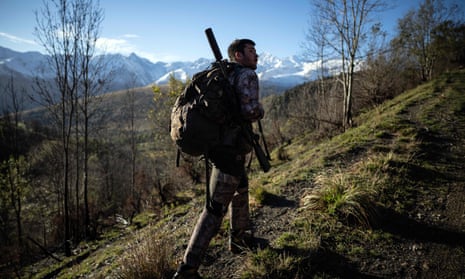
A hunter in the Pyrenees. According to figures by the French Office for Biodiversity, there were 90 hunting accidents in 2021-22.Photograph: Lionel Bonaventure/AFP/Getty Images
The French government has angered anti-hunt campaigners after refusing to ban hunting on Sundays during the season.
Instead, it has declared a ban on drinking alcohol and taking drugs while hunting, a move activists say is unenforceable, and will set up a voluntary application for hunters to indicate where they are active.
Bérangère Couillard, the ecology minister, said hunt organisers would be required to undergo training and there would be tougher sentences for those convicted of causing an accident.
The government bowed to pressure to address hunt safety after a senate inquiry prompted by the death ofMorgan Keane…