Hunter shares story after accident makes him paralyzed
A Ramsey man was paralyzed during a hunting accident, but now he’s sharing his story with the hope that others don’t make the same mistake he did.
(FOX 9)-Andy Eha has been a bow hunter for more than 20 years, but now this avid outdoorsman has spent the last two months inside after a hunting accident left him paralyzed from the chest down.
“I’m very independent. I don’t like people helping me ever. So it’s been very, very hard for me to adjust to that,” said Eha.
LINCOLN, Neb. (KLKN) – A Hickman man was accidentally shot at close range Friday while hunting in Buffalo County, the Nebraska Game and Parks Commission said.
The hunter was shot around 8:45 a.m. along the Platte River.
He was taken to Good Samaritan Hospital in Kearney, where he was treated for injuries to his arm that were not life-threatening.
Investigators think the man was shot by another member of his hunting party, Game and Parks said.
The commission is currently investigating the incident.
Officials remind hunters of the four primary rules of firearm safety:
Treat every firearm as if it is loaded.
Always point the muzzle of your firearm in a safe direction.
Be sure of your target, what is in front of it and…
An illustration shows how unusually hot the waters were in May 2015 due to the Blob. The deepest red is 3 degrees Celsius above average.(Chelle Gentemann, Chares Thompson, and Jeffrey R. Hall/PO.DAAC/JPL)
Nicknamed ‘the Blob’, a large patch of abnormally warm water covering a section of the Pacific Ocean from 2014 to 2016 behaved just like a B-grade horror movie, having a devastating impact ona wide variety of species.
A new study on the Santa Barbara Channel off the Californian coast highlights how this environmental horror show continues to affect marine ecosystems.
The Blob caused significant shifts in aquatic ecosystems at the time, particularly impacting sessile animals, those stuck in place like anemones. This latest research shows that six years later, underwater populations inhabiting the kelp forest ecosystem still aren’t back to where they were.
Former President Donald Trump stands on stage after announcing a third run for president as he speaks at Mar-a-Lago in Palm Beach, Fla., Nov. 15, 2022.(AP)
Experts predict rises in sea level many times larger than what Trump claimed.
The National Oceanic and Atmospheric Administration reported that U.S. sea level in 2100 is projected to be around 2 feet higher on average than it was in 2000, “if we are able to significantly reduce greenhouse gas emissions.”
The National Ocean Service predicted that sea level along the U.S. coastline is projected to rise, on average, 10 to 12 inches from 2020 to 2050.
I’m responding to the article “Pa. Game Commission: Deer crossing roads more often in autumn.”
Executive Director Bryan Burhans says that the rut is the reason deer are crossing roads more often and that drivers should drive more cautiously. While there is increased deer movement during the rut the main threat to drivers and the cause of many car-deer collisions is hunting. Jerry Feaser, spokesman for the Game Commission said, “November historically is the busiest month because hunters start pushing deer through the woods and across busy roadways.”
Studies show that hunting actually increases car-deer collisions. According to the National Highway Traffic and Safety Administration, most car-deer collisions happen during hunting season. Pennsylvania’s second largest insurance company (the nation’s 12th largest insurer) —…
It’s time to ditch the generations-long argument between those who blame overpopulation and those who worry about consumption
John Vidal is a former Guardian environment editor
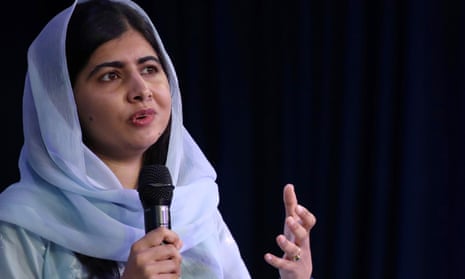
Nobel prizewinner Malala Yousafzai ‘summed it up: ‘If every girl was able to exercise her sexual and reproductive rights … it could reduce total emissions.’’ Photograph: Spencer Platt/Getty
Tue 15 Nov 2022 05.00 EST
By a remarkable coincidence, just as governments, campaigners and business owners are meeting in Egypt to address climate breakdown today, the world is officially crashing past the symbolic 8 billion population milestone . This means global population is on its way to 10 billion or more by the turn of the century.
But there will be no attempt by countries at Cop27 to connect the inexorable growth of human numbers with the seemingly unstoppable rise in temperatures. Despite the fact that the several billion more people expected to be alive in 70 years’ time will put more pressure on resources and will produce far more emissions, the population explosion is yet again being ignored, sidestepped or denied by world leaders.
Part of this is down to sensitivity about talking about human numbers. History is littered with violent governments trying to force sterilisation on vulnerable people. Suggestions, too, that human numbers be cut have often been peddled by authoritarian regimes and far-right extremists, and genuine concern today in rich countries is often met with accusations of racism or eco-fascism.
Yet as the scientist James Lovelock was fond of saying, anyone who failed to see the connection between climate and population was “either ignorant or hiding from the truth”, adding: “These two huge environmental problems are inseparable and to discuss one while ignoring the other is irrational.”
Until now, the orthodox western intellectual argument has been that the number of people does not matter as much as how people use resources. Consumption and inequality are the problem, not population size. True, the wealthiest10%consume about 20 times more energy overall than the bottom 10%. So of course the rich must change their behaviour. But making climate breakdown all about consumption has become an excuse for countries to do nowhere near enough to reduce their populations.
The hard fact is that in an age of climate breakdown, human numbers matter. And the ecological impact of another 2-3 billion humans will be immense.
This is also about women’s rights too. By ignoring population, the needs of women and girls are being sidelined by governments that are too obsessed with consumption to notice how vital education and family planning are in tackling the climate emergency.
The Nobel peace prizewinner Malala Yousafzai summed it up best last year. “When girls are educated and when they stay in schools they get married later in their lives, then they have less children and that helps us to reduce the impacts of climate change that the population increase brings,” she said. “If every girl was able to exercise her sexual and reproductive health and rights through quality education and had access to modern contraception, it could reduce total emissions.”
According to the UN population fund (UNFPA), 257 million women have an unmet need for proper contraception, half of all global pregnancies are unplanned, and nearly a quarter of all women do not have enough agency to refuse sex.
Yet the world’s richest countries together contribute just a few hundred million dollars annually to the UN’s population agency, with some now pushing “pro-natalist” policies to grow their numbers. In 2017, Donald Trump cut US funding to the UNFPA, and last year the UK followed, by cutting its contribution to the agency by 85%, from an expected $200m to a paltry $32m. US funding has since been partly restored but the British money alone, it has been estimated, would have helped to prevent the deaths of about 250,000 mothers and children, 14.6 million unintended pregnancies and 4.3 million unsafe abortions.
The generations-long argument between those who uniquely blame overpopulation and those who maintain that consumption is the biggest contribution to the climate emergency must be ditched.
Finally, and barely noticed, the Intergovernmental Panel on Climate Change, the world’s consensus of climate scientists, identified global population growth as one of the two biggest drivers of growing CO2 emissions, saying earlier this year that “globally, GDP per capita and population growth remained the strongest drivers of CO2 emissions from fossil fuel combustion in the last decade”. It also warned that if population continues to grow, “it will be much harder to limit warming to 1.5C”.
This should be proof enough for everyone that population growth and its future environmental impact are now twin global crises – and UN agencies and civil society groups meeting in Egypt must urgently recognise that both are driving planetary destruction, and poverty.
John Vidal was the Guardian’s environment editor. He is the author of McLibel: Burger Culture on Trial
Search volunteers gathered for assignments at the Carter County Mobile Command Center, which was brought to the remote location to serve as a headquarters for the search team. Photo ONSR
West Plains, MO. –The body of the hunter that went missing on Sunday was found on Wednesday morning. The body of Phillip Carnell, age 58 of Sikeston, Missouri, was recovered Wednesday morning about 900 feet from the location he had gone hunting.
The Ozark National Scenic Riverways reported the news around 5 p.m. on November 16.
Advertisement
Carnell was deer hunting in Ozark National Scenic Riverways, near Cave Spring in Carter County. He was dropped off at his hunting spot on the morning of November 13 by a friend. When he failed to return from hunting later in the day and could not be located by…
More than 100,000 birds have been culled at three Scottish farms amid the UK’s worst avian flu outbreak.
Ayrshire farmer Billy Robb told BBC Scotland he lost 32,000 hens last week.
And farming union NFU Scotland revealed 72,000 birds had also been “taken out” at two farms in Aberdeenshire in the last 10 days – taking the total to 104,000.
Last month just four avian flu cases were recorded in Scotland, compared with 80 in England.
“Our birds might have survived if they had been shut in a week or so before,” he said.
Mr Robb said he suspected his hens were infected by migrating Canadian geese which stopped at a marsh on his farm.
He added: “This is definitely the worst the poultry industry has seen.”
“I have been doing this job for 30 years and my father-in-law farmed for 40 years before that.”
Billy Robb said farmers had to rely on what retailers were prepared to pay for eggs
Mr Robb said farmers were not able to put prices up and had to rely on what retailers were prepared to pay, despite challenges posed by soaring feed and energy costs.
As a result, he warned: “There is going to be a shortage of eggs for the whole of next year.”
Asda said customers would be limited to buying two boxes of eggs until further notice, while Lidl is limiting customers to three.
Scotland’s chief vet defended the decision to allow captive birds to remain outdoors in Scotland.
Sheila Voas told BBC Scotland she was “following the science”, saying there had been 100 outbreaks in England, but just six in Scotland since 1 October.
She added: “Potentially housing would help, but housing is much less effective than improved biosecurity generally.
“The decision to house birds across the whole of Scotland has to weighed against the negative impact on welfare.”
In addition to the farm cases in Ayrshire and Aberdeenshire, Ms Voas also confirmed the three “back yard premises” affected – two on Orkney with a small number of birds and one on Lewis with about 200 birds.
Asda said customers could only buy two boxes of any size
Robert Thompson, of NFU Scotland’s poultry review working group, said the union had warned major retailers in spring about rising production costs and potential shortages.
He said: “It was well documented that we were facing a major crisis and that crisis has now happened.”
“By February we reckon there will be 7.9m less hens, so if you are out of eggs now they are going to be very scarce by spring.”
The latest outbreak of avian flu is the largest seen in the UK to date, and has affected the wild bird population as well as commercial and backyard flocks.
The Scottish government said the disease was also affecting wild bird populations elsewhere in the world, and it had published updated advice on the reporting, collection and safe disposal of wild bird carcases.
A spokesperson said: “We are aware that there are a number of issues affecting egg supplies, such as the impact of Avian Influenza on all commercial flocks, the cost of living increases and a number of other issues, including labour shortages across all sectors of the industry.”
Thanksgiving is shaping up to be a real turkey, price-wise.
BRANDON BELL/GETTY IMAGES
In early November, Hays Culbreth’s mother sent a poll to a few family members. She said she could only afford to make two sides for their group of 15 this Thanksgiving and asked them each to vote for their favorites.
Culbreth guesses green beans and macaroni and cheese will make the cut, but his favorite — sweet potato casserole with a brown sugar crust — will not.
“Talk about Thanksgiving being ruined,” joked Culbreth, 27, a financial planner from Knoxville, Tennessee.
Americans are bracing for a costly Thanksgiving this year, with double-digit percent increases in the price of turkey, potatoes, stuffing, canned pumpkin and other staples. The U.S. government estimates food prices will be up 9.5% to 10.5% this year; historically, they’ve…


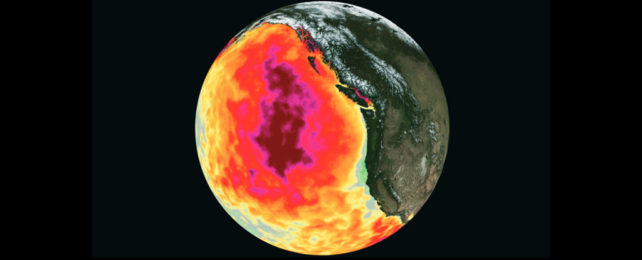 An illustration shows how unusually hot the waters were in May 2015 due to the Blob. The deepest red is 3 degrees Celsius above average.(Chelle Gentemann, Chares Thompson, and Jeffrey R. Hall/PO.DAAC/JPL)




 Listen to this