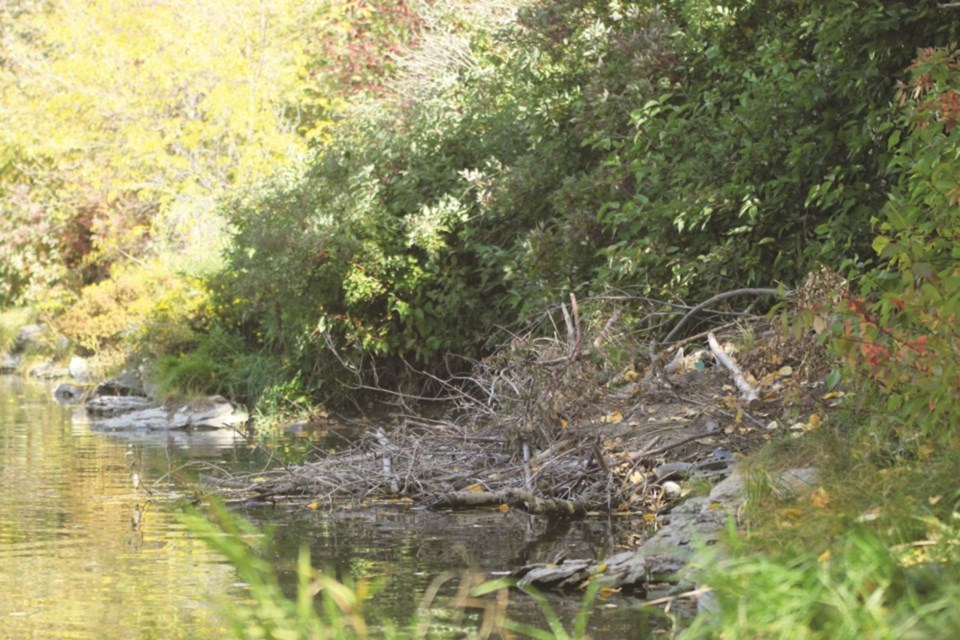
A press release from the City of Airdrie this weekend indicates the municipality is going to temporarily halt lethal trapping of beavers in Nose Creek and other local bodies of water, following backlash from the public about the issue.
“We’ve heard clearly from residents that they have concerns with the current wildlife management strategies,” said Mayor Brown in the news release. “We have also heard from residents that we need to properly manage wildlife and protect mature trees in the City.”
Nearly 3,000 hunting and fishing licenses were revoked in 2021 because of past-due child support payments. 494 of those individuals are now compliant with the new law.
A law in Utah denying hunting and fishing licenses to those with past due child support has contributed to an increase of child support payments and compliance in the past year.
H.B. 197Fishing and Hunting Restrictions for Nonpayment of Child Supportwas passed during the 2020 General Session. After it went into effect in 2021, individuals who had over $2500 in unpaid child support for a year were restricted from getting a hunting or fishing license.
According to Liesa Stockdale, director of the Office of Recovery Services (ORS) for Utah, this type of law is meant to catch the attention of non-paying…
This image shows a methane plume 2 miles (3 kilometers) long that NASA’s Earth Surface Mineral Dust Source Investigation mission detected southeast of Carlsbad, New Mexico. Methane is a potent greenhouse gas that is much more effective at trapping heat in the atmosphere than carbon dioxide.
Credits: NASA/JPL-Caltech
Built to help scientists understand how dust affects climate, the Earth Surface Mineral Dust Source Investigation can also pinpoint emissions of the potent greenhouse gas.
NASA’s Earth Surface Mineral Dust Source Investigation (EMIT) mission is mapping the prevalence of key minerals in the planet’s dust-producing deserts – information that will advance our understanding of airborne dust’s effects on climate. But EMIT has demonstrated another crucial capability: detecting the presence of methane, a potent greenhouse gas.
In the data EMIT has collected since being installed on the International Space Station in July, the science team has identified more than 50 “super-emitters” in Central Asia, the Middle East, and the Southwestern United States. Super-emitters are facilities, equipment, and other infrastructure, typically in the fossil-fuel, waste, or agriculture sectors, that emit methane at high rates.
“Reining in methane emissions is key to limiting global warming. This exciting new development will not only help researchers better pinpoint where methane leaks are coming from, but also provide insight on how they can be addressed – quickly,” said NASA Administrator Bill Nelson. “The International Space Station and NASA’s more than two dozen satellites and instruments in space have long been invaluable in determining changes to the Earth’s climate. EMIT is proving to be a critical tool in our toolbox to measure this potent greenhouse gas – and stop it at the source.”
East of Hazar, Turkmenistan, a port city on the Caspian Sea, 12 plumes of methane stream westward. The plumes were detected by NASA’s Earth Surface Mineral Dust Source Investigation mission and some of them stretch for more than 20 miles (32 kilometers).
Credits: NASA/JPL-Caltech
Methane absorbs infrared light in a unique pattern – called a spectral fingerprint – that EMIT’s imaging spectrometer can discern with high accuracy and precision. The instrument can also measure carbon dioxide.
The new observations stem from the broad coverage of the planet afforded by the space station’s orbit, as well as from EMIT’s ability to scan swaths of Earth’s surface dozens of miles wide while resolving areas as small as a soccer field.
“These results are exceptional, and they demonstrate the value of pairing global-scale perspective with the resolution required to identify methane point sources, down to the facility scale,” said David Thompson, EMIT’s instrument scientist and a senior research scientist at NASA’s Jet Propulsion Laboratory in Southern California, which manages the mission. “It’s a unique capability that will raise the bar on efforts to attribute methane sources and mitigate emissions from human activities.”
Relative to carbon dioxide, methane makes up a fraction of human-caused greenhouse-gas emissions, but it’s estimated to be 80 times more effective, ton for ton, at trapping heat in the atmosphere in the 20 years after release. Moreover, where carbon dioxide lingers for centuries, methane persists for about a decade, meaning that if emissions are reduced, the atmosphere will respond in a similar timeframe, leading to slower near-term warming.
A methane plume at least 3 miles (4.8 kilometers) long billows into the atmosphere south of Tehran, Iran. The plume, detected by NASA’s Earth Surface Mineral Dust Source Investigation mission, comes from a major landfill, where methane is a byproduct of decomposition.
Credits: NASA/JPL-Caltech
Identifying methane point sources can be a key step in the process. With knowledge of the locations of big emitters, operators of facilities, equipment, and infrastructure giving off the gas can quickly act to limit emissions.
EMIT’s methane observations came as scientists verified the accuracy of the imaging spectrometer’s mineral data. Over its mission, EMIT will collect measurements of surface minerals in arid regions of Africa, Asia, North and South America, and Australia. The data will help researchers better understand airborne dust particles’ role in heating and cooling Earth’s atmosphere and surface.
“We have been eager to see how EMIT’s mineral data will improve climate modeling,” said Kate Calvin, NASA’s chief scientist and senior climate advisor. “This additional methane-detecting capability offers a remarkable opportunity to measure and monitor greenhouse gases that contribute to climate change.”
Detecting Methane Plumes
The mission’s study area coincides with known methane hotspots around the world, enabling researchers to look for the gas in those regions to test the capability of the imaging spectrometer.
The cube (left) shows methane plumes (purple, orange, yellow) over Turkmenistan. The rainbow colors are the spectral fingerprints from corresponding spots in the front image. The blue line in the graph (right) shows the methane fingerprint EMIT detected; the red line is the expected fingerprint based on an atmospheric simulation.
Credits: NASA/JPL-Caltech
“Some of the plumes EMIT detected are among the largest ever seen – unlike anything that has ever been observed from space,” said Andrew Thorpe, a research technologist at JPL leading the EMIT methane effort. “What we’ve found in a just a short time already exceeds our expectations.”
For example, the instrument detected a plume about 2 miles (3.3 kilometers) long southeast of Carlsbad, New Mexico, in the Permian Basin. One of the largest oilfields in the world, the Permian spans parts of southeastern New Mexico and western Texas.
In Turkmenistan, EMIT identified 12 plumes from oil and gas infrastructure east of the Caspian Sea port city of Hazar. Blowing to the west, some plumes stretch more than 20 miles (32 kilometers).
The team also identified a methane plume south of Tehran, Iran, at least 3 miles (4.8 kilometers) long, from a major waste-processing complex. Methane is a byproduct of decomposition, and landfills can be a major source.
Scientists estimate flow rates of about 40,300 pounds (18,300 kilograms) per hour at the Permian site, 111,000 pounds (50,400 kilograms) per hour in total for the Turkmenistan sources, and 18,700 pounds (8,500 kilograms) per hour at the Iran site.
The Turkmenistan sources together have a similar flow rate to the 2015 Aliso Canyon gas leak, which exceeded 110,000 pounds (50,000 kilograms) per hour at times. The Los Angeles-area disaster was among the largest methane releases in U.S. history.
With wide, repeated coverage from its vantage point on the space station, EMIT will potentially find hundreds of super-emitters – some of them previously spotted through air-, space-, or ground-based measurement, and others that were unknown.
“As it continues to survey the planet, EMIT will observe places in which no one thought to look for greenhouse-gas emitters before, and it will find plumes that no one expects,” said Robert Green, EMIT’s principal investigator at JPL.
EMIT is the first of a new class of spaceborne imaging spectrometers to study Earth. One example is Carbon Plume Mapper (CPM), an instrument in development at JPL that’s designed to detect methane and carbon dioxide. JPL is working with a nonprofit, Carbon Mapper, along with other partners, to launch two satellites equipped with CPM in late 2023.
EMIT was selected from the Earth Venture Instrument-4 solicitation under the Earth Science Division of NASA Science Mission Directorate and was developed at NASA’s Jet Propulsion Laboratory, which is managed for the agency by Caltech in Pasadena, California. It launched aboard a SpaceX Dragon resupply spacecraft from NASA’s Kennedy Space Center in Florida on July 14, 2022. The instrument’s data will be delivered to the NASA Land Processes Distributed Active Archive Center (DAAC) for use by other researchers and the public.
The International Space Station hosts seven instruments for NASA Earth Science that are providing novel information for understanding our changing planet.
65-year-old fatally shoots woman while they were deer hunting, Georgia officials say
BY MOIRA RITTER OCTOBER 24, 2022 6:11 PM
Sherrie Hutto, 41, was shot and killed while deer hunting, Georgia officials say. Getty Images/iStockphoto
A man was arrested and charged in the death of a woman who was fatally shot on a deer hunting trip, Georgia officials say. State officials arrested Donald Wayne Kuni, 65, on Oct. 18, according to an Oct. 24 Georgia Bureau of Investigation news release. Kuni is charged him with felony murder, aggravated assault, possession of a firearm during the commission of felony and possession of a firearm by a convicted felon in the death of 41-year-old Sherrie Hutto. Hutto and Kuni, both from Eastman, were deer hunting in the woods on Brown Street in Chauncey, about 70 miles southeast of Macon, early Thursday, Oct. 13, when Hutto was shot by Kuni, the GBI’s investigation…
A fishing boat surrounded by fish. (Fábio Nascimento/The Outlaw Ocean Project, 2019, Gambia)
The oceans are running out of fish. To slow down that problem, environmentalists pushed for fish farming, or aquaculture. This was supposed to be the solution, but it ended up being a problem on its own. This industry became too big and too hungry. To fatten the farmed fish faster, they started feeding them high-protein pellets, called fish meal, made from massive amounts of fish caught at sea and pulverized into powder. Now more than 30% of all marine life pulled from the sea goes to feed other, on-land fish.
To explore this upside-down situation, the Outlaw Ocean Project, a nonprofit journalism organization based in Washington, D.C., traveled to West Africa for an offshore patrol where hundreds of Chinese and other fishing boats trawl for fish meal production, cratering the local food source and polluting the coastline.
The fifth episode of “The Outlaw Ocean” podcast, from CBC Podcasts and the L.A. Times, discusses fish meal — which virtually everyone eats without knowing it, and which was meant to slow down the seas from running out of fish but is actually accelerating the problem — and the grim consequences it has brought to continental Africa’s smallest country, Gambia. Listen to it here:
Gunjur, a town of some 15,000 people, sits on the Atlantic coastline of southern Gambia. In the spring of 2017, the town’s white-sand beaches were full of activity. Fishermen steered long, vibrantly painted wooden canoes, known as pirogues, toward the shore, where they transferred their still-fluttering catch to women waiting at the water’s edge. The fish were hauled off to nearby open-air markets in rusty metal wheelbarrows or baskets balanced on heads. Small boys played soccer as tourists watched from lounge chairs. At nightfall, the beach was dotted with bonfires. There were drumming and kora-playing lessons; men with oiled chests grappled in traditional wrestling matches.
But just five minutes inland was a more tranquil setting — the wildlife reserve known as Bolong Fenyo, meant to protect 790 acres of beach, mangrove swamp, wetland and savanna, as well as an oblong lagoon. A marvel of biodiversity, the reserve was integral to southern Gambia’s ecological and economic health; it draws hundreds of birders and other tourists each year.
But on the morning of May 22, 2017, the Gunjur community woke to discover that the Bolong Fenyo lagoon had turned a cloudy crimson overnight. Dead fish floated on the surface. Some residents wondered if the apocalyptic scene was an omen delivered in blood. More likely, water fleas in the lagoon had turned red in response to sudden changes in pH or oxygen levels. Soon there were reports that many of the area’s birds were no longer nesting near the lagoon.
People sorting dead fish. (Fábio Nascimento/The Outlaw Ocean Project, 2019, Gambia)
A local microbiologist concluded that the waters contained double the amount of arsenic and 40 times the amount of phosphates and nitrates deemed safe. Pollution at these levels could have only one source: illegally dumped waste from a Chinese-owned fish-processing plant called Golden Lead, which operates on the edge of the reserve.
Golden Lead and other factories were rapidly built to meet exploding global demand for fish meal, which is exported to the United States, Europe and Asia to be used for aquaculture. West Africa is among the world’s fastest-growing producers of it: More than 50 processing plants operate along the shores of Mauritania, Senegal, Guinea-Bissau and Gambia. And the volume of fish they consume is enormous. One Gambian plant alone takes in more than 7,500 tons of fish a year, mostly of a local type of shad known as bonga — a silvery fish about 10 inches long.
A fish meal plant. (Fábio Nascimento/The Outlaw Ocean Project, 2019, Gambia)
The residents of Gunjur were told that Golden Lead would bring jobs, a fish market and a newly paved 3-mile road. In reality, the plant’s putrid odor closed a booming beachfront hotel, the local fish market is dwindling, and the winding, pothole-filled road is a safety concern for residents and tourists alike.
For the area’s fishermen, most of whom toss their nets by hand from pirogues powered by small outboard motors, the rise of aquaculture transformed their working conditions. Hundreds of legal and illegal foreign fishing boats, including industrial trawlers and purse seiners, began crisscrossing the waters off the Gambian coast, decimating the region’s fish stocks and jeopardizing local livelihoods. A local fisherman who sold his catch at the Tanji market, north of Gunjur, said that two decades ago bonga were so plentiful they were sometimes given away for free. But the price of the fish has soared in recent years, and for many Gambians, half of whom live in poverty, bonga is now more expensive than they can afford.
Today Gambia exports much of its fish meal to China and Norway, where it fuels an abundant and inexpensive supply of farmed salmon for European and American consumption. Meanwhile, the fish that Gambians themselves rely on are rapidly disappearing.
Ian Urbina is the director of the Outlaw Ocean Project, a nonprofit journalism organization based in Washington, D.C., that focuses on environmental and human rights concerns at sea globally.
AMSTERDAM, Oct 22 (Reuters) – Dutch health authorities were overseeing the cull of around 44,000 turkeys on a farm in the south of the country after the detection of a highly infectious strain of bird flu, the government said on Saturday.
The farm is in the town of Hedel, 50 km southeast of Utrecht. A transport ban was imposed on ten additional nearby farms, the Agriculture Ministry said in a statement.
More than a dozen casesof the highly lethal form of avian flu have been reported in the Netherlands in the past month, following dozens of cases earlier in the year.
Advertisement · Scroll to continue
Report an ad
France has also seen a resurgence in cases after experiencing its worst-ever bird flu wave earlier this year.
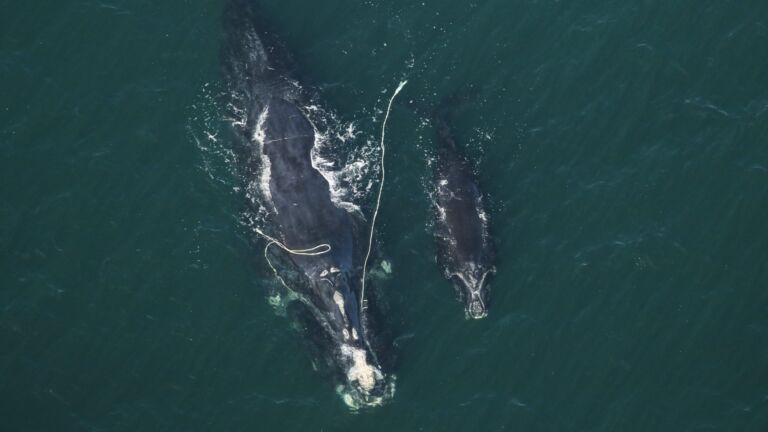
The North Atlantic right whale population is continuing to decline, reaching a low this year that it hasn’t seen since the early 2000s, according tothe North Atlantic Right Whale Consortium’s annual reporton the current right whale population.
The consortium estimated the population of the critically endangered species to be around 348 in 2020. It estimates that there were around 340 right whales in 2021.
“While it is certainly good to see the slope of the trajectory slow, the unfortunate reality is that the species continues to trend downward,” Heather Pettis, executive administrator of the North Atlantic Right Whale Consortium, said in a news release.
Turkeys are one of the most misunderstood and mistreated birds in the world. They are hunted and factory farmed and ridiculed. They are the satirized icon of the American Thanksgiving table.
I will explain who turkeys really are as opposed to how they are portrayed by exploiters and clichéd media. I will show that turkeys are intelligent and emotional birds whose natural intelligence is alive and well despite the abuses of domestication that they have endured.
Having written a book about the turkey “in history, myth, ritual, and reality” and having known several turkeys both male and female in our sanctuary, I believe I can speak thoughtfully with knowledge and care on their behalf. ‑KarenDavis
Elephants have trampled a man to death in India after villagers killed a 1-year-old calf that belonged to the herd.
Villagers in Korba in the Indian state of Chhattisgarh had allegedly killed thecalfearlier in the week and buried it in Bania village, divisional forest officer Premlata Yadav told NDTV.
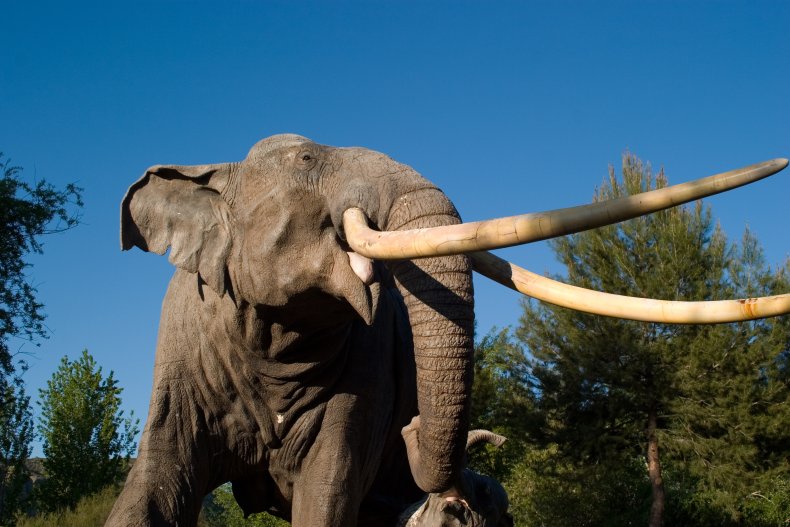
A stock photo shows an Asian elephant with tusks. A herd of 44 elephants killed a man in India.RICARDO_LOPEZ/GETTY
Human andelephantconflict has been on the rise in India for years. Villagers sometimes kill elephants in retaliation aftercrop-raiding incidents,which can often lead to dangerous incidents such as this.