British bases police netted a poacher for illegal bird trapping in the Pyla range of Xylophagou and he is now due to appear in court on September 19.
The Greek Cypriot was arrested on September 4 after the bases’ specialised unit – the community action team – spotted him retrieving ambelopoulia (black caps) from mists nets, which he allegedly set up.
Police officers scoured the area and further uncovered a bird imitating device, two iron poles, and nine recently killed black caps, among other items.
Pertev Karagozlou, acting superintendent who oversees the CAT, said this was an early warning to would-be trappers.
Speaking this week, he explained that: “The SBA police in Dhekelia has deployed the CAT for many years now [to] tackle any illegal activities related to hunting, especially bird trapping.
After trying a number of hazing strategies, officials will begin trapping and removing about 10 bears from the Jasper townsite in Jasper National Park.
For several weeks now, at least 10 black bears have been – as Jasper National Parks officials put it – “making use” of Jasper and the abundant fruit in the town’s greenspaces and yards. The number includes two mothers with cubs.
The animals have proven “reluctant” to leave and come back “almost immediately” after being moved out of the townsite, the park said in a statement on Thursday.
“The continuous presence of bears in the townsite, often in residential yards just metres from people, is an unacceptable safety risk for visitors and residents.”
Over the next few days, Parks Canada staff will be setting up live traps and traps borrowed from Banff National Park that are meant to trap mothers and cubs together.
“Bears will be humanely caught using live traps and will be taken to remote areas of the park,” the park said, stressing that the strategy isn’t guaranteed to work.
“Trapping and moving bears is not always successful. In some instances, bears will return for these easy, reliable food sources. If this occurs, Parks Canada staff may be forced to destroy ‘problem bears’ that continue to inhabit the townsite.
“Parks Canada needs the help of residents and visitors to try and avoid this situation.”
A poor berry season is enticing the bears to find easy food sources in town, according to a park resource conservation officer.
Since late August, Parks Canada has been asking residents to reduce the amount of garbage that is accessible to animals, remove fruit-bearing plants from their yards, or remove the fruit from the plants.
Jasper National Park renewed that call on Thursday, and asked residents to keep their distance from any bear traps they may come across in their neighbourhood. Locations that have a trap will be marked.
Bear sightings should be reported to 780-852-6155.
Non-residents are currently discouraged from visiting Jasper National Park because a 5,500-hectare wildfire nearby destroyed some of the town’s power lines. Jasper has been relying on generator power since the weekend. On Thursday, some residents had been without power for more than 80 hours.
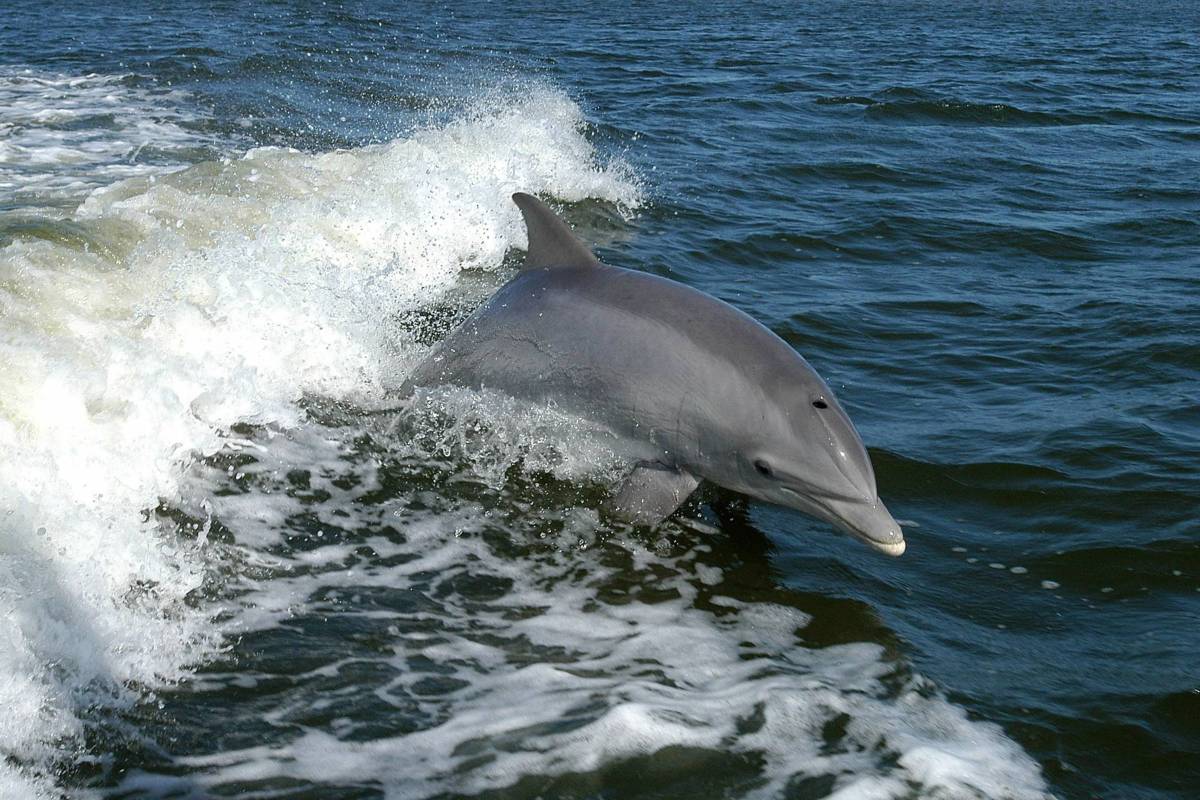
When a bottlenose dolphin was found dead in Florida’s Dixie County earlier this year, a marine animal rescue team from the University of Florida (UF) did not immediately suspect anything out of the ordinary when they performed a routine necropsy.
Tests for common causes of death turned up negative in this young male dolphin found at Horseshoe Beach.
“However, this dolphin had inflammation of the brain and also the tissues surrounding the brain, known as the meninges,” said Robert Ossiboff, D.V.M., Ph.D., an associate professor of veterinary anatomical pathology at UF, in a press release on September 7, 2022.
“This finding was unusual.”
Andrew Allison, Ph.D., an assistant professor of veterinary virology at UF, added, “Although avian flu infection had never been documented in a dolphin, the high incidence of the virus in wild birds in the spring — specifically aquatic bird species such as ducks, gulls, terns, and herons — suggested that encounters between dolphins and dying or dead birds near the shoreline was not out of the realm of possibility.”
Wild birds that succumb to the highly pathogenic avian influenza virus (HPAIV) often have neurologic signs with the virus found in their brains since the dolphin had inflammation of the brain and meninges that a virus could have caused.
Based on these initial suspicions, the UF researchers sent dolphin brain and lung samples to the state’s Bronson Animal Disease Diagnostic Laboratory in Kissimmee, Florida.
There, suspicions were confirmed, as the samples tested positive for HAPIV.
The case was the first time the HAPIV (bird flu) had been identified in a cetacean in North America.
The virus recovered from the dolphin belonged to clade 2.3.4.4b of the Eurasian H5 viral lineage.
Wild birds have spread H5 clade 2.3.4.4b HPAIV throughout the USA in 2022.
As of September 7, 2022, the USDA reported that 39 states had confirmed the loss of over 43 million birds due to HAPIV infections this year.
“While obviously, the presence of HPAIV is a concern, the key takeaway for us is that additional caution should be taken by those handling or encountering wild dolphins during rescue events or while performing necropsies,” said Mike Walsh, D.V.M., a clinical associate professor with UF’s College of Veterinary Medicine who performed the dolphin’s necropsy with others.
HAPIV infections have become common in birds; however, fatal infections have also been reported in red foxes, raccoons, striped skunks, and harbor seals in 2022. HAPIV was also found as the cause of death of a black bear.
The U.S. CDC says avian influenza is a contagious respiratory illness caused by various zoonotic (animal) viruses.
The H5N1 bird flu virus emerged in southern China in 1996, later causing large poultry outbreaks in 1997, resulting in 18 human infections.
The H5N1 bird flu viruses were not eradicated and re-surfaced in 2003, spreading throughout Asia and later in Africa, Europe, and the Middle East.
Since 2003, 19 countries have reported more than 860 human infections with H5N1 bird flu viruses, with about 53% of those cases resulting in fatalities.
In contrast to previous ‘bird flu outbreaks, only two non-fatal human cases with current H5N1 bird flu viruses have been reported.
One infection occurred in December 2021 in a person in the U.K. who raised birds.
A second human case was reported in Colorado in April 2022 in a person who was culling H5N1 virus-infected poultry.
Since annual flu shots do not protect people from bird flu infections, the U.S. government has approved a vaccine and could distribute it if a person-to-person bird flu outbreak occurs.
The U.S. FDA authorized CSL Seqirus’ Audenz monovalent cell-based vaccine in 2020.
The good news from the U.S. CDC is…. that the public health risk associated with these avian influenza detections in birds remains low as of September 8, 2022.
Note: Sarah Carey, Public Relations Director, UF College of Veterinary Medicine, wrote the original article, which was manually curated for mobile readership.
The government is investigating those deaths as part of its wild bird surveillance programme.
Martin Cade, manager of Portland Bird Observatory, said he had seen “several dozen on the Chesil Beach and on pavements and in fields”.
“These are normally powerful seabirds that spend their life at sea. They only come ashore because they’re sickly. You can see them sitting looking forlorn,” he said.
I love the Kansas state fair and I enjoy talking to people about trapping, so I spend some time each year at the Kansas Fur Harvesters booth at the Kansas State Fair. That booth is an excellent way to educate people about the importance of trapping here in the U.S.
As people stop by the booth, one of the things we point out is that furbearers in Kansas are very prolific breeders and trapping is a perfect and necessary tool to keep their populations manageable.
Beavers have from one to six young each year, and they do considerable damage by damming streams and ponds that flood farmland, back roads and golf courses. They cut off newly planted saplings with just a couple bites and kill large standing trees by completely chewing off the bark…
Warning bells are ringing across the continent over an unstoppable wave of avian flu that farmers fear could lead to poultry farm bans in vulnerable wetland areas.
In the Netherlands,more than 3.7 million chickens, ducks and turkeys have been culled in the most serious outbreak ever.
In France, where breeding ducks is popular, the government said that16 million farmedbirds had been destroyed, with farmers seeing their livelihoods collapse “like a house of cards”.
Earlier this year, the Dutch environment minister, Henk Staghouwer, admitted that bird flu was now “unavoidable” in a country where
Print versions will be available at FWP offices and other outlets in a few weeks.
Hunters and trappers will notice these regulations were combined into one book this year.
A couple of things to point out in the regulations include:
• Trapper education is required for any resident trapper who has not purchased a trapping license for three years in their lifetime, which does not need to be consecutive. This does not apply to those trapping for the purposes of livestock or property protection.
• Wolf trapping dates in occupied grizzly bear habitat may open prior to Dec. 31. Check FWP website for status of trapping dates beginning Nov. 21.
The deer you shot on public land ran onto private property and then died. You shot and killed what you thought was a spike elk only to discover that it was actually a cow elk. You just finished filleting the six rainbow trout you caught before realizing the catch limit at the reservoir was four. Before you find yourself in any of these scenarios, learn what Utah Division of Wildlife Resources conservation officers want you to know.
Do your research before going into the field
Just like you’d never fly a plane without training and preparation, you shouldn’t go fishing or hunting without knowing the laws. A common mistake that DWR conservation officers often see is someone killing wildlife without…
Thanksgiving turkey will be more expensive than usual this year due to a nationwide bird flu outbreak that’s already shortened the country’s supply ahead of the holiday.
One of the country’s largest commercial turkey processors, Hormel Foods, anticipates that “lower industry-wide turkey supplies [will] keep prices higher” through the holiday, according to Hormel CFO Jacinth Smiley on an earnings call this month. Hormel’s own supply, also hit by avian flu, is considerably lower this year, Food Dive reports.
With pricier turkeys and far fewer of them than normal, the race to snag the best bird well in advance of the holiday may be even fiercer this fall. But high prices could very well lower turkey consumption altogether around the holiday season. Last year, when fresh turkey prices rose 10% above those of 2020, turkey sales dropped 6%, according to a Forbes report. Turkey shopping may happen earlier this year, too, and some shoppers may opt instead for cheaper chicken or turkey breast, Carman Allison, a vice president at NielsenIQ, tells Forbes.
Avian influenza doesn’t pose a health concern to humans, but it’s deadly to birds that contract it. In order to contain outbreaks, farmers must kill entire flocks of turkeys—and this year, they killed around 5.4 million turkeys between January and July due to exposure, according to the U.S. Department of Agriculture.
Since mid-July of this year, 10 outbreaks have impacted roughly 617,200 birds in 39 states. July is also when producers begin raising Thanksgiving turkeys.
While outbreaks aren’t unusual on their own, they’re normally halted by the onset of warmer weather. That’s not the case this year, with the flu persisting into the hottest months and even in a late-summer heat wave in California.
In fact, this outbreak could match or outpace the worst in recent history: In 2015, the bird flu afflicted over 50 million turkeys before control measures and warm weather saw it plateau. Since January of this year, 40.8 million birds have already been affected by the outbreak.
JOHANNESBURG, Sept. 17 (Xinhua) — Four cases of avian flu, or bird flu, were confirmed among the endangered penguins at Boulders Penguin Colony in Cape Town, News24, a local news website reported on Saturday, citing a clinical veterinarian.
As of Friday, there had been four confirmed cases and another seven suspected cases, said Table Mountain National Park (TMNP) management.
Once seabirds show symptoms of bird flu, they usually die soon afterward, News24 reported, quoting Dr David Roberts, a clinical veterinarian at the Southern African Foundation for the Conservation of Coastal Birds (Sanccob) as saying.
The flu strain is the same as the one detected in seabirds in the Western Cape last year. That outbreak saw thousands of birds die in vulnerable colonies. Now, conservationists worry the same fate could await the endangered penguins, if no quick action is taken.