People drum outside court, after a jury found two Alberta men guilty in deaths of Metis hunters Jacob Sansom and his uncle Maurice Cardinal, in Edmonton Alta, on Tuesday, May 31, 2022. A man has been sentenced to 10 years in prison for the death of two Metis hunters who were shot on a rural road in Alberta. THE CANADIAN PRESS/Jason Franson
The large white dot is a whole shotgun pellet and smaller white dot is a lead fragment. Credit: University of Cambridge
Eating pheasant killed using lead shot is likely to expose consumers to raised levels of lead in their diet, even if the meat is carefully prepared to remove the shotgun pellets and the most damaged tissue.
A study has found that pheasants killed by lead shot contain many fragments of lead too small to detect by eye or touch, and too distant from the shot to be removed without throwing away a large proportion of otherwise useable meat.
Lead fragments often form when lead shotgun pellets hit the bodies of gamebirds. The fragments become lodged deep within the meat.
Researchers examined the carcasses of eight wild-shot common pheasants, killed on a farmland shoot using lead shotgun ammunition and on sale in a UK butcher’s shop. They found small lead fragments embedded in every pheasant, in addition to lead shotgun pellets in seven of them.
The researchers found up to 10mg of tiny lead shards per pheasant, all of which were much too small to be detected by eye or by touch.
Lead is toxic to humans when absorbed by the body—there is no known safe level of exposure. Lead accumulates in the body over time and can cause long-term harm, including increased risk of cardiovascular disease and kidney damage in adults. It is known to lower IQ in young children, and affect the neurological development of unborn babies.
Graph shows the lead fragment sizes and numbers detected in the pheasant carcasses. Credit: University of Cambridge
“While lead gunshot continues to be used for hunting, people who eat pheasants and other similar gamebirds are very likely to be also consuming a lot of tiny lead fragments,” said Professor Rhys Green in the University of Cambridge’s Department of Zoology, and first author of the study.
An earlier study in rats showed that when consumed, more lead is absorbed into the body from smaller fragments than from larger ones.
“It seems to have been widely assumed in the past that a lead shot embedded in a pheasant carcass remained intact, and could be removed cleanly before the pheasant was eaten—removing any health risk. Our study has shown the extent to which this is really not the case,” said Green.
He added: “By eating pheasant, people are also unwittingly eating lead, which is toxic.”
“One pheasant is a reasonable meal for two or three people. Consuming this much lead occasionally wouldn’t be a great cause for concern—but we know that there are thousands of people in the UK who eat game meat, often pheasant, every week.”
This shows a whole shotgun pellet, a small metal fragment and a probable bone fragment. Note the obvious artifact effect around the shotgun pellet. Credit: University of Cambridge
Around 11,000 metric tons of meat from wild-shot gamebirds, mostly pheasant, are eaten in the UK every year. Virtually all pheasants shot in the UK for human consumption are killed using lead shot.
The researchers used a high-resolution CT (computerized tomography) scanner to locate the lead fragments in the pheasant meat in three dimensions, and measure their size and weight. The meat was then dissolved, allowing the larger fragments to be extracted and analyzed further to confirm they were lead.
An average of 3.5 lead pellets and 39 lead fragments of less than 1mm wide were detected per pheasant. The smallest fragments were 0.07mm wide—at the limit of resolution for the CT scanner for specimens of this size—and the researchers say it is likely that even smaller fragments were also present.
The lead pieces were widely distributed within the birds’ tissues and some of the small fragments were over 50mm from the nearest lead shot pellet.
The results are published today in the journal PLOS ONE.
Pheasant bought from UK butchers’ shop. Credit: University of Cambridge
Three lead shots were removed from this pheasant meat, on sale in a UK butchers’ shop. Credit: University of Cambridge
Pheasant bought from UK butchers’ shop. Credit: University of Cambridge
Three lead shots were removed from this pheasant meat, on sale in a UK butchers’ shop. Credit: University of Cambridge
“It’s rare for people eating game meat to accidentally eat a whole lead shot, because they’re cautious about damaging their teeth and know to check for lead shotgun pellets in the meat. But the lead fragments we found in pheasant carcasses were so tiny and widely distributed that it’s very unlikely they would be detected and removed,” said Green.
There are no UK or EU regulations about the maximum allowable levels of lead in human food from wild-shot game animals. This is in contrast with strict maximum levels for lead in many other foods including meat from cattle, sheep, pigs and poultry, and shellfish harvested from the wild.
Steel shotgun pellets are a practical alternative to lead, and their use in place of lead for hunting is recommended by UK shooting organizations. But there is very little evidence of a voluntary switch away from lead being made. The UK Health & Safety Executive is currently preparing a case for banning the use of lead ammunition for hunting in the UK, and the European Chemicals Agency is doing the same for Europe.
Other game including partridge, grouse and rabbit is also mainly shot using lead shotgun pellets, and wild deer are shot using lead bullets. Hunters often remove the guts of deer carcasses to make them lighter to carry, and the discarded guts—which often contain many bullet fragments—are eaten by wildlife, which then also suffer the harmful effects of consuming lead.
Adam Leontowich holding block of ballistic gelatin at the BMIT beamline at the CLS. Credit: Canadian Light Source
The lead in some bullets used for hunting deer, moose, and elk is toxic to the humans who eat the harvested meat and to scavenger animals that feast on remains left in the field.
A team of researchers from the Canadian Light Source at the University of Saskatchewan (USask) and the College of Medicine at USask has for the first time used synchrotron imaging to study both the size and spread of bullet fragments in big game shot by hunters. Their findings were published today inPLOS ONE.
Like a scene right out of the hit television series CSI, the research team fired bullets into blocks of ballistic gelatin—the same material used bylaw enforcement agenciesfor ballistic testing—and examined the resulting fragments using…
Published:Aug. 25, 2022 at 1:53 PM PDT|Updated:22 hours ago
MADISON, Wis. (WMTV) – Wisconsin hunters are being warned against setting up their deer stands in or near ash trees ahead of this season’s hunt.
The Wisconsin Department of Natural Resources stated Thursday that most ash trees in southern Wisconsin, Door County and the counties along the Mississippi River have dead or dying ash trees from the emerald ash borer infestation.
Trees infested with the emerald ash borer are unstable and could suddenly snap or have branches fall. The department also cautioned hunters on the ground who may be walking near ash trees, especially when it’s windy, that the branches on the trees could break and tumble down.
KYIV, Aug 26 (Reuters) – Ukraine’s president urged the world to act much faster to force Russian troops to vacate Europe’s largest nuclear power plant after the site was cut from electricity for hours in an incident he said risked an international radiation disaster.
President Volodymyr Zelenskiy said Russian shelling on Thursday had sparked fires in the ash pits of a nearby coal power station that disconnected the Zaporozhzhia plant from the power grid. A Russian official said Ukraine was to blame.
The switch to walking on two legs, instead of four, is a major moment in the evolution of our species, which is why scientists are keen to pinpoint exactly when it happened – and a new study puts the adaptation as happening around 7 million years ago.
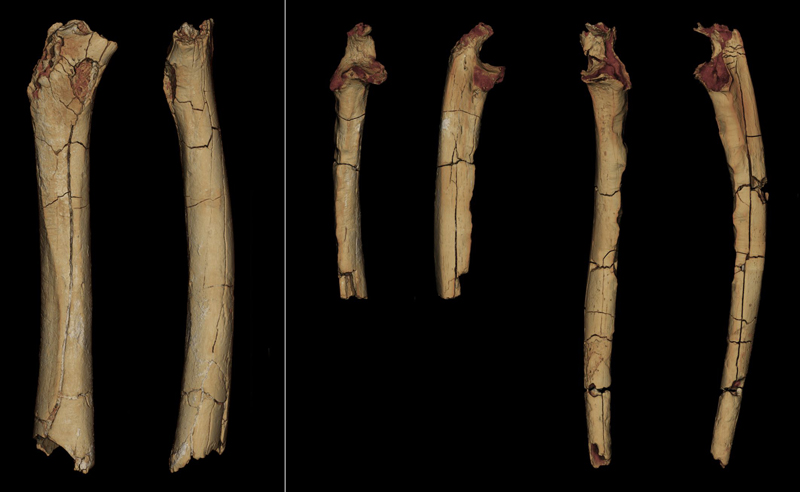
That’s based on a detailed analysis of thigh (femur) and forearm (ulna) fossils from Sahelanthropus tchadensis, the oldest representative species of humanity. These fossils were first discovered in Toros-Menalla in Chad in 2001.
At the same time, it’s probably likely these early hominins did a fair bit of tree climbing using all four limbs as well – as you would expect if the species made the gradual shift from four legs to two legs.
“Here we present postcranial evidence of the locomotor behavior of S. tchadensis, with new insights into bipedalism at the early stage of hominin evolutionary history,” write the researchers in their published paper.
3D models of the Sahelanthropus tchadensis fossils. (Franck Guy/PALEVOPRIM/CNRS – University of Poitiers)
By comparing the thigh and forearm fossils with the equivalent bones from humans, chimpanzees, and gorillas, the researchers were able to figure out the mechanics of how they were used, and how this species moved about (its “locomotor mode”).
A total of 20 different characteristics of the fossilized bones were used to establish whether S. tchadensis walked on two legs or four, including the outer shape of the remains and the internal structures, assessed via microtomography imaging.
They concluded that “habitual bipedality” with some tree climbing was the most likely scenario.
The team also suggests that there is a difference between the way the species climbed trees compared to gorillas and chimpanzees of today: with firm hand grips, rather than leaning back on finger and toe bones.
“The curvature and cross-sectional geometric properties of the ulna… are indicative of habitual arboreal behaviors, including climbing and/or ‘cautious climbing’, rather than terrestrial quadrupedalism,” write the researchers.
The research builds on an earlier study of a skull fossil dug up at the same site and thought to also belong to S. tchadensis. The skull analysis suggested that these ape-like creatures were bipedal, but now there’s more comprehensive evidence.
The fossils date from around the time (between 6-8 million years ago) that humans split off genetically from chimpanzees and bonobos, which are our closest still-living relatives, so it’s a crucial stage – and one that has already attracted plenty of scientific debate.
These early hominins would have probably lived in an environment that mixed forests, palm groves and grasslands, with both walking on two legs and clambering up trees being options for them as they looked for food and water.
“The most parsimonious hypothesis remains that the postcranial morphology of Sahelanthropus is indicative of bipedality and that any other hypothesis would have less explanatory power for the set of features presented by the material from Chad,” write the researchers.
It’s been a long time – and one major global pandemic – since bird flu last caused international concern back in 2007 and 2008. But now the disease (aka H5N1) is devastating bird populations around the world once again. Gannets in Scotland, demoiselle cranes in India and common cranes in Israel are among the species worst affected.
Since spring 2021, when the new strain of Avian flu was first detected in poultry and wild birds, it has killed more than 86 million birds in the USA and Europe alone, according to The Financial Times. This has been mostly through culling, which involves the mass slaughter of birds in areas where the disease has been detected.
Hundreds if not thousands of gannets are already thought to have been wiped out on Bass Rock to the east of Scotland. And on the Isles of Scilly to the west of Cornwall, the flu has been detected and more than 40 birds have died amid fears that the condition has spread widely.
The Isles of Scilly Wildlife Trust hoped the department for environment, food and rural affairs (Defra) would help carry out more testing and culling where necessary but said their earliest arrival would be Wednesday. Last week, culling was carried out by Defra elsewhere in Cornwall where an outbreak was confirmed on Friday.
Julian Branscombe, of the Isles of Scilly Wildlife Trust, told Time Out: ‘We’ve been seeing increasing numbers of dead or sick birds washing up over the last week, particularly gannets and herring gulls. Members of the public have reported over 40 carcasses now, with other birds offshore showing signs of illness.’
Branscombe said neighbouring gannet colonies in the Channel Islands and South and West Wales have confirmed Avian flu cases, leaving the Trust highly concerned about transmission.
He adds: ‘We are hopeful that Defra will be responding more quickly from now on, as the results will be imperative to helping us manage the situation. Right now, we need a quick response and joined-up thinking across government departments, so that we don’t see the same devastation witnessed in other areas of the UK.’
Image caption,Alderney Wildlife Trust said it expected the island’s gannet colonies – which represent nearly 1% of the global population – to be particularly impacted
Hundreds of seabirds have died as conservationists prepare for a “significant increase” in reports of “devastating” avian flu in Alderney.
Alderney Wildlife Trust said it expected the island’s gannet colonies – which represent nearly 1% of the global population – to be particularly impacted.
It means poultry or other birds cannot be imported or exported.
A spokesperson for the wildlife trust said: “Our team spends hundreds of hours each year studying these birds and working with the government to ensure their protection, and all of us are finding this current situation extremely distressing.”
What’s considered officially “dangerous heat” in coming decades will likely hit much of the world at least three times more often asclimate changeworsens, according to a new study.
In much of Earth’s wealthy mid-latitudes, spiking temperatures and humidity that feel like 103 degrees or higher — now an occasional summer shock — statistically should happen 20 to 50 times a year by mid-century, said a study Monday in the…


 Pheasant bought from UK butchers’ shop. Credit: University of Cambridge
 Three lead shots were removed from this pheasant meat, on sale in a UK butchers’ shop. Credit: University of Cambridge


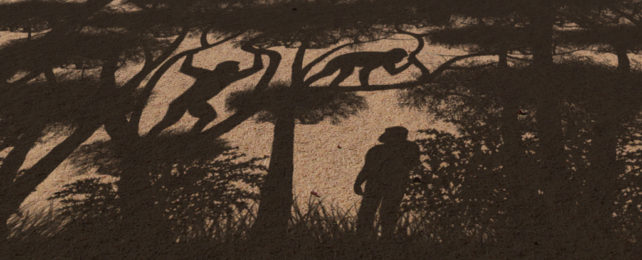 A representation of the modes of locomotion practiced by Sahelanthropus.