A new study by Science Advancesshows climate change has already doubled the chances of a disastrous flood happening in California in the next four decades. And experts say it would be unlike anything anyone alive today has ever experienced.
Daniel Swain, a climate scientist with UCLA and a researcher involved in the study, describes a megaflood as, “a very severe flood event across a broad region that has the potential to bring catastrophic impacts to society in the areas affected.”…
In Bolivia, the infamous “Death Road” has become a haven for life. Once the only route north from La Paz, the narrow and treacherous old road to the Yungas claimed an average of 300 lives per year during peak usage.
However, since the construction of a safer road in 2007, traffic has dropped 90% and wildlife has crept in, according to a new study by the Wildlife Conservation Society (WCS) published in the journal Ecología en Bolivia.
A scientist observes birds on the former death road. Photo by Rob Wallace/WCS.
Scientists placed 35 camera traps along and nearby a 12-kilometer (7.4 mile) stretch of road as well as in the surrounding Cotapata National Park and Natural Integrated Management Area in 2016. The camera traps recorded 16 species of medium and large mammals including the dwarf brocket deer (Mazama chunyi), mountain paca (Cuniculus taczanowskii), oncilla cat (Leopardus tigrinus) and the spectacled or Andean bear (Tremarctos ornatus).
“The record of the Andean bear and the dwarf brocket deer was what surprised us the most, because these are two very elusive and difficult to observe species that normally avoid places with human presence,” Guido Ayala, WCS Scientific Research Coordinator and the lead author of the study told Mongabay.
The cameras also captured 94 species of birds such as the endemic Bolivian brush finch (Atlapetes rufinucha), light-crowned spinetail (Cranioleuca albiceps), and rufous faced antpitta (Grallaria erythrotis) and vulnerable species including hooded tinamou (Nothocercus nigrocapillus) and Endangered black and chestnut eagle (Spizaetus isidori).
“The data recorded in this study confirms this trend, showing that wildlife has returned to the area, due to the reduction in vehicle traffic and the presence of humans,” Ayala said.
Roads are generally terrible for the forest. As forests dry out along roadways, issues like wildfires and forest degradation along edges can weaken ecosystems, and roads open a pathway for other destructive activities such as logging.
For wildlife, roads increase roadkill, noise, and chemical pollution, and hinder animals’ ability to move safely across the landscape. Frogs, bats, and birds are particularly affected by the noise from roads, which can disrupt the vocalizations they use for courtship, communication and defense.
When the “road of death” was in heavy use, Ayala said, roadkill, noise pollution, and the capture of wild animals as pets were the main threats to wildlife. Park rangers reported to WCS that they had seen little evidence of mammals around the road between 1990 and 2005.
“The fauna, when this road was still functioning, it was being affected by the pollution that vehicles generated, the noise and dust,” Maria Viscarra, a biologist who participated in the study told Reuters.
Now, all of these threats have decreased significantly and the situation for wildlife is much better. For instance, “there are no reports of animals being run over or species being captured for pets,” Ayala said. “The results also demonstrate the resilience of nature in the wild, and the importance of connectivity for protected areas.”
An oncilla (Leopardus tigrinus) photographed on the former death road. Photo via Ayala & M Viscarra-Trampas / WCS
At present, “the greatest threats to wildlife in the region comes from the slash-and-burn linked to coca cultivation,” Ayala adds. Coca leaves, which are used medicinally or processed into cocaine, are a key cash crop in Bolivia. In order to grow the crop, the land must be completely cleared of forest. This is achieved by cutting down all of the vegetation and then, once it dries, setting the brush ablaze. Efforts to stop illegal cultivation, such as the aerial spraying of crops also damage forests and biodiversity.
Coca crops were present in six of Bolivia’s protected areas in 2019, according to a UNODC report. Combined, these illegal plantations spanned 319 hectares (788 acres). More than 37 hectares (91 acres) of illegal coca plantations were reported inside Cotapata National Park, the Park nearest to the old road, with more farms reported outside of the park.
But overall, rangers and researchers are celebrating a win for local wildlife around the old road. “It is so nice,” Ayala told Reuters, “that we have a place close to the (capital) La Paz, some 50 minutes away, where one can come and see nature in a beautiful way.”
People for Animal Rights (PAR) in Syracuse, NY, is sponsoring Elise Able, a longtime fox and coyote rehabilitator and founder of Fox Wood Wildlife Rescue:http://www.foxwoodwildliferescue.org/
Hunting is a Tennessee tradition and protected by law. Brandon Dowdy, host of theSouthern Woods & WatersTV show, carries on the tradition with daughter Emery, who was 10 when she bagged her first buck.Submitted
Incidents of animal-rights activists harassing hunters and trying to disrupt hunts is on the rise, including incidents in Tennessee, and officials warn that it’s illegal and can result in criminal charges.
The Hunter Protection Act, better known as the “Hunter Harassment Law” was passed by the Tennessee legislature in 1995. The Tennessee Code Annotated regulation is lengthy and legally complex, but in essence it says, “It is illegal to interfere with the lawful taking of a game animal by any actions of a person or persons.”
The right to hunt with a gun — and the sports culture that surrounds hunting — are a core part of a certainAmerican identitythat can be traced back to the 19th century and the era of westward colonial expansion. From the second half of the 20th century on, however, urbanites and historically marginalized peoples, including groups who gained from the Civil Rights era, were increasingly less likely to see hunting as part of a great American past. These communities were instead more likely to view hunting as a leisure activity tied to the legacies of oppression, even as rural white Americans saw it as a vital badge of identity. Today, hunting as a sport is frequently a source…
Thinning and calving have reduced the mass of Antarctica’s ice shelves by 12 trillion tons since 1997, an analysis found.
Los AngelesAntarctica’s coastal glaciers are shedding icebergs more rapidly than nature can replenish the crumbling ice, doubling previous estimates of losses from the world’s largest ice sheet over the past 25 years, a satellite analysis showed on Wednesday.
The first-of-its-kind study, led by researchers at NASA’s Jet Propulsion Laboratory (JPL) near Los Angeles and published in the journal Nature, raises new concern about how fast climate change is weakening Antarctica’s floating ice shelves and accelerating the rise of global sea levels.
The study’s key finding was that the net loss of Antarctic ice from coastal glacier chunks “calving” off into the ocean is nearly as great as the net amount of ice that scientists already knew was being…
(CNN)As sea ice vanishes,Greenland meltsandwildfires scorchthe planet’s northernmost forests, new research confirms what scientists are sounding alarms about: the Arctic has warmed much faster than the rest of the world in the past several decades.
The phenomenon, called Arctic amplification, is caused by the heat-trapping emissions from burning fossil fuels. The pace of the temperature increase around the North Pole in recent decades was four times higher than the rest of the planet, researchers at the Finnish Meteorological Institute found in a study published Thursday.
Another problem: Climate models, which scientists used to predict long-term change, are not capturing this high rate of warming, lead author and researcher Mika Rantanen told CNN, which was part of this study’s…
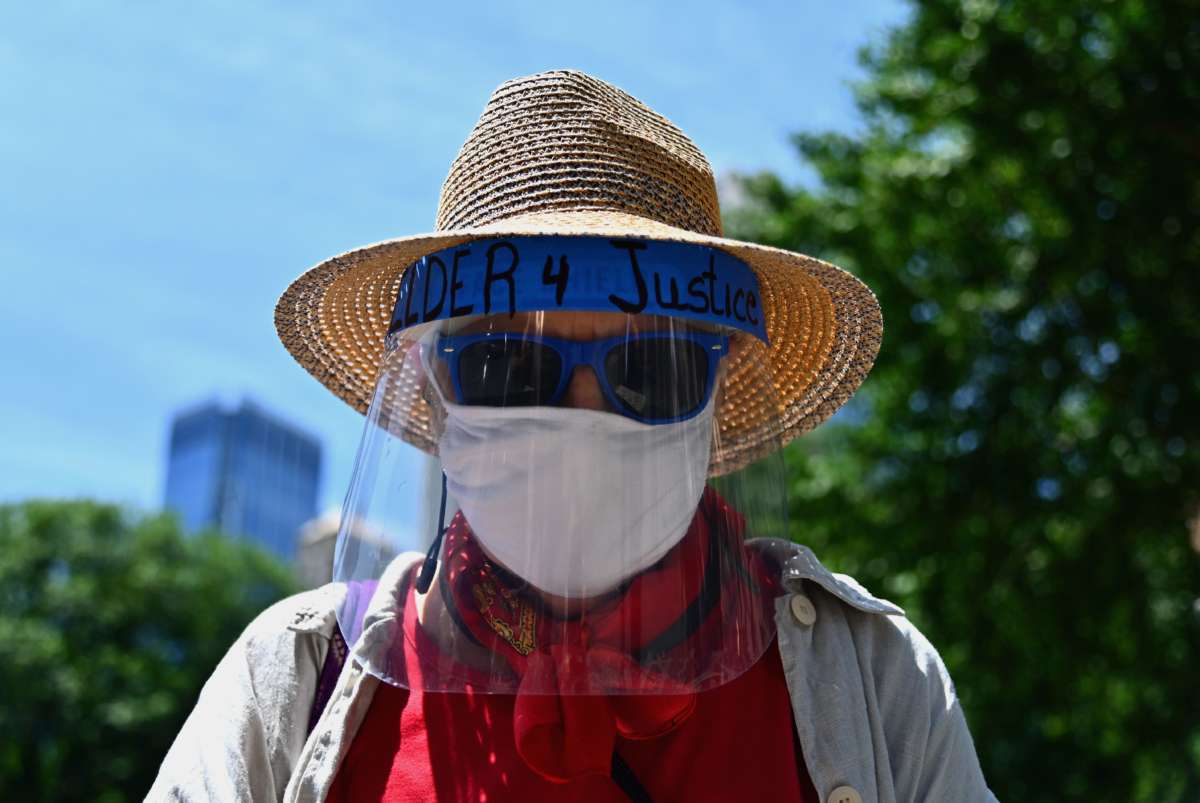
An elderly protestor wears a face mask with a sign during a rally for defunding the New York Police Department (NYPD) outside City Hall on June 24, 2020, in New York City.
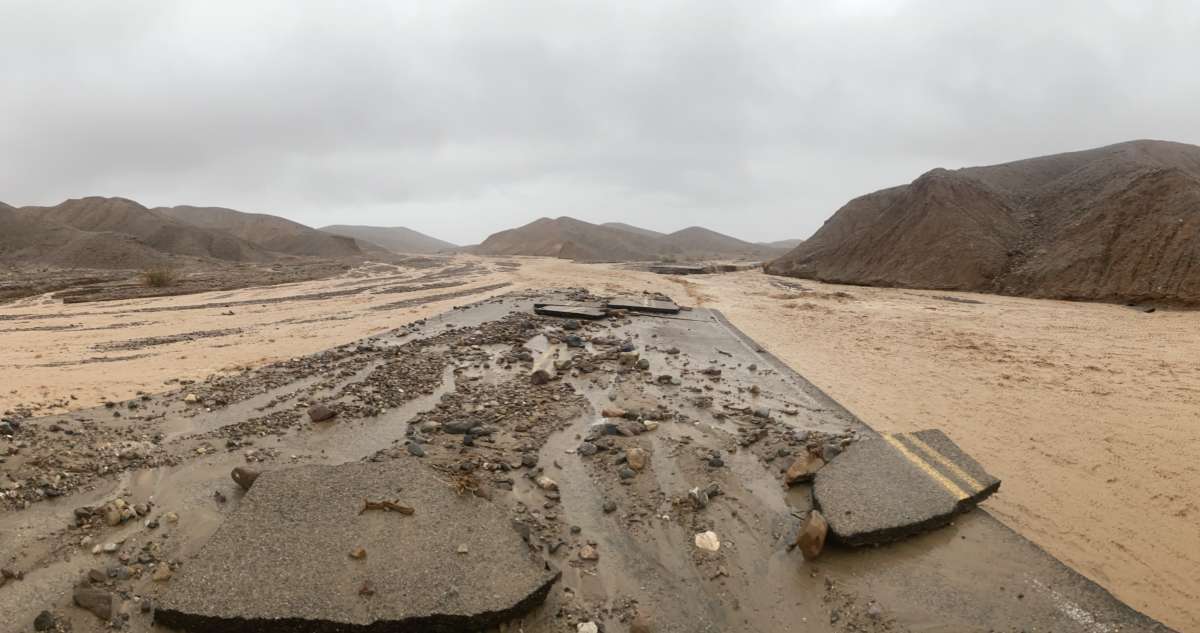
Last week’s historic rainfall and flash flooding that caused widespread damage and left hundreds of staff and tourists stranded in Death Valley National Park is another…
WASHINGTON—Wildlife conservation organizations sued the U.S. Fish and Wildlife Service today for missing its deadline to decide whether gray wolves in the northern Rocky Mountains warrant federal protection under the Endangered Species Act.
The deadline was set following aMay 2021 petitionfiled by the Center for Biological Diversity, the Humane Society of the United States, Humane Society Legislative Fund and Sierra Club. Thepetition askedthe Service to again protect gray wolves in the northern Rockies after Idaho and Montana enacted aggressive wolf-killing laws last year. It asked for emergency protection and immediate relisting of wolves under the Endangered Species Act, arguing that federal protection is necessary to prevent wolves from being virtually eradicated from the northern Rockies as a result of the new laws.
“Because Idaho and Montana are hellbent on eradicating wolves from their states, these animals desperately need federal protection now,” said Andrea Zaccardi…