IDA-Africa Baby Gorilla Rescue!

Last week In Defense of Animals-Africa was asked by its Cameroon government partner, the Ministry of Forestry and Wildlife (MINFOF), for help capturing a juvenile gorilla who was frequently eating from village farms. Farmers had been frightened by the gorilla, who did not seem to be afraid of them, and a young boy had broken his arm running away. IDA-Africa was not eager to take a free-living gorilla captive, but a team from its Sanaga-Yong Chimpanzee Rescue drove four hours to meet the MINFOF representative for a collaborative investigation. The team feared that the gorilla’s mother and others in his group had been killed by poachers.
They soon realized that the sweet six-year-old gorilla was not only unafraid of humans, he was actually seeking their company. He must have been captured as a baby by poachers, raised among humans who bought him as a pet, and dumped or “set free” near the forest when he became unmanageable. But this little lonely boy couldn’t fend for himself in the forest and would have been killed had his visits to the farms continued. The team had no choice but to capture and transport him back to Sanaga-Yong for temporary care. Since Sanaga-Yong only provides long-term care for chimpanzees, the gorilla was transferred a few days later to Ape Action Africa’s Mefou Sanctuary.
Tragically, each year thousands of baby chimpanzees, gorillas and monkeys are stolen from Africa’s forests by bushmeat poachers seeking extra profit in the pet and zoo trades, and rarely can these orphans be returned to a free life in the forest. Forest sites that meet criteria for reintroduction are nonexistent in many countries, and while there are a few success stories, released great apes endure stress and suffer high mortality. In well run sanctuaries, like Sanaga-Yong and Mefou, these surviving victims of poaching can usually find friendship and some happiness among other rescued orphans, but what they’ve lost is irreplaceable. Along with their mothers’ love and carefree childhoods, their freedom to self-determine and eventually have families of their own is gone forever.

TICKETS ON SALE NOW!

IDA-Africa Annual Gala

Saturday, September 10th 2016 from 6-10pm

The University Club in Downtown Portland Oregon

Please join us for our Sixth Annual Gala to benefit the chimpanzees of Sanaga-Yong Rescue Center. The evening’s festivities will feature Dr. Sheri Speede with an update on our rescue and conservation efforts in Africa including forest protection, sustainable agriculture, our education program and of course, a heartwarming update on the chimpanzees of Sanaga-Yong Rescue! And… get a sneak peek at a BBC pilot featuring our adorable and adventurous chimpanzees!

Purchase Your Tickets Today!: https://app.etapestry.com/cart/InDefenseofAnimals-Africa/default/category.php?ref=1165.0.75650093

Burning Ivory to Spread the Message – Hard Hitting New Videos Released

http://www.all-creatures.org/articles/ar-burning-ivory.html

An Animal Rights Article from All-Creatures.org

FROM

Joyce Tischler, founder and general counsel, Animal Legal Defense Fund (ALDF) as posted on Animal Blawg
May 2016

On April 30, 2016, Kenya burned 105 tons of ivory, along with over one ton of rhino horns and the confiscated skins of thousands of other wild animals in a strong public statement of support and respect for its native wildlife.

It’s eerie to watch these videos and realize that each pair of tusks belonged to someone (not something) who was highly intelligent and social, and who lived in an intricate society where they form lifelong familial bonds, cooperate to solve problems and teach their children the essential skills needed to survive in the wild.

burning ivory
Image by Tim Gorski

African elephants are running out of time. Homo sapiens, a species that by most accounts is overpopulating the planet, is brutally killing elephants at the rate of 96 per day. By some estimates, African elephants will be extinct in approximately one decade. Every elephant death is disturbing and the thought of no more wild elephants is beyond comprehension. The inane reason we are killing them is to seize their tusks—ivory, a coveted product that is valued by humans more highly than live elephants. You may already know that. So, here’s some promising news.

ivory trinkets

On April 30, 2016, Kenya burned 105 tons of ivory, along with over one ton of rhino horns and the confiscated skins of thousands of other wild animals in a strong public statement of support and respect for its native wildlife. This burning has been captured on video by Tim Gorski, a documentary filmmaker who is currently working on the elephant issue.

burning ivory
Image by Tim Gorski

It’s eerie to watch these videos and realize that each pair of tusks belonged to someone (not something) who was highly intelligent and social, and who lived in an intricate society where they form lifelong familial bonds, cooperate to solve problems and teach their children the essential skills needed to survive in the wild. Elephants are one of the most extraordinary species ever to grace this planet; they deserve no less than to be allowed to live out their natural lives with their herds in their homelands.

Please take a look at one or more of the videos, and listen to the powerful words of those fighting on the ground to protect elephants:

Kenya Ivory Burn 2016
Visit Tim Gorski’s Facebook page
Visit Tim’s website, Rattle The Cage Productions

And, when you’re done, please learn more about the issue; get involved. Stop the slaughter.

U.S. hunters import 126,000 wildlife ‘trophies’ annually

U.S. hunters import about 126,000 “wildlife trophies” annually and killed about 1.26 million animals between 2005 and 2014, according to the Humane Society International and The Humane Society of the United States.

Trophy hunting is the killing of animals for body parts, such as the head and hide, for display or decor rather than for food and sustenance. A recent study examining the motivation for such hunts found that U.S. hunters glamorize the killing of an animal to demonstrate virility, prowess and dominance.

A report from Humane Society International/Humane Society of the United States titled Trophy Hunting by the Numbers: the United States’ Role in Global Trophy Hunting, uses an analysis of hunting trophy import data obtained from the U.S. Fish and Wildlife Service.

Some findings:

<!–/*
* The backup image section of this tag has been generated for use on a
* non-SSL page. If this tag is to be placed on an SSL page, change the
* 'http://ads.wisconsingazette.com/www/delivery/…&#039;
* to
* 'https://ads.wisconsingazette.com/www/delivery/…&#039;
*
* This noscript section of this tag only shows image banners. There
* is no width or height in these banners, so if you want these tags to
* allocate space for the ad before it shows, you will need to add this
* information to the tag.
*
* If you do not want to deal with the intricities of the noscript
* section, delete the tag (from … to ). On
* average, the noscript tag is called from less than 1% of internet
* users.
*/–>

&amp;amp;lt;a href=’http://ads.wisconsingazette.com/www/delivery/ck.php?n=aab34001&amp;amp;amp;amp;cb=INSERT_RANDOM_NUMBER_HERE&#8217; target=’_blank’&amp;amp;gt;&amp;amp;lt;img src=’http://ads.wisconsingazette.com/www/delivery/avw.php?zoneid=6&amp;amp;amp;amp;cb=INSERT_RANDOM_NUMBER_HERE&amp;amp;amp;amp;n=aab34001&#8242; border=’0′ alt=” /&amp;amp;gt;&amp;amp;lt;/a&amp;amp;gt;

• Trophies are primarily imported from Canada and South Africa, followed by Namibia, Mexico, Zimbabwe, New Zealand, Tanzania, Argentina, Zambia and Botswana.

• Trophy hunters most want to kill American black bears, impalas, common wildebeests, greater kudus, gemsboks, springboks and bonteboks.

• Trophy hunters highly covet the so-called “African big five” — lions, elephants, leopards, white rhinos and buffalo. All of these species, except the African buffalo, are classified as near threatened or vulnerable on the IUCN Red List of Threatened Species.

• The U.S. ports of entry that received the most wildlife trophies in the past decade were New York City; Pembina, North Dakota; Chicago; Dallas/Fort Worth, Texas; and Portal, North Dakota.

“This report clearly shows the dire impact American trophy hunters are having on wildlife in other countries,” said Teresa M. Telecky, director of the wildlife department at HSI.

She continued, “It’s outrageous that every year hunters take the lives of thousands of animals, many threatened with extinction, just to win a prize and show off. These animals need protection, not to be mounted on a wall. The fact that rare, majestic species are entering the U.S. in large and small ports of entry should alarm lawmakers and the public concerned about trophy hunting.”

Hunting groups promote the hunts, offering accolades and awards to club members. The largest of these groups, Safari Club International, recently concluded its convention in Las Vegas, where more than 300 mammal hunts for more than 600 animals were auctioned off, and other hunts were arranged privately on the exhibit floor. An African lion trophy hunt can cost $13,500–$49,000. An African elephant hunt can cost $11,000–$70,000.

SCI often uses the revenue from hunt sales to lobby against wildlife protection measures.

U.S. “trophy hunters” highly covet the African big five. The import numbers for 2005–14 are 17,200 African buffalo, 5,600 African lions, 4,600 African elephants, 4,500 African leopards and 330 southern white rhinos. Photo: GraphicStock

U.S. “trophy hunters” highly covet the African big five. The import numbers for 2005–14 are 17,200 African buffalo, 5,600 African lions, 4,600 African elephants, 4,500 African leopards and 330 southern white rhinos. Photo: GraphicStock

For certain species, including lions, elephants, leopards and rhinos, the U.S. is the largest trophy-importing country.

HSI and The HSUS, in a statement on the report, pledged to continue to seek new protection under the U.S. Endangered Species Act for species that meet the criteria for listing.

The African lion is the latest species to receive ESA protection, after a multi-year effort by animal protection organizations, including HSI and The HSUS.

The groups are seeking increased ESA protections for species currently listed in a lower category of protection, as was recently done for the African elephant. HSI and The HSUS are also urging corporations — such as Swarovski Optik  — to end sponsorship of trophy-hunting advocacy organizations.

first all-female anti-poaching unit risking their lives to protect big cats, rhinos and elephants from men with guns

The REAL lionesses of Africa: Stunning ‘Black Mambas’ are first all-female anti-poaching unit risking their lives to protect big cats, rhinos and elephants from men with guns

  • WARNING: GRAPHIC CONTENT
  • Black Mambas is all female, anti-poaching group working in Balule reserve
  • They free animals from snares and radio in poachers’ locations to rangers
  • Women’s lives are constantly at risk from poachers, animals they protect
  • Poaching in Balule reduced by 75 per cent since Mambas formed in 2013 

They are in fact the Black Mambas, an all female anti-poaching unit risking their own lives to protect the endangered animals being hunted for their horns, fur and meat. 

On their daily patrols around the Balule reserve, near Kruger National Park, they face the very real prospect of being gunned down by poachers or mauled to death by the animals they swore to protect.

Despite the dangers, and against the odds, the Mambas are winning the battle against poaching. Their presence alone has reduced poaching in Balule by 75 per cent and their methods could now be rolled out across the country.

Protectors: The all-female Black Mambas risk their lives to protect the endangered animals being targetted by poachers in the South African bush

Protectors: The all-female Black Mambas risk their lives to protect the endangered animals being targetted by poachers in the South African bush

 Winning: The Mambas (pictured), many of whom are mothers and wives, have reduced poaching in the Balule reserve, near Kruger National Park, by 75 per cent

 Winning: The Mambas (pictured), many of whom are mothers and wives, have reduced poaching in the Balule reserve, near Kruger National Park, by 75 per cent

Endangered: The Mambas' most important job is to protect the rhinos being targetted by poachers for their horns, which sell for more than cocaine on the black market (pictured, Black Mamba helping victims of rhino poaching at the Rhino Revolution Rehabilitation Centre)

Endangered: The Mambas’ most important job is to protect the rhinos being targetted by poachers for their horns, which sell for more than cocaine on the black market (pictured, Black Mamba helping victims of rhino poaching at the Rhino Revolution Rehabilitation Centre)

When Siphiwe Sithole told her parents she wanted to be a Black Mamba, they feared she would be eaten by a lion.

They were right to worry. Since joining in 2014, she has had two very close encounters with the King of the Jungle.

Siphiwe, 31, said: ‘The first time was when I first started working as a Mamba. I ran from it [the lion], which was wrong. You should never run from a lion!

‘I was put on a special course which taught me how to deal with wild animals, should I ever meet them. I then met some lions for a second time and this time I knew how to behave.’

The women’s backgrounds vary, but for some who come from poor families and villages, joining the Mambas is their only chance at a well paying job. Some even become the bread winners in the family.

Day-to-day duties of the 26 strong Mamba team include freeing animals trapped by barb wire snares, and patrolling the 400 square km Balule reserve looking for the slain carcasses of endangered rhinos.

Poachers killed at least 1,215 rhinos in 2014 – up from just 13 in 2007. It was this alarming trend that inspired Siphiwe to take action.  

Responsibility: Every morning at 5am, the Mambas (pictured) begin their 12 mile long patrol of the Balule reserve to look for poachers and help the animals trapped in their snaresResponsibility: Every morning at 5am, the Mambas (pictured) begin their 12 mile long patrol of the Balule reserve to look for poachers and help the animals trapped in their snares

Patrol: On their daily treks in Balule reserve, they risk being gunned down by poachers or mauled by the animals they swore to protect

Opportunity: For many women from poor families and villages, joining the Black Mambas is their only chance at getting a well paying job

Opportunity: For many women from poor families and villages, joining the Black Mambas is their only chance at getting a well paying job

Opportunity: For many women from poor families and villages, joining the Black Mambas is their only chance at getting a well paying job

Unarmed: The Mambas, swathed in green military fatigues, look more like soldiers than they do conservationists but they do not carry guns

Unarmed: The Mambas, swathed in green military fatigues, look more like soldiers than they do conservationists but they do not carry guns

Progress: After joining the Mambas, some women even become the bread winners in their family and have to support their husbands 

Harrowing: Their patrols in the Balule reserve, near Kruger National Park, deter poachers who hunt rhinos (pictured) for their horns, which sell for more than cocaine on the black market

Harrowing: Their patrols in the Balule reserve, near Kruger National Park, deter poachers who hunt rhinos (pictured) for their horns, which sell for more than cocaine on the black market

Read more: http://www.dailymail.co.uk/news/article-3458085/The-REAL-lionesses-Africa-Stunning-Black-Mambas-female-anti-poaching-unit-risking-lives-protect-big-cats-rhinos-elephants-men-guns.html#ixzz41UrC6uON
Follow us: @MailOnline on Twitter | DailyMail on Facebook

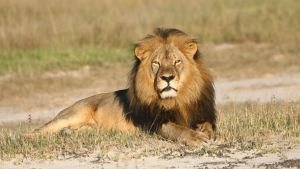
3 Arrested for Poisoning Famous Lions in Kenya

AP_Cecil_mm_150730_16x9_992

NAIROBI, Kenya — Kenyan authorities have arrested three Maasai herdsmen for allegedly poisoning a famous pride of lions, killing two, in the Masai Mara Game Reserve after the lions killed two of their cows, officials said Tuesday.

A fourth suspect is still at large, said Moses Kuyioni, the reserve’s chief warden.

The lions attacked the herdsmen’s cattle in the park in western Kenya on Sunday night, Kuyioni said. The men are suspected of setting out poisoned meat for the lions. Two lions from a pride known as the Marsh Pride died, said the Kenya Wildlife Service.

The Marsh Pride was featured in the popular BBC television series “Big Cat Diary” which aired from 1996 to 2008. Zoologist Jonathan Scott, who co-presented the series and has been following the pride since 1977 mourned the deaths in a post on his website titled “The Marsh Lions: End of an Era.”

The poisoning not only affected the lions but will move through the food chain, said wildlife expert, Paula Kahumbu. Six vultures were found dead near the poisoned meat. Other scavengers such as jackals, hyenas, and smaller predators will be feeding on the dead animals, too, Kahumbu said.

Land division and urbanization have reduced the traditional grazing lands of the Maasai herdsmen who have responded by allowing their cattle to browse on the plains of the game reserves.

Kenya’s lion population has declined to about 2,000, largely because of human wildlife-conflict, said Kahumbu.

“Lions generally cannot coexist with humans, which is why protected areas are so vital. Sadly in Mara the pastoralists are entering the reserve nightly to graze livestock, so of course lions get killed,” Kahumbu said.

In order to conserve Kenya’s remaining lions, Kahumbu said, there should be zero tolerance for cattle grazing in parks.

More: http://www.nytimes.com/aponline/2015/12/08/world/africa/ap-af-kenya-lions-poisoned.html?_r=0

Stop Canned Hunting!

https://help.four-paws.org/node/336

Help us to save lions from trophy hunting in South Africa and ask for a ban on Canned Hunting!

We need 250,000 signatures.

Already 202,500 of 250,000 signed the petition.

#FOURPAWSgowild

The most extreme variety of trophy hunting is “Canned Hunting”. Most of the victims are lions, which are served to their hunters on a silver platter: The animals which are born in captivity are taken away from their mothers within hours of being born so they can be used in petting zoos. When they become of age they then spend the rest of their life in caged compounds waiting to be released in a larger compound for the so called ‘canned’ hunt.

Anyone can go and hunt lions in South Africa – a hunting licence or proven hunting experience isn’t usually necessary. This means that many lions aren’t killed by the first shot which results in them experiencing an agonising death, this is often the case when hunters choose to kill the lion using a bow and arrow.

For trophy hunting in South Africa there are approximately 6000 lions currently be held in the countries 200 breeding farms and neighbouring properties where they will be killed.

Ask the South African President Jacob Zuma and the South African Minister of Environmental Affairs Edna Molewa, to oppose the powerful lobby of the lion breeders and to ban the cruel Canned Hunting at last!

Honourable President, honourable Minister,

South Africa has been an attraction for tourist hunters from the USA and Europe for decades. Its concept, a grim reality. Young lion cubs are taken from their mothers at birth. They are then raised by hand and bred in captivity, as commodities, for the sole purpose of being targeted in an enclosed hunting ground, where they have no chance to evade their hunters. Often times they are drugged or even baited with food.

There are currently more than 6000 lions in 200 breeding farms across the country, and more than 1000 lions are hunted each year. Along with the hunters who participate in this barbaric ‘sport’, are tourists who are unknowingly, and misleadingly contributing to the Canned Hunting industry through their volunteerism at these breeding farms. Since the breeding farms don’t disclose the true reasons as to why they have the cubs, nor why there is a need to nurture them, these volunteers are essentially contributing to raising the cubs just so that they can be shot once they reach maturity.

I ask you to prohibit Canned Hunting in your country once and for all.

With kind regards,

A savage end for the elephants killed by men who were supposed to protect them: Slaughtered beasts’ remains lie scattered after rangers poisoned them in pay dispute

 http://www.dailymail.co.uk/news/article-3295044/A-tragic-savage-end-elephants-killed-men-supposed-protecting-Slaughtered-beasts-remains-lie-scattered-rangers-poisoned-pay-dispute.html#ixzz3q6RhD4BV

  • WARNING: GRAPHIC CONTENT
  • Elephants were slayed using cyanide in Hwange National Park, Zimbabwe
  • Poachers made off with three ivory tusks after the killings, officials said
  • Deaths bring total number of elephants poisoned in October alone to 62  

Lying slaughtered on the ground with their heads barbarically hacked off, these elephants are believed to have been killed by the very men who were meant to be protecting them.

They are among 62 elephants who have been killed in Zimbabwe in the last month alone, not by poachers, but poisoned by disgruntled rangers.

Staff at Hwange National Park have reportedly not received their already low wages and it is feared that the elephant killings in the park may be a form of ‘protest’ against management.

Horrific pictures which emerged today show their remains scattered across the dusty ground after they were mutilated for their tusks. Some are too graphic to show in full.

Elephants lie slaughtered on the ground after reportedly being poisoned and mutilated by disgruntled rangers at Hwange National Park in Zimbabwe in a reported pay dispute

The most recent attack, which took place earlier this week, saw 22 elephants, including babies, poisoned using cyanide hidden in salt stones and oranges. 

Rangers working in the park are notoriously badly paid for a job where they are at constant risk, fighting off heavily armed poachers.

According to an inside source, rangers have only just received their pay due last month and management have failed to pay for fuel for the pumps for the park’s watering holes, The Telegraph reported.

‘I am afraid there are serious management problems within parks,’ an unnamed source from Zimbabwe’s National Parks and Wildlife Authority told The Telegraph.

‘Some of the rangers are very dissatisfied with their remuneration and say that they are not getting some allowances they believe they should get.

‘So many of us believe that some of the poaching at the moment is organised and executed by some rangers in parks, and we don’t know how this will be sorted out.’ 

Monday’s discovery of 22 elephant carcasses were made in the in park’s Sinamatella area alongside 35 tusks, said Caroline Washaya-Moyo, spokeswoman for the parks and wildlife management authority. 

Barbaric: Staff at Hwange National Park have reportedly not received their already low wages and it is feared that the elephant killings in the park may be a form of 'protest' against management

Barbaric: Staff at Hwange National Park have reportedly not received their already low wages and it is feared that the elephant killings in the park may be a form of ‘protest’ against management

The poachers, who apparently killed the elephants with cyanide, escaped with three ivory tusks.

The grim finding – made by park rangers Monday morning – brings the number of elephants poisoned by poachers in the southern Africa country in October alone to a staggering 62.

‘We recovered 22 elephant carcasses in the Sinamatela area and so far we have also recovered 35 tusks,’ Washaya-Moyo told AFP. ‘Initial investigations indicate that there was cyanide poisoning.’

She added: ‘We continue to lobby for deterrent penalties for people found with poisonous substances such as cyanide. We can’t continue to lose wildlife at such a rate.’

Rangers are now investigating how many of the elephants – who resided at the same park as Cecil the lion, who was shot dead by dentist Walter Palmer in July –  had fully developed tusks.

Speaking to the Associated Press, Washaya-Moyo said: ‘We are now trying to check how many elephants had fully developed tusks because babies are among those killed.

‘The rate at which we are losing animals to cyanide is alarming. 

‘Many other species are also dying from the cyanide used by poachers to target elephants. 

‘We are appealing to people in communities close to national parks to cooperate with authorities.’

Daughter of Lion Killer Walter Palmer May Have “Daddy Issues”

http://www.wildlifeplanet.net/daughter-of-lion-killer-walter-palmer-may-have-daddy-issues.html

Picture

By Dominick Mezzapesa

Tonette Palmer, has joined her beloved Walter in hiding even since he was revealed to have slaughtered the prized and beloved Lion, Cecil.

The mother-of-two seemingly shares her husband’s blood-lust for killing wildlife, with public records revealing that she has held as many as seven sport licenses entitling her to fish in Florida and hunt in Alaska – See more at: http://www.wildlifeplanet.net/wife-of-despised-lion-killer-walter-palmer-is-also-a-butcher-of-defenses-animals.html#sthash.dnHOXWqy.dpuf

Related Story: Wife of despised Lion Killer Walter Palmer is also a butcher of defenses animals.

Leaving behind their two children, 23-year-old Walter James Jr and 27-year-old Natalie to fend for themselves.

When looking over the life of the murdering moron, we discovered something very strange and to me quite disturbing.

27-year-old Natalie Palmer-Botes, a champion ballroom dancer married her 57-year-old business partner, Paul Botes, in December 2012.

Now a woman marrying someone twice her age is unsettling, but we found it kind of weird and might I say disturbing is that Natalie’s husband looks eerily similar to her daddy, Walter.

Of course, what is absolutely Disturbing is on their website acballroom.com in the about us section is states “Paul was a professional ballroom dancer since 1988,” Natalie in 1988 was “3” and still sucking her bottle and pooping in her diapers… The good news is The Circle of Life will once again rear it’s ugly head because soon (If he hasn’t started already) Paul will be pooping in his diapers

Wonder what they talk about?
Paul: “Man, I remember 1988 The Damn Mets lost to the LA Dodgers and stinkin Orel Hershiser”
Natalie: “I burped up peas all over my moms new dress”

Don’t think it’s too much of a stretch to say, dear, sweet, Natalie may have some unresolved Daddy Issues that she needs to deal with.


– See more at: http://www.wildlifeplanet.net/daughter-of-lion-killer-walter-palmer-may-have-daddy-issues.html#sthash.lDJFDvcM.dpuf

KILLER OF WORLD’S BIGGEST ELEPHANT IDENTIFIED

Be the change you want to see in the world's photo.

Rainer Schorr, a real estate CEO, was named by three separate sources as the hunter who sparked global anger after killing what is thought to be the biggest elephant killed in Africa for almost 30 years.

PETA has named the man believed to be the German hunter who paid nearly £40,000 to shoot one of the largest elephants ever seen in ‪#‎Zimbabwe‬ as a property mogul in Berlin.

‪#‎PETA‬ in Germany offered a €1,000 (£730) reward to anyone who could identify the German ‪#‎hunter‬ photographed posing with the body of the huge elephant that was circulated widely online after the Telegraph revealed the animal had been killed as a ‪#‎trophy‬ on a private shoot.

In a case that echoes the furore that erupted after ‪#‎Cecil‬ the lion was shot by an American dentist, 55-year-old ‪#‎Schorr‬ paid $60,000 (£39,000) for a permit to ‪#‎hunt‬ a large bull ‪#‎elephant‬.

Animal rights activists put a bounty on the head of a man who shot a bull elephant.

Trophy hunter

http://www.express.co.uk/news/world/612822/elephant-hunter-kill-animal-rights-bounty

By Jaymi McCann

The hunter and a guide with the lifeless body of the huge bull elephant he paid £39,000 to kill

The man, said to be a German who paid £39,000 to go on the hunt in a national park in Zimbabwe, was pictured with the corpse of the elephant, thought to be the largest killed in 30 years with 120lb tusks.

Animal rights group Peta Germany has offered a 1,000 euro (£735) reward for the man’s identity.

Palmer FACEBOOK•AP

Walter Palmer caused outrage when he took a picture with the lifeless body of Cecil the lion

ime’s about up for trophy hunters and the world wants to know exactly who this cowardly man is who’s in hiding after gunning down a magnificent elephant, who, like Cecil the lion, wanted only to be left in peace

Ingrid Newkirk, Peta president

Peta president Ingrid Newkirk said: “Time’s about up for trophy hunters and the world wants to know exactly who this cowardly man is who’s in hiding after gunning down a magnificent elephant, who, like Cecil the lion, wanted only to be left in peace.”

Peta wants the man to face the consequences of “killing and hacking apart an animal to feed his psychotic need to take a life”.

HunterGETTY

Poacher being apprehended in Kruger National Park

The elephant may have been Nkombo, a massive bull from the Kruger National Park in South Africa, just over the border. The row follows global outrage sparked by US dentist Walter Palmer, who shot Cecil with a high-powered crossbow.

Zimbabwe conservationist Johnny Rodrigues said: “We need international laws and the UN to make the killing and import of these animals illegal.”

 Dominic Dyre, of the Born Free Foundation, said: “Elephants are being lost at a massive rate. Allowing trophy hunting gives the green light to poaching.

“The money goes back to President Robert Mugabe’s corrupt regime.”