American Dentist Who Admitted Killing Cecil the Lion Now Hounded on Social Media

 http://abcnews.go.com/International/american-dentist-admitted-killing-cecil-lion-now-hounded/story?id=32757906

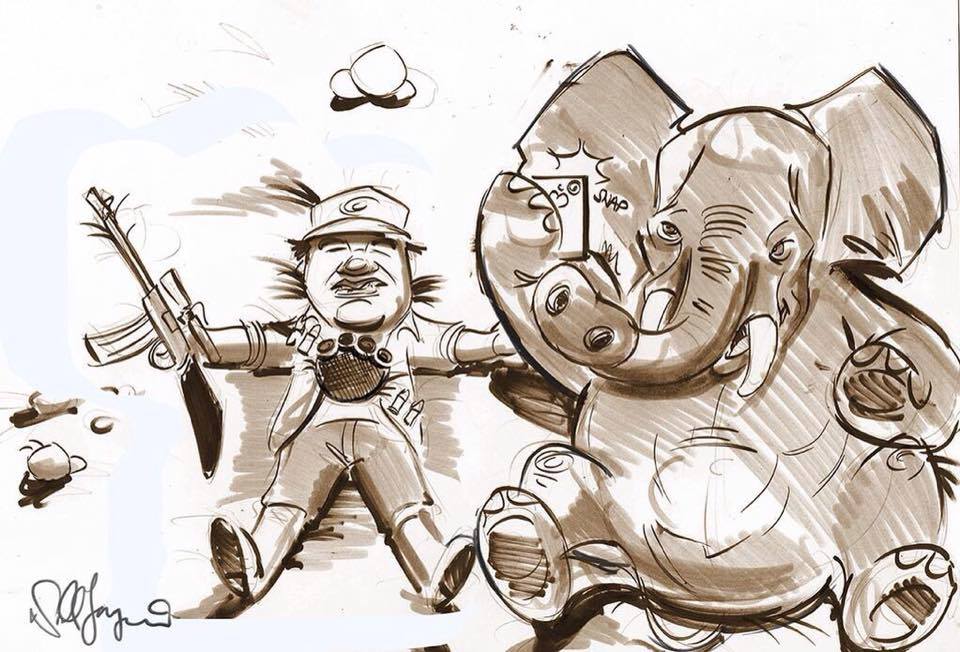
Walter Palmer, the Minnesota dentist who acknowledged hunting and killing Cecil, a beloved lion in Zimbabwe, is now the one being hounded on the Internet by protesters flooding his social media, creating online petitions and mocking him on parody accounts.

Over 273,000 tweets contained the trending hashtag #CeciltheLion on Twitter in the past 24 hours after the Zimbabwe Conservation Task Force, which is not part of the Zimbabwe government, alleged in a statement on Tuesday that Palmer paid $50,000 for the chance to kill Cecil the lion in early July. ABC News has not been able to independently confirm that figure.

Palmer responded later Tuesday, saying in a statement that he “deeply” regretted the pursuit of the early July hunt in Zimbabwe that “resulted in the taking of this lion.” He added that he “had no idea” Cecil the lion was a “known, local favorite, was collared and part of a study. I hired several professional guides and they secured all proper permits. To my knowledge, everything about this trip was legal and properly handled and conducted.”

But the Internet wasn’t satisfied with Palmer’s apology and descended upon on the Minnesota dentist on social media. Palmer’s Facebook page for his dental practice, River Bluff Dental, was flooded with expletives directed towards him and death threats. The website was seemingly taken down Tuesday evening and was not up as of Wednesday morning.

Palmer’s Yelp page for his practice has also received an overwhelming amount of sarcastic reviews attacking him for killing Cecil. The page was still up as of Wednesday morning.

PHOTO: This photo shows the dental offices of Walter James Palmer in Bloomington, Minn., on July 28, 2015.

Amy Forliti/AP Photo
PHOTO: This photo shows the dental offices of Walter James Palmer in Bloomington, Minn., on July 28, 2015.

“I hope your patients abandoned you and that you are never able to earn a living again so that you can no longer bankroll your lust for killing,” a user by the name of Mike C. wrote on the page.

“Five Stars at being a miserable excuse of a human being,” another user by the name of Thomas D. wrote. “You are not a hunter but a coward!”

A parody account mocking Palmer and his dental practice was also created on Twitter under the handle @RiverBluffDental.

Additionally, online petitions to both U.S. and Zimbabwe officials have garnered thousands of supporters.

An online petition to President Obama on Change.org demanded “justice for Cecil” and for the creation of new laws protecting big game from being hunted outside of the U.S. and brought back. Over 7,200 supporters signed the petition as of Wednesday morning.

Another petition on Care2 Petitions was addressed to Zimbabwe Republic President Robert Gabriel Mugabe and also demanded “justice for Cecil” and for the country to “stop issuing hunting permits to kill endangered animals.” The petition had over 350,000 signatures as of Wednesday morning.

Palmer and his spokesman Jon Austin did not immediately respond to ABC News’ requests for comment on the outpouring on social media. River Bluff Dental was closed Tuesday and today.

The U.S. Fish and Wildlife Service issued a statement today noting that the agency is “deeply concerned about the recent killing of Cecil the lion.”

“We are currently gathering facts about the issue and will assist Zimbabwe officials in whatever manner requested. It is up to all of us — not just the people of Africa — to ensure that healthy, wild populations of animals continue to roam the savanna for generations to come,” the agency said in its statement.

In 2008, Palmer pleaded guilty to making false statements to the U.S. Fish and Wildlife Service about a black bear he shot and killed in Wisconsin outside of an authorized hunting zone, according to court documents.

Though Palmer said in his Tuesday statement that he had “not been contacted by authorities in Zimbabwe or in the U.S. about this situation,” the Associated Press reported that Zimbabwe police said they were looking for Palmer, who is facing poaching charges.

“We arrested two people and now we are looking for Palmer in connection with the same case,” Zimbabwe Republic Police spokeswoman Charity Charamba told the AP.

A professional hunter named Theo Bronkhorst and a landowner named Honest Trymore Ndlovu are facing criminal poaching charges in connection with Cecil’s death and are set to appear in court today, the Zimbabwe Parks and Wildlife Management authority said in a joint statement along with the Safari Operators Association of Zimbabwe on Tuesday.

DEMAND JUSTICE FOR CECIL THE LION IN ZIMBABWE

DEMAND JUSTICE FOR CECIL THE LION IN ZIMBABWE

PETITION CLOSED

This petition is now closed. You can still make a difference in the Care2 community by signing other petitions today.

BROWSE PETITIONS ▸

http://www.thepetitionsite.com/821/738/351/demand-justice-for-cecil-the-lion-in-zimbambwe/#sign

  • author: Ruth McD
  • target: Robert Gabriel Mugabe, President of Zimbabwe
  • signatures: 198,641

198,641

300,000

we’ve got 198,641 signatures, help us get to 300,000

On July 1, Cecil the lion, one of the most famous animals in one of Zimbabwe’s national parks, was shot by a bow hunter. The hunter was a dentist from Minnesota who paid $55,000 for a hunting permit before shooting the 13-year-old big cat.

Please sign the petition to demand justice for Cecil! Tell Zimbabwe to stop issuing hunting permits to kill endangered animals!

The hunters reportedly lured Cecil out of Hwange National Park, where it is illegal to kill wildlife, at night. Cecil was shot with a bow and arrow. The wounded lion didn’t die until 40 hours later, when the hunters tracked him down and shot him with a rifle. They then skinned and beheaded him. The Zimbabwe Professional Hunters and Guides Association confirmed that Cecil was killed outside the park on private land, and an investigation is ongoing into the legality of the hunt.

The legend of Cecil started about three and a half years ago, when the then-10-year-old lion was kicked out of his pride, beaten by younger, more powerful males. Hunters argue that as loners, prideless male lions aren’t as important to sustaining lion populations.

But Cecil wasn’t finished. He soon teamed up with another lone male named Jericho, and the lions regained control of the region’s two prides, one of which consists of three lionesses and seven cubs under seven months old.

The loss of Cecil most likely spells the end of Jericho’s reign, and the possible loss of the pride’s cubs. Jericho, as a single male, will be unable to defend the two prides and cubs from new males that invade the territory. This is what we most often see happening in these cases. Infanticide is the most likely outcome.

Please sign the petition to demand justice for Cecil! Tell Zimbabwe to stop issuing hunting permits to kill endangered animals!

American dentist says he regrets killing Cecil the lion, but believed hunt was legal

For Cecil isn’t just any old lion. He’s one of Africa most famous and beloved lions, the star attraction at the Hwange national park, and a YouTube sensation for tourists.

He’s renowned as a gentle giant.

Such popularity cut no ice with Dr Palmer.

He and his fellow hunters tied a dead animal to their vehicle to lure Cecil out of the park, scenting an area half a kilometre away.

Cecil took the bait and strayed outside.

Dr Palmer pounced, firing his bow-and-arrow and striking Cecil.

He’s a great shot. 

A New York Times profile of him in 2009 said he was ‘capable of skewering a playing card from 100 yards with his compound bow.’

But Cecil didn’t die.

Instead, he stumbled off, wounded and bloodied, for 40 hours before Dr Palmer and his hunters finally caught up with him and shot him dead.

They then beheaded Cecil, and skinned him, before leaving his rotting carcass lying outside the park.

There was no report on whether Cecil died with a ‘dazzling smile’ on his face, but it’s probably safe to assume he didn’t.

As a result of his death though, conservation experts say it is now highly likely that all Cecil’s recently born cubs will now be killed by the next lion in the hierarchy, Jericho – so that he can insert his own bloodline into the females.

Within hours of his name being revealed today, photos of Dr Palmer with his ‘trophies’ began popping up all over the internet

Within hours of his name being revealed today, photos of Dr Palmer with his ‘trophies’ began popping up all over the internet

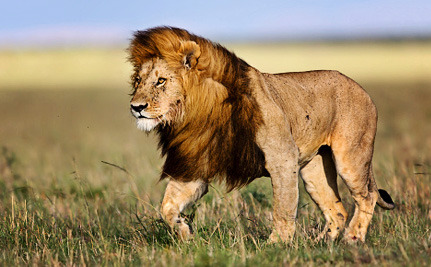
Cecil, Zimbabwe’s famous lion, crosses open plains of Hwange

The cosmetic dentist gleefully cuddling myriad fabulous animals he’s just killed and mutilated. His trusty bow-and-arrows nestled against their still twitching bodies. 

The cosmetic dentist gleefully cuddling myriad fabulous animals he’s just killed and mutilated. His trusty bow-and-arrows nestled against their still twitching bodies.

Dr Palmer is wanted for questioning on suspicion of breaking two laws – deliberately luring an animal from the park to kill it, and removing the lion’s identifying collar (which should have protected Cecil from being hunted), also a breach of the rules.

He and members of his team have been charged and will appear in court next week.

Within hours of his name being revealed today, photos of Dr Palmer with his ‘trophies’ began popping up all over the internet.

The cosmetic dentist gleefully cuddling myriad fabulous animals he’s just killed and mutilated.

He’s just a smirking, vile, callous assassin with no heart, whose shameless boasting of his disgusting exploits is almost as repellent as his exploits

His trusty bow-and-arrows nestled against their still twitching bodies.

Dr Palmer’s beatific smile ever present, those twinkling kindly eyes shining through the camera lens.

The pictures make me puke.

Dr Palmer makes me puke.

He’s just a smirking, vile, callous assassin with no heart, whose shameless boasting of his disgusting exploits is almost as repellent as the exploits themselves.

What he does isn’t ‘hunting’. It’s not a fair fight.

It’s a rich, well-armed man paying a fortune to hire a team of people to lure unsuspecting animals to their certain death. Then ripping them to pieces so their heads and horns can be retained as sickening trophies.

If convicted, Dr Palmer now faces a prison sentence, but captivity seems way too good for him.

Instead, I’d like to introduce a new sport – Big Human Hunting.

I will sell tickets for $50,000 to anyone who wants to come with me and track down fat, greedy, selfish, murderous businessmen like Dr Palmer in their natural habit.

We’d lure him out with bait – in his case I suggest the fresh blood of one of his victims would be very effective as it seems to turn him on so much – and once lured, we would all take a bow and fire a few arrows into his limbs to render him incapable of movement.

Then we’d calmly walk over, skin him alive, cut his head from his neck, and took a bunch of photos of us all grinning inanely at his quivering flesh.

This may sound harsh, but if you ask Dr Palmer, it’s really not.

Imagine we could take Dr Palmer’s head and skin and have them framed for our office walls. I’d even keep his teeth, so we could forever see his ‘dazzling smile’

Read more: http://www.dailymail.co.uk/news/article-3177611/PIERS-MORGAN-d-love-hunting-one-day-Dr-Walter-Palmer-killer-dentist-stuff-mount-office.html#ixzz3hDYOPPug
Follow us: @MailOnline on Twitter | DailyMail on Facebook

The Seal Army, The Seals Of Nam and Ricky Gervais condemns Namibia Seal Hunt

http://www.thesealsofnam.org/ricky-gervais-condemns-namibia-seal-hunt/

Subject: Ricky Gervais condemns Namibia Seal Hunt

On Wednesday 1 July 2015, the activist organization The Seals Of Nam partnered with social media experts from The Seal Army in a global outcry against the Namibian seal hunt. The online protest set social media ablaze with hash tags #Namibia and #sealhunt trending in 5th place on Twitter. At the latest count, over 13 000 tweets condemning the annual slaughter were sent, peaking at over 6 000 tweets per hour.

Ricky Gervais Namibia seal hunt

The “Tweet Storm” received a further boost when UK celebrity Ricky Gervais, known for his stance against cruelty to animals, joined in. Gervais posted links on both Facebook and Twitter with the comment “RIP the 80 000 seals to be savagely slaughtered in Namibia.”

Ricky Gervais Namibia Seal Hunt

This is not the first time The Seals Of Nam has garnered the attentions of A-list celebrities in their online campaign against the hunt. In a similar event held earlier this year, celebrity George Lopez also took to Twitter in reply to a tweet, asking what people could do to help with the cause.

The Namibian seal hunt is fast gaining international notoriety, with calls for a consumer boycott having a negative impact on tourism. The ripple effect is expected to be further impacted to include Namibian fisheries when The Seals of Nam release a cell-phone app later this month. The app has a barcode scanner and will tell European consumers the background of the fish and the relation to the Namibian seal hunt.

This app could have devastating effects, particularly since over 95% of Namibia’s fisheries harvest is exported to the EU where produce from the seal hunt is banned. Speaking on behalf of the organization, Pat Dickens said the ethical reasons of the app have been translated into European languages. A series of emails targeting fish mongers, restaurants, hotels and catering outfits will be sent out once the app is released.

The Namibian government claims the slaughter is a population management control measure necessary to protect dwindling fishing stocks. This claim is rubbished by Dickens who points to bribery, corruption, incompetence and mismanagement of the resource.

Namibia is the only country in the world to slaughter seal cubs still on the teat. The slaughter is regarded by scientists as the cruelest massacre of animals on earth and amounts to the largest slaughter of wildlife in Africa.

Wolves and Baboons in Ethiopia Form Unlikely Friendships

14587_10153162116551328_8348705720955245309_n

https://www.psychologytoday.com/blog/animal-emotions/201506/wolves-and-baboons-in-ethiopia-form-unlikely-friendships

Wolves show an increase in capturing rodents when within a gelada baboon herd
Post published by Marc Bekoff Ph.D. on Jun 19, 2015 in Animal Emotions

There are always surprises looming in the study of animal behavior. Just this week I learned that rare and critically endangered Ethiopian wolves living in the alpine grasslands form a pact with gelada baboons that helps the wolves catch rodents.

In an essay called “Monkeys’ cosy alliance with wolves looks like domestication (link is external)” by Bob Holmes in New Scientist we learn that “wolves succeeded in 67 per cent of attempts [to catch rodents] when within a gelada herd, but only 25 per cent of the time when on their own.” However, it’s not clear what makes the wolves more successful but it’s possible that hiding out in the herd is beneficial for these predators. (The title of Mr. Holmes’ essay in the print edition of New Scientist is titled “Wolves hang out with monkeys to hunt.”)

Mr. Holmes’ summary is based on a report by Dartmouth College’s Vivek Venkataraman and his colleagues titled “Solitary Ethiopian wolves increase predation success on rodents when among grazing gelada monkey herds (link is external)” published in the Journal of Mammalogy. The abstract of this study reads: “Mixed-species associations generally form to increase foraging success or to aid in the detection and deterrence of predators. While mixed-species associations are common among mammals, those involving carnivorous predators and potential prey species are seldom reported. On the Guassa Plateau, in the Ethiopian highlands, we observed solitary Ethiopian wolves (Canis simensis) foraging for rodents among grazing gelada monkey (Theropithecus gelada) herds. The tolerant and sometimes prolonged (> 1h) associations contrasted with the defensive behaviors exhibited by geladas toward other potential predators. Ethiopian wolves spent a higher proportion of time foraging and preyed more successfully on rodents when among geladas than when alone, providing evidence that gelada herds increase the vulnerability of subterranean rodents to predation. Ethiopian wolves appear to habituate gelada herds to their presence through nonthreatening behavior, thereby foregoing opportunistic foraging opportunities upon vulnerable juvenile geladas in order to feed more effectively on rodents. For Ethiopian wolves, establishing proximity to geladas as foraging commensals could be an adaptive strategy to elevate foraging success. The novel dynamics documented here shed light on the ecological circumstances that contribute to the stability of mixed groups of predators and potential prey.”

What’s very interesting is that the wolves don’t prey on the vulnerable baboons. To wit, “Only once has Venkataraman seen a wolf seize a young gelada, and other monkeys quickly attacked it and forced it to drop the infant, then drove the offending wolf away and prevented it from returning later.”

What I also found to be of interest is the speculation that the association between the wolves and the baboons resembled early moments in the domestication of dogs by humans. In a sidebar to the above essay called “Taming man’s best friend,” University of Oxford conservation biologist Claudio Sillero “doubts that the relationship could progress further down the road to domestication” because there is no reciprocal benefit for the baboons. Nonetheless, the association between the wolves and baboons is extremely interesting and “unlikely friendships (link is external)” such as these might be more common than we have previously imagined among wild animals. (For more on the domestication of dogs please see essays published by Psychology Today writer Mark Derr, an expert on this topic.)

Please stay tuned for more on the fascinating lives of the magnificent animals with whom we share our wondrous planet. There still is much to learn and there always are “surprises” looming on the horizon.

Marc Bekoff’s latest books are Jasper’s story: Saving moon bears (with Jill Robinson), Ignoring nature no more: The case for compassionate conservationWhy dogs hump and bees get depressed, and Rewilding our hearts: Building pathways of compassion and coexistence.

World Bank approves grant to boost hunting in Mozambique

11140266_10152676869137554_1328208644784607162_n
 
Bloomberg/Sunday Times
May 27, 2015

The World Bank’s International Development Association approved a $40 million grant to Mozambique to fund conservation efforts, including strengthening the country’s program of selling the rights to hunt wild animals.

The IDA approved the grant in November 2014 for a project known as MozBio, run by the Mozambican government, which aims to improve revenue collection from tourism in conservation areas. Of the funds, $700,000 is earmarked to help develop sport hunting in the southern African country.

“Hunting, when properly regulated and when revenues are distributed to communities in and around parks, is an important financing tool for governments working on the sustainable management of their parks and natural assets,” Madji Seck, a World Bank spokeswoman in Washington, said.

“Hunting blocks in Mozambique have played the role of protected areas, hosting important fauna and flora that are under very high threat in unprotected zones.”

A study released this week showing that Mozambique’s elephant population has dropped by almost half in five years because of rampant poaching, including in national parks, underscores the urgent need for the country to upgrade its conservation network.

Mozambique estimates its elephant population has dwindled to 10,300 from just over 20,000, the Wildlife Conservation Society said in a statement Tuesday.

Mozambique’s conservation areas consist of seven National Parks, 10 National Reserves, 17 controlled hunting areas and two Community Reserves, according to a World Bank document outlining the funding project. While revenue from tourism to the parks trebled to $3 million in 2013 from the previous year, that’s not enough to finance the areas, according to the bank.

Attempts to stimulate income from tourism by allocating part of the funding to developing hunting could backfire, according to critics of the practice.

“Nothing will turn away tourists faster than knowing that the beautiful and majestic animals they have come to watch might be met with a bullet,” Ashley Fruno, a spokeswoman for animal rights group PETA, said.

Victory! Another Major Airline Bans Hunting Trophies

by  May 19, 2015

http://www.care2.com/causes/victory-another-major-airline-bans-hunting-trophies.html#ixzz3b4fUmKGx

Victory! Another Major Airline Bans Hunting Trophies
In more good news for wildlife, things just got a even harder for sport hunters looking for a way to transport their trophies home.

Emirates Airlines, the world’s largest international airline, just announced that hunting trophies will no longer be allowed and that the change would be effective immediately.

In a statement, the airline said the ban will be applied to all trophies, whether or not they’re from species protected by Convention on International Trade in Endangered Species of Wild Fauna and Flora (CITES), and it will include trophies from species that aren’t currently threatened with extinction.

It further said, “This decision is to support international governments, intergovernmental and non-governmental organizations, that are managing wildlife population towards sustaining the task to eliminate illegal trade and transportation of hunting trophies worldwide and saving wildlife heritage.”

The announcement comes just weeks after South American Airlines (SAA) announced it would no longer transport trophies from rhinos, elephants, lions and tigers in an effort to protect wildlife being targeted by sport hunters and the illegal wildlife trade.

Tim Clyde-Smith, a representative for SAA, told the media that at the time that, “The vast majority of tourists visit Africa in particular to witness the wonderful wildlife that remains. We consider it our duty to work to ensure this is preserved for future generations and that we deter activity that puts this wonderful resource in danger.”

Despite conservation efforts, Africa’s iconic wildlife continues to be targeted at an alarming rate by poaching and sport hunting that has put the future survival of a number of species in jeopardy.

Now it won’t matter whether or not hunters have the required permits, since they’re not getting their trophies on flights from either of these airlines. Not only does this send a message that sport hunting isn’t supporting conservation, but it will make it harder for anyone trying to move illegal items by claiming they’re from legal hunts.

Conservationists are cheering the latest change in policy from Emirates Airlines and hope other companies will follow the ethical lead these two airlines have set.

“This is a bold move by the world’s biggest international carrier,” said Dr. Elsayed Mohamed, Middle East Regional Director for the International Fund for Animal Welfare. “Emirates have taken an important and responsible step in showing they are serious about wildlife conservation. We value their decision and look forward to other national airlines in the Gulf region to follow their lead.”

Delta Airlines, which TakePart previously reported is the only carrier based in the U.S. with direct flights to South Africa, is also being pushed to make a similar change in policy, but so far the airline hasn’t budged.

Read more: http://www.care2.com/causes/victory-another-major-airline-bans-hunting-trophies.html#ixzz3b4e0J9Z5

Sadistic hunters vie to be Extreme Huntress champ

EXCLUSIVE: The next Rebecca Francis? ‘Sadistic’ hunters vie to be Extreme Huntress champ

THESE are the women animal rights campaigners have branded “sadistic” and “unhinged”.

PUBLISHED: 19:30, Mon, May 18, 2015 | UPDATED: 08:14, Tue, May 19, 2015

Jodi Schmideder, Rebecca Francis and Jen The Archer CordaroIG

Rebecca Francis, centre, has received death threats since the show

They are in the running to be finalists in the American television female hunting competition Extreme Huntress, which has seen previous winners receive death threats and worldwide hate.

This year’s fearless competitors have admitted they are anxious about public perception, but remain defiant in their “right” to kill animals which includes zebras, lionesses, antelopes and bears.

**WARNING: GRAPHIC CONTENT PICTURES TO FOLLOW**

Rebecca Francis, the competition winner in 2010, has been repeatedly slammed by comedian and animal lover Ricky Gervais in recent months after a photograph emerged of her lying with a giraffe she had killed, beaming with happiness.

After angry animal rights activists called for her head, she refused to accept she had done anything wrong.

This year’s competitors are equally as unabashed as they fight for votes to be selected into the finals of what is regarded one of the most prestigious titles a huntress can achieve.

Jen “The Archer” Cordaro is no stranger to hate after receiving death threats for teaching children to hunt with the campaign #Bringakidhunting.

Activists even turned up at her house and threatened to murder her first born when she starts a family.

Lorraine LawrenceIG

One of the finalists Lorraine Lawrence with a lioness

Charisa ArgysIG

Contestant Charisa Argys says she believes in living with integrity and morals

I know putting myself out there could potentially attract abuse yes, but that’s the risk I am willing to take

Jodi Schmideder

Thousands of people have signed a petition to “stop” the PhD student, following graphic images of her slicing sows and posing with dead boars.

She told Express.co.uk: “Threats on someone’s life is never acceptable.”

But nothing will stop the city-born bow hunter who started shooting 18 months ago with an aim to be self-sufficient and live “off-grid” within ten years.

She added: “If anything, it makes me want to keep fighting the good fight.”

She sympathised with the abuse Ms Francis is attracting, adding she too would kill endangered and wild animals including zebras, lions or giraffes.

She said: “If the need was there for culling or management, absolutely.

Tanya Chegwidden with a zebraIG

South African contestant Tanya Chegwidden has killed game from zebra, impala, and waterbuck

Jodi SchmidederIG

Jodi Schmideder said some contestants were trophy hunters

“There are management reasons to hunt all types of animals, including endangered animals or animals that humans put at the top of their cute and fuzzy hierarchy.”

But charity People for the Ethical Treatment of Animals (PETA) accused the Extreme Huntress semi-finalists of “perpetuating violence”.

Associate director Elisa Allen said: “It has been a long time since humans truly needed to hunt in order to survive – today, people who get their kicks from hunting and killing defenceless animals are either sadists or suffering from a psychological break.

“Common decency says that we should protect the most vulnerable and helpless in society, not destroy them – much less derive “pleasure” from doing so.

“When cruelty is glorified and portrayed as a ‘hobby’, it debases society and perpetuates violence.

“Hunting of any kind has no place in modern society, and it should have ended years ago, along with cockfighting, bear-baiting and dogfighting.”

Tanya Chegwidden, top left, Jessica Amoss, right, and Taylor ReisbeckIG

Tanya Chegwidden, top left, Jessica Amoss, right, and Taylor Reisbeck

Miss Cordaro is joined by 19 other female hunters in the competition, including mother-of-one Michelle Slyder, 41, from Montana in America.

The engineer told Express.co.uk: “Nothing that happens to me personally could make me waiver in my passion for hunting. It’s not about what others think, it’s just who I am, how I was raised, and a part of me.

“I can’t and won’t ever change that. Every person has a right to their opinion and I can handle what comes my way. I also will protect my right, which is why I would never back down from someone engaging in that manner.”

Meanwhile Jodi Schmideder, 24, who started hunting before she could walk, aged two, admitted some contestants are trophy hunters.

“For some, that is what hunting is to them. I on the other hand, would love to luck out sometimes and bag a big game animal, however, it is not what hunting is to me.

Jen The Archer CordaroIG

Hunter Jen The Archer Cordaro said no one deserves death threats

Michelle Slyder with a dead wild goatIG

Michelle Slyder hunts for meat and wouldn’t kill endangered animals

“When you do shoot an animal, and you decide to post pictures for the general public to view, you should know not everyone will be ok with it. I don’t wish upon anyone to receive death threats towards them, it is extreme and yes, scary. However, every picture or post you are debating to show could potentially put you in a bad position, and precaution should be taken.

“I know putting myself out there could potentially attract abuse yes, but that’s the risk I am willing to take.”

Votes are being cast across the world to decide who is the Extreme Huntress of 2016.

The 20 semi-finalists will be reduced to six for the television finals. There they will go to a Texan ranch to compete head-to-head in outdoor skills and fitness challenges to decide who is the Extreme Huntress 2016.

Angry animal lovers claim Extreme Huntress has “nothing to do with conservation”, with one calling the television programme “a stain on the world”.

But producers are brazen in their fight back, claiming on social media “ignorance is bliss”.

Mankind’s Last Days

10405311_308608659330466_3235603653435958062_nThe other day a friend asked me, “How do you keep your head above it all? You do so much, and your immersion in the dark side of information and events is so deep. I’ve seen most of what can be seen, I think. But even still, I have to periodically recharge with temporary absences from the info stream. It’s so disheartening and yet if you’re a person who cares, you just can’t dig your head in the sand. It’s my most challenging thing in this life — striving for a balance between my mental well-being and my commitment to our fellow beings.”

First, I can understand anyone who finds this all too much on a daily basis. I guess I get through it by choosing my battles and knowing that by not eating animals I’m not so much a part of what’s happening to them. Sometimes I have to step back from the fray and look at it all through the lens of deep ecology. Earth has survived far worse than the toxic attack of the human fly speck that’s currently plaguing her and gone on to flourish, as she certainly will again once the anthropogenic onslaught is over.

Consider this blog a chronicle of mankind’s last days. What were humans thinking when they took this incredibly beautiful, fragile, planet down—in the name of greed, selfishness, arrogance, sport or self-esteem?

Some of the articles I post might seem unrelated, off-topic or out of place when examined alone. But they are all part of the bigger picture which someday may be viewed by a higher intelligence who comes across it in their quest to know just how one species—out of so many—thought they had the right to exploit all others, carte blanc, under the narcissistic delusion that non-human lives on Earth had no rights at all.

Whether or not mankind survives the assault they’re putting the planet through is a non-issue for me. Personally, I hope they don’t. They do not deserve a second chance to rule this vibrant, watery orb any more than they deserved the first chance to steal Nature, abuse and forever change her.

But why all this on an anti-hunting blog? Because hunting, and ultimately meat-eating, is where humans first started screwing things up. For a plant-eating primate to leave the trees, take weapon in hand, turn carnivorous and claim the planet and everything that walks, crawls, swims or flies as their own was a recipe for disaster.

As the same friend so aptly put it, “I do wish we didn’t have to share the planet with persons whose empathy muscles are so undeveloped.”