Why Would Anyone Hunt Elephants? GQ Tries To Defend Those That Do

By Jenny Kutner

In a recent piece for GQ, writer Wells Tower attempts to answer10304338_10204008161985492_2584105410340479966_n a simple question with a story that’s as long as it is powerful: “Who wants to shoot an elephant?” As it were, that’s not actually the question Tower ends up asking; it’s pretty easy to find the people who want to shoot elephants, as the journalist did in order to write his story. What Tower really gets at is why anyone would want to shoot an elephant, or how people think they can justify it. Try as they might, they can’t.

And oh, do they try. Robyn Waldrip and her husband, Will, allowed Tower to accompany them on an eight-day safari last summer, during which time they explained to the writer why they feel that hunts like theirs can be justified. Waldrip’s trip was arranged solely so she could kill an elephant and bring parts of its broken-down body back to her home in Texas, where she’ll keep them as a trophy. But that’s okay, she and her husband explained, because it actually does good for the environment, and even for the elephants themselves:

Perhaps out of a kind of kindred impulse, Will and Robyn Waldrip are quick to point out the violences elephants have inflicted on the local landscape. … While he has no reservations about Robyn shooting the elephant, [Will] is doing, I think, some version of the hunt-justifying psych-up going on in my own head. He wants to feel like it’s a good deed his wife is doing out here, a Lorax-ly hit in the name of the trees. …

[And] counterintuitively, even in the presence of an active bullet-tourism industry, Botswana’s elephant population has multiplied twentyfold, from a low point of 8,000 in 1960 to more than 154,000 today. These healthy numbers … mirror elephant populations in other African countries where hunting is allowed. … Kenya, on the other hand, banned elephant hunting in 1973 and has seen its elephant population decimated, from 167,000 to 27,000 or so in 2013. Some experts predict that elephants will be extinct in Kenya within a decade.

There is a confused correlation going on here, which Tower himself points out: legalized hunting incentivizes tourism, and that tourism brings money and jobs into the communities near elephant habitats. “When locals’ livelihoods are bound to the survival of the elephants,” Tower writes, “they’re less likely to tolerate poachers, or to summarily shoot animals that wander into their crop fields.” But it doesn’t have to be hunting that monetizes the elephants for local residents: other, non-lethal forms of ecotourism could bring in solid cash-flow as well.

Those with vested interests in legalized hunting — like the Waldrips’ guide, Jeff Rann — would argue that poachers can and will circumvent photo-safaris and other ecotourism concessions, as they have in Kenya. But poaching is not an inevitability; all it takes is “some combination of public policy, private money, and anti-ivory market pressures” to “render hunting obsolete as a conservation instrument,” Tower points out.

It’s easier said than done, certainly — but if we know that making elephants valuable to communities is necessary, and we know how to monetize them in a non-lethal way, then there is no excuse for trophy hunting. Alternative tourism ventures, such as Thailand’s Elephant Nature Park, have proven hugely successful at protecting elephant populations without killing relying on blood money. It’s not a form of conservation. It’s a cop-out that allows those wealthy and willing enough to participate to pay for the right to poach.

Trophy hunting advocates tout the activity as a key form of conservation — but in reality, it merely contributes to the gradual decimation of endangered species around the world. Join us in pledging never to support big game hunting of any form, and to stand with governments that ban the sale of imported animal “trophies.”
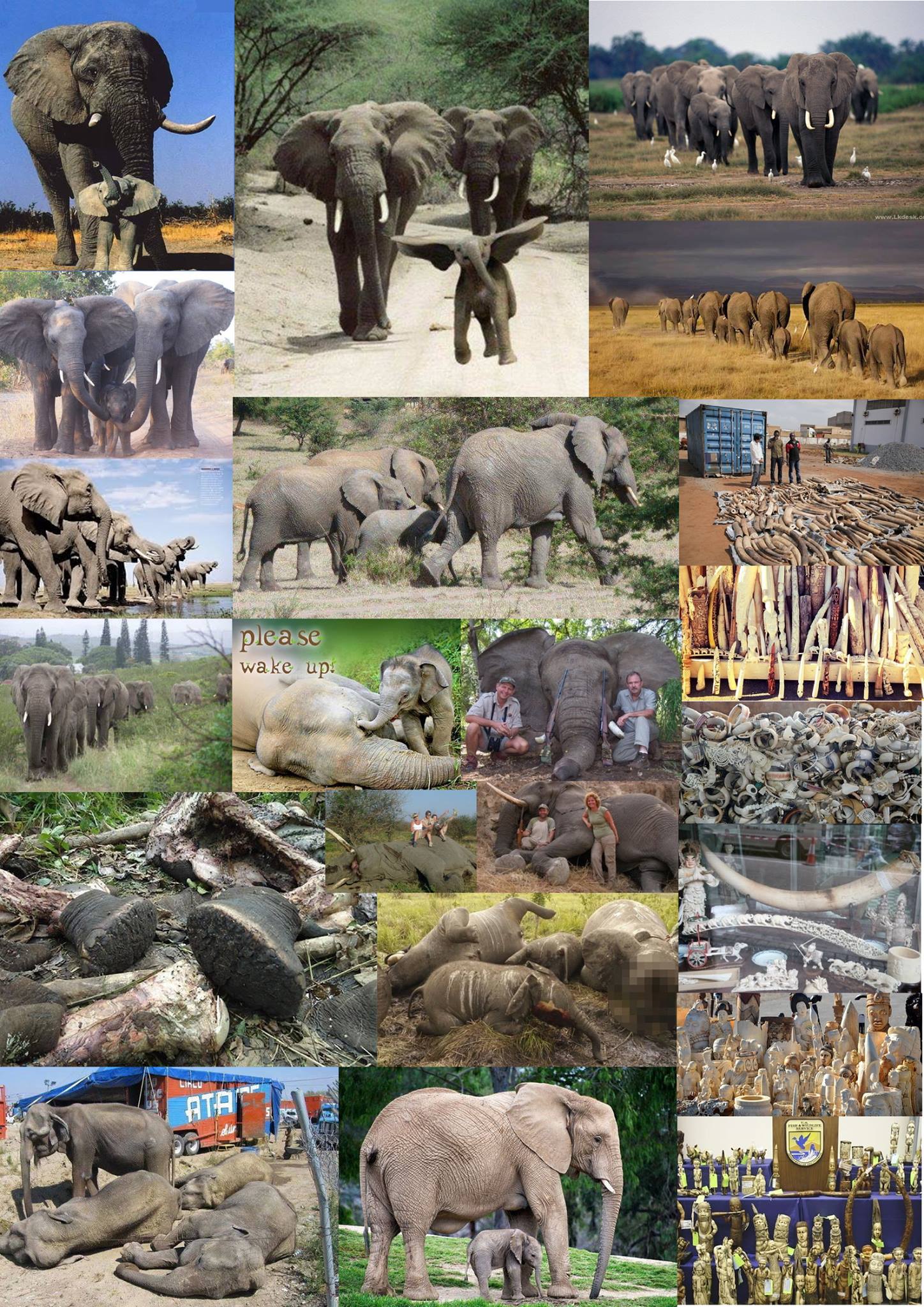
supporters have signed this petition. Let’s get to 1,000

Petition: Stop any kind of Safari hunting in Africa

Sign the Petition: https://www.causes.com/actions/1742571-stop-any-kind-of-safari-hunting-in-south-africa

President of South Africa Mr. Jacob Zuma – President of Uganda Mr. Yoweri Museveni – President of Kenia Mr. Uhuru Kenyatta – President of Tanzania Mr. Jakaya Kikwete – President of Namibia Mr. Hifikepunye Pohamba – President of Botswana Mr. Ian Khama

All wild animals in Africa, elephants, giraffes, lions, rhinos, leopards, cape buffalos, zebras, etc. are a heritage of whole mankind, a heritage for our children and for those who will come after them. With this our public petition we ask strongly to stop all forms of safari in Africa, the only kind of Safari allowed must be photographic safari. We find shameful as may be granted hunting, with precision weapons, to these animals, which are themselves the symbol of whole African continent.

P.S. Please join too to our Facebook group: No Safari Facebook Group and to our FB official page giving us a like AnimalsTrust Facebook page to give us more strength and a greater International weight.

Please follow us on Twitter too: https://twitter.com/animalstrust

1979559_639720376107870_1515330944290250336_n

DNA Links Rhino Horns to Namibia

1959301_512822552156794_8144645164928185909_n

By Werner Menges, 19 May 2014

DNA tests done in South Africa indicate that the rhino horns allegedly
discovered in the luggage of three Chinese men at Hosea Kutako International
Airport at the end of March were of Namibian origin.

This was revealed by the national head of the police Protected Resources
Unit, Detective Chief Inspector Barry de Klerk, during a bail hearing in the
Windhoek Magistrate’s Court in Katutura on Friday.

De Klerk told Magistrate George Mbundu that samples from the 14 rhino horns
found in two suitcases at the airport were sent to South Africa for a DNA
analysis to be carried out.

The DNA profiles of the samples were compared to DNA profiles on record in
the Rhino DNA Index System (RhODIS) database, and the results showed that
all of the horns came from Namibia, De Klerk testified.

The RhODIS database was developed by the University of Pretoria’s Veterinary
Generics Laboratory with the aim of keeping a record of the unique DNA
profile of individual rhinos, which could then be used to prove the origin
of rhino horns confiscated from suspected smugglers.

De Klerk said one of the horns found in the suitcases at the airport was
micro-chipped; it came from a white rhino that had been imported into
Namibia from South Africa some years ago.The three men applying to be
granted bail – Chinese nationals Li Xiaoliang (30), Li Zhibing (53), and Pu
Xunin (49) – are suspected to be the foot soldiers being used by the
faceless figures in control of an international wildlife poaching and
smuggling syndicate, De Klerk said.

The three accused were arrested and charged with possessing and exporting
controlled wildlife products after 14 rhino horns and a leopard skin were
found in two suitcases that two of them – Li Zhibing and Li Xiaoliang – had
checked in as part of their luggage on a flight on which they were supposed
to leave Namibia on 24 March.

All three men have claimed during their bail hearing that they did not know
what was in the suitcases. Li Zhibing told the magistrate last week that a
Chinese citizen living in Zambia had asked him to take the suitcases to
China. He said he was promised US$3 000 as payment if he delivered the
suitcases to someone in Shanghai.

He also told the court that he had asked Li Xiaoliang to book one of the
suitcases in as part of his luggage. Pu Xunin denied having any involvement
with or knowledge of the suitcases.

However, De Klerk testified that closed-circuit television recordings at the
Windhoek Country Club Hotel, where the three men stayed the night before
they were due to leave Namibia, showed that the two suitcases in which the
rhino horns were later found were first taken to Pu’s room, where he and an
unknown man then spent about an hour with the pieces of luggage, before the
suitcases were moved to the room of the two Lis.

De Klerk said that poachers, who have killed hundreds of rhinos in South
Africa in recent years, could try to target Namibia’s rhino population next.
The country’s courts should make it clear to would-be poachers and rhino
horn smugglers that Namibia would not be a soft target for them, he said.

The bail hearing is scheduled to continue on Wednesday.

http://allafrica.com/stories/201405191469.html

China Steps Up: Politician Pledges A Whopping $100 Million To Stop Poaching‏

China, a notorious source of demand for a massive illegal wildlife trade, is stepping up its game to save wildlife with a massive $100 million donation to combat poaching in Africa. The Chinese Premier, Li Keqiang, announced the fund during a visit to the African Union headquarters in Addis Ababa.

The fund is not a moment too soon — an estimated 22,000-35,000 elephants are killed every year by poachers, while last year poachers killed over 1,000 rhinos in South Africa alone. The funds will surely be helpful to curb supply of wildlife products in Africa, but meanwhile campaigns are working to stem demand from Chinese consumers, who value exotic animal products in traditional medicine and ivory ornaments.

1924891_10152211828561061_1647642544_n


Petition for Elephants

Sign for Elephants

We the People…

  • Refuse to allow the elephant species to disappear…
  • Refuse to allow poached elephants’ tusks to fund terrorism…
  • Refuse to allow the deaths of rangers as they defend elephants…
  • Refuse to allow the bloody ivory trade to continue in the United States of America.

Sign the Petition

Pass the Word!

<!–


–>

#signforelephants

The Elephant Crisis &
How You Can Help

100 elephants per day are slaughtered in Africa for their tusks. We must end the ivory trade, or it will be the end of elephants. This May, it is vital that elephants receive 100,000 signatures across America to the White House.

We petition the president to:

Unequivocally ban the ivory commerce to save elephants from extinction


#signforelephants

How to Sign the Petition

They don’t make it easy but it’s really this simple:

  1. Create an Account with We the People
  2. Check your email for the confirmation message
  3. Follow the confirmation link to activate your account

Ok, that’s sorted.

NOW I’m Ready to Sign!

<!–

–>

The Crisis

On average, 100 elephants per day are being slaughtered in Africa so their tusks, also known as ivory, can be sold. At this rate a species that has walked the earth for millions of years will be made extinct. Poaching is being conducted in mass by sophisticated criminal syndicates that often slaughter an entire herd with machine guns. The tusks eventually end up being traded illegally in the #1 market, Asia, and the #2 market, the United States. The U.S. Department of State has also identified elephant poaching as a national security risk, as ivory is used to fund acts of terrorism such as the 2013 Westgate Mall terrorist attack in Nairobi, Kenya.

Photo by Billy Dodson

It is essential to eliminate the demand for ivory. Though many people may think ivory is illegal to trade today in the U.S., that is not the entire story. There are loopholes in the law that allow “old” or “antique” ivory to be bought and sold. The problem is, it is very difficult and expensive to tell old ivory from new ivory and thus the domestic and export ivory trades continue. These are the loopholes that are wiping out the elephant right here at home.

On Feb. 11 the president launched a new National Strategy for Combating Wildlife Trafficking which eliminated the commercial ivory import trade. However ivory continues to be smuggled into the U.S. and we need to go further. We must stop all commercial ivory sales including the domestic and export trades.

Americans Petition for Elephants

Photo by Billy Dodson

The petition urges the United States president to TOTALLY BAN the ivory trade, with only very narrow noncommercial carve-outs for museums and other cultural institutions. This immediate and historic measure for another species is required to save the elephants from extinction. It is important to know that elephants were relatively safe just 7 years ago. But at the end of the last decade the global ban was “temporarily” lifted. Today the high price of ivory is wiping elephants out faster than they can reproduce. An elephant is killed every 15 minutes.

This petition is different than many you may have come across. This one is built on the backbone of the First Amendment established in the U.S. Constitution to petition our government for change. Upon 100,000 people – like you and me – signing this petition at http://petitions.whitehouse.gov the administration must respond.

We have only one month to achieve this goal between May 1 and May 30. As the poaching crisis is urgent we ask you to please sign now.

Sign the Petition

<!–

–>

Sign

“Congress shall make no law respecting an establishment of religion, or prohibiting the free exercise thereof; or abridging the freedom of speech, or of the press; or the right of the people peaceably to assemble, and to petition the Government for a redress of grievances.”

The First Amendment, United States Constitution

“The right to petition your government is guaranteed by the First Amendment of the United States Constitution. We the People provides a new way to petition the Obama Administration to take action on a range of important issues facing our country. We created We the People because we want to hear from you. If a petition gets enough support, White House staff will review it, ensure it’s sent to the appropriate policy experts, and issue an official response.”

The White House

A small elephant with large ears and budding tusks standing in a field of tall grass
Photo by Mike Paredes

Beginning May 1 people across the nation are invited to Sign for Elephants. The petition may only be signed online as a requirement of the Administration.

It takes under five minutes to:

  1. Create an Account with We the People
  2. Check your email for the confirmation message
  3. Follow the confirmation link to activate your account
  4. Sign the petition
  5. Share with friends and family!

NOTE: A key step to Sign for Elephants is activating your account by clicking on a link sent to your email address from the White House which redirects you to the petition page. Once this is done, you can sign the petition.

http://elephantsusa.org/

Sign the Petition

Every 15 minutes – another elephant, gone forever

1794802_600379583390084_2056398278_n

Experts believe that 35,000 elephants were killed last year for their tusks, which are made into useless trinkets and decorations. That’’s one elephant killed every 15 minutes, on average.

Regional extinctions of elephants are a danger within the next decade if we don’t act now.

The U.S. Fish & Wildlife Service has proposed strong new protections for elephants, including a ban on sales of non-antique ivory in the United States. But some special interest groups are trying to weaken the new rules.

We need to ensure that the rules protecting elephants stay as strong as possible.

Wildlife crime, including ivory trafficking, is increasingly linked to organized crime, militancy and destabilization in fragile democracies in Africa and around the world. The United States is part of the problem, with unenforceable regulation of our domestic ivory markets and a large amount of illegal ivory being smuggled past our borders each year.

The rest of the world is watching to see what actions we take. Just as several countries followed our ivory crush in Denver with similar efforts, these new rules could provide the momentum for a worldwide trade ban.

IFAW, in partnership with Dr. Jane Goodall, IFAW Honorary Board Member Leonardo DiCaprio, and a lineup of businesses, NGOs, and concerned individuals, has written an open letter to President Obama asking him to stay strong for elephants and implement the proposed rules without weakening them.

You can help save elephants. Ask President Obama and Dan Ashe, Director of the U.S. Fish & Wildlife Service, to stand strong for elephants.

Botswana, Zambia Hunting Ban Boosts Zim

http://allafrica.com/stories/201404091333.html

Victoria Falls — ZIMBABWE has projected revenue from safari hunting to increase significantly this year following the ban on wildlife hunting in neighbouring Botswana and Zambia.

Hwange-Gwayi-Dete Conservancy Chairman, Langton Masunda, said the country was expecting revenue from the sector to top $60 million up from $45 million last year.

The forecasts are anchored on spill over business from the two neighbouring countries.

Botswana and Zambia have banned hunting to replenish dwindling numbers of wildlife in the two countries.

“We are expecting a 30 percent more in revenue than in the previous hunting season because of the spill overs from the Botswana ban,” Masunda said.

The conservancy is located in Matabeleland South, the heart of wildlife hunting and conservancy which is home to the Hwange National Park, the biggest wildlife animal sanctuary in the country.

It is home to the Big Five including the lion, elephant, buffalo, leopard and lion.

At the moment, he said hunting was concentrated on big animals like elephants because of easy visibility since small prey was less visible because of the thick vegetation.

Meanwhile, the Safari Operators Association of Zimbabwe President, Emmanuel Fundira, nonetheless warned the country might miss its revenue targets if Government did not resolve an impasse in the Save Conservancy.

One of the biggest conservancies in the country, it is at the centre of ownership wrangle between local people and foreigners operating in the area.

The locals want to be parceled pieces of land in the area under the indigenisation policy drive.

“The impasse also resulted in safari business missing last year’s projected targets of $60 million,” said Fundira.

00847AF6_B0E63080B13AC39D9CCC0EE6E0B44890

Be Consistent—Support the Death Penalty for Trophy Hunters

I support the death penalty for serial killers, the type, like Ted Bundy, who acted out his fantasies of killing, mutilating, making trophies of and perhaps even eating parts of his innocent victims—just to boost his floundering self-esteem.

People like that have forfeited the right to enjoy nature’s beauty and be a part of this wondrous living planet. Bundy’s multiple escape record and subsequent violent recidivism proved that the only way to stop his ilk from killing and killing again is to humanely end their lives once and for all.

The same goes for the trophy hunter who enjoys killing elephants, giraffes, lions, elk, sheep or wolves with equal fervor. His (or her) bloodlust is never satisfied, even after they’ve committed a “Trifecta” of murders or crossed the “Big 5” African “game” species off their hit list.

Adding insult to injury, their grandiose egos compel them to broadcast their crimes across the internet, posing sadistically with their beautiful, rare, innocent victims while grinning psychopathically—showing off their vacuous viciousness. Like a serial killer who finds further fun in terrorizing their victims’ families from prison, trophy hunters get an added thrill from knowing that their grotesque, morbid, distressing photos victimize and terrorize still others who happen upon them.

The only way to rid the world of the menace of serial killers—whether their victims are human or non-man—is to execute them (as quickly and painlessly as possible, for we are not barbarians).

First, of course, we’ll have to change to laws to be consistent.

HuntingTrophiesJamieKripke600