Safari Club Pushing to Overturn Elephant Tropy Ban

1979559_639720376107870_1515330944290250336_n
ATTENTION!!

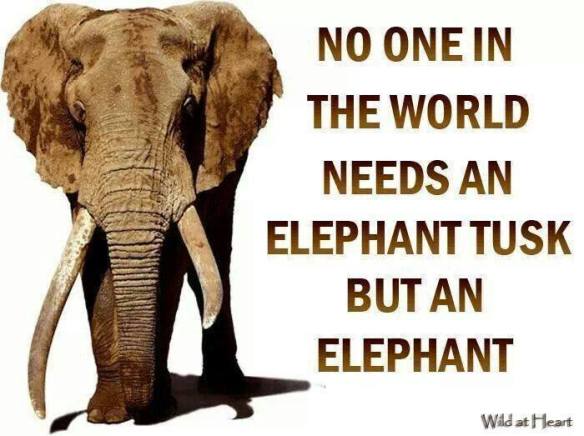
Hunters and the SCI have began a colossal lobbying program emailing and telephoning, meeting every US House representative to now try and OVERTURN the Elephant Trophy Hunting ban from Zimbabwe and Tanzania into the United States. We’re not going to allow them to win. We need YOU on our side TODAY.

Please contact the USFWS TODAY and inform them politely there is to be no ban overturn of Tanzania and Zimbabwe trophy Elephants.

TAKE ACTION TODAY AND STOP PRATS LIKE THIS BELOW FROM KILLING MORE ELEPHANTS FOR THE FUN OF IT.

Contact USFWS here TODAY – http://www.fws.gov/duspit/contactus.htm

Dear Hunting Community.

Attack us as much as you wish, you’ll never defeat us.

Signed truly

International Animal Rescue Foundation Africa..

Donate below;

https://www.facebook.com/pages/International-Animal-Rescue-Foundation-World-Action-South-Africa/199685603444685?id=199685603444685&sk=app_117708921611213

SIGN – http://www.thepetitionsite.com/524/858/168/stop-the-legal-hunting-of-african-elephants/
SIGN – http://forcechange.com/117089/urge-the-end-of-elephant-imports/

THANK YOU FOR TAKING ACTION

The African Ebola outbreak that keeps getting worse

http://www.washingtonpost.com/news/morning-mix/wp/2014/04/07/the-african-pandemic-that-keeps-getting-worse/?tid=hp_mm

by Terrence McCoy  April 7, 2014

It began early this year in the forested villages of southeast Guinea. For months, the infected went undiagnosed. It wasn’t until March 23 that the news finally hit the World Health Organization. And by then, Ebola had already claimed 29 lives, the organization reported in a one-paragraph press release.

Since then, the organization has dispatched nine additional updates on a ballooning outbreak that’s received modest notice in the West, but has sent waves of panic across the African continent.

March 24: The outbreak is “rapidly evolving.” 59 dead. 86 confirmed cases.

March 27: The sickness spread to Liberia and Sierra Leone. 66 dead. 103 confirmed cases.

March 30: “This is a rapidly changing situation,” WHO reported. 70 dead. 112 confirmed cases.

April 3: Ebola “has a case fatality rate of up to 90 percent,” the organization said. 83 dead. 127 confirmed cases.

On Sunday, after the number of dead topped 90 and Mali and Ghana recorded their first suspected cases of the disease, trouble began in remote villages.

A mob attacked an Ebola treatment center in Guinea, accusing it of infecting the town with disease, according to Reuters. In other villages, people stopped shaking hands.

“We fully understand that the outbreak of Ebola is alarming for the local population,” one doctor told the Independent. ”But it is essential in the fight against the disease that patients remain in the treatment center.”

What terrifies people so much about Ebola?

For starters, there’s no cure. Because it’s such a rare disease that primarily affects poor African villages, big drug companies perhaps haven’t seen enough economic opportunity to study the virus, Bloomberg reports.

Then there’s the fact that Ebola deaths are particularly gruesome. The disease comes from an infected animal – most likely the fruit bat, which infects monkeys, apes, pigs and, finally, humans. The disease is not airborne, but spreads through blood, secretions or other bodily fluids. Its early symptoms include fever and intense weakness, WHO says, then deepens with bouts of diarrhea, vomiting, and internal and external bleeding.

The migratory pattern of the outbreak, which aid workers call “unprecedented,” has baffled doctors. Outbreaks before this have stayed in remote pockets of the country, but this iteration shot hundreds of miles from southwest Guinea to the coastal capital of Conakry.

Exacerbating the situation is the scarcity of medical professionals in Guinea. According to the World Bank, there are only .1 physicians per 1,000 people — among the lowest ratios in the world, below even Afghanistan.

This has fed animosity among some in Guinea toward the government for its perceived inability to dispense medical services — or even enforce quarantines.

“You have a lot of people who have recovered from civil war and are living in war-ravaged areas with very poor infrastructures,” said Laurie Garrett of the Council on Foreign Relations. “As soon as word goes out of quarantine, you have people start trying to escape and get away from the clutches of authorities.”

This has already happened, some in Guinea claim.

“How can we trust them now?” Conakry resident Dede Diallo told Reuters. She’s stopped working — and keeps her kids at home, where she says it’s safe. “We have to look after ourselves.”

SOURCES: Steve Monroe, deputy director of the CDC’s National Center for Emerging and Zoonotic Infectious Diseases; World Health Organization. Graphic: The Washington Post.

Q&A: Challenges of Containing Ebola’s Spread in West Africa

“Transmission is human to human. There is no known cure.” … This could be it, people.

Health care workers struggle to stop infection from spreading.

Photo of health workers teaching people about the Ebola virus.

Health care workers teach people about the Ebola virus and how to prevent infection in Conakry, Guinea, on March 31, 2014.

Photograph by Youssouf Bah, AP

Susan Brink

for National Geographic

Published April 3, 2014

The deadly Ebola virus has broken out in the West African country of Guinea for the first time, alarming the public and catching health care workers off guard.

Since January the virus has spread from rural areas to the capital city of Conakry, so far infecting at least 122 patients and killing 83. Other cases, suspected or diagnosed, were also found recently in Sierra Leone and Liberia, making this a regional outbreak.

The disease, which first appeared in the Democratic Republic of Congo in 1976, is marked by fever and severe internal bleeding. Transmission is human to human. There is no known cure. Patients normally receive supportive care consisting of balancing their fluids, maintaining oxygen and blood pressure levels, and treating other infections. The Ebola virus is fatal in up to 90 percent of patients.

We spoke to two experts about efforts to contain the outbreak. Tarik Jasarevic, a spokesperson for the World Health Organization, spoke to us from Conakry. And Roland Berenger, West Africa emergency manager for Plan International, an aid organization that works in developing countries around the world, spoke to us from Dakar just after returning from ten days in Guinea.

What are the basic strategies for controlling this outbreak in Guinea?

Jasarevic: We need to provide isolation wards, where infected people are treated and health workers are safeguarded. Where that is in place, health workers are using standardized protective equipment, like gloves, masks, eye protection, gowns, boots. It’s all single use, discarded after each use, except for the boots that can be disinfected.

Another strategy is contact tracing—looking for those who have been in contact with an infected person. We’ve deployed two mobile labs to provide testing and supportive care. And very important is information and communication. This is the first time Guinea is facing Ebola, so we need a big effort to educate the people.

At least 11 health care workers are among those infected. So did even local health care workers need a quick course in Ebola?

Berenger: Yes, the first people to be affected were health care workers themselves. People were thinking about cholera and lassa fever. They didn’t know what they were dealing with.

Jasarevic: Educating health care workers was the first thing to be done. Immediately, the Minister of Health organized meetings with all health authorities. We sent brochures to all health centers in the country.

How is information getting out to the general population in Guinea?

Jasarevic: Several things are happening. The president [of Guinea, Alpha Condé] gave a televised speech on Sunday on the outbreak. Journalists are getting really well briefed. People are going out to religious organizations to provide information. We’re in the process of designing posters that even illiterate people can understand, with images, say, of a hand with the international red circle and line through it. It indicates: Don’t touch. Don’t touch a person who is infected or dead.

Berenger: There are some gaps in providing the information to all the people. We need to reach all the people in the farthest villages. We need to do more with social media, radio, and using posters. We need to be more proactive. People are getting adequate information through TV and radio, but there is a part of the population who do not have access to those things, in very remote areas.

How are the people in Guinea dealing with this outbreak?

Jasarevic: Of course people are worried. But they are going about their business. Like anywhere, no one can afford to stay home all day.

Berenger: People understand the outbreak when you take time to explain things clearly. The people who have seen cases of Ebola are really scared. When you see people dying, bleeding to death, and there is nothing anyone can do, you get scared. In Conakry, they are going about their daily business, but I think many avoid going to crowded places. You see many people using hand sanitizers.

Some neighboring countries, including Liberia, have closed their borders, or are considering closing borders. Is this an effective strategy for control?

Berenger: The borders in many places are really porous. You can’t really prevent people from crossing the forest and going to other countries. It has already become a regional threat. I think it’s time for people to wake up and work on this as one planet.

http://news.nationalgeographic.com/news/2014/04/140403-ebola-virus-outbreak-deaths-guinea-health-geography/


Researchers Discover Why Zebras Have Stripes

It’s an evolutionary abnormality that has stumped scientists for hundreds of years: Why do zebras have stripes?

Hypotheses have included mating rituals, protection from predators, camouflage and heat protection, though no evidence has backed up the claims. But in a paper released Tuesday in Nature Communications, researchers at University of California, Davis may have proven the reason: to protect the animal from disease-carrying biting flies.

“No one knew why zebras have such striking coloration,” wrote Tim Caro, lead author and a UC Davis professor of wildlife biology, in a press release. “But solving evolutionary conundrums increases our knowledge of the natural world and may spark greater commitment to conserving it.”

The biting fly explanation has long been suspected, as flies tend to avoid black-and-white striped surfaces. To find out once and for all, researchers noted the geographic distribution of zebras, horses and asses, and noted differences in zebra stripe patterns. They then overlapped the data with variables such as temperature, terrain, predator range and biting fly distribution.

While the other factors did not correlate with stripe patterns, one factor overwhelmingly did: the biting flies.

“I was amazed by our results,” wrote Caro. “Again and again, there was greater striping on areas of the body in those parts of the world where there was more annoyance from biting flies.”

Researchers noted that the short coats of zebras make them particularly susceptible to the flies, which may explain why the stripes do not appear on other animals.

However, as researchers mentioned in the release, one mystery solved leads to yet another mystery: why biting flies avoid black-and-white striped surfaces.

And the wonder continues.

giraffe

American Trophy Hunters in Africa: Monsters of Death and Destruction

01bfb39948b2f313b238ba43f926ea25

…hunting clubs are free to regulate themselves, to decide for themselves what is ethical. And their committee decision have the force of law. The very industry which has so ill-treated wild animals has been given the power to decide how wild animals should be treated. Like giving paedophiles the right to decide what they can do to children…

USA TROPHY HUNTERS IN AFRICA – MONSTERS OF DEATH AND DESTRUCTION

They call themselves conservationists. But all they conserve are their sordid commercial interests and their sick hunting culture.

Spreading out like a deadly cancer from their HQ at Safari Club International, these insidious weapons of mass destruction infect the vulnerable third world conservation structures in Africa.

The strategy of all Big Business is to seize control of their own regulatory authorities, and Big Hunting is no exception. Using stalking horses like WWF, they take over and paralyse conservation authorities in Africa, perverting conservation policies to their own brutal ends.

This evil cult – for that is what it is when stripped of its propaganda whitewash – already controls the Internation Conservation organisations like CITES and IUCN. Let’s see how:

CITES:

CITES lists all big cats as Appendix I – except lions, who can be freely hunted under Appendix II. Why are lions excluded from Appendix 1 protection, when everyone knows that their numbers have declined by about 80% in the last five decades and that lions are clearly headed for regional extinction?

Answer: because the hunting industry lobbies, campaigns and threatens when necessary , to keep lions huntable.

Compare lions with jaguars. There are twice as many jaguars in central American jungles as there are lions in the whole of Africa.

Logically, lions should be listed as Appendix I, and jaguars left huntable under Appendix II.

But U.S. hunters have no interest in jaguars. Who wants to suffer the discomfort of struggling through foetid jungles, being bitten by leeches and mosquitos, in order to hunt jaguars? No one, it seems. So Big Hunting is quite happy to see jaguars placed on Appendix I.

Lions are a different commercial proposition altogether. Every US hunter wants to enjoy the pampered luxury of 5 star lodges in the healthy African savannah. So lions will go extinct because as long as there is a lion left to kill in Africa, Big Hunting will keep lions from being listed as Appendix I.

To hell with the numbers and to hell with conservation.

IUCN:

This is the organisation that has contributed so significantly to the decline of wild lions by adopting the hunting industry’s policy of sustainable use. This made real conservation – i.e. the preservation of natural funcioning eco-systems, irrelevant.

And when the EU was considering whether to require import permits for, inter alia, lion trophies, Dr. Rosie Cooney and the whole IUCN sustainable use gang lobbied furiously to prevent it, arguing that this would “inconvenience” the hunting industry.

TANZANIA:

Tanzanian lions are being hammered by US trophy hunters. When Dr. Luke Hunter of Panthera published research showed that the trophy hunting of lions was adversely impacting the survival of lions in Tanzania, his research permit was suddenly withdrawn. Similarly when Dr. Bernard Kissui was due to give his presentation to the Tourism Authority of Tanzania at Arusha recently, he let it be known that his talk would also refer to the damage being done to wild lions by trophy hunting. Shortly before he was due to talk, he received a threatening phone call, and felt nervous enough to delete all reference to trophy hunting out of his presentation.

Big Hunting brooks no interference!

SOUTH AFRICA:

Having wiped out wildlife populations in S.A. the hunting industry now claims credit for getting tens of thousands of farmers to stop producing food for the nation and turn to game farming in order to creat a ghastly parody of conservation – wildlife as alternative livestock. They kill off the wildlife, then bring back the lost numbers by taking the ‘wild’ out of wildlife – and have the gall to describe their obscene substitute as ‘conservation.’

For example, look at the TOPS (Threatened or Protected Species) regulations in SA. Unbelievably, hunting organisations are granted self-government. They can themselves: – ‘define criteria for the hunting of listed threatened or protected species in accordance with the fair chase principle;’

It means that the hunting clubs are free to regulate themselves, to decide for themselves what is ethical. And their committee decision have the force of law. The very industry which has so ill-treated wild animals has been given the power to decide how wild animals should be treated. Like giving paedophiles the right to decide what they can do to children.

The Protection Racket.

To protect the huntiing fraternity, SA government structures are a mouthpiece for hunting propaganda. They’ll tell you ‘canned hunting is illegal.’ They lie.

They’ll tell you that tame lion hunts “take the pressure off wild lion populations” and that if canned lion hunting were banned there would be an increase in wild lions being killed.

They lie. Actually the opposite holds true. Lion farming causes an increase in the poaching of wild lions.
Whistleblowers have come forward in Botswana to relate how, using 4 x 4 vehicles, they have chased down wild lion prides to the point of exhaustion, shot the pride adult lions, and captured the cubs for sale to unscrupulous S.A. lion farmers. The captured cubs are smuggled across S.Africa’s porous borders. Lion farmers need a constant supply of wild lions to prevent in-breeding and captivity depression in their lion stocks.

Besides, CITES scientists realized long ago that allowing captive breeding of predators for their body parts would cause an increase in the poaching of wild animals. That is why CITES decision 14.69 bans tiger farming for their body parts. So, if tiger farming is banned because it would cause the extinction of wild tigers, surely lion farming should be banned for the same reason?

Lion bone trade.
South Africa officially issued permits for the export of 1,300 dead lions from South Africa to China, Lao PDR and Viet Nam in just 5 years from 2008 to 2012 inclusive.

The SA lion skeleton is sold for US$ 1500 to a Laotian syndicate, who sells it on.
In Vietnam a 15 kg skeleton of a lion is mixed with approx. 6 kgs of turtle shell, deer antler and monkey bone and then the boiled down in large pots over a three day period.
This yields approx. 6-7 kg of tiger cake, which is worth US$60,000 – $70,000 in Vietnam.

To promote canned hunting, SA government conservation officials give permits to lion farmers to export lion bones to known wildlife crime syndicates in Asia. They seem blind to the threat of extinction to wild lions caused by the lion bone trade.

Unfortunately for lions, the Asian traditional medicine practitioners regard the bones of wild lions as being more “potent” than those of captive – bred ones. So the law of unintended consequences will apply here: as the existing lion bone trade (a spin-off from canned lion hunting) allows more and more Asians to become invested in the growing trade, so the demand for wild lion bones will grow. Prepare for a poaching frenzy of wild lions every bit as egregious as the existing slaughter of rhino.

So, US Fish and Wildife, what will you do? The case for raising the status of lions to endangered is overwhelming. Do you have the courage to break the stranglehold of the hunting bullies? If you do not, then lions will go extinct in Africa.

Chris Mercer  March 31st 2014

Campaign Against Canned Hunting. http://www.cannedlion.org


Bat-eating banned to curb Ebola virus

http://www.bbc.com/news/world-africa-26735118

Guinea Ebola outbreak: Bat-eating banned to curb virus

File photo of officials from the World Health Organization in protective clothing preparing to enter Kagadi Hospital in Kibale District, about 200 kilometres from Kampala, where an outbreak of Ebola virus started (28 July 2012) There is no known cure or vaccine for Ebola

Guinea has banned the sale and consumption of bats to prevent the spread of the deadly Ebola virus, its health minister has said.

Bats appeared to be the “main agents” for the Ebola outbreak in the remote south, Rene Lamah said.

Sixty-two people have now been killed by the virus in Guinea, with suspected cases reported in neighbouring Liberia and Sierra Leone.

Ebola is spread by close contact and kills between 25% and 90% of victims.

There is no known cure or vaccine.

Symptoms include internal and external bleeding, diarrhoea and vomiting.

‘Quarantine sites’

It is said to be the first time Ebola has struck Guinea, with recent outbreaks thousands of miles away, in Uganda and the Democratic Republic of Congo.

Mr Lamah announced the ban on the sale and consumption of bats during a tour of Forest Region, the epicentre of the epidemic, reports the BBC’s Alhassan Sillah from the capital, Conakry.

The medical charity Medecins Sans Frontieres said it had set up two quarantine sites in southern Guinea to try to contain the outbreak, the Associated Press news agency reports.

Health officials reported one more death on Tuesday, bringing the number of people killed by Ebola to 62, our correspondent says.

Sierra Leone’s health ministry said it was investigating two suspected cases of Ebola, the AFP news agency reports.

Medical supplies being loaded in Guinea's capital, Conakry (24 March 2014) Aid agencies and the government are taking medical supplies to the affected areas in Guinea

“We still do not have any confirmed cases of Ebola in the country,” its chief medical officer Brima Kargbo is quoted as saying.

“What we do have are suspected cases, which our health teams are investigating and taking blood samples from people who had come in contact with those suspected to have the virus,” he added.

Mr Kargbo said the one suspected case involved a 14-year-old boy who was thought to have died two weeks ago in Guinea and then brought to his village on the Sierra Leonean side of the border in the eastern district of Kono.

map

The other case was in the northern border district Kambia, he added, without giving further details.

“This is the first time such a national health threat has come to our borders. In any case, we are prepared and on the alert in readiness in case the disease is diagnosed in Sierra Leone,” Mr Kargbo was quoted as saying by AFPs.

Five people are reported to have died in Liberia after crossing from southern Guinea for treatment, Liberia’s Health Minister Walter Gwenigale told journalists on Monday.

However, it is not clear whether they had Ebola.

Outbreaks of Ebola occur primarily in remote villages in central and west Africa, near tropical rainforests, the World Health Organization says.

A Hunter Weighs in

Here’s a nuisance, pro-kill comment I received this morning on the post, “What’s the Difference Between a Poacher and the Owner of Jimmy John’s Gourmet Sandwiches?” It is quoted here, verbatim, to share some insight into how these kind of people think:

“Apart from the elephants and rhinos, a lot (not saying all) of the big cats hunted in Africa are typically neucense animals to local tribes, farms, and villages. The hunters are the ones who pay the money for the guided hunt (by locals) and almost all of the animal is utilized for it’s furs, meats, and bones. It doesn’t just go to waste. On top of that it also removes the neusence animal from the area; which in turn makes life for the locals a little bit easier. Or I’m wrong and he likes to murder awesome animals. Either way, I am for it.”

1794802_600379583390084_2056398278_n

Elephants recognize the voices of their enemies

[This is true of many other animal species as well…]

African elephants can distinguish human languages, genders and ages associated with danger.

  1. An African elephant listening intently. Elephants can recognize which humans are more likely to pose a danger depending on what they sound like.

    Karen McComb

  2. A matriarch reacts with alarm after the play-back of a Maasai voice.

    Karen McComb

  3. An elephant family group on the move.

    Graeme Shannon

    Humans are among the very few animals that constitute a threat to elephants. Yet not all people are a danger — and elephants seem to know it. The giants have shown a remarkable ability to use sight and scent to distinguish between African ethnic groups that have a history of attacking them and groups that do not. Now a study reveals that they can even discern these differences from words spoken in the local tongues.

Biologists Karen McComb and Graeme Shannon at the University of Sussex in Brighton, UK, guessed that African elephants (Loxodonta africana) might be able to listen to human speech and make use of what they heard. To tease out whether this was true, they recorded the voices of men from two Kenyan ethnic groups calmly saying, “Look, look over there, a group of elephants is coming,” in their native languages. One of these groups was the semi-nomadic Maasai, some of whom periodically kill elephants during fierce competition for water or cattle-grazing space. The other was the Kamba, a crop-farming group that rarely has violent encounters with elephants.

The researchers played the recordings to 47 elephant family groups at Amboseli National Park in Kenya and monitored the animals’ behaviour. The differences were remarkable. When the elephants heard the Maasai, they were much more likely to cautiously smell the air or huddle together than when they heard the Kamba. Indeed, the animals bunched together nearly twice as tightly when they heard the Maasai.

More: http://www.nature.com/news/elephants-recognize-the-voices-of-their-enemies-1.14846?WT.ec_id=NEWS-20140311

What’s the difference between a Poacher and the Owner of Jimmy John’s Gourmet Sandwiches

http://catastrophemap.org/wordpress/?p=3180

ANSWER: One does it for money, the other does it for fun Jimmy John Liautaud

Jimmy John’s Owner Jimmy John Liautaud Likes To Kill Large Mammals
NO STUDIES YET AVAILABLE ON COMPENSATION ISSUES FOR BIG GAME HUNTERS WHO OWN COMPANIES THAT MAKE TORPEDO SHAPED SANDWICHES

In addition to loss of habitat, elephants, rhinos and big cats are being hunted to extinction globally by humans who need their parts. In the case of elephants and rhinos, the tusks and horns are the booty. These are valuable commodities, used primarily in Asia to make little religious trinkets (ivory tusks) and as aphrodisiacs (rhino horns). The animals are usually alive when the poachers tusks and horns are cut away. The world’s remaining big cat are hunted for their skins.Is heinous as this trade it, the motive is profit, enough profit that poachers are less likely to be individuals and more likely to be warlords, or even members of various African military forces moonlighting. They’re in it for the money and the authorities are losing the battle nearly everywhere. 2012 was a record year for rhino massacres, with four out of five remaining species nearing final extinction.Congo elephant massacre

This is a fundamentally different motivation than that of Jimmy John’s sub sandwich empire Jimmy John Liautaud, who loves to go on safari for the sheer pleasure of killing large animals. Look at the big grin of triumph as he poses with their corpses. This is a happy fellow who has proven once again that he can master nature as long as he has a safari staff and a big fucking gun.

Jimmy participates in the safaris on private game preserves, where the safari companies essentially own the prey whose guaranteed death is their profit center. In fact, here’s a handy link to Johan Calitz Safaris’ photo page, featuring a host of mighty men with their subdued trophies.

In case you are looking for patterns, Johnny is also politically inclined to the right wing. He just hates providing health care for his workers, and publicly announced plans to reduce workers’ hours in order to avoid the Affordable Care Act’s requirement to provide health coverage or pay a penalty.

_____________________________

[As I pointed out in my post “‘Kill ‘Em All Boyz’ Are ‘Ethical’ Hunters Once Again,” Poachers or not, it all ends the same for the animals they killed.]

FoA challenges Congress’ betrayal of endangered antelope

Today international animal protection organization Friends of Animals filed
a Complaint challenging the constitutionality of a provision that was buried
in the 2014 Federal Budget by Congressman John Carter of Texas that seeks to
eliminate Endangered Species Act protection for three species of African
antelope held captive on U.S. sport-hunting ranches.

“After the better part of a decade on the losing end of Friends of Animals’
efforts to protect these amazing antelope, private hunting ranch operators
that profit on the killing of these animals chose to show their disrespect
for our justice system by turning to their Congressional pawn,
Representative John Carter,” said Priscilla Feral, president of Friends of
Animals. “Fortunately for the antelope, Friends of Animals won’t let them be
killed so easily and will continue to fight on their behalf in the
courtroom.”

Mike Harris, director of Friends of Animals’ Wildlife Law Program, explains
that the provision in the Federal Budget, Section 127, purports to undo
Friends of Animals’ 2009 victory in which a federal judge told the U.S. Fish
and Wildlife Service that it could not exempt these hunting ranches from theHuntingTrophiesJamieKripke600
permitting requirements in Section 10 of the Endangered Species Act. Section
127 also seeks to interfere with Friends of Animals’ 2013 lawsuit
challenging whether USFWS’s permitting of more than 100 of these hunting
ranches violated the Endangered Species Act’s conservation purposes.

“Representative Carter’s attempt to strip legal protections for these
endangered animals reeks of special interest favoritism,” Harris said. “His
budget rider is not only harmful to the antelope, but also to American
democracy. It is now up to the court to stop this misuse of Congressional
power.”

Today, addax and dama gazelles are nearly wiped out in Northern Africa due
to hunting, war, desertification of habitat, human settlement and
agribusiness. FoA has facilitated the reintroduction of the antelope within
Ferlo National Park in northwest Senegal. Through member support, FoA funds
habitat restoration efforts at Ferlo National Park. For example, in fiscal
year 2013, $66,000 went toward expanding the Oryx Fence Project, which
includes dama gazelles. One hundred and 20 oryx and 20 dama gazelles
benefitted, along with other animals, from these funds. FoA has also
collaborated with European and Middle Eastern specialists in captive
breeding of arid ecosystem gazelle species to restore these animals to the
wild.

The full Complaint can be viewed on the Friends of Animals’ website:

http://friendsofanimals.org/sites/default/files/kcfinder/files/Antelope_Ride
r_Complaint%20FINAL.pdf