NRA Campaigns Against The Plan To Save The World’s Elephants

ele-with-tusks-feature
An Animal Rights Article from All-Creatures.org

FROM

By Hayes Brown, ThinkProgress.org
March 2014

“Any firearm, firearm accessory, or knife that contains ivory, no matter how big or small, would not be able to be sold in the United States, unless it is more than 100 years old. This means if your shotgun has an ivory bead or inlay, your revolver or pistol has ivory grips, your knife has an ivory handle, or if your firearm accessories, such as cleaning tools that contain any ivory, the item would be illegal to sell.”

For that reason, the NRA implores its members to flood the White House and Congress with phone calls and emails to “let them know you oppose the ban on commercial sale and trade of legally owned firearms with ivory components.” That desire to resell old — but not antique — weaponry clearly is more important to the NRA than preventing the looming extinction of the species — which is linked closely to the skyrocketing demand for ivory.

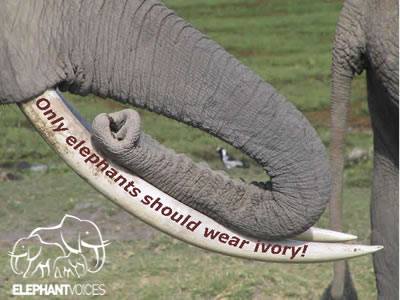
The National Rifle Association (NRA) on Friday (February 28) asked its 3.1 million members to call their representative in Congress and urge them to block a rule designed to protect the world’s elephants from being poached into extinction.

Last month, the White House announced a ban on the commercial trade of elephant ivory, placing a total embargo on the new import of items containing elephant ivory, prohibiting its export except in the case of bona fide antiques, and clarified that “antiques” only refers to items more than 100 years old when it comes to ivory. “This ban is the best way to help ensure that U.S. markets do not contribute to the further decline of African elephants in the wild,” a White House fact sheet on the announcement declared.

The NRA is disturbed about provisions of the ban related to domestic resale of items including ivory. “We will finalize a proposed rule that will reaffirm and clarify that sales across state lines are prohibited, except for bona fide antiques, and will prohibit sales within a state unless the seller can demonstrate an item was lawfully imported prior to 1990 for African elephants and 1975 for Asian elephants, or under an exemption document,” the White House said in February.

While many people would make the mistake of assuming that this was about helping save endangered elephants, the NRA understands what the real motivation is. “This is another attempt by this anti-gun Administration to ban firearms based on cosmetics and would render many collections/firearms valueless,” the NRA said in its call to arms.

“Any firearm, firearm accessory, or knife that contains ivory, no matter how big or small, would not be able to be sold in the United States, unless it is more than 100 years old. This means if your shotgun has an ivory bead or inlay, your revolver or pistol has ivory grips, your knife has an ivory handle, or if your firearm accessories, such as cleaning tools that contain any ivory, the item would be illegal to sell.”

For that reason, the NRA implores its members to flood the White House and Congress with phone calls and emails to “let them know you oppose the ban on commercial sale and trade of legally owned firearms with ivory components.” That desire to resell old — but not antique — weaponry clearly is more important to the NRA than preventing the looming extinction of the species — which is linked closely to the skyrocketing demand for ivory. “In 2013 alone an estimated 30,000 African elephants were killed for their ivory, more than 80 animals per day,” Dr. Kerri-Ann Jones, Assistant Secretary of State for Oceans and International Environmental and Scientific Affairs, told the House Foreign Affairs Committee last week.

The commercial ivory ban is only part of a new National Strategy for Combating Wildlife Trafficking announced at the same time as the embargo, which prioritizes “strengthening domestic and global enforcement; reducing demand for illegally traded wildlife at home and abroad; and strengthening partnerships with international partners, local communities, NGOs, private industry, and others to combat illegal wildlife poaching and trade.” In that vein, the United States has been leading the charge in persuading countries around the world to destroy their stockpiles of intercepted ivory, annihilating six tons of it last November. Since then, Togo, China, and France have also followed suit and destroyed seized contraband of their own.

Aside from the conservation concerns, which the NRA doesn’t seem moved by, poaching is increasingly being viewed as a national security issue for the United States. In an interview last year, Robert Hormats, Under Secretary of State for Economic Growth, Energy, and the Environment, said ivory had become a “conflict resource.” An Enough Project report from last year also found that Joseph Kony’s Lord’s Resistance Army has begun poaching ivory from elephant tusks to fund the group’s activities, which include abducting children and forcing them into sex slavery.
Stop Hunting Giraffes for Sport

by Christopher Baranowski

Target: Governments of South Africa, Namibia, and Zimbabwe

Goal: End the brutal and inhumane hunting of giraffes for sport.

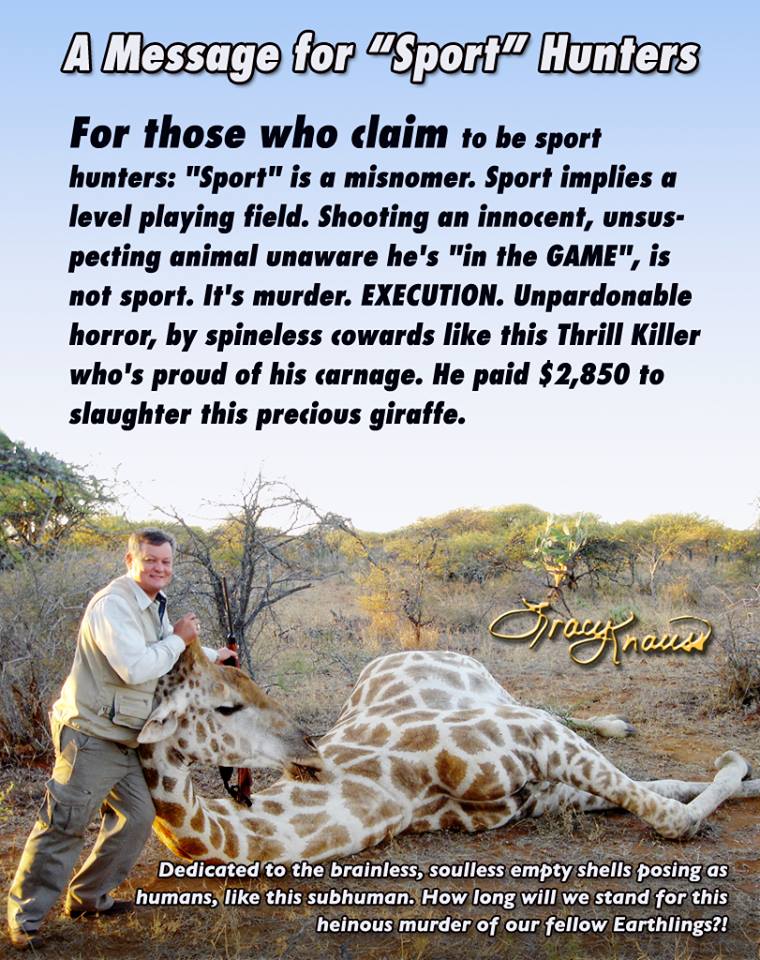
In many African countries, it is legal to hunt giraffes for sport. Hunters from around the world pay up to 15,000 dollars just for the chance to kill one of these animals. Despite declining giraffe populations, these African countries claim that hunting can be profitable for the government and citizens and that giraffe populations can be sustainably managed. But the continuation of this brutal practice only perpetuates the idea that these animals are a commodity and encourages illegal poaching. End the hunting of giraffes for sport today.

Hunters from countries like Russia, the United States and Germany pay thousands of dollars for plane tickets to countries like South Africa, Namibia and Zimbabwe where hunting of giraffes is still allowed. Game parks charge trophy fees for killing the animals and additionally daily fees for hired trackers and guides. The final bill can be up to 15,000 dollars. The governments of these countries argue that this brings money, tourism and giraffe meat to local communities and point to the fact that giraffe populations in their countries have remained stable. But giraffes have gone extinct in Angola, Mali and Nigeria and the giraffe population has been halved since 1988 to the current number of 80,000. Though the Giraffe Conservation Foundation cites human development as the main reason for their decline, one cannot help but wonder how sustainable and ethical hunting these endangered animals can be.

Trophy hunters often miss their target and end up shooting the giraffe in a place that results in a painful death. Illegal poachers also use nets and snares to capture giraffes, which results in a similarly painful death. How can countries that have made giraffe hunting illegal expect to combat poachers when they are sending the message that hunting big game is okay? Giraffegiraffe populations are plummeting and no matter what the cause, we cannot allow these beautiful creatures to be hunted for sport.

PETITION LETTER:

Dear Presidents Jacob Zuma, Hifikepunye Pohamba and Robert Mugabe,

Currently, you are the only three African states that allow legal hunting of giraffes. We understand that this can be a lucrative industry for both the government and the people of your countries and that your giraffe populations have remained relatively stable, but you are also sending the message that it is okay to hunt these harmless and threatened animals. This may increase poaching in countries where hunting giraffes is illegal.

Poachers use cruel and inhumane methods to capture giraffes, and even legal hunting can sometimes result in a painful death for the giraffes. Angola, Mali and Nigeria have already seen their giraffe populations go extinct. Please take a stand against cruel game hunting and for the giraffes of Africa. Ban hunting of giraffes before it is too late.

Sincerely,

[Your Name Will Go Here]

Sign the Petition

First & Last Name*

Email*

Your email will not be published. By signing you accept the ForceChange terms of service and may receive updates on this and related petitions.

http://forcechange.com/12033/stop-hunting-giraffes-for-sport/

and there is another petition for giraffe’s here — http://www.ryot.org/young-giraffe-killed-tomorrow-copenhagen-zoo/562109
and:
http://www.psychologytoday.com/blog/animal-emotions/201402/healthy-young-zoo-giraffe-be-killed-zoothanasia-redux

German Environment Ministry Official in Elephant Killing Scandal

00847AF6_B0E63080B13AC39D9CCC0EE6E0B44890

Udo W. (German law prohibits the release of his full name) is a high official in the environment ministry of the German county of Thuringia and actually still holds a leading function in the wildlife species protection department.

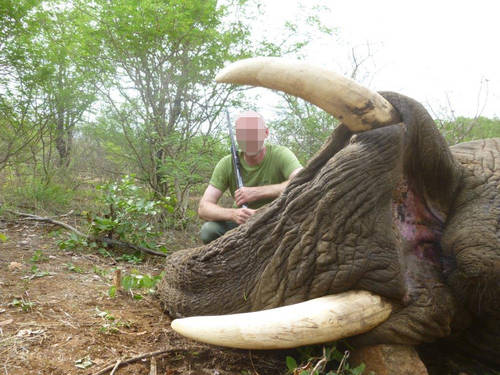
Just days before Botswana closed trophy “hunting” on 31. December 2013, achieving that since first of January now all such sport-killing is prohibited in the African country, the civil servant went on a trophy hunt in Botswana and bragged himself now to have killed a 40 year old, middle aged bull.

Though it apparently was a legal big-game safari in old colonial style, the case has raised a storm of protest in Germany and calls – e.g. by the Green Party – for the immediate dismissal of the civil servant from his post.

The biggest shame, however, has not yet become a viral twitter storm and that is given by the fact that Botswana actually permitted such colonial style killing for money of an elephant by a foreign trophy hunter, while at the same time and under the helm and often enough at the hands of the same Botswana officials, members of the First Nation in Botswana, the San bushmen, are tortured, killed, raped, alienated from their wildlife resources and expropriated from their wildlands. All these atrocities against the San must be seen as what they are: Outright genocide.

While peoples the indigenous hunter-gatherer cultures are driven to extinction, the kill-for-money psychopaths are allowed to continue their shameful acts in other African countries.

The leaked photos from the kill:

http://media401.zgt.de.cdn.thueringer-allgemeine.d…
http://media101.zgt.de.cdn.thueringer-allgemeine.d…

Read also the background to these atrocities against the San:

Tswana Atrocities 4.0

http://groundreport.com/5058632/

ECOTERRA Intl.
SURVIVAL & FREEDOM for PEOPLE & NATURE

It’s Terrible About Those Death Threats

I don’t know who is sending would-be rhino Corey Knowlton all those death threats we keep hearing about, but I think it’s just terrible.

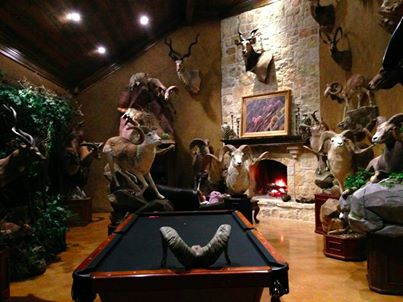
It’s terrible they waited until after he’d killed all those other 120 species—from every continent—that line the walls of his trophy1613918_577895065613412_412557772_n room. Too bad they held off until he had a chance to murder one of every species of wild sheep in existence, for instance. It’s a shame the 35 year old lived long enough to become the co-host of a hunting show on The Outdoor Channel which extols the virtues of snuffing out wildlife and encourages animal assassination in the name of sport.

It’s an absolute tragedy they waited until he won last week’s Dallas Safari Club auction to hunt a black rhino in Namibia. Now, unless the threats are in fact serious and carried out in the coming weeks, he will get the chance to destroy yet another undeserving sentient being in the name of ego, selfishness, arrogance and hedonism.
____________________________

For those not keen on lethal action, here are 3 things you can do to help:

1) PETITION: http://e-activist.com/ea-action/action?ea.client.id=104&ea.campaign.id=24844
2) PETITION: http://www.ifaw.org/united-states/get-involved/protect-black-rhinos-trophy-hunters
3) FB page with USFWS contact info and sample letter for writing to ask them to deny permit: https://www.facebook.com/events/242483775925213/

1017393_10202261526713538_1876940690_n

Black Rhino Auctioned for $350K in the Name of Conservation

black-rhino

http://www.psychologytoday.com/blog/animal-emotions/201401/black-rhino-auctioned-350k-in-the-name-conservation

by Marc Bekoff

Should we kill in the name of conservation? Individual animals are not disposable commodities

We live in a troubled and wounded world in which humans continue to dominate and to relentlessly kill numerous nonhuman animals (animals).

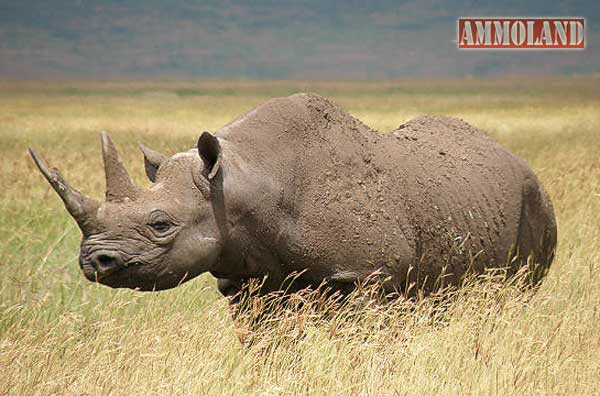
A Texas hunting club recently auctioned off an endangered black rhino purportedly to save other black rhinos and their homes in Namibia. The Dallas Safari Club says, “Namibian wildlife officials will accompany the auction winner through Mangetti National Park where the hunt will occur, ‘to ensure the correct type of animal is taken.'” This is not a very comforting thought.

This sale, in which an animal is objectified and treated like a disposable commodity, raises many questions about how we try to save other species. One major question is, “Should we kill in the name of conservation?” People disagree on what is permissible and what is not. My take and that of compassionate conservation is this is not an acceptable trade-off. (Please see “Ignoring Nature No More: Compassionate Conservation at Work”, Ignoring nature no more: The case for compassionate conservation, and a Forbes interview for more on compassionate conservation.) The life of every individual matters.

The world is in dire need of healing and we must revise some of the ways in which we attempt to coexist with other animals. Some of these methods center on heinous ways of killing them “in the name of conservation” or “to foster coexistence”. Compassionate conservation stresses that the life of every individual matters and trading off an individual for the good of their own or another species is not an acceptable way to save species. And, there doesn’t seem to be much evidence that it works in any significant way.

Black rhinos do indeed find themselves trying to avoid humans out to kill them, but in Namibia only 10 rhinos have been killed since 2006. Of course, this is 10 too many, but far fewer than have been killed in neighboring South Africa where around 1000 were killed in 2012 alone.

“To destroy nature is not to conserve nature. To mount the head of a wild animal in your trophy room is not conservation, it is repugnant.”

The above quotation comes from an essay in examiner.com called “Must conservation of wildlife including killing wildlife”. It was based on a 60 Minutes report titled “Hunting animals to save them?” While it dealt with wildlife ranches in Texas where people can pay a small fortune to kill various animals in canned hunts, it does raise important questions about killing in the name of conservation. Some other valuable snippets worth deep consideration include:

“If we want to conserve a population of, for instance, people native to a particular section of our country, would we kill a few to conserve the others? Isn’t that saying the group is more important than the individual? Isn’t it saying the individual gives up his or her rights to life because he or she belongs to a particular group, a particular species?”

“Each life—human animal and nonhuman animal—is an individual with an individual personality. Take a group of purebred puppies, for example—they may all look the same but they aren’t. They are their own individual beings with individual traits and personalities. Wildlife are individuals with their own individual traits and personalities. To say one is more deserving to live than another, in the name of conservation, bastardizes the word.”

Killing animals to save others sets a bad example and a regrettable precedent and is not the way to foster peaceful coexistence. When people say they kill animals because they love them this makes me feel very uneasy. I’m glad they don’t love me.

Cruelty can’t stand the spotlight and it is important that news about the sorts of activities discussed above be widely disseminated and openly discussed. That major media is covering them is a step in the right direction.

Bob Barker Says Dallas Safari Club’s Black Rhino Auction Is A ‘Cheap Thrill’

http://keranews.org/post/bob-barker-says-dallas-safari-club-s-black-rhino-auction-cheap-thrill

By

Credit The Price Is Right/Facebook
Bob Barker recently returned to “The Price Is Right” to celebrate his 90th birthday.

Bob Barker, the legendary game show host, has chimed in on the Dallas Safari Club’s black rhino auction that’s taking place this weekend. He wants the club to call off the event.

The club hopes to raise as much as $1 million to protect the rare black rhino by auctioning off the right to hunt one. But the auction has kicked up international controversy. Club members have been receiving death threats, and the FBI is investigating. (Update: On Saturday, the rhino hunt permit was sold for $350,000, the Associated Press reported.)

Friday afternoon, PETA released a letter from Barker, who hosted “The Price is Right” for 35 years. He’s also an animal rights advocate. (You remember his classic sign-off, right?: “Help control the pet population. Have your pets spayed or neutered.”)

The rhino to be hunted is an old bull that’s past the point of helping sustain the herd. This is the sixth such auction in Namibia, but the first to be held outside the country. The Dallas Safari Club says 100 percent of the money raised will go toward conservation efforts.

But in his letter, Barker says it is “presumptuous to assume that this rhino’s life is no longer of any value.”

“The rhino that your organization reportedly has in its crosshairs is an older ‘non-breeding’ male who has apparently been deemed expendable,” Barker wrote. “As an older male myself, I must say that this seems like a rather harsh way of dealing with senior citizens.”

Barker continues:

“Just because you’re ‘retired’ doesn’t mean you don’t have anything more to offer. In fact, I personally feel that I’ve accomplished a great deal since I quit my day job. Surely, it is presumptuous to assume that this rhino’s life is no longer of any value. What of the wisdom that he has acquired over the course of a long life? What’s the world coming to when a lifetime’s experience is considered a liability instead of an asset?

The Safari Club’s executive director, Ben Carter, recently spoke with KERA about his group’s efforts. Listen to that conversation here.

Here’s Barker’s full letter, provided by PETA:

I am writing to ask you to call off your planned auction of a chance to kill an endangered black rhino in Namibia. The rhino that your organization reportedly has in its crosshairs is an older “non-breeding” male who has apparently been deemed expendable. As an older male myself, I must say that this seems like a rather harsh way of dealing with senior citizens.

I can certainly sympathize with this animal’s plight (and I would think that many of your older members could as well). How many seniors have been written off simply because they have a certain number of birthdays under their belts? But just because you’re “retired” doesn’t mean you don’t have anything more to offer. In fact, I personally feel that I’ve accomplished a great deal since I quit my day job. Surely, it is presumptuous to assume that this rhino’s life is no longer of any value. What of the wisdom that he has acquired over the course of a long life? What’s the world coming to when a lifetime’s experience is considered a liability instead of an asset?

There are only about 5,000 black rhinos still alive in Africa. What kind of message does it send when we put a $1 million bounty on one of their heads? These animals are endangered for that very reason: money. What makes you any better than the poachers who kill rhinos to feed their families? At least, they are honest about their less noble motives. You try to dress up greed under the guise of “conservation.”

True conservationists are those who pay money to keep rhinos alive—in the form of highly lucrative eco-tourism—as opposed to those who pay money for the cheap thrill of taking this magnificent animal’s life and putting his head on a wall.

If you want someone’s head to go on a wall, pick mine. I will happily send you an autographed photo to auction off instead. My mug may not fetch as much money as that of a dead rhino, but at least we’ll all live to enjoy another sunrise in our sunset years.

Sincerely,

Bob Barker

“Wish Someone Dead Foundation” Grants Child’s Homicidal Request

The Wish Someone Dead Foundation, a new nonprofit organization dedicated to countering the animal-unfriendly efforts of the group, Hunt of a Lifetime (which was founded in 1998, after the Make a Wish Foundation ceased granting wishes involving the use of firearms or other weapons designed to cause injury), has awarded 7 year old leukemia victim, Gerald Watkins, a chance to fulfill his lifelong dream of offing a trophy hunting scumbag. The charitable group plans to fly the boy to Zimbabwe, outfit him with a sniper rifle and plenty of ammunition and line him up with a professional assassin who will instruct him in the fine art of dispatching a camo-clad nimrod with one clean shot.

Although society generally frowns on children (outside the military) being trained to kill other people, the raw deal this young terminal patient has been dealt in life seems to justify an exception to the rule. And besides, the target Gerald has chosen to eliminate—Philippe de Sade—couldn’t be more deserving. In one African safari, De Sade shot and killed species including elephants, hippos, buffaloes, lions, cheetahs, leopards, giraffes, zebras, hartebeest, impalas, pigs, the not-so-formidable 30-pound steenbok and even a mother ostrich on her nest. No wait, that was Teddy Roosevelt, musing in his autobiographical, African Game Trails. But this De Sade guy is a pretty murderous a-hole too…
______________________
(This has been another installment in EtBG’s “Headlines We’d Like to See.”)

HuntingTrophiesJamieKripke600

2013: The Year of the Big Backslide?

The year of our lord, 2013, could be known as the year of the big backslide, at least in terms of attitudes toward animals and the environment, as well as the general acceptance of scientific fact.

For example, CBS News reports that the number of Republicans who believe in evolution today has plummeted compared to what it was in 2009, according to new analysis from the Pew Research Center. A poll out Monday shows that less than half – 43 percent – of those who identify with the Republican Party say they believe humans have evolved over time, plunging from 54 percent four years ago. Forty-eight percent say they believe “humans and other living things have existed in their present form since the beginning of time,” up from 39 percent in 2009.

I can’t help but think this is because many people still aren’t comfortable admitting they’re animals. And this supremacist attitude is reflected in everything they do in regard to our fellow species.

Anyone who has been following the wolf issue since gray wolves were removed from the Endangered Species List in a handful of backward states has certainly noticed a rapid backslide pertaining to how wolves are perceived, treated and “managed” by those bent on dragging us back to the dark ages for animals—the Nineteenth Century—when concepts like bounties, culls and contest hunts were commonplace. Hunters and ranchers in the tri-state area surrounding Yellowstone National Park, as well as in the Great Lakes region, are doing everything they can to resurrect the gory glory days of the 1800s, and wolves are paying the ultimate price.

Meanwhile, in spite of great efforts to educate people about the myriad of problems associated with factory farming and the dependence on meat consumption in an ever more crowded human world, the number of ruminants raised for food on the planet today is at an all-time high of 3.6 billion, double what is was 50 years ago. Regardless of or our burgeoning human population, not only do we have a chicken in every pot in this country, we now have cow and sheep parts in every freezer and pig parts in practically every poke. This, of course, is all thanks to ever-worsening living conditions for farmed animals.

Professor William Ripple and co-authors of a research paper, “Ruminants, Climate Change, and Climate Policy,” prepared in Scotland, Austria, Australia and the United States, noted that about 25 percent of the earth’s land area is dedicated to grazing, and a third of all arable land is used to grow food for livestock, according to the report. Reducing the number of cattle and sheep on the planet, and thereby reducing the methane gas emissions they produce, is a faster way to impact climate change than reducing carbon dioxide alone, the report concluded. The researchers concluded that greenhouse gas emissions from cattle and sheep are 19 to 48 times higher per pounds of food produced than the gas emitted in the production of plant protein foods such as beans, grains or soy.

To get an idea of how unnatural and unsustainable 3.6 billion large ruminants is, think back to when vast bison herds blackened the plains. At that time there were only 50 million bison in all of North America. There are over 300 million human beef-eaters in the United States, every one of them expecting to see a fully stocked steak house, Subway or McDonald’s on every street corner.

Meanwhile, the media’s busily cooking up a spin to answer to meat’s culpability in this planet’s climate crisis. Articles on how methane from grass-eaters is a primary greenhouse gas are often accompanied by the suggestion that pigs and chickens don’t produce as much. In other words, don’t worry your little meat-addicted heads if this beef-cow-causing-global-warming thing becomes a recognized issue, you can just switch over to other non-ruminants’ carcasses—no one really expects you to become a vegetarian, after all.

One of the most outrageous spins ever concocted aired on a “Ted Talk” just last March. Allan Savory, a former Rhodesian provincial Game Officer, has been spreading the counterintuitive notion that to control desertification and stop global warming we need to turn even more cattle out onto arid land. This notion comes from a man who, as late as 1969 advocated for the culling of large populations of elephants and hippos because he felt they were destroying their habitat. Savory participated in the culling of 40,000 elephants in the 1950s, but he later concluded it did not reverse the degradation of the land and called the culling project “the saddest and greatest blunder of my life.” Now he’s trying to sell us on another blunder with even more destructive consequences. What will this guy do for an encore? Never mind, I don’t want to know.

Speaking of Africa, 2013 saw the fastest growing and second most populous continent on its way to adding another billion people to the planet. By the end of this century, 3/4 of the world’s growth is expected to come from Africa, and projections put its population at four billion—one billion in Nigeria alone. Most African countries will at least triple in population, as there are very high fertility rates and very little family planning in most regions. No one is quite sure how the continent will provide for that many hungry humans; only time will tell.

And even though China’s overwhelming population is already well past a billion, in 2013 they abandoned their one child policy and affectively doubled it by implementing a two child policy at the stroke of a pen.

Sorry, but this shit is scary, at least if you care about the plight of non-human species on this planet. Sure, cultural diversity is important—to people. But it sure as hell doesn’t trump biological diversity in the scheme of things. Regardless of what you may or may not believe about whether we were created in the image of a god, life on Earth as we know it will not go on if we humans are one of the only species left around.

The coming decades are going to test just what Homo sapiens are made of. Are we progressive and adaptable enough to learn to share the planet with others and become plant eaters, as some people have? Or is our incessant breeding and meat consumption going to put us into an all new classification—planet eater?

1535443_10151792030721493_1254752217_n