Travel Scene: Global warming opens Northwest Passage to pleasure cruises

Mon Oct 6, 2014.

Global warming and the resultant melting of parts of the Arctic icecap have opened a new world of travel — a 900-mile, 32-day luxury cruise with fares starting at $20,000.

Crystal Cruises, one of the world’s top-rated cruise lines, has announced that one of its ships, the Crystal Serenety, will traverse the fabled Northwest Passage on this Pacific-to-Atlantic voyage, beginning from Seward, Alaska, through the north part of mainland Canada and the Arctic Ocean to New York City.

<iframe id=”50cba8a6e2b30″ name=”50cba8a6e2b30″ src=”http://d.oxsng.com/w/1.0/afr?auid=264272&cb=INSERT_RANDOM_NUMBER_HERE” frameborder=”0″ scrolling=”no” width=”300″ height=”250″><a href=”http://d.oxsng.com/w/1.0/rc?cs=50cba8a6e2b30&cb=INSERT_RANDOM_NUMBER_HERE” ><img src=”http://d.oxsng.com/w/1.0/ai?auid=264272&cs=50cba8a6e2b30&cb=INSERT_RANDOM_NUMBER_HERE” border=”0″ alt=””></a></iframe>

Crystal says it will be the first luxury cruise ship to make this voyage, following the route that Norwegian explorer Roald Amundson discovered some 100 years ago.

Crystal, in press releases, says the journey, in August 2016 will be on “a mystical Pacific-Atlantic sea route far beyond the Arctic Circle that for centuries captured the imagination of kings, explorers and adventurers.”

Part of the reason that the Northwest Passage captured so many imaginations for many centuries, according to Bloomberg Businessweek, was that it was choked with ice and impossible to navigate. But climate change has set off a scramble to control the now-accessible shipping routes and mineral rights.

The Crystal Serenity, Bloomberg says, is simply following the wake of the freighters that are already plying the Arctic.

Climate-change tourism will offer something greatly different than a usual journey. The cruise, notes Bloomberg, will offer passengers kayaking and tundra treks, up-close sightings of polar bears, narwhals, musk oxen and caribou.

“These are encounters,” notes the newsletter, with the inhabitants and distinctive elements of the world that climate change —- the same thing that’s allowing the cruise to take place — is threatening.

Crystal bills the trip as a “once-in-a-lifetime expeditionary voyage that marries extreme wilderness adventure with unsurpassed luxury voyage.” It adds that cruisers “will bear witness to breathtaking landscapes that few have ever seen, from spectacular glaciers to towering fjords and experience nature that is truly wild.”

The cruise line says that two years of extensive planning has gone into the itinerary, balancing days at sea with scheduled ports of call. Designed to be flexible, the cruise will incorporate unplanned “expedition days,” when favorable weather conditions allow. These treks will be led by veteran explorers.

All told, a team of 14 experts, including scientists and an Arctic guide, will be aboard. Ports of call include remote areas of the Canadian Arctic such as Ulukhaktok, Northwest Territories and Cambridge Bay in Nunavut.

The cruise sails from Aug. 16 to Sept. 17, 2016. Prices start at $19,975 double occupancy and cabins are on sale.

Crystal’s web site, at crystalcruises.com/NWP-FAQs, offers more information.

Plans set for new Mexico City airport

If you’ve flown into Mexico City’s airport — and we have — you will know that a new airport is needed, and one apparently is on the way.

A new $9.2 billion facility is planned that will quadruple the capacity of the current Benito Juarez Airport. The nation’s president, Enrique Pena Nieto has described the project as Mexico’s largest infrastructure addition in recent years and called it “Mexico’s gateway to the world.”

Travel Weekly reports that the airport will be built on 11,400 acres of federally owned land adjacent to the existing airport and the plan is to handle up to 120 million passengers a year — four times the capacity of the existing facility.

The design of the structure will be unique: The soaring vaulted terminal and lightweight glass and steel structure will be designed in the form of a giant X. No date has been set for the start of the project.

BEVERLY HILLS, CA - FEBRUARY 10:  Actor Leonardo DiCaprio attends the 86th Academy Awards nominee luncheon at The Beverly Hilton Hotel on February 10, 2014 in Beverly Hills, California.  (Photo by Kevin Winter/Getty Images)

One of the actors in “Titanic”

Never Mind, I Fuckin’ Hate ’em*

…Despite anything I might have said in yesterday’s post, In Defense of Our Misanthropy, some people deserve nothing less than full on hatred!

(*Title by my wife.)

http://news360.com/article/290268031/#

Moose stabbed to death in Alaska park; suspects in custody

ANCHORAGE, Alaska   • Three men are in custody in Alaska’s largest city after a young moose was stabbed to death at a popular local park.

Anchorage police say 25-year-old Johnathan Candelario, 28-year-old James Galloway and 33-year-old Nick Johnston are under arrest in connection with the death of the yearling moose Tuesday night near a bike trail in Russian Jack Springs Park.

The men were arrested on charges of animal cruelty, wanton waste of big game and tampering with evidence. It’s unclear if they have attorneys.

Police say several witnesses called shortly before 7:30 p.m. reporting that the three men were jumping on the animal, kicking it and stabbing it with a large knife.

Police officers quickly located the three suspects nearby. The animal was found dead.

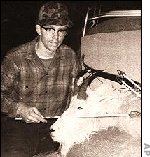
6-4Hansens-trophy-goat Alaskan serial killer, Robert Hansen

Chorus of Outrage as Obama Administration Approves Arctic Drilling for Shell Oil

http://www.commondreams.org/news/2015/04/01/chorus-outrage-obama-administration-approves-arctic-drilling-shell-oil

Thanks to a government ruling on Tuesday, Shell may soon be able to continue drilling in the Arctic, despite risks to the environment and animals who live there. (Photo: Day Donaldson/flickr/cc)

Environmental activists expressed shock and outrage on Tuesday after the U.S. Department of the Interior upheld a 2008 lease sale on the Arctic’s Chuchki Sea, opening the door for continued oil exploration in a region long eyed for drilling by Shell Corporation and increasingly strained under the effects of climate change.

The decision opens up 30 million acres in the Chuchki Sea to fossil fuel exploration and drilling, a move which state and national green groups called “unconscionable.”

“Our Arctic ocean is flat out the worst place on Earth to drill for oil,” said Niel Lawrence, Alaska director of the Natural Resources Defense Council. “The world’s last pristine sea, it is both too fragile to survive a spill and too harsh and remote for effective cleanup.”

In January 2014, the Court of Appeals for the Ninth Circuit ruled that the Interior Department had violated the law when it sold those 2008 leases—a deal that came about during George W. Bush’s presidency, but was upheld two years later by the Obama administration.

The 2014 decision ordered the Interior Department to reconsider the leases. A month later, the department admitted that drilling in the Chucki Sea was likely to have devastating consequences, with a spill risk of 75 percent or more.

“It is unconscionable that the federal government is willing to risk the health and safety of the people and wildlife that live near and within the Chukchi Sea for Shell’s reckless pursuit of oil,” said Marissa Knodel, a climate campaigner with Friends of the Earth. “Shell’s dismal record of safety violations and accidents, coupled with the inability to clean up or contain an oil spill in the remote, dangerous Arctic waters, equals a disaster waiting to happen.”

“Ignoring its own environmental review, the U.S. Department of the Interior has opened the door for drilling in the remote and iconic Arctic Ocean,” said the Sierra Club on Tuesday.

“It’s shocking that the Department of the Interior would knowingly move forward with a plan that has a 75 percent chance of creating a major spill in the Chukchi Sea. We can’t trust Shell or any other oil company with America’s Arctic,” Cindy Shogan, executive director of the Alaska Wilderness League, added. “Shell has proposed an even dirtier and riskier Arctic drilling program for this summer. The Obama administration has seen the impacts of what a major oil spill looks like.”

The Bureau of Ocean Management will next conduct an environmental assessment on Shell’s exploration plan for the Chuchki Sea, which could take 30 days or more.

The Chuchki Sea is home to an estimated 2,000 polar bears and serves as the feeding grounds for migratory gray whales.

“The industrial oil development that Interior hopes will flow from its decision to approve the Chukchi lease sale gives us a 75 percent chance of a large oil spill and a 100 percent chance of worsening the climate crisis,” Rebecca Noblin, Alaska director for the Center for Biological Diversity, added. “I don’t like those odds.”

18 wolves shot near Interior AK village to boost moose population

http://www.adn.com/article/20150313/18-wolves-shot-near-interior-village-boost-moose-population

Dermot Cole

End the Iditarod

http://www.all-creatures.org/alert/alert-20150209.html
Action Alert from All-Creatures.org

FROM

SledDogma.org
February 2015

ACTION

Iditarod season is upon us again – March 7, 2015

Go here and Write to Iditarod sponsors and supporters

INFORMATION / TALKING POINTS

Sled Dogma: Reality Bites believes that a tethering ban on a federal level is necessary to significantly improve conditions for the sled dogs associated with commercial mushing. Currently commercial sled dog operations are exempt from federal regulations under a “working dog” exclusion.

Please watch Dream an Iditarod Dream (with links to other videos). This video shows the living conditions of the Iditarod “participants” when they’re not “racing”.

See for yourself the conditions in which commercial sled dogs in Alaska are forced to live. These animals are located on a property deep in the woods with no residence on site — they are left alone to fend for themselves without any human supervision besides a daily distribution of food and water.

sled dogs

sled dogs

sled dogs

In the fall in Alaska, Iditarod “training” begins:

sled dogs
“Trainer” in ATV…

sled dogs
One way to transport dogs to “race” venues

For more information, images and videos, visit I Hurt A Dog.com and SledDogma.org


Return to Action Alerts

Industrial logging invasion of the Tongass imminent! ‏

From Audubon.org

One of America’s most precious and endangered habitats is under siege — again.

Contrary to its own policies, the Obama Administration is rushing through a massive old-growth timber sell-off in the Tongass National Forest in Alaska — the largest sale of its kind in decades. This industrial level logging could put many vulnerable bird species at risk.

Audubon has joined with other conservation groups in federal court to stop this malicious sell-off of America’s globally important coastal temperate rainforest.

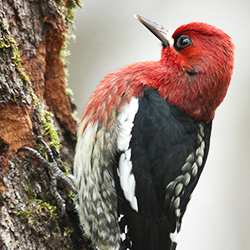
The ancient coastal woodlands of the Tongass are home to many bird species that depend on old-growth forests for their survival. Native species include nearly a third of the world’s Red-breasted Sapsucker population and at least 20% of the global population of pacific-slope flycatchers. Marbled Murrelets — listed under the Endangered Species Act in Washington, Oregon and California — are old-growth-dependent birds that rely on Tongass old growth to support healthy populations.

Perhaps most at-risk from the so-called Big Thorne timber sale is the Queen Charlotte Goshawk, an old-growth dependent raptor. Only 300 to 700 breeding pairs of these birds survive in the wild. The proposed timber sale would degrade goshawk habitat, perhaps past the point of no return.

The Big Thorne timber sale would put 120 million board feet of old-growth trees literally on the chopping block. What’s worse, this is only the first of four massive logging incursions proposed by the US Forest Service.

Four years ago, the Obama Administration said it was bringing to an end the era of massive and destructive logging in the Tongass. This latest sale, sadly, is a giant step in the wrong direction.

APA_2013_28905_229464_RogerBaker_Redbreasted_Sapsucker_K

Wolves Need Trees Too

Alexander Archipelago wolf
Bookmark and Share

For thousands of years, black wolves have roamed the snow-covered islands of southeast Alaska’s Alexander Archipelago. But even in this remote stretch of more than 1,000 islands and glaciated peaks, Alexander Archipelago wolves have been no match for industrial logging, road building and overharvest.

Right now the Forest Service is about to close a deal on the Big Thorne timber sale, with logging planned for more than 6,000 acres of prime old-growth habitat for wolves, Sitka black-tailed deer, black bears, Queen Charlotte goshawks, flying squirrels, marten and other imperiled species.

Alexander Archipelago wolves can’t coexist indefinitely with clearcut logging: The wolf population is directly connected to the health of black-tailed deer, which in turn is directly tied to the health of the old-growth forests. And as road density increases, so do wolf kills — both legal and illegal. In the Tongass National Forest logging roads provide access for wolf hunters and trappers, and road density on much of Prince of Wales Island is already beyond sustainable levels.

Dr. David Person, the preeminent Alexander Archipelago wolf biologist, has bluntly concluded that “the Big Thorne timber sale, if implemented, represents the final straw that will break the back of a sustainable wolf-deer predator-prey ecological community on Prince of Wales Island.”

Take action below — tell the Forest Service to drop Big Thorne now: http://action.biologicaldiversity.org/p/dia/action3/common/public/?action_KEY=15803

Alaska hunter bags world record grizzly bear

May 06, 2014

Larry Fitzgerald and some pals were moose hunting near Fairbanks, Alaska, when they came across fresh bear tracks in the snow. Three hours later, the auto body man had taken down the grizzly that left the prints, an enormous bruin that stood nearly 9 feet tall and earned Fitzgerald a place in the record books.

Although Fitzgerald shot the bear last September, Boone and Crockett, which certifies hunting records, has only now determined the grizzly, with a skull measuring 27 and 6/16ths inches, is the biggest ever taken down by a hunter, and the second largest grizzly ever documented. Only a grizzly skull found by an Alaska taxidermist in 1976 was bigger than that of the bear Fitzgerald bagged.

 “I’m not really a trophy hunter, or anything,” Fitzgerald, 35, told FoxNews.com. “But I guess it is kind of cool.”

Fitzgerald brought down the bear from 20 yards, with one shot to the neck from his Sako 300 rifle. He said he knew from the tracks he was on the trail of a massive grizzly, but only learned this week that he held a world record.

“We knew it was big,” he said. “It was a rush.”

Bears are scored based on skull length and width measurements, and Missouloa, Mont.-based Boone and Crockett trophy data is generally recognized as the standard. Conservationists use the data to monitor habitat, sustainable harvest objectives and adherence to fair-chase hunting rules.

Richard Hale, chairman of the Boone and Crockett Club’s Records of North American Big Game committee, said it was unusual that such a massive grizzly would be taken near a a city.

“One would think that a relatively accessible area, with liberal bear-hunting regulations to keep populations in line with available habitat and food, would be the last place to find one of the largest grizzly bears on record,” said Hale.

The Alaska Department of Fish and Game instituted grizzly hunting regulations to help balance and control the bears’ preying on moose. Although baiting is allowed under the regulations, Fitzgerald stalked his trophy.

Grizzlies are currently federally protected in the Lower 48 states under the Endangered Species Act, but thriving populations have prompted regulators to consider de-listing them, said Hale.

Rare Alaskan Wolves Considered for Endangered Species List

Greenpeace March 28, 2014

The U.S. Fish and Wildlife Service announced today that Alaska’s Alexander Archipelago wolves may need protection under the Endangered Species Act because of unsustainable logging in the Tongass National Forest and elsewhere in southeast Alaska. The agency will now conduct an in-depth status review of this rare subspecies of gray wolf, which lives only in the region’s old-growth forests.
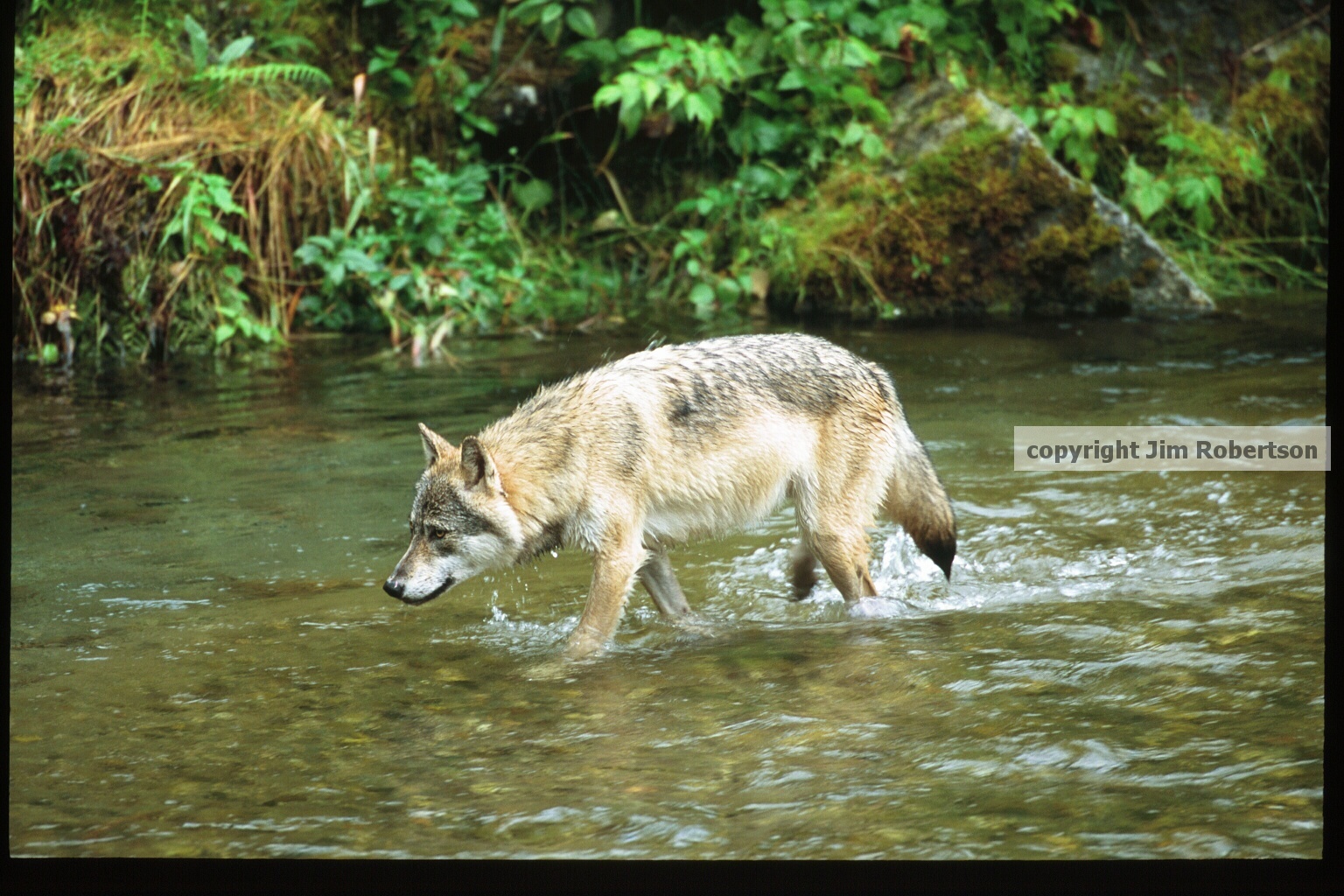
wolfAlexander Archipelago wolf populations cannot survive in areas with high road density, which the logging industry relies on. Photo credit: Greenpeace

Today’s decision responds to a scientific petition filed in Aug. 2011 by the Center for Biological Diversity and Greenpeace. Following the status review and a public comment period, the agency will decide whether or not to list the species as threatened or endangered.
“The Alexander Archipelago wolf, one of Alaska’s most fascinating species, needs the protection of the Endangered Species Act if it’s to have any chance at survival,” said Rebecca Noblin, Alaska director of the Center of Biological Diversity. “The Endangered Species Act is the strongest law in the world for protecting wildlife, and it can save these beautiful wolves from reckless logging and hunting.”
Alexander Archipelago wolves den in the root systems of very large trees and hunt mostly Sitka black-tailed deer, which are themselves dependent on high-quality, old forests, especially for winter survival. A long history of clearcut logging on the Tongass and private and state-owned lands has devastated much of the wolf’s habitat on the islands of southeast Alaska.
“This gray wolf subspecies exists only in southeast Alaska, and its principle population has declined sharply in the last few years,” said Larry Edwards, Greenpeace forest campaigner and long-time resident of the region. “Endangered Species Act protection is necessary to protect the wolves, not least because of the Forest Service’s own admission that its so-called transition out of old-growth logging in the Tongass will take decades. The negative impacts on these wolves are very long-term and have accumulated over the past 60 years of industrial logging.”
The-4-timber-projects-(map)
Logging on the Tongass brings new roads, making wolves vulnerable to hunting and trapping. As many as half the wolves killed on the Tongass are killed illegally, and hunting and trapping are occurring at unsustainable levels in many areas. Despite scientific evidence showing that Alexander Archipelago wolf populations will not survive in areas with high road density, the Forest Service continues to build new logging roads in the Tongass. Road density is particularly an urgent concern on heavily fragmented Prince of Wales Island and neighboring islands, home to an important population of the wolves.
In 2013 the Alaska Board of Game authorized killing 80 percent to 100 percent of the wolves in two areas of the Tongass because habitat loss has reduced deer numbers so that human hunters and wolves are competing for deer—putting yet more pressure on the wolf population.
The Fish and Wildlife Service considered listing the wolf under the Endangered Species Act in the mid-1990s but then chose not to do so, citing new protective standards set out in the Forest Service’s 1997 Tongass Forest Plan. Unfortunately, as outlined in the conservation groups’ 2011 petition, the Forest Service has not adequately implemented those standards.
Today’s U.S. Fish and Wildlife Service 90-day finding on the Alexander Archipelago wolf determined that protecting this wolf as threatened or endangered “may be warranted” under three of the five “factors” specified in the Endangered Species Act:
1. present or threatened destruction of habitat
2. overutilization (e.g. from hunting and trapping)
3. the inadequacy of existing regulatory mechanisms

Drone-Assisted Hunting Banned in Alaska

http://www.smithsonianmag.com/smart-news/drone-assisted-hunting-banned-alaska-180950251/?no-ist

by Rose Eveleth smithsonianmag.com

Alaska takes big game hunting seriously, and, in a recent meeting of the Alaska Board of Game, the state officially banned the use of unmanned aerial vehicles to help hunters track prey.

Alaska Wildlife Troopers told the board that, while drone-assisted hunting was still rare, they worried that, as the technology got cheaper, more hunters would start using it, Casey Grove at Anchorage Daily News reports. In 2012, a hunter took down a moose using a drone, and troopers couldn’t do anything about it because the practice wasn’t technically illegal. “Under hunting regulations, unless it specifically says that it’s illegal, you’re allowed to do it,” Wildlife Trooper Captain Bernard Chastain told Grove.

To get ahead of potential problems, the board decided to make spotting and shooting game with a drone illegal. This is similar to the law that bans hunters from using aircraft to follow and shoot animals. With aircraft, it’s legal to shoot the animal if you take it down a day or more after spotting it with the plane but, with drones, any kind of tracking and killing will not be allowed. According to Grove, these laws stem from a “principle of fairness”—not to the animals, but to the other hunters. “Other people don’t have a fair opportunity to take game if somebody else is able to do that,” Chastain says.

According to Valentina Palladino at the Verge, this isn’t the first use of drones banned by hunting communities. Colorado will vote on a rule that would require permits to use drones while hunting. And in Illinois, PETA’s drones, which were tracking hunters, were made illegal. And not only can you not hunt animals, but delivering beer by drone is apparently also a no-go. Spoil sports.

Colorado-man-offering-drone-hunting-lessons-in-Deer-Trail