“It was a freak act of God”

Sheep hunter dies in Alaska Range south of Fairbanks
Posted: Tuesday, August 27, 2013

Tim Mowry/tmowry@newsminer.com

FAIRBANKS—A sheep hunter from Texas was killed in the Alaska Range south of Fairbanks on Friday after a large rock fell on him as he was walking along a creek bottom.

Manuel Rechy, 48, of Laredo, Texas, was on a guided hunt in the area of Red Mountain and Dry Creek, 49 miles east of the Parks Highway near Healy, when the accident occurred, according to Alaska State Troopers.

The guide who owns the guiding company Rechy was hunting with, Eric Umphenour, of Fairbanks, called the accident “a freak deal.”

“A rock came down the hill and crushed him,” Umphenour said. “It wasn’t a rock slide; it was just one big boulder.

“It was a freak act of God,” he said. “It’s like being struck by lightning.”

Rechy and an assistant hunting guide were walking down a creek bottom at around 6:30 p.m., scouting for Dall sheep, when the large rock broke loose from about 30 feet above them on a hill, Umphenour said.

“(The assistant guide) saw it coming and told him to get out of the way, but the guy wasn’t fast enough,” he said. “It’s not like we were walking up cliffs. They were in a creek bottom. It was in the valley floor.”

The rock, which Umphenour estimated weighed 1,000 pounds, slammed into Rechy, knocking him in the creek and causing serious injuries to his legs. The assistant guide pulled the hunter out of the creek and covered him with his coat before going to alert Umphenour. When the two guides returned less than an hour later, Rechy was unresponsive, Umphenour said.

Umphenour used a satellite phone to call Alaska State Troopers, who were notified at 7:41 p.m. Troopers attempted to fly a helicopter to the scene but turned back due to bad weather, trooper spokeswoman Megan Peters said.

Troopers alerted the Rescue Coordination Center in Anchorage, which in turn notified the Alaska Air National Guard. Rescuers arrived at the scene of the accident at around 2 a.m., about six hours after troopers were notified, Umphenour said. Rechy was flown to Fairbanks Memorial Hospital, where he was pronounced dead on arrival.

Umphenour, who has been guiding in the area for 20 years, said he doesn’t know what caused the rock to move. It had been raining all day Friday prior to the accident, he said.

“It’s a creek I’ve been up 20 or 30 times over the course of 20 years,” Umphenour said. “We snowmobile up it in the winter.”

While he didn’t know Rechy well, the Texan was a repeat customer, Umphenour said. “A lot of his friends had hunted with us. He was no stranger to us.”

On Tuesday, Umphenour was still having a hard time trying to process what happened.

“I’ve never had anything like that happen,” he said. “When somebody dies in a hunting accident they usually get shot.”

Sheep photo copyright Jim Robertson

Sheep photo copyright Jim Robertson

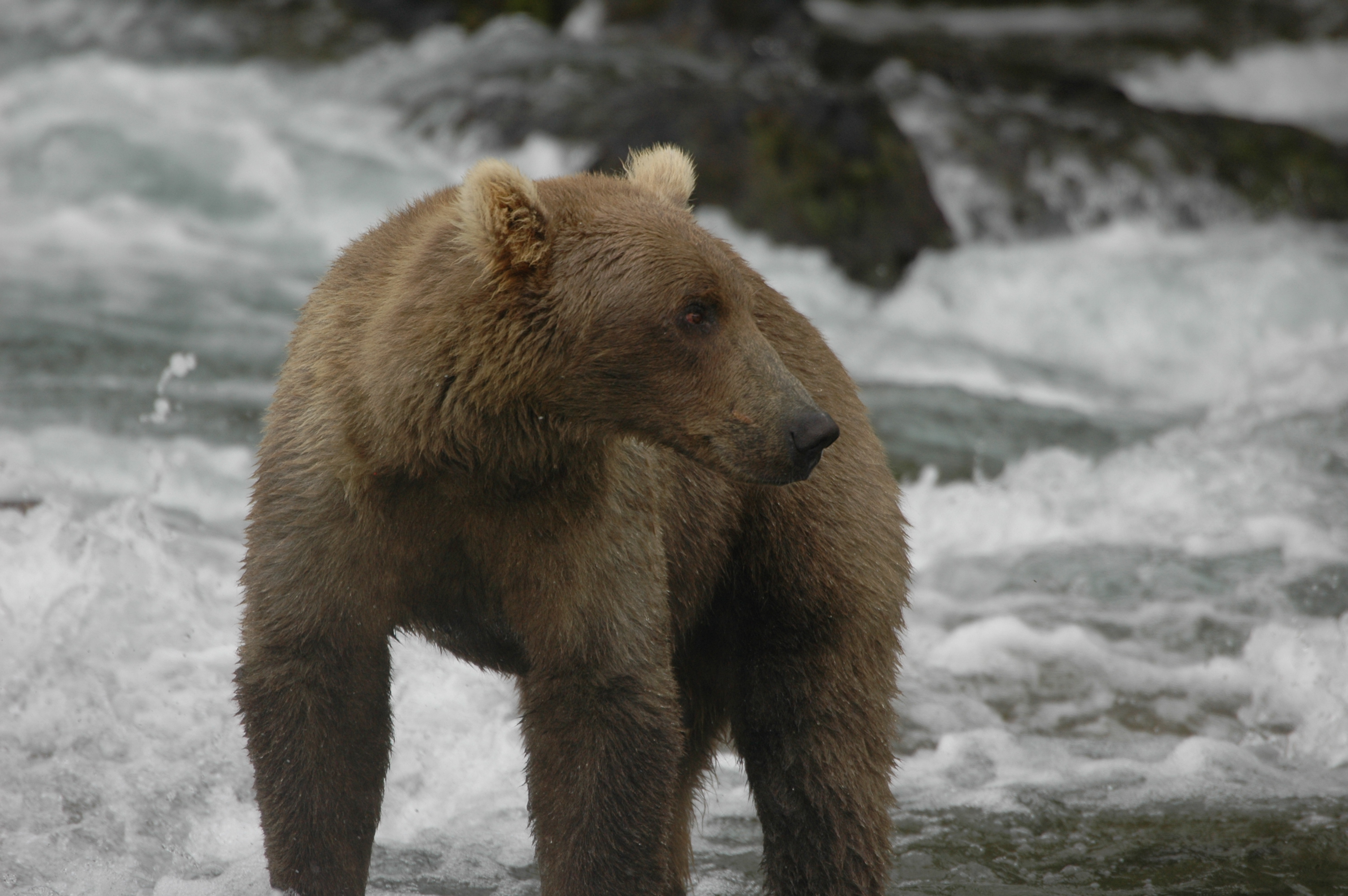
Man Mauled by Grizzly in Alaska was Hunting Guide

Unfortunately these type of stories always seem to end with one or more animals dead…

Photo Copyright Jim Robertson

Photo Copyright Jim Robertson

Man mauled by grizzly in Alaska recounts attack

ANCHORAGE, Alaska (AP) — A man who recently was mauled by a grizzly bear near northern Alaska’s remote Brooks Range said he recognized the animal that left him with broken teeth and a deep gash in his arm from his guide trips.

Jim Tuttle said he and the hunters he guided often spotted the bear, nicknamed Buddy. But the animal was never aggressive toward them until two weeks ago, when Tuttle was walking along a creek and saw it charging.

Tuttle said 16 years of guiding in the area had dulled him to the risks of working in bear country. When the incident occurred earlier this month, he was walking to a caribou carcass by himself, armed only with a pair of trekking poles.

“I am partly to blame. I got complacent, and I paid for it,” he told the Anchorage Daily News (http://bit.ly/19VFd8D ). “I guess I should have had a gun in my hand, safety off, ready to shoot.”

He said the attack northwest of Anaktuvuk Pass lasted less than 15 seconds. When it was over, Tuttle was spitting out broken teeth and needed a tourniquet on his left arm. One of his cheekbones was cracked.

Because of dense fog, Tuttle had to wait 36 hours for a National Guard helicopter to reach him. Following surgery and dozens of stitches, he is recovering at his Anchorage home.

Tuttle suffered nerve damage to the face and wounds to his groin and knee have temporarily hobbled him. A cast on his left wrist has fixed his forearm in place so it can grow back muscle.

Tuttle, 52, said he feels lucky to be alive.

He had flown into the hunting camp in early August, where he planned to stay for two weeks. The camp was 15 miles from the base camp run by his outfitter, Arctic North Guides.

Chris Carrigee, who stayed in Tuttle’s camp with his son before the mauling, said grizzlies were commonly in the area and would eat meat scraps that hunters left behind.

Carigee had taken photographs of his son and Tuttle in front of Buddy with their coffee and oatmeal. He said he didn’t feel there was any danger.

On Aug. 14, after Carrigee and his son left, Tuttle was working with new hunters. The group killed a caribou that morning. They carried some of the meat back to camp and ate lunch before Tuttle returned to the carcass.

He heard the bear coming from behind him. He swung his hiking poles in the animal’s face, but the bear knocked him over and bit him on the arm and hand before walking away.

“I thought maybe I’d get lucky, and she’d leave. No, she turned right back around, and then really chewed and got into where she could bite my face,” Tuttle said. “I said to myself, ‘You’re dead.’

After the bear left, Tuttle made a tourniquet from rope in his backpack, and waited 10 minutes to make sure the bear didn’t return, before limping back to camp.

The hunters called to request a rescue, but the camp was fogged in.

The owner of Tuttle’s outfitting company flew in the following morning during a break in weather with a retired paramedic and medical supplies. But they left Tuttle, believing they couldn’t fly him all the way to a hospital.

At 3 a.m. the following morning, the National Guard helicopter came.

The bear was killed by one of the hunters in Tuttle’s group. Harry Reynolds III, a retired biologist who worked for the Alaska Department of Fish and Game for more than 30 years, said it’s hard to say what made the bear attack. “They’re wild animals,” he said.

———

Information from: Anchorage (Alaska) Daily News, http://www.adn.com

Associated Press

Anchorage sheep hunter rescued after Interior raft accident

Here’s one with a happy ending for all…

Sheep photo copyright Jim Robertson

Sheep photo copyright Jim Robertson

http://www.adn.com/2013/08/15/3025570/anchorage-sheep-hunter-rescued.html#storylink=cpy

The Associated Press August 15, 2013

FAIRBANKS, Alaska — A 56-year-old Anchorage man injured in a rafting accident near Delta Junction was rescued by the Alaska Air National Guard.

The Fairbanks Daily News-Miner reports Mike Vogel was on a sheep hunting trip Tuesday and rafting on the Gerstle River. He came out of the raft and was dragged behind it.

Vogel suffered broken ribs and a severed finger.

His hunting partner, 62-year-old Melvin Iler of Oregon, set up a fire and shelter for Vogel and then hiked 15 miles to the Alaska Highway, where he summoned help.

An Air National Guard helicopter found Vogel at 8:45 p.m.

He was taken to Fairbanks Memorial Hospital and treated for serious injuries.

The Air Guard says pilots had to contend with wildfire smoke limiting visibility to less than a mile.

Information from: Fairbanks (Alaska) Daily News-Miner, http://www.newsminer.com

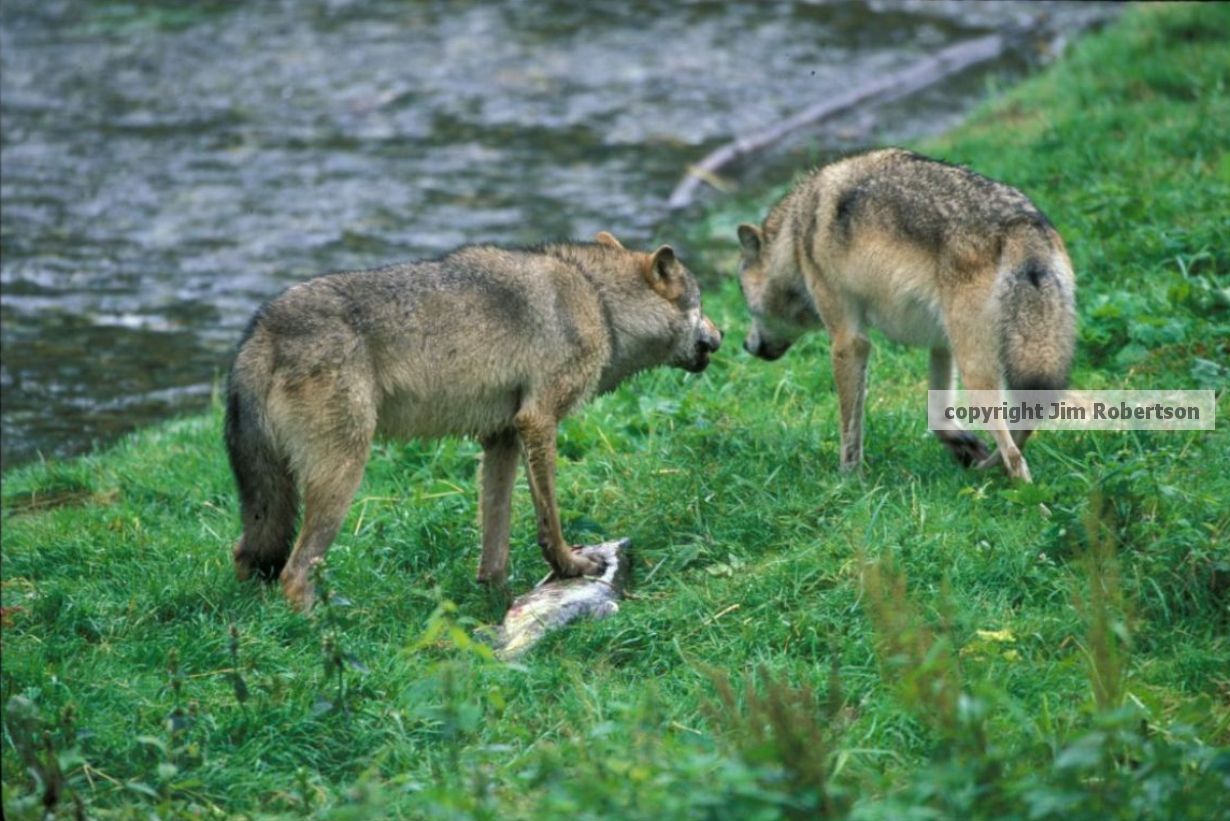
Bloodthirsty ‘factual’ TV shows demonise wildlife

From: http://www.guardian.co.uk/environment/nature-up/2013/may/17/bloodthirtsty-wildlife-documentaries-reality-ethics

Major US TV channels are promoting hysterical and outdated ideas about wildlife in popular, blood-soaked shows

Most people’s wild beasts live in the TV.

What I mean is that, in my experience, most people are highly unlikely to come eyeball-to-eyeball with a large wild animal in their everyday lives, and much of their knowledge of wildlife comes from a screen.

If you’re North American or get US-produced satellite TV, you’ve probably learned a lot about wildlife from outlets like the Discovery Channel, Animal Planet and History. You might trust these channels because you’ve seen educational, factually accurate shows on them, unlike the ‘trashy’ material that dominates free-to-air network TV.

But not everything on on these ‘factual’ channels might be as ethical or even as accurate as you might think, and the implications for conservation could be profound.

I recently spent a few entertaining hours watching episodes of Discovery’s Yukon Men, a hit ‘reality’ series about the residents of the small town of Tanana in central Alaska. Launched in August last year, it’s consistently gained over two million US viewers in its Friday night slot, been syndicated overseas, and helped the channel win some of its biggest audiences ever.

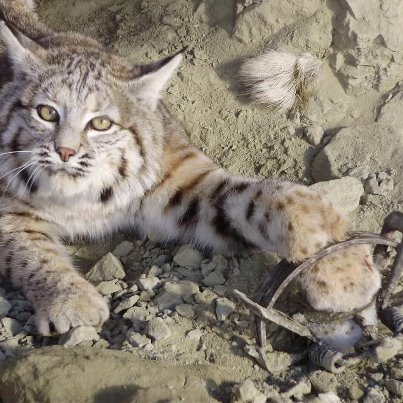
The first episode brings us to midwinter Tanana, which a theatrical, husky male voiceover tells us is “one of America’s most remote outposts” where “every day is a struggle to survive”. A dramatic, orchestral score pounds as we see a lynx struggling in a leghold trap, guns firing, a man attacking a squealing wolverine with a tree trunk, a wolf which a voice tells us “might eat one of those kids”, a hand lifting up the head of a bloodied, dead wolf to show us its teeth, and then a gloved hand dripping blood while the voiceover rumbles that in Alaska, it’s “hunt or starve, kill or be killed”.

That’s all in the first minute.

In the second minute the voiceover tells us that “the town is under siege by hungry predators”. We see wolves eating a bloody carcass, a growling bear, men with guns shouting bleeped-out words, then a coffin. Another voice says that “there’s always somebody that’s not going to make it home”.

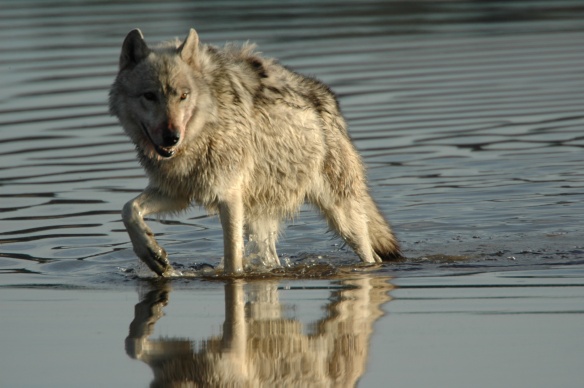
We’re soon told that Tanana’s water pipes are freezing up “but that’s not the only crisis. Wolves have been spotted on the edge of town.” Charlie, a hunter, shows us the tracks of “a lone wolf”. “Wolves are mean, ferocious animals and they can tear a man apart real easy” he says, so “we have to get this wolf, it’s not an if, its a must, because he’ll go to any measure to eat. They’re the worst kind.”

We then meet Courtney, a local mother, who’s scared that the wolf could eat her young daughter. Charlie agrees, “if we turned our backs for a couple of minutes, that baby would be gone.”

“There have been twenty fatal wolf attacks in the last ten years”, the voiceover intones.

Charlie kills the wolf in the next episode, pursuing it on a snowmobile and shooting it outside town with an AR-15, the same semi-automatic assault rifle used by the Sandy Hook school shooter. “The only good thing about a wolf is the quality of their nice fur”, says Charlie, holding up the blood-smeared pelt. Courtney agrees: “Dirty little rotten bastard.”

Another scene shows Stan, a fur trapper, dealing with a wolverine. Wolverines, about as big as a medium-sized dog, are the largest members of the weasel family. One has been caught by its front paw in one of Stan’s steel leghold traps and is trying to get away, squealing and snarling as he approaches. “He’s really dangerous”, says Stan, “I don’t think any human being could keep an attacking wolverine from killing them.”

Stan chops down a small tree, which he bashes the struggling wolverine with — to “stun” it, he says. Once the wolverine’s strength is somewhat depleted, he approaches it with a small handgun. The animal’s head turns, tracking the gun, and he shoots it. The camera zooms in to show steam rising from the carcass.

Charlie, too, sets a leghold trap for a wolverine, and catches it. As it squeals in the trap, trying to run away, the voiceover tells us dramatically that “wolverines are capable of tearing human beings apart.”

“He could gut me”, says Charlie, before raising his AR-15 and opening fire on the hapless animal. Many of his shots miss, but he eventually kills it.

All through Yukon Men we see predatory animals being killed: a leghold-trapped lynx is strangled to death with a wire noose by Stan’s son, a grizzly bear is shot in the head, etcetera, and every time the producers use the techniques of the reality TV genre to convince us that the animals are man-woman-and-child killers which are best turned into fur coats.

Joey Zuray kills a lynx – Yukon Men promo video

(Click here to view this video on YouTube.)

Frenetic edits and manic music are used to build drama, authoritative-sounding voiceovers combine with the tightly edited words of the on-screen characters tell how dangerous, vicious or deadly the creatures we’re seeing on screen are. I spot occasions where animal noises seem to have been overdubbed to make them sound scarier. It makes for gripping viewing, but I wondered if Discovery wasn’t betraying its viewers who trust it to deliver reliable, factual TV. As a trained zoologist and filmmaker, much of what I was seeing didn’t make sense to me.

Take wolverines for example: I lived in Alaska for almost a year and never saw one. They’re extremely shy and avoid humans. Although they’re capable predators of small animals and found in many cold, high-latitude regions of the northern hemisphere, I’d never heard of a wolverine killing a person.

I searched the web and could not find a single documented case of a wolverine even attacking a person anywhere in the world, ever.

To double-check, I emailed Jeff Copeland of the Wolverine Foundation, who told me that “we are not aware of any instance in which a wolverine has killed a human, or even attempted to do so”, which perhaps explains why the wolverines in Yukon Men are doing their desperate best to get away from their human assailants.

Wolves are a lot larger than wolverines, of course. But even though the US and Canada hold over 60,000 wolves, I found only two records of fatal attacks by wild wolves in these countries in last ten years; one controversial case in Saskatchewan, Canada, in 2005, which some experts think was actually a bear attack, and another in Alaska in 2010.

Why did the producers of Yukon Men tell their viewers that there had been twenty fatal wolf attacks in the last ten years, implying that these had taken place around Tanana? Why does a ‘factual’ show portray Alaskan wolves as man-eating monsters straight out of Victorian fairytales, a serious threat to life and limb, when the data show that wolf attacks are extremely rare in North America?

Idaho-based wolf expert Suzanne Stone told me that she’d once been surrounded by a howling pack of gray wolves while sitting by a campfire in the twilight, armed only with a marshmallow on a stick. The animals were only twenty or thirty yards away. Was she scared, I asked? “No, not at all. It was an incredible experience. I howled back and forth with them”, adding that people and domestic livestock were the most dangerous creatures she’d encountered in many years of walking in wolf-inhabited backcountry.

Yukon Men isn’t the only ‘factual’ show about people who kill wild animals that seems to hysterically hype up the danger the animals pose to humans while minimising (or completely failing to address) their important ecological roles.

The Louisiana alligator hunter stars of the History Channel’s blockbuster show Swamp People use huge baited hooks to snare alligators and various guns to blow their brains out, all the while telling us how desperately dangerous they are. Despite Louisiana having almost two million alligators, I could not find a single record of a fatal alligator attack there in the last century, although Florida ‘gators do occasionally eat people. (Swamp People gets record ratings for the channel, despite the contemporary alligator hunt’s tenuous connection to history.)

“It’s a Texas thing” – Rattlesnake Republic promo video

(click here to watch this video on YouTube.)

Animal Planet’s Rattlesnake Republic shows Texan snake wranglers capturing dozens of rattlesnakes at a time while repeatedly playing up their lethality. In the episodes I watched I never saw anything about how snake hunters have helped make the Eastern Diamondback Rattlesnake so rare that it’s now a candidate endangered species. Rattlesnake Republic sends a clear meta-message that the only good rattlesnakes are dead ones, sewn into boots.

Discovery and the BBC Natural History Unit have arguably similar status in the wildlife filmmaking industries on their respective sides of the Atlantic, and have co-produced high-profile series like Planet Earth and Africa. The BBC displays its editorial guidelines for natural history shows on a public website which, on the face of it, Discovery’s Yukon Men seems to fall afoul of. The BBC guidelines say that “audiences should never be deceived or misled by what they see or hear”, that “we [the BBC] should never be involved in any activity with animals which could reasonably be considered cruel”, for example.

This begs the question: What are Discovery’s editorial guidelines?

After numerous calls and emails to the Discovery Channel and Animal Planet, I’ve yet to find out. I’ve not received any indication that either of these channels (which are owned by the same company) even have editorial guidelines or an ethics policy. The Discovery Channel gave me only one line in response to my questions: “We are committed to the highest standards of natural history filmmaking.”

Despite partnering with them on multimillion-dollar shows, the BBC’s Natural History Unit also seems to have no idea what Discovery’s policies are; when I asked, the BBC would only say that they expected any versions of their programs aired by co-producers to adhere to BBC standards.

The History Channel told me that their standards and practices department ensures that all their shows meet “the standards of good taste and community acceptability while also allowing our creative departments the freedom to explore new and innovative ideas.” Each programme is individually evaluated, but “given the subjective judgments that are required, it is difficult to come up with a detailed list of guidelines.” History’s statement said nothing about factual accuracy or animal cruelty.

I contacted National Geographic TV, assuming that this flagship brand would have a policy something like that of the BBC’s. Christopher Alberts, the Senior Vice President of Communications for the National Geographic Channels, told me that they have “one of the best policies there is”, but refused to send it to me or tell me anything about it.

Why are these factual networks, whose survival depends on building trust with their audiences, so reluctant to clarify their ethics policies with respect to wildlife?

What does it mean for conservation if high-rating shows on leading channels are portraying wildlife in a negative, seemingly misleading way to millions of viewers worldwide? And why are so few people saying anything about it?
copyrighted-wolf-argument-settled

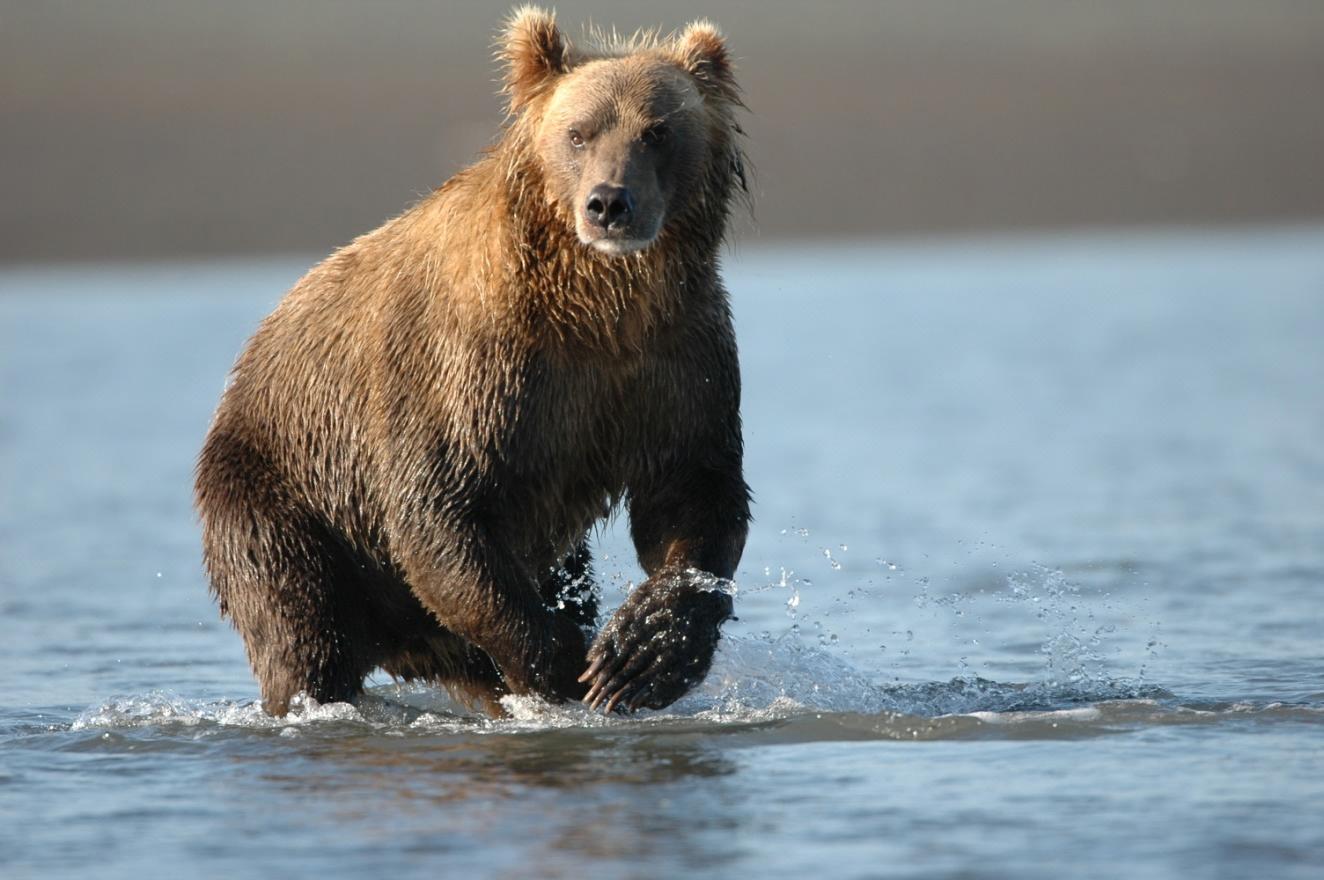
The True Nature of the Grizzly Bear

Here’s another older letter to the editor (this time to small, local paper in Northeast Washington), that I found in my archives…

A couple of months ago I may have sided with the attitude that if grizzly bears come back to the North Cascades on their own, fine, but there’s no need to reintroduce them. But now, after a rash of anti-grizzly letters have appeared in this paper, I’m ready to become one of the champions of their full recovery here. I hope your readers are laughing off the letters from these misguided, close-minded fanatics and will learn for themselves the true nature of the grizzly bear, instead of jumping on the fear bandwagon and turning their backs on this vanishing species.

One of the common misconceptions frequently stated is that these bears are fearless and have no respect for man. This would lead you to believe that grizzlies would soon be wandering the streets of Winthrop. The fact is, grizzlies will avoid man if at all possible and will choose to inhabit the most rugged and remote areas. I worked for years in known grizzly country in Montana and the Selkirk Mountains of Washington and only sighted a grizzly in those areas once (although I saw numerous black bears).

On the other hand I’ve seen scores of grizzlies and have had numerous positive encounters with them in Yellowstone and national parks in Alaska where bear hunting is not allowed. In one case, I came face to face with a large grizzly on a narrow, brushy trail. I rounded the corner and nearly prodded him with my fishing pole before seeing him. The grizzly did not charge, but merely waited until I moved off the trail before he continued on. As John Crawford put it in an article entitled, “Getting along with grizzlies,” “…Confidence devoid of cockiness and a deep basic respect and fondness for grizzlies” should be our attitude if we meet up with Ursus arctos. Crawford goes on to describe other typical bear encounters. In one case, two B.C. trail workers met a grizzly who was running toward them in pursuit of a grouse. The bear did not see the men, but when he got a scent of them, “he reacted as though he’d run into a wall. His front legs stiffened; and mud splattered as his paws pushed out to break.” Then, “the bear turned and walked slowly, sullenly away. As soon as he was out of sight…he broke into a gallop…”

To those people who can’t appreciate living near one of the last wild areas in the lower 48, there are plenty of place to live where you won’t have to face the remote possibility of encountering a wild animal. If we are not willing to allow grizzly bears to exist in the rugged Cascade Mountains, what can we say if elephants are wiped off the African continent, or pandas have joined the dinosaurs?

Text and Wildlife Photography ©Jim Robertson, 2013. All Rights Reserved

Text and Wildlife Photography ©Jim Robertson, 2013. All Rights Reserved

USFWS Offers $2500. in AK Eagle Snaring Case

Snaring claims 2 more innocent victims! From the USFWS:

March 26, 2013

The U.S. Fish and Wildlife Service, Office of Law Enforcement is
investigating the death of two golden eagles near Chickaloon, Alaska. A
reward of up to $2,500 is being offered for information leading to a
conviction of the person or persons responsible for killing the eagles.

The eagles were discovered in the Anthracite Ridge area northwest of the
Chickaloon-Knik-Nelchina Trail along Purinton Creek. The eagles were found
lying dead on top of a bait pile of meat that was surrounded by snares used
by trappers. Evidence at the scene suggests the eagles were caught and
killed in the snares while trying to get at the meat in the bait pile. One
of the golden eagles was an adult female and the other was an immature male.

Golden eagles are the largest raptor in North America and range from Mexico
to Alaska. Golden eagles may live up to 30 years in the wild and sometimes
mate for life. Golden eagles are mainly found in mountainous regions and
eat small mammals, birds, fish, and carrion.

Golden eagles are protected by the Bald and Golden Eagle Protection Act and
the Migratory Bird Treaty Act, both federal wildlife statutes. Violations
of these statutes carry maximum criminal penalties of up to $100,000 and/or
one year in federal prison.

Anyone with information concerning these eagles is asked to call the U.S.
Fish and Wildlife Service, Office of Law Enforcement in Anchorage at (907)
271-2828.

Alaskan-Wolf-Snare_med

Back To the Bad Old Days

What’s up with all the anti-wildlife legislation going on around the country these days? Everywhere you look there’s some state senator or representative introducing bills to keep non-human animals down and implement some new form of cruelty to punish them for the crime of not being born of our privileged species.

A few examples: a self-amused eastern Washington representative is calling for east-side wolves to be moved out of his district to the west side of the Cascade Mountains; at the same time Washington State politicians just introduced three bills to make it easier for ranchers to use lethal measures on wolves whenever they see fit; and of course you’ve heard that Montana’s public servants are on a rampage to get rid of their resident wolves. Now one of their legislators wants to lower the minimum hunting age for that state to nine years old.

Meanwhile, in Alaska, a senator just put forth legislation to instate a $100.00 bounty on sea otters! Never mind that these playful, aquatic mammals were nearly completely wiped out during the fur trade era, are critically endangered or extinct from much of their former range and are still listed in Alaska as Threatened or Endangered under the federal ESA, those poor, underpaid (sarcasm intended) commercial crab fishermen see them as competition. (Far from downtrodden, crabbers take pride in being the wealthiest of commercial fishermen; no doubt the senator who proposed the bounty is counting on a kickback into his campaign coffers from the crabbing industry for his otter oppression bill.)

And the list of detrimental anti-wildlife legislation goes on and on.

Is it just me, or have good ol’ boy state politicians stepped up the pace of non-human animal persecution? It’s as though they’re intentionally trying to drag us back to the bad old days of the 1800s, arguably this country’s most reckless period for uncontrolled animal exploitation—besides, perhaps, the present.

Take Action:

Not surprisingly, state legislators only take input from residents of their given state, but since there are bogus bills and measures cropping up across the country, there should be something to speak out against wherever you live. For instance, if you live in Washington State, contact your senator and urge them to oppose anti-wolf bills SB 5187, SB 5188 and SB 5193. Let them know:

  • These three bills would undermine the state’s wolf management plan by giving authority to the county legislators and local sheriffs over the state wildlife agency biologists, and would allow the public to override the state and kill wolves perceived to be a threat to livestock on public and private lands.
  • There are only 50 wolves in Washington.  Now is not the time to remove their protection.
  • Washington’s wolf management plan was created with massive public involvement and adopted unanimously by the Washington Wildlife Commission; powerful ranching advocates should not be allowed to undermine it.
Text and Wildlife Photography ©Jim Robertson, 2013. All Rights Reserved

Text and Wildlife Photography ©Jim Robertson, 2013. All Rights Reserved


TIME TO END A TWISTED TRADITION!

Unless a severe blow to the head or some congenital brain disorder has rendered them incapable of feeling empathy, anyone who has witnessed the harrowing ordeal suffered by an animal caught in a leg-hold trap should be appalled and outraged that trapping is legal in a society that considers itself civilized.

The continuation of this hellish violation in a country governed by the people suggests that either most folks have brain damage, or the majority of the voting populace is blissfully unaware of the terrible anguish someone caught in a trap goes through.

They must never have heard the cries of shock and agony when an animal first feels the steel jaws of a trap lock onto his leg. They must never have looked into the weary eyes of a helpless captive who has been stuck for days and nights on end…

525140_440817092654544_311118433_n

Sidestepping the indisputable cruelty issue, pro-trapping factions try to perpetuate the myth that this demonic practice is “sustainable,” but time and again entire populations are completely trapped out of an area, often within a single season. The winter after I found wolf tracks in Alaska’s Katmai National Park, all seven members of a pack who had filled a niche in and around that preserve were killed by trappers. Though wolves are extinct or endangered in most of the US, but 1500 are permissibly “harvested” in Alaska each year.

Leg-hold traps are now banned in 88 countries and a few enlightened US states. Yet in most states, as in Canada, this twisted tradition is not only legal, it’s practically enshrined as a sacred human right. Compassionate people everywhere must add their voice to the rising call to end this gratuitous torture for good.

__________________________________________

Text excerpted from the chapter “Time to End a Twisted Tradition” in the book, Exposing the Big Game: Living Targets of a Dying Sport.

Photo Copyright Jim Robertson

Photo Copyright Jim Robertson

Snaring’s About the Sickest

In Alaska, bears—in addition to wolves—are routinely hunted, trapped and shot from planes under the deathly ill-advised notion that eliminating those animals leaves more moose or caribou for more hunters to slay. What the Alaska state Board of “Game” can’t seem to figure out is, as the number of hunters goes up, the quantity of moose goes down, simple as that. Will we have to see an Alaska devoid of bears and wolves before the game players finally figure out who’s to blame?

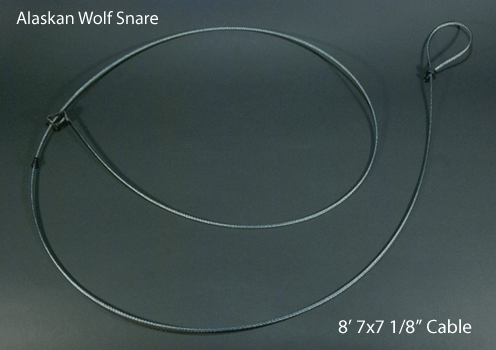
But if anything could be sicker than aerial gunning for bears, it’s snaring them. Bear snaring is a recent addition to Alaska’s long history of animal abuse and exploitation; this new act of depravity was allowed “experimentally” for the first time in 2008.

In the following excerpt from an article, posted January 12, 2012 in the Anchorage Press, Bill Sherwonit dared to imagine just what snaring is really like for its victims:

Picture this: An adult female grizzly bear is roaming forested lowlands on the western side of Cook Inlet when she gets a whiff of ripe, decaying flesh. Sensing an easy meal, the bear follows her nose to a large tree. Several feet above the ground, a bucket partly filled with rotting guts and skin has been attached to the tree; placed on its side, the open-lidded container faces outward, inviting inspection. The grizzly stands and sniffs around the cavity, then sticks her right paw into it. When the paw hits the bottom of the pail, it triggers a metal snare that closes around the animal’s foot. Feeling the pinch of the trap, the grizzly pulls back. As she does, the metal loop tightens.

Two cubs have followed her to the bait. Now, sensing their mother’s agitation, they too become upset. One begins to bawl. This only deepens the adult bear’s determination to free herself. With her free paw she swats and tears at the bucket and tree and she pulls even harder against the snare, which begins to cut through the animal’s thick fur and into her flesh. Now the embodiment of rage, the adult grizzly roars and snaps her jaws, thrashes about. The cubs wail louder.

Eventually exhausted by her struggles, the grizzly mom slumps against the tree, while the whimpering cubs huddle together nearby. More time passes and the trapped grizzly resumes her fight for freedom. The cubs again cry in panic.

It goes like this for hours. A day might pass before the trapper-called a “snare permittee” by state wildlife officials-comes to check the snare, even longer if he’s delayed for some reason. When he does show up, the grizzly mom goes berserk. Depending on their age and personalities, the cubs might charge the person, run off, or huddle in fear. These two retreat into nearby bushes.

The trapper could legally shoot the cubs, now in their second year, but he chooses to ignore the small, frightened bears and heads for their mom. He takes aim, fires his gun, and kills her…

The cubs remain in hiding. Without their mother, it’s more likely they will starve than survive the summer.

Even five years ago, the idea was unimaginable: trap and shoot Alaska’s bears so that human hunters might kill more moose.

Okay, that’s not entirely true. Always trying to come up with new ways to rid Alaska’s landscape of competitors for moose and caribou meat, at least a few predator-control proponents, Ted Spraker among them, were looking toward Maine, then the only state to allow the snaring of bears. The retired Department of Fish and Game biologist worked nearly three decades to increase kills of wolves and bears, primarily to benefit sport hunters.…

Stomach churning stuff—those “snare permitees” must be as callous as they come. I’m just glad Sherwinot saved me the heartache of making the imaginary journey myself this time.

The late, Canadian naturalist and author, R D Lawrence, wrote:

“Killing for sport, for fur, or to increase a hunter’s success by slaughtering predators is totally abhorrent to me. I deem such behavior to be barbaric, a symptom of the social sickness that causes our species to make war against itself at regular intervals with weapons whose killing capacities have increased horrendously since man first made use of the club—weapons that today are continuing to be ‘improved’.”

Contact in for the Alaska Board of Game can be found here: https://exposingthebiggame.wordpress.com/2013/01/31/stop-bear-snaring-and-wolf-trapping-adjacent-to-denali/

Wildlife Photography ©Jim Robertson, 2013. All Rights Reserved

Wildlife Photography ©Jim Robertson, 2013. All Rights Reserved

Stop Bear Snaring and Wolf Trapping Adjacent to Denali

copyrighted-wolf-argument-settled
Please Tell the Board of Game to Vote “Yes” to Stop Bear Snaring and “Yes” to Create a No-Trapping Buffer Zone Adjacent to Denali!

Dear Wildlife Supporter,

The Alaska Board of Game will meet in Wasilla from February 8 – 15, 2013 to vote on proposals governing wildlife management regulations for the Central and Southwest regions of Alaska.

The BOG has many, many proposals to consider at this meeting – there are many worthy proposals to support and even more that need to be opposed. However, AWA is focusing on two crucial issues: bear snaring (Proposal 105) and protecting Denali’s wolves (Proposal 86).

You may review all of the proposals online via the link below and make additional comments on as many as you choose.

E-mail comments on the proposals are due to info@akwildlife.org by 5:00 pm on Friday, February 1, 2013, and we will deliver them to the Board of Game prior to the start of the meeting. (The BOG does not accept comments via e-mail.)

Comments should specifically state “support” or “oppose” and the proposal number(s) on which you are commenting.

Comments also may be faxed or mailed so they are received by the Board of Game before February 7.

Comments:

ATTN: Board of Game Comments
Alaska Department of Fish and Game
Boards Support Section
P.O. Box 115526
Juneau, AK 99811-5526

Fax comments to:
(907) 465-6094

The current BOG proposal book is available in pdf format online at: http://www.adfg.alaska.gov/index.cfm?adfg=gameboard.meetinginfo. Proposal numbers 45 through 126 (pages 62 – 198) are scheduled to be considered at this meeting.

We are asking you to please comment in support of the following two proposals:

Proposal 105 (page 158), submitted by AWA, would ban grizzly and black bear snaring in the Southwest and Central regions.

* Scientists overwhelmingly agree that bear snaring is indiscriminate, cruel and not biologically sustainable.

* Bear snaring is an extremely controversial method of killing animals. The BOG tarnishes Alaska’s image for residents and non-residents alike by insisting on continuing its war on predators. Bear snaring has never been allowed in Alaska since statehood until the BOG approved an experimental program in 2008.

* Because bear snaring is indiscriminate, females with dependent cubs and cubs themselves are at risk. Bears have one of the lowest reproductive rates and it is for this reason modern scientific management principles discourage the harvest of females.

* Enforcement will be a nightmare for the Alaska State Troopers, who are already stretched thin.

* There are the dangers to other consumptive users, hikers and their pets who may come upon a situation where one bear is caught while its siblings or mother remain free in the area, creating the very real possibility of severe injuries or fatalities.The baited traps also create food-conditioned bears, and animals which learn to associate food with humans are a danger to our communities.

* Bear snaring is archaic, cruel and should be banned.

* Living bears have a very high value as a tourism draw and a source of revenue. They are almost always cited as one of the “big three” species visitors come to Alaska to see.

Proposal 86 (page 126) would re-establish a no-trapping buffer zone adjacent to Denali National Park. This proposal would provide crucial protection for wolves that wander across the Park boundary onto state land in search of prey or mates, where they are targeted by several recreational trappers.

* Wolf populations (and therefore viewing opportunities) have declined significantly in the Park due in part to trapping along the east and south Park boundary. The most recent official survey (Spring 2012) found a total of only 70 wolves in nine packs in the six million acre park – one of the lowest populations in decades.

* Several hundred thousand visitors annually travel to Denali to view wolves and other wildlife. Two or three recreational trappers targeting wolves habituated to the sight and smell of humans should not be allowed to negate visitors’ viewing opportunities (nor the millions of dollars they spend in the state).

* The loss of only one wolf to these trappers can result in a huge impact on viewing opportunities in the Park. Last spring the alpha female of the Grant Creek pack was trapped and killed just outside the Park boundary. The pack produced no pups last year, and subsequently dispersed. For years the Grant Creek pack had offered hundreds of thousands of Park visitors the best, most frequent opportunities to view wild wolves.

[Note: a six year moratorium on submitting proposals to re-establish a Denali buffer zone was enacted by the BOG in 2010. A request to the BOG in January to rescind its moratorium was met with a quick, unanimous refusal to even consider the matter. It is not known how the BOG will deal with Proposal 86 at the February meeting.]

Please take the time to speak out on behalf of Alaska’s wildlife. Our bears and wolves need your support.

As ever, thank you for your support and for your commitment to Alaska’s wildlife.

Best regards,
Tina M. Brown
President
Alaska Wildlife Alliance

PS: We will of course let you know the outcome of these and other proposals after the conclusion of the BOG meeting.

Alaska Wildlife Alliance
P.O. Box 202022
Anchorage, AK 99520
info@akwildlife.org
http://www.akwildlife.org