Crippling Animals Should Weigh on One’s Conscience

Other than a stopover at the Anchorage Airport on my family’s flight home from Japan in 1962 when I was two years old, my first trip to Alaska was in 1977. Back then I was still deceived by society’s prevailing norms and under the influence of its contradicting principles regarding fish (as they were aquatic, enigmatic and incapable of voicing their distress, surely they didn’t have the right to be left alone), so I’d taken a summer job in the salmon fishing industry at a dismal settlement on the windswept side of the breathtaking Alaska Peninsula.

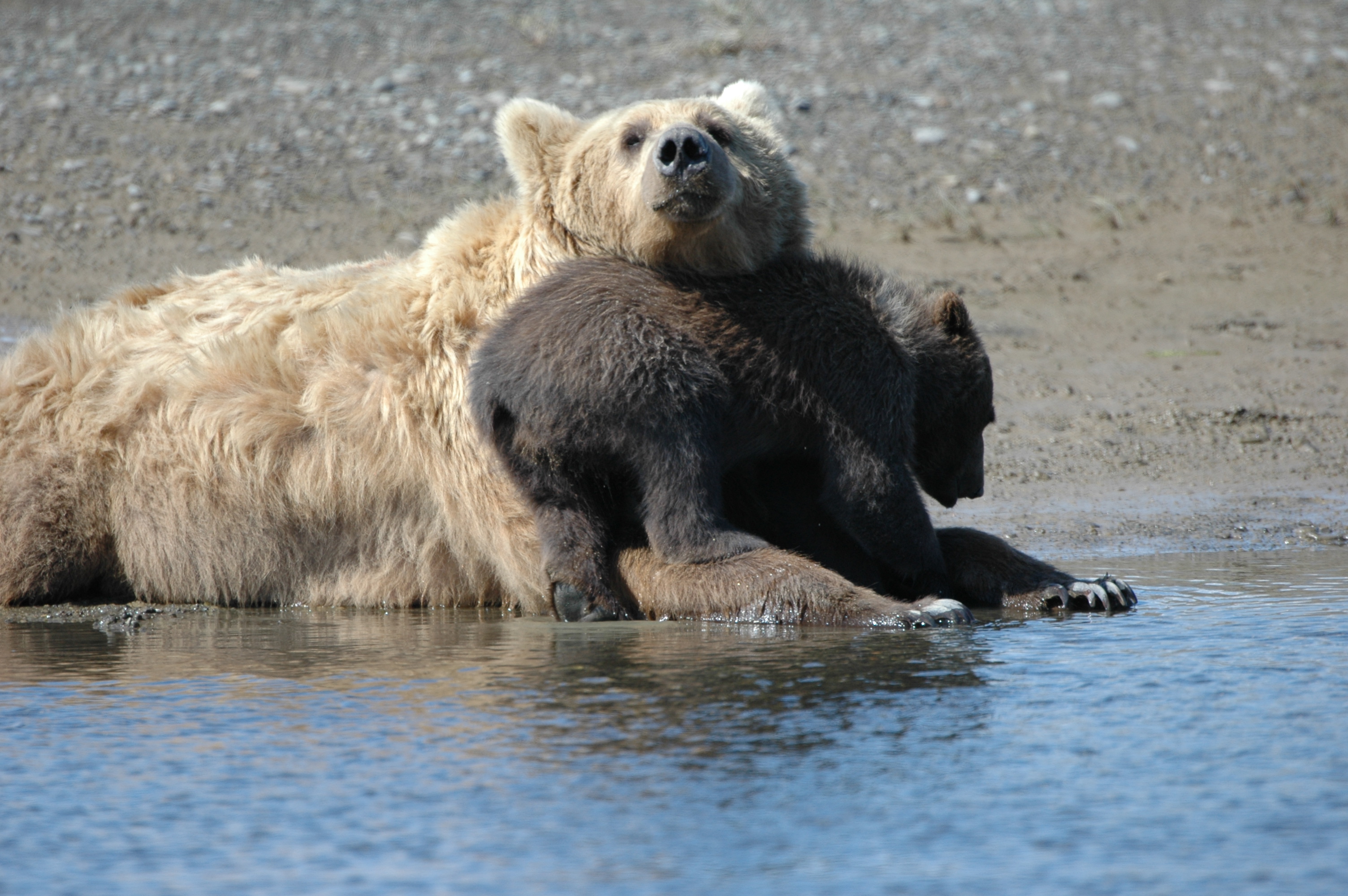
Nak Nek was a gloomy ghost town most of the year and a small but hyperactive boom town during the annual fish-kill frenzy, when the tides twice-daily ushered in barge after barge overflowing with mountains of bloody fish bodies. The only thing the village had going for it, to my mind, was its proximity to the spectacular emptiness of Katmai National Monument, which I vowed to visit once the term of my employment was over. Named after one of its many active volcanoes and supporting a hefty population of grizzly bears who congregate at the spawning streams (to which any salmon lucky enough to escape slow death stuck in a gill net feels a desperate yearn to return), Katmai’s best known feature is Brooks Falls.

At the time, grizzlies (or brown bears, as they’re locally known) outnumbered people, and there wasn’t so much as a footbridge across the clear, deep river that connects Nak Nek Lake to Brooks Lake. This was long before the construction of the now-popular tourist boardwalk and viewing platform, complete with bear-proof railings and gates. The only way through the dense black spruce forest and tall-grass marsh to the falls was on a crooked, narrow bear trail.

On the afternoon of my last day of my stay at Katmai, I decided to cast out a line and try to catch one of the many sockeye salmon converging along the edge of Nak Nek Lake, waiting for their turn to head upstream. Right away I hooked one, but before I could bring it ashore, the line broke and the fish swam off trailing a length of fishing line. I felt terrible, imagining it would end up tangled on something and die unable to get to a spawning bed.

But the next morning, while waiting for the float plane, I tied on a new fly and cast out my line once again. This time I was able to land a fish, which turned out to be sweet relief both for me and for the fish. Incredibly, it was the same fish as the day before—this time the hook was stuck in a branch that had the broken line from the day before tangled around it! I unhooked the fish and released it back into the lake to continue its journey, now unfettered by human garbage…

The experience was part of what led me to eventually turn my back on fishing altogether. The reason I bring all this up is, knowing how bad I felt when the fish got away with a hook stuck in it makes me wonder how some hunters can live with themselves when they wound animals with bullets or arrows and watch them run off to suffer and die a prolonged death because of their thoughtless acts.

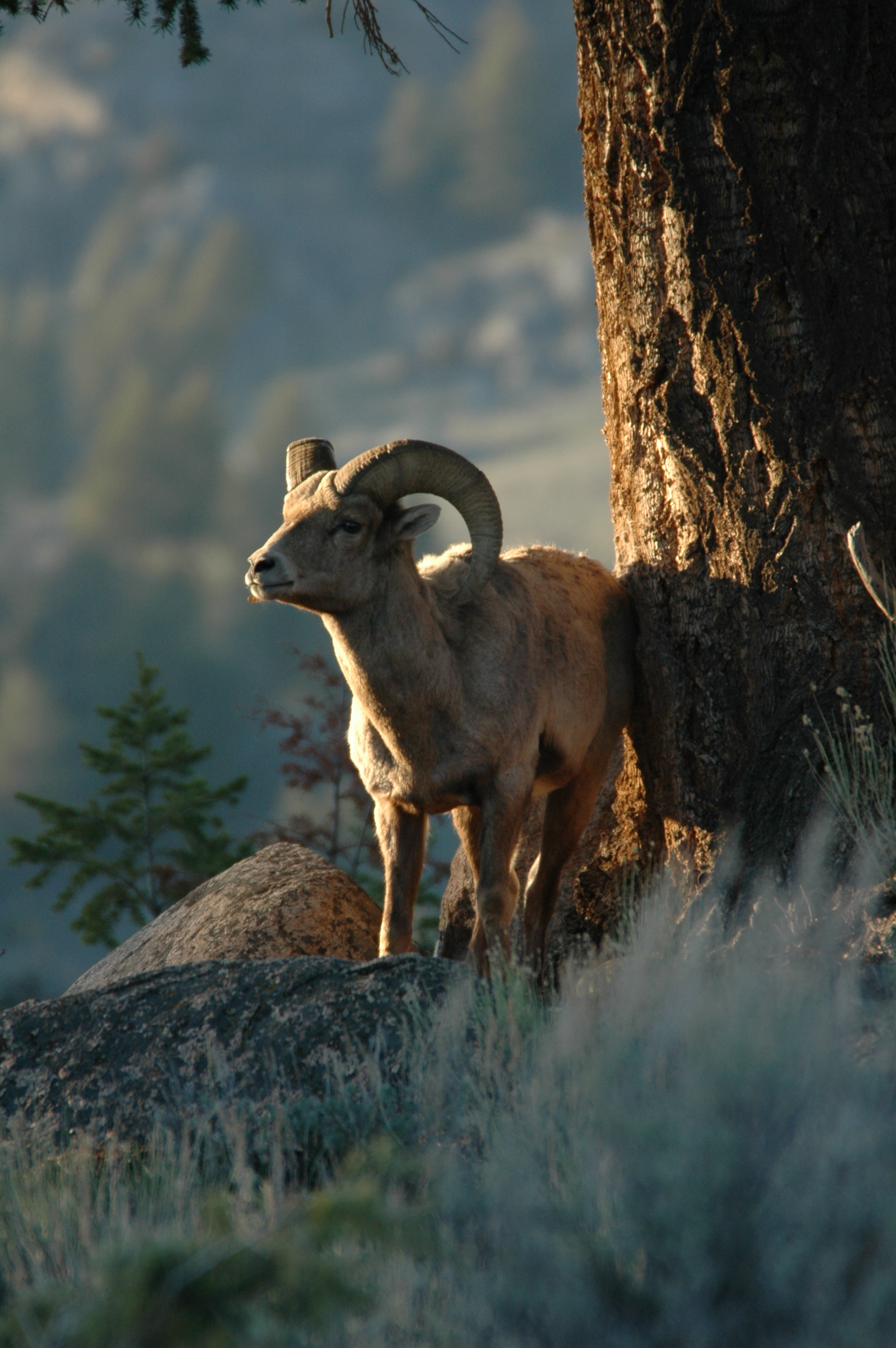
Bowhunting is notorious for wounding deer, elk or others who can 473851-1234448543-mainlive for months with arrows stuck in them. A recent article about a town on the Oregon Coast deciding to allow bowhunting and hunting with shotguns loaded with slugs, in a forest reserve right outside city limits, quoted a city council member reporting on an all-too-common tragedy, “There are animals that are harvested during rifle season where broadheads are found” (in them). Though he admitted that there’s a higher chance that an elk or deer will be wounded but not killed if hit by an arrow rather than by a slug or a rifle bullet, the bureaucrat did not want to appear softhearted and callously went on to say, “Elk are amazingly tough animals.”

What I want to know is, given that bowhunting has a 50% crippling rate, why aren’t we hearing about more bowhunters turning their backs on the sport? Could it be they lack remorse, guilt, empathy or a normal human conscience?
_______________________

This post includes an excerpt from the book, Exposing the Big Game: Living Targets of a Dying Sport.

Text and Wildlife Photo ©Jim Robertson

Text and Wildlife Photo ©Jim Robertson

State Agency Game Farming Is Not Compatible with Ecosystem Integrity

The following pro-wildlife/anti-wolf hunting article puts today’s “game” department policies into perspective…

State Agency Game Farming Is Not Compatible with Ecosystem Integrity
by George Wuerthner

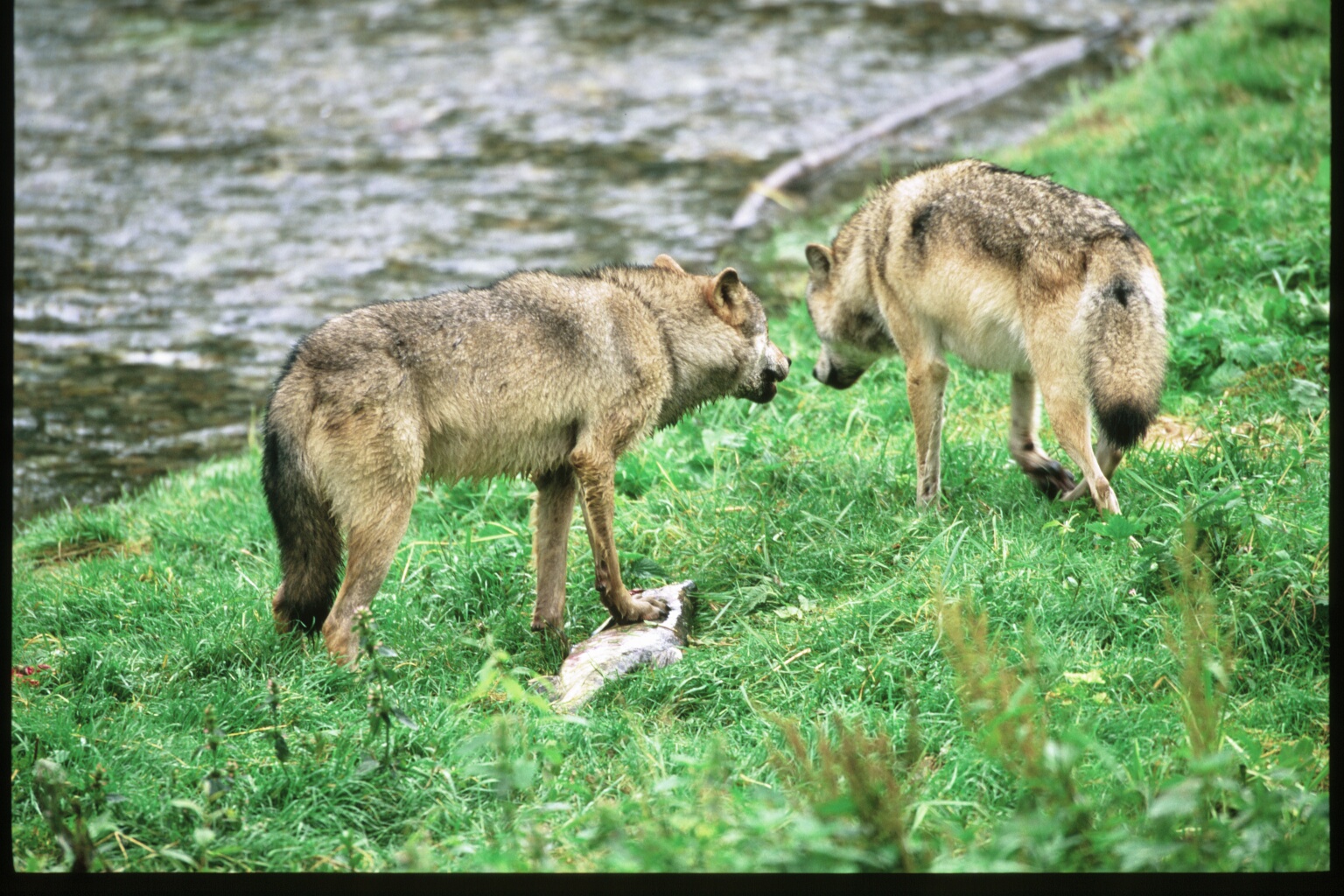
With the delisting of wolves from protection under the Endangered Species Act, management of wolves has been turned back to the individual states where wolves occur. In most of these states, we see state agencies adopting policies that treat wolves as persona no grata, rather than a valued member of their wildlife heritage. Nowhere do I see any attempt by these state agencies to educate hunters and the general public about the ecological benefits of predators. Nor is there any attempt to consider the social ecology of wolves and/or other predators in management policies. Wolves, like all predators, are seen as a “problem” rather than as a valuable asset to these states.

In recent years state agencies have increasingly adopted policies that are skewed towards preserving opportunities for recreational killing rather than preserving ecological integrity. State agencies charged with wildlife management are solidifying their perceived role as game farmers. Note the use of “harvest” as a euphemism for killing. Their primary management philosophy and policies are geared towards treating wildlife as a “resource” to kill. They tend to see their roles as facilitators that legalize the destruction of ecological integrity, rather than agencies dedicated to promoting a land ethic and a responsible wildlife ethic.

Want proof? Just look at the abusive and regressive policies states have adopted to “manage” (persecute) wolves and other predators.

Idaho Fish and Game, which already had an aggressive wolf killing program, has just announced that it will transfer money from coyote killing to pay trappers to kill more wolves in the state so it can presumably increase elk and deer numbers.

The Montana Department of Fish, Wildlife and Parks (MDFWP) which many had hoped might be a bit more progressive in its predator attitudes, supports new regulations that will expand the wolf killing season, number of tags (killing permits), and reduces the license fee (killing fee) charged to out of state hunters who want to shoot wolves.

Wyoming is even more regressive. Wolves are considered “predators” with no closed season in many parts of the state.

Alaska, perhaps displaying the ultimate in 19th Century attitudes that seem to guide state Game and Fish predator policies, already has extremely malicious policies towards wolves, and is now attempting to expand wolf killing even in national parks and wildlife refuges (it is already legal to hunt and trap in many national parks and refuges). For instance the Alaska Fish and Game is proposing [aerial?]-gunning of wolves in Kenai National Wildlife Refuge and wants to extend the hunting/trapping season on wolves in Lake Clark National Park, Katmai National Park, and Aniakchak National Preserve until June, long after pups have been born. Similar persecution of wolves to one degree or another is occurring in Minnesota, Wisconsin and Michigan, which have been given management authority for wolves in those states.

Although some states like Montana changed their name from “game” to wildlife, their attitudes and policies have not changed to reflect any greater enlightenment towards predators.

Montana recently increased the number of mountain lions that can be killed in some parts of the state to reduce predation on elk.

South Dakota Game, Fish and Parks is on a vendetta against a newly established mountain lion population in that state, and greatly increased mountain lion kill in a small and recently established population of these animals.

The Wyoming Game and Fish is almost salivating at the prospect of grizzly delisting so hunters can kill “trophy” grizzly bears.

I could give more examples of state game agencies that have declared war on predators in one fashion or another.

The point is that these agencies are still thinking about predators with a 19th Century mindset when the basic attitude was the “only good predator is a dead predator” and the goal of “wildlife management” was to increase hunter opportunities to shoot elk, deer, moose and caribou. These ungulates are seen as desirable “wildlife” and predators are generally viewed as a “problem.”

Many state game farming agencies suggest that they have to kill these carnivores to garner “social acceptance” of predators. Killing wolves, bears, coyotes and mountain lions is suggested as a way to relieve the anger that some members of the ranching/hunting/trapping community have towards predators. Is giving people who need counseling a license to kill so they can relieve their frustrations a good idea? Maybe we should allow frustrated men who are wife beaters to legally pound their spouses as well?

Despite the fact that many of these same agencies like to quote Aldo Leopold, author of Sand County Almanac, and venerate him as the “father” of wildlife management, they fail to adopt Leopold’s concept of a land ethic based upon the ecological health of the land.

Aldo Leopold understood that ALL wildlife have an important role to play in ecosystem integrity. Decades ago back in the 1940s he wrote: “The outstanding scientific discovery of the twentieth century is not television, or radio, but rather the complexity of the land organism. Only those who know the most about it can appreciate how little we know about it. The last word in ignorance is the man who says of an animal or plant: “What good is it?” If the land mechanism as a whole is good, then every part is good, whether we understand it or not. If the biota, in the course of aeons, has built something we like but do not understand, then who but a fool would discard seemingly useless parts? To keep every cog and wheel is the first precaution of intelligent tinkering.”

To keep every cog and wheel means keeping not only species from going extinct, but maintaining the ecological processes that maintain ecosystem function. What makes state game farming policies so unacceptable is that there is no excuse for not understanding the ecological role of predators in ecosystem integrity. Recent research has demonstrated the critical importance of predators for shaping ecosystems, influencing the evolution of prey species, and maintaining ecosystem integrity. We also know that predators have intricate social relationships or social ecology that is disrupted or destroyed by indiscriminate hunting.

Yet state game farming agencies continuously ignore these ecological findings. At best the policies of game farming agencies demonstrates a lack professionalism, or worse, maybe they are just as ignorant of recent scientific findings as the hunters/trappers they serve.

Ironically these same state game farming agencies see that the numbers of hunters and anglers are declining, along with their budgets. Agencies depend upon the killing fees (licenses and tags) charged to hunters and anglers for the privilege of killing and privatizing public wildlife to run their operations. Yet instead of broadening their base of support from other wildlife watchers to those interested in maintaining ecological integrity, these agencies are circling the wagons, and adopting policies that reflect the worse behaviors and attitudes of the most ignorant and regressive hunting/trapping constituency. In the process, they are alienating more moderate hunters and anglers, as well as the general public.

The problem is that state game farming agencies have a conflict of interest. Their budgets depend on selling killing permits which depends upon the availability of elk, deer, moose and caribou to kill, not more predators. Any decline in the population of these “game” animals is seen as a potential financial loss to the agency. Therefore, these agencies tend to adopt policies that maintain low predator numbers. Yet these same agencies are never up front about their conflict of interest. They pretend they are using the “best available science” and “managing” predators to achieve a “balance” between game and predators.

Because of this conflict, game farming agencies turn a blind eye to ethical considerations as well. Most of the public supports hunting if one avoids unnecessary suffering of the animals—in other words, makes a clean kill. They also want to know the animal did not die in vain and the animals is captured and/or killed by generally recognized codes of ethical behavior. In other words, the animal is consumed rather than killed merely for “recreation” or worse as a vendetta and the wildlife has a reasonable chance of evading the hunter/trapper. But when the goal is persecution, ideas about ethics and “fair chase” are abandoned.

Personally I would rather see state agencies reform themselves and adopt more inclusive, informed and progressive attitudes towards all wildlife, especially predators. But judging from what I have seen, it appears these state game farming agencies are headed in the opposite direction.

If they continue down this path, it’s clear that they will lose legitimacy with the public at large. Efforts to take away management authority will only strengthen. For instance, voters in a number of states have already banned the recreational trapping of wildlife, always over the objections of state game farming agencies. Efforts are now afoot to ban trapping in Oregon and I suspect other states will soon follow suit.

The next step will be to take away any discretion for hunting of predators and perhaps ultimately hunting of all wildlife. The trend towards greater restrictions is seen as the only way to rein in the abusive policies of state game farming agencies. In California, the state’s voters banned hunting of mountain lions in 1991. Oregon banned hunting of mountain lion with dogs. In other states, there are increasing conflicts between those who love and appreciate the role of predators in healthy ecosystems, and state game farming agencies.

Bans on all hunting has even occurred in some countries. Costa Rica just banned hunting and Chile has so limited hunting that it is effectively banned.

I suggest that the negative and maltreatment of predators displayed by game farming agencies in the US, will ultimately hasten the same fate in the U.S.

ABOUT THE AUTHOR
George Wuerthner is an ecologist and former hunting guide with a degree in wildlife biology

Hunting Humans

After my post, Killing Wolves Provides “a Level of Tolerance”?, the director of a Canadian animal rights group, Lifeforce, sent me this press release, which, like my post, is a semi-satirical statement about turning the tables on trophy hunters…

Animal Rights Group To Booth: Let Us Hunt You

An animal rights group is challenging Vancouver Canucks forward David Booth to see what it feels like to be hunted in the wilderness. Peter Hamilton, director of the B.C.-based advocacy group Lifeforce, took umbrage with a picture Booth tweeted last week of the left winger posing next to a freshly-killed mountain goat.

He responded with a dare. “We’re challenging David Booth to put himself in the position of a hunted wildlife,” Hamilton told CTV News. “He would be subjected to the same plight that wildlife are, in hopes that he will reflect upon the suffering and pain of innocent animals.”

A draft version of the “Booth Hunt” plan indicates the Canuck would be sent into the wild unarmed, alone and without rations. A team of hunters with dogs and high-tech equipment would then attempt to track and capture him within an agreed-upon time limit. Naturally, Booth would not be harmed by his chasers.

“He would rely on any of his woodsman skills, as do the wildlife who are forced to rely on their abilities while being ruthlessly pursued,” the draft plan reads. Hamilton described trophy hunting as “barbaric,” and said it’s a practice that must be stopped.BOOTHHUNT

“A trophy is an inanimate object. These are sentient beings,” he said. “One has to question anyone’s motive in getting any kind of pleasure out of killing an animal in this manner.” …

I certainly have to agree with Peter Hamilton on that last point—their motive mirrors that of a serial killer—but as I told him, the fact that he’d know he wouldn’t be harmed by his pursuers would make Booth’s experience only a watered-down version of what a hunted animal fearing for its life goes through. Mr. Hamilton concurred; of course his proposition had to sound non-lethal in order to get the barbaric Booth to even consider going along with it.
6-4Hansens-trophy-goatIronically, another infamous celebrity who posed with murdered mountain goats is Anchorage, Alaska baker, serial killer and renowned trophy hunter, Robert Hansen (now serving a 461 year prison sentence for the murder of at least 17 women, ranging in age from 16 to 41.) Well-liked by his neighbors and famed as a local hunting champion, Hansen even broke several records for trophy (nonhuman) kills, documented in the Pope & Young’s book of world hunting records.

Another bit of irony: like the Connecticut school shooter, Adam Lanza, and the D.C. Beltway snipers, John Allen Mohammed and John Lee Malvo, he used a .223-caliber semi-automatic hunting rifle to make his kills (both human and non-human).

Whenever Hansen got a victim under his control, he would fly her in his private plane to his remote cabin where they would be subjected to torture and then set free in the woods, naked and sometimes blindfolded. Hansen would give his victims a brief head start and then hunt them down with a hunting knife or a high-powered rifle. In5-2Robert-Hansens-trophy-room describing his hunts to investigators, Hansen said that it was like “going after a trophy Dall sheep or a grizzly bear.”

As world renowned FBI profilers, John Douglas and Roy Hazelwood correctly surmised, Hansen was compelled to keep trophies of his murders, such as a victim’s jewelry. According to Douglas, the abuse of prostitutes is a way for perpetrators to get back at women. Hansen was probably using his victims as a way to get revenge (much like the motive of good ol’ boys who kill wolves).

Several investigators who were familiar with Hansen said that he was known around the area as a proficient hunter. He earned this reputation after taking down a wild Dall sheep with a crossbow. Douglas concluded that Robert Hansen must have tired of elk, bear and Dall sheep, and instead turned his attention to more interesting prey.

When investigators first heard Hansen’s confession, they couldn’t help but think of the popular fictional story “The Most Dangerous Game” by writer Richard Connell. In the story, a shipwrecked trio find themselves stranded on an uncharted island, where they meet a Russian Count, known only as General Zaroff. The group’s initial delight turns to terror when they realize that the shipwreck was no accident and the good general had lured them there so he could hunt them down.

According to the Huffington Post, Anchorage police and FBI investigators just released information about another Alaskan serial killer, Israel Keyes, who authorities said never showed any remorse but said he got a rush out of hunting for victims and killing them. He also tortured animals as a child, investigators said.

Again, the serial killer’s motive and behavior closely parallels a trophy hunter’s:

“Israel Keyes didn’t kidnap and kill people because he was crazy. He didn’t kidnap and kill people because his deity told him to or because he had a bad childhood,” Anchorage homicide Detective Monique Doll said. “Israel Keyes did this because he got an immense amount of enjoyment out of it; much like an addict gets an immense amount of enjoyment out of drugs. In a way, he was an addict, and he was addicted to the feeling that he got when he was doing this.”

While researching for this blog post, I dug up an article by lion conservationist, Gareth Patterson, entitled “The Killing Fields.” In it, Patterson compares the uncanny similarities between trophy hunters and serial killers.

Here are some excerpts…

Certainly one could state that, like the serial killer, the trophy hunter plans his killing with considerable care and deliberation. Like the serial killer, he decides well in advance the type of victim–that is, which species he intends to target. Also like the serial killer, the trophy hunter plans with great care where and how the killing will take place–in what area, with what weapon. What the serial killer and trophy hunter also share is a compulsion to collect trophies or souvenirs of their killings. The serial killer retains certain body parts and/or other trophies for much the same reason as the big game hunter mounts the head and antlers taken from his prey…as trophies of the chase.

Hunting magazines contain page after page of (a) pictures of hunters, weapon in hand, posing in dominating positions over their lifeless victims, (b) advertisements offering a huge range of trophy hunts, and (c) stories of hunters’ “exciting” experience of “near misses” and danger. These pages no doubt titillate the hunter, fueling his own fantasies and encouraging him to plan more and more trophy hunts.

Trophy hunters often hire a camera person to film their entire hunts in the bush, including the actual moments when animals are shot and when they die. These films are made to be viewed later at will, presumably for self-gratification purposes and to show to other people–again the longing “to be important” factor?…

And finally, while on the subject, here’s an excerpt from the chapter, “Inside the Hunter’s Mind,” in my book, Exposing the Big Game: Living Targets of a Dying Sport:

A hunter’s true impetus is to serve the evil master in custody of his soul: his ravening ego. His self-interests are consistently placed far above those of his animal victims, whom he depersonalizes and views as objects rather than individuals. Reducing living entities to lifeless possessions and taking trophies of their body parts—without the slightest hint of guilt, remorse or other higher sentiment—is standard practice for the sport hunter…and the serial killer.

The sportsman keeps his malignant, murderous obsession concealed within the hollow confines of his psyche…until the next hunting season. Beneath a façade of virtuosity he’s driven by an urge to obtain surrogate victims, or stand-ins, representative of some perceived injustice he imagines he underwent at the hands of someone who didn’t let him have his way at some time in his life.

Maybe as a young child he felt he was undeservedly reprimanded, and so he terrorized the family pet, threw rocks at pigeons or turned to some other form of animal abuse to lift his sense of worth and gain a feeling of control. Over the years, he may have found that same kind of ego boost in killing animals for sport, partially satiating his savagery until the next legal opportunity to kill again. Imagining he’s reaping the power of the bear or the stately bull elk temporarily boosts his floundering self-esteem or relieves his sense of inadequacy. But his pride is a shallow pool, constantly in need of refreshing…

Text and Wildlife Photography ©Jim Robertson, 2012. All Rights Reserved

Text and Wildlife Photography ©Jim Robertson, 2012. All Rights Reserved

No Market for the Truth?

I was watching a PBS documentary on the Alaska Lands Act and how the concept of protecting the wilderness was met with opposition by local resource extractors who had the patrician perception that the land was theirs and theirs alone and who wanted no part of any new ideas such as land preservation for the sake of the wildlife and nature itself.

The resident’s closed minded stance was reminiscent of that taken by the owner of a bookstore in Lincoln City on the Oregon Coast who refused to carry my book, Exposing the Big Game: Living Targets of a Dying Sport, on the grounds that there’s “no market for an anti-hunting book” around there.

While I do not doubt there are a higher percentage of hunters in that smallish tourist town compared to the national average, I don’t buy that no one living there or travelling through would be interested in expanding their knowledge on the subject of animal protection. There are certainly plenty of new pro-hunting books and magazines out these days, some of which were for sale in that very shop.

Based on what she told me, it’s clear that the bookstore owners’ snubbing of Exposing the Big Game was due to there being hunters among her family and friends and thus she did not want anything in the store that might expose the dark underbelly of sport hunting. It was just another case of someone doing their part to suppress the truth about the myriad of malicious ways that the animals of the Earth are being exploited for the benefit of just one narcissistic, overly-acquisitive species.

Text and Wildlife Photography ©Jim Robertson


A Day of Remembrance for Wolves

If I a flag to hang outside my house, it would be flying at half-mast today.

Today should be officially declared a day of mourning for wolves, in honor of Washington’s Wedge pack—brutally killed last week to appease an intolerant cattle rancher—and also a day of remembrance for all of the wolves across the country and throughout our history who were hunted to extinction in order to make room for modern humans and their chosen food species.

This whole thing brings to mind the first time I beheld the sight of wolves. Due to repeated persecution by residents of a nearby, decrepit mining-town-turned-tourist-trap on the Alaska panhandle, wolves hadn’t been seen around there for decades. Their surprise return that year was greeted with generous appreciation by an assembly of bear watchers and photographers who shared in my elation.

But the spectacle lasted only one short season; by late fall a couple of local tyrants—under the patrician delusion that it‘s all here for them—had trapped, shot and otherwise driven off every member of the pack. These days, the only sign of wolves to be found is a hand-painted plywood sign advertising “Wolf Hides for Sale” in front of a detestable trinket shop on a muddy back road of the wretched little town.

Wolves in Alaska can legally be killed by anyone, virtually anytime and by any means imaginable (former Governor Sarah Palin‘s apparent personal favorite: strafing from low-flying aircraft).

I never thought I’d see the day that Washington wolves would suffer that same fate; when wolves here would be relentlessly pursued from the air and gunned down like escaped convicts as they fled for the Canadian border; when a radio tracking device would be used not for furthering scientific understanding, but to aid in the massacre of an entire family; when wolves in one of the most progressive states would be sacrificed on the altar of the T-bone and the cheeseburger.

As in Alaska, a few local tyrants here think they can dictate whether a wild wolf pack should live or die. Clearly, bigotry against wolves is alive and well in Washington State. It’s just tragic that the wolves of the Wedge pack had to be the first to find out.           __________________________________________

A portion of this post was excerpted from the book, Exposing the Big Game: Living Targets of a Dying Sport

Text and Wildlife Photography ©Jim Robertson

Answer to an Elmer “Enjoying a bear hunt in Alaska”

The following is a letter in response to an article in the “sports” section of the Albany, NY Times Union:

Dear Editor,

A friend of mine sent me the article, “Enjoying a bear hunt in Alaska,” by your Outdoors writer, Rob Streeter (June 15, 2012). With friends like that, who needs enemies? I don’t normally have acid reflux, but reading how casually Mr. Streeter prattled about his desire to impale a black bear with an arrow made me burp up enough burning bile to fill a golf cart battery.

Bears are not play toys put here for our sporting pleasure; they are intelligent, autonomous, highly evolved sentient beings. But each year, ursiphobic “Elmers,” as I un-lovingly refer to bear hunters in my book, Exposing the Big Game: Living Targets of a Dying Sport, are responsible for the deaths of 30,000 black bears in the US alone.

I’ll never understand how a New Yorker can feel justified in flying clear to Alaska to savagely snuff out an innocent bear peacefully grazing on spring grass.

Rachel Carson, author of Silent Spring, saw the brutality of hunting as a detriment to civilized society:

“Until we have the courage to recognize cruelty for what it is—whether its victim is human or animal—we cannot expect things to be much better in this world. We cannot have peace among men whose hearts delight in killing any living creature. By every act that glorifies or even tolerates such moronic delight in killing we set back the progress of humanity.”

On the rare instance that bears resort to violence, at least they don’t take moronic delight in it.

Wildlife Photography Copyright Jim Robertson