Exposing the Big Game

Forget Hunters' Feeble Rationalizations and Trust Your Gut Feelings: Making Sport of Killing Is Not Healthy Human Behavior

Exposing the Big Game

60 dead seals found along warming Alaska coast

Scientists are trying to figure out whether the deaths are due to loss of sea ice or something else

A dead seal was found on a beach near Kotzebue, Alaska, in May. Federal biologists are investigating the deaths of at least 60 ice seals along Alaska’s west coast. (Raime Fronstin/National Park Service/Associated Press)

At least 60 dead seals have been discovered along beaches of the Bering Sea and Chukchi Sea in northwestern Alaska, and scientists are trying to determine what caused their deaths, the National Oceanic and Atmospheric Administration (NOAA) said on Wednesday.

The bearded, spotted and ringed seals have been found at sites ranging from southern edge of the Bering Strait region to the Chukchi coastline above the Arctic Circle, NOAA’s Fisheries said.

Ice in the Bering and Chukchi seas has been far scarcer than normal, and sea-surface temperatures have been far higher than usual, according to scientists and agency reports. But the cause of the seal die-off is as yet unknown, said Julie Speegle, an Alaska spokesperson for NOAA Fisheries.

“We are mobilizing to get our marine mammal experts and our partners there to get some samples,” she said. “It could be a harmful algal bloom. It could be a number of things.”

There is almost no ice left in the Bering Sea. The summer melt has been at least three weeks ahead of normal, while melt in the Chukchi Sea is about a month ahead of normal, according to Brian Brettschneider, a climatologist with the University of Alaska Fairbanks.

Sea-surface temperatures along the coastlines of the Bering Sea and the southern Chukchi Sea were as much as 4.5 degrees Celsius above normal last month and remained well above normal as of this week, according to NOAA data.

Bearded, spotted and ringed seals use sea ice as platforms for food foraging, for resting and for raising their young. Alaska’s bearded and ringed seals are currently listed as threatened under the Endangered Species Act.

A dead grey whale that washed up on a beach is shown in this handout photo. The American federal agency dedicated to ocean science declared an ‘unusual mortality event’ as the bodies of dozens of grey whales washed up on West Coast beaches in Canada and the U.S. this spring. (HO-Cascadia Research/Canadian Press)

The reports of dead seals, which started in May and come from village residents and a National Park Service biologist, coincide with mounting discoveries of dead grey whales along the West Coast from California to Alaska.

The whale die-off has been designated as an “unusual mortality event,” a classification that authorizes a special investigation.

Speegle said it is unclear whether the seal and whale die-offs are connected.

https://www.cbc.ca/news/world/dead-seals-alaska-whales-warming-1.5173237?fbclid=IwAR0cGBm2Rj-awstWSLNA7Kaxwlo2tXUbirWDfOwH3WyKjkMnULq0kBFTG-U

ON THE COAST OF ALASKA SET IN THE MYSTERIOUS DEATHS OF DOZENS OF SEALS

https://galpost.com/on-the-coast-of-alaska-set-in-the-mysterious-deaths-of-dozens-of-seals-photo/13922/

Along the coast of the Bering and Chukchi seas in the American state of Alaska discovered a large number of dead seals. Killing at least 60 animals of the three species – ringed seals, the spotted and sea hares. While the cause of death of these marine mammals is not established, according to the National oceanic and atmospheric administration (NOAA).

Carcasses of seals were found in cities Kotlik, Kotzebue, Kivalina, and the Islands of Stuart and the St. Lawrence. While scientists analyze samples.

Some of the dead animal was without hair. Experts are trying to figure out whether it happened in the decomposition of, or was caused by an abnormal shedding that was observed during another mass death of seals in the 2011-2016 years. Then failed to install by the deaths of 657 individuals.

The problem is serious for the region, as the seals are an important food resource for Alaska natives. Some people believe that it could happen because of pollution. Others reported that this year the seal is unusually thin, which tells about the availability of their prey.

Mass deaths of seals in recent years were also found in other regions of the world. So, in 2014, victims of a bird flu outbreak became 4.5 thousand animals in Germany, Denmark and Sweden. Then it was noted that the real tragedy is impossible to know. In reality, could have been dead tens of thousands of seals.

And in 2017, was killed 132 ringed seals in lake Baikal. Then dozens of carcasses were found on three sites of Baikal coast near the village of Novyy enkheluk in Buryatia, near the village of Murino of the Irkutsk region and along the Circum-Baikal railway, between the villages of Port Baikal and Kultuk in the Irkutsk region. The cause of death of animals at the deepest freshwater lake in the world was hunger. As explained by the then experts, the lack of fodder could be caused by the fact that the population of Baikal seals in recent years has increased significantly.

As Polar Ice Cap Recedes, The U.S. Navy Looks North

An F/A-18 Super Hornet gets ready to fly off the USS Theodore Roosevelt in the Gulf of Alaska.

Zachariah Hughes/Alaska Public Media

The U.S. Navy is looking north.

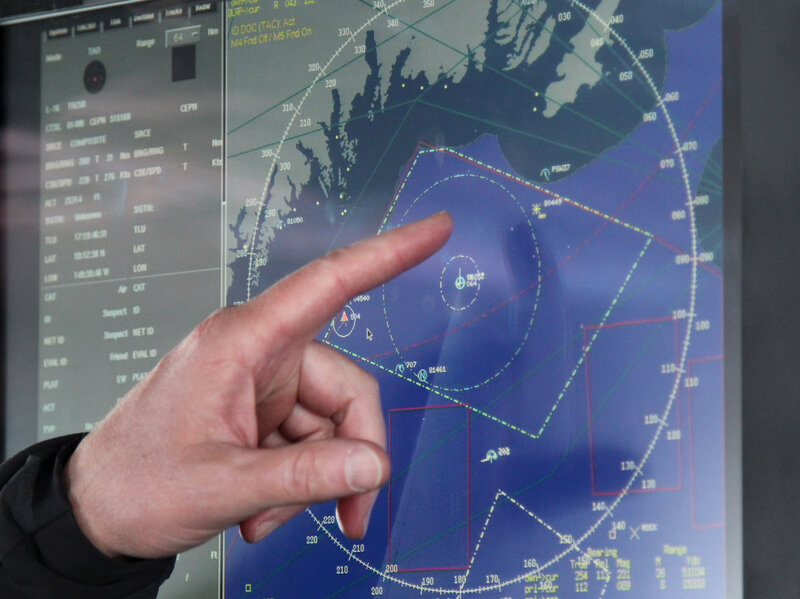
As climate change melts ice that has long blocked the region off from transit and industry, the military is figuring out how to expand its presence in the waters of the high north, primarily off the coast of Alaska.

Driving the push is that much of the commercial activity and development interest in the region is coming from nations that the Pentagon considers rivals, such as Russia and China.

The Navy’s presence in Alaska has waxed and waned over the years. The state has abundant Army and Air Force assets, with the Coast Guard spread throughout. The Navy runs submarine exercises beneath the sea ice off Alaska’s northern coast.

But until last year, no U.S. aircraft carrier had ventured above the Arctic Circle in almost three decades. The USS Harry S. Truman took part in naval exercises in the Norwegian Sea last October, the first such vessel to sail that far north since 1991.

And for the first time in a decade, this May, an aircraft carrier strike group — led by the USS Theodore Roosevelt — sailed to Alaska as part of Northern Edge, a biennial large-scale military exercise that brings together personnel from all the military branches — airmen, Marines, soldiers, seamen and Coast Guardsman. The Navy always participates, but this year, it was out in force.

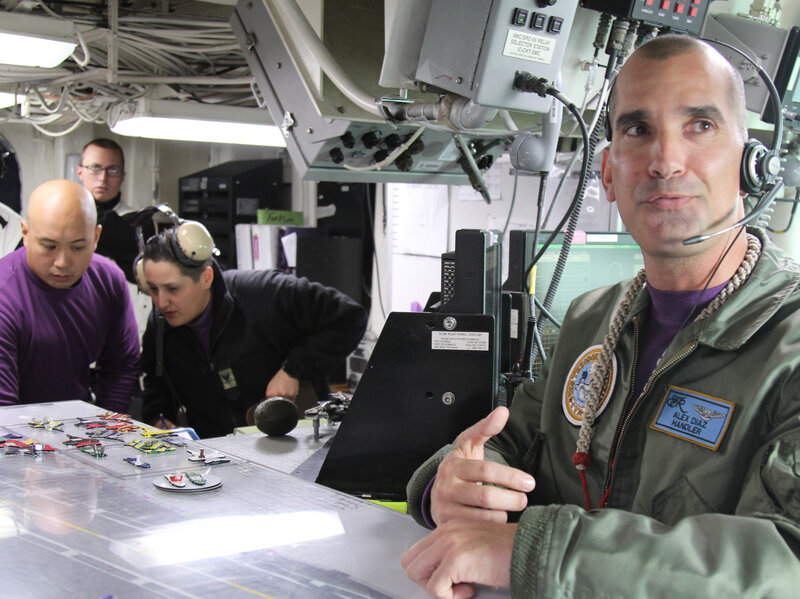
Lt. Cmdr. Alex Diaz oversees traffic on the USS Theodore Roosevelt flight deck.

Zachariah Hughes/Alaska Public Media

Rear Adm. Daniel Dwyer commands the nine ships in the Roosevelt strike group. Speaking on an observation deck several stories above the flight deck, he said climate change is adding a new urgency to training like this one as marine activity increases in Arctic waters.

“You see the shrinking of the polar ice cap, opening of sea lanes, more traffic through those areas,” Dwyer said. “It’s the Navy’s responsibility to protect America through those approaches.”

The Defense Department views the threat of military conflict in the Arctic as low, but it is alarmed by increasing activity in the region from Russia and China. A 2018 reportby the Government Accountability Office on the Navy’s role in the Arctic notes that abundant natural resources like gas, minerals and fish stocks are becoming more accessible as the polar ice cap melts, bringing “competing sovereignty claims.”

Defending U.S. interests in the Arctic

As the Roosevelt cruised through the Gulf of Alaska, F/A-18 Super Hornets took off and landed at a brisk clip. Each takeoff is a full-body experience for those on deck, shaking everything from one’s shoes to teeth. Planes are launched by a steam catapult system powered by the ship’s nuclear reactors.

Some of the jets flew more than 100 miles toward mainland Alaska and continued on past mountain ranges to sync up with Air Force and Marine Corps counterparts operating in the airspace around Eielson Air Force Base near Fairbanks. Then they returned to the Roosevelt. The whole trip lasts about four hours.

For the first time in a decade, an aircraft carrier strike group — led by the USS Theodore Roosevelt — sailed to Alaska as part of Northern Edge, a biennial large-scale military exercise.

Zachariah Hughes/Alaska Public Media

To land, the Super Hornets suddenly dropped out of the sky dangling a hook that snagged at wires bringing them from full speed to full stop in 183 feet. It looked less like a car braking and more like a roller coaster slamming still to give riders one last jolt.

“We are catching anywhere from six to 25 aircraft on this recovery,” crackled a voice over a loudspeaker on the deck. “I’m not sure yet [how many]. If they show up on the ball, we’re gonna catch ’em.”

The deck was coordinated chaos, with crew members and aircraft rotating through intricate maneuvers like a baroque ballet, billows of steam from the launch equipment periodically billowing past.

The deck crews are referred to as “skittles” because they wear uniforms that are color-coordinated to match their jobs. Much like the candy, most of the rainbow is represented. Greens take care of takeoffs and landings. Reds handle ordnance. Purples deal with fuel and are referred to as “grapes.”

The Navy says that given what is expected of it in the region, crews are trained and equipped to carry out their missions as well as any other nation’s navy.

“Regardless of the conditions: day, night, good weather, bad weather, flat seas, heavy seas, it’s the same procedure every time,” Dwyer said of the jets taking off below just as a helicopter set down on the flight deck.

A shifting focus to the “high north”

Speaking at this year’s Coast Guard Academy commencement, national security adviser John Bolton said the military will play a part “reasserting” American influence over the Arctic.

“We want the high north to be a region of low tension, where no country seeks to coerce others through military buildup or economic exploitation,” Bolton told graduates.

The Trump administration is expected to unveil a new Arctic strategy sometime this month.

Forecasters anticipate diminishing ice will reliably open up northern sea lanes, thus cutting down the time and cost moving freight from Asia to Europe but causing a rise in vessel traffic.

The military is candid that the warming climate is opening up transit routes that sea ice has long locked in. Right now, though, the U.S. naval presence is minimal.

F/A-18 Super Hornet is launched by a steam-powered catapult off the USS Theodore Roosevelt during naval exercises in the Gulf of Alaska.

Zachariah Hughes/Alaska Public Media

“If you’re gonna be a neighbor, you have to be in the neighborhood,” said Vice Adm. John Alexander, commander of the Navy’s 3rd Fleet, which is responsible for the Northern Pacific, including the Bering Sea and Alaskan Arctic.

“We’re going to have to ensure that there’s free and open transit of those waters,” Alexander said.

But the Navy faces major impediments to expanding its presence in a maritime environment as harsh as the Arctic. According to the GAO report, most of the Navy’s surface ships aren’t “designed to operate in icy water.”

The authors note that Navy officials have stated that “contractor construction yards currently lack expertise in the design for construction of winterized, ice-capable surface combatant and amphibious warfare ships.”

After years of study, the Defense Department has yet to pick a location and design for a strategic port in the vicinity of the Arctic that can permanently accommodate a strong Navy presence.

And even if the military can operate in the Arctic, it still has to get there. For now, the region’s waters are solidly frozen over for much of the year. According to the Coast Guard, Russia has more than 40 icebreakers, including three new gargantuan nuclear-powered vessels designed to ply sea lanes along the northern sea route. The U.S. military, by contrast, has just two working icebreakers.

This story comes from American Homefront, a military and veterans reporting project from NPR and member stations.

Trump Wants to Make Alaska’s Protected Wilderness a Hunting Ground

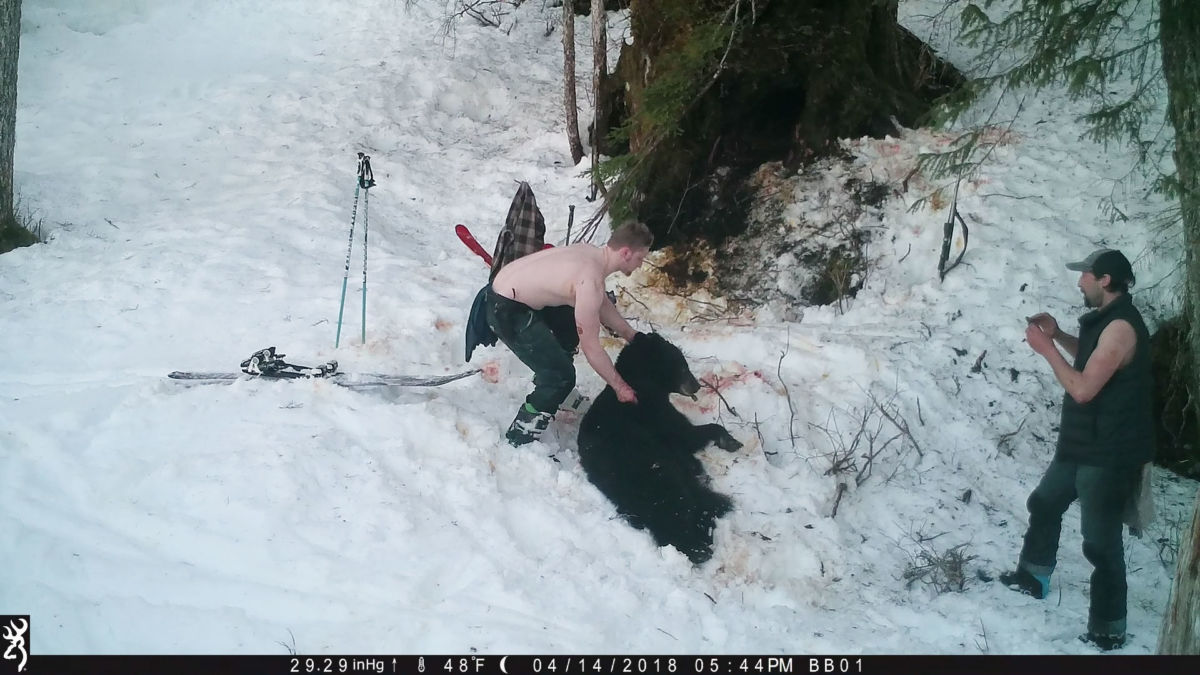
A video featuring a father and son slaughtering a mother black bear and then her two screaming newborn cubs in their den has ricocheted around the world, drawing obvious comparisons to the killing of Cecil, the African lion, by a Minnesota dentist several years ago.

Sadly, the shocking brutality the two men displayed for the world to see could soon be sanctioned by this administration. The Department of the Interior proposes to make legal these and other venal trophy-hunting practices on more federal public lands in Alaska. In 2017, Congress and the president overturned a 2016 rule governing 76 million acres of National Wildlife Refuge System lands, and effectively prohibited the trophy hunting of hibernating black bears.

This administration has shown a penchant for supplicating itself to trophy hunters and trappers. At a time when most Americans regard trophy hunting with revulsion, the Trump administration plans to overturn two federal rules prohibiting the most deplorable trophy hunting and trapping practices ever carried out on federal lands in Alaska.

Also at risk is a 2016 rule concerning the Kenai National Wildlife Refuge that prohibited the hunting of brown bears over bait and the discharge of weapons within one-quarter mile of heavily used recreational areas, including campgrounds, trailheads and rivers. This rule also prohibited trophy hunting and trapping in high-use public zones in the Kenai refuge.

A wildlife camera captures Andrew Renner and his son, Owen, illegally killing a mother bear and her cubs in Alaska. The camera, originally set up as part of a wildlife study, also documents them tampering with evidence two days later.
USFS AND ALASKA DEPT. OF FISH & GAME

Another element of the mess at issue is that the Alaska Department of Fish and Game works under the auspices of Intensive Management, a paradigm that privileges hunting interests over wildlife conservation. Intensive Management permits the wholesale slaughter of wolves and bears in the mistaken belief that killing lots of these native carnivores will increase game herds for humans. That approach has utterly failed, however, most importantly because the Arctic’s fragile ecosystems cannot support unlimited numbers of herbivores. The result is a management strategy that has decimated Alaska’s native carnivore communities and encouraged an increase in the animal species most likely to cause harm to the landscape and environment.

When will it all end? Trophy hunters and trappers have killed wolves in Denali National Park and Preserve and along its boundaries in such numbers that tourists have all but lost their chance to witness wolves, including the famous and storied East Fork (Toklat) Pack, studied and admired since the 1930s.

The same is true for grizzly bears. Because of Intensive Management, Alaska’s great bears are now in great jeopardy. The state’s sanction of extreme hunting practices threatens to shrink native carnivore populations, to the dismay of biologists who study these majestic animals and to the great loss of all Americans who care about them. Such trophy hunting and predator-control practices should not be allowed on federal lands anywhere, and especially not in our national preserves and refuges in Alaska.

As of the previous census, wildlife-watching is a $2 billion-a-yearindustry in Alaska that contributes far more to local economies than trophy hunting and trapping ever could. Alaska’s wildlife-watching tourism outperforms the funds generated in the state from all hunting activities (and the extreme methods at issue here account for only a tiny fraction of that amount).

Wolves, black bears and grizzly bears represent an extraordinary lure for tourists, and they will continue to compel the interest of all Americans for decades. If their populations are hindered on these public lands, local economies could falter. But more importantly, we will all suffer the loss that their death and disappearance from our wild spaces entails.

Our national parks, preserves and wildlife refuges were founded “to conserve species and habitats in their natural diversity … for the benefit of present and future generations.” Overturning these rules and catering to trophy hunters moves us backward. That’s the wrong direction, and we shouldn’t let it happen.

Sign a petition urging Secretary of the Interior David Bernhardt to oppose the rule that would overturn the 2015 National Park Service rule currently protecting iconic wildlife from trophy hunters and trappers on federal U.S. lands.

This article was produced by Earth | Food | Life, a project of the Independent Media Institute.

Freak accident in ditch near Morristown kills popular hunting guide

http://www.mankatofreepress.com/news/local_news/freak-accident-in-ditch-near-morristown-kills-popular-hunting-guide/article_5589bcc2-3a0e-11e9-8456-bb81e477ab3c.html

Pineur
Morristown resident Travis Pineur on a hunting expedition. He was killed Sunday in freak accident in a ditch during the blizzard. Photo courtesy of Caring Bridge

MORRISTOWN — A rural Morristown man killed while trying to free his pickup from a snowy ditch was a well-known big-game hunting and fishing guide who traveled the world in pursuit of trophies for himself and his clients.

Travis Pineur, co-founder of Nomad Adventures, died Sunday about 4 miles from his home in Morristown Township under a freak set of circumstances along a rural road, according to the Rice County Sheriff’s Office.

The 33-year-old Pineur chronicled many of his hunts in extensively produced videos on YouTube, where viewers see him hunting bear in Alaska, snow geese in Missouri and big game and fowl in New Zealand.

Pineur’s loss to hunting and fishing was felt not only in Minnesota but thousands of miles away.

H & H Alaskan Outfitters, on the Kenai Peninsula, posted on its Facebook page that “Travis’s personality was as big as the Alaska size game he hunted. He lived large, with adventure in his blood.

“Many of our clients had the privilege of hunting and spending time in the field with Travis. His dedication and skill were some of the best in the industry.”

On Sunday southwest of Faribault, a motorist who lives nearby stopped and attached a strap to the two vehicles, intending to pull the pickup from the ditch.

However, the strap broke on Tyler Nusbaum’s vehicle and sent the broken hitch hurtling toward Pineur’s pickup. The piece went through the windows of the camper top and the back of the pickup, and it hit Pineur in the back of the head, the Sheriff’s Office said.

Blizzard conditions prevented an air ambulance to respond to the scene, the Sheriff’s Office said. Instead, he was driven in an ambulance to Hennepin County Medical Center, where he died.

Pineur is survived by his wife, Megan Pineur. The two were married last year and co-owned Nomad Adventures. Funeral arrangements have yet to be announced.

React to this story:

Black bear wandering around Kincaid Park in the middle of winter? Here’s why.

  •  Author: Tegan Hanlon
  •  Updated: 6 days ago
  •  Published 6 days ago
A black bear, in front of the front-end loader, rummages around equipment at Kincaid Park on Jan. 25, 2019. (Craig Norman photo)

A black bear, in front of the front-end loader, rummages around equipment at Kincaid Park on Jan. 25, 2019. (Craig Norman photo)

A black bear was spotted last week in Anchorage’s Kincaid Park, the wooded and popular recreation area on the west side of town.

Some reported the bear eating grass or drinking water or just wandering around, according to the Alaska Department of Fish and Game. At least a few young skiers with the Nordic Skiing Association of Anchorage’s Junior Nordic League saw the bear off the snowmaking loop last Wednesday evening during a particularly busy evening at the park. They reported the sighting to their coach, Geoff Wright.

“I assumed they were looking at a moose or a large dog or a coyote, but probably not a bear,” Wright said. “It’s stories from 6- and 7-year-old kids and they say all sorts of funny things.”

Like many park users, Wright has spotted bears in Kincaid in the summer. But in his 20 or so years of skiing in the park, he said, he’d never seen a bear there in the middle of winter. Still, he told his group to turn around just in case. Later, another skier showed him a picture of the bear taken that evening. Bear sighting confirmed.

Fish and Game hasn’t gotten a report of the Kincaid bear since last Friday, so it has likely headed back to its den, said department spokesman Ken Marsh. The department is aware of bear dens in Kincaid.

“They usually don’t stay up long unless they have that consistent food source,” Marsh said.

But the midwinter bear spotting raises the questions: Why was the bear awake? Did it have to do with the warmer-than-usual temperatures last week? Do bears actually sleep all winter?

Sean Farley, a Fish and Game wildlife physiologist, didn’t see the Kincaid Park bear last week, but here’s what he said about why a bear might be wandering around Anchorage in January:

Weather plays a role in when bears head into their dens. In the Anchorage area, black and brown bears generally hibernate from late October or November to April or May, he said. Female bears that are pregnant typically go in earliest and come out the latest.

Farley described hibernation as a “spectrum of physiological adaptations” to conserve energy. Arctic ground squirrels, for instance, can drop their body temperatures to below freezing. Bears aren’t like that.

“They’re not out cold like ground squirrels, they’re more like a sleeping dog that can be roused pretty easily,” Farley said. “They’ll get up and move around and thrash around.”

For bears, hibernation means heading into dens and lowering their metabolic rate. Their body temperature lowers from roughly 101 degrees to about 90 or 91 degrees, Farley said. It’s a survival tactic to make it through the winter, when there’s little to no food available.

[Support local journalism in Anchorage. Subscribe to the Anchorage Daily News / adn.com]

During hibernation, bears usually don’t eat, drink, urinate or defecate. They’ll lose about 20 to 25 percent of their body weight. Mostly fat, Farley said.

Yes, they also sleep, but not the whole time.

Bears cycle through periods of deep sleep and periods of arousal. Their body temperature will increase a bit when they’re aroused. They might shift positions. They might poke their heads out of their den. They might even leave for a few hours and come back — that’s not common, but it’s not unheard of, Farley said.

“When we say ‘leave the den,’ they don’t usually go on big walks,” he said.

Pregnant bears will give birth just a couple of months into hibernation. They’ll nurse their cubs in their dens, despite not eating or drinking.

“They’ve got these newborn cubs that they’ve got to take care of. They can’t go to sleep and just be out of it,” Farley said. “The cubs can’t do anything. … All they can do is eat and scream and that’s about it. She has to move them around and hold them close to her body so they can nurse. She has to clean them.”

It’s very unlikely that a female bear with cubs will leave its den in the winter, Farley said.

So, why might a bear head outside in January?

A bear might get restless and want to stretch its legs, Farley said.

It’s also possible the bear went into a den too skinny. Its energy reserves might have gotten so low at some point that it prompted the bear to wake up and go look for food. It’s that or starve to death, Farley said.

Or, maybe a noise outside of the den stirred it when it wasn’t in a deep sleep. Farley noted, however, that he has photographs of snowmachine tracks that go over a den hole that’s covered in snow.

What about last week’s weather? Temperatures spiked to 44 degrees on Friday at the Ted Stevens Anchorage International Airport. Could that be why the black bear wasn’t in its den?

A goal of a bear den: To keep the cold out, Farley said. So mild fluctuations in outside temperature shouldn’t really impact bears in insulated dens.

“If they’re deep inside in some sort of den, maybe covered with snow, they’re insulated,” he said. “So fluctuations in the ambient temperature outside the den don’t get reflected as strongly inside the den. Plus they’re in the den heating it themselves because they’re at least 90 degrees or so.”

In the Anchorage area, black bears often den in trees. Both brown and black bears will also dig into hillsides and excavate a dirt den. Bears can den in many other places too, Farley said.

If high temperatures melt snow and that leads to a bear’s den getting flooded, that’s another reason the bear might head outside. It’ll likely try to find another den, Farley said.

If you see a bear in the middle of winter, give it space, just as you would in the summer, Marsh said.

“Maybe turn around, change your course, you don’t want to push it,” he said.

Really this time of year, Marsh said, it’s more likely you’ll come upon a cranky moose.

“It’s been a long winter and they’re starting to get a little nutritionally stressed,” Marsh said. “Be alert just like you would in the summertime and give wildlife their space.”

Mixed-ancestry wolves are recolonizing the Pacific Northwest

Their combination of coastal and inland DNA could help them survive a changing climate.

This article is from Hakai Magazine, an online publication about science and society in coastal ecosystems.

Mixed-ancestry wolves are recolonizing the Pacific Northwest

Wolves were wiped out in Washington state in the early 20th century — the victims of bounty hunting as ranching and farming expanded in the state. Over the past two decades, however, under the protection of state and federal wildlife authorities, wolves have been reclaiming their former turf. But as new research shows, the wolves now living and hunting in Washington’s forests are different from those that lived there more than a century ago. These new wolves are hybrids — crossbreeds of inland wolves from the interior United States and a unique, beach-loving subspecies from as far north as Southeast Alaska.

The ancestors of the wolves now recolonizing the Pacific Northwest include a coastal subspecies.
Chris Darimont / raincoast.org

The researchers who made this discovery think the hybrid wolves’ DNA could help them thrive in a changing landscape.

Conventional wisdom holds that the wolf packs slowly recolonizing not only Washington but Oregon and California are the descendants of animals that migrated west from the interior — from the mountains, plains, and forests of Montana and Idaho. But when researchers analyzed DNA samples from wolves throughout the Pacific Northwest, the results told a different story. Sarah Hendricks — now a computational biology doctoral candidate at the University of Idaho — was a research assistant at the University of California, Los Angeles when she and her colleagues amassed genetic samples from the region’s wolves. A recent analysis shows that some of the wolves have unique genetic markers that could have only come from the distinct coastal wolves of British Columbia and Southeast Alaska.

Coastal wolves differ from their interior cousins in a number of important ways. Unlike interior wolves, which stalk large mammals such as elk through forests and fields, coastal wolves spend much of their time on beaches, hunting salmon and marine mammals such as seals. Coastal wolves also look different — they’re smaller and their fur has a red-brown tinge.

So far, the hybrid wolves are sticking to the lifestyle of their ancestors from the east. “As of right now, the wolf packs are mostly in the habitat that’s suitable for interior wolves, but we think over time they’ll begin to establish in habitat that’s more suitable for coastal wolves,” says Hendricks. As the climate continues to change, Hendricks suspects the hybrid wolves’ genetic diversity will allow them to adapt better than if they just had genes from interior wolves.

Even without the benefits of genetic mixing, wolves are generally quite adaptable animals, says Jay Shepherd, who leads the wolf program for the nonprofit organization Conservation Northwest. In Yellowstone Park, for instance, wolves hunt bison. These wolves are much larger than those in surrounding regions, but their size is the consequence of a diet driven by learned behavior rather than genetics. Still, he agrees that hybrids could have an advantage in areas with a mix of habitats.

The coastal wolves of British Columbia and Southeast Alaska are a distinctive subpopulation with red-brown fur and a hunting style adapted to coastal life.
Chris Darimont / raincoast.org

The finding also offers a life preserver of a sort to the coastal wolves of British Columbia and Alaska, whose populations are dwindling in many parts of their range. For example, Hendricks points to a population in Southeast Alaska that is declining quite drastically. The hybrids may serve as a genetic reservoir, protecting some of the coastal wolves’ distinctive traits.

But while the hybrid wolf population may act as a reservoir, there could be complications if the Alaskan coastal wolves became protected under the United States Endangered Species Act. In that case, wildlife managers in the Pacific Northwest would find themselves charged with managing wolves that share genetic traits with federally protected animals. “The problem is that the Endangered Species Act doesn’t have a lot of language regarding how to deal with hybridization,” says Hendricks.

Hendricks hopes her findings will inspire biologists and policymakers to focus on sorting out the unanswered legal question of what should be done when the ancestor of a hybrid animal is an endangered species, whether these mixed-lineage descendants should be protected as well or left vulnerable to hunting and habitat loss. Either way, she thinks the hybrid wolves’ mixed heritage will be an asset as they continue to reclaim their species’ old haunts across the Pacific Northwest.

Alaskans say ‘no’ to cruel hunting methods for killing hibernating bears, wolf pups in dens

June 29, 2018

A rule recently proposed by the Trump administration would roll back an Obama-era regulation that prohibits controversial and scientifically unjustified methods of hunting on Alaska’s national preserves, which are federal public lands. These egregious hunting methods include the use of artificial light to attract hibernating bears and their cubs out of their dens to kill them, shooting wolf and coyote pups and mothers at their dens, using bait to attract brown and black bears, shooting vulnerable swimming caribou, including with the aid of motorboats, and using dogs to hunt black bears. Biologists have already condemned these methods, and now a supermajority of Alaska’s residents have spoken out resoundingly against allowing them in their state.

The telephone poll, conducted by Remington Research Group and released by the Humane Society of the United States, found a whopping 71 percent of Alaskan voters oppose allowing hunters to use artificial light to attract hibernating bears and their cubs out of their dens to kill them. Sixty-nine percent oppose hunting black bears with packs of hounds, and 75 percent oppose hunting swimming caribou with the aid of motorboats. Sixty percent of Alaskan voters oppose the baiting of bears with pet food, grease, rotting game or fish or other high-calorie foods, and 57 percent oppose killing whole packs of wolves and coyotes when they are raising their pups in their dens.

The poll also found that a majority of voters disfavor allowing trophy hunters and trappers killing wolves, brown bears, black bears, wolverines, lynx and other wildlife on state lands along the northeast boundary of Denali National Park and Preserve.

In complete disregard for the wishes of the state’s residents, however, the Department of the Interior’s National Park Service is now accepting public comments on the controversial rule that’s designed to benefit a handful of trophy hunters looking for their next big kill.

This indiscriminate killing of native carnivores such as grizzly bears and wolves is often justified as “protecting” ungulates, animals like caribou and moose. But in Alaska and elsewhere, studies show, such predator control, including trophy hunting or culling of wild native carnivores in order to grow game herds, just doesn’t work. In fact, that is precisely the finding of a comprehensive new study that was reported in Scientific American.

On the other hand, live native carnivores like grizzly bears and wolves contribute immensely to the state’s economy. In Alaska, wildlife-watching tourism brings $2 billion every year to local, rural economies.

Several studies in Alaska show that predator control is doomed to fail, because the unforgiving Arctic lands cannot sustain large numbers of prey herds in the short growing seasons followed by extreme winters. Alaska officials have also failed to acknowledge that with the massive killing of wolves or bears, other smaller predators rise up to compete for those same prey, rendering these cruel and harmful predator control practices utterly futile.

Most Alaskans do not want hunters, backed by the deep pockets of trophy-hunting groups like Safari Club International and Alaska Outdoor Council, treating their state as a shopping mall for bearskin rugs and wolf heads to adorn their walls. American wildlife is for all of us to enjoy, and you can do your part to help save it by submitting a commentopposing this new proposed rule by July 23.

Three Hunting Guides Arraigned in Nome

Photo via Flickr Creative Commons courtesy of Eric Gorski.

HUNTING GUIDE BRIAN LEE SIMPSON, 56, was arraigned in the Nome courthouse on Monday. Simpson was charged with five misdemeanor violations of Alaska hunting laws, including illegal guiding on private land.

Last Friday, two of Simpson’s employees were also arraigned. Tyler Weyiouanna, 25,  was charged with aiding in the violation of hunting regulations and using a motor vehicle to harass game. Matthew Iyatunguk, 23, was charged with one count of harassing game.

The charges were initially filed in Alaska District Court on August 17th. Simpson has hired his own attorney, while Weyiouanna and Iyatunguk will be represented by public defenders appointed by the court. All three men are set to appear at the courthouse in Nome on November 9th.

Image at top: Brown bear. Photo via Flickr / Creative Commons, courtesy of Eric Gorski.

Trump administration moves to lift restrictions on hunting, trapping in national preserves in Alaska

Under proposed changes hunters could bait brown bears, hunt black bears with dogs and kill wolves

The Associated Press · Posted: May 22, 2018 3:33 PM CT | Last Updated: May 22

<https://i.cbc.ca/1.2735917.1407976946!/cpImage/httpImage/image.jpg_gen/derivatives/16x9_780/travel-trip-alaska-katmai-bears.jpg&gt;

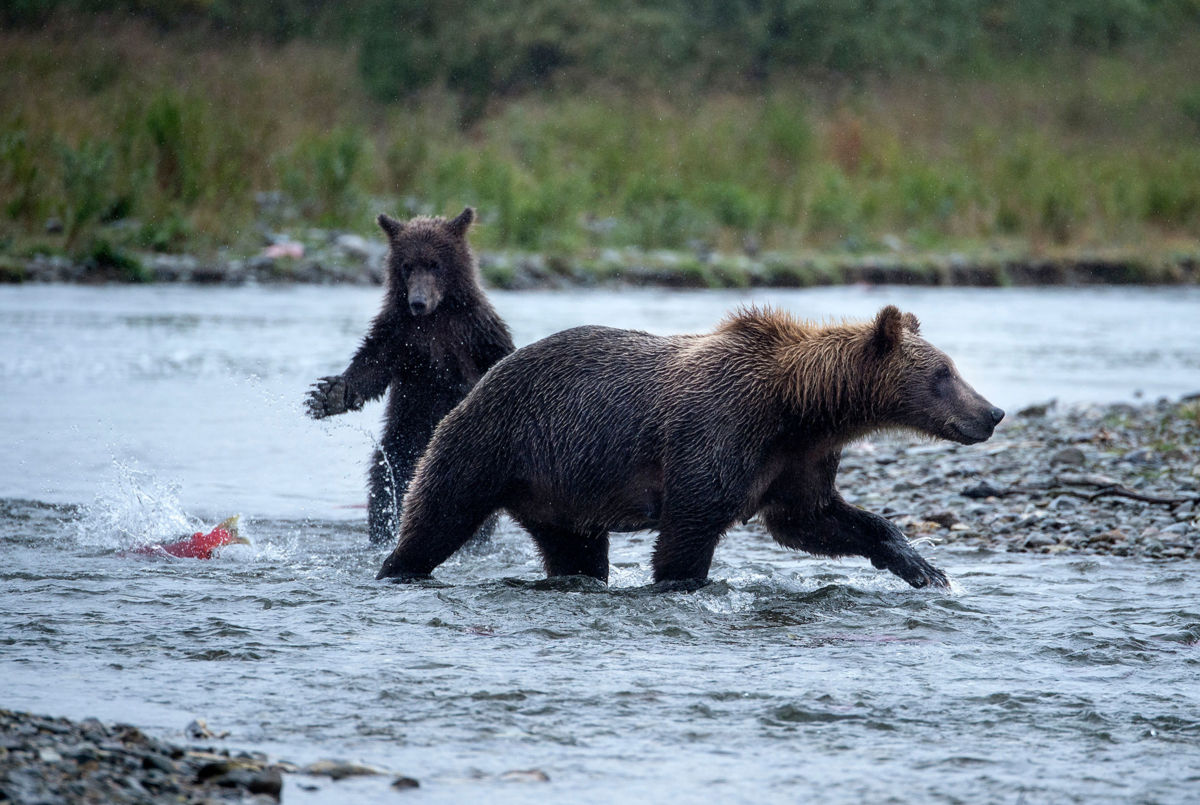
A brown bear catches a salmon in Katmai National Park and Preserve, Alaska in July 2013. Under proposed changes to sport hunting and trapping regulations for national preserves, hunters could bait brown bears with bacon and doughtnuts. (The Associated Press)

The Trump administration is moving to reverse Obama-era rules barring hunters on some public lands in Alaska from baiting brown bears with bacon and doughnuts and using spotlights to shoot mother black bears and cubs hibernating in their dens.

The National Park Service issued a notice Monday of its intent to amend regulations for sport hunting and trapping in national preserves to bring the federal rules in line with Alaska state law.

Under the proposed changes, hunters would also be allowed to hunt black bears with dogs, kill wolves and pups in their dens, and use motor boats to shoot swimming caribou.

Cruel and harmful hunting methods like killing bear cubs and their mothers near dens have no place on our national preserves.- Collette Adkins, lawyer and biologist

These and other hunting methods — condemned as cruel by wildlife protection advocates — were outlawed on federal lands in 2015. Members of the public have 60 days to provide comment on the proposed new rules.

“The conservation of wildlife and habitat for future generations is a goal we share with Alaska,” said Bert Frost, the park service’s regional director. “This proposed rule will reconsider NPS efforts in Alaska for improved alignment of hunting regulations on national preserves with State of Alaska regulations, and to enhance consistency with harvest regulations on surrounding non-federal lands and waters.”

Alaska has 10 national preserves covering nearly 95,830 square kilometers.

<https://i.cbc.ca/1.4673578.1527022003!/cpImage/httpImage/image.jpg_gen/derivatives/original_780/alaska-black-bears.jpg&gt;

A black bear and cub seen in Anchorage, Alaska. The Trump administration plans to reverse a ban on using spotlights to shoot mother black bears and cubs hibernating in their dens on some public lands in the state. (The Associated Press)

The Alaska Department of Fish and Game was “pleased to see the National Park Service working to better align federal regulations with State of Alaska hunting and trapping regulations,” Maria Gladziszewski, the state agency’s deputy director of the Division of Wildlife Conservation, said in an email to the Associated Press.

She said the proposal is “progress in that direction, and we appreciate those efforts. Alaskans benefit when state and federal regulations are consistent.”

Gladziszewski said the state doesn’t conduct predator control in national preserves.

“Predator control could be allowed in preserves only with federal authorization because such actions are subject to NEPA (National Environmental Policy Act) review,” she said.

Expanding hunting rights on federal lands has been a priority for Interior Secretary Ryan Zinke, a former Montana congressman who displays a taxidermied bear in his Washington office along with mounted heads from a bison and an elk.

<https://i.cbc.ca/1.4673491.1527019877!/cpImage/httpImage/image.jpg_gen/derivatives/original_780/u-s-senate-ryan-zinke.jpg&gt;

Expanding hunting rights on federal lands has been a priority for Interior Secretary Ryan Zinke. (Jacquelyn Martin/The Associated Press)

The Obama-era restrictions on hunting on federal lands in Alaska were challenged by Safari Club International, a group that promotes big-game hunting. The Associated Press reported in March that Zinke had appointed a board loaded with trophy hunters to advise him on conserving threatened and endangered wildlife, including members of the Safari Club.

President Donald Trump’s sons are also avid trophy hunters who have made past excursions to Africa and Alaska.

Collette Adkins, a lawyer and biologist with the advocacy group Center for Biological Diversity, expressed outrage at the rollback.

“Cruel and harmful hunting methods like killing bear cubs and their mothers near dens have no place on our national preserves,” she said.

The Humane Society of the United States said it would oppose the new rules.

“These federal lands are havens for wildlife and the National Park Service is mandated to manage these ecosystems in a manner that promotes conservation,” said Anna Frostic, a lawyer for the animal rights group. “This proposed rule, which would allow inhumane killing of our native carnivores in a misguided attempt to increase trophy hunting opportunities, is unlawful and must not be finalized.”

http://www.cbc.ca/news/canada/north/trump-restrictions-hunting-trapping-alaska-preserves-1.4673467