Exposing the Big Game

Forget Hunters' Feeble Rationalizations and Trust Your Gut Feelings: Making Sport of Killing Is Not Healthy Human Behavior

Exposing the Big Game

Rescue Gajraj the Elephant From Torture at Indian Temple

https://animalpetitions.org/243668/rescue-gajraj-the-elephant-from-alleged-torture-at-temple/

Target: Modi Narendra, Prime Minister of India 

Goal: Rescue Gajraj the elephant, who has been tortured and held in captivity for over 50 years, from the Satara Temple.

A 63-year-old elephant named Gajraj has been living in devastating conditions for most of his life. Currently, he is being kept in chains as a tourist attraction at the Satara Temple in India. Before he was there, he was used by handlers to beg visitors for money. Since becoming ill and too sick to continue doing that, he was left at the Satara Temple.

Gajraj’s living conditions were revealed anonymously to The Sun newspaper in the U.K. in the form of video footage. Due to being chained to a hard floor, he has developed abscesses on his hind quarters and elbows. He reportedly spends time every day trying to free himself from those chains. Pictures also show that the ends of his tusks have been cut off and that he has overgrown and broken toenails on all of his feet.

He is also exhibiting classic signs of severe psychological distress, presumably as a result of both his social isolation and the terrible conditions he is living in. He is apparently not receiving the appropriate care because he can no longer make the handlers any money, but he does not deserve to die in agony because of that.

Something needs to be done to save Gajraj and to prevent this from happening to more animals in the future. Sign this petition to demand that the appropriate measures are taken as soon as possible.

PETITION LETTER:

Dear Prime Minister Modi Narendra,

Gajraj the elephant is dying in agony at the Satara Temple and it seems that no one at that facility cares. You have the power to do something about this and to send someone in to rescue Gajraj before it’s too late.

He has spent the majority of his life being tortured and held in captivity. At the Satara Temple, he is chained to the ground and completely alone. This is driving him into severe psychological distress that no living creature deserves to experience.

We ask that you help save Gajraj and take the measures necessary to implement legislation that prevents this from happening to more animals in the future.

Sincerely,

[Your Name Here]

https://animalpetitions.org/243668/rescue-gajraj-the-elephant-from-alleged-torture-at-temple/

Karmic Disaster: Dead Meat as Gastronomic and Economic Sustenance

http://www.all-creatures.org/articles/ar-karmic-disaster-dead-meat.html

An Animal Rights Article from All-Creatures.org

FROM

John R. Hall, The GreanvillePost.com
April 2017

A nation of zombies feeds on the flesh of dead animals, salutes, pledges allegiance to, and sings the patriotic songs of the Empire which spreads death and destruction worldwide. Few have noticed Bad Karma nibbling away at their sorry asses. Few have noticed the Fall of Empire in progress. Their national borders are prison bars, their economy in shambles, their hopes and dreams gone. When it comes to neighbors, love has been replaced by fear. More firearms than humans populate the land…

sue coe
By Sue Coe, the world’s foremost political artist focusing on humanity’s tyranny over non-human creatures.

Hindu scriptures teach that anyone who kills or causes harm to other sentient beings is in for a big dose of Bad Karma as a result. The shit can hit the fan in this lifetime or in some future reincarnation, but it will happen. Not that I personally subscribe to Hinduism or any other religion, but I do believe that there’s a large dose of merit in their world view. A lot can be said for lifestyles which involve veganism and peaceful coexistence with our fellow beings. Stray from the path, commit the crime, and you’ll eventually do the time. Like the Hindus, we’ll define “sentient beings” as including (most) humans, all other creatures with eyes and mothers, and most importantly Mother Earth herself; for she’s borne the brunt of harm caused by her thoughtless, careless, greedy human children.

Dead meat is the fuel that powers Empire, and the resulting karmic disaster now bites all its citizens in the ass in oh so many ways. We’ve been told since birth that we need to kill and consume cows, pigs, chickens, turkeys, ducks, sheep, goats, rabbits, and/or squirrels, to maintain a necessary level of protein in our diets. Whack ’em, gut ’em, skin ’em, cook ’em (optional), and eat ’em. We’ve also been instructed to drink the milk meant for calves, in its many forms, and to ingest the embryos of large birds. If you are a believer in the studies and lifework of Dr. Caldwell Esselstyn, or are even mildly observant, you understand that your morbidly obese friends and neighbors (or you) are dying prematurely from meat/dairy/egg-intensive diets, in ever-increasing numbers. Heart/coronary artery disease, cancers, diabetes, dementia, Alzheimer’s, and untold other karmic paybacks are their rewards for either directly killing animals or buying their dead flesh from Safeway’s meat case, and consuming it. If Dr. Esselstyn is correct, by the time the average meat-consuming high school graduate in The U.S.A. accepts his diploma, coronary artery disease is already ravaging his body.

Dead meat is the fuel that powers Empire. War is its business, and fast becoming its only business. Bombs, bullets, missiles, rockets, warships, and warplanes are its preferred delivery methods. Its young people are lured into the bloody, tangled web of death and destruction by slick-huckster, pseudo-patriotic, U.S. Military-glorifying advertising schemes. The lucky do their time, emerging with bodies largely intact, suffering only a lifetime of residual mental anguish and PTSD, souls stolen away, brains scrambled, expressionless, and aimless, demented, self-doubting heroes to the masses who cheerlead Empire’s wars. Warfare for profit drives the stock markets. In my lifetime alone: A few million dead Koreans, a few million dead Vietnamese, Cambodians, Laotians, a few million dead Afghans, Iraqis, Libyans, and Syrians, and the market values of Boeing, Exxon-Mobil, Raytheon, Halliburton, Monsanto, and Northrop Grumman soar. Billionaires, corporate executives, bankers, and politicians rake in the blood money. Combat boots leave their marks upon the faces of dead populations across the globe, as the looming shadow of Bad Karma darkens the land.

Dead meat, the fuel that powers Empire, brings a tear to the eye of Mother Earth. Mega-corporate meat-growing mass-execution operations grow sentient mammals and birds in immobile squalor, pumping them full of antibiotics and growth hormones, raping (force-breeding) them, stealing their progeny and milk, unceremoniously slaughtering them, and feeding them to the masses of sick, mindless, obese humans. Filling the atmosphere with the stench of uncontained defecation and urination, and contributing more greenhouse gas emissions than all other sources combined. Crops feeding death-row, USDA-inspected, four-legged or feathered prisoners consume more water in Empire than all other uses combined, both domestic and agricultural, not to mention the associated, indiscriminate use of toxic soil-killing herbicides and pesticides connected with corporate agriculture.

Dead meat. Populations of third world countries cry out for food and drinking water, but receive bombs instead. Citizens unfortunate enough to live in oil-rich lands yearn for basic needs, but find themselves to be testing grounds for Empire’s newest, state-of-the-art WMD’s. But who needs rice when you can have depleted uranium? Countries ravaged, war’s ultimate goal; death, destruction, chaos. Dead meat litters broken countrysides. Empire’s exceptional citizens stuff their fat faces full of dead meat. They watch in awestruck approval the fireworks of death, in countries they can’t find on a map, on their favorite corporate “news” channels. Meat; it’s what’s for dinner. Meat; it’s what you become if you’re not in sync with Empire’s agenda. Meat; it’s what all sentient beings are, in the eyes of those who push the buttons and pull Empire’s strings. Resources to be harvested. Meat.

sue coe
By Sue Coe, the world’s foremost political artist focusing on humanity’s tyranny over non-human creatures.

The U.S.A. is now ground zero for karmic disaster. A nation of zombies feeds on the flesh of dead animals, salutes, pledges allegiance to, and sings the patriotic songs of the Empire which spreads death and destruction worldwide. Few have noticed Bad Karma nibbling away at their sorry asses. Few have noticed the Fall of Empire in progress. Their national borders are prison bars, their economy in shambles, their hopes and dreams gone. When it comes to neighbors, love has been replaced by fear. More firearms than humans populate the land. Pawnshops and porn stores offer temporary solace from wretched lives of impending poverty and loveless relationships with despised partners. Self-loathing zombies cover their bodies, head to toe, with senseless colorful graffiti, squalor of the skin, ill-conceived epidermal etchings. Drug and alcohol addiction run rampant. Hungry, homeless, hopeless people beg on every street corner, while others turn a blind eye. The Police State grows like a malignant tumor across the land, but soulless faces buried in miniature electronics fail to pay heed.

It would be easy to end this sordid little piece on a hopeless note, for Empire’s apparent future appears to hold little in the way of hope. If only there was someone who might have a chance of gaining enough power to turn things around, end constant warfare for profit, and bring a degree of sanity to The U.S.A. before Bad Karma brings the wrath of the rest of the world down upon us in a big and final way. Someone who would have the huevos to run for and be elected POTUS, buck the power of The C.I.A., The U.S. Military, the neocon/neolib war consortium, and Wall Street. A John F. Kennedy reincarnate. Maybe a disillusioned combat veteran who’s also a beautiful, well-spoken, and fearless U.S. Congresswoman from Hawaii. Someone who’s travelled to Syria (with Dennis Kucinich), spoken with President Assad, doubts that he was responsible for the sarin gassing of his people, and would be extremely hesitant to EVER AGAIN start another war. How about a lifelong vegetarian Hindu? President Tulsi Gabbard….hmmm. We can only hope and dream. Karmic disaster is imminent as our karmic debt comes due, but there may yet be time to bury Empire and save The U.S.A. Hope springs eternal.


The Greanville Post Senior Contributing Editor, John R. Hall is a street-trained agnotologist with an advanced degree in American Ignorance. Other hats include: photojournalist, novelist, restaurateur, mountaineer, grocer, nurseryman, and janitor. He’s written three novels which have been read by almost nobody: Embracing Darwin, Last Dance in Lubberland, and Atlas fumbled. An untrained writer and college drop-out, he began his short career in journalism writing the ‘Excursion’ column for The Jackson Hole News & Guide. More recently he penned the ‘Left Column’ for The Molokai Island Times; appropriately on the island once known as a leper colony. John currently resides, writes, and protests injustice in the shadow of the Sangre de Cristo Mountains, and walks among the spirits of those who once occupied the 79 Disappeared Pueblos.

Texas Lawmaker Wants to Legalize Hunting Feral Hogs from Hot Air Balloons

 https://www.texasobserver.org/texas-lawmaker-feral-hogs-hot-air-balloons/

Policymakers in Texas continue to scratch their heads over the state’s feral hog problem, and the solutions are getting weirder.

Hot air balloon  FLICKER/IRULAN_AMY

Researchers and policymakers for years have searched fruitlessly for effective ways to significantly drop feral hog population levels in Texas, with proposals ranging from eating our way out of the problem to widespread poisoning.

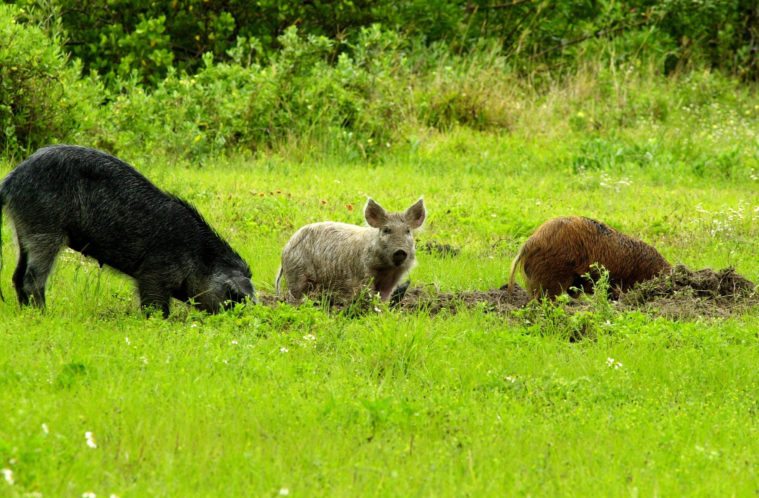
Roughly 2 million wild hogs are estimated to live in Texas, and they cause more than $50 million in damage each year. The invasive animals’ high breeding rate and lack of predators have fueled their proliferation in South, Central and East Texas, leading to big business for hunters and trappers.

In 2011, Agriculture Commissioner Sid Miller, then a state rep, passed what became known as the “pork chopper” bill, legalizing the hunting of feral hogs from a helicopter. On its face, the bill sounded more like a joke than an actual solution.

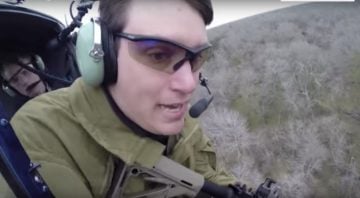
Hunter prepares to shoot feral hogs with a rifle from a helicopter.  YOUTUBE/NICK LEGHORN

Turns out, it’s really hard to shoot anything from a helicopter. In addition to being ineffective, the method is also very dangerous (and not just for the hogs.) The only results produced by the bill were some crazy YouTube videos and an industry in which people pay upwards of $3,000 per hunt to pick off pigs from a chopper.

Enter state Representative Mark Keough, a Republican and pastor from The Woodlands. He told the Observer that he “loved” Miller’s pork chopper bill and found himself asking: “What are more ways we can take more feral hogs?”

After chatting with hunters and conducting his own informal research, Keough believes he’s found an alternative solution: hot air balloons.

His House Bill 3535 would authorize Texans to hunt feral hogs and coyotes from a hot air balloon with a permit.

If the idea seems crazy, that’s because it is. No one hunts from a hot air balloon. Go ahead, Google it. “I haven’t found people anywhere doing this,” Keough admits.

But he thinks it would be pretty damn sweet to try. (It’s currently illegal, or he would’ve tried already, he said.)

The fast-moving helicopter approach, Keough says, has a lot of “safety issues,” leads to many misses and often scares off the hogs. “They’re smart,” he said.

Feral hogs damage land in rural areas, but have increasingly caused problems in suburban and urban areas.  U.S. FISH AND WILDLIFE SERVICE

Hot air balloons, on the other hand, are more stable, slower and offer a better rifle-shooting platform, Keough said.

Last July, 16 people were killed in the deadliest hot air balloon crash in U.S. history near Lockhart when the pilot lost control and crashed into power lines. The incident led to calls for stricter regulation of the balloon industry.

Still, Keough says, “It’s far safer than if you were hunting out of a helicopter.”

But more effective? Probably not.

Even Keough admits there’s a good chance hunters could spend all day in a balloon and not shoot anything. And its clumsy, slow-moving nature will keep hunters from effectively chasing the animals.

The animals, which can grow to weigh 100-400 pounds, have a gestation period that’s shorter than four months and litter sizes of up to 12. They are considered a non-game animal, meaning there are no seasons or bag limits, but a state hunting license is required.

Billy Higginbotham, a professor and wildlife and fisheries specialist with the Texas A&M AgriLife Extension Service, said the balloon strategy faces the same problem as helicopters in the eastern third of the state: trees.

“Aerial gunning by any vehicle [in East Texas] is not widely used because of the extensive tree cover,” Higginbotham said.

State Representative Mark Keough, R-The Woodlands.  FACEBOOK

Keough said the “pork choppper” bill “was more about creating an industry” and that no single strategy will significantly reduce hog populations.

“I think there is a possibility [with hot air balloons] for an industry, but the motivating factor is this is another way to get rid of the problem,” he said

Keough also sponsored legislation that would require more research on the effects of widespread lethal pesticides, including warfarin, before they can be used on hogs. The measure passed the House Monday.

A Texas Parks and Wildlife Department spokesperson declined to comment on pending legislation, citing agency policy. HB 3535 would require the agency to license individuals who want to hunt from the balloons.

Keough, who said he’s “interested in anything that will help us get rid of these things,” believes his bill represents the spirit of Texas.

“We’ve got a problem here, and we are willing to fix it ourself,” he said. “We have that Western, swashbuckling, cowboying type of way to deal with things. It’s part of the culture, it’s different than any other state.”

Correction: An earlier version of this story reported no license is required to hunt feral hogs in Texas. A state-issued license is required, although there are no seasons or bag limits.

Bird Flu Pandemic Hasn’t Changed Atrocious Conditions at Poultry Farms

http://koreabizwire.com/bird-flu-pandemic-hasnt-changed-atrocious-conditions-at-poultry-farms/80831

The government’s recent move to encourage bigger cages in order to prevent another avian influenza from spreading on a massive scale like the one which transpired last November is being met with a lukewarm reception and skepticism among critics over the lax nature of the newly introduced rules. (Image: Kobiz Media)

The government’s recent move to encourage bigger cages in order to prevent another avian influenza from spreading on a massive scale like the one which transpired last November is being met with a lukewarm reception and skepticism among critics over the lax nature of the newly introduced rules. (Image: Kobiz Media)

SEOUL, April 17 (Korea Bizwire) – Despite new government measures that require farmers to make use of larger cages, the horrific conditions that poultry live under at typical factory farms in South Korea are unlikely to change soon, which have been identified as one of the major factors behind the recent influenza Type A pandemic that causes illness to people.

The government’s recent move to encourage bigger cages in order to prevent another avian influenza from spreading on a massive scale like the one which transpired last November is being met with a lukewarm reception and skepticism among critics over the lax nature of the newly introduced rules.

Existing poultry farms will have 10 years to update their old cages in accordance with the new standards, but critics say the grace period is too long, and that simply making cages slightly bigger won’t get to the root of the problem.

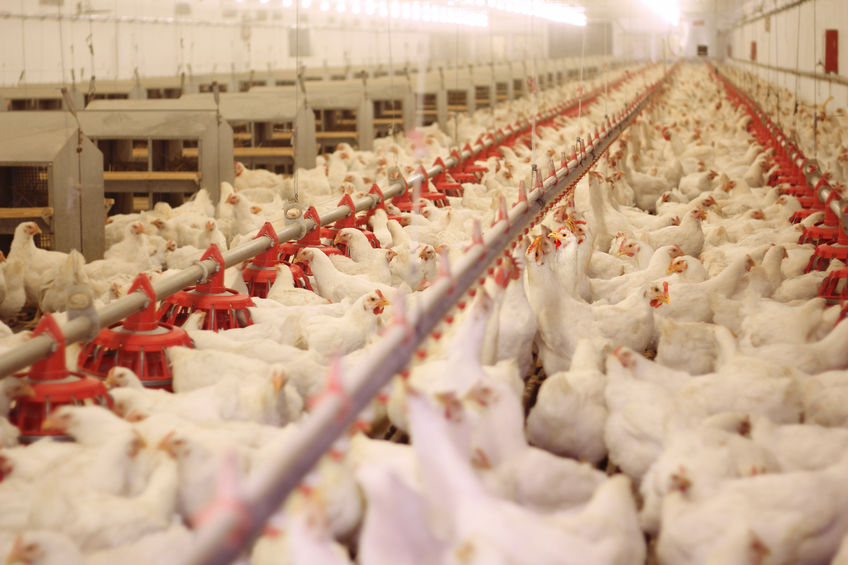
According to current laws regarding poultry farming, chickens are being raised in a space smaller the size of an A4 sheet of paper (0.05 square meters or 0.5 square feet), which means 1 square meter per 20 chickens. When the new rules take place, poultry farms will be required to have their cages built at least 0.075 square meters in size.

The EU already banned (in 2003) the construction of any more of the so-called battery cages, a term that refers to small wire cages in which hens spend their entire lives with little to no space to move around. Since a total ban on battery cages took place in 2012, an increasing number of farmers have adopted free-range farming.

South Korean poultry farms however, have been bucking the trend and engaging in activities that border on animal cruelty, such as keeping the lights on during the night to maximize egg production, exploiting a physiological phenomenon in which a drastic environmental change suddenly increases the egg production of hens.

Despite opposition from animal rights groups, little has been done to secure the wellbeing of farm animals in South Korea.

A representative from the Korea Association for Animal Protection (KAAP), Lee Won-bok, was critical of the government’s move to tackle avian influenza, calling it a ‘makeshift plan’ that will bring little to no change.

“AI pandemics occur almost every year due to the poor living conditions of farm animals, not because of the size of cages,” Lee said.

Hyunsu Yim (hyunsu@koreabizwire.com)

More than 350 animals

Matted dogs

From HSUS.org

We are finding dogs living in inches of their own urine and feces, with coats matted so heavily that they can barely walk, puppies choking on toxic fumes and many animals suffering from a variety of skin and eye conditions.

Animals rescued from neglect

Sadly, it isn’t just dogs and puppies who are suffering.

So far, our Animal Rescue Team has found more than 350 neglected animals — including cats, donkeys, a horse, bunnies, chickens, ducks, geese, goats, sheep and an alpaca.

Jim, the cruelty we’re witnessing is heart-wrenching. We will stay here until every animal is on their way to a better life.

This rescue is only possible with the help of compassionate supporters like you.
Thank you so much,
Sára Varsa
Senior Director, Animal Cruelty, Rescue and Response

Calling all animal lovers: Trump’s sons are proud murderers of endangered species

CnxlOqgW8AATJy5_1_.jpg

Some people are posting this picture as a joke. Don Jr. bringing down an elephant (under highly controlled hunting) and cutting off its tail is kind of ironic. But it’s really just sick, down to the clean knife above.

Don Jr. made his big debut tonight and some say he made a big splash and helped “humanize” his father.  But he and his disgusting brother, Eric, deserve nothing but scorn for the series of wild animal kills that spread across Twitter tonight.

I was not aware of their depravity towards animals until tonight. The folks calling Don Jr. “Patrick Bateman” on Twitter were spot on.

From The Daily Beast:

Back in 2012, photos surfaced of the elder Trump’s sons, Donald Trump Jr. and Eric Trump, proudly posing with the carcasses of dead animals they hunted while on a big-game hunting expedition in Africa. The photos showed Donald and Eric posing with a lifeless cheetah, Donald clenching a knife along with the bloody, sawed-off tail of an elephant, and the pair posing next to a crocodile hanging from a noose off of a tree.

Here are Trump’s sons holding up a dead cheetah, all smiles:

How quickly the press forgot about Donald Trumps spoiled kids being exotic animal killers but I didn’t.

I guess this is the dead croc:

View image on Twitter
Horrible people doing horrible things,

More Daily Beast:

The Trump boys were hunting in Zimbabwe—the same country where Cecil was killed—and though Zimbabwean animal conservation groups looked into the incident, the hunt was deemed perfectly legal. Once the photos went viral online, Donald Trump Jr. tweeted (and then deleted): “Not a PR move I didn’t give the pics but I have no shame about them either. I HUNT & EAT game.”
Later, Donald Jr. clarified his thoughts on the big-game hunt in an interview with Deer & Hunting magazine in August 2012.

“I think what made it sort of a bigger story and kind of national and even global news was that I didn’t do what a lot of other people do, which is immediately start apologizing for what I am and that I’m a hunter and all this,” Donald Jr. told Deer & Hunter. “I kinda said, ‘No, I am what I am. I did all those things. I have no regrets about it.’”

Wednesday, Jul 20, 2016 · 12:16:27 PM PDT · kat68

CORRECTION: It has been noted several times in the comments that the Trump kids are holding up a dead leopard, not a cheetah. Apologies for the mistake. I relied on the news story instead of my own eyes.

Donald Trump vs. animals

If a presidential candidate announced that his or her administration would hurt one of your relatives, you would likely do everything possible to prevent that person from being elected. For the 95% of U.S. pet owners who describe their dog or cat as a member of the family, or the millions of other Americans who care about animals on farms and in the wild, Donald Trump presents such a threat.

From a four-legged vantage point, a Trump administration would be a disaster. Last month, the Trump campaign floated billionaire Forrest Lucas as the potential secretary of the interior in his administration, a position that oversees vital animal-related programs at the National Park Service and Bureau of Land Management.

Described as “the leading anti-animal advocate in the United States” by the Humane Society Legislative Fund, Lucas has dedicated much of his time and fortune to defending some of the worst animal abuse industries in our country.

Lucas’ anti-animal front organization, Protect the Harvest, spent a quarter of a million dollars to try to block a ballot initiative in North Dakota that would have set felony-level penalties for malicious cruelty to dogs, cats and horses. That’s relevant to Lucas’ potential influence in a Trump administration, given that the Bureau of Land Management manages tens of thousands of wild horses in the West.

Lucas’ political machine has also advanced other anti-animal causes, including so-called “right to farm” legislation in states like North Dakota, Missouri, Indiana and Oklahoma. Such legislation would leave millions of animals suffering in silence on factory farms and slaughterhouses, while undermining the Bureau of Land Management’s role in humanely administering 155 million acres of grazing land for cattle and sheep.

While Interior is not directly responsible for companion animal programs, Lucas has shown callous indifference to their protection by funneling hundreds of thousands of dollars to efforts to weaken and repeal tough standards to reform puppy mills in Missouri, the nation’s largest dog-breeding state. The Lucas group also helped kill a local initiative in Indiana that simply would have required proper outdoor shelters to protect dogs and cats from the elements.

Along with Lucas, the other members of Trump’s Agriculture Advisory Committee include some of the most vocal anti-animal business leaders and elected officials in our country. Former Iowa State Rep. Annette Sweeney, one member of that group, was the author of her state’s “ag gag” bill, a perverse inversion of justice in which the heroes who film cruelty on factory farms are instead charged as criminals themselves. That bill was signed into law by Iowa Gov. Terry Branstad, another advisor on Trump’s team.

Nebraska Gov. Dave Heineman, yet another member of Trump’s committee, is infamous for vetoing a bill that would have banned trophy hunting of mountain lions in his state, thus extending Lucas’ anti-cat efforts outlined earlier to their wild cousins as well.

Donald Trump Jr. in Africa with an elephant tail.

But Donald Trump doesn’t need to consult his advisory board to find defenders of cruel trophy hunting practices like Heineman. He has more than enough of them in his own family.

Sons Eric and Donald Trump Jr. have offended millions of wildlife lovers with their pay-to-kill hunts for some of Africa’s most magnificent creatures, including elephants, kudus, civet cats, crocodiles, waterbucks and leopards. Pictures of the Trump boys posing with the victims of their murderous vacations have drawn condemnation across the world, but a much more muted response from their father, who justified it with a casual comment that his “sons love to hunt.”

In this midst of Trump’s anti-animal tornado, it is with wistful retrospection that many Republican animal advocates remember the past leadership by our party on many of the same issues. President Dwight Eisenhower signed the first federal Humane Methods of Slaughter Act into law, as well as legislation prohibiting the poisoning of wild horse and burro waterholes. President Richard Nixon expanded the scope and coverage of animal protection legislation by signing landmark animal protection laws including the Animal Welfare Act, Marine Mammal Protection Act, and Endangered Species Act.

President Gerald Ford expanded both the Animal Welfare Act and the Marine Mammal Protection Act, while Republican legislative leaders like Senator Bob Dole championed the protection of farm animals throughout their careers from their seats in Congress. More recently, Representative Elton Gallegly (R-Calif.) twice led Congress to ban horrific animal crush videos, and dozens of Republican representatives in both chambers have fought for legislation to protect whales, chimpanzees, horses and companion animals from cruelty and abuse.

On Election Day, those are the voices for animals that we should honor and respect. If you love your dog, cherish your cat or care about other animals on farms or in the wild, then proxy their paws in the voting booth and pull the lever for anybody but Donald Trump.

Weinstein is CEO of Ridgeback Communications. He was director of media relations for the Dole/Kemp presidential campaign and was deputy press secretary to then-House Speaker Newt Gingrich.

Referendum to make hunting, fishing, trapping a constitutional right garners support from 30 senators

A majority of Montana’s state senators backed a measure to ask voters to decide whether hunting, fishing and trapping should become constitutional rights in the 2018 general election.

Senate Bill 236, sponsored by Sen. Jennifer Fielder, R-Thompson Falls, would create a ballot initiative to put in Montana’s constitution the right for Montana citizens to hunt, fish and trap. Measures that ask for a ballot initiative require 100 votes total between the Senate and the House and don’t need the governor’s signature.

In an initial vote on Monday, 30 Senators supported the bill. It faces a final Senate vote on Tuesday — the vote that will actually count toward the 100 necessary.

 Fielder said the bill will strengthen the state constitution’s protections for these activities.

“The language in the existing Montana constitution is unclear,” Fielder said.

She also said strengthening the language will help fight off future attempts to limit hunting or trapping in the state, such as the ballot measure voters rejected in November to ban trapping on public lands.

But opponents of the bill said the protections within the constitution are strong enough and that the failure of the trapping initiative last fall shows that the activity isn’t in serious danger.

“We don’t need to change something that already works,” said Sen. Mike Phillips, D-Bozeman.

In a February committee hearing, the bill garnered support from the Montana Trappers Association and the Montana Outfitters and Guides Association, among others. A number of conservation groups and Montana Fish, Wildlife and Parks opposed it.

The bill was amended slightly before being sent out of the Senate Fish and Game committee on a 6-5 vote. The amendment turned some opposition into support — namely, the Rocky Mountain Elk Foundation — but it didn’t eliminate all opposition.

Nick Gevock, the conservation director for the Montana Wildlife Federation, said his group still opposes the measure because they believe changing the constitution requires more careful consideration than can be found in the “hurried emotion of a 90-day legislative session.”

On the Senate floor Monday, Fielder said the bill is similar to laws passed in 14 other states, including Idaho. In a post on its website, the National Conference of State Legislatures says {a style=”font-size: 12px;” href=”http://www.ncsl.org/research/environment-and-natural-resources/state-constitutional-right-to-hunt-and-fish.aspx#5” target=”_blank”}21 states{/a} across the country guarantee the right to hunt and fish, including Montana.

Montana’s current law guarantees the “opportunity” to hunt, and Fielder’s bill would change that word to “right,” which she said has a more clear legal definition.

“It’s time for Montana to step up,” she said.

But some worry that the change could upend wildlife management within the state. An internal memo from Montana Fish, Wildlife and Parks provided to the Chronicle said the bill would endanger the state’s ability to charge residents and nonresidents different prices for hunting and fishing licenses. The memo says the change would likely draw a legal challenge and that a court might find that the state is discriminating against non-residents by charging them higher license fees.

Phillips mentioned this on the Senate floor Monday, saying the change could result in the state “giving the deal of the century to nonresidents” by lowering out-of-state license fees.

“If you feel lucky in court, vote for 236,” he said.

Sen. Jeff Welborn, R-Dillon, and Sen. Terry Gauthier, R-Helena, joined the Senate’s 18 Democrats in voting against the bill. The measure will need 70 votes in the House to pass, which means that even if all Republicans support it, they will need at least 11 votes from Democrats. Two House Democrats are listed as sponsors of the bill — Rep. Jonathan Windy Boy of Box Elder and Rep. Brad Hamlett of Cascade.


A seafood company killed a lobster — and was convicted of animal cruelty

 https://www.washingtonpost.com/news/animalia/wp/2017/03/07/a-seafood-company-killed-a-lobster-and-was-convicted-of-animal-cruelty/?utm_term=.9dd86bc65913
March 7

An Australian seafood company was recently convicted of animal cruelty — for killing a lobster.

The legally actionable problem was not actually taking the life of the lobster. It’s that the lobster was killed in a way deemed to be unnecessarily — and illegally — brutal.

According to the Guardian’s description of what happened, workers at Nicholas Seafoods were seen by investigators “butchering and dismembering lobsters with a band saw, without adequately stunning or killing them.” The lobsters’ tails were cut from their bodies while the animals were still alive, in violation of local animal cruelty laws, and led to a conviction that may be the first of its kind in the world.

Depending on your perspective, this might both churn the stomach and raise confusing questions. Are you behaving monstrously if you boil a live lobster — a fairly common cooking method? Could you be found guilty of animal cruelty if so?

The answer to the second question is pretty straightforward: As things stand now, you are highly unlikely to be convicted of animal cruelty for behaving badly, even very badly, toward a lobster.

The Nicholas Seafoods killing took place in the Australian state of New South Wales — one of a few Australian jurisdictions to specifically include crustaceans sold for food, like lobsters, in its animal cruelty laws. The conviction was the first in that state, a local spokeswoman for the Royal Society of the Prevention of Cruelty to Animals said. The company was fined $1,500.

It’s not unheard of for some sea critters to have legal protections. Octopuses are “honorary vertebrates” under European Union law governing the treatment of animals used in scientific research. And some advocates say they would like to see more fish gain more protection — like the 806 people who recently signed an online petition asking to include lobsters in Britain’s animal cruelty laws.

But welfare laws for lobsters and their ilk are unusual. In the United States, neither fish nor crustaceans are covered under the federal Animal Welfare Act, and they are mostly exempt from state animal cruelty laws as well. (Occasionally, a cruelty charge has been brought under state law when a pet fish is killed in a brutal way.)

“A majority of state laws protect all animals, but there are typically exemptions for hunting and fishing activities,” said Ann Chynoweth, vice president of the Humane Society of the United States’s animal cruelty campaign. “Laws regarding slaughter do not cover fish — or chickens.” (They do cover cows and pigs.)

Why aren’t fish, crustaceans and chickens given these legal protections? It’s not because these creatures aren’t smart or don’t experience pain. There’s good evidence that they are and they do. Jonathan Balcombe, author of the book “What a Fish Knows: The Inner Lives of Our Underwater Cousins,” said he believes fish are sentient creatures with highly complex lives and societies.

“Their lives matter to them,” he said. “I’ve become firmly convinced they deserve equal moral consideration to all other vertebrates.”

Balcombe said the situation with crustaceans, as opposed to vertebrate fish, is “less clear.” But research has shown that crustaceans do “remember and learn from apparently painful events,” and that should bring them into our moral universe, he said.

“Sentience is the bedrock of ethics,” he said.

Regardless of the established science or the moral reasoning, the reason dogs and cows have more legal protection than lobsters seems primarily based on our cultural associations and practices. Dogs have the most protections because people adore them and think of them as members of the family. Fish and lobsters have been given practically none, because in general people do not — though every once in a while an especially old or pretty lobster captures our rapt attention and mercy.

“This exemplifies the paradoxes and inconsistencies we see in the treatment of animals,” said Hal Herzog, a psychology professor at Western Carolina University and author of “Some We Love, Some We Hate, Some We Eat.”

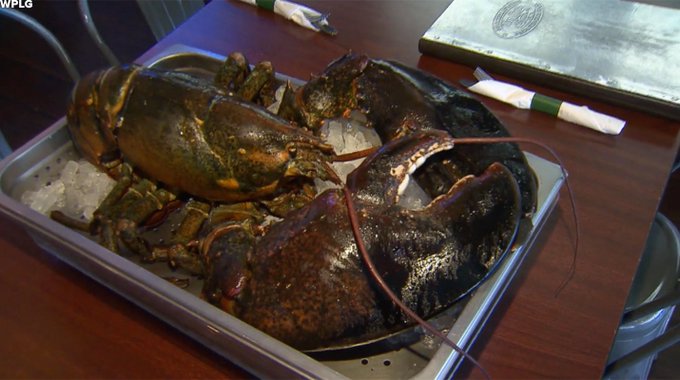
Group saves 110-year-old lobster from someone’s dinner table at South Florida restaurant. http://abcn.ws/29OSEJI 

But according to Andrew Lurie, the Humane Society International’s senior attorney for international law and trade, even those species we love don’t get a whole lot of protection — here in the United States or elsewhere. Animal cruelty convictions in general “are rather rare worldwide,” he said.

On the other hand, consumers are beginning to demand that the animals who produce our food are kept and killed more humanely. It’s this consumer demand that, for example, is driving companies to vow to switch to eggs from cage-free hens. In November, Massachusetts voters approved a ballot measure banning the sale of eggs or meat from animals kept in tight confinement.

So is the Australian lobster case an oddball anomaly or a step toward a future in which more animals we eat get more protections, and when it might not be so strange for lobsters to be included in our moral and legal universe? Lurie said he is not sure. But the chief executive of the RSPCA in New South Wales said it sets a significant precedent.

“We hope this conviction will expand the circle of empathy and welfare to crustaceans and more animals that often do not evoke the same level of compassion as others,” Steve Coleman said. “With the scientific community proving lobsters feel pain, and the New South Wales legislation backing that up, we’re excited to see such progress in the space of animal welfare, and we hope that this case can be a guiding light for others.”

Still want to dine on lobster but minimize its suffering — not to mention your chances of being busted if you happen to be in Australia? The RSPCA Australia’s website recommends a few preferable methods for ending a lobster’s life. And no, boiling it alive is not one of them.

Stunning the lobster in an electrified bath is better, the organization says, as is chilling the lobster in a saltwater ice slurry, then “rapidly cutting through the center-line of the head, thorax (chest) and abdomen with a large, sharp knife” before the lobster regains its version of consciousness.

Or — just a friendly suggestion here — you could avoid all these questions and let the lobsters live.

Read more:

To save their beloved red squirrels, Brits will monitor and kill invasive American ones

A revered sea turtle was offered coins as a blessing. She ate them all and nearly died.

More people are adopting old dogs — really old dogs

Tennessee officials: 2nd confirmation of avian flu

http://abcnews.go.com/US/wireStory/tennessee-officials-2nd-confirmation-avian-flu-46028555

Tennessee officials have confirmed that a second commercial breeding poultry operation in Tennessee has tested positive for the avian flu.

Officials say the chicken breeding facility is located in Giles County, which lies south of Nashville and is close to the Alabama state line.

On Sunday, the U.S. Department of Agriculture announced that another farm in southern Tennessee had bird flu. The entire flock of birds in Lincoln County was killed. That farm supplied Tyson foods.

Officials said the latest chicken-breeding operation to be infected is owned by a different company. Investigators do not believe that chickens at one farm sickened those at the other facility.

The Giles County chicken flock has been killed and investigators are testing nearby poultry facilities.