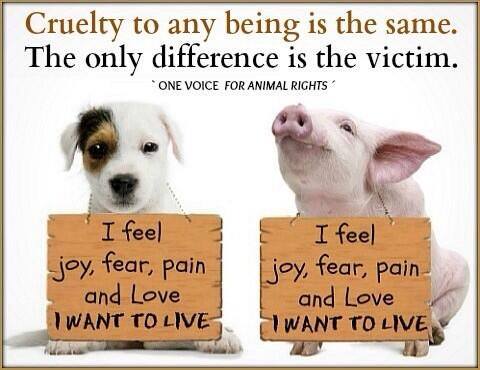
Exposing the Big Game

Forget Hunters' Feeble Rationalizations and Trust Your Gut Feelings: Making Sport of Killing Is Not Healthy Human Behavior

Exposing the Big Game

A ‘Squirrel Slam’ Lures Hunters and Protesters to Western New York

BROCKPORT, N.Y. — They crouched and hid, using the gray, rainy skies and fallow fields as camouflage. They scurried across well-traveled roads, up barren trees and perhaps even toward the border with Canada. They used their wits, their two extra legs and — yes — their bushy tails to fend off their pursuers.

And yet, it was not the squirrels but the hunters who triumphed here on Saturday during the annual Squirrel Slam, a decade-old fund-raising event that has drawn the ire of animal lovers and environmentalists.

The slam and its former host and beneficiary — a volunteer fire department in the nearby town of Holley in western New York — are the subject of a lawsuit filed in state court by Lauren Sheive, a squirrel aficionado who claims there has not been a proper review of its environmental effect.

In particular, Ms. Sheive and her lawyers allege that the slam — which is held on the last Saturday of February during squirrel-hunting season — is particularly damaging to the arboreal rodents because the key to winning the one-day contest is to bag the heaviest squirrels; that is, those that might be pregnant.

“Since it is baby time, the moms will be fatter and larger,” according to an affidavit submitted by Ms. Sheive, who lives in Williamson, N.Y., east of Rochester. “So if, as could happen, there is an overkilling of females who are potentially leaving young to die in their nests, what does that do to the balance of nature?”

Photo

Dennis Bauer recorded the weight of squirrels at the hunt on Saturday. Mr. Bauer has helped organize the event for the last 11 years. CreditMike Bradley for The New York Times

State environmental officials dispute that assertion, saying the hunt falls outside of the period in which squirrels breed and care for their young. Supporters of the slam have long been bewildered by the accusation that they are somehow upsetting the area’s ecology, saying the event is merely a fun way to raise money and promote community bonding.

“Everyone thinks I’m sending 300 people into the woods and slaughtering all the squirrels,” said Dennis Bauer, a hunter who helps organize the event, noting that the slam is not localized, but countywide. If it were harming squirrels, he said, “I wouldn’t do it.”

The dispute also touches on age-old friction between rural and urban mores, with some here grumbling that the conflict was being stoked by downstaters who would not know a Remington from a Rembrandt.

“I think it’s the coolest — Americana in action,” said Jeff Allen, a former logger in Alaska and a local resident who was up early to check out the slam. “And I think this is just a great little thing for upstate New York.”

At the same time, the hunt has also tapped into a broader push by national animal rights groups to stop hunting contests, including those that target animals such as coyotes, pigeons and prairie dogs.

In Albany, state lawmakers have introduced a bill to ban any contest where the goal “is to take the greatest number of wildlife,” though the winners of the squirrel slam receive a small cash prize based on weight, not the number of animals killed. (Slam hunters are limited to five squirrels; the state limit for most species is six a day.)

Still, the New York State director of the Humane Society of the United States, Brian Shapiro, has expressed concern that the slam could cause “the wider community to believe that wildlife is unimportant and killing for a monetary prize is meritorious.”

When the lawsuit was filed in 2015, it was initially dismissed. Then in December, Ms. Sheive won on appeal, and the case was sent back to Orleans County Supreme Court for further review. Arguments there are due on Monday.

One of the slam’s principal opponents has been Richard Brummel, a Long Island resident and grass-roots environmental advocate who has waged a dogged campaign against the event in recent years, citing the State Environmental Quality Review Act to challenge the hunt. He said that his love of squirrels was born from a suburban upbringing and that the animals were “agile,” “industrious” and “very acrobatic.”

“And they are actually somewhat approachable,” he said.

Squirrels are plentiful in New York, according to the State Department of Environmental Conservation, which categorizes three types of squirrels — gray, fox and black — as having “abundant population” and allows them to be hunted in most parts of the state from Sept. 1 to Feb. 28.

Some squirrels, however, are considered nuisances and thus are hunted by humans year round. And many of the squirrels in this neck of the woods fall into that enemy-of-the-people category, said Amethyst McCracken, an avowed pet lover who works at an animal-care office in Holley.

“We have squirrels here the size of cats,” said Ms. McCracken, a licensed veterinary technician. “They do damage. They cause accidents. They chew through power cords, go through drains.”

Photo

Amy Prate of Hilton, N.Y., left, and Brian Sams of Palmyra, N.Y., took a selfie at the hunt in Brockport, N.Y., on Saturday. CreditMike Bradley for The New York Times

Like others here, Ms. McCracken said part of the slam’s problem might be branding. “When you hear ‘slam,’ you think about someone taking it and slamming them on the ground,” she said. But whatever the hunt is called, its organizers insist that the animals did not go to waste. Their tails are used to make fishing lures, while much of their meat — a flavor that has been compared to rabbit or, yes, chicken — finds its way into squirrel stew and other foods.

Joey Inthavong, an immigrant from Thailand who lives in Rochester, collects hundreds of squirrels from the slam every year. He insisted the quality of the local squirrels was excellent.

“They live outside, eat apples, like deer, eat good food,” Mr. Inthavong said. “Not like in the city — they eat garbage.”

Regardless of the looming legal action, the slam proceeded on Saturday, though without the Holley Fire Department after previous protests. Kevin Dann, the fire chief, said his company was “100 percent uninvolved.”

“People in New York City don’t like that we hunt up here,” he said.

Instead, the event was transferred to an Elks Lodge in Brockport, a college town on the Erie Canal, about 20 miles west of Rochester. Most of the participants were experienced hunters — rifles and high-powered pellet guns being the weapons of choice — and had war stories about their nimble prey.

Photo

Brett Jacobson of Greece, N.Y., participated in the squirrel hunt. “They’re like little ninjas,” he said.CreditMike Bradley for The New York Times

“They’re like little ninjas,” said Brett Jacobson, an avid hunter from Greece, N.Y. He noted that squirrels often scare off deer during that hunting season. “They’re obnoxious,” he said.

All told, New York has more than 500,000 licensed hunters — including 30,000 squirrel hunters. The participants in Saturday’s slam worked in a range of professions, including public-school teachers, salesmen and small-business people. Many chatted amiably in the hall of the Elks Lodge, drinking draft beer and buying raffle tickets.

Mr. Bauer, the hunter who helps organize the event, is a mechanic. He says the event draws all kinds of people — “fathers and daughters, 60-year-old brothers, husbands and wives.” And sure enough, a steady stream of hunters arrived in the late afternoon, bearing boxes and plastic bags full of squirrels.

The squirrels were handed off to a team of women called “squirrel girls,” who weighed them on digital scales as Mr. Bauer recorded weights. The winning team — teenagers from Kendall, N.Y. — brought in the heaviest individual squirrel (nearly two pounds), and five squirrels that weighed more than seven pounds total.

Mr. Bauer said it had been a tough day to hunt, driving rain and wind, but a good day for the slam: All of the money raised — from $10 tickets, raffles and the like — would go to the local Elks, who said they would use it for causes like helping veterans and fighting cerebral palsy.

Many of the hunters said they understood that squirrel hunts may not be for everyone, particularly those in cities, where the animals are more likely to be in a park than your barn.

“It’s a country thing,” said Rich Ezell, 62, who hunted with his son-in-law, adding that the event was for a good cause. “I wouldn’t shoot them just to shoot them.”

‘Hog Apocalypse’: Texas has a new weapon in its war on feral pigs. It’s not pretty.

https://www.washingtonpost.com/news/animalia/wp/2017/02/23/hog-apocalypse-texas-has-a-new-weapon-in-its-war-on-feral-pigs-its-not-pretty/?utm_term=.01fdacb6c80b
                                                       _____________________
Best lines: Stephanie Bell, an animal-cruelty director for People for the Ethical Treatment of Animals, said in a statement that feral hogs “should not be sentenced to death simply for trying to forage and feed their own families.” She noted correctly that feral boars were brought to the United States to be hunted for sport before they proliferated across Texas and other states.
                                                       _________________________
February 23 at 8:44 AM

Securing a Texan’s right to shoot wild pigs from a helicopter may have been Sid Miller’s best-known accomplishment before this week.

The state’s agricultural commissioner hangs a boar’s head and toy chopperoutside his office to remind people of the law he got passed, the Austin American-Statesman reports.

But Miller has never stopped searching for better ways to kill some 2 million feral hogs in Texas that the commissioner accuses of eating newborn lambs, uprooting crops and “entire city parks,” trampling across highways and causing more than $50 million in damage a year.

The search is over, Miller announced Tuesday: “The ‘Hog Apocalypse’ may finally be on the horizon.”

Miller said he would return his entire research budget to the state. He doesn’t need it anymore, he says, after finding “a new weapon in the long-standing war on the destructive feral hog population.”

It’s called warfarin: the pesticide with war in its name. Pigs eat it. It kills them slowly, often painfully, and turns their innards blue. It’s already wiped out swine herds in Australia, which later banned the product as inhumane.

The Environmental Protection Agency just approved it.

Hunters and wildlife experts, not so much.

More than 3,000 have signed the Texas Hog Hunters Association’s petition against Miller’s chemical war.

“If this hog is poisoned, do I want to feed it to my family?” the group’s vice president, Eydin Hansen, asked the Dallas CBS affiliate. “I can tell you, I don’t.”

Stephanie Bell, an animal-cruelty director for People for the Ethical Treatment of Animals, said in a statement that feral hogs “should not be sentenced to death simply for trying to forage and feed their own families.” She noted correctly that feral boars were brought to the United States to be hunted for sport before they proliferated across Texas and other states.

Tyler Campbell, a former researcher with the U.S. Agriculture Department, led the agency’s feral-hog studies in Kingsville, Tex., for several years, when warfarin was first tested on pigs in the United States.

“It was fast-tracked,” he said.

The test results weren’t pretty, he said. Marketed as Kaput Feral Hog Bait, the product is comparable to rat poison — with similar effects.

“They bleed,” Campbell said. Internally and externally, usually for a week or more before they die.

Just as concerning, he said, were difficulties in preventing other species from eating the poison — which is known to paralyze chickens, make rats vomit and kill all manner of animals.

The EPA regulations — which Texas plans to strengthen by licensing warfarin’s use — requires hogs to be fed the poison out of bins with 10-pound lids.

The lid tactic won’t work, Campbell said. Before retiring from government research a few years ago, he saw a study in which raccoons lifted much heavier lids in search of food.

“The wildlife community at large has reasons to have concerns,” he said.

“We do have very serious concerns about non-target species,” state wildlife veterinarian Jim LaCour told the Times-Picayune.

Even if only hogs can get to the bait, LaCour said, “they’re going to drop crumbs on the outside.” Those crumbs might then be eaten by rodents, which might be eaten by birds, and thus warfarin could spread throughout the ecosystem.

People should be concerned too, LaCour said: Millions take low doses of warfarin, like Coumadin, to prevent blood clots. Ingesting more from poisoned game could be “very problematic,” he said.

Miller isn’t worried.

The commissioner’s office didn’t reply to requests for comment. But in a statement to the CBS station DFW, he said years of testing prove that other wildlife, or pets, “would have to ingest extremely large quantities over the course of several days” to get sick.

As for the hunters’ objections, Miller said a blue dye will make poisoned hogs obvious long before they reach the oven.

“If you want them gone, this will get them gone,” the commissioner told the Statesman.

As precedent, he pointed to Australia, where he said warfarin “was used for many years” on feral hogs.

It was — in experiments that concerned government officials so much they later banned its use on grounds of “extreme suffering.”

The poison was effective, granted. It proved as apocalyptic as Miller promises, taking just a few months to wipe out an estimated 99 percent of wild pigs in Sunny Corner State Forest during an experiment in 1987.

Other studies described poisoned hogs’ last days in explicit detail: Some were lucky; massive internal bleeding killed them quickly after they ate warfarin. Most suffered for a week or more — one pig for a full month before it died.

“Animals moved only if approached closely and spent most time lying in shelter,” researchers wrote in Australian Wildlife Research in 1990.

Some leaked blood from their eyes or anuses. Many bled internally — sometimes into their joints, causing severe pain. An autopsy revealed one pig’s liver had fused to its stomach.

Being shot from a helicopter, the Australian government concluded, was objectively less cruel.

Tom Regan, Pioneer Animal Rights Philosopher Died February 17 But His Work & Influence Endure

By Karen Davis, PhD, President of United Poultry Concerns*

“My tribute to philosopher Tom Regan, who wrote The Case For Animal Rights,
and*
*who died on February 17, 2017 after a battle with Parkinson’s Disease, is
a*
*slightly expanded version of the Comment I posted yesterday morning to
Merritt*
*Clifton’s beautifully composed obituary for Tom in Animals 24-7 which you
can*
*read here: Tom Regan, 78, made the case for animal rights
<http://www.animals24-7.org/2017/02/18/tom-regan-78-made-the-case-for-animal-rights>.*

Thank you Merritt Clifton for your informative tribute to animal rights
philosopher Tom Regan, whom I met in the early 1980s right around the time
that
his book *The Case For Animal Rights* was published in 1983. Since that
book was
more academic than Peter Singer’s *Animal Liberation*, published in 1975,
was, it
probably was more dipped into by activists than read cover to cover. But
Regan
transcended Singer by arguing that nonhuman animals have not only
“interests”
but RIGHTS and INHERENT VALUE. Sentient beings, in his famous phrase, are
Subjects-of-a-Life in the sense that “their experiential life fares well or
ill
for them, logically independently of their utility for others and logically
independently of their being the object of anyone else’s interests.”

Accordingly, he wrote that nonhuman animals “have a distinctive kind of
value
– inherent value – and are not to be viewed or treated as mere
receptacles,” a
point he stressed at length in *The Case For Animal Rights* and throughout
his
career.

In later years, Regan criticized Singer’s acquiescence in scientific
experiments
on nonhuman animals if the experiments were claimed by the experimenters to
have
a potential to save more HUMAN lives or to mitigate more HUMAN diseases.
Regan
challenged the media’s reflexive reference to Singer as the “father of
animal
rights” which, he said in a discussion about making monkeys suffer for human
benefit, is not so. He wrote: “The Peter Singer interviewed on the BBC2
program
does not believe that nonhuman animals have basic moral rights. As early as
1978, three years after the publication of Animal Liberation, he explicitly
disavowed this belief.” (Tom Regan Replies to Peter Singer
<http://animalfreedom.org/english/column/peter_singer.html>)

Tom Regan in his work following *The Case For Animal Rights* evinced a
lyrical
gift, writing expressively and movingly about animals and about his own
early
life in Pittsburgh, Pennsylvania and his evolution from being an avid
boyhood
fisherman and meat eater to becoming a passionate vegan advocate for
animals and
animal rights.

A True Pioneer

Tom Regan is a true pioneer of the Animal Rights Movement. He laid
philosophical
groundwork even for those who may not now know him as well as they should
and, I
hope, will. Regan had an emotional and artistic sensibility which he
combined
with his academic polemics to produce powerful speaking and writing for
animals
and animal rights.

I attended his outdoor presentations in the 1980s and later, where he said
of
the Establishment versus himself: “They say we’re EXTREMISTS for caring
about
animals! I AM an EXTREMIST. I am EXTREMELY against animal abuse, and I am
against it All the Time!”

This is a paraphrase of a speech I heard him give one year. It was
passionate
and fiery and interesting too when you compare that oratory with his
earliest
foray into animal rights in a clip from The Animals Film
<http://www.theanimalsfilm.com> where he appears
reading from a paper with his head down, but delivering words that echo in
all
of us who are working for animals and animal rights to this day and always
will.

I am eternally grateful to Professor Tom Regan for his establishment, in
philosophy and the arts, of the case for animal rights. And I am honored by
his
kind words of appreciation for my own animal rights work through United
Poultry
Concerns in his 2013 Interview with the Eugene Veg Education Network, which
you
can – and must! – read here:

Eugene Veg Education Network Interview with Tom Regan
<http://www.eugeneveg.org/pdf/Interviews/Interview-Tom_Regan.pdf>

TELL THE USDA TO STOP PROTECTING ANIMAL ABUSERS

Animal welfare advocates rely on the transparency of the United States Department of Agriculture (USDA) to publicly post regular inspection reports on thousands of commercial dog breeding operators, Tennessee Walking horse show participants, roadside zoos, aquariums, circuses, research labs, and other facilities regulated under the federal Animal Welfare Act (AWA) and Horse Protection Act (HPA).

On February 3, the USDA purged its website of all these reports with no warning or explanation. This outrageous action undermines longstanding consensus about public access to information concerning these laws and frustrates public interest, state, local, and industry efforts to help enforce them.

Animals held in research facilities and puppy mills are shielded from public view, therefore these records are essential to ensure that these dogs, monkeys, rabbits, and other animals are receiving basic care.

The USDA is changing the equation for the worse for animals and the public with this abrupt and destructive move. Your voice is needed to ensure that these records are restored.

TAKE ACTION
Please send a message to the USDA and let them know, in no uncertain terms, that they should not be permitted to withhold this vital information and should instead continue to keep those who are responsible for complying with federal law accountable for their actions.

Share to Facebook  Twitter

Your Message

*Subject:

Dear United States Department of Agriculture,

I was shocked and concerned to learn that all inspection reports on thousands of commercial dog breeding operators, Tennessee Walking horse show participants, roadside zoos, aquariums, circuses, research labs, and other facilities regulated under the federal Animal Welfare Act (AWA) and Horse Protection Act (HPA) were scrubbed from your website on February 3.

These reports are crucial to those of us who wish to protect animals from exploitation and abuse. Furthermore, they are the product of taxpayer dollars and there is no justifiable reason for these regularly requested public records to not be posted online.

*Please personalize your message

Sincerely,
[Your Name]
[Your Address]
[City, State ZIP]

Your Information

*Required fields
*Title:

Mr.
Ms.
Mrs.
Miss
Dr.

*First Name:

*Last Name:

*Your Email:

*Address 1:

 Address 2:

*City:

*State / Province:

Choose a State
AK
AL
AR
AZ
CA
CO
CT
DC
DE
FL
GA
HI
IA
ID
IL
IN
KS
KY
LA
MA
MD
ME
MI
MN
MO
MS
MT
NC
ND
NE
NH
NJ
NM
NV
NY
OH
OK
OR
PA
RI
SC
SD
TN
TX
UT
VA
VT
WA
WI
WV
WY
AS
FM
GU
MH
MP
PR
PW
VI
AB
BC
MB
NB
NL
NS
NT
NU
ON
PE
QC
SK
YT
None
*ZIP / Postal Code:

 Phone Number:

This action alert is for U.S. residents only. International advocates, please visit Humane Society International for ways you can take action for animals.

After you take action, you’ll receive updates by email on how you can help animals. You can easily opt-out at any time.

Could Going Vegan Save Millions Of Lives? Who would have thought?

Some Good News and Some Victories for Animals in 2016

http://www.all-creatures.org/articles/ar-goodnews2016.html
An Animal Rights Article from All-Creatures.org

From All-Creatures.org
December 2016

THANK YOU for every single thing you did to make a difference for animals in 2016!

This list is about the animals and to honor animal rights activism. Congratulate yourself for your contribution and get inspired to do even MORE for animals in 2017. Please SHARE this link!

We know there are many more victories and many more good news items for animals in 2016 and we know there are LOTS of opinions of what “victory” or “good news” mean. This is a listing of what was posted as good news/victories on our All-Creatures.org 2016 weekly eNewsletters. Please subscribe here.

Image above to celebrate Ringling Bros. LAST Elephant Show, May 2016!

THANK YOU…FOR ANIMALS EVERYWHERE!

Showing Mercy to Suffering Animals Is Not ‘Criminal Mischief’

Anita Krajnc gives water to pigs in Toronto on their way to slaughter.
13509120_1489667357723390_1046634769482457799_n
by Matthew Scully November 7, 2016, Issue
A Canadian woman finds herself in court for giving water to thirsty pigs bound for a slaughterhouse. Depressed about large and momentous events beyond our control, perhaps we had best think of humbler matters in which, at least, the decisions are ours alone to make. If that’s your state of mind in the fall of 2016, I’ve got just the news story for you. A morality tale out of Ontario, Canada, it’s known locally as the “thirsty pigs” case and presents choices that are, in their way, momentous enough. In a court of justice, a 49-year-old woman named Anita Krajnc stands accused of criminal mischief. Her offense, as alleged by complainants and provincial authorities, was to give water to pigs bound for a nearby abattoir. It was a hot day in June of last year. A trailer hauling 180 or so of the animals had stopped at an intersection. Seeing the pigs looking out through the vents, panting and foaming at the mouth, the defendant let them lap water from a plastic bottle, provoking this videotaped confrontation related by the Washington Post: At that moment, the truck driver emerged in protest. “Don’t give them anything!” he shouted, his own camera phone in hand. “Do not put anything in there!” “Jesus said, ‘If they are thirsty, give them water,’” she yelled back. “No, you know what?” he shouted. “These are not humans, you dumb frickin’ broad! Hello!” The driver, Jeffrey Veldjesgraaf, called police and eventually continued on with his doomed cargo down Harvester Road to the suitably named Fearmans slaughterhouse (what pig shouldn’t fear man’s slaughterhouse?). The next day Eric Van Boekel, owner of Van Boekel Hog Farms, pressed charges for what he regards as an interference with his livelihood and property: a case of tampering with the food supply and nothing more. Anita Krajnc, moreover, didn’t just happen to be at that intersection. She leads a group called Toronto Pig Save. Part of its mission is to offer water to pigs and other farm animals in their final moments. In the way of mass-confinement farming these days, that ride to Fearmans affords their very first glimpse of the world and their very last. Often these journeys are hundreds of miles, the pigs crowded into trucks for as long as 36 hours with no food, water, or rest. Krajnc is there to “bear witness,” that they might go to their deaths having encountered at least one human face that wasn’t glaring indifferently at them, felt one touch of human kindness. Viewing the woman as incorrigible, Van Boeckel decided this was his chance to put an end to it. Meanwhile, the Ontario Federation of Agriculture, representing hog farmers, informs members that “our coordinated action plan has been established” in case the controversy gets out of hand. “Developments in the case and associated actions by interested parties are being monitored very closely,” and “we sincerely hope the court continues to focus on the specific issue at hand.” They are understandably wary of any inquiry extending beyond the property-interference question, wishing to steer as far clear as possible of a public moral debate, to say nothing of a religious debate, about the mistreatment of farm animals in general and about Krajnc’s last-hour benefactions in particular. Allow the spirit of the Comforter and Good Shepherd at the end of the creatures’ lives, and attentive men and women will start to wonder where it was all along. Not good for business when people get too unearthly about these things. Save your prayers for grace over the meal. For her part, the dumb frickin’ broad with the water says that she was “just following the Golden Rule,” understood as applying wherever human empathy can reach. She explained in court that she prefers the word “intervening” to “interfering,” since whatever the law says about Van Boekel’s property, she was simply living out her Christian obligation of compassion for animals, thereby serving the public good. It was an act of mercy, and in what kind of enterprise is it forbidden to be merciful? I was thirsty and you gave me drink. Nothing in the ring of those words to encourage help for an afflicted fellow creature? Do humans alone know thirst? The reputations of revered saints instruct us in gentleness toward animals, along with firm admonitions in Scripture and felony-level penalties recognizing, toward some creatures, anyway, an obligation of justice. So to Krajnc’s supporters it seems unfair that she should be the one compelled to explain herself, facing imprisonment for being merciful, while Van Boekel, who shows nothing of that quality, steps into court like some aggrieved pillar of the community. Change.org, petitioning for Prime Minister Justin Trudeau’s attention to the case before a verdict comes next month, frames the matter this way: “What is wrong with our legal system, when attempting to alleviate the suffering of another being is seen as criminal, and those who are inflicting the pain and cruelty are left unchallenged?” A satisfactory answer from the prime minister would top his viral-video performance back in April, when he explained quantum computing to a dazzled audience of reporters and academics. Merely addressing the problem of factory farming at all would show a truly searching mind at work. How often do liberals who lay blame for the world’s ills on the greed of other people, or conservatives on the weak will of other people, ever question their own habits and appetites, or consider how a change in these might help to avoid vast animal suffering? In neither case do we see the moral idealism of serious people at their best, and liberals in particular receive far more credit than is merited for thinking and caring about animal causes. So it would be nice if Canada’s progressive prime minister set a helpful example. Should he answer the question put to him by Change.org, it is a challenge of mental prowess less theoretical than quantum theory, and the test of truth is consistency. For instance, it was pointed out in Krajnc’s trial that if the court had the same basic set of facts, replacing only the word “pig” with “dog,” the weight of law would shift instantly in favor of the defendant, even though dogs also fall rather uneasily into the category of legal property. A conscientious person, seeing a trapped, desperate, overheated dog, would be expected to offer relief, and in some places, parts of Canada included, the law encourages exactly that. What would we do? And why should we care in the least what the owner thinks, when the creature is clearly suffering from deliberate or reckless neglect? Social norms basically say that dogs are awesome and pigs are worthless. Provably, however, pigs are every bit the equals of dogs in their intelligence, emotional depth, and capacities for suffering and happiness alike. Though badly maligned, pigs are really quite impressive and endearing when they are not being tortured, terrified, scalded alive (as often happens), and dismembered amid the bedlam of places like Van Boekel’s factory farm and Fearmans’s abattoir. In countries where dogs are mostly appreciated, admired, and loved, while unseen pigs are killed by the hundreds of thousands every day, people need to pretend there’s some subtle yet all-important moral difference between abusing one and abusing the other, or eating one and eating the other. And it falls to guileless souls like Anita Krajnc to remind them it’s all just made up. Charge her with a lack of sophistication, being too naïve to play along with convenient cultural distinctions that have no basis in reality. Indeed, we can easily imagine a Chinese or Korean version of the story, a “thirsty dogs case” in which some Golden Rule do-gooder dares to offer a merciful bit of water to one of the millions of dogs ensnared in the canine meat trade — complete with a driver shouting “These are not humans! Hello!” and a seller insisting that she take her damn hands off his food animals. Dogs in China, South Korea, and elsewhere are subjected to devilish torments; as with our farm animals, thirst is the least of their miseries. Call up a few pictures on the Internet if you can bear reminding of how utterly depraved some people are toward animals. And then try explaining why that meat trade is needless, selfish, and hard-hearted but ours is not. If anything, the dog butchers and their customers may be credited with greater consistency, being unselective in their inhumanity toward animals. Wait on the day when all such scenes are in our past, finally left behind in what Wayne Pacelle calls the “humane economy” (in a powerful book by that name). For every product of human cruelty, human creativity will offer something better, as it does already with an abundance of far healthier substitutes for meat. We will need no witnesses like Anita Krajnc to gentler, saner ways, because the slaughterhouses will be gone. The little acts of mercy will lead to great ones; the ruthless instead of the kindly will be counted disturbers of the peace. You can take that on the authority, as well, of Charles Krauthammer, a man educated in Canada, who observed recently on Fox News that “in a hundred years people are going to judge us as a civilization that killed wantonly and ate animals. There’s going to be a time when we’re not going to need to do that. And they’re going to end up judging their ancestors, meaning us, harshly for having been that wanton and that cruel.” Or, you can take it from Anita, this gracious person whose real offense is to see what we are not supposed to notice, and to say what the world both dismisses as foolish and knows to be true. “When someone is suffering,” she told the Post, “it’s actually wrong to look away. We all have a duty to be present and try to help. In the history of the world, that’s how social movements progress.” – Mr. Scully, a former literary editor of National Review and senior speechwriter to President George W. Bush, is the author of Dominion: The Power of Man, the Suffering of Animals, and the Call to Mercy. Read more at: https://www.nationalreview.com/magazine/2016-11-07-0000/

Read more at: https://www.nationalreview.com/magazine/2016-11-07-0000/

Animal Welfare On The Ballot In November

DANIEL ACKER / REUTERS

When voters go to the polls this November, they won’t only be making critical decisions about who represents them in the White House, Congress and state and local offices. In a number of states, the people will vote on the humane treatment of animals—deciding whether to adopt policies on factory farming, wildlife trafficking and other animal protection issues.

Since the early 1990s, The Humane Society of the United States and allied organizations have been involved in about 50 statewide ballot contests, and voters have sided with animals about 70 percent of the time. They’ve banned cockfighting in three of the last states where it remained legal (Arizona, Missouri and Oklahoma), set humane treatment standards for dogs in the largest puppy mill state (Missouri), stopped extreme confinement of animals on factory farms (Arizona, California and Florida), and adopted new policies to restrict greyhound racing; horse slaughter; body-gripping traps and poisons; trophy hunting of bears, cougars and wolves and more. When politicians in the state legislatures have been held captive by special interests—such as big agribusiness, the trophy hunting lobby or even organized cockfighting groups—animal advocates have petitioned to put these questions directly to the people.

This year in Massachusetts, voters will decide on Question 3, which would phase out the extreme confinement of veal calves, breeding pigs and egg-laying hens in small crates and cages where they are virtually immobilized for their entire lives, and will remove inhumane and unsafe products from the Massachusetts marketplace. Backed by the MSPCA, Animal Rescue League of Boston, Zoo New England and hundreds of Massachusetts veterinarians and family farmers, more than 170,000 Massachusetts voters signed petitions to place Question 3 on the ballot. Question 3 adds momentum to what’s already occurring in the marketplace, with McDonald’s, Walmart and 200 other major food retail brands pledging to change their procurement practices and source only cage-free eggs and meats.

In Oregon, voters will weigh in on Measure 100, which will help save endangered sea turtles, elephants, rhinos and other wild animals threatened with cruel poaching and extinction. Every day close to 100 elephants are brutally killed in Africa, their tusks hacked off to supply the black market for ivory trinkets. Poachers poison watering holes with cyanide, killing hundreds of elephants at once. Organized criminal gangs and armed rebels use military weapons to kill wildlife for the multi-billion dollar illegal wildlife trade. Measure 100 will ensure that Oregon does not provide a market for endangered species products resulting from wildlife poaching and trafficking. If passed, Oregon will join California, Washington, Hawaii and other states in shutting down local markets for those who seek to profit from this destructive wildlife trade.

In Oklahoma, family farmers and animal advocates are opposing State Question 777, a measure referred to the ballot by politicians to amend the state constitution with a so-called “right to farm.” It would protect corporate interests and foreign-owned big agribusiness at the expense of Oklahoma’s family farmers, land and animals. The measure is so broadly worded that it could prevent future restrictions on any “agricultural” practice, including puppy mills, horse slaughter and raising gamefowl for cockfighting. Even the president of the Oklahoma Farm Bureau said the language is flawed, and “I wish that language weren’t in there.”

Those aren’t the only states where voters will see ballot issues related to animals. Californians will vote on Proposition 67, to protect the state’s ban on plastic grocery bags, which wash into our rivers, lakes, streams and ocean, where they are ingested by or entangle sea turtles, otters, seals, fish and birds. Some ocean animals mistake bags for food, fill their stomachs with plastics, and die of starvation. Montanans will vote on I-777, which would restrict the use of cruel traps and snares on public lands. In Colorado, Amendment 71 would make it more difficult for citizens to have a say on future constitutional ballot measures, including those dealing with animal protection. The HSUS favors the California and Montana measures, but strongly opposes the Colorado measure as an attack on citizen voting.

When you enter the voting booth or send in your mail ballot this November, make sure you don’t stop after the candidate races. Continue down the ballot and review the issues at stake, and you could have a role in promoting the humane treatment of animals and protecting these creatures from cruelty and suffering, and preserving your rights to participate in democratic decision-making in future elections.

Michael Markarian is chief operating officer of The Humane Society of the United States, and president of the Humane Society Legislative Fund.

Big Food Strikes Back

from DawnWatch: This Sunday, October 9, the Magazine section of the New York Times is dubbed “The Food Issue.” It includes some terrific articles, including a piece by Michael Pollan, and a haunting photo-essay on big ag. Best of all it includes a piece, by Ted Genoways, on the undercover work of a
“Compassion Over Killing” investigator.

The article on the COK investigator, titled, “Close to the Bone,” and titled online “The Fight Over Transparency in the Meat Industry,” first tells us how little consumers know about the meat they eat. We read that the Department of Agriculture no longer oversees and verifies claims such as
“grass-fed” or “naturally raised,” and that even when the department certifies labels they are questionable, with no standard definition for “humanely raised,” and no site visits to confirm enforcement for those approved to use the label.

Genoways writes:
“Amid such dwindling transparency and oversight, animal rights activists, once regarded as the radical fringe, have taken on a somewhat unlikely role as consumer watchdogs.” He follows an investigator named Jay who get a job at a pig slaughterhouse near Austin. We read:

“He filmed a hog being hit in the face with plastic rattle paddles and electrically prodded on the head. He filmed another hog being repeatedly beaten then rolled and pushed by its hindquarters. He filmed hogs having their throats slit while still alive and — in one particularly harrowing sequence — appeared to capture a hog struggling to right itself in its shackle as it is carried toward processing. A spokesman for Q.P.P. said all the hogs ‘had been properly rendered insensible,’ but the video itself seems to contradict that claim. At one point, a worker shouts over the din of machinery and squealing pigs: ‘Too many sensibles. If U.S.D.A. is around, they could shut us down.'”

The article explains that because of a new kind of self-regulation, known as HIMP, the USDA was unlikely to be around.”

You’ll find the full piece on line at http://tinyurl.com/hansj7j

Michael Pollan’s article is titled, “Big Food Strikes Back.” The subheading is, “When Barack Obama took office activists hoped his administration would fight for stronger regulation of corporate agriculture. Eight years later they are still waiting.”

Pollan shares part of an early interview given by President Obama to Joel Klein of Time Magazine:

“I was just reading an article in The New York Times by Michael Pollan about food and the fact that our entire agricultural system is built on cheap oil. As a consequence, our agriculture sector actually is contributing more greenhouse gases than our transportation sector. And in the meantime, it’s creating monocultures that are vulnerable to national security threats, are now vulnerable to sky-high food prices or crashes in food prices, huge swings in commodity prices, and are partly responsible for the explosion in our health care costs because they’re contributing to Type 2 diabetes, stroke and heart disease, obesity.”

He reminds us that on the campaign trail Obama vowed “to bring CAFOs under the authority of the federal Clean Air and Clean Water Acts and Superfund program ‘just as any other polluter.’”

What follows is a fascinating study on the power of Big Ag. You’ll find it on line at http://tinyurl.com/hz3mr5v

Featured Image -- 12776

Trial of activist who fed water to pigs en route to slaughter resumes today

Anita Krajnc gives pigs water near a slaughterhouse in Burlington. Krajnc has pleaded not guilty to a mischief charge in the June 2015 incident.

http://www.cbc.ca/news/canada/hamilton/pig-water-trial-1.3788586

Anita Krajnc expected to take the stand to defend herself against mischief charge

By Nicole Thompson, The Canadian Press Posted: Oct 03, 2016 

A woman who gave cool water to hot pigs on their way to slaughter last year is expected to take the stand in her own defence today.

Anita Krajnc, an activist with the group Toronto Pig Save, has pleaded not guilty to a mischief charge in the June 2015 incident.

Krajnc freely admits to feeding water to the pigs, but contends it wasn’t illegal for her to do so.

Today is the third court date in the trial, which started in late August.

On previous days, the court heard from the truck driver who was transporting the pigs to a Burlington, Ont., slaughterhouse.

Jeffrey Veldjesgraaf testified that it wasn’t unusual for Krajnc and other animal rights activists to offer water to the pigs, and the Fearman’s Pork slaughterhouse has never turned away the animals he hauls there because of it.

During cross-examination, Veldjesgraaf said the animals are given water before and after they’re loaded onto the trucks, but not during transit.

Court also watched video of the 2015 incident, in which Krajnc is seen yelling to the truck driver, “Have some compassion, have some compassion!”

“Let’s call the cops,” the driver says, holding his phone.

“Call Jesus,” Krajnc says as she continues to allow the pigs to drink the water.

“Yeah, no. What do you got in that water?” he asks.

“Water,” Krajnc says.

“No, no, how do I know?” he says.

“Trust me,” she says.

Krajnc’s defence lawyers told court that they would argue the activist was acting in the public good, and therefore not breaking the law.

The first day of trial wrapped up with a debate about how to refer to pig waste.