Wildlife Photography a Crime? Stop Wisconsin’s Right to Hunt Bill

https://takeaction.takepart.com/actions/worse-than-ag-gag-stop-wisconsin-s-right-to-hunt-bill?cmpid=tpdaily-eml-2015-11-4

About the Petition

The Wisconsin legislature is considering a bill that would potentially criminalize photography in the wild and could even make being in the proximity of a hunter a violation of the law.

The “Right to Hunt” bill expands on legislation designed to prevent the obstruction of hunting, fishing, or trapping in the state. Photographing, monitoring, or recording hunters and trappers would be prohibited under the law if passed as written. Even maintaining “visual or physical proximity” to those engaged in hunting or trapping would be criminalized.

The bill is so far-reaching that it could practically ban wildlife photography and expose hikers and other non-consumptive public land users to hundreds of dollars in fines or even jail time simply for being in the presence of a hunter or trapper.

Please sign the petition to the chair of the Wisconsin Committee on Sporting Heritage, Mining, and Forestry, and ask him to immediately table this bill and prevent it from becoming law.

To: Sen. Thomas Tiffany

I am alarmed to learn that the Wisconsin legislature is considering a bill that seeks to shield the actions of hunters and trappers from public scrutiny by grossly expanding the list of activities prohibited under existing law.

The bill, 2015 Senate Bill 338—or, as some are calling it, the “Right to Hunt” bill—would criminalize photographing or videotaping hunters in addition to maintaining proximity to or impeding a person engaged in hunting or trapping.

This proposed legislation is so expansive and restrictive that it could make criminals out of bird-watchers and wildlife photographers and put hikers, cross-country skiers, and other non-consumptive users of public land at risk of arrest. Public lands belong to all Americans, not just a chosen few that engage in activities favored by some politicians. This legislation appears not only designed to protect one class of citizens at the expense of another (in a likely unconstitutional manner) but also to prohibit public knowledge and scrutiny of activities on public lands that impact wildlife and wild places held in the public trust. Neither of these ends is a worthy goal for a state legislature to pursue.

The bill would also be bad for endangered wolves. One of the primary causes of human/wolf conflict in Wisconsin is depredation of bear hunting hounds by wolves defending themselves or their families from these packs of dogs. Criminalizing efforts to document this activity could lead to even greater conflict and more wolves killed in retaliation.

I urge that as chair of the Committee on Sporting Heritage, Mining, and Forestry, you exercise your authority to table this bill permanently and prevent it from becoming law.

Sincerely,

[Your name here]

Why Did the WHO Take So Long to Declare Meat Dangerous to Our Health?

http://www.huffingtonpost.com/aysha-akhtar/why-did-the-who-take-so-l_b_8401138.html

2015-10-27-1445972992-9071689-1024pxFresh_meat.jpg

When I read the news yesterday that an analysis by the World Health Organization (WHO) concluded that red and processed meats increase the risk of cancer, my first thought was: The medical community has known this for some time.

Studies going as far back as the 1970s have shown an increased risk of colon and rectal cancers (colorectal cancers) with meat intake. In 2007, a joint international panel convened by the World Cancer Research Fund and the American Institute of Cancer Research (WCRF/AICR) evaluated hundred of studies. (1) This panel found that the evidence that red and processed meats cause colorectal cancer is “convincing,” the highest rank of association. This was damning evidence in 2007. The question isn’t whether or not the WHO is right. The question is why did it take more than eight years for the WHO to make its announcement?

In our current hyper-polarized atmosphere with a never ending stream of competing talking-heads, the reaction to WHO’s finding has, not surprisingly, been mixed. Many researchers have argued that the evidence is not conclusive and the risk of colorectal cancer from eating meat is not nearly as strong as the risk of lung cancer from smoking. These statements are correct to some degree.

But that argument misses a vital point: the evidence between meat and colorectal cancer might not be as strong in part because the wrong studies were evaluated in the first place.

It appears that the major category of studies that the WHO panel assessed mostly investigated the risk of cancer among people who ate more red meat compared with people who ate less red meat, but still consumed other animal products. The second group of studies they investigated were largely animal experiments. Here are the problems with these studies:

First, the human studies largely relied on the participants to report how much meat they consumed. People are notoriously poor at reporting this type of information. Participants in such studies either cannot accurately recall or quantify their consumption habits or they misreport due to an unconscious or conscious effort to make their diets appear healthier than they actually are.

Second, and more importantly, the human studies mostly assessed degrees of meat intake of all kinds. One of the main reasons why the evidence for the risk of lung cancer among smokers was so strong is that in so many studies, the comparison groups were non-smokers. So the contrast was more black and white: smokers versus non-smokers. And, study participants can much more accurately state whether they smoked or didn’t smoke, rather than attempt to quantify their degree of smoking.

Using comparison groups that starkly contrast in the one factor that is being investigated can help clarify the evidence and strengthen it (you want the groups to be as similar as possible in all other respects). Cancer is complicated and we know so little about how it develops. Foods that cause one type of cancer may play a role in promoting other types of cancers as well. Studies have routinely suggested that any animal product — red meat, processed meat, chicken, and dairyincreases the risk of certain forms of cancer.

Thus, comparing groups of people who all ate animal products complicates factors. If the WHO panel solely assessed the studies that compared people who ate red meat versus people who ate no animal products at all, the evidence for the risk of cancer among meat eaters would likely be much stronger.

Third, animal experimentation can give you any result you want. You want to prove meat causes cancer? Animal experiments can show you that. You want to prove that meat does not cause cancer? Well, animal experiments can show you that, too.

Animal experiments can easily be manipulated and, as I have mentioned in previous posts, animal experiments are extremely poor at predicting human findings. The WCRF/AICR report recognized this and stated that the limitations of the animal experiments are “their artificiality and the fact that no effect on rodents, however unequivocal, can be assumed to apply to humans.”

Cancers take a long time to develop, usually decades. While humans have been eating meat for centuries, we are now living longer and that allows more time for cancer to manifest. So the result of our meat-heavy diets is finally emerging: cancers. Diets largely based on plant foods are not only less risky in terms of cancer development, but they are actually protective. They protect us from developing cancer.

The WCRF/AICR report stated that the majority of cancers are not inherited, but are caused by changes and damage to our DNA. Plant foods not only help prevent damage to our DNA, they actually promote DNA repair. The report stated:

An integrated approach to the evidence shows that most diets that are protective against cancer are mainly made up from foods of plant origin.

Unsurprisingly, one of the WCRF/AICR report’s main recommendations is to consume a diet of mostly plant-based foods to reduce the risk of many forms of cancer. While every type of study conducted will have it’s limitations, there is sufficient evidence to suggest that plant-based diets are the healthiest overall.

Given all that we don’t know about cancer, we should pay close attention to what we do know: MEAT CAUSES CANCER

References:

1. World Cancer Research Fund / American Institute for Cancer Research.Food, Nutrition, Physical Activity, and the Prevention of Cancer: a Global Perspective. Washington DC: AICR, 2007

…and from the Onion:  Experts: Bacon, Hot Dogs Can Cause Cancer

 http://www.theonion.com/americanvoices/experts-bacon-hot-dogs-can-cause-cancer-51740

According to the World Health Organization, there is sufficient evidence to link processed red meats to the development of colorectal cancer, which means foods such as hot dogs and bacon will be added to the WHO’s list of known carcinogens. What do you think?

Costs of Oregon hunting, fishing licenses keep climbing; License sales drop but ODFW says price not main factor

The change in demographic is the prime driver for the economic spiral state wildlife management agencies face nationwide. They have never been more vulnerable for change. Reforming state wildlife commissions to represent more than just hunters is key to this evolution.

http://www.bendbulletin.com/localstate/environment/3620921-151/costs-of-oregon-hunting-fishing-licenses-keep-climbing

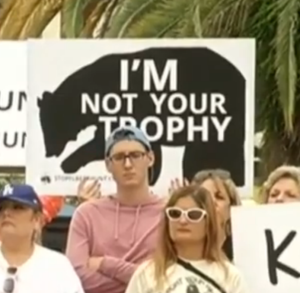
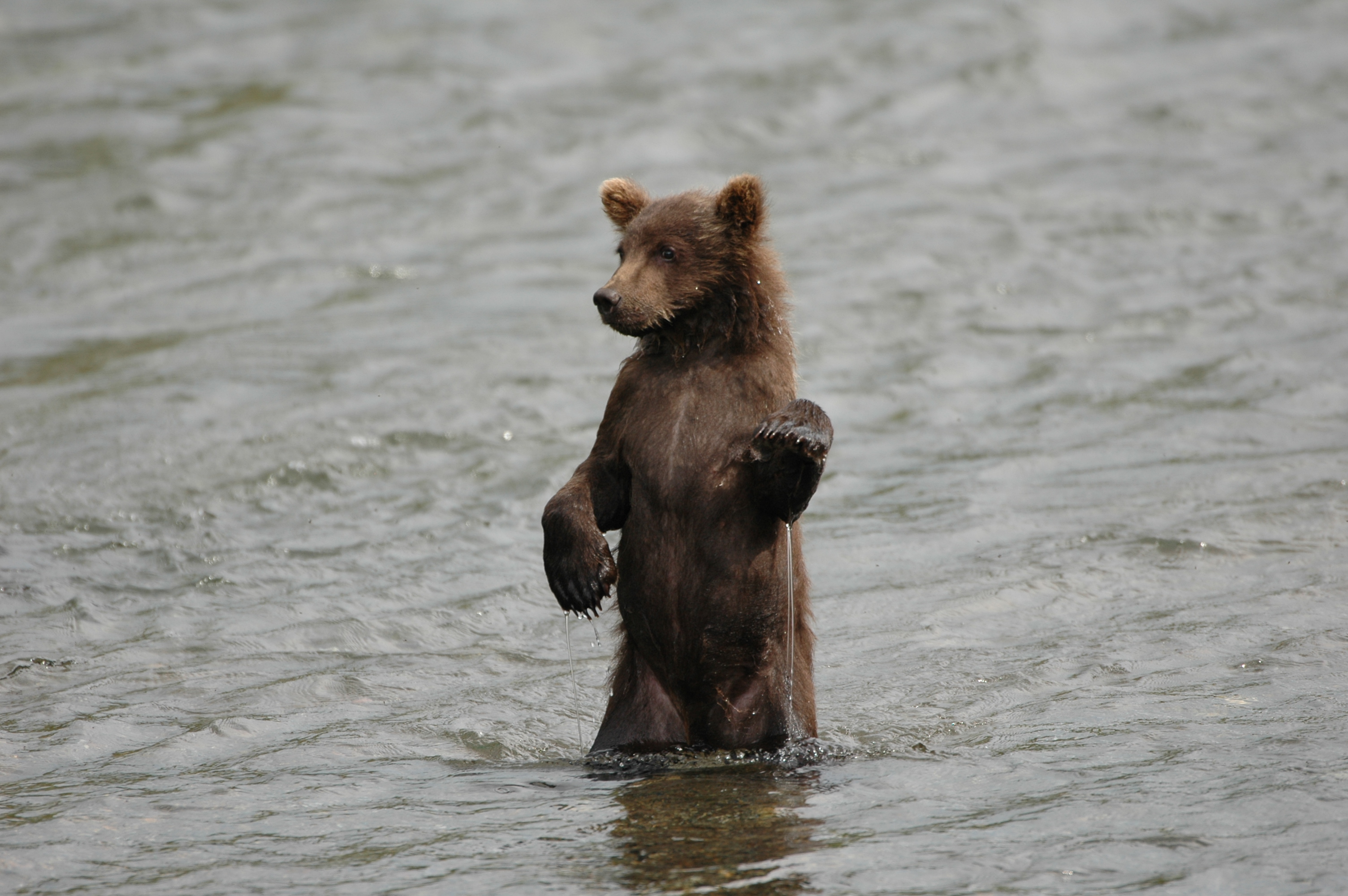
B.C. man persuaded to give up coveted licence to hunt grizzly bears

Screen Shot 2015-09-28 at 3.17.28 PM

http://www.theglobeandmail.com/news/british-columbia/bc-man-persuaded-to-give-up-coveted-licence-to-hunt-grizzly-bears/article26646576/

Brent Sheppe grew up in a family of hunters, and for almost as long as he can remember he wanted to kill what some people regard as the biggest trophy of all.

“It’s been a dream of mine to get a grizzly bear. You know, to be able to hunt something that could hunt you back is pretty intimidating, is pretty awesome,” Mr. Sheppe said in a recent interview as he sat at home watching a hunting show on television.

This fall, after 10 years of trying, Mr. Sheppe got lucky, and for the first time his name was drawn for a grizzly bear licence in a limited entry hunt (LEH) in the Knight/Kingcome Inlet area on British Columbia’s central coast.

Getting your name drawn for an LEH is like winning the lottery, because it allows you access to an area from which the vast majority of hunters are excluded. LEHs are a way for the government to restrict the number of animals killed by limiting the number of hunters allowed in a prescribed zone. This year, 9,614 hunters applied for LEH licences for grizzly bears in British Columbia, and 3,469 tags were issued. In the Knight/Kingcome zone, 324 applied and 59 were selected.

(A government spokesman said many more tags are issued than bears are harvested. In 2014, for example, 3,067 LEH hunters province-wide killed 267 grizzlies.)

When Mr. Sheppe got his licence after so many years of trying, he was ecstatic.

But in a remarkable story of conversion that shows the dramatic way attitudes are shifting against grizzly hunting in B.C., Mr. Sheppe is going to forfeit his LEH.

Instead of shooting a trophy bear, he is going to look at one through binoculars.

The 31-year-old welding contractor grew up in Port McNeill on the north end of Vancouver Island, where people go into the forest to get meat the way urbanites visit the butcher.

“The way I was raised, we’d go out and shoot some animals and we’d bring the animals home and clean them, process them, smoke them and put them in the freezer. That was what we’d eat growing up. So hunting has been a big part of my life,” he said.

But his views on hunting grizzly bears changed recently when he talked with Mike Willie, an old friend and a hereditary chief of the Musgamakw Dzawada’enuxw First Nation.

Mr. Willie runs Sea Wolf Adventures, which offers cultural and wildlife tours on the coast, and Mr. Sheppe was hoping to get a boat ride into the remote Knight/Kingcome area, at the southern edge of the Great Bear Rainforest.

“I gave him a call, and was like, ‘You know, you’re the guy to take me out and help find some animals.’ And he said, ‘Well, there’s a bit of a problem because I’m completely against hunting these animals; they are majestic and spiritual,’” Mr. Sheppe said.

They talked about the importance of bears to First Nations.

“Bears are like family. If you have a bear lost, it’s a family member down,” Mr. Willie said.

“It really hit me,” Mr. Sheppe said. “I never had the opportunity to go hunt one before, so I was pretty excited about this [hunt], but my views have changed. Something in my spirit has switched and I’m ready to start a new chapter and try and help promote saving these bears.”

Mr. Willie said as an incentive to help Mr. Sheppe abandon his hunt, Sea Wolf Adventures and Nimmo Bay Resort, a luxury wilderness lodge, have offered to host him and his family for a bear-viewing trip.

It is an offer he hopes to make to other hunters prepared to give up their LEH licences.

Fraser Murray of Nimmo Bay Resort said when Mr. Sheppe sees a trophy grizzly, they will identify it as the bear that would have been shot had the hunt proceeded. A snare will be used to get DNA from a hair sample, and the bear will become part of a science project tracking the movement of coastal grizzlies.

“We’ll learn more about that bear and get a sense of the value of that bear to tourism as opposed to hunting,” he said.

A study last year found that tourists spent $15-million on bear viewing in the Great Bear Rainforest in 2012, while hunters spent $1.2-million.

Judging by that, the bear being spared by Mr. Sheppe is worth a lot more alive than dead.

Increasingly, British Columbians seem to be realizing that. A survey released on Friday found that more than 90 per cent now oppose the grizzly hunt. Included in that number are probably a lot of hunters like Mr. Sheppe, who have turned away from killing bears.

Hunters defending themselves from bears are the No. 1 cause of death of grizzly bears in the Greater Yellowstone Ecosystem ‏

Documents detail outcome of bear, hunter conflicts in Greater Yellowstone
The Jackson Hole News and Guide’s Freedom of Information Act requests to the agencies that deal with grizzly bears in the Greater Yellowstone Area found that hunters defending themselves from bears are the No. 1 cause of death of grizzly bears in that ecosystem, and that bear spray is mentioned in only a quarter of the 24 investigations of a hunter’s killing a grizzly in self defense.
Jackson Hole News & Guide; October 7

 Wildlife Photography ©Jim Robertson

Wildlife Photography ©Jim Robertson

Big Cat Advocates Oppose Plan To Kill Cougars

Screen Shot 2015-09-28 at 3.17.20 PM

 http://www.eugeneweekly.com/20151008/news-briefs/big-cat-advocates-oppose-plan-kill-cougars

Oregon’s 2016 big-game hunting regulations will be on the agenda when the Fish and Wildlife Commission meets in Florence Oct. 8 and 9.

Specifically the commission will discuss opening up target areas where “cougar numbers will be proactively reduced in response to established criteria” for cougar conflicts with humans, livestock or other game animals such as mule deer.

There were no target areas in 2014 and 2015, but the commission is proposing to open up four areas in 2016. One of them is to reduce livestock and safety conflicts, two are for improving mule deer populations and the fourth is for mule deer and bighorn sheep.

Cougar advocates want the state to know that “the people of Oregon want cougars well managed and not killed en masse because of ill-conceived schemes that have no scientific validity,” as Scott Beckstead, senior Oregon director for the Humane Society of the United States, puts it.

In a call to Facebook followers to come and testify on Oct. 9, the group Predator Defense compares cougars to Cecil, the African lion killed by an American hunter, saying, “America’s mountain lions are experiencing the same fate as Cecil, Zimbabwe’s most famous and beloved lion, illegally killed in July by a Minnesota dentist on a trophy hunt.” The group continues, “But what’s happening here is even worse — the slaughter is legal and being carried out by government agents on behalf of deer hunters.”

Beckstead of HSUS tells EW, “The policy of treating wild ungulates like free-roaming livestock to be ‘harvested’ and wild carnivores as vermin to be exterminated is an archaic approach to wildlife management that ignores the evolving humane values of most Oregonians.” He points out that voters have opposed twice allowing recreational hunters to use hounds to hunt cougars in 1994 and 1996.

According to the commission’s agenda information, depending on the area, the cougar killing would be carried out by volunteer agents, federal Wildlife Services and the Oregon Department of Fish and Wildlife at an annual cost of almost $70,000 to remove 95 cougars. Sally Mackler, native carnivore advocate for Predator Defense, says “federal agents from the USDA’s Wildlife Services and local houndsmen deputized by ODFW are immune from state law banning use of hounds by trophy hunters.”

Beckstead says that “using packs of radio-collared trailing hounds and neck snares to indiscriminately kill Oregon cougars” in the target zones “under the guise of protecting mule deer and reducing conflicts with humans and livestock is just poor wildlife management, not scientifically valid.”

Mackler adds, “Science shows that cougar predation is a minor influence on mule deer population, and the main reasons for decline are habitat, nutritional quality of and access to forage.”

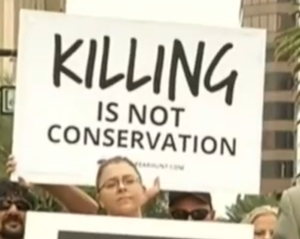
The groups are calling for a stop to “indiscriminate killing” and for the use of up-to-date science on the big cats, especially in light of the fact that Oregon’s management plan for cougars is due to be revised and updated next year. “Cougars should be conserved for all, not just managed for a few trophy hunters,” Predator Defense, HSUS and 10 other groups say in their comments to the ODFW commission.

Those who wish to testify about the plan can go to the 8 am meeting at the Driftwood Shores Resort, Pacific Room, 2nd floor, 88416 1st Ave. in Florence.

NM “Game” Commission caters to hunters, ranchers

Letters to the editor

Published: Tuesday, September 8th, 2015 at 12:02am
Commission caters to hunters, ranchers
AT THE N.M. Game Commission hearing on Aug. 27, opponents of increased mountain lion and bear killing outnumbered the hunters, trappers and ranchers at least 4 to 1. Yet, while some of the environmental/animal groups were allowed to speak, many of us individual citizens were not.
It was obvious to many that the commission was changing the rules to fit its biased needs. Not only are numerous ranchers and hunters on this commission, but there are two Safari Club International members as well.
Anyone surprised that the “vote” was unanimous in favor of more killing?
We cannot help wildlife by changing these game (commission’s) names, or funding structure, or by continuing to accept their barbaric “game management policies” as something worthy of support.
Game agencies were started in the early 1900s. Aldo Leopold – a longtime wolf killer – literally wrote the textbook on game management. Yes, he was “sorry” for killing one wolf too many, but he was responsible for the atrocious model of today’s “modern game management,” which views wild animals as “commodities and resources.”
Terms such as “harvest” and “game quotas” are designed to artificially maintain wild species for trophy/trapping – keeping just enough of them for human exploitation/killing.
The N.M. Game (and Fish) Department comes up with pseudo-statistics to rationalize its use of wildlife. Some so-called wildlife groups are collaborating with the enemies of wildlife – the hunting, trapping and livestock industries – to establish a so-called sustainable level of wildlife killing. The wildlife of New Mexico has enough to contend with without wildlife organizations joining the killing machine.
The World Wildlife Living Planet Report states that populations of fish, birds, mammals, amphibians and reptiles measured for the report have declined by 52 percent since 1970; and freshwater species have suffered a 76 percent decline – an average loss almost double that of land and marine species.
We are developing a campaign against trophy hunting, and the state game departments that support it, on our EARTH for Animals website.
ROSEMARY LOWE
Santa Fe
Protect our wildlife from trophy hunters
I FIND IT despicable that the N.M. Game Commission could be dominated by the lobbying of hunters. Bears, cougars and other native species are magnificent wildlife creatures that have no voice, no vote, no money and no guns with which to fight back.
Shame on the commission for considering any killing, let alone killing by traps. Anyone with a degree in biology knows that predator/prey populations enter population equilibrium if humans do not interfere by hunting. It is unnecessary to kill them.
I will work to defeat those on the commission with my time, effort and money if they refuse to protect our wildlife from trophy hunters.
Hunting is not motivated by a need for food but by a need for power and satisfaction of personal ego. Allowing these kills satisfies the self interest of the few over the common interest of the many, the greater public.
Listen to the people who support the common interest, people who want these creatures to live, not die.
LORNA DYER
Santa Fe
Game Commission OKs exterminations
SHAME ON THE New Mexico Game Commission for its continued assault on our wildlife. It is tragically pathetic that even though the taxpaying public has loudly voiced opposition to the commission’s plans to exterminate all forms of wildlife from our lands (commissioners) continue their quest to do so and get away with it.
How sad for the rest of us.
RUTH CONNERY
Albuquerque
All commissioners ignored will of people
A PERVERSION OF democracy in order to kill cougars. Just one fact makes that statement sadly accurate.
Seventy-five percent of voters (polled) don’t want trapping of cougars, and furthermore, 75 percent of voters (polled) don’t want trapping of cougars, even considering it would bring in revenue. And yet, the N.M. Game Commission voted, unanimously, to allow trapping of cougars.
Let that sink in. Seventy-five percent of voters polled don’t want trapping of cougars in New Mexico, and yet, the N.M. Game Commission voted unanimously to allow it anyway. Unanimously.
All of the game commissioners ignored the will of the people.
And while maybe the Game Commission doesn’t have to adhere strictly to democratic principles, the fact that all commissioners ignored the will of the people shows that absolutely none of them give democracy any consideration.
It seems like that would be impossible. Impossible that none of the commissioners would vote according to the will of the people. This, folks, is a sad commentary on the arrogance of these officials. Ignoring democratic principles. Surely one would think that at least one commissioner would acquiesce to the will of the people, but no. Not one considered democracy when voting.
Add to that the petition results opposing trapping of cougars and the questionable handling of public comments, it is accurate and fair to say that the decision to allow trapping of cougars in N.M. is a perversion of democracy here in New Mexico. Just so a few people can torture and kill.
How sad.
DAVID J. FORJAN
Tularosa
Time to get some new commissioners
THE NEW MEXICO Game Commission is charged with managing wildlife for all of us. Recent decisions show there is no representation for those of us who think wildlife, including the top predators, should be protected from slaughter. We are the majority yet completely unrepresented on the commission.
The terms of three of the commissioners expire on Dec. 31. All New Mexicans who believe wildlife has a right to more than a brutal death should implore Gov. Susana Martinez to appoint at least one commissioner to represent the majority.
MARK JUSTICE HINTON
Albuquerque
JOURNAL

“I’m Mad as Hell and I’m Not Going to Take This Any More!”

Many of you may recognize that title as a line from a movie. It was one of the two great movies I’ve seen in the past few days, which seem to go together yet are completely different in style and content.

The first was an excellent documentary, Cowspiracy, which just came out in streaming1442633447556 Netflix form, in addition to DVD as well as a downloadable version on their website. This absolutely-must-see is not just an expose of the kind of cruelty that the human species is capable of and complicit in toward animals on a daily basis (as if that weren’t enough). It mainly focuses on the massive carbon footprint of animal agriculture (51% of all anthropogenic greenhouse gas emissions) and the fact that no one—not the powers that be, not the industry chiefs and spokesmen, not the current cattle flesh-food purveyors, not even the heads of major corporate environmental, household-name, supposed green groups, like Greenpeace, the Sierra Club, NRDC or the rainforest action group—is willing to take a stand on or even acknowledge it. They were all too busy laying the blame for climate change on unstoppable oil companies, pinning all their hopes on renewable energies for everyone—all 7.4 billion and counting.
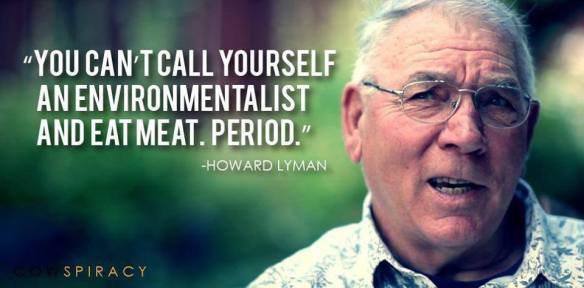
But as one interviewee pointed out, those energy sources won’t see the light of day in a big way for at least 20 years (sorry, we don’t have 20 years, people) and not until after 43 trillion dollars have been invested. Yet all we have to do, as this movie shows us (through the words of ex-rancher Howard Lyman and others) is stop eating animals today. (And stop breeding, I might add.) Problem solved. Then we just have to wait for the feed-back loops to play themselves out and hope that Mother Nature forgives us for our avariciousness in reducing all other animal life to fodder for our one-species-takes-all, suicidal free-for-all.

The issue of hunting was quickly laid to rest with the statement that back when humans may have been “sustainably” killing other species for their sustenance, there were only around 10 million people. Now there’s over 500 million on this continent alone. This is no time for a resurgence in popularity of the mindset that got us into this mess in the first place. We need to move forward, not back.

Meanwhile, a mouthpiece for the fishing industry tries to deny the ongoing collapse of fisheries across the globe by invoking a feeble economic analogy, hoping we’ll believe that every time they kill thousands of fish, they are replaced by even more new fish as if by some miraculous, infinite, deep-sea upwelling—like they’re only taking the interest, not the principal. The fact is, climate change is already warming ocean waters so fast that toxic algae blooms are rapidly replacing the traditional, edible phytoplankton—the basis of the ocean’s food chain. At the same time, run-off from animal agriculture is creating dead zones wherever once-fresh water meets the sea.

The other movie I saw recently (although it came out in 1977), Network, was also inspirational, in its own way. It summed up how I felt after watching Cowspiracy. Worked into the middle of the script were the lines of a newscaster run amok, who was trying to get the brain-washed, brain-dead sleepwalkers riled up by telling it like it is. It was the kind of shaking into reality that people need about what’s really going on nowadays.

Here are is a sequence from the movie wherein Howard Beale, a network anchorman played by Peter Finch (in an Oscar-winning performance), has mysteriously disappeared before he’s scheduled to go on the air with the evening news. He shows up just in time, stepping in from the pouring rain, wearing only his pajamas under a raincoat………………………………..

Still of Peter Finch in Network (1976)Still of Peter Finch in Network (1976)Still of Faye Dunaway in Network (1976)Still of Faye Dunaway and Peter Finch in Network (1976)

“—and, suddenly, the obsessed face of Howard Beale, gaunt, haggard, red-eyed with unworldly fervor, hair streaked and plastered on his brow, manifestly mad, fills the monitor screen.

HOWARD (on monitor):

I don’t have to tell you things are bad…shopkeepers keep a gun under the counter, punks are running wild in the streets, and there’s nobody anywhere that seems to know what to do, and there’s no end to it. We know the air is unfit to breath and our food is unfit to eat, and we sit and watch our tee-vees while some local newscaster tells us today we had fifteen homicides and sixty-three violent crimes, as if that’s the way it’s supposed to be. We all know things are bad. Worse than bad. They’re crazy. It’s like everything’s going crazy. So we don’t go out anymore. We sit in the house, and slowly the world we live in gets smaller, and all we ask is, please, at least leave us alone in our own living room. Let me have my toaster and my tee-vee and my hair dryer and my steel-belted radials, and I won’t say anything, just leave us alone. Well, I’m not going to leave you alone. I want you to get mad. I don’t want you to riot. I don’t want you to protest. I don’t want you to write to your Congressman. Because I wouldn’t know what to tell you to write. I don’t know what to do about the depression and inflation and the defense budget and the Russians and crime in the street. All I know is first you got to get mad. You’ve got to say, ‘I’m mad as hell and I’m not going to take this any more. I’m a human being goddamn it. My life has value.’ So I want you to get up now. I want you to get out of your chairs and go to the window. Right now, I want you to go to the window, open it, and stick your head out and yell. I want you to yell: ‘I’m mad as hell and I’m not going to take this any more!’

[This is going out live to 67 stations across the country.]

HOWARD: (on monitor)

Get up from your chairs. Go to the window. Open it. Stick your head out and yell and keep yelling—First, you have to get mad.

(They’re yelling in Baton Rouge.)

HOWARD: (on monitor)

Things have got to change. But you can’t change unless you’re mad. You have to get mad. Go to the window, stick your head out and yell. I want you to yell: ‘I’m mad as hell and I’m not going to take this anymore!’ Right now.

(A distant thunderclap crashes somewhere off and lightning shatters the dank darkness. In the sudden hush following the thunder, a thin voice can be heard shouting.)

THIN VOICES: (off screen)

I’m mad as hell and I’m not going to take this any more!

HOWARD: (on TV set)

…Open your window…

(An occasional window opens and from his apartment house, a MAN opens the front door of a brownstone—)

MAN: (shouting)

I’m mad as hell and I’m not going to take this anymore!

(OTHER SHOUTS are heard.)

VOICES:

I’m mad as hell and I’m not going to take this any more!”

—————————————————————————————————

Now, substitute Howard Beale’s name for mine and exchange whatever he’s mad about for the issue we should all be talking (SHOUTING) about: the selfless message of animal rights and the conspiracy of silence that keeps 70 billion cows and other animals captive, as slaves, constantly bred and butchered as products of an industry that won’t even fess up to their enormous carbon footprint. To paraphrase Howard Lyman, it’s time to change—or else.

But first, you may have to get mad. If you’re not already mad—as hell—watch Cowspiracy.
1508517_10155698578665314_6658310035003500226_n