Exposing the Big Game

Forget Hunters' Feeble Rationalizations and Trust Your Gut Feelings: Making Sport of Killing Is Not Healthy Human Behavior

Exposing the Big Game

One cormorant’s plea to stop the slaughter

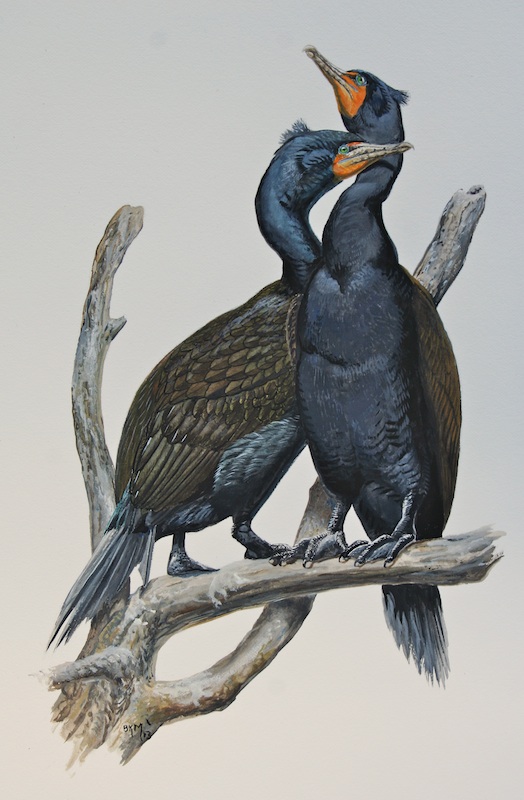
Painting Courtesy Barry Kent McKay

Painting Courtesy Barry Kent McKay

https://wordpress.com/post/35261376/new/

The Corps, the Cormorants, and the Cull

One cormorant’s plea to stop the slaughter

The U.S. Army Corps of Engineers recently approved a culling of the large mixed seabird colony on East Sand Island, near the mouth of the Columbia River. The plan aims to reduce the number of double-crested cormorants to 5,600 breeding pairs from roughly 13,000 by 2018, through a combination of hazing, oiling the eggs in 15,000 nests, and shooting approximately 11,000 individuals. The cull is necessary, says the Corps, because cormorants eat an average of 11 million young salmon and steelhead each year—up to 20 percent of hatchery releases—as the smolts migrate out to sea.

During the drafting of the environmental impact statement, the Corps received more than 150,000 public comments, of which about 98 percent opposed its plan. Here is one such letter, dredged up from the very bottom of the pile.

To Whom It May Concern:

I realize the comment period may be over, and that as of March 19, your plan has received the blessing of the necessary higher-ups. But I feel I have to speak out.

To begin, I admit that we are not the most beloved of birds. People kill more than 40,000 of us each year all over the country. And I get it. We have a taste for fish, and an enviable talent for catching them. When you make said fish freely available to us by raising great numbers of them all in one place and sending them downstream, we simply can’t help helping ourselves. (I am pretty sure that if you happened upon an all-you-can-eat buffet you would tuck in, too.) True, we sometimes drive out animals more couth than ourselves. We poop so much that trees sometimes die. But it is natural for us to travel in large groups, and make ourselves at home as we see fit. This is a behavior with which you, as part of the U.S. Army, are familiar, I think? But I’m just speculating here.

In any case, this brings me to the present circumstance. I don’t want to embarrass you, but you, people of the Corps, do remember that you created East Sand Island for birds, right? Back in the 1990s, thousands of Caspian Terns nested on Rice Island, a few miles upriver. They, too, ate millions of young salmon and steelhead. So you drove the terns to this island, which you had created out of sand. Once they settled in, they shifted their diet to other small fishes. (Terns are agreeable like that, bless their hearts.)

But we cormorants showed up, too. We took a look around and thought, Hey, nice island! What better place to pluck out the young hatchery fish sent out every year in tremendous, naïve waves to the sea! (You’ve dammed up so many other streams and rivers that there are few ways left for them to get around us. Thanks!) Our numbers increased. We started eating the—excuse me—your salmon. And yes, we eat a lot of them. So you tried to thwart our voracious appetites. You tried to make the island less homey. You confined us to ever-smaller areas, and surrounded us with walls, fences, and observation towers. Our colony now looks like a prison camp! But we didn’t leave. Indeed, we persevered in spite of your best efforts. What can I say? We are a hardy folk.

I can see how this might be frustrating for you. And by “this” I mean the nuances of ecology and all of its unintended consequences, its unforeseen contingencies. You are the Corps of Engineers, after all. You have a proud history of seeing the world as a place where Tab A goes into Slot B, just so. You see: salmon. You see: cormorants. You see: cormorants eating salmon. Subtract: cormorants. Problem: solved. Or so you assume. (Never mind that most of those extremely tasty smolts wouldn’t have made it back to their native hatcheries; that states like Montana and Washington actually consider hatchery steelhead and salmon harmful to wild genetic stocks.)

I can’t help but admire your resolve. Your decision-making has the solidity of concrete. Rest assured, I don’t write to critique the relative merits of your plans. I’ll leave that to others more qualified than I, such as the several biologists—including the one you yourself hired to study my comings and goings for nearly 20 years—who say you both misinterpret and misrepresent the data and therefore are not making the correct use of the best available science.

Granted, we do eat a lot of fish. Mea culpa. And I know it is easier and—and let’s be honest here—more viscerally satisfying to blast away at me and few thousand of my kin than it is to confront the full range of ecological complications for which you are responsible. (We are a far ranging species—we remember Katrina.) Yet I must remind you: Cormorants can’t build dams. It is not thanks to us that well over half of the Columbia salmon and steelhead runs are threatened or endangered. But now that you’re confronted with what to you seems a distasteful side effect of your work (to us it is glorious!), you go all ballistic. It hardly seems fair. We’re just doing what nature intended us birds to do.

Thank you for considering these comments. Perhaps we could discuss the issue one day over a little (wild) salmon. I hear Cabezon up in Northeast Portland serves a nice fillet.

From one rampant consumer to another,

DCCO

P.S. To all you sea lions yukking it up at the East Mooring Basin in Astoria: Stop laughing. Your time will come.

Update: On Monday, April 13, the U.S. Army Corps of Engineers received the necessary permits to proceed with the cull. The plans will wipe out 15 percent of the Double-crested Cormorants west of the Rocky Mountains. The Audubon Society of Portland plans to sue the Army Corps of Engineers, according to an April 14 press release. “We are deeply disappointed in the U.S. Fish and Wildlife Service for issuing these permits,” Audubon Society of Portland conservation director Bob Sallinger said in the release. “The pubic looks to the Fish and Wildlife Service to protect wild birds, not to permit wanton slaughter.”

Learn more about how you can help.

Reward Offered in Astoria, Oregon Sea Lion and Harbor Seal Shootings

Photo @ Jim Robertson

Photo @ Jim Robertson

May 28, 2015

The Humane Society Wildlife Land Trust

The National Oceanic and Atmospheric Administration is investigating the deaths of approximately ten California sea lions and one harbor seal found floating in the waters near Astoria, Oregon, over the past two months. The Humane Society of the United States and the Humane Society Wildlife Land Trust are offering a $5,000 reward for information leading to the identification, arrest and conviction of the person or persons responsible.

According to NOAA, multiple expended shell casings of various calibers were found during the months of April and May on the causeway at the East End Mooring Basin and at the water’s edge at the foot of 9th Street in Astoria. The deceased sea lions and harbor seal were found floating in the vicinity. The locations of the shell casings are known haul-out areas for marine mammals. The cause of death for the animals was determined to be gunshot wounds.

A recent rash of sea lion killings is coinciding with a die-off of sea lions in Southern California that has seen stranding response centers in California scrambling to rescue over 2,000 starving young animals.

Scott Beckstead, Oregon state director for The HSUS, said: “It is ironic that, on one hand we see humans reaching out to help suffering animals at the same time that others are breaking the law and killing them. Shooting sea lions and harbor seals is a violation of the Marine Mammal Protection Act and is punishable by criminal penalties up to $100,000 and one year of imprisonment. Civil penalties up to $11,000 per violation may also be assessed. The HSUS is grateful for NOAA’s work to investigate this crime and hope someone comes forward with information.”

Anyone with information concerning the shootings is asked to call NOAA’s Office of Law Enforcement in Astoria, Oregon, at 503-325-5934 or the NOAA Enforcement Hotline at 1-800-853-1964. Callers may remain anonymous.

Media Contact: Naseem Amini: 301-548-7793; namini@humanesociety.org

REWARD! Feds seek clues in sea lion shootings

By Edward StrattonThe Daily Astorian

May 29, 2015 9:54AM

Photo courtesy of Veronica Montoya
Sea Lion Defense Brigade volunteer Veronica Montoya reported finding 11 shell casings from a .44-caliber weapon May 18 at the Port of Astoria’s East End Mooring Basin, along with a sea lion with a serious eye wound.

1
 of
2

Photo courtesy of Veronica Montoya
Sea Lion Defense Brigade volunteer Veronica Montoya reported finding 11 shell casings from a .44-caliber weapon May 18 at the Port of Astoria’s East End Mooring Basin, along with a sea lion with a serious eye wound.

Photo courtesy of Veronica Montoya
The Sea Lion Defense Brigade reported finding 11 shell casings from a .44-caliber weapon May 18 at the Port of Astoria’s East End Mooring Basin. The group reported finding 19 shell casings in early April, as well.

<!–

–>

NOAA has confirmed the shooting of sea lions and a seal in and around Astoria, and the Humane Society is offering a $5,000 reward for information.

At least 10 California sea lions and one harbor seal have died from gunshot wounds and trauma in and around Astoria over the past two months, federal investigators have confirmed.

“It’s all been along the waterfront in Astoria,” National Oceanic and Atmospheric Administration’s Office of Law Enforcement Special Agent Karl Hellberg said, adding the death tally is a conservative estimate.

Hellberg reached out in the last few days to The Humane Society of the United States to offer a reward for information about the shootings. Thursday, The Humane Society offered a $5,000 reward for information leading to the identification, arrest and conviction of anyone responsible for the shootings.

Shell casings

On April 6, members of the Sea Lion Defense Brigade reported finding 19 bullet casings on the Port of Astoria’s East End Mooring Basin causeway. On May 18, they reported finding 11 more shell casings at the basin. Hellberg said more were found near Buoy Beer Co. on Ninth Street.

He said the local wildlife stranding networks have been doing necropsies on the animals.

“We’ve been watching this and trying to investigate this as we can,” he said, adding it is a difficult case because of the number of reports and the longstanding conflict between recreational and commercial fishermen and sea lions.

“I’m trying to develop additional leads right now,” Hellberg said. “I’ve exhausted many leads already.”

Since 1972, sea lions and harbor seals have been covered by the federal Marine Mammal Protection Act. Shooting them is punishable by criminal penalties up to $100,000 and one year in prison. Civil penalties of up to $11,000 can also be assessed for each violation of the act.

The Humane Society and Hellberg are directing anyone with information concerning the shootings to call NOAA’s Office of Law Enforcement in Astoria at 503-325-5934 or the NOAA Enforcement Hotline at 800-853-1964. Callers may remain anonymous.

Why sea lions are here

The NOAA Northwest Fisheries Science Center recently reported on the increase of sea lions in the Columbia River and starvation in California.

Male sea lions, NOAA said, seek out high-energy, oily fish such as herring and sardines. In recent years, they’ve come in increasing numbers to the mouth of the Columbia River to feed on strong runs of smelt, taking up residence on docks and jetties near Astoria.

Their numbers locally can range from a few hundred to more than 2,000, depending on the fish runs. As the smelt run dissipates and male sea lions migrate to rookeries in Southern California, there are fewer in the river.

A die-off of sardines, a traditional food source of sea lions in California, coincides with large recent die-offs and strandings of sea lions along the California coastline, NOAA reported.

Bird Flu Disposal Fun

http://www.kcci.com/news/des-moines-pitches-in-with-bird-flu-disposal-efforts/33116758

DES MOINES, Iowa —The city of Des Moines is pitching in to help with the bird flu cleanup.

The Des Moines Public Works has property that can hold a sprawling 10 acres of dumping ground for the city’s unwanted trees.

But instead of the city paying to have the massive pile of mulch hauled off to a landfill, truckers are traveling to Des Moines to pick it up and deliver the wood waste to communities in northwest Iowa fighting the bird flu.

Massive mounds of mulch are stacking up and private contractors are hauling it off.

When one bed is full, the next truck is waiting to move in.

Matt Ohlson covered more than 800 miles alone on Tuesday transporting Des Moines’ dumped wood to Iowa counties hit by the bird flu.

“It’s good for me because I get the steady haul-in. And it’s great for the city because they get an easy way out,” Ohlson said.

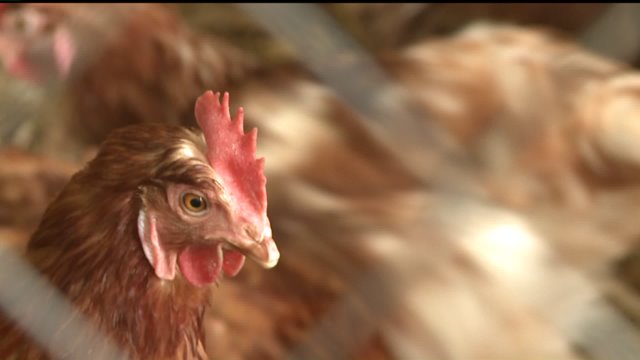
Iowa has 60 confirmed cases of the avian flu. The number of chickens dead or dying is about 26 million.

The city of Des Moines is donating 2,000 cubic yards of wood waste used to help poultry farms dispose of birds infected with the disease.

Public Works is saving $50,000 by cutting out its landfill costs.

“We’ve got a great win-win situation [the only losers so far? The birds.]

Featured Image -- 9291

Sea Lions Shot in Astoria, Again!

SLDB observers report on May 18,2015 at approximately 9:00am that eleven bullet shell casings were found on the causeway in the East Mooring Basin in Astoria, Oregon. This incident was reported to NOAA and is now under Federal investigation.

At 10 :20 am a sea lion suffering with a severe eye injury is observed

This is the second time bullet shell casings have been found in the EMB within two months. At the same time SLDB observers have documented numerous sea lions suffering with severe head and eye injuries from what appear to be gun shot wounds.

Please contact :

Astoria City Hall

(503) 325-5821
1095 Duane St
Astoria, Oregon 97103

_***
The Port of Astoria
Office: 503 741-3300 (Toll free in Oregon: 800-860-4093)
****
Astoria-Warrenton Area Chamber of Commerce
Address: 111 W Marine Dr, Astoria, OR 97103
Phone :(503) 325-6311 http://www.oldoregon.com/

*****
Governor Kate Brown
State Capitol Building
900 Court Street NE, 160
Salem, OR 97301
Phone: (503) 378-4582 (503) 378 3111

Thank you for taking action for the sea lions!

Sea Lion Defense Brigade's photo.

Sadistic hunters vie to be Extreme Huntress champ

EXCLUSIVE: The next Rebecca Francis? ‘Sadistic’ hunters vie to be Extreme Huntress champ

THESE are the women animal rights campaigners have branded “sadistic” and “unhinged”.

PUBLISHED: 19:30, Mon, May 18, 2015 | UPDATED: 08:14, Tue, May 19, 2015

Jodi Schmideder, Rebecca Francis and Jen The Archer CordaroIG

Rebecca Francis, centre, has received death threats since the show

They are in the running to be finalists in the American television female hunting competition Extreme Huntress, which has seen previous winners receive death threats and worldwide hate.

This year’s fearless competitors have admitted they are anxious about public perception, but remain defiant in their “right” to kill animals which includes zebras, lionesses, antelopes and bears.

**WARNING: GRAPHIC CONTENT PICTURES TO FOLLOW**

Rebecca Francis, the competition winner in 2010, has been repeatedly slammed by comedian and animal lover Ricky Gervais in recent months after a photograph emerged of her lying with a giraffe she had killed, beaming with happiness.

After angry animal rights activists called for her head, she refused to accept she had done anything wrong.

This year’s competitors are equally as unabashed as they fight for votes to be selected into the finals of what is regarded one of the most prestigious titles a huntress can achieve.

Jen “The Archer” Cordaro is no stranger to hate after receiving death threats for teaching children to hunt with the campaign #Bringakidhunting.

Activists even turned up at her house and threatened to murder her first born when she starts a family.

Lorraine LawrenceIG

One of the finalists Lorraine Lawrence with a lioness

Charisa ArgysIG

Contestant Charisa Argys says she believes in living with integrity and morals

I know putting myself out there could potentially attract abuse yes, but that’s the risk I am willing to take

Jodi Schmideder

Thousands of people have signed a petition to “stop” the PhD student, following graphic images of her slicing sows and posing with dead boars.

She told Express.co.uk: “Threats on someone’s life is never acceptable.”

But nothing will stop the city-born bow hunter who started shooting 18 months ago with an aim to be self-sufficient and live “off-grid” within ten years.

She added: “If anything, it makes me want to keep fighting the good fight.”

She sympathised with the abuse Ms Francis is attracting, adding she too would kill endangered and wild animals including zebras, lions or giraffes.

She said: “If the need was there for culling or management, absolutely.

Tanya Chegwidden with a zebraIG

South African contestant Tanya Chegwidden has killed game from zebra, impala, and waterbuck

Jodi SchmidederIG

Jodi Schmideder said some contestants were trophy hunters

“There are management reasons to hunt all types of animals, including endangered animals or animals that humans put at the top of their cute and fuzzy hierarchy.”

But charity People for the Ethical Treatment of Animals (PETA) accused the Extreme Huntress semi-finalists of “perpetuating violence”.

Associate director Elisa Allen said: “It has been a long time since humans truly needed to hunt in order to survive – today, people who get their kicks from hunting and killing defenceless animals are either sadists or suffering from a psychological break.

“Common decency says that we should protect the most vulnerable and helpless in society, not destroy them – much less derive “pleasure” from doing so.

“When cruelty is glorified and portrayed as a ‘hobby’, it debases society and perpetuates violence.

“Hunting of any kind has no place in modern society, and it should have ended years ago, along with cockfighting, bear-baiting and dogfighting.”

Tanya Chegwidden, top left, Jessica Amoss, right, and Taylor ReisbeckIG

Tanya Chegwidden, top left, Jessica Amoss, right, and Taylor Reisbeck

Miss Cordaro is joined by 19 other female hunters in the competition, including mother-of-one Michelle Slyder, 41, from Montana in America.

The engineer told Express.co.uk: “Nothing that happens to me personally could make me waiver in my passion for hunting. It’s not about what others think, it’s just who I am, how I was raised, and a part of me.

“I can’t and won’t ever change that. Every person has a right to their opinion and I can handle what comes my way. I also will protect my right, which is why I would never back down from someone engaging in that manner.”

Meanwhile Jodi Schmideder, 24, who started hunting before she could walk, aged two, admitted some contestants are trophy hunters.

“For some, that is what hunting is to them. I on the other hand, would love to luck out sometimes and bag a big game animal, however, it is not what hunting is to me.

Jen The Archer CordaroIG

Hunter Jen The Archer Cordaro said no one deserves death threats

Michelle Slyder with a dead wild goatIG

Michelle Slyder hunts for meat and wouldn’t kill endangered animals

“When you do shoot an animal, and you decide to post pictures for the general public to view, you should know not everyone will be ok with it. I don’t wish upon anyone to receive death threats towards them, it is extreme and yes, scary. However, every picture or post you are debating to show could potentially put you in a bad position, and precaution should be taken.

“I know putting myself out there could potentially attract abuse yes, but that’s the risk I am willing to take.”

Votes are being cast across the world to decide who is the Extreme Huntress of 2016.

The 20 semi-finalists will be reduced to six for the television finals. There they will go to a Texan ranch to compete head-to-head in outdoor skills and fitness challenges to decide who is the Extreme Huntress 2016.

Angry animal lovers claim Extreme Huntress has “nothing to do with conservation”, with one calling the television programme “a stain on the world”.

But producers are brazen in their fight back, claiming on social media “ignorance is bliss”.

Why SC’s Animal Cruelty Laws Rank 45th

http://www.wltx.com/story/news/2015/05/18/why-scs-animal-cruelty-laws-rank-45th/27550493/

Columbia, SC (WLTX) South Carolina’s laws against animal cruelty rank 45th in the nation, according to the Humane Society of the United States, and state lawmakers who’ve tried to toughen those laws say there’s one main reason for that.

“We have people that are avid hunters and fishermen and they believe that anything to do with animal concerns, animal abuse, is going to take away, infringe on their rights, take away their guns, not let them hunt and that kind of thing. So anytime you bring something up about animals you’re hitting a brick wall,” says Rep. Deborah Long, R-Indian Land, who sponsored a bill two years ago to create an animal abuse registry, similar to the sex offender registry. Now, someone can be convicted of animal abuse in one county and, even if a judge prohibits them from having any more animals, if they move to another county enforcement of that ban is difficult. The bill never made it out of committee.

One of the main opponents of tougher animal cruelty laws has been Rep. Mike Pitts, R-Laurens, who is an avid hunter and fisherman. “I am not against toughening animal cruelty laws,” he says. “What I am against is an intrusion that most people don’t see, don’t understand, that uses animal cruelty laws as a façade for a much bigger agenda.”

He says local Humane Societies are fine and do good work. His concern is with the Humane Society of the United States, or HSUS, and People for the Ethical Treatment of Animals, PETA. “My absolute opposition to animal rights bills is not based on trying to stop something in good direction to protect pets and service animals. It is to keep HSUS and PETA at bay in my state,” he says.

He says HSUS president and CEO Wayne Pacelle wants to ban all sport hunting, so Pitts is worried that any bill that HSUS supports is a foot in the door to move in that direction. Officially, HSUS is working to ban some forms of hunting, like hunting animals that are kept in enclosed areas.

One example he says of a bill that seems good but can go too far is a tethering law. The state has no law against keeping a dog chained to a tree, post, or stake in the ground, but Pitts and others fought against a tethering bill. “In that tethering bill, it also included that I couldn’t put my bird dog or rabbit dog in a box in the back of my truck, a box that’s made for them. I couldn’t put, tie my horse while I was saddling my horse. That would be illegal tethering, because a rope’s not over six foot. So the devil is in the details of what they’re trying to do,” he says.

Wayne Brennessel, executive director of the Humane Society of South Carolina, says there are a couple of laws the state needs, one of them being a tethering law. “We need some laws about puppy mills, about these people who breed and breed and breed animals until, basically, the female animal is just falling apart because she’s been so overbred,” he says.

But Pitts counters with a question. How do you prevent puppy mills without unfairly restricting legitimate dog breeders? A bill just introduced on May 5th tries to answer that. It would put standards in place that would allow commercial dog breeders to operate without overbreeding their dogs.

Lawmakers did pass a tougher law last year that increases penalties for repeat offenders. Sen. Paul Campbell, R-Goose Creek, chaired a subcommittee that traveled around the state and listened to residents’ concerns about animal cruelty and laws to prevent it.

“It’ll be interesting to see how they rate South Carolina after we tightened those, the law up last year on the penalty and made it much more severe on a repeat offense,” he says.

Gray Whale Threats

http://en.wikipedia.org/wiki/Gray_whale#Threats

Threats[edit]

According to the Government of Canada’s Management Plan for gray whales, threats to the eastern North Pacific population of gray whales include:[106]

  • Increased human activities in their breeding lagoons in Mexico
  • Climate change
  • Acute noise
  • The threat of toxic spills
  • Aboriginal whaling
  • Entanglement with fishing gear
  • Boat collisions
  • Impacts from fossil fuel exploration and extraction

Western gray whales are facing, the large-scale offshore oil and gas development programs near their summer feeding ground, as well as fatal net entrapments off Japan during migration, which pose significant threats to the future survival of the population.[32]

The substantial nearshore industrialization and shipping congestion throughout the migratory corridors of the western gray whale population represent potential threats by increasing the likelihood of exposure to ship strikes, chemical pollution, and general disturbance.[33][97]

Offshore gas and oil development in the Okhotsk Sea within 20 km (12 mi) of the primary feeding ground off northeast Sakhalin Island is of particular concern. Activities related to oil and gas exploration, including geophysical seismic surveying, pipelaying and drilling operations, increased vessel traffic, and oil spills, all pose potential threats to western gray whales. Disturbance from underwater industrial noise may displace whales from critical feeding habitat. Physical habitat damage from drilling and dredging operations, combined with possible impacts of oil and chemical spills on benthic prey communities also warrants concern.[33][58]

Along Japanese coasts, four females including a cow-calf pair were trapped and killed in nets in the 2000s. There had been a record of deceased individual thought to be harpooned by dolphin-hunters found on Hokkaido in 90s.[107][108] Meats for sale were also discovered in Japanese markets as well.[109]

Captivity[edit]

A gray whale in captivity

Because of their size and need to migrate, gray whales have rarely been held in captivity, and then only for brief periods of time.

In 1972, a three-month-old gray whale named Gigi (II) was captured for brief study by Dr. David W. Kenney, and then released near San Diego.[110]

In January 1997, the newborn baby whale J.J. was found helpless near Los Angeles, California, 4.2 m (14 ft) long and 800 kilograms (1,800 lb) in weight. Nursed back to health in SeaWorld San Diego, she was released into the Pacific Ocean on March 31, 1998, 9 m (30 ft) long and 8,500 kg (18,700 lb) in mass. She shed her radio transmitter packs three days later.[111]

A huge US food distributor says bird flu could hurt egg supply for the next year


by Anjali Athavaley, Reuters

NEW YORK (Reuters) – Food distributor Sysco said on Friday that a record U.S. outbreak of avian flu would limit its supply of eggs and chickens that lay them for nine to 18 months, based on information provided to the company by its suppliers.

Sysco is the biggest U.S. food distributor, whose clients include restaurants, hotels and hospitals.

The company is discussing options with its customers, including creating alternative menu items during the period, a Sysco spokesman said in an email.

Read more: http://www.businessinsider.com/r-exclusive-sysco-sees-us-bird-flu-hurting-egg-supply-up-to-18-months-2015-5#ixzz3aLNgLNBa

The Role Of Science In A Push For Animal Liberation

http://wcqs.org/post/role-science-push-animal-liberation

Last Friday in the Washington Post, Charles Krauthammer asked which contemporary practices will be deemed “abominable” in the future, in the way that we today think of human enslavement.

He then offered his own opinion:

“I’ve long thought it will be our treatment of animals. I’m convinced that our great-grandchildren will find it difficult to believe that we actually raised, herded and slaughtered them on an industrial scale — for the eating.”

Krauthammer goes on to predict that meat-eating will become “a kind of exotic indulgence,” because “science will find dietary substitutes that can be produced at infinitely less cost and effort.”

I don’t often agree with Krauthammer’s views and his animal column is no exception. His breezy attitude on animal biomedical testing does animals no favors. (It’s perhaps only fair to note that I have similar concerns about Alva’s conclusions on animal testing from his 13.7 post published that same day.)

But, still, Krauthammer does a terrific job of awakening people to many issues related to animals’ suffering. And he’s not alone. On April 17, I joined other scientists and activists on the radio show To the Point hosted by Warren Olney, to discuss this question: Is Animal Liberation Going Mainstream? In the 34-minute segment, we discussed the public outcry against SeaWorld’s treatment of orcas, Ringling Brothers’ plan to retire elephants from the circus in three years, and the rightness or wrongness of keeping animals in zoos — all issues brought up by Krauthammer in his column.

But why now? What combination of factors is moving our society at this specific point in time towards greater concern for animal welfare? I posed this question to Lori Marino, executive director for The Kimmela Center for Animal Advocacy and, on Monday, she responded by email in this way:

“Most changes in public attitudes are due to the scientific exploration of behavior and cognition in other animals and the translation of that knowledge into the public mindset. Now, more than ever, many people accept that other animals have thoughts, feelings and, indeed, autonomous lives to live. We’re seeing changes in how the public feels about keeping wild animals captive for entertainment and biomedical research, the legal status of other animals with the groundbreaking work of the Nonhuman Rights Project, and in plant-based diets slowly but surely becoming part of the “cultural furniture” in many parts of the world.

So, we can credit science for revealing to us the many complex levels of intelligence and sensitivities in other animals. Of course, science is always a double-edged sword, and the same scientific endeavors which have led to increased awareness of other animals have also opened up new windows of opportunities to exploit many of those same animals.

With our increasing capabilities in genomics, molecular biology, cloning and neuroscience, we are now capable of manipulating other animals in more invasive ways than ever. One need only think about the commercial catalogs for genetically engineered mice, the overuse of antibiotics in factory farmed animals, and the glint of genetic monster-making in the growing efforts at de-extinction. (Science is one aspect of our global exploitation of animals; the commercial market for animal parts and labor, climate change and habitat destruction have forced this planet into the current sixth mass extinction event.)

So the answer to this question depends upon one’s perspective. I wish I could say that the groundswell of increasing awareness and concern for other animals is a global phenomenon. But, I am keenly aware of how my standpoint is shaped by being ensconced in the animal protection world and how cautious I need to be about over-reaching conclusions. Instead, every day I try to see things from the 32,000 foot perspective. When you look from that vantage point the situation is not very encouraging.

Overall, I see two parallel paths into the future. One represents growing understanding, compassion and unity with our fellow animals. The other represents the increasing exploitation and abuse. It is probably too late to turn everything around for the planet. But we can all make a difference for other animals on an individual level and, in the process, maybe salvage the dignity of our own species as well.”

Through Marino’s words, we can see that the answer to “why now” is intimately tied to advances not only in scientific techniques but also in the questions scientists bring with them into the field. It’s a building crescendo: Studies of wild elephants, orcas and chimpanzees reveal that these animals live in layered, complex societies and cooperate in the expression of intelligent and/or emotional acts; those revelations lead in turn to scientists’ deciding to test hypotheses about intelligent and emotional action in other animals. What we’re finding out about fish cognition and sentience alone represents an exciting new development — and new scientific developments make their way into the public consciousness about animals’ lives, as Marino notes.

While I feel that it’s important to celebrate recent strides in animal welfare, including those mentioned by Krauthammer in his column, I also take note of Marino’s bottom-line caution. Invasive, experimental and, in many cases, unethical science on animals continues in traditional ways on species ranging from monkeys to mice, and also in novels ways rooted in modern technologies like cloning and other forms of genetic manipulation.

The best question for animals really isn’t “Why now?” but “What’s next?,” in the sense of “What can we do next to help and protect animals?” One key answer to that question brings us right back to Krauthammer on meat: As a panel of U.S. nutritional experts recommends we can adopt a more plant-based diet.


Barbara J. King, an anthropology professor at the College of William and Mary, often writes about human evolution, primate behavior and the cognition and emotion of animals. Barbara’s most recent book on animals was released in paperback in April. You can keep up with what she is thinking on Twitter: @bjkingape.

Copyright 2015 NPR. To see more, visit http://www.npr.org/.

302023_10150378903781188_1851399709_n