PETA Offers Up to $5,000 Reward for Help in Nabbing Person Who Killed Mother Seal

A mother harbor seal, who had recently given birth, was found dead on the beach north of the Ocean Park beach approach last week, thought to have been a victim of an intentional vehicular killing.  Photo by SUZY WHITTEY / Chinook Observer

A mother harbor seal, who had recently given birth, was found dead on the beach north of the Ocean Park beach approach last week, thought to have been a victim of an intentional vehicular killing.
Photo by SUZY WHITTEY / Chinook Observer

http://www.peta.org/media/news-releases/peta-offers-5000-reward-help-nabbing-person-killed-mother-seal/

Federal Officials Seeking Culprit and Missing Baby Seal

For Immediate Release:
May 8, 2014

Contact:
Sophia Charchuk 202-483-7382 begin_of_the_skype_highlighting 202-483-7382 FREE  end_of_the_skype_highlighting

Ocean Park, Wash. – On April 19, a pregnant harbor seal gave birth on a beach just north of Ocean Park. Concerned residents set up a perimeter—complete with red flag–draped warning signs—and checked on the seals periodically. On the morning of April 20, a concerned resident arrived to find that someone had apparently driven a truck into the area and run over the seal, severing her tail. The seal had to be euthanized because of the extent of her injuries, and her baby remains missing.

Officials have yet to make any arrests. That’s why PETA is offering up to $5,000 for information leading to the arrest and conviction of the person or persons responsible for this violent crime.

Would you please consider sharing this information with your audience? It might be the only way to apprehend those responsible for this heinous act.

“Study after study has confirmed that people who hurt animals often go on to hurt human beings,” says PETA Director Martin Mersereau. “PETA is urging anyone with information to come forward now, before another violent act is committed.”

Anyone with information about this case is encouraged to contact the National Oceanic and Atmospheric Administration’s Office of Law Enforcement toll-free at 1-800-853-1964 begin_of_the_skype_highlighting 1-800-853-1964 FREE  end_of_the_skype_highlighting .

For more information, please visit PETA.org. To listen to PETA’s anti-violence public service announcement—which features Inglourious Basterds star and Hostel director Eli Roth—please visit http://www.petatv.com/audio/psas/Eli_Roth_PSA_V3.mp3.


Read more: http://www.peta.org/media/news-releases/peta-offers-5000-reward-help-nabbing-person-killed-mother-seal/#ixzz31A1Nkn7w

California Animal Rights Groups Offer $10,000 Reward for Pelican Slasher

http://www.scientificamerican.com/article/california-animal-rights-groups-offer-10000-reward-for-pelican-slasher/

Apr 29, 2014

By Laila Kearney(Reuters) – U.S. animal rights groups are offering a $10,000 reward for information on a person who apparently mutilated a California brown pelican this month in a case that has drawn widespread public attention.

California brown pelicans are a threatened species that is protected by the Migratory Bird Treaty Act.

The pelican, named Pink after the colored band on its leg, was found in the city of Long Beach with a severed throat pouch, the International Bird Rescue (IBR) organization said in a statement.

The emaciated bird’s throat was stapled, so it could feed, and it is now being taken care of in a small Los Angeles aviary. On Sunday, it had a three-hour surgery to repair the laceration and IBR said it would require many more operations and extensive rehabilitative care to fully recover.

“In my 40-plus years as a wildlife rehabilitator, I’ve seen too many of these horrible attacks against innocent animals,” IBR executive director Jay Holcomb said in the statement. “The public is sick of it too, and we hear their frustration.”

The IBR is offering the reward along with the Animal Legal Defense Fund.

The U.S. Fish and Wildlife Service said is was investigating the possible crime, which is punishable by a fine of up to $15,000 and a county jail sentence of up to six months.


(Reporting by Laila Kearney; Editing by Sharon Bernstein and Miral Fahmy)

Petitions: Prosecute man who Killed Cat with BOW for fun in Australia!

You might be thinking, who the hell hunts cats or dogs? Well, just yesterday I received a comment from someone who started off, “I already ate a dog, I love dog fights, blood,…” etc., etc., blah blah blah.

There are plenty of psychopaths out there; it’s up to us to put laws in place to keep them in their place (hell preferably).

Please sign these two petitions for domestic animals, one against cat hunting and one on to  Prevent cruelty to dogs and cats in China: http://www.change.org/petitions/prevent-cruelty-to-dogs-and-cats-in-china-2?share_id=ACCyzOYrFC&utm_campaign=friend_inviter_chat&utm_medium=facebook&utm_source=share_petition&utm_term=permissions_dialog_true

And: https://www.yousign.org/en/cat-bow-australia

Prosecute Australian man that KILLS Cats with BOWS AND ARROWS! Sign here for justice: https://www.yousign.org/en/cat-bow-Australia
Petition text: Tyler Atkinson form Ballarat, Victoria in Australia boasts online and in hunting forums about killing cats with his prized possession, a professional hunting bow. He even posted pictures of his deeds, a good thing because we can use it as evidence!He said: “Got my first feral cat this morning.Called him into about 3 meters after spotting him sniffing around about 50 meters away, and put a supreme on track and he was mine inside 6m”We urge the Chief Police Commissioner to start an investigation and prevent any other innocent animals from being killed by this man. – See more at: https://www.yousign.org/en/cat-bow-australia#sthash.xWFWv1og.dpuf


Animal rights: Clean kill still ends precious life

Wildlife Photography © Jim Robertson

Wildlife Photography © Jim Robertson

[The nice thing about letters to the editor is that this sometimes the truth gets published, even in Missoula, Montana.]
April 13, 2014 10:11 am

In so many ways, animals are the same as you and I. Mothers give tender loving care to their babies and will fight to the death to protect them. Parents may go without food to feed their young. They play games, have tempers, get jealous, frustrated, angry, feel the loss of loved ones, pain, anxiety, hunger, happiness, and sing with joy at just being alive and most of all, their lives are precious to them and they will fight tooth-and-claw to keep it. Yes, they have the same emotional attributes you and I have.

Best of all, the animals we call wild are free, free from human imprisonment and enslavement. They’ve managed themselves for millions of years without human interference.

Then, men with guns appeared. Five billion passenger pigeons once darkened the skies of this land, now not a single one is alive today. Sixty million buffalo were callously slaughtered, left to rot on the prairies, and had not 260 miraculously escaped detection, hidden away in a remote valley in Yellowstone, the bison too would now be extinct.

All the wolves were slaughtered by guns, poison and traps to the last whimpering pup; other animals were also victims of these idiotic genocides. And there are those who say the bison and wolves should be exterminated again. Some management.

A recent letter implied it was OK to kill an animal if the kill was clean. Well, no death in the wild is clean, no, not from the barrel of a high-powered rifle, or painfully caught in a steel trap waiting for their executioner to bludgeon them to death.

Yes, their lives are as precious to them as ours are to us. They are different in that they kill to survive and not for sport or a few silver dollars.

Leonard Stastny,

Missoula

Rescued grizzly bear treated for two broken elbows at Veterinary Teaching Hospital

The horses were moved, the police were alerted, and Colorado State University’s Veterinary Teaching Hospital was abuzz Tuesday as a rescued grizzly bear arrived for surgery to repair both elbows, which apparently were broken when the carnivore was confined in a concrete bunker as a roadside attraction in north Georgia.

“This is the most exciting case I’ve been part of during my two years of clinical rotations in veterinary school,” said vet student Barr Hadar, who would compile case notes on the patient thought to be a mix of grizzly bear and Syrian brown bear. “That’s what interests me in veterinary medicine, especially wildlife medicine. You never know what you’re going to get.”

Unexpected diagnosis

Last month, the Wild Animal Sanctuary in Keenesburg, Colo., rescued “Marley” and 16 fellow inmates from a foreclosed “bear park,” where the animals were kept in cramped concrete pits and fed apples and bread by tourists. The bears were released into 15-acre natural habitats on the plains northeast of Denver, but sanctuary keepers noticed Marley, a 7-year-old female, would not put weight on one of her front legs, said Rebecca Miceli, who accompanied the impressive patient.

The 300-pound grizzly came to the CSU Veterinary Teaching Hospital crated and anesthetized on Tuesday morning. Examining radiographs, veterinarians soon determined Marley had not one, but two forelimb fractures estimated to be more than a month old; one break was badly infected.

“Our main concern is the infected fracture on the left forearm,” said Dr. Terry Campbell, a CSU veterinarian specializing in wildlife and exotic animals. “A draining, open fracture on a bear is anything but ideal, and we will need to surgically treat it immediately.”

Campbell knew the procedure would require the skills of an orthopedic surgeon. But was it a job for a large-animal or small-animal orthopedist? The decision: both.

“We have to determine: Is the bear more like a dog or more like a horse?” Campbell said before surgery, referring to the patient’s bone structure. “The truth is, it’s a bear. It’s not like either. So we, as a team of veterinarians, collaborate to find the best solution.”

Dr. Felix Duerr, small-animal orthopedic surgeon, and Dr. Jeremiah Easley, equine orthopedic surgeon, jointly handled the successful surgery. In the case of the infected forelimb, vets cleaned the infection, looked for necrotic bone, cleared scar tissue and inserted antibiotic beads to promote full healing. Duerr then provided shockwave therapy to accelerate the process.

Also essential to the case were Dr. Pedro Boscan, veterinary anesthesiologist, and Dr. Gregg Griffenhagen, a resident training in the specialty.

Much better quality of life

By Tuesday afternoon, Marley was recovering, and CSU veterinarians expressed hope that their unusual patient would have a greatly improved quality of life. Miceli, director of animal care at the Wild Animal Sanctuary, said she thought Marley could potentially live another 20 years at the home for rescued large carnivores.

For veterinary students involved with the case, the memory of Marley might last just as long. As the grizzly bear arrived, excited murmurs filled the hospital halls, and students swarmed the windows and doors of the large animal wing to catch a glimpse of an ear, nose or paw.

The equine unit had been alerted about the grizzly to prevent spooking among horse patients. A police officer was on standby, a standard precaution when a large carnivore is in the hospital, Dr. Tim Hackett, hospital director, said.

The students lucky enough to be on rotation with the wildlife and exotic animal service were able to observe Marley’s treatment up-close and to weigh in on options.

“Yesterday, we saw a guinea pig, a rat and a of couple ferrets. Today we get to see a grizzly bear,” third-year vet student Katherine Alley said. “This week is definitely turning out to be pretty cool and heightens my interest in pursuing a future working with exotic animals.”

http://www.today.colostate.edu/story.aspx?id=9688

“Kill ‘Em All Boys” Ringleader Gets 13 Months in Prison for Poaching and Animal Cruelty

Prosecutors obviously saw the potential for this hunter/poacher’s behavior to lead to cruelty against humans–Washington state officials also suspended his nursing license.

http://www.komonews.com/outdoors/news/30924359.html

Poaching group leader gets 13 months in prison

Mick Gordon poses with slain cougar

By Dan Tilkin and KATU Web Staff

Oct 13, 2008   Story Updated: Oct 30, 2013

CATHLAMET, Wash. – The man considered the ringleader of a group of poachers who called themselves the “Kill ‘Em All Boys” was sentenced to a year and a month in prison Monday for illegally killing wildlife.

Mick Gordon, pictured below, pleaded guilty to charges of first-degree animal cruelty, hunting black bear, cougar, bobcat and lynx with dogs, second-degree criminal trespass and third-degree malicious mischief.

Washington Fish and Wildlife officers said the group used a device they called “the permission slip,” which is a metal bar used to break locks blocking access to prime poaching territory on timber company lands. They even had a videotape made of the bar in use because they wanted to sell the contraption on eBay.
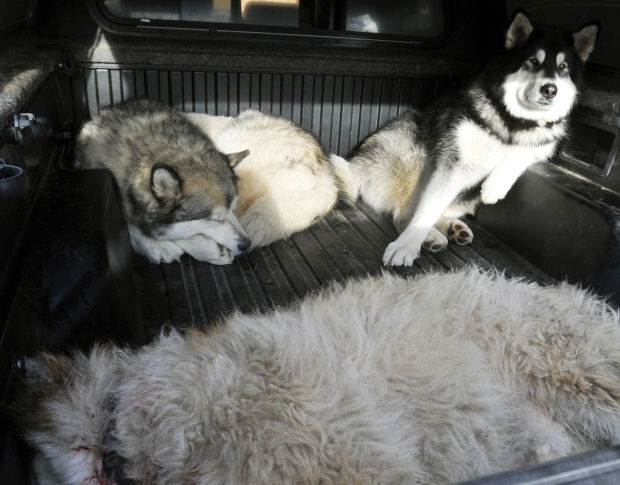
Undercover officers infiltrated the group as part of the investigation. Later wildlife officers seized trophy heads and guns from Gordon’s garage.

Gordon, a registered nurse, was also accused of torturing one of his hunting dogs with a shock collar as well as not giving it care for porcupine wounds; the dog eventually died.

Prosecutors on Monday asked for an exceptionally long sentence, saying Gordon had “run amok.”

“I’m deeply sorry for what I’ve done,” Gordon told the judge. “It’ll never happen again”

Judge Michael J. Sullivan called Gordon an aberration.

“When I look at you and what you’ve done here, which seems to be a highly organized crime spree, I just don’t know how to put those two together,” the judge said.

The sentence was much stiffer than normal. In other recent animal cruelty cases, defendants received sentences of about 3.2 months on average.

Washington state officials have also suspended Gordon’s nursing license.

According to state health department documents, Gordon told an undercover officer he put a shock collar on a child’s neck, turned it to its highest setting and shocked the child. He also told the officer he despised his bed-ridden, elderly patients.

Stop the Cruel Sled Dog Race

From ALDF.org 52894dc72233b_preview-620

Animals will be harmed during the 2014 Iditarod, this is a fact. Teams of dogs will be forced to pull a sled over a thousand miles across the Alaska wilderness, often running at a grueling pace of up to one hundred miles per day for seven to ten straight days.

Injured or “dropped” dogs may not receive shelter, unless for medical treatment, and must be put back outside once treatment is completed. Furthermore, dropped dogs are left alone at checkpoints on a chain with four pounds of dog food. Dropped dogs — and all participating dogs — remain tethered at all times. Dogs receive one mandatory 24 hour resting period and additional shorter periods for rest — but the event relies upon the honor system, and it’s up to the musher to rest for the entire period.

Since the race began more than forty years ago, more than 140 dogs have died during the event — from heart attacks, pneumonia, muscle deterioration, dehydration, diarrhea, and spine injuries. They are impaled on sleds, drowned, or accidentally strangled.

Please take action to help ALDF speak out for sled dogs by asking the corporate sponsors of events like the Iditarod to withdraw their support.

Warm Alaskan Winter May Pose Problems for Iditarod Dog Sled Race

http://www.accuweather.com/en/weather-news/warm-alaska-winter-may-present/23749451
By Kristen Rodman, AccuWeather.com Staff Writer
February 27, 2014; 4:25 PM
Alaska’s most popular sporting [sic] event, the Iditarod Sled Dog Race is set to begin March 1, 2014. However, due to the milder-than-normal weather that has depleted snowpack this winter this winter, mushers may encounter some setbacks.

Kicking off the race, the annual ceremonial start will take place in downtown Anchorage on Saturday, March 1, 2014. The actual start to the competition will be on Sunday afternoon, March 2, 2014, in Willow, despite recent discussions.

Due to the lack of snowcover thus far this winter, race organizers considered moving the race start from Willow to Fairbanks, according to an Alaska Public Media  article. However, a construction company offered to help fix the trail with specialized equipment, and as a result, the race will stick to its traditional route through the Rainy Pass of the Alaska Range.

Musher Michelle Phillips of Tagish, Yukon Territory, Canada, makes the final push on the Bering Sea ice for the finish line a few miles outside Nome, Alaska, on Wednesday, March 13, 2013. (AP Photo/Mark Thiessen)

“It’s been a very unusual winter up across Alaska,” AccuWeather Senior Meteorologist Jack Boston said. “The problem has been frequent mild days, which have been knocking down the snowcover.”

In January, Anchorage’s average temperature was 12 F above normal, causing the city’s snowcover to melt. Farther northwest in Nome, the temperature soared to a record-breaking high on Jan. 27, 2014, hitting 50 F for the first time ever during the winter season. Nome’s average temperature for January was 16 F above normal.

Despite the region’s massive winter warmup, many areas along the path of the race have received near-normal snowfall. So far this winter, Anchorage has received 53.7 inches of snow, or 90 percent of the normal snowfall, while Nome has accumulated 53.9 inches, or 96 percent of the normal snowfall.

As nearly 70 mushers get ready to make the 1,000-mile, multiple-day journey from Willow to Nome, the weather does not seem like it is going to cooperate this year but not because of its normal severity. Typically, the troublesome weather conditions that the race faces include winter storms, blizzards, high winds and subzero temperatures.

“It looks like a mild start to the Iditarod,” AccuWeather Long-Range Forecast Meteorologist Jason Nicholls said. “It looks like there can be a little snow on the ground around March 5, 2014, but it should not amount to much more than a few inches.”