WillPower vs. Won’tPower — Is it Really Hard to Stop Hurting Animals?

Photo  Jim Robertson

Photo Jim Robertson

by Jack Carone

There is a tendency for some of us who wish to promote veganism—a way of living which excludes the use of animals for food, clothing and other exploitation— to cushion the call to action with a warning/acknowledgement/suggestion that it is a difficult thing to do.

While this is surely the case for some people, for others, including me, it has happened quickly and painlessly when the time was right. To set the stage for interested seekers to expect hardship invites failure or a refusal to even try.

For someone who still really wants to eat animals and their secretions, or still wants to wear a fur coat or a silk shirt, but resists for health or moral reasons understood but not felt, it is certainly hard to do. They have to exert Willpower to resist things they still desire, and this almost inevitably leads to a failure to maintain the “sacrifice”. Someone who gives up meat for “health reasons” very often reverts, occasionally or permanently.

But for someone who has internalized the horror and immorality of subjecting other feeling beings to abuse and slaughter, and who simply refuses to, simply cannot—just won’t— be a part of this any longer, there is no feeling of deprivation, and no enticement which can make them go back to participating in these injustices.

I call this Won’tPower, and in contrast to WillPower, it is effortless to maintain.

Let me tell you what pushed the button in my being and changed my life in an instant.

At the time, I subscribed to the Los Angeles Times newspaper. I sat down one morning and turned to the feature section, and began reading a human-interest story about a man who had become very bitter about life due to some tragic personal experiences. He had become very hard-hearted.

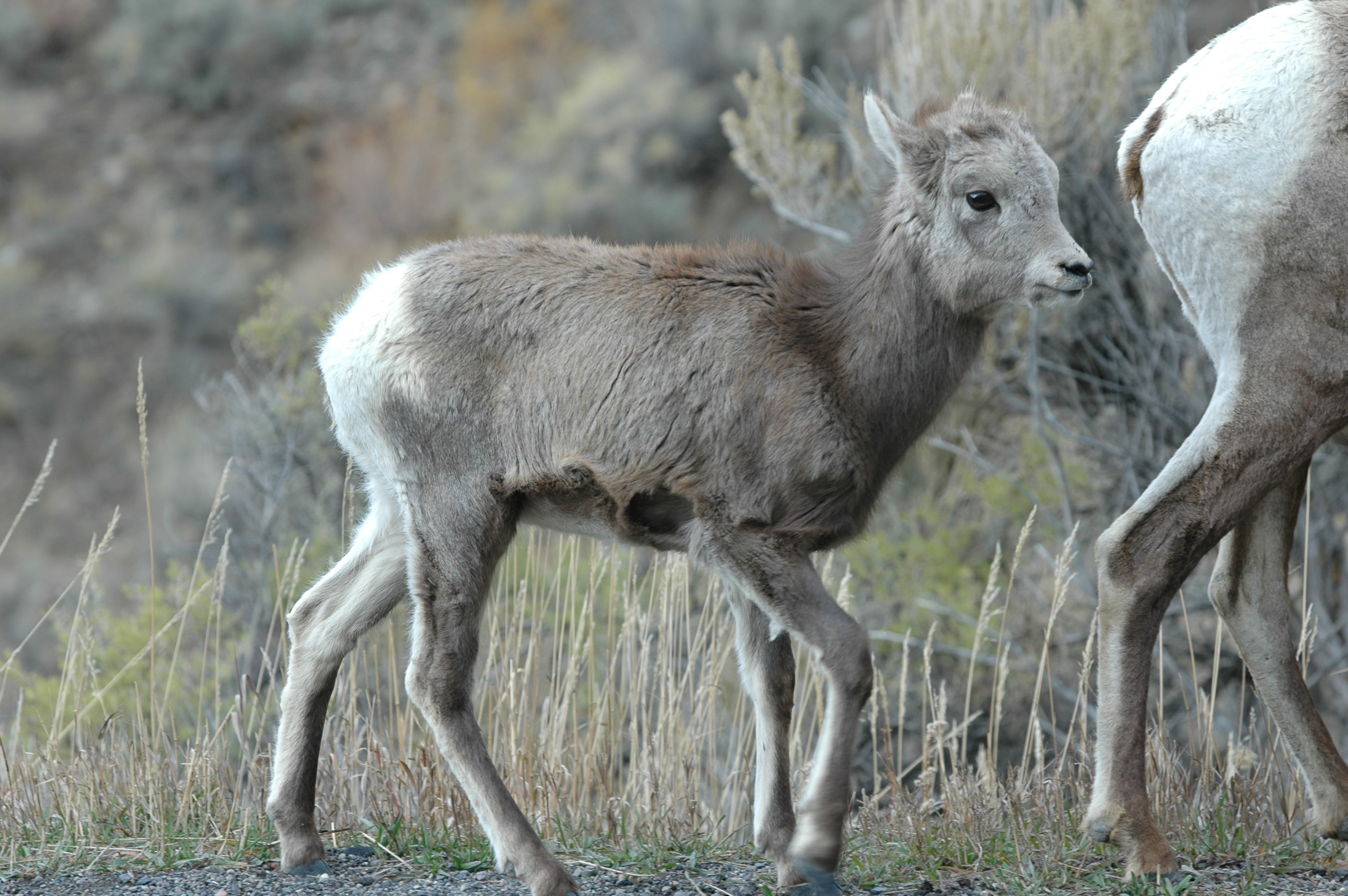
He somehow got a job in a slaughterhouse, killing lambs—baby sheep— as they came by in procession, he took their just-beginning lives with a knife.

One day, a particular lamb passed his station, and he stabbed as before. But before this lamb could fall, mortally wounded, she turned and tenderly licked her own blood from her killer’s hand.

The man broke down, had an instant change of heart, his bitterness melted, he left and became a minister, enriching lives instead of ending them.

I folded the paper, set it down, and have never looked back, except to regret that I had not saved the article!

It is important to note that I had already been thinking about the morality of eating animals, primarily due to my experience of having my first dog as an adult, with all the revelations that living with another species brings, and having met someone’s “pet” turkey, who had expressed as much interest in me as had their Great Dane dog. In other words, the time was right for me, much as the time has to be right to change any ingrained habit, whether it’s smoking, drinking or anything else.

So if you have been wrestling with the ethics of consuming and wearing animals, if you are torn, keep wrestling. Keep thinking and considering. Keep the internal quest alive. When it coincides with the thing—your own personal newspaper article—that pushes your moral button, you may find that it is the easiest and most satisfying thing you have ever done.
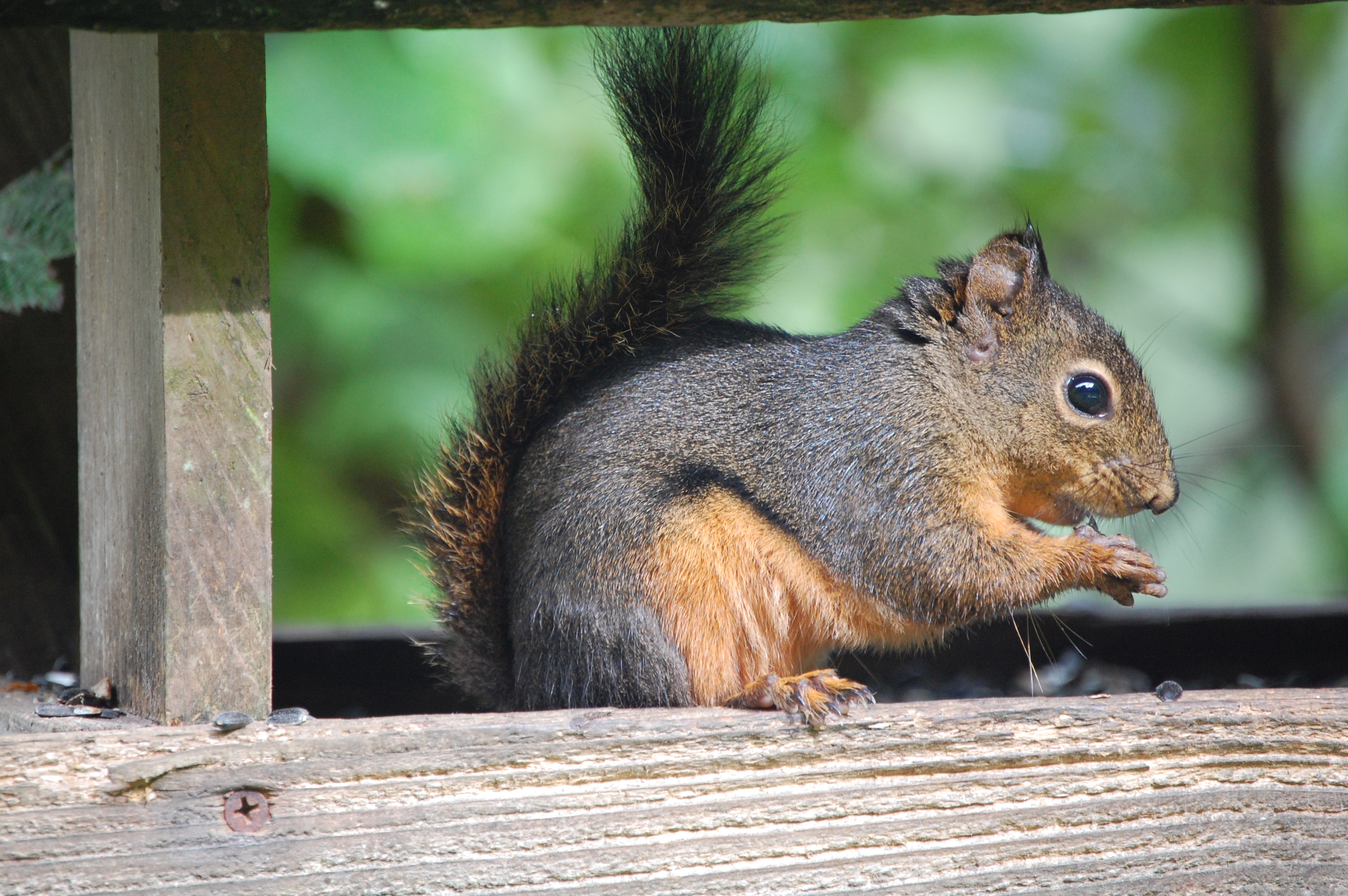
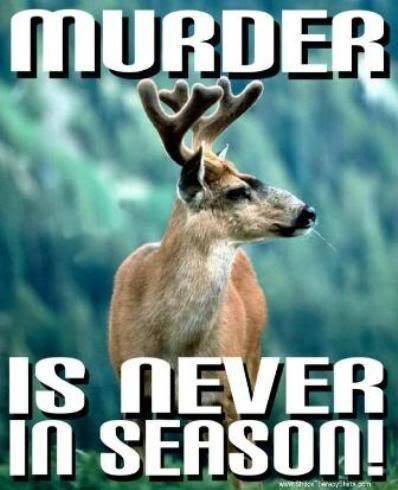
NY Town Hosts Annual “Squirrel Slam” Bloodbath

Photo copyright Jim Robertson

Photo copyright Jim Robertson

THE VILLAGE OF HOLLEY, N.Y., IS PREPARING FOR ANOTHER
BLOODBATH SATURDAY, FEB. 22, WHEN IT WILL HOST ITS ANNUAL”SQUIRREL SLAM”

Friends of Animals (FoA) and local residents will lead a protest of the
horrific event, a squirrel-shooting contest for children and adults
disguised as a fundraiser, and take questions from the media, on Saturday
from 4:30 to 6 p.m. outside the Holley Fire Department located at 7 Thomas
St., where the hunters will bring dead squirrels to be weighed to claim prizes.

“Our experiences protesting the event last year showed a sickening,
gun-worshipping culture of adults, teenagers and children who celebrated the
violence of mass animal killing,” said Edita Birnkrant, FoA’s NY Director.

While the fire department gears up for the event despite opposition, New
York lawmakers are speaking out against the disgrace and showing support of
legislation that would put an end to animal killing contests for good.

“Any competition that encourages and glorifies the slaughter of innocent
animals for no purpose has no place in our state,” said N.Y. state Sen. Jack
Martins, one of the sponsors of a bill that would make these contests illegal.

Last year FoA, an international animal advocacy group founded in New York in
1957, mobilized supporters and took to the streets to protest and released a
mini documentary detailing its efforts. The video,
<http://friendsofanimals.org/news/2013/april/squirrel-slam-video&gt;
http://friendsofanimals.org/news/2013/april/squirrel-slam-video , also draws
attention to the Senate and Assembly bills that would ban animal killing contests in New York.

“Killing contests like the ‘Squirrel Slam’ provide an incentive to children
and adults to shoot many animals to win prizes- a disturbing, irrational
activity that’s out-of-pace with New York culture and must end throughout
the state,” said N.Y. state Sen. Tony Avella, who created the bill.

“I believe it is an obligation and honor to advance legislation that will
protect and maintain the beauty and health of New York State wildlife,”
added N.Y. state Assembly member Deborah J. Glick.

David Brensilver, a wildlife advocate and writer/musician, created a
“Squirrel Slam” protest song in support of FoA’s efforts and can be
downloaded here: <http://thedailymaul.com/?p=9791&gt;

Puppy dies in hot backyard

Animal killing contests are part of a broader conversation on gun violence.
The Holley event comes just over a year after a rifle wielding Adam Lanza
committed mass murder at an elementary school, and last month, a 12-year-old
opened fire at a middle school and an elderly man fatally shot someone
because he was text messaging during a movie.

__________________

Friends of Animals, an international animal protection organization founded
in 1957, advocates for the rights of animals to live free, on their own
terms. <http://www.friendsofanimals.org&gt; http://www.friendsofanimals.org

Animal Cruelty and Human Violence

http://www.huffingtonpost.com/cathy-kangas/animal-cruelty-and-human-_b_2507551.html

by Cathy Kangas, 01/18/2013

Recently in Tampa, a pit bull was found dead, chained to a post in a foreclosed home. In Sacramento, a puppy was burned alive. At the same time across America dozens of men, women and children are victims of violent crimes. It is time to take a serious look at the connection between those who torture and kill animals, and perpetrators of violent crimes against people.

The examples are appalling. Mass murderer Jeffrey Dahmer cut off the heads of cats and dogs impaling them on sticks; Albert DeSalvo, the “Boston Strangler, trapped dogs and cats in orange rates and shot arrows through the box, and David “Son of Sam” Berkowitz poisoned his mother’s parakeet. While these are anecdotal stories about well-known serial killers, there are scientific studies that draw a direct correlation between animal torture and human cruelty.

With their limited resources local law enforcement can’t always make animal cruelty incidents a top priority. But perhaps when we look at the connection between animal cruelty and human violence, we would focus more attention on those who abuse animals to prevent them from escalating to crimes against people.

According to the Humane Society of the United States, researchers determined that between 71 percent and 83 percent of women entering domestic violence shelters reported that their partners also abused or killed the family pet. 1 Another study found that in families under supervision for the physical abuse of their children, pet abuse was concurrent in 88 percent of the families. 2 In seven school shootings that took place across the country between 1997 and 2001, all boys involved had previously committed acts of animal cruelty. 3

Because of this growing evidence of a link between animal cruelty and violent crimes, those who abuse animals are now on the radar of law enforcement agencies, social workers, and veterinarians in states that have cross-reporting laws requiring these professionals to report cases of animal abuse.

In the case of animal abuse by young children, intervention at an early age can stop these tendencies before they escalate to include violence against people. The National School Safety Council, the U.S. Department of Education, the American Psychological Association, and the National Crime Prevention Council all now agree that animal cruelty is a warning sign for at-risk youth.

Dr. Randall Lockwood, a psychologist who has written extensively on the link between animal abuse and human violence, wrote “Those who abuse animals for no obvious reason are budding psychopaths. They have no empathy and only see the world as what it’s going to do for them.”

What can the public do to stop animal abuse? First and most importantly, all animal abuse should be reported to local law enforcement, who should make arrests in these cases a priority. Only 28 states currently have counseling provisions in their animal cruelty laws. Psychological counseling should be mandated for anyone convicted of animal cruelty with particular emphasis placed on helping children who have abused animals. This is necessary for their own welfare as well as that of their community.

Animal welfare organizations should come together to offer substantial rewards for information leading to the arrest and conviction of anyone who abuses an animal and efforts should be undertaken to push this story in the local media. The Humane Society of the United States offers rewards in cases across the country, oftentimes in partnership with other organizations. Prosecutors should not only demand jail time, but also insist on psychological counseling for those convicted of animal cruelty. In questioning suspects in violent crimes, law enforcement should question them about any abuse of animals in their past.

This is a serious problem. It is also one that will only get worse if left unchecked. The public should demand that anyone who abuses an animal be prosecuted to the fullest extent of the law. This is not an animal rights issue. It is a way to identify and help those who may one day become a danger to the community at large.
__________
Cathy Kangas, a member of the Board of Directors of The Humane Society of the United States, supports animal welfare causes through Beauty with a Cause.

1237908_417630058349401_880655430_n

If You Eat Meat

1782018_10152293762567498_482181499_n

If you eat chicken or pork, you’re supporting extreme animal abuse on factory farms;

If you eat beef, you’re supporting the livestock industry that kills bison, elk and wolves;

If you eat fish, you’re supporting the demise of our living oceans;

If you hunt, your selfish food choice robs a life and cheats a natural predator;

If you eat meat, you’re part of the problem instead of the solution;

1797410_10201246274383855_1764880622_n

Yes, Joe Namath Wore a Fur Coat to the Super Bowl

Still more backsliding?

Now I’m really glad I didn’t watch the Super Bowl. And let’s not forget what…I mean who the ball is made of.

From the Urban Dictionary,  Definition of fur hag:
Someone who wears a ridiculous amount of fur, and doesn’t care that it supports murder.

http://mashable.com/2014/02/02/joe-namath-fur-coat-super-bowl/

 By Annie Colbert1 day ago

Joe-Namath


Former New York Jets QB Joe Namath walks on the field before the NFL Super Bowl XLVIII.
 

Image: AP Photo/Mark Humphrey/Associated Press

New York Jets legend Joe Namath resurrected his famous flashy duds for Super Bowl XLVIII. Broadway Joe showed up on the sidelines in a fur coat reminiscent of his playing days.

The former quarterback often wore a full-length fur coat on the bench in the 1960s and ’70s — a practice that has since been banned by the NFL. The eye-catching duds had Twitter talking and wondering when the wrath of PETA will hit.

Stop Cruel Animal Traps in America by 2020!

525140_440817092654544_311118433_nhttps://www.causes.com/actions/1752223-stop-cruel-animal-traps-in-america-by-2020?conversion_request_id=2381843&ctag=09d44ab239cd00064c53385eb9814ef8af&ctoken=MLEjxS0ImRVakE02ScHkiK6eM07ignxPMzzi7vJUKqnWFjfXcN2DtRJEPzOCVXh84X8iuDGxXGYYhuoTR8oWdA%3D%3D&recruiter_id=46771178&uid=55991894&utm_campaign=activity_invitation_mailer%2Factivity_invitation&utm_medium=email&utm_source=causes

Sign the Petition to Jim Lane, Director of New Mexico Game & Fish Department, Fish and wildlife managers nationwide.

We ask that you and other Game & Fish Directors across America put a stop to the cruel, inhumane practice of animal trapping. We’re asking you to take a leadership role in this and let your fellow wildlife managers be aware:

1. Stop your own trapping Mr. Lane, you’re practicing animal cruelty. Your personal cessation of this activity will set an example for others to follow. You are unfit to manage wildlife so long as you torture animals.

2. We ask that you stop supporting the practice of trapping in the State Legislature of New Mexico when called to testify, and that your peers cease similar activity in their states.

3. Begin to phase out new trapping licenses. This practice will end.

4. Eliminate issuance of trapping licenses completely by 2015 in New Mexico. Ask your peers to follow your lead.

Signed,

Bold Visions Conservation

 https://www.causes.com/actions/1752223-stop-cruel-animal-traps-in-america-by-2020?conversion_request_id=2381843&ctag=09d44ab239cd00064c53385eb9814ef8af&ctoken=MLEjxS0ImRVakE02ScHkiK6eM07ignxPMzzi7vJUKqnWFjfXcN2DtRJEPzOCVXh84X8iuDGxXGYYhuoTR8oWdA%3D%3D&recruiter_id=46771178&uid=55991894&utm_campaign=activity_invitation_mailer%2Factivity_invitation&utm_medium=email&utm_source=causes

As you read this, hundreds of animals have their foot, shattered and mangled in a foothold trap, or are slowly choking to death in conibear traps.

Thousands of animals are suffering unthinkable pain and anguish, EVERY DAY. They’re frightened beyond hope, and in horrible pain. Their savior will show up in a day or two or three, to murder them, and finally end their anguish.The people whose job it is to manage wildlife for ALL PEOPLE use their position purely to help that very small population of trappers: it’s time they heard from the rest of us!

Please Sign the petition and visit the Bold Visions Conservation website:http://boldvisions.businesscatalyst.com/bold-visions-conservation—trapping.html

We need YOU and 250,000 other concerned people across the planet to take on this issue with us: wild creatures belong to the earth, not to the few deranged individuals that think animals are for killing, and for killing alone.

IT’S TIME TO QUIT LETTING THE BARBARIANS BE IN CHARGE!

Bold Visions Conservation is YOUR representative. We will fight these departments on your behalf, and we’ll fight with every resource available. We will start with the New Mexico Game and Fish Department, and use what we learn to work with groups across America to stop barbaric trapping, once and for all!

http://boldvisions.businesscatalyst.com/bold-visions-conservation—trapping.html


Call OFF the “Wild”man

Drugs, Death, Neglect: Behind the Scenes at Animal Planet

Mother Jones’ exclusive investigation reveals how animals suffer on the network’s top reality show.

By the time three orphaned raccoons arrived for emergency care at the Kentucky Wildlife Center in April 2012, “they were emaciated,” says Karen Bailey, who runs the nonprofit rehab clinic set in the sunny thoroughbred country just outside of Georgetown, in central Kentucky. “They were almost dead.”

Read more: http://www.motherjones.com/environment/2014/01/animal-abuse-drugs-call-of-the-wildman-animal-planet

1488271_587846841303023_63989389_n

Connections of animal and human suffering

http://www.stltoday.com/lifestyles/pets/dr-fox/connections-of-animal-and-human-suffering/article_0d7de883-b56e-587a-bc67-516db2cddce1.html

by Dr. Michael Fox

Dear Readers • Humans, like other animals, have so-called mirror neurons in their brains that instantly process the emotional state of another deciphered through their facial expressions, vocalizations and body language. This happens to facilitate communication and appropriate action/reaction.

When signals of distress and suffering are processed, empathetic concern is evoked, as is fear. Sociopaths and psychopaths may respectively feel nothing or some perverse pleasure. Empathetic concern, which can include sympathy, outrage, remorse, anger, guilt and disbelief, can lead to denial or appropriate action to help, save, protect and defend by direct action.

While the print and TV media increasingly limit public exposure to extreme human suffering, there are even greater limits imposed, at least in America, on showing documented cruelties and suffering of animals. Ironically, some newspapers —1474693_10202436592133870_578596781_n including my local edition — have no qualms publishing photographs of a 12-year-old girl with a deer she had shot and a wildlife biology student grinning with a wolf he had shot draped around his shoulders. This establishes a culturally accepted norm, but images of animal suffering and cruelty — of animals in traps, in factory livestock and fur farms, puppy mills and slaughterhouses — are rarely shown by the mass media. We should ask why, and who is protecting whom.

Censorship of animal cruelty and suffering by the mass media parallels the atrocious record of state and federal law enforcement agencies of anti-cruelty laws. Janelle Dixon, president and CEO of the Minneapolis Animal Humane Society, recently reported how her organization spent $225,000 caring for dogs from a puppy mill, while the operator of this commercial dog breeding operation received a charge of a year’s probation, a 90-day suspended jail sentence and a $50 fine.

Clearly, America must wipe its mirror clean when it comes to animal and human suffering caused by how, as a culture, we choose to do our business. And the media must begin to act responsibly rather than entertain, distract and continue to promote consumerism and biased information.

The A-Hole Who Ate An Octopus

[Back on October 4th I posted about the New rule banning octopus hunting in Seattle because of the public outcry when a diver killed a 6 foot “specimen” and left it clearly displayed in the back of his truck (like a wolf in Jackson Hole). Then on October 14th, the New York Times ran an absurdly-titled article praising the killer, while disparaging the people who called for an end to octopus hunting in Puget Sound (who were ultimately successful).

I’m not going to include the entire article (hell, I’m not even going to read it all), since it goes on for 4 or 5 pages, but here’s the first page so you can see how feebly the media sucks up to animal killers these days]:


The Octopus that Almost Ate Seattle

October 14th, 2013 NYT

In the months leading up to the hunt, Dylan Mayer trained twice a week in his parents’ swimming pool, asking friends to attack him, splay their arms and grab him, drag him to the surface and shove him below it, pull off his mask, snatch his regulator, time his recovery. By last Halloween, he was ready, and as the light began to fade that afternoon, the broad-shouldered 19-year-old jumped into a red Ford pickup truck with his buddy and drove some 40 minutes from Maple Valley, Wash., to West Seattle. They arrived at Alki Beach around 4 p.m., put on their wet suits and ambled into Cove 2. Then they slipped into Elliott Bay, the Space Needle punctuating the city line in the distance like an inverted exclamation point.

Mark Saiget

Dylan Mayer holding the giant Pacific octopus that he caught in Puget Sound.

Under the dark water, the teenagers looked around with the help of a diving light. At 45 feet, they passed a sunken ship, the Honey Bear, and at 85 feet, beneath the buoy line, they saw further evidence of the former marina — steel beams, pilings and sunken watercraft. Marine life thrived in this haven of junk, and for this reason, Cove 2 was a popular dive site. According to the permit he had just purchased at Walmart, Mayer was allowed to catch this sea life and cook it, which is exactly what he set out to do. He wasn’t much of a chef, but he had experience foraging for his dinner. Mayer had attended a high school known for its Future Farmers of America program; he also knew how to slaughter cows and castrate bulls. Now he was going to community college, where he was asked to draw something from nature. He figured that he might as well eat it too. And as he scanned the bay, he could already imagine searing the marine morsels on high heat and popping them, rare and unctuous, into his mouth. He soon spotted his prey. “That’s a big [expletive] octopus,” he scribbled on his underwater slate.

The giant Pacific octopus was curled inside a rock piling, both its color and texture altered by camouflage. Mayer judged it to be his size, about six feet, and wondered if he could take it on alone. He lunged at the octopus, grabbing one of its eight arms. It slipped slimily between his fingers, its suckers feeling and tasting his hand. He reached for it again, and again it retreated. Able to squeeze its body through a space as small as a lemon, the octopus was unlikely to succumb to his grip. He poked it with his finger and watched it turn brighter shades of red, until finally, it sprang forward and revealed itself to be a nine-foot wheel charging through the water.

The octopus grabbed Mayer where it could, encircling his thigh, spiraling his torso, its some 1,600 suckers — varying in size from a peppercorn to a pepper mill — latching onto his wet suit and face. It pulled Mayer’s regulator out of his mouth. His adrenaline rising, he punched the creature, and began a wrestling match that would last 25 minutes.

Eventually, he managed to pull the animal to the surface, where a number of divers couldn’t help noticing a teenager punching an 80-pound octopus. As they approached, Mayer freaked out. “Let’s get out of here,” he said, sucker marks ringing his face. “Maybe we shouldn’t have done this.” But it was too late. He dragged his kill ashore, where a few bystanders, in disbelief, took his picture and threatened to report him. Lugging the octopus to the red truck, Mayer cited his permit. But the divers kept taking pictures. That night, as Mayer butchered the octopus for dinner, they posted the photos online.

In a city finely attuned to both the ethics of food sourcing and poster-worthy animal causes (the spotted owl, the killer whale and marbled murrelet among them), Mayer’s exploits became an instant cause célèbre. On Nov. 1 and 2, Seattle’s competing news stations reported the octopus hunt. The next day, The Seattle Times ran the story on the front page. On Web forums, Seattleites tracked down the teenager’s name and address through the clues in the photos: the truck’s license plate, the high school named on Mayer’s sweatshirt and the inspection sticker affixed to his tank. “I hope this sick [expletive] gets tangled in a gill net next time he dives and thus removes a potential budding sociopath before it graduates from invertebrates to mammals,” read one typical comment, which received 52 “thumbs-ups.” Around the same time, Scott Lundy, one of the men who had confronted Mayer in Cove 2, issued a “Save the G.P.O.” petition to ban octopus harvesting from the beach and examine the practice statewide. By the next day, he had collected 1,105 signatures.

&amp;lt;img src=”http://meter-svc.nytimes.com/meter.gif”/&amp;gt;         &nbsp;