Don’t worry, I’m not going to get all it’s “karma” or “Divine justice” on you here, but this whole Coronavirus pandemic is just what humans deserve for the sick, domineering, heartless ways they’ve treated animals over the centuries. Somehow they’ve convinced themselves (or worse yet, maybe they’ve never really thought about it) that they’re entitled to acts of extreme abuse on their fellow sentient beings. How else did they justify digging pits for mammoths or running herds of bison off cliffs only to be butchered en masse later? Oh yeah, they were hungry. Well, so were the animals they destroyed but they never stooped to making humans their slaves for flesh.
Even given humans’ long history of animal abuse, it’s hard to fathom them coming up with intrinsically evil, karma-defying traditions like factory farming and “wet” markets, both of which involve intensive warehousing of animals as though their rights or well-being were of no consequence. And like a bunch of spoiled, self-centered serial killers, their wants and desires are all that matters.
Over time, after the hairless, fleshy mutant hominid serial-killers-of-other-animals had driven the largest herbivores off the planet or at least to the most extreme rugged corners, they decided to give “animal husbandry” a go. Nowadays, they’ve gone so postal with that misadventure, they must have convinced themselves (or never really thought about it) that animals somehow enjoy being their servants and meat and secretion providers: that cows enjoy giving up their babies’ milk to demonic little primates who rush them through the mechanical milking process like the spear-wielding jabber-walkies who herded their ancestors over cliffs; that birds enjoy being crammed into cages so small they can’t even raise their wings so their precious eggs can be squirreled away by some self-important deity-wanna-bes; that pigs enjoy living their lives out as nothing more than bacon-on the hoof or that pangolins like being dragged from the wild and stuffed into tiny cages and displayed in a crowded, noisy, open-slaughter market next to fruit bats, secretive snakes, fish or untold other beings forced to serve their self-appointed masters.
As much as we might feel sorry for the people who are subjected to this pandemic like victims of some undeserved plague wrought by a punishing divinity, perhaps when this is all over they should stop and think seriously about changing their hedonistic, carnivoristic ways. And I’m sure it’s a challenge to keep one’s social distance for a species that’s let their population surge to almost EIGHT BILLION (and forces their “food animals” into tiny, over-crowded cells for life), but if humans want to continue their reign over this wonderfully vibrant planet, it’s time to back off a bit—and don’t go crying “Where’s the justice?” to anyone out there who might be keeping score.
There are rumors that the new coronavirus originated in animals sold at Chinese ‘wet markets’ in the city of Wuhan. What are ‘wet markets’ and how likely is it that this is true?
As medical professionals around the world are searching for ways to stop the coronavirus outbreak, greater scrutiny is being cast on the “wet markets” suspected to have played a role in the initial spread of the sickness.
While rumors have swirled that the virus originated in bats and then infected another animal that passed it onto people at a market in the southeastern Chinese city of Wuhan, scientists have not yet determined exactly how the new coronavirus infected people. But these kinds of markets are known to operate in not the most sanitary conditions.
“You’ve got live animals, so there’s feces everywhere. There’s blood because of people chopping them up,” Peter Daszak, president of EcoHealth Alliance, which works to protect wildlife and public health from emerging diseases, told the Associated Press last month.
Residents wearing face masks purchase seafood at a wet market on Jan. 28 in Macau, China. (Getty Images)
“Wet markets,” as defined by the Oxford English Dictionary, are places “for the sale of fresh meat, fish, and produce.” They also sell an array of exotic animals.
The Huanan Seafood Wholesale Market in Wuhan, before its closure, advertised dozens of species such as giant salamanders, baby crocodiles and raccoon dogs that were often referred to as wildlife, even when they were farmed, according to the Associated Press.
And like many other “wet markets” in Asia and elsewhere, the animals at the Wuhan market lived in close proximity as they were tied up or stacked in cages.
Animals in “wet markets” are often killed on-site to ensure freshness — yet the messy mix raises the odds that a new virus will jump to people handling the animals and start to spread, experts say.
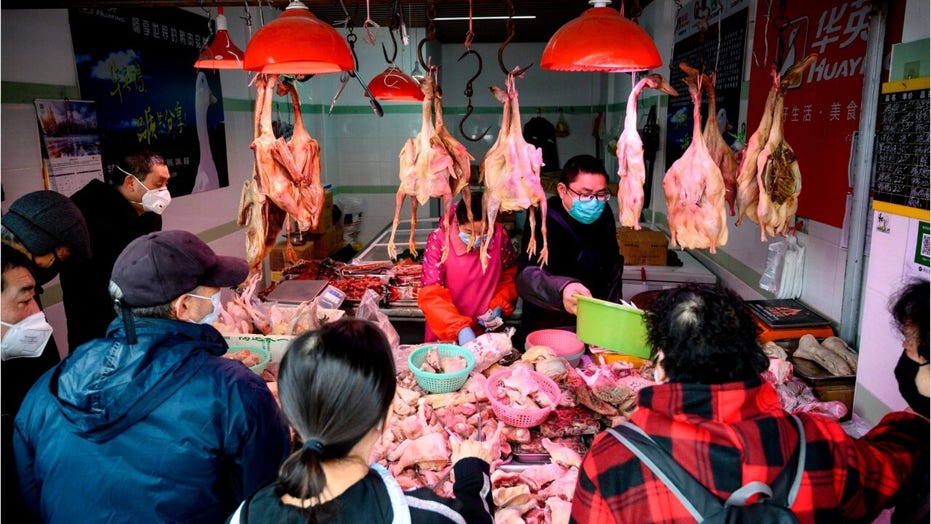
A vendor sells meat to customers at a market in Beijing on Jan. 15. (Getty Images)
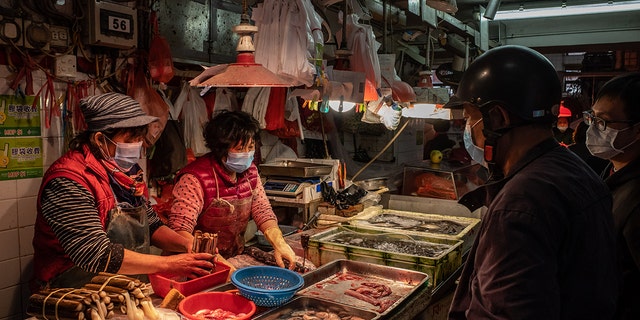
“I visited the Tai Po wet market in Hong Kong, and it’s quite obvious why the term ‘wet’ is used,” an NPR reporter wrote about them earlier this year.
“Live fish in open tubs splash water all over the floor. The countertops of the stalls are red with blood as fish are gutted and filleted right in front of the customers’ eyes. Live turtles and crustaceans climb over each other in boxes,” he described. “Melting ice adds to the slush on the floor. There’s lots of water, blood, fish scales and chicken guts. Things are wet.”
COVID-19, like SARS, is a disease that has been traced back to animals. But it’s not the only recent one.
The killing and sale of what is known as bushmeat in Africa is thought to be a source for Ebola. Bird flu likely came from chickens at a market in Hong Kong in 1997. Measles is also believed to have evolved from a virus that infected cattle.
There are signs following the outbreak of the coronavirus that the Chinese government may make more lasting changes to how exotic species are raised and sold. Last month, Chinese leader Xi Jinping said the country should “resolutely outlaw and harshly crackdown” on the illegal wildlife trade because of the public health risks it poses.
Before the outbreak began, it was legal in China to sell 54 species of animals, like pangolins and civets — as long as they were raised on farms. But that made it difficult to distinguish between legal and illegal wildlife in “wet markets”, and enforcement was lax, Jinfeng Zhou of China Biodiversity, Conservation and Green Development Foundation, an environmental group based in Beijing, told the AP.
All told, officials say about 1.5 million markets and online operators nationwide have been inspected since the coronavirus outbreak began. About 3,700 have been shut down, and around 16,000 breeding sites have been cordoned off.
However, even if China successfully regulates or bans it, the wildlife trade is likely to continue elsewhere.
Recent visits to wet markets on the island of Sulawesi in Indonesia and in the coastal city of Doula in Cameroon revealed similar conditions to “wet markets” in China, the Associated Press reported. Vendors were slaughtering and grilling bats, dogs, rats, crocodiles and snakes, and sanitary measures were scant.
The following was written by Judie Mancuso, the Founder and President of Social Compassion In Legislation (SCIL) as a plea to mainstream media to stop ignoring the root of the Coronavirus pandemic.
President Trump has repeatedly referred to the Covid-19 virus as the “Chinese” virus. The media questioned him on whether he saw that as racist or not. His answer was “no” it wasn’t racist, “the virus came from China”. Although this virus originated in China, it could have come from anywhere, and that is what we wish he would recognize instead of simply putting the “China” label on it.
In reality, it is not the where, but then what! Language like this can inflame racism and prolongs solving the root of the problem: the wildlife trade and animal agriculture. This virus could have originated in any country that exploits and commodifies animals. Humanity as a whole owns this virus as we continually exploit animals via wildlife trade, factory farming, and overfishing. The latest information particular to Covid-19 is that it came from bats. You can watch this excellent clip from Richard Engle’s in-depth report which outlines the origins of the virus, and others before it. Also, 60 Minutes Australia did a comprehensive and must-watch piece on Covid-19 as it relates to live markets.
This is not the first killer virus to come from animals under stress and exploitation. The 1918’s influenza pandemic, which was an unusually deadly influenza pandemic that originated from birds. 500 million people around the world were infected, or about 27% of the world population of between 1.8 and 1.9 billion. Estimates of people who died from the virus are 50-100 million people. It was the first of the two pandemics involving H1N1 influenza virus, with the second being the Swine Flu in 2009. Other highly contagious and deadly viruses that originated from animals are SARS, Bird Flu, and Ebola, to name a few.
Now, it is time we ask ourselves: what is the cost of ignoring this essential aspect of the Covid-19 story? Through our global collective willful ignorance, could we be setting the stage for something even deadlier?
What needs to be done immediately is to end all live animal markets around the world! President Trump and his administration need to work with world leaders to not only ban these markets, but to also clamp down on wildlife trafficking. Here in the United States, each state needs to take immediate action to outlaw live markets themselves. Secondly, we must begin to move away from our factory farming system which is a breeding ground for deadly viruses and antibacterial resistant strains of bacteria.
Recently, coast to coast activists have rallied to shut down New York City’s 85 live animal markets and west coast live markets in San Francisco, Berkeley, and Oakland, given that Covid-19 started at a live market. Yet, inexplicably, no media reported on these protests. Why are we ignoring the root cause of this pandemic? The real story is the abuse of animals in our food system. This systemic abuse is at the heart of the global debacle that is fast destroying our economy, climate, killing a growing number of people, and forcing millions of others to live in miserable isolation. This is, indeed, mother nature’s revenge. Not our phrase. That’s how an expert in zoonotic diseases described it.
Recently the New York Post did an investigative story about live meat markets just like the one in Wuhan, China, where this pandemic began. Here is their description of the average “live market,” aka a meat market. “In stall after stall, a mix of live and dead animals, which run the gamut from the known (pig, ox, duck, chicken) to the rare or unknown due to the condition of the carcass — stare back at you. In the wet areas of the market — usually reserved for fish and sea creatures and where the ground is slick with water and often blood — the stink is worse. The animals that have not yet been dispatched by the butcher’s knife make desperate bids to escape by climbing on top of each other and flopping or jumping out of their containers (to no avail). At least in the wet areas, the animals don’t make a sound. The screams from mammals and fowl are unbearable and heartbreaking.” Thanks to the New York Post for acknowledging the suffering of the animals involved.
Why are we not hearing similar, accurate descriptions from news anchors at the major networks? To talk about a global pandemic without consistently discussing its origins is like holding a murder trial and rarely mentioning the defendant. It’s irresponsible. Except for some great special reports by NBC’s Richard Engel and 60 Minutes Australia, the news media continues to dance around the primal issue at the heart of this mind-boggling catastrophe, the likes of which we have never seen. News hosts question expert panel after expert panel, without ever having a full-blown conversation about the horrific conditions at these markets and how meat markets are a global phenomenon and, therefore, a global problem.
It is time we start talking about the origin of this virus, not just the country it came from… and more importantly, do something about it! Otherwise, Covid-19 is just another name on a list of the ever-growing pandemic viruses we could have prevented. Who’s fault is it? All of ours for ignoring the facts in front of us and allowing it to continue. Together let’s not just flatten the curve, or find the next vaccine. Let’s solve this existential threat to our humanity.
Historically, tragedies such as the ongoing COVID-19 epidemic have sometimes led to important changes. The probable source of the new coronavirus – so-called wet markets, at which live animals are sold and slaughtered before customers’ eyes – should be banned not only in China, but worldwide.
PRINCETON – The apocalyptic images of the locked-down Chinese city of Wuhan have reached us all. The world is holding its breath over the spread of the new coronavirus, COVID-19, and governments are taking or preparing drastic measures that will necessarily sacrifice individual rights and freedoms for the general good.
Some focus their anger on China’s initial lack of transparency about the outbreak. The philosopher Slavoj Žižek has spoken of “the racist paranoia” at work in the obsession with COVID-19 when there are many worse infectious diseases from which thousands die every day. Those prone to conspiracy theories believe that the virus is a biological weapon aimed at China’s economy. Few mention, let alone confront, the underlying cause of the epidemic.
Both the 2003 SARS (Severe Acute Respiratory Syndrome) epidemic and the current one can be traced to China’s “wet markets” – open-air markets where animals are bought live and then slaughtered on the spot for the customers. Until late December 2019, everyone affected by the virus had some link to Wuhan’s Huanan Market.
At China’s wet markets, many different animals are sold and killed to be eaten: wolf cubs, snakes, turtles, guinea pigs, rats, otters, badgers, and civets. Similar markets exist in many Asian countries, including Japan, Vietnam, and the Philippines.
In tropical and subtropical areas of the planet, wet markets sell live mammals, poultry, fish, and reptiles, crammed together and sharing their breath, their blood, and their excrement. As US National Public Radio journalist Jason Beaubien recently reported: “Live fish in open tubs splash water all over the floor. The countertops of the stalls are red with blood as fish are gutted and filleted right in front of the customers’ eyes. Live turtles and crustaceans climb over each other in boxes. Melting ice adds to the slush on the floor. There’s lots of water, blood, fish scales, and chicken guts.” Wet markets, indeed.
Scientists tell us that keeping different animals in close, prolonged proximity with one another and with people creates an unhealthy environment that is the probable source of the mutation that enabled COVID-19 to infect humans. More precisely, in such an environment, a coronavirus long present in some animals underwent rapid mutation as it changed from nonhuman host to nonhuman host, and ultimately gained the ability to bind to human cell receptors, thus adapting to the human host.
SUBSCRIBE NOW
Subscribe today and get unlimited access to OnPoint, the Big Picture, the PS archive of more than 14,000 commentaries, and our annual magazine, for less than $2 a week.
SUBSCRIBE
This evidence prompted China, on January 26, to impose a temporary ban on wildlife animal trade. It is not the first time that such a measure has been introduced in response to an epidemic. Following the SARS outbreak China prohibited the breeding, transport, and sale of civets and other wild animals, but the ban was lifted six months later.
Today, many voices are calling for a permanent shutdown of “wildlife markets.” Zhou Jinfeng, head of China’s Biodiversity Conservation and Green Development Foundation, has urged that “illegal wildlife trafficking” be banned indefinitely and has indicated that the National People’s Congress is discussing a bill to outlaw trade in protected species. Focusing on protected species, however, is a ploy to divert public attention away from the appalling circumstances in which animals in wet markets are forced to live and die. What the world really needs is a permanent ban on wet markets.
For the animals, wet markets are hell on earth. Thousands of sentient, palpitating beings endure hours of suffering and anguish before being brutally butchered. This is just one small part of the suffering that humans systematically inflict on animals in every country – in factory farms, laboratories, and the entertainment industry.
If we stop to reflect on what we are doing – and mostly we do not – we are prone to justify it by appealing to the alleged superiority of our species, in much the same way that white people used to appeal to the alleged superiority of their race to justify their subjection of “inferior” humans. But at this moment, when vital human interests so clearly run parallel to the interests of nonhuman animals, this small part of the suffering we inflict on animals offers us the opportunity for a change of attitudes toward members of non-human species.
To achieve a ban on wet markets, we will have to overcome some specific cultural preferences, as well as resistance linked to the fact that a ban would cause economic hardship to those who make their living from the markets. But, even without giving nonhuman animals the moral consideration they deserve, these localized concerns are decisively outweighed by the calamitous impact that ever more frequent global epidemics (and perhaps pandemics) will have.
Martin Williams, a Hong Kong-based writer specializing in conservation and the environment, puts it well: “As long as such markets exist, the likelihood of other new diseases emerging will remain. Surely, it is time for China to close down these markets. In one fell swoop, it would be making progress on animal rights and nature conservation, while reducing the risk of a ‘made in China’ disease harming people worldwide.”
But we would go further. Historically, tragedies have sometimes led to important changes. Markets at which live animals are sold and slaughtered should be banned not only in China, but all over the world.
Freshly-slaughtered meat from wildlife and farm animals is preferred over meat that has been slaughtered before being shipped. Photograph: Visual China Group/Getty
Nearly 20,000 wildlife farms raising species including peacocks, civet cats, porcupines, ostriches, wild geese and boar have been shut down across China in the wake of the coronavirus, in a move that has exposed the hitherto unknown size of the industry.
Until a few weeks ago wildlife farming was still being promoted by government agencies as an easy way for rural Chinese people to get rich.
But the Covid-19 outbreak, which has now led to 2,666 deaths and over 77,700 known infections, is thought to have originated in wildlife sold at a market in Wuhan in early December, prompting a massive rethink by authorities on how to manage the trade.
China issued a temporary ban on wildlife trade to curb the spread of the virus at the end of January and began a widespread crackdown on breeding facilities in early February.
The country’s top legislative officials are now rushing to amend the country’s wildlife protection law and possibly restructure regulations on the use of wildlife for food and traditional Chinese medicine.
The current version of the law is seen as problematic by wildlife conservation groups because it focuses on utilisation of wildlife rather than its protection.
“The coronavirus epidemic is swiftly pushing China to reevaluate its relationship with wildlife,” Steve Blake, chief representative of WildAid in Beijing, told the Guardian. “There is a high level of risk from this scale of breeding operations both to human health and to the impacts on populations of these animals in the wild.”
The National People’s Congress released new measures on Monday restricting wildlife trade, banning consumption of bushmeat and sales of wildlife for meat consumption at wet markets between now and the time the Wildlife Protection Law can be amended and adopted. Untouched however, are breeding operations for traditional Chinese medicine, fur and leather, lucrative markets known to drive illegal poaching of animals including tigers and pangolins.
For the past few years China’s leadership has pushed the idea that “wildlife domestication” should be a key part of rural development, eco-tourism and poverty alleviation. A 2017 report by the Chinese Academy of Engineering on the development of the wildlife farming industry valued the wildlife-farming industry those operations at 520bn yuan, or £57bn.
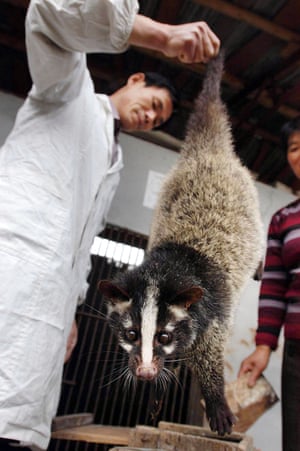
Civet cats – thought to be potential carriers of Sars – are among the animals farmed for meat in China. Photograph: China Photos/Getty
Just weeks before the outbreak, China’s State Forestry and Grassland Administration (SFGA) was still actively encouraging citizens to get into farming wildlife such as civet cats – a species pinpointed as a carrier of Sars, a disease similar to Covid-19. The SFGA regulates both farming and trade in terrestrial wildlife, and quotas of wildlife products – such as pangolin scales – allowed to be used by the Chinese medicine industry.
“Why are civet cats still encouraged to [be eaten] after the Sars outbreak in 2003? It’s because the hunters, operators, practitioners need that. How can they achieve that? They urged the government to support them under the pretext of economic development,” Jinfeng Zhou, secretary-general of the China Biodiversity Conservation and Green Development Foundation (CBCGDF), told the Guardian.
On state TV the popular series Secrets of Getting Rich, which has aired since 2001, often touts these kinds of breeding operations – bamboo rats, snakes, toads, porcupines and squirrels have all had starring roles.
But little was known about the scale of the wildlife farm industry before the coronavirus outbreak, with licensing mainly regulated by provincial and local-level forestry bureaus that do not divulge full information about the breeding operations under their watch. A report from state-run Xinhua news agency on 17 February revealed that from 2005–2013 the forestry administration only issued 3,725 breeding and operation licenses at the national level.
But since the outbreak at least 19,000 farms have been shut down around the country, including about 4,600 in Jilin province, a major centre for traditional Chinese medicine. About 3,900 wildlife-farming operations were shuttered in Hunan province, 2,900 in Sichuan, 2,300 in Yunnan, 2,000 in Liaoning, and 1,000 in Shaanxi.
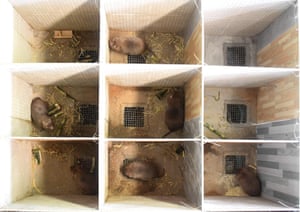
Breeding of animals such as rats has been seen as central to alleviating poverty in rural areas. Photograph: Zhang Ailin/Alamy
There is little detail available about the animals farmed across China, but local press reports mention civet cats, bamboo rats, ostriches, wild boar, sika deer, foxes, ostriches, blue peacocks, turkeys, quails, guinea fowl, wild geese, mallard ducks, red-billed geese, pigeons, and ring-necked pheasants.
Advertisement
Neither do reports offer much detail about the shutdowns and what is happening to the animals, although Blake said he does not think animals are being culled, due to issues over compensation.
Chen Hong, a peacock farmer in Liuyang, Hunan, said she is concerned about her losses and whether she will get compensation after her operations were suspended on 24 January.
“We now aren’t allowed to sell the animals, transport them, or let anyone near them, and we have to sanitise the facility once every day,” Chen said. “Usually this time of year would see our farm bustling with clients and visitors. We haven’t received notice on what to do yet, and the peacocks are still here, and we probably won’t know what to do with [them] until after the outbreak is contained.
“We’re very worried about the farm’s future,” she added. “The shutdown has resulted in a loss of 400,000–500,000 yuan (£44,000–55,000) in sales, and if they decide to put an outright ban on raising peacocks, we’ll lose even more, at least a million yuan(£110,000).”
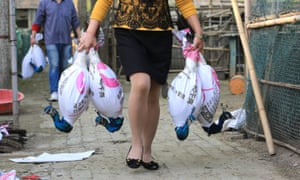
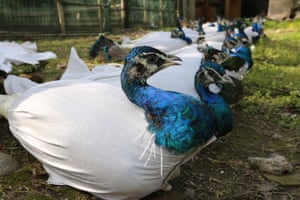
Peacock breeders use plastic bags to wrap up the birds in transit to stop their feathers falling off. Photograph: Visual China Group/Getty
Advertisement
On a visit to Shaoguan, Guangdong province, last year, the Guardian and staff from CBCGDF saw a caged facility previously used for attempted breeding of the notoriously hard-to-breed pangolin.
While there were no longer pangolin at the site, several locals near the facility confirmed the species had been raised there, along with monkeys and other wildlife.
Besides being used for Chinese medicine, much of the meat from the wildlife trade is sold through online platforms or to “wet markets” like the one where the Covid-19 outbreak is thought to have started in Wuhan.
“All animals or their body parts for human consumption are supposed to go through food and health checks, but I don’t think the sellers ever bothered,” said Deborah Cao, a professor at Griffith University in Australia and an expert on animal protection in China. “Most of them [have been] sold without such health checks.”
There have been calls for a deep regulatory overhaul to remove the conflicting duties of the forestry administration, and for a shift in government mindset away from promoting the utilisation of wildlife and towards its protection.
Zhangjiakou city has more than 1,500 firms processing furs from animals including foxes and racoons. Photograph: Greg Baker/Getty
“The ‘referee-player’ combination needs to be addressed and is the toughest [challenge],” Li Shuo, a senior campaigner at Greenpeace East Asia told the Guardian. “This goes back to the institutional identity [of the SFGA] which was established to oversee timber production. Protection was an afterthought.”
There are concerns that in trying to prevent outbreaks authorities may go too far in the culling of wild animals that can carry disease.
“Some law professors have suggested ‘ecological killing’ of disease-transmitting wild animals, such as pangolins, hedgehogs, bats, snakes, and some insects,” Zhou said. “We believe lawmakers need to learn [more about] biodiversity before advising on the revisions to the law, or they’ll bring disaster.”
Additional research and reporting assistance provided by Jonathan Zhong.
The owner of a Virginia kennel has been charged with animal cruelty after authorities said they discovered 21 dead hunting dogs there.
Dinwiddie County Animal Control, acting on an anonymous tip, went to the property off U.S Highway 1 and discovered the dead dogs inside the kennel. One dog was still alive, The Progress-Index of Petersburg reported.
The surviving dog is receiving treatment and is expected to recover.
The four-time Academy Award nominee won the best-supporting actor accolade for his role as a stuntman in “Once Upon a Time in Hollywood.” The win marked his first-ever Academy Award win for acting. He immediately took the stage and got political by taking a jab at senators who voted against Democrats’ requests to call new witnesses in the impeachment trial, specifically former National Security Adviser John Bolton, who claimed he was willing to testify.
“They told me I only have 45 seconds up here, which is 45 seconds more than the Senate gave John Bolton this week,” Pitt said. “I’m thinking maybe Quentin [Tarantino] does a movie about it. In the end, the adults do the right thing.”
No new witnesses were called in Trump’s impeachment trial, for which he was ultimately acquitted by the Senate in a vote across party lines, with the exception of a lone Republican vote to convict coming from Sen. Mitt Romney.
Pitt had been expected to win the category after scooping up a series of honors this year, including at the Golden Globes and Screen Actors Guild Awards.
They told me I only have 45 seconds up here, which is 45 seconds more than the Senate gave John Bolton this week
— Brad Pitt
Speaking backstage, the actor explained why he included a political jab in his Oscars acceptance speech.
“I was really disappointed with this week,” he told reporters. “And I think when gamesmanship trumps doing the right thing, it’s a sad day and I don’t think we should let it slide, and I’m very serious about that.”
Pitt was not the only actor to politicize his comments as Joaquin Phoenix used his lengthy, emotional best actor acceptance speech to discuss, among other things, the state of humanity, and the plight of cows.
“We feel entitled to artificially inseminate a cow, and when she gives birth, we steal her baby,” Phoenix said after winning the Oscar for best actor. (Photo by Kevin Winter/Getty Images) (Getty)
“I think whether we’re talking about gender inequality or racism or queer rights or indigenous rights or animal rights, we’re talking about the fight against the belief, one nation, one race, one gender, or one species has the right to dominate, control and use and exploit another with impunity,” the animal-rights activist said.
“We feel entitled to artificially inseminate a cow,” Phoenix continued. “And when she gives birth, we steal her baby even though her cries of anguish are unmistakable and then we take her milk that’s intended for her calf and we put it in our coffee and our cereal.”
Julia Reichert, left, and Steven Bognar accept the award for best documentary feature for “American Factory.” (AP Photo/Chris Pizzello)
Even socialist revolutionary Karl Marx was mentioned in a speech by Julia Reichert, the co-director of the Barack and Michelle Obama-produced Best Documentary winner “American Factory.”
Reichert concluded her speech with a paraphrase of the “Communist Manifesto,” written by Marx and Frederich Engels, stating “[W]e believe that things will get better when workers of the world unite.”
IndieWire
✔@IndieWire
Brad Pitt backstage at the #Oscars talking about what prompted the political reference in his speech: “I was really disappointed with this week…I don’t think we should let it slide. I’m very serious about that.”
Pitt’s politically driven tone was significantly different than previous wins, where he kept it light with jokes and breezy speeches. Pitt was more somber on Sunday, calling his win “incredible” as his peers cheered.
The actor plays the stunt double of an aging cowboy actor played by Leonardo DiCaprio, a best actor nominee, in Quentin Tarantino’s 1969 Hollywood fable.
“‘Once Upon a Time in Hollywood,’ ain’t that the truth,” an emotional Pitt said before he thanked his children, Tarantino and DiCaprio.
“I’ll ride on your coattails any day,” he concluded of his co-star. “The view’s fantastic.”
Brad Pitt accepts the award for best performance by an actor in a supporting role for ‘Once Upon a Time in Hollywood’ at the Oscars on Sunday, Feb. 9, 2020, at the Dolby Theatre in Los Angeles. (AP Photo/Chris Pizzello)
Live animals are normally slaughtered in front of each other at wet markets (Photo: Adobe. Do not use without permission)
On New Year’s Eve last year, the World Health Organisation (WHO) was informed of a cluster of cases of pneumonia of unknown cause in Wuhan City in the Hubei Province of China.
In January of this year, the Wuhan novel coronavirus (WN-CoV) was identified as a new respiratory illness, previously unseen in humans.
To try and contain this outbreak, over 20 million people in Wuhan and other cities have been placed on lock-down, with public transport being closed.
What is the situation internationally?
Most people affected are in China, but cases have been reported from other countries: Thailand, USA, Australia, Singapore, Taiwan, Malaysia, South Korea, Japan, France, Vietnam, Nepal, Canada, Cambodia, Sri Lanka, Germany and Bavaria.
The number of total cases confirmed by China rose to 4,515 as of 27 January, up from 2,835 a day earlier. At the time of writing, 106 people have died, but if the virus is able to spread before symptoms show, it seems likely the death toll will rise considerably.
UPDATE: 29 January, the outbreak has killed 132 people in China and infected close to 6,000.
What are coronaviruses?
Coronaviruses are a common type of virus that cause mild illnesses, such as the common cold, but can cause more serious problems like severe acute respiratory syndrome (SARS).
Where did it come from?
The new virus is thought to have originated in a crowded so-called ‘wet market’ in Wuhan, selling marmots, birds, dogs, pigs, badgers, rabbits, bats, snakes, wolf pups, cicadas, scorpions, bamboo rats, squirrels, foxes, salamanders, turtles, crocodiles and civet cats.
Live wild and farmed animals are packed into crowded cages alongside each other – think of it as an all-you-can-eat smorgasbord of infectious diseases.
The outbreak has so-far killed 132 people in China and infected close to 6,000 (Photo: Adobe. Do not use without permission)
Previous outbreaks
We’ve seen it before with HIV/AIDS, Ebola, Zika, avian influenza (bird flu) and SARS – all originating in animals. Ebola came from monkeys, infected by bats, then eaten by villagers living in the African bush.
The 2003 SARS outbreak, which killed 774 people, was thought to be caused by an animal virus, again maybe from bats, which spread to civet cats and infected humans in the Guangdong province of southern China.
Following this, there was a temporary ban on wild animal markets. However, these markets are trading again.
Repulsive places filled with caged, frightened souls
Juliet Gellatley, founder of Viva! and zoologist said: “Wet markets are called ‘wet’ because animals are often slaughtered in front of customers. They are repulsive places filled with caged, frightened souls – many captured illegally in the wild.
“We reap what we sow. The world must wake up and shun meat and all animal flesh and instead eat vegan. No cruelty. No cages. No fear. No blood. And no zoonoses. No brainer.”
A bat-snake hybrid
The new coronavirus may also have originated in bats, but then transferred to snakes (both sold in the market) before jumping species to humans.
Viruses from different species can combine when animals are kept in close proximity. Wet markets put a wide variety of live animals alongside large numbers of people – a ripe breeding ground for emerging viruses.
Exposure to respiratory droplets, faeces or body fluids from animals, or from carcasses and raw meat, provides plenty of opportunity for new strains of viruses to infect humans. It is a perfect storm – a disaster of our own making.
The H5N1 bird flu virus that kills 60 percent of those it infects, thankfully has a low infection rate – it’s hard to catch. This new coronavirus appears to be spreading relatively easily, but does not have such a high mortality rate. If the next virus to jump from animals to humans has a high mortality rate and is easily spread, we will be in big trouble.
Time to ban wildlife markets
Experts are now calling for the banning of wild animal markets worldwide – the sale of sometimes endangered species for human consumption is the cause of this new coronavirus outbreak and many other past epidemics.
Of course it’s not just meat-eaters that are affected. Dr Jonathan Quick, Adjunct Professor of Global Health at the Duke Global Health Institute, says: “Traditional Chinese wet markets remain a threat to global health.”
There are currently no known cases of the virus in the UK, but it’s probably only a matter of time. Public Health England has issued a guide to hospitals on symptoms and how to handle the virus and the NHS has been put on high alert as the country braces for the outbreak to hit.
Time to go vegan
Back in 2004, following the SARS outbreak, Professor Diana Bell from the University of East Anglia’s School of Biological Sciences warned: “A major lesson from SARS is that the underlying roots of newly emergent zoonotic diseases [from animals] may lie in the parallel biodiversity crisis of massive species loss as a result of overexploitation of wild animal populations and the destruction of their natural habitats by increasing human populations.”
We are decimating wild landscapes, killing wild animals or caging them and sending them to market. Invading and disrupting ecosystems will inevitably shake viruses loose from their natural hosts.
It’s high time we listened to the warnings and put a halt to wildlife markets. It’s time to go vegan.
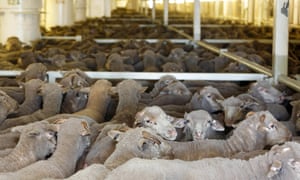
Animals may spend weeks on board vessels en route to another country for slaughter. Photograph: Trevor Collens/AAP
The live export trade carrying millions of sheep and cattle across the seas each year is plagued by “old” and “inferior” ships that are a threat to animal welfare, claims a leading shipping company.
Livestock carriers are a key part of the multibillion dollar live export industry, dominated by Australia, South America and Europe. In 2017, almost 2 billion animals were exported in a trade worth $21bn (£15bn), with a significant proportion travelling by sea.
But most of the ships are old car carriers or other former cargo ships, rather than purpose-built vessels that can meet higher standards of animal welfare, said Wellard, one of the world’s largest livestock exporters, based in Australia.
Q&A
Why are we reporting on live exports?
Show
A spokesperson for the company, which shipped nearly 400,000 cattle in 2019, said: “The old converted vessels bring the standard of the whole industry down. If you’re using a ship that was originally built for another purpose, you’re compromising on your animal services when you convert it to a livestock vessel.
“The biggest threat to the global live export industry is old ships. They have inferior standards and livestock services and they are more prone to accidents and breakdowns. Those ships give a bad name to a legitimate industry.”
More than half of the 129 livestock carriers listed as active with a working automated tracking system on at least one marine website were built before the 1980s. “The livestock carrier fleet is one of the oldest sectors in the globally trading fleet with an average vessel age of 38 years old,” said Adam Kent, managing director of market analysts Maritime Strategies International (MSI). In comparison, the average age of a container ship is 13.
“Only the Laker fleet, trading on the freshwater Great Lakes, has an older average age,” he said.
“Given that around 80% of all livestock carriers are converted vessels, which were originally designed for another cargo, the relative investment in the sector is significantly below other ship types,” he added. Most ships were converted from general cargo or “roll on roll off” (RoRo) vessels, meaning ships that have been designed to carry wheeled cargo.
The Dutch company Vroon, which owns the subsidiary Livestock Express, is known as the “world’s biggest independent seaborne livestock carrier”, with a fleet of 13 purpose-built vessels. Around half its ships have a gross tonnage of 10,241 and can carry more than 4,600 heads of cattle.
Livestock Express managing director Paul Pistorius warned that converting old vessels into livestock carriers means making “compromises”.
“When converting a vessel, you must live with the original hull and machinery and furthermore you always need to make compromises during the conversion phase. History has shown that these compromises may lead to poor animal welfare outcomes.
“There are indeed a lot of old conversions and also recent conversions of old hulls. Unfortunately, many of these vessels don’t always meet the standards to which we believe livestock carriers should adhere,” he said.
Share your story
Share your experiences
If you or someone you know has expertise in this field, we would like to hear from you. You can get in touch by filling in the form below, anonymously if you wish. Only the Guardian can see your contributions and one of our journalists may contact you to discuss further.
Tell us
Animal health and welfare concerns
The practice of transporting thousands of live animals (some ships carry more than 10,000 animals) across the sea for weeks at a time means attention must be paid to the welfare of animals. Older ships were not built for this purpose, which raises concerns.
The most common health risks for animals on ships are fatigue, heat stress, overcrowding and related injuries, and the spread of disease. Lynn Simpson, a former veterinarian on livestock export ships, has been a vocal critic of the long-distance ship trade. She’s witnessed cattle forced to stand on hard floors for weeks on end, sick, injured animals left to die, and sheep literally cooking from the inside with their “fat melted and like a translucent jelly”.
“Some animals are held on decks for as long as 40 days, living on hard decking of concrete and metal. They [the animals] are not built to cope with these environments,” said Simpson. She points out that the long time spent at sea makes it even more critical for ships to be well-adapted for animals to protect their health and welfare. “A truck is transporting from A to B, but a ship is really a floating feedlot. They are at sea for up to six weeks so it’s not just a small period of time. They [the animals] have to eat, sleep, drink and recover.”
“The live animal trade is not one where great fortunes are made. The unsuitability of the ships has created a lot of issues for the welfare of the animals. There has been a lot of concern about converted ships, which have a checkered history of inspection failings,” said Andrew Linington, former editor for the maritime trade union, Nautilus International.
In November the Queen Hind, a 40-year-old vessel owned by Romanian company MGM Marine, was carrying more than 14,000 sheep when it capsized en route from Romania. The 22 crew members were rescued but just 180 sheep survived.
Campaign groups said at the time that a major problem was that often vessels were not built for the journey. “They are old vessels that are converted to transport animals,” Francesca Porta from Eurogroup for Animals in Brussels told the New York Times.
That incident prompted Nautilus International to call for an investigation into converted livestock carriers, saying the industry must “learn safety lessons for keeping seafarers safe and improving animal welfare”.
“There’s a risk that in these long-distance transport there are major problems with animals overheating in highly humid, dirty conditions … where a vessel has been converted it will be less able to control bad conditions,” said a spokesperson from Compassion in World Farming.
Mortality figures in the export of livestock are largely unavailable as the majority of countries, aside from Australia and New Zealand, do not require them to be publicly reported. The International Maritime Organization only requires an investigation of casualties at sea if they led to the death or serious injury of a person, or serious damage to the ship or the marine environment. In Australia the government reports on any shipments where the mortality rate exceeds 1%. In August 2017, around 2,400 sheep died from heat stress on a ship sent from Australia to the Middle East.
For Europe, the only available mortality figures are from media reports on major incidents. In 2015, Jordan rejected a shipment of 13,000 sheep from Romania because 40% of the animals were dead. A veterinary inspection at port found that it was not disease that caused the high mortality rate, but a failure to provide adequate food or water on the eight-day trip.
Simpson said the mortality rates were likely to be higher in other regions not reporting figures. “The ships I was on 10 years ago carried 10,000 cattle for 20-day voyages and if you lost 15 animals I would say that was average. When they were travelling out of South America, the crew told me the same ships would have 14,000 cattle and would lose 300–500 animals in a voyage.
“They don’t care about animal welfare. It is just about numbers, which would be fine if we were talking about cans of soup.”
A large number of livestock-carrying ships are also sailing under flags of convenience with poor reputations for ship safety. Out of the 129 ships listed as active, 52 are flying flags from countries currently blacklisted by the port inspection body the Paris MOU, which conducts more than 17,000 inspections on ships every year in ports around the world.
In addition, 10 of the companies that own or manage converted vessels built before 1975 are listed as “low or very low-performing” by the European Maritime Shipping Agency.
Faced with growing cultural criticism of large-scale animal agriculture, corporations, manufacturers, and consumers alike are turning towards so-called “humane” methods of animal farming and seeking out alternative labels on their animal products. These falsehoods and myths–the Humane Hoax–range from large farms with thousands of animals to your neighbor’s backyard, yet exploitation and suffering are omnipresent in every method of husbandry. The Humane Hoax Online Summit brings together experts on a wide variety of topics in order to expose the Humane Hoax in all its forms.
For our second conference, we will dig deeper into The Humane Hoax with speakers from a range of different perspectives. We will have activist attorney Kelsey Eberly from the Animal Legal Defense Fund, who has dedicated her practice to pushing for farmed animal justice through false advertising lawsuits. We will have Deborah Blum of Goatlandia, a rescuer who saves male goats destined to die in the goat dairy industry. Regenerative grazing is now the darling of the locavore meat movement, touted as the answer to all the problems of animal agriculture. Dr. Sailesh Rao, Executive Director of Climate Healers, will explore this topic with a critical eye and challenge this supposed environmental cure-all. And much more.
Please join us on January 18, 2020 for this inspiring event as we advance our much needed conversation about The Humane Hoax!

















 Exposing the Big Game