Mourning orca mother carries dead calf for sixth day

https://komonews.com/news/local/mourning-orca-mother-carries-dead-calf-for-fifth-day

The mother of an orca calf that was born and died Tuesday carries her baby, unwilling to let it go. It is another in a series of unsuccessful pregnancies for the southern-resident orcas. (Ken Balcomb, Center for Whale Research)

AA

A mourning orca whale continued to carry her dead calf for a sixth straight day on Saturday.

J35, a member of the critically endangered southern resident family of orcas, gave birth to her calf Tuesday only to watch it die within half an hour.

Since then, she’s been carrying the calf’s body around on her nose, diving to pick it up again when it falls off. She was last sighted in the early evening on Saturday in Canadian waters.

Scientists have documented grieving behavior in other animals with close social bonds in small, tightly knit groups, observed carrying newborns that did not survive.

Seven species in seven geographic regions covering three oceans have been documented carrying the body of their deceased young, including Risso’s dolphin in the Indian Ocean; the Indo-Pacific bottle-nosed dolphin and the spinner dolphin in the Red Sea; and pilot whales in the North Atlantic.

But more than 24 hours of grieving is a rare occurance, says Deborah Giles, research scientist for University of Washington Center for Conservation Biology and research director for the nonprofit Wild Orca.

“It is horrible. This is an animal that is a sentient being,” Giles told the Associated Press. “It understands the social bonds that it has with the rest of its family members. She carried the calf in her womb from 17 to 18 months, she is bonded to it and she doesn’t want to let it go. It is that simple. She is grieving.”

J35’s news came just as researchers were also tracking a 4-year-old in the southern residents that is emaciated, and whose survival may be in doubt due to loss of body fat.

Researchers have been growing more concerned about the fate of the southern residents, who face three major challenges to their survival as a species: toxins, vessel traffic and lack of adequate food (their primary food source being chinook salmon).

The most recent census of the orcas has found that they number just 75 in the area, across three southern resident pods. For the last three years there have been no new calves born to the shrinking killer whales in the Pacific Northwest.

For researchers who work closely with the southern residents, their continued decline is painfully apparent.

 

Why Not Become a Sea Lion Advocate?

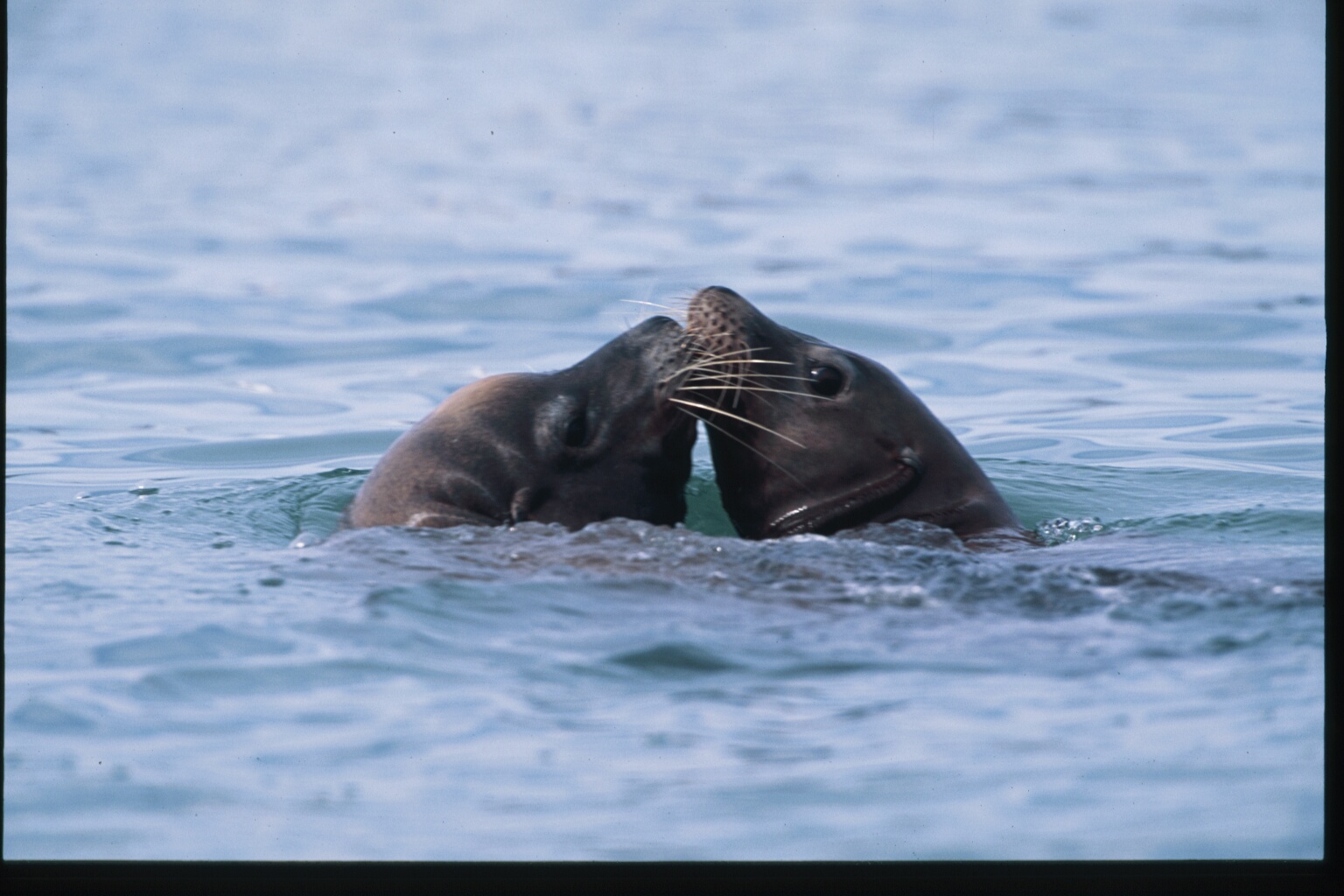
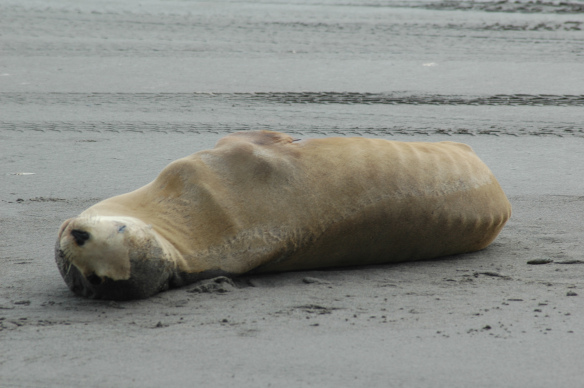
According to an MSN news article entitled, Golden Gate Bridge jumper says sea lion saved him, “A man who jumped off San Francisco’s Golden Gate Bridge to try to take his own life and was kept afloat by a sea lion said Wednesday suicide prevention was now his life’s work.”

Witnesses who saw the incident said a sea lion kept him afloat until the Coast Guard sent a rescue boat. Kevin Hines told MSN news, “I really thought it was a shark and I thought it was going to take off a leg and I was panicking. And then it just didn’t, it just kept circling beneath me. I remember floating atop the water and this thing just bumping me, bumping me up.”

One of the witnesses told Hines, “I was less than two feet away from you when you jumped. It haunted me until this day; it was no shark, it was a sea lion and people above looking down believed it to be keeping you afloat until the Coast Guard brought a ride behind you.”

Hines stated, “[Witnesses] saw me laying atop the water and being bumped.” He added, “This thing beneath me didn’t stop or didn’t go away until I heard the boat behind me.”

After all our species has done and continues to do to sea lions—hunted them by the thousands for their fur and oil while feeding their flesh to dogs or captive minks; vilifying and putting a bounty on their heads forDSC_0129 competing with commercial fishermen; and forcing them to perform as trained “seals” in the circus, etc.—it’s incredible that one of these “lesser” mammals would go out of his or her way to save a human.

If not for the sea lion keeping him afloat, Hines would very likely have gone under and drowned before the rescue boat arrived.  While it’s noble that he is now devoting his life to suicide prevention, if he really wants to be altruistic, why not advocate for the one who went out of their way to prevent his suicide. It seems to me that if anyone has a good reason to become a marine mammal advocate, he does—he owes them his life.

While the human population grows by 350,000 per day, Steller sea lions, dsc_0224whose total pre-persecution numbers were never more than 300,000, have been driven below 100,000 and are still in decline. In Alaska, the Western segment of Stellars is down to a mere 18% of their historic numbers. Meanwhile, starved California sea lion pups are washing up dead on the beaches.

Sea lions are still being scapegoated, branded and shot, all for eating fish—the only food they have.

Text and Wildlife Photography ©Jim Robertson

Text and Wildlife Photography ©Jim Robertson

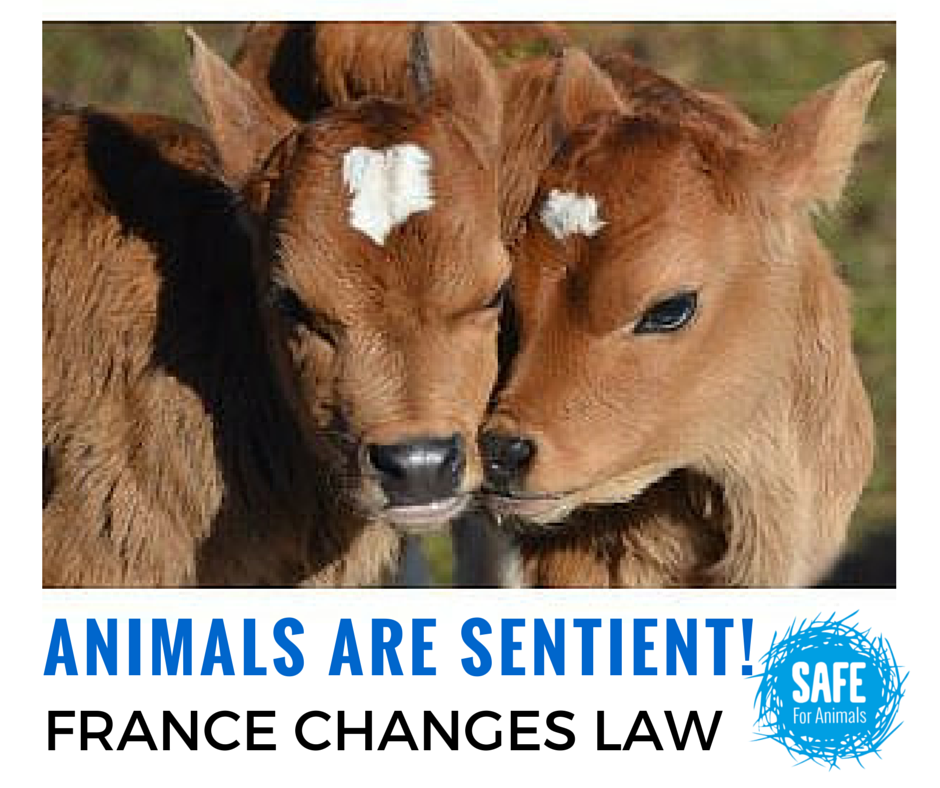
Animals are Sentient! Time to End Foie Gras!

France has declared that animals are sentient and ‘not furniture!’

The French Parliament has overturned 200 years of law to elevate animals to the status of sentient beings. Although it was already obvious to most of us, this recognition in law is an important milestone for animals. As the law begins to acknowledge the sentience of animals, recognition will grow that animals have needs and desires of their own. And one day they will gain the rights that they have so long been denied.

Thanks to the many submissions put in by you and others, New Zealand is set to acknowledge sentience in its own animal welfare legislation later this year. Find out more about animals and NZ law: http://safe.org.nz/issues/animals-and-the-law#description

SHARE if you think animals are so much more than a piece of furniture!

1920039_10155164268620434_4071049611738543474_n

Does this mean the French, who invented and produce foie gras, will end the bizarre practice of shoving a pipe down the throats of geese and force feeding them until their livers swell or their stomachs burst, whichever comes first?

speciesism
(ˈspiːʃiːzˌɪzəm)
n
1. (Environmental Science) a belief of humans that all other species of animals are inferior and may therefore be used for human benefit without regard to the suffering inflicted

The New Christmas Story & Commandents

DSC_0002
by Marc Bedner & Rosemary Lowe
In the beginning the Great Felidæ said, “Let the Earth bring forth every kind of living creature. And we will make cats in our image, after our likeness. They shall rule.”
And it was foretold: the wolf & grizzly shall once again roam free, and the leopard shall lie down with the kid; and a little kitten shall lead them.
And it came to pass, after much begetting, that many cats had gone astray, and there was no room in the shelter. Then an angel of the Felidæ came to Mary and Joseph and said, “we need foster parents.” And she delivered to them a kitten wrapped in swaddling clothes.
And lo, three wise men came to bring gifts to the baby kitten and to worship her. The kitten had many titles: wonderful, counselor, princess of peace, Queen of Judæa. The wise men wondered what to call her.
The one who brought gold said, we should call her name Manuela, the Goddess is with us. The one who brought incense said we should call her Gloria, her Excellency. The third asked the kitten what she thought.
The kitten responded “Mrrrrh.” And there was a twinkling in her eye. And she said: Humans are corruptible.
For verily, I say unto thee, I am thy cat, a jealous cat, there shall be no others before me; humans will be humbled, and few.
Remaining Humans will now obey the New Commandments:
  1. Humans shall no longer multiply and subdue the Earth.
  2. Thou shalt not wear, eat, experiment upon, hunt, trap, harass, capture, poison, torture, or otherwise, in any way, mistreat or disrespect non-human creation.
3. Non-humans: those who crawl, burrow, fly, walk, swim, run, climb–from the great mammals to the smallest insects and bacteria–will be free from human bondage, never-ending human development and destruction, at last.
  1. All the waters of the Earth shall once again flow free. Dams, and other human diversions, machines, will be destroyed.
  2. Non-humans will take precedence over the land. Humans will be relegated to certain, small areas of the Earth, which will not disturb non-humans.
  3. Wild Nature will be held Sacred and Secure, as the Apostle, Walkin’ Jim Stoltz proclaimed in his songs to the Earth.
  4. Humans shall not make War anymore. Those lands scarred and desecrated by Endless Human War shall be restored.
  5. All weapons shall no longer exist: Guns, Arrows, Snares, Bombs, Cages, Spears, & any other weapon used to injure, kill, or capture, will be no more.
  6. Humanist Ideology & Religion shall now be replaced by Wisdom, Awe, Respect, Adoration, and Humbleness to The Great Filedae, who will Reign Over All.
  7. The Earth will breath a sigh of relief from the terror, greed, avarice, ignorance, prejudice, and mindlessness of The Rogue Species, once called Humans.
These New Commandments Shall Now Declare a New Earth, birthed from the ashes of the sick, dying Earth humans have made. We now sing praises to the Great Felidae. “unto her, all the Power, the Glory, and Majesty—-FOREVER, AMEN.
 

Follow Your Inner Convictions

“[After almost being pressured by other boys to sling rocks at birds.] From that day onward I took courage to emancipate myself from the fear of men, and whenever my inner convictions were at stake I let other people’s opinions weigh less with me than they had done previously. I tried also to unlearn my former dread of being laughed at by my school-fellows. This early influence upon me of the commandment not to kill or to torture other creatures is the great experience of my youth. By the side of that all others are insignificant.” ~ Dr. Albert Schweitzer

Photo Copyright Jim Robertson

Photo Copyright Jim Robertson

A Sentimental Old Lot

Photos Copyright Jim Robertson

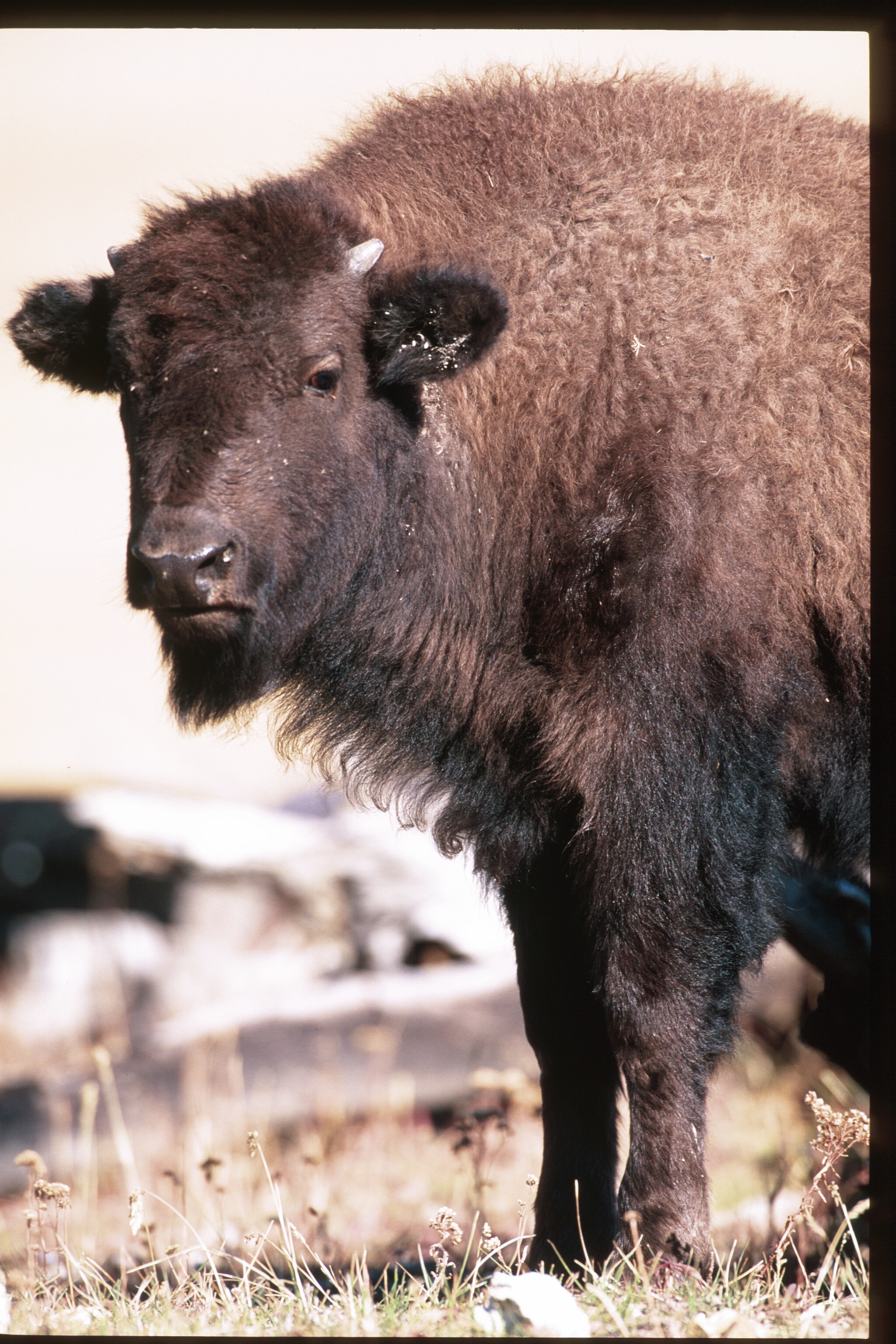
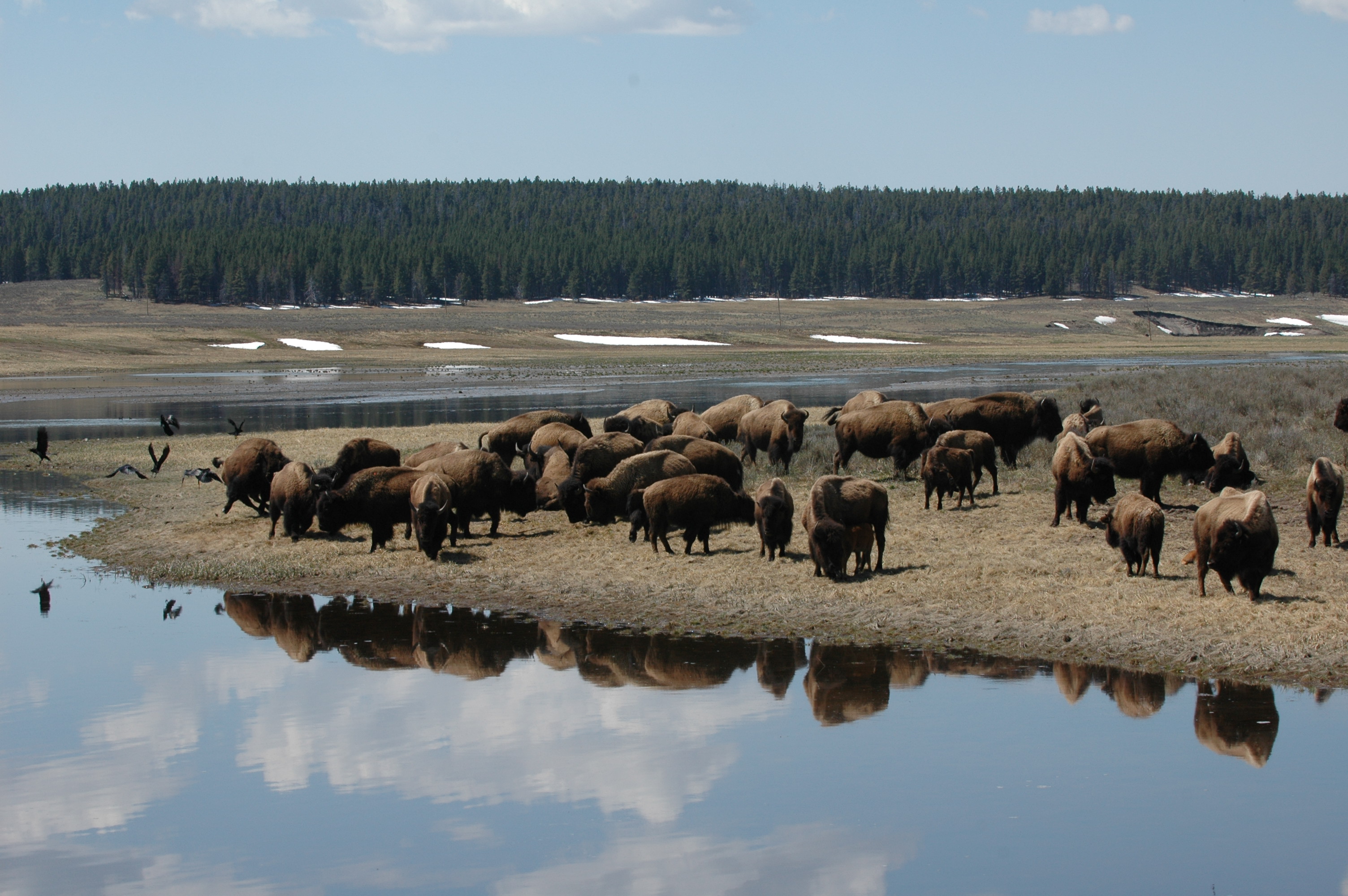
Bison are a kind, sympathetic, sentimental old lot. Perhaps it’s because, for most of the year, the herd is run by the fairer sex. Like elephants, bison have a matriarchal society; the adult bulls live off on their own in small groups for most of the year, rejoining the main herd during the summer breeding season. Gregarious, caring and benign, bison of both sexes keep a watchful eye on their fellow herd members and often come to the rescue when animals outside their species are in distress. 

Thanks to observations by naturalists, biologists and cognitive ethologists, people are forced to cling to a shorter and shorter list of characteristics that make them “uniquely human.” Altruism and the practice of mourning over the remains of the dead are just two of the human “hallmarks” actually shared by species like elephants and bison. 

I have witnessed bison put themselves in danger to protect not only other bison, but also animals they share their habitat with like elk and pronghorn. I’ve seen them stop to grieve when they happen upon the bones of their dearly departed—and even get pretty gloomy upon finding the dead of another species. 

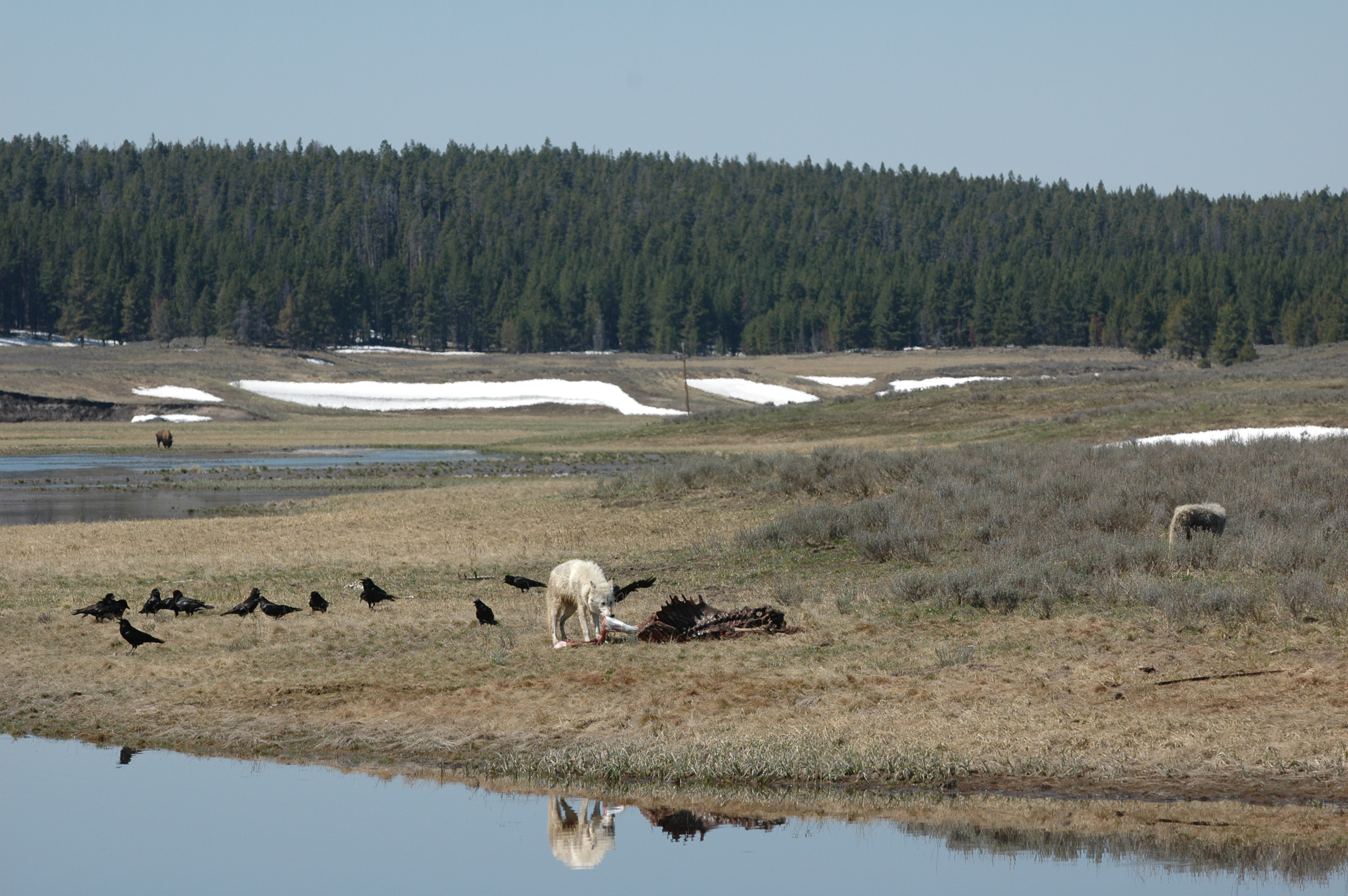
In the photos below, a bison herd came across the carcass of an elk cow killed by wolves earlier that day and spent the better part of the afternoon in a funk, solemnly paying their respects to the fallen and guarding her from scavengers.