How Fish Communicate

http://www.nytimes.com/2015/12/15/science/how-fish-communicate-even-using-noise.html?_r=0

Credit Victoria Roberts

It is well known that fish communicate by gesture and motion, as in the highly regimented synchronized swimming of schools of fish.

Some species use electrical pulses as signals, and some use bioluminescence, like that of the firefly.

Some kinds of fish also release chemicals that can be sensed by smell or taste. In 2011, a scientist in New Zealand suggested that what might be called fish vocalization has a role, at least in some ocean fish.

In the widely publicized work, done for his doctoral thesis at the University of Auckland, Shahriman Ghazali recorded reef fish in the wild and in captivity, and found two dominant vocalizations, the croak and the purr, in choruses that lasted up to three hours, as well as a previously undescribed popping sound.

The sounds of one species recorded in captivity — the bigeye, or Pempheris adspersa — carried 100 feet or more, and the researcher suggested it could be used to keep a group of fish together during nocturnal foraging. Another species, the bluefin gurnard, or Chelidonichthys kumu, was also very noisy, he found.

“Vocalization” is a bit of a misnomer, as the sounds these fish make are produced by contracting and vibrating the swim bladder, not by using the mouth. question@nytimes.com

Wolves and Dogs Speak With Their Eyes

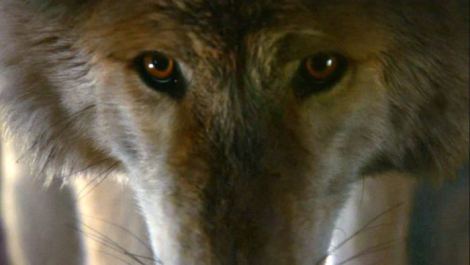
summer-dire-wolf-GoT-fanpop 

Wolves and dogs can communicate using their eyes alone, suggests a new study in the journal PLoS ONE.

The color of the face around the eye, the eye’s shape and the color and shape of both the iris and the pupil are all part of the elaborate eye-based communication system, according to the research, which could apply to humans as well.

Sayoko Ueda of the Tokyo Institute of Technology and Kyoto University led the study, which compared these characteristics of the face and eyes among 25 different types of canines.

Full Story: http://news.discovery.com/animals/pets/wolves-and-dogs-speak-with-their-eyes-140624.htm

Dolphin Speak: Did a Dolphin Really Say “Seaweed”?

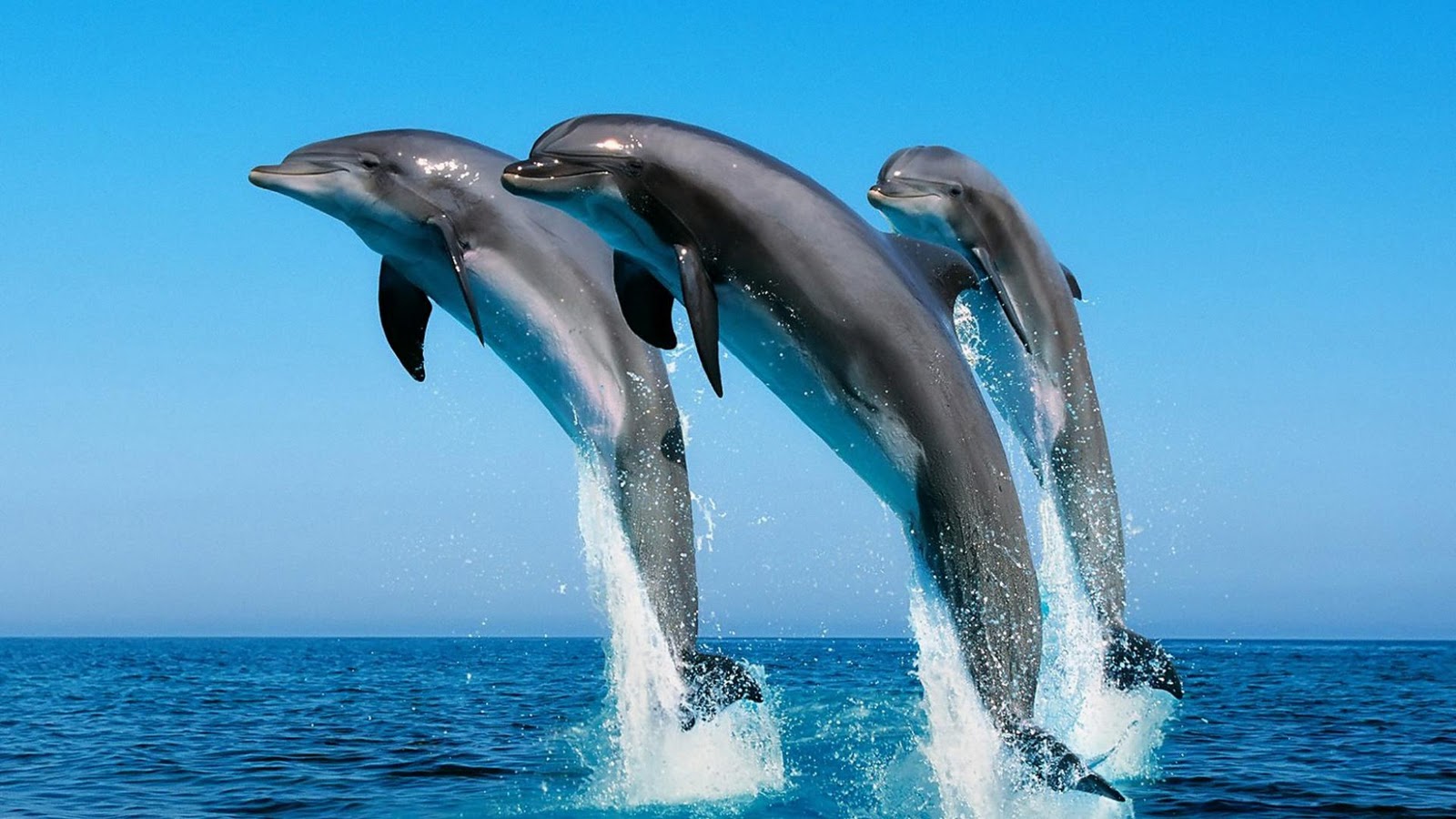
dolphin_228398

http://www.psychologytoday.com/blog/animal-emotions/201404/dolphin-speak-did-dolphin-really-say-seaweed

”I don’t see a fundamental white line that distinguishes us from other animals.” Dr. Terrence Deacon
Dolphin tool use influences a population’s genetic structure and they may talk.
 
Dolphins are unquestionably highly charismatic animals. They have unique and sophisticated communication skills and also are known to use tools, including sponges to protect their sensitive beaks, when foraging for food.

During the past two weeks I came across two extremely interesting articles about these crafty cetaceans. The first, titled “Dolphin whistle instantly translated by computer” by Hal Hodson, considers the possibility that dolphins are able to whistle the same words we use to denote an object. The print version of the latter essay is called “Decoding dolphin.” The second, called “Cultural transmission of tool use combined with habitat specializations leads to fine-scale genetic structure in bottlenose dolphins” by Anna Kopps of the University of New South Wales and her colleagues, focuses on their use of protective sponges during foraging and its effect on the genetic structure of dolphin populations.

Say what? Did you really whistle seaweed?

Denise Herzing is well known for her and her team’s long-term field research on Atlantic spotted dolphins. Among many aspects of the amazing lives of dolphins, she has long been interested in dolphin communication and whether or not they and other animals use language to communicate with one another or can use language to communicate with us.

While it’s too early to know for sure, there is compelling evidence that some animals are language users (see, for example, a brief review of the research by Dr. Con Slobochikoff on prairie dogs). I found Hal Hodson’s essay called “Decoding dolphin” to be an extremely interesting, stimulating, and easy read. To wit, and I encourage you to take a few minutes to read it, Mr. Hodson begins: “IT was late August 2013 and Denise Herzing was swimming in the Caribbean. The dolphin pod she had been tracking for the past 25 years was playing around her boat. Suddenly, she heard one of them say, ‘Sargassum'”. And, what did Dr. Herzing exclaim? “‘I was like whoa! We have a match. I was stunned.'” Dr. Herzing “was wearing a prototype dolphin translator called Cetacean Hearing and Telemetry (CHAT) and it had just translated a live dolphin whistle for the first time.” So, “When the computer picked up the sargassum whistle, Herzing heard her own recorded voice saying the word into her ear.” I, too, would have been stunned and I can’t wait for more research in this fascinating area of study.

Perhaps we are not the only animals who use language. Dr. Terrence Deacon, a neuroscientist at the University of California, Berkeley, who also is an expert in animal communication, notes, “I don’t see a fundamental white line that distinguishes us from other animals.” Only time and research will tell if we’re alone in the language arena. For now it’s a good idea to keep the door wide open.

Cultural hitchhiking: Was there a “sponging Eve”?

An informative summary of the research on the genetics of tool use in dolphins living in Shark Bay in Western Australia can be found in an article called “Cultural hitchhiking: How social behavior can affect genetic makeup in dolphins.” It turns out that the culturally transmitted use of sponges—called vertical social transmission—can actually “shape the genetic makeup” of wild dolphins. Dolphins, who live deep in the bay, show mitochondrial DNA (mtDNA) types called Haplotype E or Haplotype F that are inherited solely from the mother, whereas non-sponging dolphins who live in shallower water mainly show Haplotype H. All of the 22 sponging dolphins who were observed turned out to be members of one matriline and were Haplotype E.

This novel and significant discovery demonstrates a strong correlation between haplotype and habitat. According to Dr. Kopps, “Our research shows that social learning should be considered as a possible factor that shapes the genetic structure of a wild animal population.” She also notes, “For humans we have known for a long time that culture is an important factor in shaping our genetics. Now we have shown for the first time that a socially transmitted behaviour like tool use can also lead to different genetic characteristics within a single animal population, depending on which habitat they live in.” This is one of the first demonstrations of what is called “cultural hitchhiking” in nonhuman animals.

What an exciting time it is to study the behavior of nonhuman animals. Stay tuned for more on their fascinating lives.

Marc Bekoff’s latest books are Jasper’s story: Saving moon bears (with Jill Robinson; see also), Ignoring nature no more: The case for compassionate conservation (see also)and Why dogs hump and bees get depressed (see also). Rewilding our hearts: Building pathways of compassion and coexistence will be published fall 2014.

Computer Identifies Individual Wolves’ Howls

By Marc Lallanilla, Assistant Editor   |   July 23, 2013

The howl of a wolf in the wilderness may make your spine tingle — it has a similar effect on wolf conservationists, who have struggled for years to accurately analyze the sounds that wolves make. Researchers at Nottingham Trent University (NTU) in England have now developed a computer program that can identify the signature howl of an individual wolf with pinpoint accuracy. Just like a person’s voice, the howl of a wolf has a specific pitch and volume. But identifying each wolf’s howl has been difficult, especially in the wild, where wind and water can muffle and distort the sound. It gets even more challenging when a pack of wolves starts howling in unison. – See more at:
[Gee, maybe animals aren’t so dumb after all…On a related note]:

Scientists have found further evidence that dolphins call each other by “name”.

Research has revealed that the marine mammals use a unique whistle to identify each other.

A team from the University of St Andrews in Scotland found that when the animals hear their own call played back to them, they respond.

The study is published in the Proceedings of the National Academy of Sciences.

Dr Vincent Janik, from the university’s Sea Mammal Research Unit, said: “(Dolphins) live in this three-dimensional environment, offshore without any kind of landmarks and they need to stay together as a group.

“These animals live in an environment where they need a very efficient system to stay in touch.”

Signature whistles

It had been-long suspected that dolphins use distinctive whistles in much the same way that humans use names.

Previous research found that these calls were used frequently, and dolphins in the same groups were able to learn and copy the unusual sounds.

But this is the first time that the animals response to being addressed by their “name” has been studied.

more: http://www.bbc.co.uk/news/science-environment-23410137

copyrighted Hayden wolf walking

Scientists Should Wake Up and Smell the Fish Farts

When studying something which can be tested in a lab, scientists don’t hesitate to employ the tried and true formula: if it looks like shit, and smells like it, chances are it’s actually shit. When it comes to literal excrement, some scientists are real whizzes. Even without a DNA test, they can tell you with near-certainty through which species of animal’s anus a particular scat has passed. But when it comes to animal sentience, some scientists still don’t know shit (pardon my French—throughout).

Thanks to his creator, author Arthur Conan Doyle, the criminologist Sherlock Holmes famously pointed out that, “If you’ve eliminated all other possibilities, whatever remains must be the truth.” Well, scientists have spent centuries toying with every other possibility to avoid the obvious fact that non-human animals are conscious, thinking, feeling beings.

Incredibly, there are some who’re still grappling with the question: “Are animals aware?” What the fuck—of course they’re aware! Most animals are far more aware of their surroundings than the average human, for that matter.

The science of animal behavior has come a long ways from the dark days of Rene Descartes, thanks to the likes of Donald Griffin, Marc Bekoff and other pioneers in the study of cognitive ethology. Just last summer, an international group of prominent neuroscientists meeting at the University of Cambridge issued “The Cambridge Declaration on Consciousness in Non-Human Animals,” The document stated that “humans are not unique in possessing the neurological substrates that generate consciousness,” and concludes that numerous documented animal behaviors must be considered “consistent with experienced feeling states.”

Having witnessed remarkably intelligent actions on the part of individuals throughout the animal kingdom—from the family dog leaping to his feet at the whispered mention of a “walk” or “car ride,” to a herd of wild bison mourning over the remains of their dead—my response to the Cambridge Declaration on Consciousness in Non-Human Animals is, “Well duh, tell us something we don’t know.”

Speciously, the Cambridge Declaration drew an arbitrary line and left the world of fishes out in the cold when it comes to animal consciousness. Far too many of today’s “behaviorists” still ascribe to the long outdated notion of fish the way science had long thought of all non-human animals—as automatons: mindless machines going through life without any more than random responses to stimuli.

Now I’m in no way anti-science—far from it, in fact—I just think that sometimes a scientist will spend an exorbitant amount of time chasing his or her tail when the answer they’re looking for is as plain as the nose on their face.

Take the question of animal communication, for example. We all know whales and dolphins are able (when they can find a quiet stretch of ocean—devoid of the deafening drone of ships or navy sonar) to communicate with one another through songs or clicks, respectively. But lately observers have learned that even fish have devised clever ways to keep in touch. According to an article entitled “Fish Farts: Herring Use Flatulence To Communicate” in the Huffington Post, apparently some types of herring pass gas to “speak” to each other without alerting other fish.

Researchers Bob Batty, Ben Wilson and Larry Dill made that Nobel Prize-worthy discovery after studying Pacific and Atlantic herring in Canada and Scotland, noting (importantly) that the gas is not caused by the digestive process. Instead, the fish swallow air from the surface and emit it through a small opening near their bung holes. Thus, profound as they may be, the bubbles aren’t really farts in the stinky, human sense.

So, it seems to me a bit arrogant to write an entire class of animal life out of a “Declaration on Consciousness in Non-Human Animals.” Granted, herring may not be flatulent enough to recite the Preamble to the Constitution, but then, as Georg Christoph Lichtenberg wrote, “Only a man can draw a self-portrait, but only a man wants to.”

Time for skeptical scientists to wake up and smell the sentience when it comes to fish.

images