Puppy dies in hot backyard

July 9, 2015, 2:42 p.m.

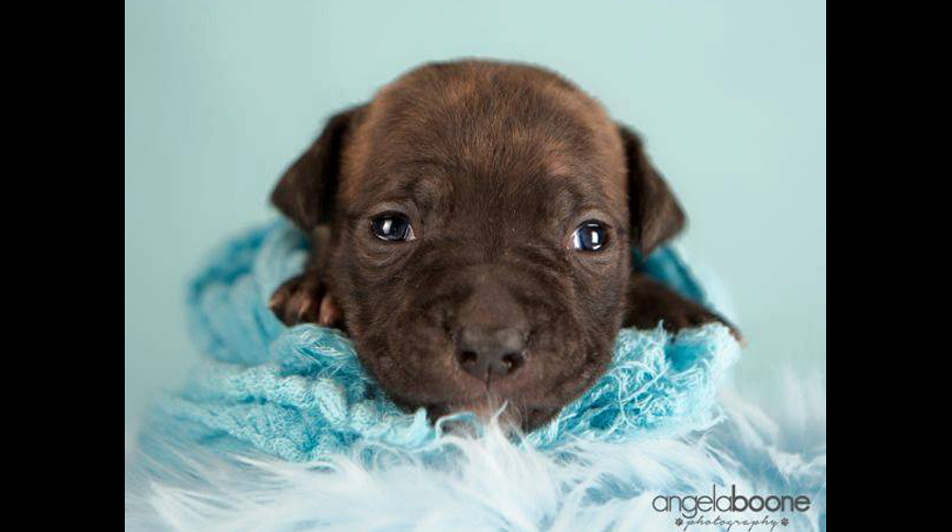
WENATCHEE — A puppy died earlier this month after it was left tied up outside in 100-degree-plus temperatures, authorities say.

“This poor pup. There was no shade, no water. It was just awful,” said Sgt. Jody White with Wenatchee Valley Animal Control.

More: Featured Image -- 9087http://www.wenatcheeworld.com/news/2015/jul/09/puppy-dies-in-hot-backyard/

Wildlife Services kills 5 wolves

Wolf

Wolf

A gray wolf patrols its territory in the mountains of Idaho.

 http://www.mtexpress.com/news/environment/wildlife-services-kills-wolves/article_2e2ac646-2507-11e5-b966-c32dd2a28611.html

Wednesday, July 8, 2015 4:00 am

Idaho Wildlife Services has killed five wolves due to two incidents of sheep depredation that occurred on BLM land at the head of Croy Canyon and two incidents of cattle depredation that occurred on private land about 10 miles northeast of Fairfield.

Wildlife Services director Todd Grimm said the Idaho Department of Fish and Game confirmed that wolves had killed a ewe and a lamb on May 26 and a second ewe on June 3. He said the department confirmed a wolf kill of a calf on June 24 and a probable wolf kill of a cow on July 3.

Grimm said three wolves were shot on May 28 and two were shot on June 4.

He said the sheep were attended by herders and guard dogs, but said he did not know whether any scare devices were employed. He said the agency does not release the names of livestock producers whose animals are involved in depredation incidents.

Local wolf advocate Lynne Stone, director of the Boulder White Clouds Council, said the wolves were part of the Red Warrior pack, which had been viewed by people this winter on the hillside opposite the Warm Springs base area. She said that at that time, the pack consisted of nine wolves, though the alpha female died before the depredation incidents occurred.

“These wolves were in a great place with lots of wild country,” she said. “Then in came the sheep and we lose the wolves.”

Stone contended that Wildlife Services was “jumping the gun” by using lethal means before giving other methods a chance to scare off the wolves.

“When one ewe and one lamb get killed, they go in with their airplanes and shoot the whole pack,” she said. “We’re not going to have wolves in Blaine County if this is what the sheep industry and Wildlife Services are going to continue to do.”

Grimm said that elsewhere in the state this season, Wildlife Services killed three wolves due to depredation incidents in the Pahsimeroi Valley and three near Cascade. In February, the federal agency killed 19 wolves in the Lolo zone in northern Idaho at the request of the Department of Fish and Game to boost a declining elk population there.

B.C. conservation officer suspended for refusing to put down bear cubs

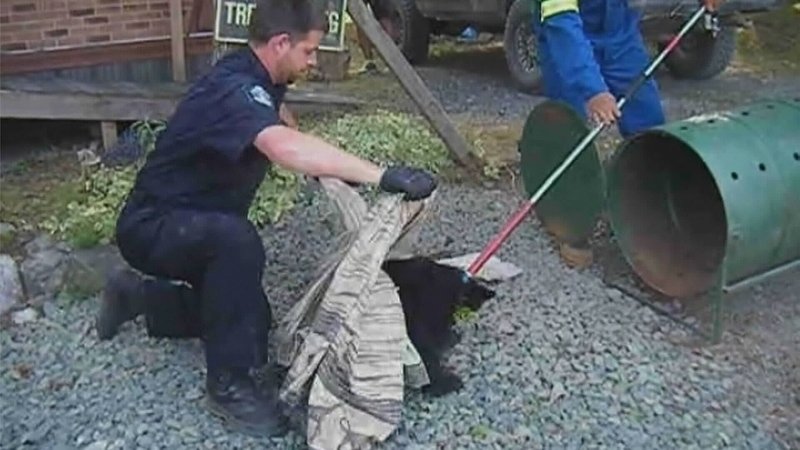
Bryce Casavant, a Vancouver Island conservation officer has been suspended without pay, pending a performance investigation for refusing to put down a pair of bear cubs near Port Hardy last weekend.

http://www.theglobeandmail.com/news/british-columbia/bc-conservation-officer-suspended-after-failing-to-put-down-bear-cubs/article25349738/

A B.C. Conservation officer has been suspended without pay after he reportedly refused an order to put down two bear cubs last weekend.

The cubs were orphaned after their mother was killed for breaking into a meat freezer inside a mobile home in Port Hardy on Vancouver Island.

After tranquilizing the cubs, Bryce Casavant brought them to a vet to be checked out and then to the North Island Wildlife Recovery Association operated by Robin Campbell.

Campbell says the bears, believed to be around eight weeks old, were at the home only because they were looking for their mother.

An online petition has been launched by the association calling on B.C. Environment Minister Mary Polak to reinstate Casavant.

The petition had collected well over 17,000 names by early Wednesday.

North Island Wildlife Awareness
55,322
Supporters

Conservation Officer Bryce Casavant has been suspended without pay pending a performance investigation after he refused to put down two bear cubs this weekend.
These baby bears, a brother and sister, were orphaned after their mother had to be destroyed after she had, at least twice, broken into a freezer of salmon and deer meat inside a mobile home on Hardy Bay Road, “through no fault of the owner.”
“Although it is unlikely the mother was in town due to the fire, it is hard to know,” said Casavant.
On July 5, Casavant and members of the Port Hardy Fire Department literally pulled out all stops to rescue the babies who had come back to the property and were up a tree calling for their mother.
“They (firefighters) had their high-angle rescue specialist scale the tree and rappel down on top of the bears to lower them to me. I then tranquilized them by hand,” said Casavant.
The babies were estimated to be about eight weeks and weigh 20 to 25 pounds, are healthy and still nursing.

They did nothing wrong and the order to destroy them came came in even before we had the little things out of the tree. I’m not sure how a decision can be made so quickly based on so little information from so far away. -Justin Reusch Port Hardy Fire Department.

Please sign this petition to show your support to have Bryce Casavant reinstated as conservation officer to the North Island.

Desperate Cow Does The Unthinkable To Escape Slaughter

This steer was ready to die for his freedom. They still wouldn’t give it to him.

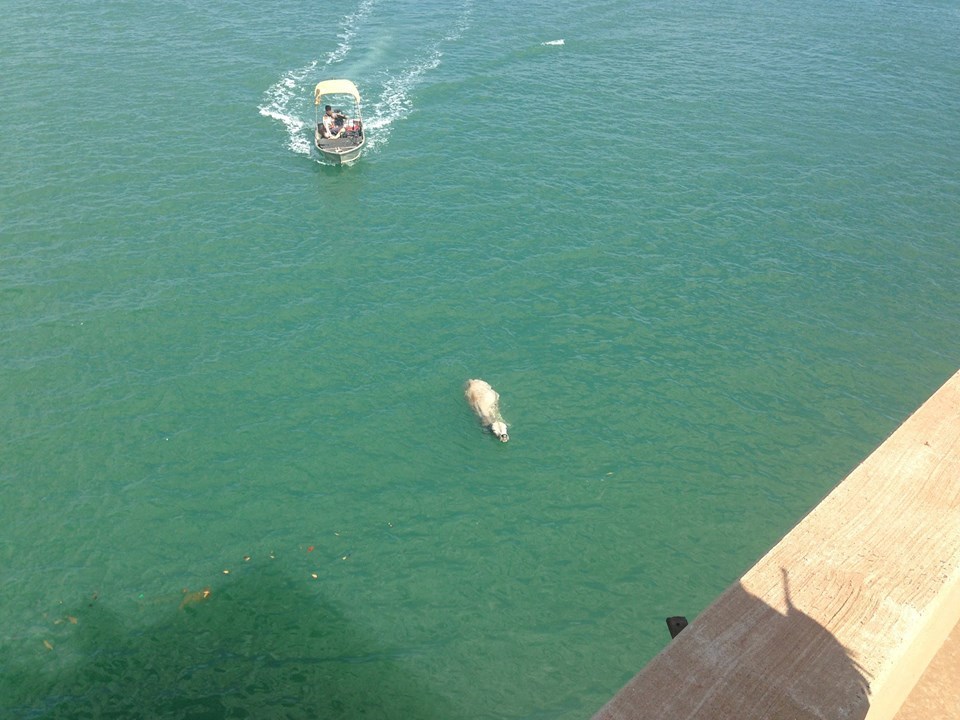
The heartbreaking episode happened earlier this week when the frightened animal escaped from his handlers at an Australian dock. He was about to be loaded onto an export ship bound for Vietnam, where he would be slaughtered.

He had already endured a grueling journey, packed onto an overcrowded truck and driven from his home to the busy port, and was stressed and scared by all the new sights and sounds. When officials arrived to recapture him he was “freaking out,” they told Australia’s ABC news.

Facebook/Litchfield Council

They shot the steer with two sedation darts. But the petrified animal refused to let himself be recaptured. “He took one look at us and was like: ‘Oh no,'” Will Green, a ranger who responded to the incident, told ABC.

Instead, the brave steer turned right around — and hurled himself off the 25-foot tall dock into the crocodile-infested water below. Even as the sedatory drugs began to course through his system, he was determined to do whatever he could to escape.

This sad story raises even more questions about Australia’s live export industry, which has attracted growing concern from animal lovers worldwide. Each year the country exports millions of live animals for slaughter — to countries that have little or no animal protection laws.

Facebook/Litchfield Council

More than 2.5 million animals have died over the past 30 years from the terrible conditions during the journey abroad, and those that make the trip face a fate even worse than those of factory farmed animals.

One recent investigation by Animals Australia showed that animals sent to Vietnam, where this unlucky steer was destined for, were being sledgehammered to death; another 2015 investigation revealed that cows sent to Israel were having their throats slit and being strung up while fully conscious.

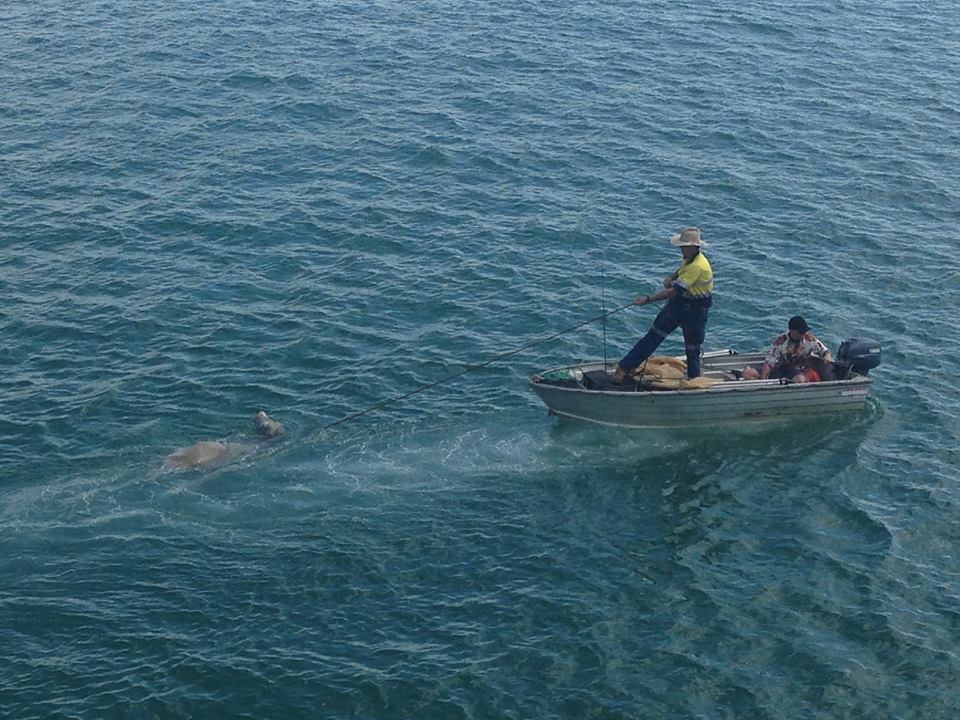
Unfortunately, this steer didn’t have a better fate. With the help of a local fisherman, officials lassoed the frightened animal. When faced with the option of bringing him back to port or hoisting him onto the export ship, they chose the latter.

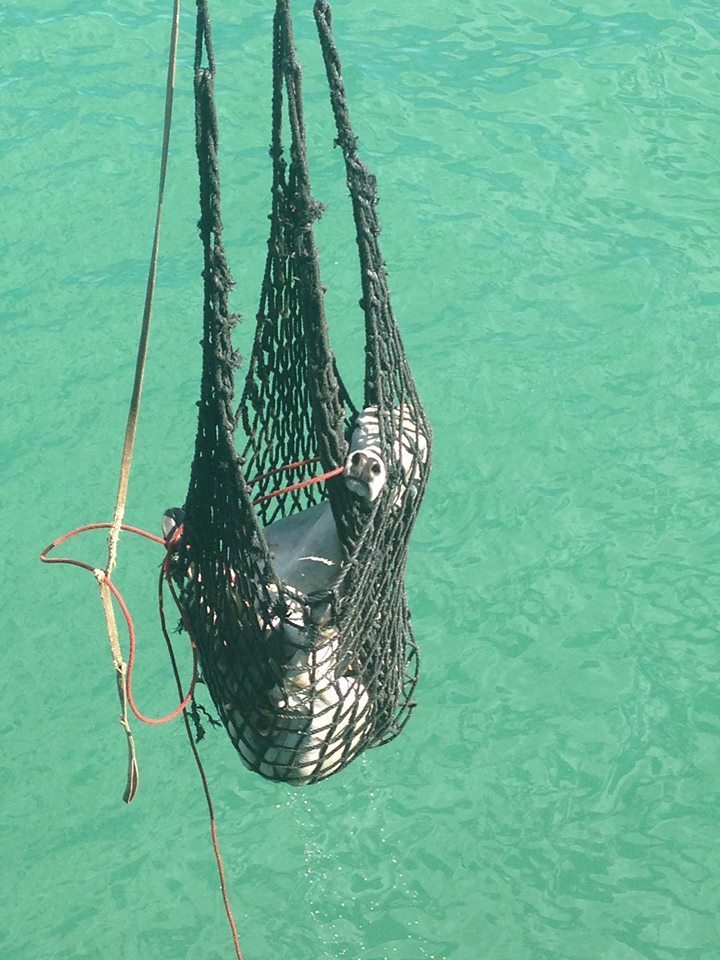
So they wrapped the scared steer in a fishing net and dumped his tired body onto the ship that would bring him to his death.

Facebook/Litchfield Council

If you’d like to stop Australia’s live export of animals, you can click here to join the nearly 500,000 people who have signed a petition calling for it to end. You can also donate to Animal Australia’s campaign here.

Fish Smarts: Why Fish Are More Than Just Streams of Protein

https://www.psychologytoday.com/blog/animal-emotions/201507/fish-smarts-why-fish-are-more-just-streams-protein

Fish are smart, sentient, and know a lot about themselves and others
by Marc Bekoff Ph.D. on Jul 05, 2015 in Animal Emotions

I’m always looking for interesting and “surprising” discoveries about animal cognition and emotions to share with readers and today I learned about two excellent and brief summaries of some of the latest news about the cognitive lives of fish — what they know about themselves and others. In the past I’ve written a lot about fish sentience because fish often get the short end of the stick when people write about the cognitive and emotional lives of vertebrates (please also see “Fish have feelings too: Expert claims creatures experience pain in the same way humans do – and should be treated better (link is external)” in which it is noted, “Fish have good memories, build complicated structures and show behaviour seen in primates – as well as feeling pain like us”). Indeed, fish were omitted from the list of animals mentioned in the Cambridge Declaration on Consciousness, issued in July 2013 (please see “Scientists Finally Conclude Nonhuman Animals Are Conscious Beings“) when they should have been included. At the time the declaration was issued we knew a lot about fish sentience and cognition and their omission is regrettable and indefensible..

An excellent review of research on fish cognition and emotions can be found in Macquarie University’s Culum Brown’s (link is external) essay called “Fish intelligence, sentience and ethics (link is external),” published in the peer reviewed journal Animal Cognition. A very interesting and important interview with Dr. Brown by Farm Sanctuary’s Bruce Freidrich (link is external) can be read here (link is external).

The abstract for Dr. Brown’s essay reads as follows: Fish are one of the most highly utilised vertebrate taxa by humans; they are harvested from wild stocks as part of global fishing industries, grown under intensive aquaculture conditions, are the most common pet and are widely used for scientific research. But fish are seldom afforded the same level of compassion or welfare as warm-blooded vertebrates. Part of the problem is the large gap between people’s perception of fish intelligence and the scientific reality. This is an important issue because public perception guides government policy. The perception of an animal’s intelligence often drives our decision whether or not to include them in our moral circle. From a welfare perspective, most researchers would suggest that if an animal is sentient, then it can most likely suffer and should therefore be offered some form of formal protection. There has been a debate about fish welfare for decades which centres on the question of whether they are sentient or conscious. The implications for affording the same level of protection to fish as other vertebrates are great, not least because of fishing-related industries. Here, I review the current state of knowledge of fish cognition starting with their sensory perception and moving on to cognition. The review reveals that fish perception and cognitive abilities often match or exceed other vertebrates. A review of the evidence for pain perception strongly suggests that fish experience pain in a manner similar to the rest of the vertebrates. Although scientists cannot provide a definitive answer on the level of consciousness for any non-human vertebrate, the extensive evidence of fish behavioural and cognitive sophistication and pain perception suggests that best practice would be to lend fish the same level of protection as any other vertebrate.

This weekend I learned about an essay by Abigail Geer called “5 Incredible Fish Behaviors That Show Just How Intelligent They Really Are (link is external)” that nicely summarizes some of the latest research on fish cognition. Ms. Geer writes about mutual cooperation, how fish cheat others, how they form hunting partnerships, how they signal to others using their body, and how they know to eat food that will disappear shortly. She concludes her essay as follows: “As humans, we have developed a very self centric view of the world, where we judge all other species by our own perception of them. For us to develop into a more compassionate society, which is not responsible for the murder of billions of animals each year, we must learn to understand and respect each and every animal on the planet for who they are.”

Primates aren’t all that special 

Ms. Geer’s essay is based mainly on the work of noted fish researcher Redouan Bshary (link is external), who’s groundbreaking research is summarized in an essay by Alison Abbott called “Animal behaviour: Inside the cunning, caring and greedy minds of fish (link is external)” published in the prestigious journal Nature. Both Ms. Geer and Ms. Abbott’s essays are easy reads and I highly suggest them. Research on the cognitive and emotional lives of fish are showing that non-human primates aren’t all that special. Emory University’s world renowned primate researcher Frans de Waal (link is external)notes, “Primate chauvinism may now be poised to decline, thanks in large part to Bshary’s fish work.” Claims about nonhuman primate and human exceptionalism must be carefully re-evaluated because this sort of speciesism can be seriously called into question based on solid scientific research.

Fish should be included in our moral circle

So, what does the latest research on fish cognition and emotions mean in terms of how we treat them? In her very interesting book called Do Fish Feel Pain? (link is external) Victoria Braithwaite (link is external) concluded, “I have argued that there is as much evidence that fish feel pain and suffer as there is for birds and mammals — and more than there is for human neonates and preterm babies.” (page 153).

It’s high time that we use what we know on behalf of fish and other animals who are used and abused in the countless billions. Fish clearly are not things nor disposable objects or mere streams of protein, but rather sentient and feeling beings, a point stressed in Farm Sanctuary’s “Someone, Not Something (link is external)” project.

In a recent interview with Hope Ferdowsian (link is external) I noted, “There still is a lot of work to be done but there is no doubt in my mind and heart that we can make the world a much better place – a more compassionate home — for nonhumans and humans. It isn’t going to be easy but that’s just the way it is. Every one who can do something positive must do what she/he can do. We need to be activists, not slacktivists. We all must walk the talk and not expect others to do what we can and should do. I remain optimistic because of all the wonderful people who are out there working for all animals and their homes. We must remember that compassion begets compassion and violence begets violence. I love the saying, ‘The world becomes what you teach,’ espoused by the Institute for Humane Education (link is external).”

It is essential that a broad audience knows what we are learning about fish from detailed empirical research. As noted above, Dr. Brown concludes his essay as follows: “Although scientists cannot provide a definitive answer on the level of consciousness for any non-human vertebrate, the extensive evidence of fish behavioural and cognitive sophistication and pain perception suggests that best practice would be to lend fish the same level of protection as any other vertebrate.” I couldn’t agree more. Fish and all other animals need all the help they can get and we need to use what we learn from empirical research on their behalf.

Note: I just learned of a most valuable essay by B. Wren Patton and Victoria Braithwaite called “Changing tides: ecological and historical perspectives on fish cognition (link is external),” the abstract of which concludes, “Never before has the field had such a wide array of interdisciplinary techniques available to access both cognitive and mechanistic processes underpinning fish behavior. This capacity comes at a critical time to predict and manage fish populations in an era of unprecedented global change.” You can also watch an interview with Dr. Braithwaite here (link is external) about why fish need to be treated humanely.

Marc Bekoff’s latest books are Jasper’s story: Saving moon bears (with Jill Robinson), Ignoring nature no more: The case for compassionate conservationWhy dogs hump and bees get depressed, and Rewilding our hearts: Building pathways of compassion and coexistenceThe Jane effect: Celebrating Jane Goodall (edited with Dale Peterson) has recently been published. (marcbekoff.com; @MarcBekoff)

‘Pawesome’ tips to help keep pets safe on July Fourth

http://www.komonews.com/news/local/Pawesome-tips-to-help-keep-pets-safe-on-July-Fourth-311584121.html

'Pawesome' tips to help keep pets safe on July Fourth»Play Video
Charlie and Waffles of Snohomish. Photo courtesy YouNews contributor Victoria S.
SEATTLE, Wash. – Fourth of July fireworks routinely make July 5th one of the busiest days of the year for animal shelters across the country.

That’s why Seattle-based Pet Hub is declaring all of July “National Lost Pet Prevention Month.”

Dogs and cats frightened by fireworks often escape yards in the course of the evening. Some even manage to slip out through doors or open windows.

“Make sure your pet has an external I.D. tag,” says Pet Hub’s Lorien Clemens. “It’s the number one way lost pets get home quickly.”

Pet Hub’s mission is to help reunite lost pets with rightful owners. Pet Hub’s digital I.D. tag can store an owner’s name, address, and phone number. It can even include information on the pet’s medications and personality. The tag can be read by a smartphone, putting important information right at the finger tips of those who find a missing pet.

But even a traditional tag with a simple name and current phone number is better than nothing, Clemens says, adding that microchips are also good, as long as contact information is kept current.

Owners can also help pets adjust by planning ahead for the day. Create a safe space in your home, perhaps in an interior room or on a lower floor, that allows your pet to feel sheltered from the loud noises. For crate-trained pets, their kennel may be their safe spot. For others, it may be a closet or on the couch next to their owner.

For families planning to go out for the night, consider asking a friend or relative to pet-sit.

Exercise early in the day can also help by burning off some energy and helping your pet relax.

“Take them to the lake or the park,” Clemens says. “Throw things around. Get them exhausted and they won’t even care it’s the fourth.”

Understanding Labels & Loopholes

http://humanefacts.org/labels-loopholes/

humanely-raised-vealWhat is the difference between Certified Humane and American Humane Certified? What’s the difference between free-range and cage-free?

Unfortunately, consumers who care about animals are being misled by deceptive marketing schemes.

Producers have learned that if a label contains buzzwords such as “happy,” “free,” “humane,” or “animal welfare,” concerned customers will often buy their products (with higher prices) without actually understanding their practices.

The result is a confusing proliferation of packaging labels pertaining to farmed animal welfare. But what do these labels really mean?


To start, it’s important to know that there is no legal definition of “humane.”1

Under USDA-approved welfare labels, farms and producers decide independently what practices they will call “humane.” The USDA merely verifies that the company follows its own arbitrary standards.

Some private humane certification labels require third-party auditors to verify compliance with their standards, but even among these programs the term “humane” is not consistently defined or enforced.

Piglet restrained for scalpel castration

For example, Animal Welfare Approved does not allow debeaking, but considers castration and ear notching without pain relief “humane.”

On the other hand, American Humane Certified permits debeaking, but does not allow ear notching and requires anesthesia for castration of some animals.

Furthermore, not only do terms like “humane” and “free-range” mean different things to different producers; they also mean different things depending on the kind of animal.

For instance, while free-range beef cows must have spent some time on pasture, free-range chickens commonly spend their entire lives crammed inside windowless sheds with thousands of other birds.


Free-Range

Pigs can be confined in manure-laden barns like this one and still be sold as free-range pork. Image: freerangefraud.com

The term “free-range” is not regulated by the USDA, except for use on chickens and turkeys raised for meat (which only requires “access” to outdoors).

Its use for cows and pigs is neither regulated nor enforced.

Often, free-range labels refer to animals packed into warehouse-style sheds with no access to the outdoors.

This is far from the rolling pasture that the term “free-range” conjures in most people’s minds.

All that is required for free-range labeling of poultry is that the birds have “access” to the outdoors for an unspecified amount of time.

Thousands of birds may be confined inside a warehouse facility with a single exit the size of a cat door, and the door may be opened for a few minutes. This still qualifies as free-range.2

The layers of excrement and urine in which these birds are forced to stand, day after day, cause severe flesh and eye burns, and fill the air with so much ammonia that many birds suffer from respiratory disorders.

Conditions on many free-range operations are so bad that most birds are not even aware of outdoor access, or they are too crowded, ill, or weak to move that far.

Debeaking is standard procedure on free-range poultry farms. Free-range claims on eggs are completely unregulated.


Cage-Free

Under misleading welfare labels, confinement operations like this one sell their eggs as “cage-free.” Photo: Sally Ryan, New York Times

Cage-free labels refer to hens used for eggs and mean only that the chickens are not in cages.

Cage-free egg-laying hens are typically crowded into windowless sheds or warehouse facilities, with thousands of birds on the floor and on stacked wire platforms, with little or no access to the outdoors and no room to perform natural behaviors.

The ammonia laden air is so noxious that hens commonly suffer respiratory disorders, severe flesh and eye burns, and even blindness.

Debeaking is routine and permitted. There is no third-party auditing.

perdue-cage-free

Cage-free labels should only appear on egg packages, as egg-laying hens are the only farmed animals kept in cages. (Veal calves and breeding sows are confined in crates.)

When cage-free labels appear on chicken or turkey meats (as shown in this photo of Harvest Land chicken meat), consumers are being deliberately misled.

Even on factory farms, chickens and turkeys raised for meat are not kept in cages, but are severely confined indoors inside massive sheds.


Grass-Fed

Typical feedlot.

Cows raised for beef eat grass for at least the first six months of life, then most are shipped to crowded, barren feedlots and fattened (“finished”) on grain to reach slaughter weight more quickly.

Some producers market feedlot-finished beef as higher priced grass-fed beef even though their cows are intensively confined for the last year or more of life.

USDA certified grass-fed animals must have access to pasture from early Spring to late Fall, but may otherwise be confined to pens or sheds.

All of the standard mutilations including castration, dehorning, and branding are permitted without pain relief under generic and USDA grass-fed labels. Hormones and antibiotics are also allowed.


Humanely Raised

The term “humanely raised” is not regulated or verified, meaning animals can be raised in confinement and mutilated without painkiller.3

Unfortunately, virtually any producer can slap a “humanely raised” label on their animal product, which renders the term nearly meaningless. Even on higher welfare farms, the term is often used deceptively.

Niman Ranch is a useful example, considered by many to be a model of humane pig farming. Their website shows images of happily roaming pigs, and their pork labels read, “Humanely raised on sustainable farms.” The labels also say, “Raised outdoors or in deeply bedded pens.”

That “or” is a loophole that means that Niman Ranch could get away with confining up to 100% of their pigs indoors. According to one writer, they currently confine around 75% of their pigs in warehouse-style barns with straw floors.

The welfare of pigs not given access to the outdoors is markedly lower than that of grazing pigs, yet Niman Ranch enjoys the celebrated reputation of a “pastured pork” operation.


Humane Dairy & Happy Cows

Real cheese from Happy Cows label
Happy Cow Creamery label
Laughing Cow label

Despite all the feel-good labels to the contrary, happy dairy cows are a myth. The basis of all dairy production is sexual violation and the destruction of motherhood.

These are not overstatements. It is a matter of fact that in order to produce milk, female cows must be impregnated (usually via invasive artificial insemination), carry their babies for nine months (like humans), and give birth.

Also inherent to dairy production is the separation of calves from their mothers in order for humans to take their milk.

This breaking of the mother-calf bond happens on small farms, humane label farms, and factory farms alike. According to the USDA, 97% of dairy calves are permanently removed from their mothers within just the first 12 hours of birth.4

Many humane label farms remove the calves in the first hour, claiming that the longer mother and calf are permitted to bond, the more stressful the separation.

Most calves spend their first 2 to 3 months of life in constant confinement in cramped, individual hutches, and never know the nurturing or warmth of their mother’s care.

Regardless of farm type, male calves of dairy cows are sold to be killed for veal or cheap beef.

When they are no longer optimally productive, dairy cows are slaughtered for cheap beef, usually around five years of age.

See also:

  • Learn more about “humane” dairy at our Happy Cows? page.
  • Our Practices page for detailed explanations of standard procedures.


Specific Packaging Labels


Certified Organic

USDA Organic label

For animal products, the organic label mainly distinguishes animals raised without hormones and antibiotics, which are prohibited under organic standards. Animal feed must also be organic.

Animals must have “access” to the outdoors, with cows, sheep and goats given some access to pasture, but the amount, duration, and quality of outdoor access is undefined.

Organic standards do not provide protection against routine mutilations, severe confinement, rough handling, long transport, or brutal slaughter of animals. Tail-docking, dehorning, debeaking, and castration without painkiller are all permitted.


American Grass-Fed Certified

American Grassfed label

While the USDA’s grass-fed label allows for confinement of animals, American Grassfed Certification requires continuous access to pasture and a diet of 100 percent forage. Hormones and antibiotics are also prohibited.

However, routine mutilations such as castration, tail docking, branding and dehorning are all permitted without pain relief.

No standards are in place regarding the treatment of breeding animals, animals during transport, or animals at slaughter.


American Humane Certified

American Humane Certified label

One of the worst certified labels. Access to the outdoors is not required for any animals, and indoor space requirements are the lowest of all the main humane certification programs.

AHC is the only third-party audited welfare program to permit cage confinement of egg hens. The killing of male chicks, debeaking, and tail docking without pain relief are permitted.

Some standards extend to the treatment of breeding animals, animals during transport, and animals at slaughter.


Animal Welfare Approved

Animal Welfare Approved label

The Animal Welfare Approved certification is a program of the Animal Welfare Institute. They claim to have “the most rigorous standards for farm animal welfare currently in use by any United States organization.”

As proof of this claim, their website includes a useful chart comparing the various practices and provisions of each certified humane label. While there is bias in favor of AWA in the chart and guide, we include them here for reference.

The AWI boasts that the AWA is the only USDA-approved third-party certification program, but as with other humane labels, egregious cruelties are still permitted.

On the upside, animals have “access” to the outdoors and are able to engage in “some” natural behaviors. No cages or crates may be used, and growth hormones and antibiotics are prohibited. Debeaking is also not allowed.

However, the killing of male chicks born to egg-laying hens is permitted, as are other painful mutilations performed without painkiller, including ear notching and castration.

Standards include breeding, transport, and slaughter of animals.


Certified Humane

Certified Humane label

There is no requirement for outdoor access for birds used for meat, egg-laying hens, or pigs. However, minimum space allowances and indoor environmental enrichments are stipulated.

Feedlots are permitted for beef cattle. Killing of male chicks born to egg-laying hens is allowed.

Debeaking of hens and turkeys, tail docking of pigs, dehorning of goats without painkiller, and rubber ring castration without painkiller are all permitted.

Standards include the treatment of breeding animals, animals during transport, and animals at slaughter.


Global Animal Partnership

Global Animal Partnership label

GAP is a step-based rating program used by Whole Foods.

Producers receive one of six ratings, from Step 1 to Step 5+. Step 1 permits industrial style (factory farm) confinement of animals and merely prohibits crates and cages. Feedlots are allowed for beef cattle through Step 4. Debeaking and tail docking are permitted through Step 3.

Standards consider the treatment during transport, but not breeding or slaughter.


Process Verified

Process Verified label

Warning: this industry label is intentionally misleading.

The USDA currently allows producers enrolled in its Process Verified Program (PVP) to label their products “humanely raised.”

In reality, producers decide independently what practices they will call “humane,” and the USDA merely verifies that the company follows its own arbitrary standards.

Under such a scheme, industrial producers running large scale confinement operations can simply submit their current practices as “humane,” and display the “Process Verified” and “humanely raised” labels.

Read more about this marketing scheme here and here.


United Egg Producer Certified

United Egg Producers Certified label

Warning: this industry label is intentionally misleading.

UEPC permits battery cage confinement of egg-laying hens and other routine inhumane factory farm practices.

Hens in these barren cages have 67 square inches of cage space per bird (less than a sheet of paper), and cannot perform any of their natural behaviors, including perching, nesting, foraging, or even spreading their wings. Debeaking is permitted and routine.


See also:

How Long Did They Think It Could Go On?

Jim Robertson-wolf-copyright

For as far back as I can remember, I’ve always thought, how long did they think they could get away with it? I guess I’ve always had a different perspective when it comes to the whole crazy industrialized world and the consequences of living so extremely against Nature as Americans have done for around a century or so.

Whenever I heard people talk of bombing Iraq or Iran (or whoever was the perceived target of the day) “back to the Stone Age,” I’d think, throw me into the briar patch, what’s wrong with that? Living like it was the Stone Age would be the best thing for the Earth and us all.

I spent nearly half my life like it was the Stone Age and never found myself wanting for more. Not only was the cabin where I lived in the mountains of the North Cascades without power, phone or running water, I didn’t have the urge to get a generator to see what I was missing out on.

Somehow I knew a gas-powered generator banging away for hours on end would be about as unnatural as you could get; I’d rather not have any power than have power produced so noisily. Such a foul assault on Mother Nature would have consequences down the line.

Perhaps it was because I studied physical anthropology rather than sociology; spent so much time backpacking—living out of a tent in National Parks and wilderness areas; and planting trees for work rather than cutting them down. But when some old rustic wilderness cabin came available to care take, I jumped at the chance. Never mind that I had to cut firewood for heat or that it was beyond the county plowed roads—I cross country skied to get around and chopped a hole in the ice on the river to water the horses. Sure, it was hard work, but it felt right.

1173835_594069293967592_2141908188_nBut whenever I’d have to be where cars were stuck bumper to bumper on the freeway, or witness rampant development, I’d think, how long do they think this can go on before Nature extracts her revenge? How long do people think they can jet-set between their houses and condos, or have specialty products flown or shipped in to their nearest Costco or Walmart, or turn even more moose or elk habitat into golf courses or strip malls or housing developments for an ever-burgeoning human population before Nature says, “Enough!” and retaliates?

Well, considering deadly heat waves like the recent one that hit India; the record flooding in Texas; California’s ongoing mega-drought; the 300+ tundra and forest fires raging across Alaska and the acidic dead zones in the Pacific and other oceans, it looks like the party’s winding down.

As John A. Livingston put it, “Human uniqueness is even more profound than we have been taught to believe and to proclaim.” As you may have guessed (and not to further burst any bubbles), Livingston didn’t mean “unique” in a good way. He meant something more like what Gary Yourofsky says here: “Humans are the scum of the earth. Pure parasites. There is only one species on this planet that can be removed from Earth – and with that removal – EVERY living being, sentient and insentient, will benefit. The animals would thrive. The rainforest, the woods, the mountains, the trees, the plants would thrive. The air and the oceans would become clean again. The earth itself would be born again.”

1379284_544626882259670_451791472_n

The Seal Army, The Seals Of Nam and Ricky Gervais condemns Namibia Seal Hunt

http://www.thesealsofnam.org/ricky-gervais-condemns-namibia-seal-hunt/

Subject: Ricky Gervais condemns Namibia Seal Hunt

On Wednesday 1 July 2015, the activist organization The Seals Of Nam partnered with social media experts from The Seal Army in a global outcry against the Namibian seal hunt. The online protest set social media ablaze with hash tags #Namibia and #sealhunt trending in 5th place on Twitter. At the latest count, over 13 000 tweets condemning the annual slaughter were sent, peaking at over 6 000 tweets per hour.

Ricky Gervais Namibia seal hunt

The “Tweet Storm” received a further boost when UK celebrity Ricky Gervais, known for his stance against cruelty to animals, joined in. Gervais posted links on both Facebook and Twitter with the comment “RIP the 80 000 seals to be savagely slaughtered in Namibia.”

Ricky Gervais Namibia Seal Hunt

This is not the first time The Seals Of Nam has garnered the attentions of A-list celebrities in their online campaign against the hunt. In a similar event held earlier this year, celebrity George Lopez also took to Twitter in reply to a tweet, asking what people could do to help with the cause.

The Namibian seal hunt is fast gaining international notoriety, with calls for a consumer boycott having a negative impact on tourism. The ripple effect is expected to be further impacted to include Namibian fisheries when The Seals of Nam release a cell-phone app later this month. The app has a barcode scanner and will tell European consumers the background of the fish and the relation to the Namibian seal hunt.

This app could have devastating effects, particularly since over 95% of Namibia’s fisheries harvest is exported to the EU where produce from the seal hunt is banned. Speaking on behalf of the organization, Pat Dickens said the ethical reasons of the app have been translated into European languages. A series of emails targeting fish mongers, restaurants, hotels and catering outfits will be sent out once the app is released.

The Namibian government claims the slaughter is a population management control measure necessary to protect dwindling fishing stocks. This claim is rubbished by Dickens who points to bribery, corruption, incompetence and mismanagement of the resource.

Namibia is the only country in the world to slaughter seal cubs still on the teat. The slaughter is regarded by scientists as the cruelest massacre of animals on earth and amounts to the largest slaughter of wildlife in Africa.