
Deep ecology is a contemporary ecological and environmental philosophy characterized by its advocacy of the inherent worth of living beings regardless of their instrumental utility to human needs, and advocacy for a radical restructuring of modern human societies in accordance with such ideas. Deep ecology argues that the natural world is a subtle balance of complex inter-relationships in which the existence of organisms is dependent on the existence of others within ecosystems.[1] Human interference with or destruction of the natural world poses a threat therefore not only to humans but to all organisms constituting the natural order.
Deep ecology’s core principle is the belief that the living environment as a whole should be respected and regarded as having certain inalienable legal rights to live and flourish, independent of its utilitarian instrumental benefits for human use. It describes itself as “deep” because it regards itself as looking more deeply into the actual reality of humanity’s relationship with the natural world arriving at philosophically more profound conclusions than that of the prevailing view of ecology as a branch of biology. The movement does not subscribe to anthropocentric environmentalism (which is concerned with conservation of the environment only for exploitation by and for human purposes) since deep ecology is grounded in a quite different set of philosophical assumptions. Deep ecology takes a more holistic view of the world human beings live in and seeks to apply to life the understanding that the separate parts of the ecosystem (including humans) function as a whole. This philosophy provides a foundation for the environmental, ecology and green movements and has fostered a new system of environmental ethics advocating wilderness preservation, human population control and simple living.[2]
Contents
[hide]
Principles[edit]
Proponents of deep ecology believe that the world does not exist as a resource to be freely exploited by humans. The ethics of deep ecology hold that the survival of any part is dependent upon the well-being of the whole. Proponents of deep ecology offer an eight-tier platform to elucidate their claims:[3]
- The well-being and flourishing of human and nonhuman life on Earth have value in themselves (synonyms: intrinsic value, inherent value). These values are independent of the usefulness of the nonhuman world for human purposes.
- Richness and diversity of life forms contribute to the realization of these values and are also values in themselves.
- Humans have no right to reduce this richness and diversity except to satisfy vital human needs.
- The flourishing of human life and cultures is compatible with a substantial decrease of the human population. The flourishing of nonhuman life requires such a decrease.
- Present human interference with the nonhuman world is excessive, and the situation is rapidly worsening.
- Policies must therefore be changed. These policies affect basic economic, technological, and ideological structures. The resulting state of affairs will be deeply different from the present.
- The ideological change is mainly that of appreciating life quality (dwelling in situations of inherent value) rather than adhering to an increasingly higher standard of living. There will be a profound awareness of the difference between big and great.
- Those who subscribe to the foregoing points have an obligation directly or indirectly to try to implement the necessary changes.
These principles can be refined down into three simple propositions:
- Wilderness preservation;
- Human population control;
- Simple living (or treading lightly on the planet).[2]
Development[edit]
The phrase “deep ecology” was coined by the Norwegian philosopher Arne Næss in 1973.[4] Næss rejected the idea that beings can be ranked according to their relative value. For example, judgments on whether an animal has an eternal soul, whether it uses reason or whether it has consciousness (or indeed higher consciousness) have all been used to justify the ranking of the human animal as superior to other animals. Næss states that from an ecological point of view “the right of all forms [of life] to live is a universal right which cannot be quantified. No single species of living being has more of this particular right to live and unfold than any other species.”
This metaphysical idea is elucidated in Warwick Fox‘s claim that humanity and all other beings are “aspects of a single unfolding reality”.[5] As such Deep Ecology would support the view of Aldo Leopold in his book A Sand County Almanac that humans are “plain members of the biotic community”. They also would support Leopold’s “Land Ethic“: “a thing is right when it tends to preserve the integrity, stability and beauty of the biotic community. It is wrong when it tends otherwise.” Daniel Quinn in Ishmael showed that an anthropocentric myth underlies our current view of the world.[6]
Deep ecology offers a philosophical basis for environmental advocacy which may, in turn, guide human activity against perceived self-destruction. Deep ecology and environmentalism hold that the science of ecology shows that ecosystems can absorb only limited change by humans or other dissonant influences. Further, both hold that the actions of modern civilization threaten global ecological well-being. Ecologists have described change and stability in ecological systems in various ways, including homeostasis, dynamic equilibrium, and “flux of nature”.[7] Regardless of which model is most accurate, environmentalists[citation needed] contend that massive human economic activity has pushed the biosphere far from its “natural” state through reduction of biodiversity, climate change, and other influences. As a consequence, civilization is causing mass extinction, at a rate of between 100 species a day, or possibly 140,000 species per year, a rate that is 10,000 times the background rate of extinction. Deep ecologists hope to influence social and political change through their philosophy. Næss has proposed, as Nicholas Goodrick-Clarke writes, “that the earth’s human population should be reduced to about 100 million.”[8]
Scientific[edit]

Næss and Fox do not claim to use logic or induction to derive the philosophy directly from scientific ecology[9] but rather hold that scientific ecology directly implies the metaphysics of deep ecology, including its ideas about the self and further, that deep ecology finds scientific underpinnings in the fields of ecology and system dynamics.
In their 1985 book Deep Ecology,[10] Bill Devall and George Sessions describe a series of sources of deep ecology. They include the science of ecology itself, and cite its major contribution as the rediscovery in a modern context that “everything is connected to everything else.” They point out that some ecologists and natural historians, in addition to their scientific viewpoint, have developed a deep ecological consciousness—for some a political consciousness and at times a spiritual consciousness. This is a perspective beyond the strictly human viewpoint, beyond anthropocentrism. Among the scientists they mention specifically are Rachel Carson, Aldo Leopold, John Livingston, Paul R. Ehrlich and Barry Commoner, together with Frank Fraser Darling, Charles Sutherland Elton, Eugene Odum and Paul Sears.
A further scientific source for deep ecology adduced by Devall and Sessions is the “new physics”, which they describe as shattering Descartes‘s and Newton‘s vision of the universe as a machine explainable in terms of simple linear cause and effect. They propose that Nature is in a state of constant flux and reject the idea of observers as existing independent of their environment. They refer to Fritjof Capra‘s The Tao of Physics and The Turning Point for their characterisation of how the new physics leads to metaphysical and ecological views of interrelatedness, which, according to Capra, should make deep ecology a framework for future human societies. Devall and Sessions also credit the American poet and social critic Gary Snyder—with his devotion to Buddhism, Native American studies, the outdoors, and alternative social movements—as a major voice of wisdom in the evolution of their ideas.
The Gaia hypothesis was also an influence on the development of deep ecology.
Spiritual[edit]
The central spiritual tenet of deep ecology is that the human species is a part of the Earth, not separate from it, and as such human existence is dependent on the diverse organisms within the natural world each playing a role in the natural economy of the biosphere. Coming to an awareness of this reality involves a transformation of an outlook that presupposes humanity’s superiority over the natural world. This self-realisation or “re-earthing”[11] is used for an individual to intuitively gain an ecocentric perspective. The notion is based on the idea that the more we expand the self to identify with “others” (people, animals, ecosystems), the more we realize ourselves. Transpersonal psychology has been used by Warwick Fox to support this idea. Deep ecology has influenced the development of contemporary Ecospirituality.[12]
A number of spiritual and philosophical traditions including Native American, Buddhist and Jain are drawn upon in a continuing critique of the philosophical assumptions of the modern European mind which has enabled and led to what is seen as an increasingly unsustainable level of disregard to towards the rights and needs of the natural world and its ability to continue to support human life. In relation to the Judeo-Christian tradition, Næss offers the following criticism: “The arrogance of stewardship [as found in the Bible] consists in the idea of superiority which underlies the thought that we exist to watch over nature like a highly respected middleman between the Creator and Creation.”[13] This theme had been expounded in Lynn Townsend White, Jr.‘s 1967 article “The Historical Roots of Our Ecological Crisis”,[14] in which however he also offered as an alternative Christian view of man’s relation to nature that of Saint Francis of Assisi, who he says spoke for the equality of all creatures, in place of the idea of man’s domination over creation. Næss’ further criticizes the reformation’s view of creation as property to be put into maximum productive use: a view used frequently in the past to exploit and dispossess native populations. Many Protestant sects today regard the Bible’s call for man to have stewardship of the earth as a call for the care for creation, rather than for exploitation.
The original Christian teachings on property support the Franciscan/stewardship interpretation of the Bible. Against this view, Martin Luther condemned church ownership of lands because “they did not want to use that property in an economically productive fashion. At best they used it to produce prayers. Luther, and other Reformation leaders insisted that it should be used, not to relieve men from the necessity of working, but as a tool for making more goods. The attitude of the Reformation was practically, “not prayers, but production.” And production, not for consumption, but for more production.” This justification was offered to support secular takings of church endowments and properties.[15]
Philosophical roots[edit]
Spinoza[edit]
Arne Næss, who first wrote about the idea of deep ecology, from the early days of developing this outlook conceived Baruch Spinoza as a philosophical source.[16]
Others have followed Naess’ inquiry, including Eccy de Jonge, in Spinoza and Deep Ecology: Challenging Traditional Approaches to Environmentalism,[17] and Brenden MacDonald, in Spinoza, Deep Ecology, and Human Diversity—Realization of Eco-Literacies[citation needed].
One of the topical centres of inquiry connecting Spinoza to Deep Ecology is “self-realization.” See Arne Næss in The Shallow and the Deep, Long-Range Ecology movement and Spinoza and the Deep Ecology Movement for discussion on the role of Spinoza’s conception of self-realization and its link to deep ecology.
Criticism and debate[edit]
Knowledge of non-human interests[edit]
Animal rights activists state that for an entity to require rights and protection intrinsically, it must have interests.[18] Deep ecology is criticised for assuming that living things such as plants, for example, have their own interests as they are manifested by the plant’s behavior—for instance, self-preservation being considered an expression of a will to live. Deep ecologists claim to identify with non-human nature, and in doing so, deny those who claim that non-human (or non-sentient) lifeforms’ needs or interests are nonexistent or unknowable. The criticism is that the interests that a deep ecologist attributes to non-human organisms such as survival, reproduction, growth, and prosperity are really human interests. This is sometimes construed as a pathetic fallacy or anthropomorphism, in which “the earth is endowed with ‘wisdom’, wilderness equates with ‘freedom’, and life forms are said to emit ‘moral’ qualities.”[19][20]
“Deepness”[edit]
Deep ecology is criticised for its claim to being deeper than alternative theories, which by implication are shallow. When Arne Næss coined the term deep ecology, he compared it favourably with shallow environmentalism which he criticized for its utilitarian and anthropocentric attitude to nature and for its materialist and consumer-oriented outlook.[21] Against this is Arne Næss‘s own view that the “depth” of deep ecology resides in the persistence of its penetrative questioning, particularly in asking “Why?” when faced with initial answers.
Writer William D. Grey believes that developing a non-anthropocentric set of values is “a hopeless quest”. He seeks an improved “shallow” view, writing, “What’s wrong with shallow views is not their concern about the well-being of humans, but that they do not really consider enough in what that well-being consists. We need to develop an enriched, fortified anthropocentric notion of human interest to replace the dominant short-term, sectional and self-regarding conception.”[22]
Bookchin’s criticisms[edit]
Some critics, particularly social ecologist Murray Bookchin, have interpreted deep ecology as being hateful toward humanity, due in part to the characterization of humanity by some deep ecologists, such as David Foreman of Earth First!, as a pathological infestation on the Earth.[8] Bookchin[23][24] therefore asserts that “deep ecology, formulated largely by privileged male white academics, has managed to bring sincere naturalists like Paul Shepard into the same company as patently antihumanist and macho mountain men like David Foreman who preach a gospel that humanity is some kind of cancer in the world of life.”[23] Bookchin mentions that some, like Foreman, defend seemingly anti-human measures, such as severe population control and the claim regarding the Third World that “the best thing would be to just let nature seek its own balance, to let the people there just starve”.[23] However, Bookchin himself later admitted that “statements made by Earth First! activists are not to be confused with those made by deep ecology theorists.”[25] Ecophilosopher Warwick Fox similarly “warns critics not to commit the fallacy of ‘misplaced misanthropy.’ That is, just because deep ecology criticizes an arrogant anthropocentrism does not mean that deep ecology is misanthropic.”[25] Likewise, The Deep Ecology Movement: An Introductory Anthology attempts to clarify that “deep ecologists have been the strongest critics of anthropocentrism, so much so that they have often been accused of a mean-spirited misanthropy”; however, “deep ecology is actually vitally concerned with humans realizing their best potential” and “is explicit in offering a vision of an alternative way of living that is joyous and enlivening.”[26]
Murray Bookchin’s second major criticism is that deep ecology fails to link environmental crises with authoritarianism and hierarchy. Social ecologists like him believe that environmental problems are firmly rooted in the manner of human social interaction, and suggest that deep ecologists fail to recognise the potential for human beings to solve environmental issues through a change of cultural attitudes. According to Bookchin, it is a social reconstruction alone that “can spare the biosphere from virtual destruction.”[23] Though some deep ecologists may reject the argument that ecological behavior is rooted in the social paradigm (which, according to their view, would be an anthropocentric fallacy), others in fact embrace this argument, such as the adherents to the deep ecologist movement Deep Green Resistance.
Botkin’s criticism[edit]
Daniel Botkin[27] has likened deep ecology to its antithesis, the wise use movement, when he says that they both “misunderstand scientific information and then arrive at conclusions based on their misunderstanding, which are in turn used as justification for their ideologies. Both begin with an ideology and are political and social in focus.” Elsewhere, though, he asserts that deep ecology must be taken seriously in the debate about the relationship between humans and nature because it challenges the fundamental assumptions of Western philosophy. Botkin has also criticized Næss’s restatement and reliance upon the balance of nature idea and the perceived contradiction between his argument that all species are morally equal and his disparaging description of pioneering species.
Ecofeminist response[edit]
Both ecofeminism and deep ecology put forward a new conceptualization of the self. Some ecofeminists, such as Marti Kheel,[28] argue that self-realization and identification with all nature places too much emphasis on the whole, at the expense of the independent being. Similarly, some ecofeminists place more emphasis on the problem of androcentrism rather than anthropocentrism. To others, like Karen J. Warren, the domination of women is tethered conceptually and historically to the domination of nature. Ecofeminism denies abstract individualism and embraces the interconnectedness of the living world; relationships, including our relationship with non-human nature, are not extrinsic to our identity and are essential in defining what it means to be human. Warren argues that hierarchical classifications in general, such as racism or speciesism, are all forms of discrimination and are no different from sexism. Thus, anthropocentrism is simply another form of discrimination as a result of our flawed value structure and should be abolished.[29]
Links with other philosophies[edit]
Parallels have been drawn between deep ecology and other philosophies, in particular those of the animal rights movement, Earth First!, Deep Green Resistance, and anarcho-primitivism.
Peter Singer‘s 1975 book Animal Liberation critiqued anthropocentrism and put the case for animals to be given moral consideration. This can be seen as a part of a process of expanding the prevailing system of ethics to wider groupings. However, Singer has disagreed with deep ecology’s belief in the intrinsic value of nature separate from questions of suffering, taking a more utilitarian stance.[30] The feminist and civil rights movements also brought about expansion of the ethical system for their particular domains. Likewise deep ecology brought the whole of nature under moral consideration.[31] The links with animal rights are perhaps the strongest, as “proponents of such ideas argue that ‘All life has intrinsic value'”.[32]
Many in the radical environmental direct-action movement Earth First! claim to follow deep ecology, as indicated by one of their slogans No compromise in defence of mother earth. In particular, David Foreman, the co-founder of the movement, has also been a strong advocate for deep ecology, and engaged in a public debate with Murray Bookchin on the subject.[33][34] Judi Bari was another prominent Earth Firster who espoused deep ecology. Many Earth First! actions have a distinct deep ecological theme; often these actions will be to save an area of old growth forest, the habitat of a snail or an owl, even individual trees. Actions are often symbolic or have other political aims. At one point Arne Næss also engaged in environmental direct action, though not under the Earth First! banner, when he chained himself to rocks in front of Mardalsfossen, a waterfall in a Norwegian fjord, in a successful protest against the building of a dam.[35]
There are also anarchist currents in the movement, especially in the United Kingdom. For example Robert Hart, pioneer of forest gardening in temperate climates, wrote the essay “Can Life Survive?” in Deep Ecology & Anarchism.[36]
Robert Greenway and Theodore Roszak have employed the deep ecology platform as a means to argue for ecopsychology.[citation needed] Although ecopsychology is a highly differentiated umbrella that encompasses many practices and perspectives, its ethos is generally consistent with deep ecology.[citation needed] As this now almost forty-year-old “field” expands and continues to be reinterpreted by a variety of practitioners, social and natural scientists, and humanists, “ecopsychology” may change to include these novel perspectives.
Heidegger’s critique of technology has certainly inspired environmentalist and postmodernist of our time. Deep ecologists, like Heidegger, allege that certain metaphysical presuppositions are responsible for ecological destruction, and also contend that any transformation can be brought about only through a renewed awareness about the world. Then the key to environmental crisis, require an ontological shift: from an anthropocentric and utilitarian understanding of world to an understanding which lets things be. A non-anthropocentric humanity would probably initiate attitudes, practices, and institutions that would exhibit respect and care for all beings.



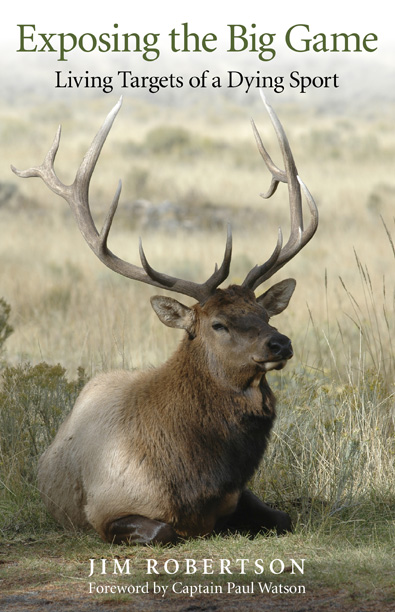




 Exposing the Big Game