Animal Testing Is Useless for Determining COVID Vaccine Effectiveness in Humans

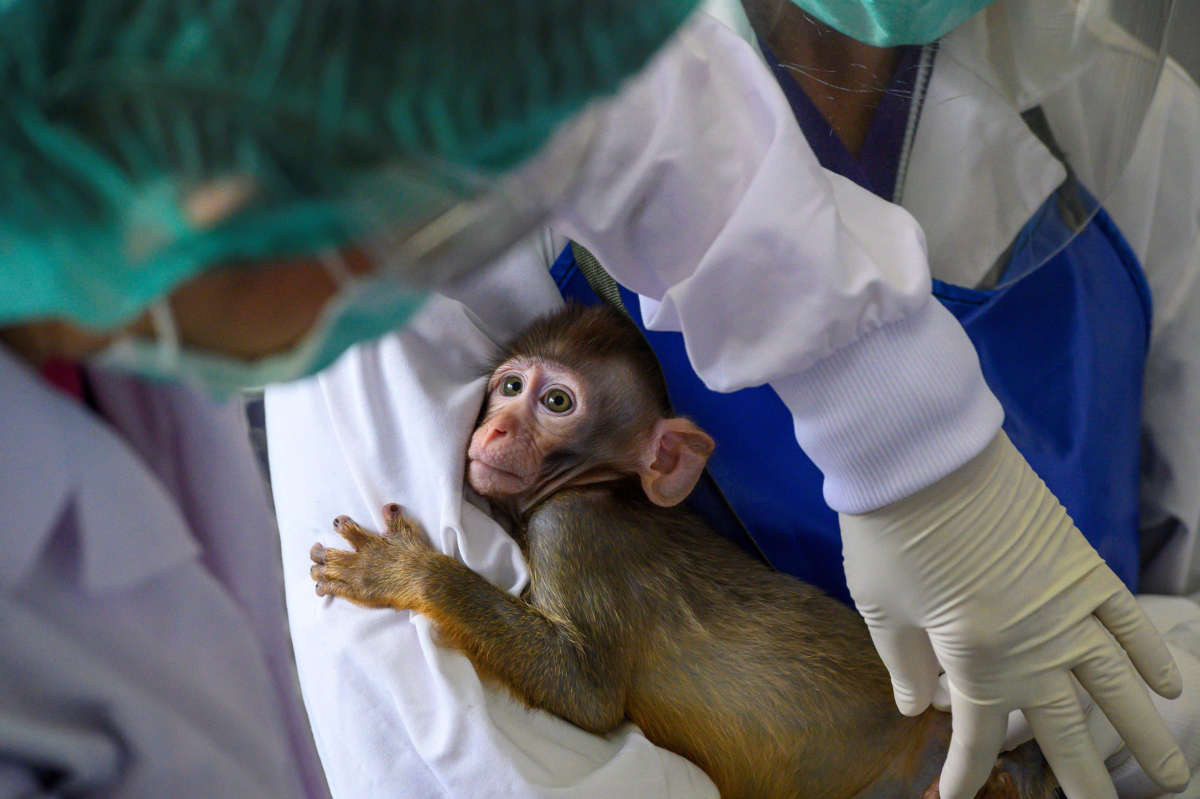
A baby monkey in a laboratory is examined by employees in the National Primate Research Center of Thailand at Chulalongkorn University in Saraburi, Thailand, on May 3, 2020. Scientists at the center tested potential vaccines for the novel coronavirus (COVID-19) on animals, including monkeys.

BYAysha AkhtarTruthoutPUBLISHEDMarch 20, 2021SHAREShare via FacebookShare via TwitterShare via Email

There have been concerted efforts on the part of primate researchers to convince the public and political leaders that more money and monkeys are needed for COVID-19 vaccine research. It’s not surprising that monkey researchers would attempt to exploit people’s fears about the pandemic to increase “supplies” and funding for their work.

What is surprising, however, is the complete lack of differing scientific views offered. The problem with the assertions made by pro-monkey research groups is their lack of supporting evidence.

Most findings in animals, including nonhuman primates (NHPs), do not predict human results — and, thus, far from being helpful, they are actually misleading.

More than 700 human trials of potential HIV/AIDS vaccines have been conducted, all of which gave encouraging results in animals including monkeys and chimpanzees — yet not one has worked in humans. In fact, some HIV vaccines actually increase the risk of HIV in humans. And as models of human diseases, NHPs have failed for Alzheimer’s and Parkinson’s diseases, neuroscience/brain research, stroke, cancer, hepatitis C, and many more.

More than 90 percent of drugs that appear to be safe and effective in animals fail in human trials. Vaccine development has an even higher failure rate. Only 6 percent of vaccines make it to the market. Can you imagine if you boarded a plane, and the pilot announced that you have a 6 percent chance of landing safely at your destination? You would demand an overhaul of the entire airline industry. Yet, when it comes to the safety and effectiveness of the vaccines and drugs we put into our bodies, monkey researchers want you to believe that clinging to the tools of old (i.e., monkeys) is a good idea. We don’t see anyone suggesting we should stick to the 8-track tape when we can stream music on our phones.

There is a valid reason why we need diverse representation in human clinical trials. No one human can accurately represent how a vaccine or drug will work in another human. How can we expect another species to effectively predict biological responses in humans?

Although COVID vaccines were tested in animals for regulatory reasons — tradition-based, rather than science-based — there is devil in the detail. Biologically, very different processes are occurring with the COVID-19 virus. Mice proved difficult to infect with the virus, even when genetically modified to make them more susceptible. If they did show symptoms, they were mild. Different species of monkeys also failed to replicate human symptoms, and where symptoms did appear, they too tended to be mild, reflecting different infectious processes.

Human trials of the Oxford/AstraZeneca vaccine proceeded despite prior monkey data that showed it did not prevent infection, and the Moderna vaccine was first encountered by humans without preceding animal trials. This would not have happened if the animal trials had been a crucial step in ensuring safety and efficacy.More than 90 percent of drugs that appear to be safe and effective in animals fail in human trials.

Expert opinion agrees: the chief medical officer at Moderna stated, “I don’t think proving this in an animal model is on the critical path to getting this to a clinical trial.” Operation Warp Speed’s chief scientific adviser said Human data is “100 times more significant” than NHP data, and Anthony Fauci stated that translating animal vaccine results to humans has been “one of the banes of our existence.” Pfizer and BioNTech recognized early on that mRNA vaccines work very differently in animals compared to humans.

Biomedical research is increasingly utilizing innovative techniques that are human-specific. These techniques include human mini-organs (organoids) and human organs-on-a-chip, where 3D cultures of human cells are housed on small chips, with circulatory systems and other means of mimicking real-life function and physiology of actual human organs and the human body.

These techniques are being used ever more widely in disease research and in drug discovery and development, and were used in pivotal stages of the COVID-19 vaccine development, alongside computational approaches to their design. Entire human immune systems can be cultured, as can lymph nodes (pivotal to immune function) specific to individual people to reflect interhuman variability, and reflective of both diseased and healthy states — all without the confounding issues of extrapolation between different species.

For the sake of human health, our tax dollars should be directed into the best science. Whichever way you look at it, future biomedical research, including vaccine development for pandemics like COVID-19, will be based on human biology and human-specific testing methods. These methods are quicker, cheaper, more humane and — most importantly — relevant.

Jane Goodall’s Advice on How to Lead a Full Life

The world-renowned scientist and conservationist has spent the pandemic living at her childhood home in England, watching “mindless television” with her sister at suppertime and working around the clock

PHOTO: MICHAEL CHRISTOPHER BROWN

By Lane FlorsheimMarch 15, 2021 8:32 am ET

  • PRINT
  • TEXT

In our series My Monday Morning, self-motivated people tell WSJ. how they start off the week.

For Dr. Jane Goodall, the pandemic has meant the end of almost all of her normal routines. “There are no weekends anymore,” she says. “Every single day is Zooms and Skypes and interviews and video messages all over the world. And writing, I have writing to do.” Goodall, 86, one of the most famous scientists and conservationists in the world, has been living away from her usual home in Tanzania at her childhood house in Bournemouth, England, with members of her family. The only part of her schedule that’s the same every day comes at 12:30 p.m., when she takes her dog out for a short walk and then eats lunch in the garden, sitting under the beech tree she used to climb when she was young. She often has company. “I’m usually joined by a robin redbreast and a blackbird,” she says. “I’m always out there, even if it’s pouring rain, because I don’t want to disappoint the birds.”

Goodall first began to fulfill her dream of living among African wildlife when, at 22, she voyaged to Nairobi by boat from London. There, she met paleontologist Louis Leakey, who hired her to work as his assistant and eventually sent her to Tanzania’s Gombe Stream National Park, where she began her work with chimpanzees. Goodall’s observations disproved major beliefs about human uniqueness, including that we’re the only species capable of using and making tools and that we’re the only ones who have personalities and emotions. Though she stopped doing fieldwork in 1986, she is at work every day for the Jane Goodall Institute, which she founded in 1977 to promote wildlife and environmental conservation. She’s been married twice, first to Dutch wildlife filmmaker Hugo van Lawick, with whom she has a son, named Hugo Eric Louis van Lawick, 54, and then to Derek Bryceson, who was a national parks director and assemblyman in Tanzania. Recently, Goodall launched an essential-oils collection sourced throughout Africa in partnership with Forest Remedies and started a podcast called the Jane Goodall Hopecast, which has featured guests like musician Dave Matthews and the teenage animal rights activist Genesis Butler.

Here, she tells WSJ. about her dream podcast guest and how she sees her legacy.

What time do you get up on Mondays, and what’s the first thing you do?

Full story: https://www.wsj.com/articles/jane-goodalls-advice-on-how-to-lead-a-full-life-11615811551

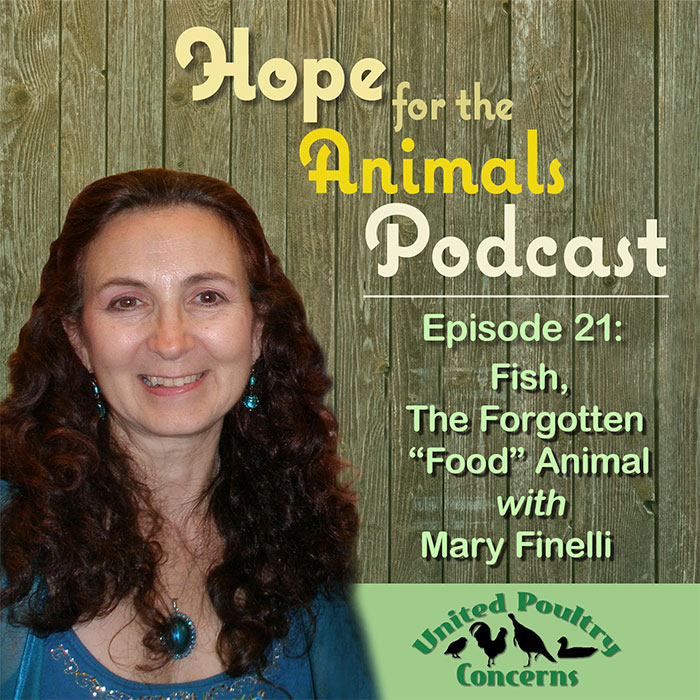
Episode 21: Fish, the Forgotten “Food” Animal with Mary Finelli of Fish Feel

26 February 2021

Banner with Hope Bohanec holding a chicken
Mary Finelli

Just as United Poultry Concerns was the first farmed animal advocacy organization to focus on chickens, Fish Feel was the first organization to focus on fishes. In Episode 21 we have a special interview with Mary Finelli, founder and president of Fish Feel. Hope and Mary discuss how fishes are caught and killed in the ocean by the trillions every year and how the fishing industry is also notorious for human slavery.

Mary talks about aquaculture and the cruelties to the fish in this industry as well as the ecological damage caused by fish farms. She shares her insights into the killing and eating of other marine life such as lobsters, crabs, oysters, and clams and also educates us on the fish oil supplement industry, the caviar industry, and the exciting new trend in advocacy of fish rescue. Listen in for a breadth of knowledge about our underwater relatives and share this episode with those who need to hear it.

LISTEN TO EPISODE 21

More From UPC


Capturing Fluffy in the Freezing Cold: “My Love for This Special Creature Who Honored Me by Choosing Our Home”


I Stopped Saying “Meat” and Here’s Why


“Cockfighting roosters can be rehabilitated” by Karen Davis

United Poultry Concerns

www.upc-online.org

PO Box 150
Machipongo, VA 23405 USA
 info@upc-online.org

Prison animal farms are ineffective and unethical


JS

By Jessica Scott-ReidContributor

Sun., Feb. 21, 2021timer2 min. read

Supporters of prison animal farms – namely agriculture industry stakeholders
poised to profit – claim that for incarcerated individuals, farming, milking
and slaughtering animals is beneficial. Supporters believe prison animal
farms provide valuable work skills and aid in the rehabilitation of inmates.
According to some academics and advocates however, those benefits are
unproven, and these operations cause far more harm than good.

Prison farms operated by the Correctional Service of Canada (CSC) were
outlawed in 2010 by the Conservative government, which found they did not
effectively rehabilitate inmates. The farms were reinstated by the Liberals
in 2019, with plans for two institutions to see thousands of goats farmed
on-site. They’re likely starting this spring, reportedly to produce milk for
the Chinese market.

Profit is the priority of these operations, not the rehabilitation of
inmates, and certainly not the welfare of animals.

“Industrial-scale animal farming creates brutal conditions for animals and
workers alike,” says Animal Justice executive director Camille Labchuk (with
whom I co-host a podcast). “There’s no rehabilitative aspect to a factory
goat farm. All it teaches incarcerated persons is that animals should be
exploited and commodified. This is hardly consistent with inspiring more
care and compassion for others.”

In a recent article
<https://theconversation.com/the-correctional-service-of-canadas-goat-plans
wont-help-inmates-153183> condemning the future prison farming operation,
professors Amy Fitzgerald and Amanda Wilson agree: “There is no empirical
evidence that working in a major livestock operation has any rehabilitative
impact,” they write, adding “internal documents indicate CSC will be using
nearly $10 million of its capital budget for the program.”

Of particular concern for Shawna Gray, a social worker and member of the
Ceg-a-Kin Nakota Nation, is that 30 per cent of Canada’s incarcerated
population are Indigenous.

“Indigenous people have sacred relationships with this land and the
animals,” Gray says. “The introduction of exploitative farming practices
into Indigenous communities was one component of a colonial system designed
to assimilate Indigenous peoples and destroy their cultural practices.”

Making incarcerated Indigenous individuals engage in this form of work can
reinforce and perpetuate long-standing systems of oppression and violence,
says Gray. “If we teach and model oppression and violence, we will encourage
oppression and violence.”

Ultimately, prison animal farms exist exclusively to generate profit for
those seeking to benefit from cheap labour and animal exploitation. They
were outlawed for a reason, and that reason persists today: prison animal
farms are ineffective, unethical, and do not belong in Canada.

Jessica Scott-Reid is a writer, animal advocate and co-host of the
<https://animaljustice.ca/feed/podcast/> Paw & Order podcast.

https://www.thestar.com/opinion/contributors/2021/02/21/prison-animal-farms
are-ineffective-and-unethical.html?fbclid=IwAR20AU3bjTQBl38sdGJhicuU2_g08FEV
gFH5m9r9V4ix62WDd-WsSc5xt8k

<https://www.thestar.com/opinion/contributors/2021/02/21/prison-animal-farms
-are-ineffective-and-unethical.html?fbclid=IwAR20AU3bjTQBl38sdGJhicuU2_g08FE
VgFH5m9r9V4ix62WDd-WsSc5xt8k>

<https://www.thestar.com/opinion/contributors/2021/02/21/prison-animal-farms
-are-ineffective-and-unethical.html?fbclid=IwAR20AU3bjTQBl38sdGJhicuU2_g08FE
VgFH5m9r9V4ix62WDd-WsSc5xt8k> Opinion | Prison animal farms are ineffective
and unethical

Animal farms staffed by inmates exist exclusively to generate profit for
those seeking to benefit from cheap labour and animal exploitation. They
were…

http://www.thestar.com <http://www.thestar.com

Animal rights activists lambaste Costco supplier over its rotisserie chickens

20 hours ago

The poultry supplier is accused of having ‘large piles of dead, rotting animals’

By Daniella GenoveseFOXBusinesshttps://static.foxnews.com/static/orion/html/video/iframe/vod.html?v=20210209231724#uid=fnc-embed-1

Fox Business Flash top headlines for February 9

Fox Business Flash top headlines are here. Check out what’s clicking on FoxBusiness.com.

Costco-owned slaughterhouse is being accused of engaging in “cruel” animal practices including cramming chickens into “filthy sheds” and breeding them to grow to an unnatural weight.

An undercover investigation allegedly revealed how Lincoln Premium Poultry’s practices directly contrast “Costco’s claim that animal welfare is a critical component” of its chicken supply chain, according to Animal rights group Mercy for Animals “Revealing the hidden price of Costco chicken” investigation.

Representatives for Lincoln Premium Poultry did not immediately return FOX Business’ request for comment.

In 2019, farmers began raising chickens for the Nebraska slaughterhouse which supplies the wholesale club with many of the tens of millions of rotisserie chickens it sells each year, Mercy said.

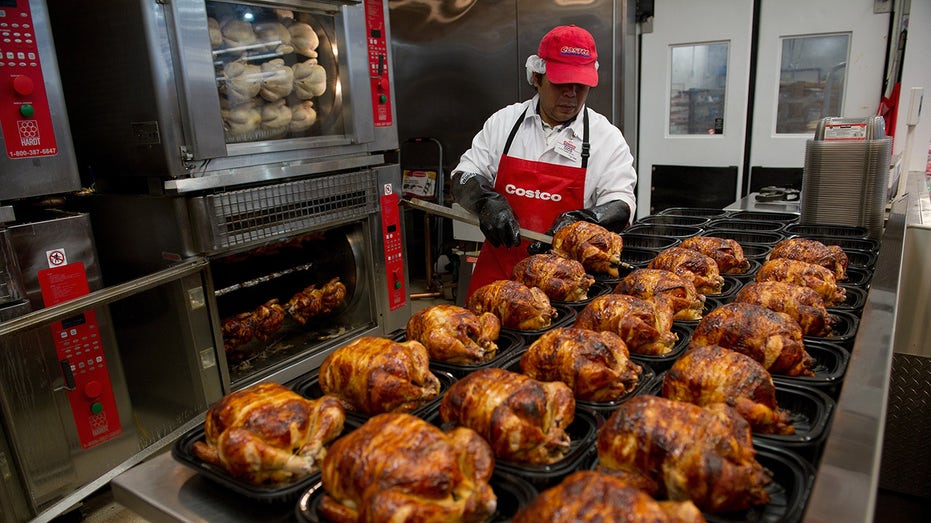
Dios Ruiz, a service deli worker for Costco Wholesale Corp., places cooked rotisserie chickens in containers at a store in San Francisco, California, U.S., on Tuesday, Dec. 6, 2011. Costco Wholesale Corp., a wholesale membership warehouse company, is (David Paul Morris/Bloomberg via Getty Images)https://www.credible.com/partners-widgets/credit-card/rich-cta/?variation=interactive&theme=fox&credclid=abd3fbe6-22c0-4d39-90ec-3a324f3fc376&pageUrl=https%3A%2F%2Fwww.foxbusiness.com%2Flifestyle%2Fcostco-rotisserie-chicken-animal-rights

One year later, the animal’s rights group said it discovered “large piles of dead, rotting animals” on the facility’s grounds outside the barns which housed live chickens.

“Costco members deserve to know the truth about where their chickens come from and how Costco is failing to live up to the animal welfare standards members expect and the company claims to support,” the group said.

Additionally, an undercover investigator captured animals being forced to live for weeks in their own waste while being raised to “grow so large so fast that they often cannot support their weight.” The animals allegedly struggle to walk and “many die from organ failure,” the group said.

COSTCO DROPS COCONUT MILK BRAND FOLLOWING ALLEGATIONS OF FORCED MONKEY LABOR, PETA SAYS

Aside from the terrible living conditions, the investigator allegedly witnessed “countless birds with open wounds, ammonia burns, broken bones, and twisted necks and beaks,” the group said.

Costco told FOX Business that “independent audits are regularly performed to ensure all parties are consistently in compliance” and that Costco and Lincoln will “use the results of our audits as well as other sources of information, including this video” to further improve its animal welfare processes.

“Costco is committed to maintaining the highest standards of animal welfare, humane processes and ethical conduct throughout the supply chain,” the company said in a statement. “Lincoln Premium Poultry (LPP) shares our commitment, as do the independent growers selected for the program who have been carefully chosen based on our mutual business philosophies.”

Mercy for Animals says Costco has the “power to implement meaningful animal welfare requirements for these farms” and is urging the company to take action.

GET FOX BUSINESS ON THE GO BY CLICKING HERE

According to Mercy for Animals, over 200 companies have already adopted Better Chicken Commitment standards which “ban the worst cruelty from their operations” and so far, “Costco has failed to do the same.”

Animal rights activists calling for halt of bird flu poultry culling

Posted : 2021-02-08 13:34Updated : 2021-02-09 09:04

1

Animal rights activists stage a protest at Gwanghwamun, Seoul, in this Jan. 25 photo, calling for a halt to the culling of poultry as a method to prevent the spread of avian influenza, saying there are other options. Yonhap

https://www.koreatimes.co.kr/www/nation/2021/02/119_303745.html

By Bahk Eun-ji

While the government has been bolstering measures to prevent the spread of avian influenza, animal welfare organizations and veterinarians are criticizing the measures ― culling poultry regardless of whether or not they have been infected.

They say culling is nothing more than animal slaughter, and vaccines for the highly pathogenic H5N8 avian flu should be introduced as a preventive measure.

According to the Ministry of Agriculture, Food and Rural Affairs, the number of chickens and ducks culled here, since last Nov. 26 when the first H5N8 case broke out, topped 25.3 million as of Feb. 3. There were 75 cases of infections nationwide.

In Gyeonggi Province alone, more than 6.8 million chicken and ducks in 83 poultry and egg farms were culled during the same period. Of these, 4.24 million at 65 farms, or 61 percent, were culled as a preventive measure although they were not infected with the virus.

The government has been culling all poultry within a three-kilometer radius of infected farms since 2018.

However, animal welfare organizations and veterinary associations are questioning whether the government’s policy is the only viable solution.

Members of 45 organizations, including the Korea Association for Animal Protection (KAAP), held a press conference in Gwanghwamun in Seoul last month, saying more than 100 million poultry have been buried underground since the very first outbreak of avian influenza here in 2003.

“Based on scientific and elaborate analysis, culling should be carried out mainly on the farms infected with the virus. As a fundamental measure to solve the problem, a vaccine for H5N8 should be introduced, just like vaccines turned out to be the fundamental solution to end the ongoing COVID-19 pandemic,” said Lee Won-bok, head of the KAAP.

“Although the country can minimize culling by using vaccines, the government sticks to culling and it seems to only be because of administrative convenience.”

Lee Sung-sik, head of the Gyeonggi Veterinary Medical Association, also said even though there is a simple test kit that can detect the virus within three hours, the government adheres to culling the animals without convincing reasons.

“It seems the authorities are hesitant out of fear of losing the country’s status as a bird flu clean zone if they use vaccines for avian influenza, but now we have to begin vaccination as the virus breaks out every year,” he said.

According to him, losing its status as a “bird flu clean zone” could result in restrictions on the export of domestic poultry and related products, and increase the possibility of allowing imports of poultry products from China, which have been banned as the country is not designated as a clean zone.

In August 2008, Korea declared itself a bird flu clean zone in accordance with guidelines set by the World Health Organization.

He also noted the biggest reason for the government’s hesitation to implement a vaccination program is fear of a virus mutation that could be deadly to humans.

Animal rights activists stage a protest at Gwanghwamun, Seoul, in this Jan. 25 photo, calling for a halt to the culling of poultry as a method to prevent the spread of avian influenza, saying there are other options. Yonhap
Culled chickens are buried near a poultry farm in Yongin, Gyeonggi Province, Jan. 21, after an outbreak of avian influenza was confirmed there. Yonhap

Virus variants can develop when vaccines are used; the H5N8 strain of avian influenza does not pose a great threat to human health, but there is a chance for a variant to develop that is lethal to humans, he explained.

“The virus is powerful enough to infect a million birds with just 1 gram,” an official of the agriculture ministry said, adding no one can predict what mutations could occur or how these mutations might affect humans.

“Despite the large number of culled birds, it should be understood as a measure to prevent greater damage,” he added.

Some other experts argued that the government’s position is understandable given that some types of avian influenza can infect both animals and humans, but claimed the government still needs to consider other options.

“We should not blindly block the introduction of a vaccine, but examine the possibility of a variant in a scientific and rational manner,” said Song Chang-sun, a professor of veterinary medicine at Konkuk University.

Animal rights groups are urging the Government to follow the UK’s example and put an end to badger culling.

09.39 28 JAN 2021


SHARE THIS ARTICLE


Ireland has killed more than 110,000 badgers since 1989 in a bid to prevent cattle getting infected with tuberculosis.

The Irish Wildlife Trust has warned that the culls see healthy badgers, including pregnant or nursing females, snared and then shot. It has said levels are TB in cows are still too high and the programme should “now be considered a failure.”

Meanwhile, the UK Government yesterday confirmed that no more mass badger culls will take place after 2022.

It will instead seek to eradicate bovine TB by vaccinating badgers and restricting the movement of cattle.

Animal Rights Groups Call For End To Badger Culling In Ireland00:00:00 / 00:07:20

On Newstalk Breakfast this morning, the Irish Farmers Association (IFA) animal health chairman Pat Farrell said the number of cattle slaughtered over TB fears has dropped from 44,000 a year to 16,000 a year since the badger culls were introduced.

He said farmers see their trade suspended for a minimum of 120 days when they record an outbreak – with no ability to earn an income until the suspension is lifted.

“The department investigates where there is an outbreak of TB at farm level,2 he said.

“If it is found the badgers have infected the cattle, they apply for a licence and there are strict protocols put in place and there are trained personnel within the department

“It is not a willy nilly situation with badgers culled all over the country. It is only where there is an outbreak of TB that this happens.”

Also on the show, John Carmody, John Carmody, founder of the Animal Rights Action Network said it is time for a more humane response to the issue.

He welcomed the UK decision and urged the Irish Government to honour its commitments under the programme for Government and follow suit.

“The reality is that if we placed more focus on humanely vaccinating these animals, we may not have the problems we face today,” he said.

“What irks me so much is that when we appear to have problems with wildlife, for whatever reason, the only answer we seem to come up with every goddamn time is to kill these poor animals.

“The reality is that if we all sit down together and work together on this particular situation we could come about and work towards ending this cull – which I do hope happens.”

Animal rights groups call for end to badger culling in IrelandMichael StainesMichael Staines

09.39 28 JAN 2021


SHARE THIS ARTICLE


Animal rights groups are urging the Government to follow the UK’s example and put an end to badger culling.

Ireland has killed more than 110,000 badgers since 1989 in a bid to prevent cattle getting infected with tuberculosis.

The Irish Wildlife Trust has warned that the culls see healthy badgers, including pregnant or nursing females, snared and then shot. It has said levels are TB in cows are still too high and the programme should “now be considered a failure.”

Meanwhile, the UK Government yesterday confirmed that no more mass badger culls will take place after 2022.

It will instead seek to eradicate bovine TB by vaccinating badgers and restricting the movement of cattle.

Animal Rights Groups Call For End To Badger Culling In Ireland00:00:00 / 00:07:20

On Newstalk Breakfast this morning, the Irish Farmers Association (IFA) animal health chairman Pat Farrell said the number of cattle slaughtered over TB fears has dropped from 44,000 a year to 16,000 a year since the badger culls were introduced.

He said farmers see their trade suspended for a minimum of 120 days when they record an outbreak – with no ability to earn an income until the suspension is lifted.

“The department investigates where there is an outbreak of TB at farm level,2 he said.

“If it is found the badgers have infected the cattle, they apply for a licence and there are strict protocols put in place and there are trained personnel within the department

“It is not a willy nilly situation with badgers culled all over the country. It is only where there is an outbreak of TB that this happens.”

Also on the show, John Carmody, John Carmody, founder of the Animal Rights Action Network said it is time for a more humane response to the issue.

He welcomed the UK decision and urged the Irish Government to honour its commitments under the programme for Government and follow suit.

“The reality is that if we placed more focus on humanely vaccinating these animals, we may not have the problems we face today,” he said.

“What irks me so much is that when we appear to have problems with wildlife, for whatever reason, the only answer we seem to come up with every goddamn time is to kill these poor animals.

“The reality is that if we all sit down together and work together on this particular situation we could come about and work towards ending this cull – which I do hope happens.”