
Humans Eat Themselves Out of House and Home
Image
2

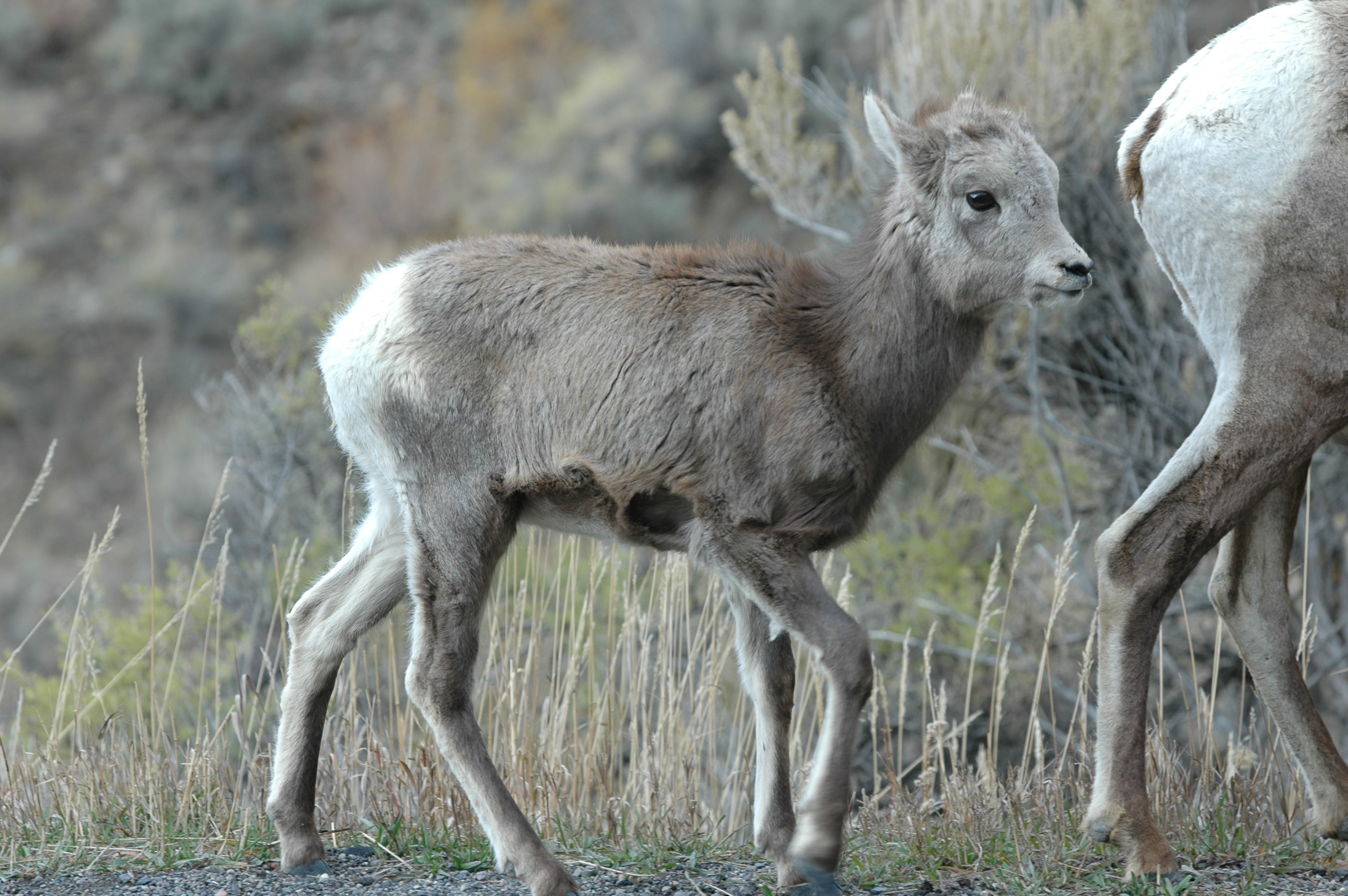
Photo Jim Robertson
by Jack Carone
There is a tendency for some of us who wish to promote veganism—a way of living which excludes the use of animals for food, clothing and other exploitation— to cushion the call to action with a warning/acknowledgement/suggestion that it is a difficult thing to do.
While this is surely the case for some people, for others, including me, it has happened quickly and painlessly when the time was right. To set the stage for interested seekers to expect hardship invites failure or a refusal to even try.
For someone who still really wants to eat animals and their secretions, or still wants to wear a fur coat or a silk shirt, but resists for health or moral reasons understood but not felt, it is certainly hard to do. They have to exert Willpower to resist things they still desire, and this almost inevitably leads to a failure to maintain the “sacrifice”. Someone who gives up meat for “health reasons” very often reverts, occasionally or permanently.
But for someone who has internalized the horror and immorality of subjecting other feeling beings to abuse and slaughter, and who simply refuses to, simply cannot—just won’t— be a part of this any longer, there is no feeling of deprivation, and no enticement which can make them go back to participating in these injustices.
I call this Won’tPower, and in contrast to WillPower, it is effortless to maintain.
Let me tell you what pushed the button in my being and changed my life in an instant.
At the time, I subscribed to the Los Angeles Times newspaper. I sat down one morning and turned to the feature section, and began reading a human-interest story about a man who had become very bitter about life due to some tragic personal experiences. He had become very hard-hearted.
He somehow got a job in a slaughterhouse, killing lambs—baby sheep— as they came by in procession, he took their just-beginning lives with a knife.
One day, a particular lamb passed his station, and he stabbed as before. But before this lamb could fall, mortally wounded, she turned and tenderly licked her own blood from her killer’s hand.
The man broke down, had an instant change of heart, his bitterness melted, he left and became a minister, enriching lives instead of ending them.
I folded the paper, set it down, and have never looked back, except to regret that I had not saved the article!
It is important to note that I had already been thinking about the morality of eating animals, primarily due to my experience of having my first dog as an adult, with all the revelations that living with another species brings, and having met someone’s “pet” turkey, who had expressed as much interest in me as had their Great Dane dog. In other words, the time was right for me, much as the time has to be right to change any ingrained habit, whether it’s smoking, drinking or anything else.
So if you have been wrestling with the ethics of consuming and wearing animals, if you are torn, keep wrestling. Keep thinking and considering. Keep the internal quest alive. When it coincides with the thing—your own personal newspaper article—that pushes your moral button, you may find that it is the easiest and most satisfying thing you have ever done.
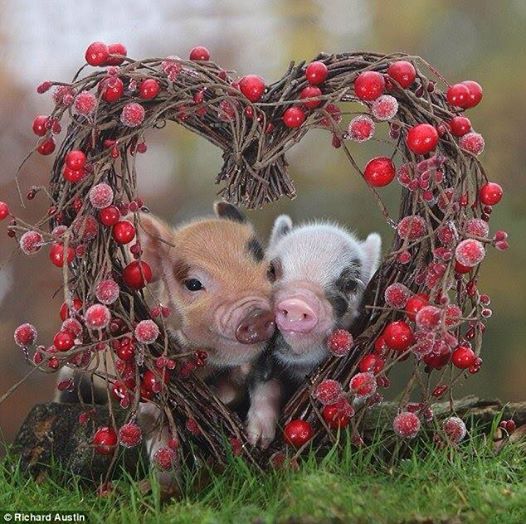
If you eat chicken or pork, you’re supporting extreme animal abuse on factory farms;
If you eat beef, you’re supporting the livestock industry that kills bison, elk and wolves;
If you eat fish, you’re supporting the demise of our living oceans;
If you hunt, your selfish food choice robs a life and cheats a natural predator;
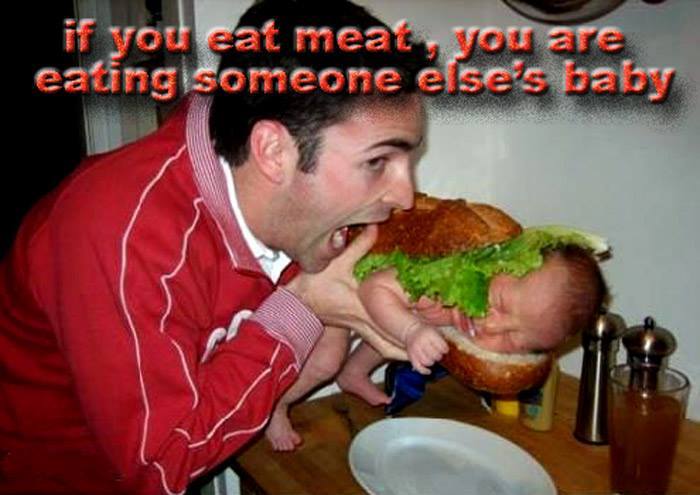
If you eat meat, you’re part of the problem instead of the solution;

Four more cases of deadly bird flu were reported in China on Wednesday, bringing the season’s total in that country to 221. Fifty-seven people have died.
The surge in cases has health officials worldwide watching closely as hundreds of millions of Chinese begin to travel for Chinese New Year.
The H7N9 strain of influenza jumped from birds to humans only last year. It is extremely dangerous, causing severe illness in more than three quarters of people infected and death in more than one quarter, according to Chinese researchers.
It is called bird flu because the virus originated in birds and so far is transmitted to humans only by live poultry. Cooked meat is no risk.
All of this year’s cases have been in China.
The surge in cases comes as China gets ready for what is called Spring Festival in Chinese. Known as Chinese New Year in the West, it begins Jan 31. People customarily travel to spend the holiday with family.
China estimates that 3.6 billion trips will be taken during the two-week holiday — and many of those traveling will be taking or buying live chickens and ducks as gifts.
Humans can be infected by being in close contact with “infected live poultry, mostly in live bird markets or when slaughtering birds at home,” the United Nations Food and Agriculture Organization said in a warning issued Tuesday.
So far, no sustained human-to-human transmission has occurred, according to the World Health Organization.
“Nothing can be predicted with certainty, but on present evidence, none of these viruses shows a potential to spread widely or cause an explosive outbreak,” Margaret Chen, director-general of the World Health Organization, said Tuesday in Geneva.
Flu viruses are notorious for quickly mutating into new forms, but so far genetic analysis by the FAO shows that the H7N9 virus has not changed significantly since its emergence last year.
“We are watching closely the increasing number of confirmed cases that are being reported from China during the past few weeks,” said Joseph Breese, an influenza expert with the Centers for Disease Control and Prevention in Atlanta. “Fortunately, Chinese health officials have not reported changes in the epidemiology of the virus that would lead us to believe it can easily spread between humans.”
The fear is that it could all too easily do so, said Mike Osterholm, director of the Centers of Excellence for Influenza Research and Surveillance at the University of Minnesota in St. Paul. “The clock is ticking but we just don’t know what time it is.”
Several things about H7N9 worry health officials. A major concern is that unlike other flu strains, it doesn’t make infected birds sick, so farmers don’t know their flocks are infected.
Humans are the proverbial canary in the coal mine in this outbreak. “The way we know that we have H7N9 in poultry is that humans start to get sick,” Osterholm said.
When testing shows a flock is ill, farmers have been reluctant to cull their birds because the animals seem healthy.
The birds breathe out the virus. That’s different from other flu strains, which are excreted in feces.
“We don’t know yet if there’s an infectious cloud that comes off the bird markets that can infect nearby humans,” Osterholm said. There have been cases in which people who lived close to a live bird market but didn’t go in still got infected, he said.
The concern is that with so many cases appearing in eastern and southern China, and hundreds of millions of people traveling long distances to get home for the holidays, the virus could find a way to mutate into something that can easily pass between humans.
“We’re in a ‘stay tuned’ moment right now,” Osterholm said. “If that happens, then bets are off. It’s potential pandemic time.”
To all those of breeding age who are considering starting a family or adding yet another human child to this already dangerously over-crowded world, I politely urge you, with all due respect, to please think again. If not for the fragile planet’s sake or for the sake of every other struggling life form headed for mass extinction, then for the child’s sake, your sake and for sanity’s sake. Go ahead and adopt, whether human or non-human, but please don’t add to every environmental woe known to—and caused by—man by falling prey to the ill-advised notion that propagating is our duty or prerogative.
The world as we know it is headed for collapse. Do you really want your precious offspring to witness the unraveling of all of Earth’s systems or suffer the reckoning that’s soon to befall those unfortunate enough to be here when humankind’s self-serving environmental crimes come back on them? Can’t you see that the sheer weight of the human race is crushing everything and everyone else?
As a good friend, a young woman wise beyond her years, put it, those who consider reproducing to be a positive prospect for the twenty-first century “must be closing their eyes, plugging up their ears, and singing ‘Lalalala!’ very loudly.”
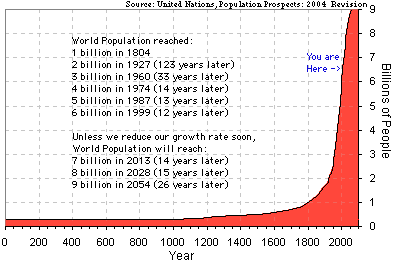
What goes up must come down, people; and for the past couple of hundred years or so, the human population has been accelerating skyward—breaking all sound barriers in a headlong quest to defy gravity, burst out of the Earth’s atmosphere and sail on to oblivion—taking all of creation with it.
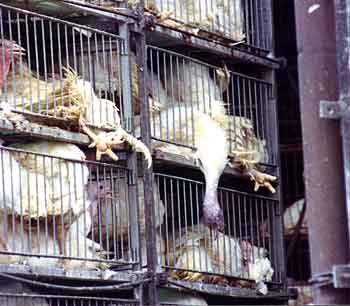
Live chickens at the Baixing Sanniao Wholesale Market in Guangzhou’s Baiyun district, Dec. 20, 2013. (Photo/CNS)
As millions of Chinese prepare to return to their hometowns for Spring Festival, the challenges of containing the latest H7N9 bird flu epidemic have come sharply into focus.
Health authorities are deeply concerned by the resurgent epidemic, with about twenty new cases reported in the first two weeks of 2014, mostly in the eastern costal regions. About 150 cases of H7N9 bird flu have been confirmed in China since the first case in March last year.
Li Lanjuan of the Chinese Academy of Engineering said the virus is more active in winter and spring, and that high density transportation in coaches, trains and aircraft could create favorable circumstances for the epidemic to spread.
Li is China’s leading researcher on bird flu and a member of the H7N9 prevention and control group. She warns that the virus might be spread by migrants returning to their, mainly rural, homes from developed eastern regions.
During the world’s biggest annual human migration in the 40 days around Spring Festival, about 3.62 billion trips will be made this year, according to Tuesday’s National Development and Reform Commission press release.
This year, the highlight of Spring Festival, Chinese Lunar New Year, falls on Jan. 31, which Chinese people traditionally celebrate as a family.
“We are worried about the risk brought by massive numbers of people gathering together in confined spaces,” said Dr Liang Weifeng of the medical college at Zhejiang University.
In Zhejiang, new H7N9 cases have been reported for six consecutive days. As of Tuesday, the eastern province had reported a total of 11, including some fatalities. Zhejiang was also the site of China’s first confirmed human-to-human transmission last November, when a man was infected while caring for his father-in-law.
More alarming still, Guizhou province in the remote southwest of the country confirmed its first H7N9 fatality on Saturday, that of a migrant worker who returned home from Zhejiang on Jan. 4.
Results of research by a Chinese team published in the Lancet, have established that the variation of an amino acid on the H7 gene has made the H7N9 strain more infectious to mammals.
“On the PB2 gene, we have found another variation in a key amino acid. One more variation of a specified amino acid, and human-to-human transmission will become much more likely,” said Liang, indicating his extremely high concern over the possibility.
The team recently identified a new partial variation in the virus, demonstrating its capacity to adapt to its environment.
“It has increased the risk of human-to-human transmission and brought more difficulty in treatment,” Liang added.
“In spite of this, there is no reason to panic. We can confirm that the H7N9 flu virus has not shown scaled variation and human-to-human transmission,” said Gao Hainyu, a member of the team drafting a thesis on the new results.
Another problem facing health authorities is that Spring Festival is also the peak season for poultry sales and consumption.
The Chinese have a long tradition of eating fresh food especially at important feasts and family reunions. Chinese people, especially those in eastern regions, like to buy live chicken and duck and slaughter them at home to serve fresh. Despite a government ban, live poultry markets are reemerging in some regions.
At an open-air market in Zhejiang, Cai, a local senior citizen, and his wife pick several live birds in preparation for cooking the city’s speciality, Hangzhou Roast Duck for the new year. “Dishes of chicken and duck are a must on New Year’s Eve. We can hardly change tradition,” said Cai.
“There is no problem after cooking, and the duck and chicken sold here have been quarantined,” said Zhu Linying, a housewife at Xianlinyuan market in Hangzhou.
Zhejiang and other provinces are cranking up H7N9 control with more inspections and tougher quarantine measures wherever live birds are sold.
Poultry are easily infected by H7N9, and the risk cannot be contained simply by closing live poultry markets, said Li Lanjuan.
“Some deaths were caused by delays in seeking medical advice, as the virus quickly attacks the lungs,” said Li, alerting people to mind their health during the holiday and go to hospital if they have fever or a cough.
http://www.globalpost.com/dispatch/news/afp/140116/spain-animal-rights-groups-call-ban-hunting-dogs
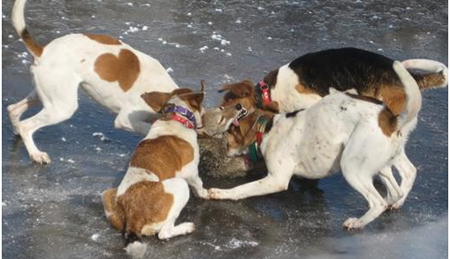
Animal rights groups on Thursday urged Spain to ban the use of dogs in hunting, which they said leads to the abandonment of roughly 50,000 greyhounds each year when they become too slow to hunt with.
Greyhounds, known as “galgos”, are used in Spain for hunting, but when the end of the November-February hunting season comes around their owners often decide they have no further need for them.
Campaigners say many are just abandoned and often starve to death or die in car accidents.
In some cases hunters dispose of their greyhounds by hanging them from trees or throwing them down wells, or they torture poorly performing dogs by breaking their legs or burning them.
“For them they are not pets, they are tools just like a wrench is to a plumber, they have no affection for the greyhounds,” Beatriz Marlasca, the president of BaasGalgo, an association dedicated to the rescue of abandoned greyhounds, told a news conference.
“We either stop this from above or else it will never end. We must eliminate the root of the problem starting by banning hunting with dogs,” she added at the news conference attended by three other animal rights groups.
Marlasca’s group alone finds homes for around 200 abandoned greyhounds a year in Spain, Belgium and the Netherlands.
“A ban on hunting with dogs, as already exists in other European nations, would be a measure that would avoid much suffering to all these animals,” said Silvia Barquero, the vice president of Pacma, a small animal rights party.
The species Homo sapiens woke up this morning to a sudden collective realization that they are plant eating primates, not some Tyrannosaurus-like super predators. Instantly, as if waking with a start from a bad dream, it came to each and every human at exactly 8:00 a.m. that all their problems would be solved if they changed their carnivorous ways.
By day’s end, with the whole of humanity now born again vegan, people begin to feel better than ever—revitalized—with a glow of guilt-free contentment. World hunger eases and peace seems actually attainable since folks have moved beyond their self-centered lust for animal flesh. And the once hunted and farmed animals rejoice, knowing that fleshy two-leggers are over their foolish power trip and are now treating them with fairness and respect.
It’s been a long time coming and not a moment too soon. Starting today, winter solstice, December 21st, 2013 will be known as Happy Vegan Day, a time when all people exchange cruelty-free gifts in honor of the glorious occasion.
______________________
(This has been another installment in EtBG’s “Headlines We’d Like to See.”)

 Exposing the Big Game