Lawsuit Filed Today on Behalf of Chimpanzee Seeking Legal Personhood

http://www.nonhumanrightsproject.org/2013/12/02/lawsuit-filed-today-on-behalf-of-chimpanzee-seeking-legal-personhood/

Posted by on Monday, December 2, 2013

TOM_18_13-web

This morning at 10.00 E.T., the Nonhuman Rights Project filed suit in Fulton County Court in the state of New York on behalf of Tommy, a chimpanzee, who is being held captive in a cage in a shed at a used trailer lot in Gloversville.

This is the first of three suits we are filing this week. The second will be filed on Tuesday in Niagara Falls on behalf of Kiko, a chimpanzee who is deaf and living in a private home. And the third will be filed on Thursday on behalf of Hercules and Leo, who are owned by a research center and are being used in locomotion experiments at Stony Brook University on Long Island.

The lawsuits ask the judge to grant the chimpanzees the right to bodily liberty and to order that they be moved to a sanctuary that’s part of the North American Primate Sanctuary Alliance (NAPSA), where they can live out their days with others of their kind in an environment as close to the wild as is possible in North America.

Full Story: http://www.nonhumanrightsproject.org/2013/12/02/lawsuit-filed-today-on-behalf-of-chimpanzee-seeking-legal-personhood/

Why kill turkeys to celebrate Thanksgiving?

http://www.psychologytoday.com/blog/animal-emotions/201311/slaughtering-sentience-theres-no-reason-eat-turkeys

Millions of turkeys are horrifically raised and killed as mere tokens, but why?

November 28, 2013 by Marc Bekoff, Ph.D. in Animal Emotions

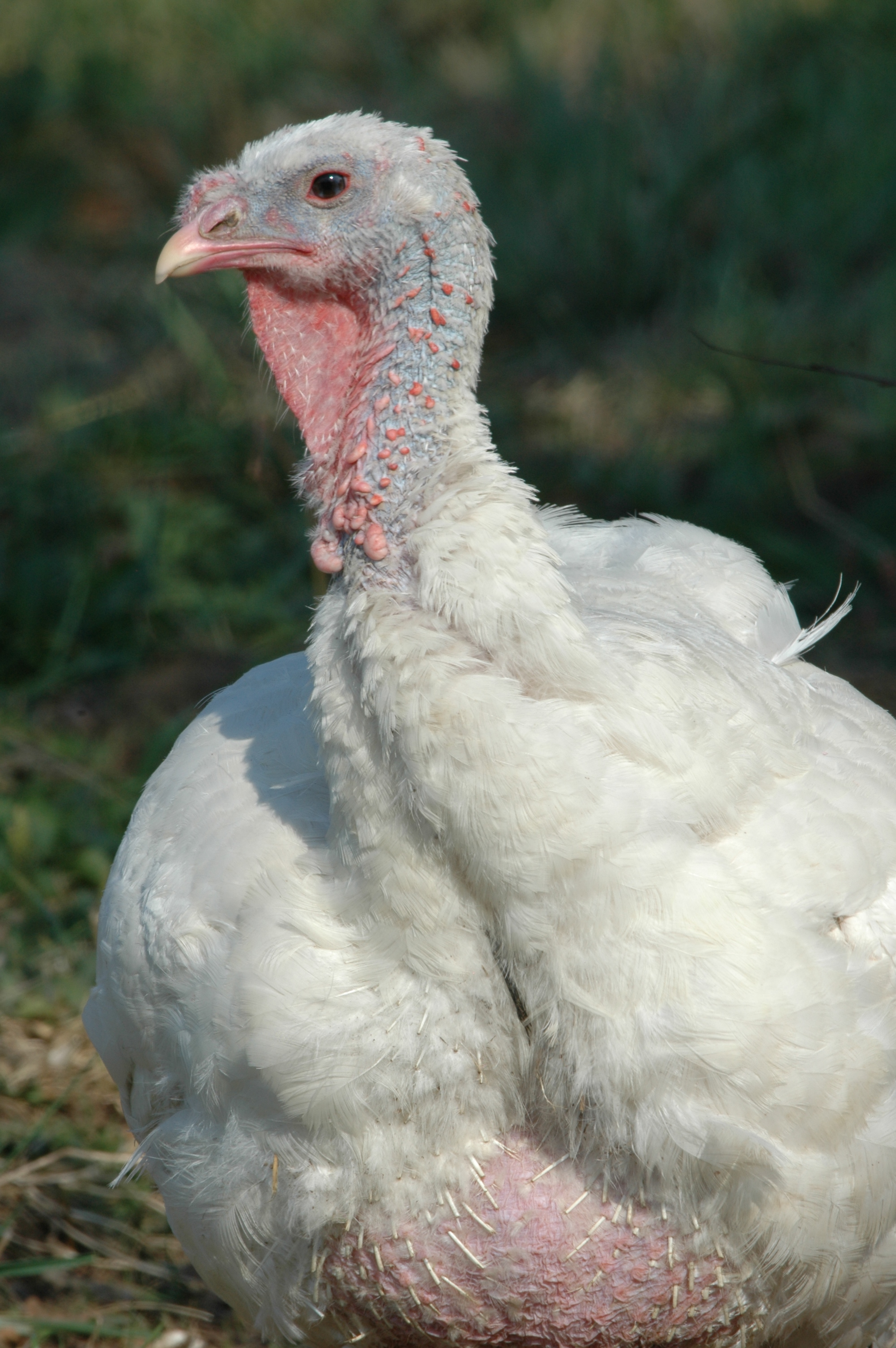
Many of you have heard this question over and over again, “Why kill turkeys to celebrate Thanksgiving?” They say repetition is boring conversation but I feel it’s essential to ask this question repeatedly, because there really

Photo by Jim Robertson

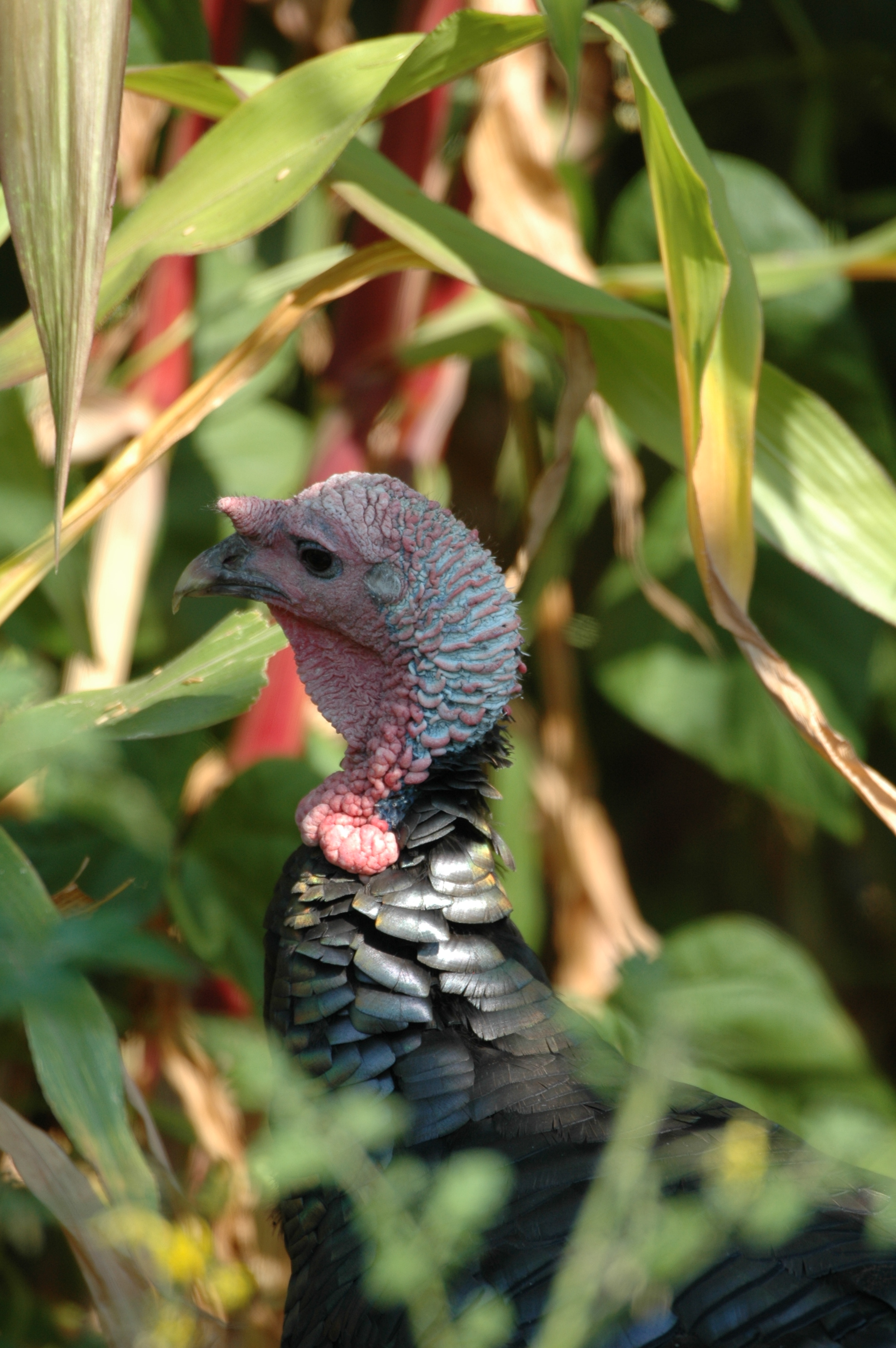
Photo by Jim Robertson

is no reason at all to slaughter and to eat these fascinating sentient beings in the name of a holiday, and turkeys surely are sentient beings (see also). Dr. Ian Duncan, a world-renowned expert on the behavior of food animals notes, based on detailed scientific research, “It is indisputable that poultry are capable of feeling pain. All poultry species are sentient vertebrates and all the available evidence shows that they have a very similar range of feelings as mammalian species. Poultry can suffer by feeling pain, fear, and stress.” More information about the lives of turkeys can be found here.

Turkeys are also very smart and have distinct personalities. People used to write off fish as being unfeeling “lower” animals but we now know, also based on solid scientific research, that they are sentient and feel pain (see also). The more we study other animals the more we learn about how complex their lives are, even for animals previously thought to be unfeeling creatures.

There’s no reason to consume pain and misery: Would you kill and eat your dog?

Holidays should be times for deep reflection. So, please reflect on these facts. More than 45 million turkeys are killed every Thanksgiving. More than 300 million are killed annually. Before they are mercilessly slaughtered individuals are kept in the most inhumane conditions, on the floors of dark, filthy sheds, houses of horrors, where they walk through their own excrement, breathe ammonia-filled air, and are cramped together so tightly they can’t move or get away from one another. As a result there are numerous fights among normally peaceful individuals and they suffer from massive injuries and a wide variety of diseases that humans consume.

Furthermore, when one eats a turkey carcass they are eating a genetically engineered animal and also consuming pain and misery. To keep turkeys from injuring one another their toes and beaks are cut off with hot blades with no anesthetic or analgesic, and when their throat is slit many are still conscious. We know chickens feel empathy and there is every reason to believe that turkeys do too. I know no one would treat their dog like turkeys are treated from birth to their heinous road to death.

There are numerous very tasty non-animal alternatives and even if you don’t think they’re as yummy as a dead bird is it really asking too much to give up something that isn’t a necessary part of your diet? I don’t think so.

Animals shouldn’t be used as token objects of joyous festivities

In order to make changes in the way we live, including who, not what, we eat, we occasionally need to leave our comfort zones. By not turning a blind eye to the incredible suffering that turkeys experience and choosing to forgo eating them, you can add more compassion to the world. You can even adopt a turkey. I urge everyone to try to make this incredibly simple change right now, for this coming holiday and for future celebrations in which animals are consumed as mere token objects of the festivities. I can’t imagine you wouldn’t feel better about yourself. Thank you very much for trying.

Marc Bekoff’s latest books are Jasper’s story: Saving moon bears (with Jill Robinson; see also), Ignoring nature no more: The case for compassionate conservation

Thanksgiving Celebration—Eat Lots, Drink Lots, Respect Little, Care Less

It’s a special morning of a special day, but out in migratory bird habitat there’s a massacre going on. Though nearly every family across the country has a turkey thawing out in preparation for a gluttonous banquet a little later in the day,

Text and Photography ©Jim Robertson, 2013. All Rights Reserved

Text and Photography ©Jim Robertson, 2013. All Rights Reserved

recreational meat-pursuers are ringing in the season by blasting away into flocks of wintering geese to make up for the fact that their sacrificial bird-of-the-day came from a grocery store.

Never mind that the poor being was raised in a windowless barn, crowded-in with so many other turkeys that their wings wither away to virtual stumps of appendages, their natural coloration was bred out of them anyway.

Can’t afford your own tormented Thanksgiving turkey this year? Not to worry, chances are some abattoir has donated hundredsDSC_0277 of frozen carcasses to your local food bank, in hopes of promoting their own animal industry. Here on the coast, turkeys were donated by a thriving seafood “processing” plant.

Non-human life has very little value in today’s world. Heck, a Montana wolf hunter can go out and mow down a loyal dog walking practically at her beloved master’s side and not face any legal consequences. The value of mass-produced birds is measured by the pound. No charge for their stark white feathers; they come off the body easily and can fetch a penny or so a pound at the pillow factory.

But the mighty hunters out in the tidelands currently shooting up a storm won’t be satisfied until they kill something themselves. There’s nothing like a hands-on blood bath to get you in the mood for a feast, I guess. Some folks haven’t come far from Plymouth Rock; at least they phased out witch burnings.

Text and Wildlife Photography ©Jim Robertson, 2013. All Rights Reserved

Text and Wildlife Photography ©Jim Robertson, 2013. All Rights Reserved

November Is World Vegan Month…or Go Stuff It

We interrupt our regularly scheduled, impassioned, pro-wildlife/anti-hunting rant and steady flow of mainstream media articles about shocking situations, reported on in droll, middle-of-the-road-forget-about-everything-and-just-go-shopping fashion, to bring you the following important announcement: It’s my birthday!

That may not seem so important to you, but it’s kind of monumentous to me. It means I’m a day older (I know they say a year older, but technically today I’m really just a day older).
In any case, starting today, I’m going to do things a little differently around here. My original writings, as well as posts and action alerts from pro-animal groups, will still be seen in full. But lengthy articles from the mainstream will, from now on, be posted with just their title, possibly a line or two of lead-in and the link to the publication where you can find them.

More and more news sources are surrounding their text with so many ads that it’s nearly impossible to copy and paste readable portions of a given story; for some reason it seems they don’t want you to read the story without commercial interruptions.
That way, not only will you be linked to any of their related articles, but you’ll also get a chance to window-shop all the material goods and services they’re trying to sell you on. This will also free up some of my time for other writing projects I’m working on. Of course, anyone hungry for more pro-wildlife/anti-front-cover-low-res6hunting material can always get a copy of my book, Exposing the Big Game; Living Targets of a Dying Sport.

Having my birthday fall so close to Thanksgiving is interesting. Most years the 26th of November comes after that celebration, sometimes they both land on the same day and occasionally there’s a year like this one when it’s before. This gives me time a special opportunity to ask you for a gift. Well, it’s not so much a gift as a simple request for the upcoming holiday: this year, instead of feasting on the traditional turkey, how about just stickin’ to the fixin’s. Or you can substitute Tofurkey or Field Roast for the animal flesh entrée; but either way, if you use your imagination, I guarantee you’ll be sated.

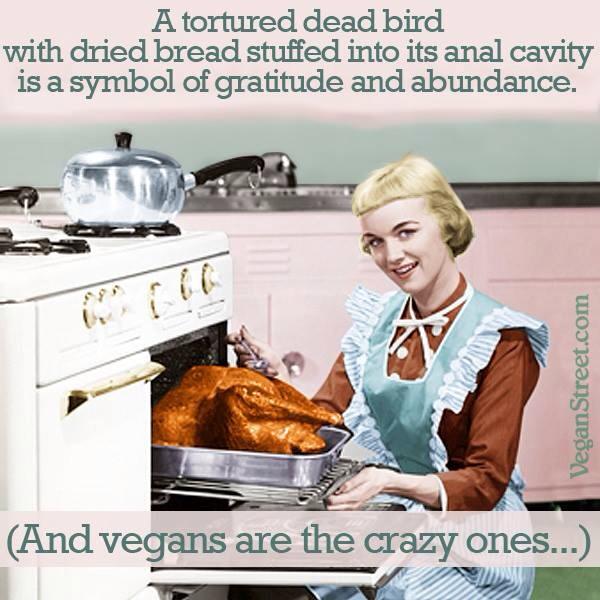
And a side note to those of you who refuse to forego the sacrificial bird–Go stuff it!

1454779_10100531845668927_1897819340_n

What Would Happen to All the Animals if Everyone Went Vegan?

Dr. Will Tuttle: Educator & Author
November 20, 2013

OneGreenPlanet

Those of us eating a plant-based diet often find our food choices causing more questions and consternation during the upcoming weeks than during the rest of the year. One of the perennial concerns I’ve found people have is that if everyone went vegan, what would happen to all the animals—chickens, turkeys, pigs, and cows? If we stopped eating them, wouldn’t they just take over the Earth, threatening our survival?

For years this question irked me because it seemed patently ridiculous, and worse, would be used to justify the cruelty of eating animal foods. Now, though, whenever I hear this question, I see it as an opportunity to deliver a brief meditation on how our world can be healed.

Imagining the world gradually going vegan is imagining the most positive possible future for our species, for the Earth, and for all living beings. First of all, as we reduce the number of animals we are eating, that will send a message to agribusiness to forcefully inseminate fewer female pigs, turkeys, cows, fishes, and other animals, so fewer animals will be imprisoned, and there will be less mutilation, killing, violence, terror, and suffering. It also means there will be lower demand for GMO corn, soy, alfalfa and other feed grains, and thus less deforestation, monocropping, and pollution. As this continues, there will be more food to feed starving people, and also monocropped land can be returned to being critically-needed habitat for wildlife, whose populations are being decimated by the habitat loss caused by grazing livestock and growing feed grains.

As the vegan trend continues, streams will come back and run cleaner. More birds, fish, and other animals will be able to thrive, there will be far less toxic pesticides and fertilizers needed, and the oceans, which we are devastating, will begin to heal. As studies continually demonstrate, livestock production is the main driving force behind global warming, and this also will decrease. In addition, by eating less animal-based foods, people will be healthier physically as they eliminate the toxic fat, cholesterol, and animal protein that drive obesity, diabetes, arthritis, cancer, kidney disease, heart disease, and drug use. People will become healthier emotionally and spiritually, also, as they cause and eat less misery, and our culture, as its level of violence decreases, will become healthier as well.

As forest, rainforest, and prairie communities come back to life, along with riparian and ocean communities, the devastating mass extinction of species that is going on right now will slow down. To raise and slaughter hundreds of millions animals daily for food on this planet, we are forcing hundreds of species of animals and plants into extinction every week. Because of our appetites for a few species of birds, mammals, and fish, we are destroying the Earth’s genetic diversity, and it seems absurd to be unconcerned about these tens of thousands of species, but to care only about the few that we’re eating. In any event, the animals we imprison today for food lived freely in nature for millions of years and could do so again. The animals that we most intensely enslave for food and products, such as turkeys, ducks, geese, chickens, and fish, are all doing just fine in the wild (aside from being hunted and having their habitat destroyed). They would continue to do so, and this is also true for pigs, sheep, and goats, which even today have substantial wild populations. There is no reason to think that the animals we are eating and using wouldn’t be able to return to their natural lives living freely in nature—they already are!

Cows are the only possible question—their progenitors, the aurochs, were forced into extinction in the 1600s, but it is certainly conceivable that cows could be reintroduced into central Asia and Africa where they lived for millions of years, and with time would return to the ecological niche they inhabited before cruel human enslavement tore them from their ancestral homelands.

So, it’s a refreshing question to ponder. It’s remarkably uplifting and heartening to reflect on “what will happen if we all stop eating meat, dairy products, and eggs?” Contemplating this, we see clearly that there’s nothing stopping us from creating a heaven on this beautiful and abundant Earth – nothing except the culturally mandated, deeply-ingrained, and deluded habits of routinely abusing animals for food. Each one of us can question this, and I hope the next time you hear this question, you’ll welcome it enthusiastically!

We can all discuss this question a few times during the holidays, and by doing so, pull back the curtain to reveal the positive future we can create together. There is no action more powerful anyone can take to subvert the dominant paradigm of exploitation and inequality than to shift to a plant-based diet for ethical reasons. By going vegan, and spreading the vegan message creatively, we take the most effective action to create a world where peace, abundance, sustainability, freedom, and universal joy are not just possible but natural.
524958_3325028303604_654533903_n

Stop the Apocalypse—Now

It all started (or should I say, ended) back in 1998 when the Makah tribe was preparing to hunt a grey whale off the Washington coast. Like many people who grew up during the 1960s and ‘70s, I was taken with the idea of returning to a more primitive lifestyle, in “harmony with Nature” as I believed the American Indians surely were. I even spent a summer in the southeast Oregon desert, studying “Aboriginal life skills” of the Paiute people of the Northern Great Basin. It was the same survival course (taught by the same instructor) that Jean M. Auel later took as research for her “Clan of the Cave Bear” book series.

But I began to think that not all tribal people are cut of the same loincloth as the Makah made preparations to kill their NMFS quota of five whales to use for ceremonial and unspecified “commercial purposes.” You may remember the media frenzy surrounding the issue and the animal activists, including Captain Paul Watson at the helm of a Sea Shepherd ship, as well as devoted land protesters whom my wife and I supported and joined whenever we could. Unfortunately, despite months of protests and pleading, the tribe’s rag-tag whaling crew (aided by the federal government) was successful in killing a young female whale with a bullet from a highly untraditional high-powered 50 caliber rifle.

Sadly, “Yabis” (as a Makah elder and lone whale hunt detractor named the whale) could not be saved. The media, of course, defended the kill to the death, comparing the tribe’s right to shoot a whale with their own right to eat unlimited hamburgers. They did their darnedest to convince readers that the road to political correctness was through backing the tribe’s revival of their cultural tradition of killing whales. And besides, who wants to give up their hamburgers anyway?

Well, I for one. I finally saw the hypocrisy of objecting to hunting while continuing to eat farmed animals. From then on we vowed not to be complicit in the unnecessary taking of lives—150 billion a year, at last count. Up until then I had been a meat eater and an occasional fisherman. But from that moment on, I hung up my rod and reel and swore off meat and dairy, never once looking back.

Yet, I know dyed-in-the-faux-shearling vegans whose solid anti-animal abuse stance melts away like a sno-cone on a hot summer day at the first hint that an animal abuser is of aboriginal decent (not that any human being is really “native” to the America’s—some just arrived sooner than others). I may seem obstinate, but I don’t believe a prayer, a chant or any other song and dance makes an animal suffer less or end up any less dead if they were killed by a Native American.

Yet, some people buy into the notion that the mistreatment of a non-human by a native is some sort of spiritual event. Whether elk or bison, fish or whales, a killing that would normally be frowned upon is a joyous occasion when perpetrated by a tribal member. While anyone who holds to their ideals is somehow considered a “racist,” it’s the animal advocate who looks the other way as certain people do the killing who’s the real discriminator.

Shocking as it sounds, the Yellowstone bison are equally exploited fenced-in on a ranch on reservation land as they would be anywhere else in Montana; a deer or elk ends up every bit as injured or dead when shot by a tribal hunter as by the average American sport hunter; tribal gill nets do as much damage to a struggling salmon as those set out by non-Indian commercial fishermen, and a 50 caliber bullet rips into a whale with the same destructive force, no matter who pulls the trigger.

Yes, I used to be a meat-eating fisherman. I changed my ways after allowing myself to absorb facts like, “humans slaughter 6 million animals per hour!” and “20,000 more will die in the time it takes you to read these sentences!” That’s a Holocaust of farmed animals every 60 minutes! And that’s not counting fish, lobsters, shrimp, oysters, clams, krill or other sea life.

Call me a zealot, but when you realize there’s an apocalypse of animals happening right now, you want it stopped, once and for all, and by all—no exceptions.

Text and Wildlife Photography ©Jim Robertson, 2013. All Rights Reserved

Text and Wildlife Photography ©Jim Robertson, 2013. All Rights Reserved

A Bit of Animal Trivia

Everyone likes a bit of trivia. Well, maybe not everyone; you may be the one person who doesn’t. Come to think of it, I don’t really enjoy trivia all that much myself. But anyway, like it or not, here’s some trivia for you…

1) What is the fastest growing bone tissue on Earth?
Answer:  Deer antlers

2) Which wild animal carries a dominant gene affecting their appearance that was acquired from their domesticated cousins?
Answer: Wolves. The wolf got their gene for black fur (found nearly exclusively in North American wolves) from dogs brought over with the earliest people to inhabit this continent.

3) What animal can detect odors up to 5 miles away; can hear both low and high frequency sounds beyond human capabilities and has 360 degree panoramic vision?
Answer: Cows. They also form friendships and are devoted mothers and will walk upwards of five miles in search of their calves.

4) A few centuries ago, this animals’ droppings were considered the best available fertilizer and therefore were protected by armed guards?
Answer: Pigeons

5) Which marine animal can live up to 100 years, uses complicated signals to establish social relationships, and sometimes travels hand in hand, the old leading the young?
Answer: Lobsters

6) When this animal gets injured or sick, his or her mate, and sometimes a comrade or two, will stay by their side until they are able to recover or pass on.
Answer: Canada goose

7) Which animal has the ability to learn the precise details of an area of over 1000 acres?
Answer: The turkey

8) Which dog breed was an American favorite in the early 20th century, featured as a child’s best friend and constant companion on TV and in movies, and can now be found in hospitals and nursing homes as a registered therapy animal?
Answer: The Pit Bull Terrier

9) What creature has some so paranoid that they’ve had protective enclosures—modeled after shark cages—built at school bus stops?
Answer: The Mexican Wolf in Catron County, New Mexico

10) Which animal species secretly communicates with one another through their flatulence?
Answer: Herring. Many species of fish have devised creative forms of communication and recent research has shown fish have a more complex nervous system than was previously accepted.

Bonus Question) While so many others dwindle, which group of animals has been steadily on the increase over  the years, now surpassing 150 billion?
Answer: Those consumed by humans each year.

turkey-factory-farming

Careful, Hunters: PETA’s Drones May Be Watching You

http://mashable.com/2013/10/23/peta-drones/?utm_medium=feed&utm_source=rss

Ar-drone-2.0

By Fran Berkman16 hours ago
Animal rights activists are promoting a new way to make sure game hunters don’t break the rules — but the tool itself may not be legal.

People for the Ethical Treatment of Animals (PETA) has introduced a surveillance drone called the “Air Angel,” which the organization is selling to anyone who wants to keep tabs on hunters. PETA debuted the Air Angel on Monday, the first day of bow hunting season in Massachusetts.

If watchers witness any illegal or cruel hunting practices, they can call the authorities and contact PETA to get the footage shared online, PETA spokeswoman Lindsay Rajt told Mashable. This can also help raise awareness about the cruelty of hunting, she said.

Rajt added that by using the hobby drone, activists could find out which Massachusetts hunters jumped the gun on their Monday morning expedition, which could not start until “one-half hour before sunrise,” according to state regulations. The drone users reported this alleged offense to the local authorities.

“[Authorities] were very receptive, and they said they were going to look into it,” Rajt said. “I think people should call in violations as they see them.”

Dennis Boomer Hayden, president of the Massachusetts Bowhunters Association, said he doesn’t see the point of these drones and called PETA’s efforts “redundant.”

“Hunters already have a police force that watch us, they’re called game wardens,” Hayden told Mashable. “Obviously, they more than protect the wildlife in Massachusetts. They would arrest a hunter if they were doing something wrong.”

Hayden also warned potential drone users that there is a law against harassing hunters in Massachusetts

Hayden also warned potential drone users that there is a law against harassing hunters in Massachusetts, under which it is illegal to both “drive or disturb wildlife or fish for the purpose of interrupting a lawful taking” and to “block, follow, impede or otherwise harass another who is engaged in the lawful taking of fish or wildlife.”

“Anybody that’s going to go out there and buy one of these things to go watch hunters, it’s a form of harassment, and they’re breaking the law,” Hayden said.

The Massachusetts Office of Energy and Environmental Affairs declined to comment on the matter.

Most other hunters don’t seem too excited about this new option for surveillance, either.

“This is just another of the ridiculous antics developed by PETA and other anti-hunting organizations,” reads a post about the drones on the U.S. Sportsmen’s Alliance’s website.

Kali Parmley, a communications specialist at the U.S. Sportsmen’s Alliance who wrote the blog post, did not reply to our inquiry.

Drones, or unmanned aerial vehicles, have sparked a great deal of controversy lately. The Obama administration has used them as its signature weapon in the war against terrorism. Other groups have found more peaceful uses for drones, such as monitoring warlords in Africa, delivering textbooks to Australian students, rescuing victims of heart attacks and even delivering pizza.

PETA is selling the Air Angel for $325 on its website. Rajt insists the organization isn’t earning a profit from the sales.

The aircraft is actually a Parrot AR Drone 2.0 with custom decals that read, “Air Angels: Protecting Wildlife With Drones.” The description of the device on PETA’s website describes its possible uses:

Using your hobby drone, you can collect instant to-your-phone video footage of hunters engaging in illegal activity, such as drinking while in possession of a firearm, injuring animals and failing to pursue them, and illegally using spotlights, feed lures, and other nasty but common hunting tricks. Your amateur footage can be used to alert game wardens and other authorities to who is doing what to animals.

“As a hunter with a high-powered rifle, I can see this getting very very expensive … for PETA, that is,” wrote a commenter with the username “Buck” on the U.S. Sportsmen’s Alliance blog post. This sentiment was a common thread.

Just Call Me a Cow Hugger

People often ask if I get a lot of uninvited remarks from anti-wolf or pro-hunting trolls. The answer is, not as many as you might think. It seems the smart hunters (again, not so many as you might suppose) know better than to waste their time writing to this blog, since any pro-kill comments go straight to the cyber-round file never to reach the light of day. I usually know right away which comments are from hunters; they’re the ones that start off with, “You people are all a bunch of tree huggers…” (Guilty as charged.)

But there are others whose comments also deserve being jettisoned off the cyber-map. I’m talking about those single-minded “wolf people” who blame the cows themselves for the persecution of wolves, as though cows enjoy their lot in life and are part of a grand conspiracy against predators, in league with the very ranchers who brand, dehorn and ultimately slaughter them. These one-note wolf folks should know that not only am I a tree-hugger and a wolf-lover, I’m also a bunny, deer and cow hugger.

In an earlier post, entitled “Animal Industry = Animal Abuse,” I wrote of hearing the cows lowing for their calves. Tonight I’m hearing it again. To me, the sounds they make are every bit as mournful as the howling of wolves, and for good reason. Not only are cows raised just to be killed and eaten by humans, theirs is a lifetime of abuse at the hands of man. Forcibly impregnated, many cows see their calves snatched away just as they start to bond with them. Unlike their wild ancestors, they’re never allowed to freely migrate to wherever conditions are more favorable for them. There are always barbed wire fences, or some bully on horseback or four-wheeler bossing them around or telling them where to go.

Taking it out on the cows (as a psychiatrist in Arizona  did when he killed seven cows in his driveway) is like wishing ill on caged elephants because you disagree with zoos or on rabbits because you hate animal experimentation. Slave auctions were repugnant because people were “treated like cattle.” Well, why should any sentient being be bought and sold like chattel? But no abolitionist ever wished harm on the slaves themselves…

The cows didn’t choose to be born in wolf habitat; they’re there because some fourth generation rancher’s forefather killed off the original wolves, claimed the land and stuck cows on it. If you want to blame someone, blame today’s ranchers for continuing the practice.

In other words, pick on someone with your own brain size. Cows know all they need to know to be a cow. A cow will never be born the next Einstein, but by the same token, no cow will ever be the next Hitler, Ted Bundy or Ted Nugent.

1379284_544626882259670_451791472_n