Lead-ing the Way in California

From Wayne Pacelle’s blog, A Humane Nation

October 11, 2013

Bullets should not keep killing long after they’ve left the barrel of a firearm. Soon, in California, they won’t.

In an act that will have major national reverberations for hunting and ammunitions manufacturing in the United States, Gov. Jerry Brown today signed legislation to make California the first state in the nation to halt the use of lead ammunition in hunting. The HSUS led the fight, along with Audubon California and Defenders of Wildlife, besting the National Rifle Association, the National Shooting Sports Foundation, and other hunting-rights lobby groups that called for the status quo and the continued incidental poisoning of countless birds and mammals, including endangered California condors, in the Golden State. Gov. Brown also signed legislation today to forbid the trapping of bobcats around Joshua Tree National Park and other national parks and wildlife refuges – a second major wildlife victory for us.

Thank you, Gov. Brown. We are immensely grateful.

The lead ammo bill, AB 711, was authored by Assemblymembers Anthony Rendon and Dr. Richard Pan, and the bobcat bill, AB 1213, was authored by Assemblymember Richard Bloom. We are also so grateful to these legislative champions for pushing these important policies over the finish line.

Last year, Gov. Brown signed legislation to outlaw the use of dogs in hunting bears and bobcats, and the year before put his signature on a bill to ban the sale and possession of shark fins. He’s also signed more than 25 other animal welfare bills, protecting mountain lions, banning cruel traps and a wide range of other practices. In all, since voters passed Proposition 2 in California in 2008, state lawmakers and two governors have together enacted more than 40 new statutes for animals – including bans on tail docking of dairy cows and forbidding the sale of shell eggs that don’t meet the standards of Prop 2. Hats off to my colleague, California senior state director Jennifer Fearing, and the rest of our team for leading the advocacy efforts and skillfully working with so many lawmakers and with Gov. Brown. This incredible raft of legislation cements California’s place as the nation’s leading state on animal welfare.

When the NRA and other groups fought efforts more than two decades ago to ban the use of lead shot for waterfowl hunting, they said that a legal prohibition on its use would result in the end of duck and goose hunting. Such outlandish claims, which we can now evaluate in a very tangible way, have proven false. In this year’s legislative fight in California, the National Shooting Sports Foundation – the trade association for gun and ammunition makers, based in Newtown, Conn., of all places – spent tens of thousands of dollars running print and radio ads attacking The HSUS, but their expenditures were all for naught.

Lead has been removed from paint, gasoline, and other consumer products because lead kills. A preponderance of scientific evidence demonstrates that there are significant public health, environmental and wildlife health risks associated with lead from ammunition. One estimate says that there are more than 10 million doves a year who die from lead poisoning. When you consider that there are more than 130 species known to suffer from the toxic effects of spent lead ammunition, it’s quite a staggering toll. Scavenging birds like condors, owls, eagles, and hawks, as well as mammals like coyotes, are all at risk and known to be suffering. Death from lead poisoning is painful, and even when lead exposure isn’t high enough to kill an animal, it doesn’t take much to weaken an animal to the point that it succumbs to predation or disease.

With an alternative product available – including steel, copper and bismuth ammunition – why not make the switch?

Editorial support for AB 711 from newspapers across California has poured in – The Los Angeles Times, the Monterey County Herald, the San Jose Mercury News, the Fresno Bee, the Sacramento Bee, the Riverside Press-Enterprise and the Bakersfield Californian, to name a few. The president and the vice president of California’s Fish and Game Commission backed the bill, as did Department of Fish and Wildlife director Chuck Bonham.

This is an enormous win for our movement. Committed conservationists and animal welfare advocates know it is wrong to allow random poisoning of wildlife. It is inimical to any sound principle of wildlife management and other states should follow California’s lead. With the signing of these two bills, today is a great day for condors, bobcats, and more than 130 other species of wildlife in California!

00-intro

Animal Industry = Animal Abuse

The cows at the ranch across the road were lowing mournfully again last night. Possibly because their calves were taken from them and shipped off to slaughter. Or maybe because they are stuck out in a half-flooded field while the tail-end of a typhoon dumps on them for the fourth straight day.

As is typical in this modern era, although his is a very small operation, the rancher has a building for his machinery, but the animals have to endure hypothermic weather conditions. Meanwhile, their “owner” sits inside an electrically-heated house, thinking only about what the blue, glowing boob tube tells him to.

And they call cows “dumb animals.”

I’ve always felt sorry for cows. Dehorned, defenseless and fenced into squared off, undersized pastures by barbed wire; they’re lucky if they can find a scraggly lone tree to take shelter under during winter storms or hot summer days. Domestic cattle in North America are not adapted to the interminably wet or subzero conditions they are expected to endure here.

And don’t even get me started on sheep. Talk about defenseless. Sheep ranchers have seen to it over the centuries that sheep are at their mercy, or the mercy of any other predatory species that comes along for that matter. And if said predator is non-human, the ranchers bring out their guns, traps and poisons to put the hurt on them as well.

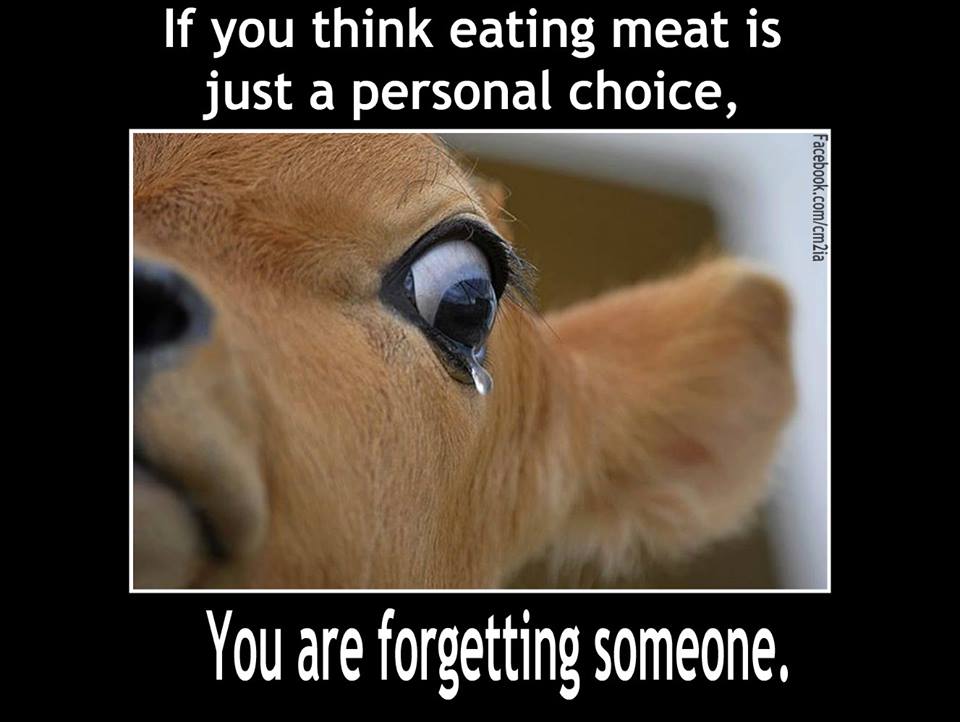
Animal industry is animal abuse, no matter how you slice it.

1175354_593063067417723_1797546469_n

Relative Radicalism

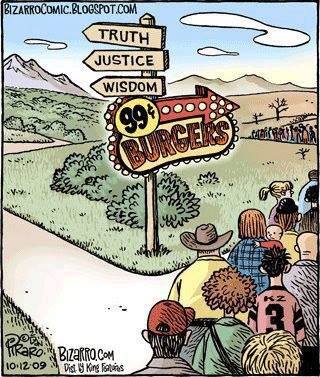
All things are relative, and that includes radicalism. Do I go too far, or not far enough? That depends on who you ask. Ask a hunter, and I’m an extremist “anti”; in the eyes of the everyday meat-eater, I’m a vegan food Nazi.

But to an actual radical—one of the die-hard few who won’t be happy until every cage is empty, every cattle ranch is bankrupt, every mink is freed and every fur farm burned to the ground—well, I’m probably considered too fuckin’ nice. It’s not that I don’t want to see every hog farm abandoned, every layingcage_1 hen liberated, every trap melted back into pot metal, every trophy hunter prosecuted and every meat-eater veganized.

I guess I just don’t have that much faith in humanity.

I can’t get past the feeling that the only way all this human evil’s gonna end is when the species goes completely under, due to, say, a pandemic, major drought, storms or food shortage—the kind of things we’re likely to see as the climate keeps changing for the worse.

I’m not saying we shouldn’t try to do everything humanly possible (within reason) to stop the coming global train wreck, but meanwhile, I’m going to continue to secretly hope Mother Nature will hurry up and get her shit together to make right her biggest mistake. She’s been an overly permissive parent to the spoiled species Homo sapiens thus far, letting them get away with uncontrolled, selfish misbehavior.

It’s about time for her to rein in the over-intelligent, under-compassionate, over teched, under-ethical killer ape, even if she has to throw out the baby with the bath water.


Nothing to Be Proud Of

Being born human is nothing to be automatically proud of. For all you knew, you could just as easily have been born a poodle or pit bull, a parrot, or a penguin, a pig, a platypus or a polar bear. If you ever saw your undeveloped embryo, you’d swear it was a chicken or fish, or a pollywog for that matter—but certainly not the crown of creation.

Call it luck or chance, or even fate (depending on how you feel about who or what you turned out to be), but don’t think it a miracle. Surely God has better things to do than personally see to it that you joined the billions of other humans on the planet on a one-way journey to find a meaningful life.

For most of us, the world would be better off if we hatched out prematurely, at say, the gilled or amphibian stage. If all a person does with their oversized brain is eat hot dogs and memorize baseball statistics, they might as well have been born a carp or a newt—some species evolutionarily locked into a repetitious and relatively mundane way of life.

The only thing that makes human beings any better than some sort of a lowly (but not necessarily loathsome) scavenger is the ability to improve their behavior and evolve beyond their destructive urges. For example, I used to eat meat and enjoy fishing. More on that in an upcoming post…

embryo-compare

Activists Hijack Brutal Bull-spearing Festival

Published: 16 Sep 2013bull

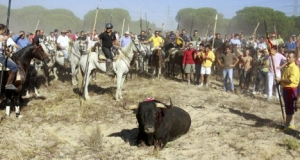
Twenty bulls have been “liberated” from the town of Tordesillas in northern Spain on the eve of a controversial festival in which the whole town hunts down a single animal with spears.

The animals went missing on Saturday night hours before they were due to take part in the notorious Toro de la Vega festival.

Organizers have not ruled out the possibility that animal rights protesters freed the bulls from their stables in the Castile and Leon municipality, online daily El Norte de Castilla reported.

The medieval festival has attracted widespread condemnation for its “savagery and brutality”, with anti-bullfighting party PACMA labelling it one of the “worst examples of animal abuse” in Spain.

Toro de la Vega sees hundreds of spear-wielding participants taking on a 600-kilo beast through the streets and fields of Tordesillas.

The bull, which is surrounded by a multitude of people on foot and on horseback, is only pardoned if it makes it past the fighting zone limits standing.

Ten to fifteen thousand people took to the streets of Madrid on Saturday to call for an end to the ancient bullfighting tradition.

PACMA spokesperson Laura Duarte led the march past Spain’s ruling Popular Party headquarters.

“The PP authorize this festivity in Castile and Leon and opposition party PSOE organize it,” Duarte told digital daily 20minutos.

“They’re both equally responsible for what’s happening in Tordesillas but they won’t change anything unless it’s in their own interests.”

An online campaign launched by Spain’s Animal Dignity Platform has seen thousands of participants holding up signs with the message “I’ll take the bull’s place” as well them posting images of them symbolically breaking spears in half.

Factory Farm Legacy: Animal Torture, Water and Air Pollution and Antibiotic-Resistant Superbugs

From: Organic Consumers Association, September 18, 2013

For related articles and more information, please visit OCA’s Factory Farming page and our Food Safety page.

The days of the small farmer raising his cattle, hogs and hens on green pastures are long gone. Today America’s farming landscape resembles a windowless, animal gulag system filled with metal sheds, wire cages, gestation crates and confinement systems.

Factory farms aren’t about feeding the hungry or harvesting healthy food. They’re about maximizing profits for a handful of the world’s largest agribusiness corporations, and the biotech and pesticide companies that fuel their factories and feed their animals.

Today, nearly 65 billion animals worldwide, including cows, chickens and pigs, are crammed into CAFOs and slaughtered annually. These animals are literally imprisoned and tortured in unhealthy, unsanitary and unconscionably cruel conditions.

Factory farms produce unhealthy animals. And unhealthy people. About 80 percent of all antibiotics used in the U.S. are used on factory farms, either to prevent disease or stimulate growth. Meanwhile, about 70,000 Americans die each year from “superbugs” that have developed a resistance to antibiotics.

Animal Torture Chambers

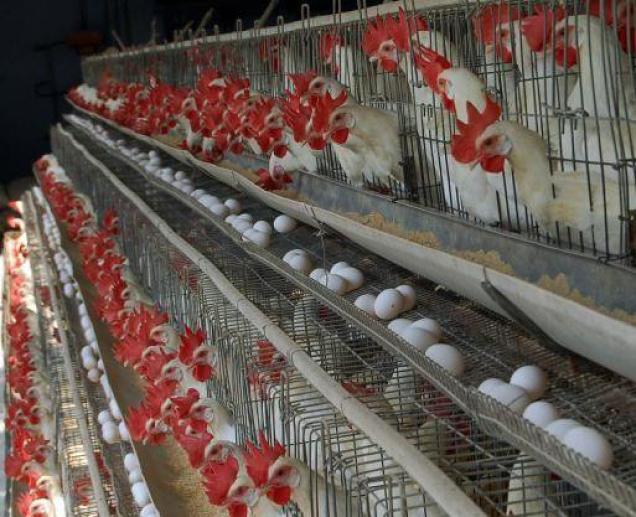
Over 300 million: The number of laying hens in the United States; of these, some 95 percent are kept in wire battery cages.

67: The average number of square inches of space allowed in each hen’s wire battery cage – less than the size of a standard sheet of paper.

72: The number of square inches of space a hen needs to be able to stand up straight.

303: The number of square inches a hen needs to be able to spread and flap her wings.

2 ft: The width of a factory farm sow cage – too small for them even to turn around or lie down comfortably.

2 ft.: The width of a factory farm cage for calves who are raised for veal.

None: The time provided to chickens and hogs raised in factory farms to spend outdoors, breathe fresh air or experience natural light.

None: The time provided to dairy and beef cattle to graze in a pasture where they could express their natural behavior (and ideal diet).

80: The percentage of antibiotics used in the United States that are given to farm animals, as a preventative measure or to stimulate growth. Growth stimulants are prohibited in Europe, but not here.

23 million: The number of pounds of antibiotics added to animal feed every year, to make the animals grow faster.

875 million: The number of U.S. animals, or 8.6%, who died lingering deaths from disease, injury, starvation, suffocation, maceration, or other atrocities of animal farming and transport.

Endangering Human Health

220 billion: The number of gallons of animal waste dumped by factory farms onto farmland and into our waterways every year.

73,000: The number of E. coli and salmonella outbreaks in 2007.

70,000: The number of Americans that die every year because of force-feeding animals antibiotics that helps breed antibiotic-resistant “superbugs.”

5,000: The number of deaths per year from food borne illnesses in the U.S.

4.5 million: The approximate number of Americans exposed to dangerously high nitrate levels in their drinking water. Agricultural Waste is the number-one form of well-water contaminants in the U.S.

14: The percentage of factory farm chickens that tested positive for
salmonella.
68: The percentage of chickens with salmonella that showed resistance to one or more antibiotics.

40: The percentage of cows in industrial dairies that are injected with genetically engineered recombinant bovine growth hormone (rBGH) to increase their milk yields.

70: The percentage of chicken producers that used the toxin roxarsone in their feed additives between 1995 and 2000.

3: The number of cases of mad cow disease identified in cattle in the U.S. — in December 2003, June 2005, and March 2006.

Over 90: The percentage the U.S. Department of Agriculture (USDA) scaled back testing for mad cow disease starting in the fall 2006, claiming that testing was expensive and detection of infected cows was rare.

Nearly 43: The percentage of large-scale dairies (over 500 head) that used rBGH on their cows in 2007, compared to 30 percent of mid-sized dairies, and nine percent of small dairies.

Sources:
Antibiotics are widely used by U.S. meat industry, Consumer Reports
Report: Bacteria in chicken too high, Consumer Reports
10 Reasons to Fear Your Food Supply, Takepart.com
Factory-Farmed Chickens: Their Difficult Lives and Deaths, Britannica Advocacy for Animals
CAFO’s Uncovered, Union of Concerned Scientists

Zack Kaldveer, Assistant Media Director for the Organic Consumers Association, compiled these statistics.

_________________

And From the UK Guardian:

Mad cow, bird flu, pink slime? The bigger threat is antibiotics in our meat

23,000 people die each year in the US from overuse of antibiotics. We should regulate antibiotic use in agriculture


  •  Wednesday 18 September 2013
                                          Beef carcasses at a wholesale meat market in Paris
Beef carcasses at a wholesale meat market. Photograph: Francois Mori/AP

Remember pink slime – that Dayglo-bright mash of ground up meat scraps and cow connective tissues larded with industrial strength ammonia that was being served up in school lunch programs in the United States last year?

More ominously, there was mad cow disease, which has killed scores of people in Britain and elsewhere. Bird-flue outbreaks originating in poultry farms  in China and Southeast Asia have also led to periodic scares. And did I mention salmonella?

But these food-related scourges pale in comparison with another threat, which was the subject of a report released Monday by the US Centers for Disease Control: the spread of antibiotic resistant bacteria. In its first estimate of the scope of the problem, the CDC says that 23,000 people – and possibly many more than that – die in the US each year from infection by microorganisms that can no longer be controlled by our current array of antibiotics.

We’ve known for a long time that our chronic overuse of antibiotics is helping to create these dangerous new strains of bacteria. Public health officials worry that doctors are routinely overprescribing powerful broad-spectrum antibiotics for everything from stomach aches to common colds. The CDC report says that 50% of all the antibiotics prescribed for people are not actually necessary.

But antibiotics are not just overused in medical care; we’re also feeding them indiscriminately to cows, pigs and chickens. Fully 80% of the antibiotics sold in the US are administered to farm animals in their water and feed. The use of these drugs in agriculture is virtually unregulated, according to Keeve Nachman, the director of the Center for a Livable Future at Johns Hopkins University.

Nachman told me that we don’t know exactly what antibiotics are being used in meat production, or how large the doses that are administered are. Even more critically, we don’t know how much of these antibiotics remains in the meat that we eat. There is no requirement to routinely test for this. Eating meat, even with low doses of antibiotics, he warns, may lead to the spread of antibiotic resistant bacteria in our own guts, if the meat is mishandled or undercooked.

There is also ample evidence that the overuse of antibiotics has created resistant bacteria in the external environment. Studies have shown them in water downstream from livestock farms, as well as in the air and soil near facilities where antibiotics are used. Nachman himself published a study yesterday in the journal JAMA Internal Medicine that shows that people living near swine production sites are more likely to be infected with the superbug MRSA (Methicillin-Resistant Staphylococcus aureus).

In light of these risks, the CDC report says pointblank:

The use of antibiotics for growth is not necessary, and the practice should be phased out.

Most antibiotics currently used on farms are not for the treatment of sick animals, or even the prevention of disease, but to promote the growth and weight of livestock. Until recently scientists didn’t know how antibiotics stimulated growth. However, a study published in the journal Nature last year helped to clear up this mystery.

New York University researchers found that antibiotics have a big impact on what is called the microbiome, the teeming ecosystem of billions of diverse bacteria that live within the gut. Not only do they kill off many valuable microorganisms, but they also apparently alter the ability of some gut bacteria to metabolize carbohydrates. With the result that mice that the scientists fed antibiotics fattened up, just as as livestock do.

So if animals typically put on weight when they take antibiotics, what about humans? A study published in the Journal of Obesity found a strong correlation between exposure to antibiotics in childhood and later obesity. But that may not be the worst of it. Evidence is also mounting that low microbial diversity in the gut is associated with a whole range of inflammatory illnesses including heart disease, type 2 diabetes and cancer.

With all of these dangers deriving from our overuse of antibiotics, Keeve Nachman argues that the time has come to get serious about regulating them. He says:

The FDA has proposed a voluntary program in which the pharmaceutical companies are asked to give up their drug approvals for purposes of growth promotion and to relist them for purposes of disease prevention.

But Nachman calls this “essentially a shell game” which will change how the drugs are labelled, but not the way they are actually used in animals.

To solve the problem, he says, we’ll have to ban antibiotics except in actual cases of illness. Farmers should be required to get a prescription from a veterinarian, much as you and I need a prescription from their physician before we can use the drugs.

There are already several European countries that have banned the indiscriminate use of antibiotics in meat production. But so far neither Congress nor regulators in the US have been willing to stand up to the livestock lobby and protect the public’s health.

In Relation to Animals, All People Are Narcissists

The protagonist in Nobel Peace Prize laureate and author Isaac Bashevis Singer’s book, The Letter Writer, stated, “In relation to animals, all people are Nazis.”

Ah, the Nazis; who can forget them? They were those goose-stepping narcissists who had the arrogant audacity to think themselves superior to all other races. Hell, “Nazi” even sounds like a derivative of the word “narcissism.” Thank God that kind of grandiosity is a thing of the past.

Or is it…

Not if you, like Isaac Singer, consider the attitudes human beings have toward their fellow animals. When you allow yourself even for a moment to ponder the plight of non-humans at the hands of man and connect the dots, you’re sure to come to the logical conclusion that: in relation to animals, all people are Narcissists.

Although Galileo and Copernicus have long since put to rest the notion of Earth as the center of the universe, so engrained is the belief that humans themselves are the center of all things that they even imagine their omnipotent creator in the image of man. (When the Good Lord was handing out personality disorders, he must have decided to make humankind the narcissists of the animal kingdom—in His image, perhaps.)

So what’s the problem with people having this perception of prowess, self-importance and excessive sense of entitlement (undeserved as they may be)? As those who study aberrant behavior have found, like the Nazis, the vast majority of serial killers have overblown narcissistic tendencies. While the serial killer objectifies his human victims, the human species is comfortable exploiting other Earthlings for their own selfish gains—no other life forms seem to matter much in the human scheme of things. The human race as a whole considers only the treatment of their own kind worthy of consideration.

Instantaneous creation and miraculous wand waving aside, how did Homo sapiens become so narcissistic as a species? It has been well established that hunters share many of the behaviors and rationalizations of serial killers. Although most people don’t live by hunting any more these days, a long, long history of proving oneself the baddest spear-throwing, fire-wielding, big game hunter on the planet doesn’t fade from the collective psyche overnight. No wonder the species has been so quick throughout history to take advantage of every other animal with such indifference to their needs or feelings. All others are just background—props on their stage.

Never before in the history of mammals have seven billion large, terrestrial, meat-eating members of one species single-handedly laid waste to so much of the Earth’s biodiversity. Human carnivorousness is killing the planet one species at a time, one ecosystem after another. Yet meat has never been so readily available worldwide. That’s because living conditions for farmed animals has taken a backseat on the bus of human hedonism. For all the recent advances made in regards to human rights, the treatment of non-humans has never been more deplorable and demonic.

Like the ordinary German civilian who chose to look the other way during the Holocaust, the everyday meat-eater chooses to remain willfully ignorant of today’s ongoing atrocities. But some who choose a vegetarian or vegan diet purely for their health can be about as narcissistic as a meat-eater.

Even the severely deformed and consequently down-trodden title character in David Lynch’s classic film, The Elephant Man, voiced his perceived human superiority when he told a gawking crowd, “I am not an animal! I’m a human being!” Of course he was an animal, and so are you, and so am I. I’m proud to be an animal. I’m sure if John Merrick, “the elephant man,” had had a chance to get to know many non-human animals, he would have realized that most animals are far more accepting and less judgmental than the average human.

Edgar Kupfer-Koberwitz, a conscientious objector and Holocaust victim who was sent to a concentration camp for “being a strong autonomously thinking personality” wrote in his Dachau Diaries, “I have suffered so much myself that I can feel other creatures’ suffering by virtue of my own…I believe as long as man tortures and kills animals, he will torture and kill humans as well—and wars will be waged—for killing must be practiced and learned on a small scale.”

Human beings are unique only in the extent of cruelty and destruction they inflict. While each and every human being does not suffer from narcissistic personality disorder, the species Homo sapiens is a lot more like a narcissist than a Galileo or Copernicus.

Isaac Bashevis Singer was one of those who was able to shed his deep-rooted human narcissism, a fact made clear by his statement in Judaism and Vegetarianism, “I am a vegetarian for health reasons – the health of the chicken.”

poultry_845904f_jp_1463316f