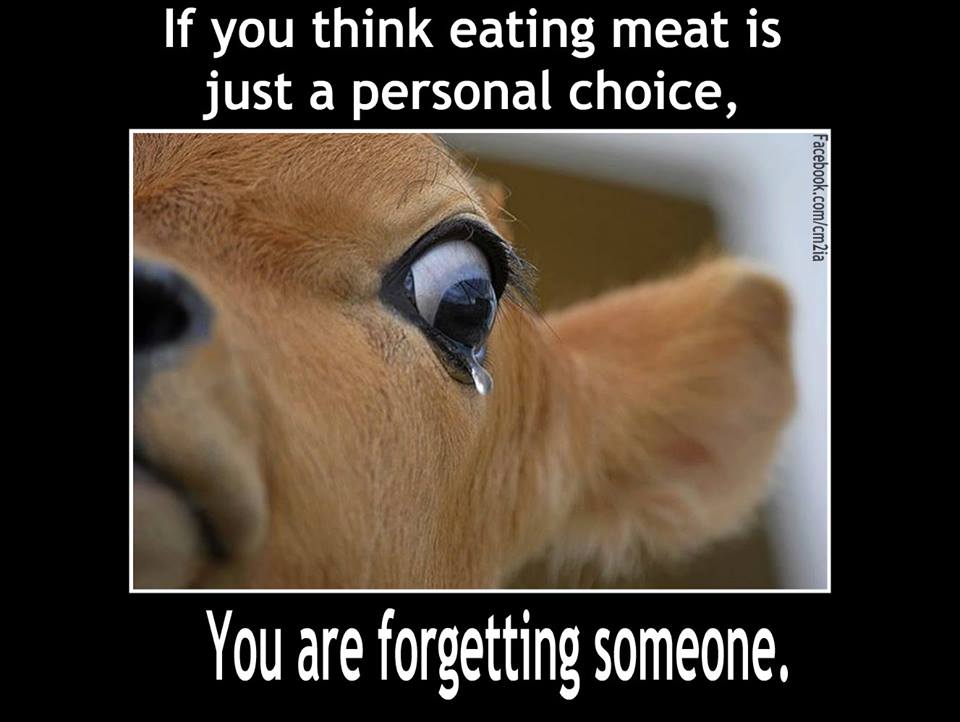
Not Just a “Personal Choice”
Image
5

In agreeing with President Obama’s plan to strike Syria, Representative Nancy Pelosi was quoted as saying we must respond to actions “outside the circle of civilized human behavior.” Nice to hear that the U.S. Government thinks it has the moral authority to respond to such actions. While they’re at it, I can think of a whole lot of other actions which should be considered “outside the circle of civilized human behavior” that are desperately in need of responding to.
I’m referring, of course, to the innumerable abuses of non-human animals by humans—many that go on every day right here in the U.S. of A. I’m afraid if I were to try to list all the instances of human mistreatment of other animals which should fall outside the “circle of civilized human behavior,” the pages would fill the halls of justice, spill out onto the streets and overflow the banks of Potomac River in an unending tsunami of savagery.
So here’s just a partial list…
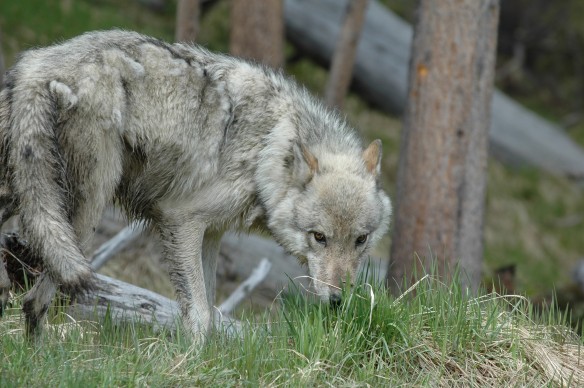
Wolf Hunting—No sooner did grey wolves begin to make a comeback in the Lower 48 than did the feds jerk the rug out from under them by lifting their endangered species protections and casting their fate into the clutches of hostile states. Now, hunters in Wyoming have a year-round season on them while anti-wolf fanatics in Montana have quadrupled their per person yearly kill quota.
Trapping—Only the creepiest arachnid would leave a victim suffering and struggling for days until it suits them to come along for the “harvest.” Yet “law abiding trappers” routinely leave highly sentient, social animals clamped by the foot and chained to a log to endlessly await their fate.
Hound-Hunting—“Sportsmen” not content to shoot unsuspecting prey from a distance of a hundred yards or more sometimes use hounds to make their blood-sport even more outrageously one-sided.
Bowhunting—Those who want to add a bit of challenge to their unnecessary kill-fest like to try their luck at archery. Though they often go home empty-handed, they can always boast about the “ones that got away”… with arrows painfully stuck in them.
Contest Hunts—Prairie dogs, coyotes, and in Canada, wolves, are among the noble, intelligent animals that ignoble dimwits are allowed to massacre during bloody tournaments reminiscent of the bestial Roman Games.
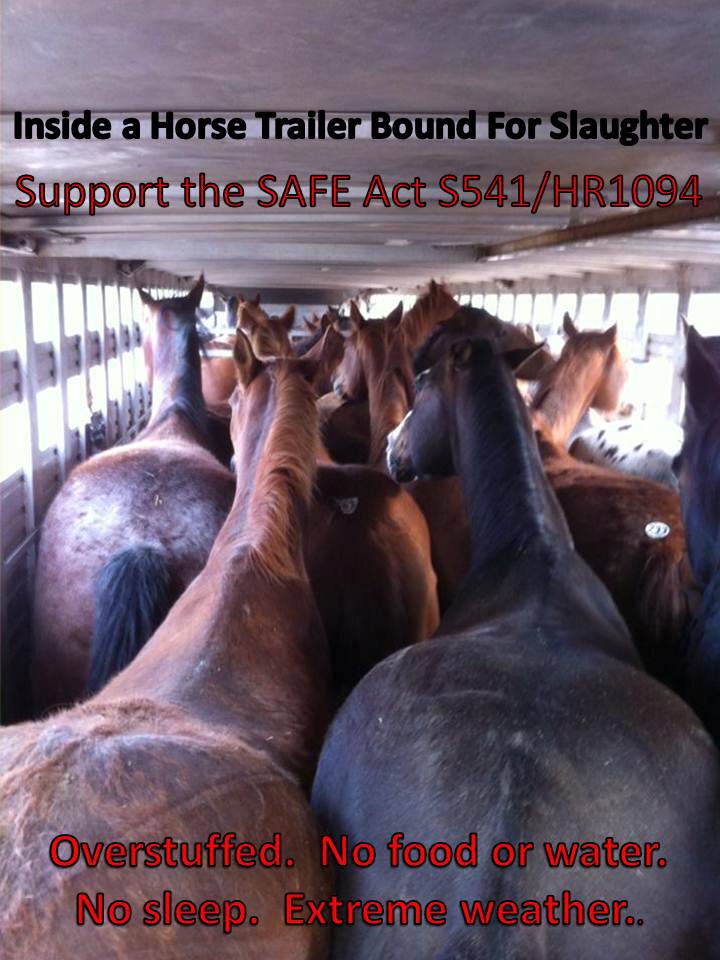
Horse Slaughter—After all that our equine friends have done for us over the centuries, the administration sees fit to send them in cattle trucks to those nightmarish death-camps where so many other forcibly domesticated herbivores meet their tragic ends.
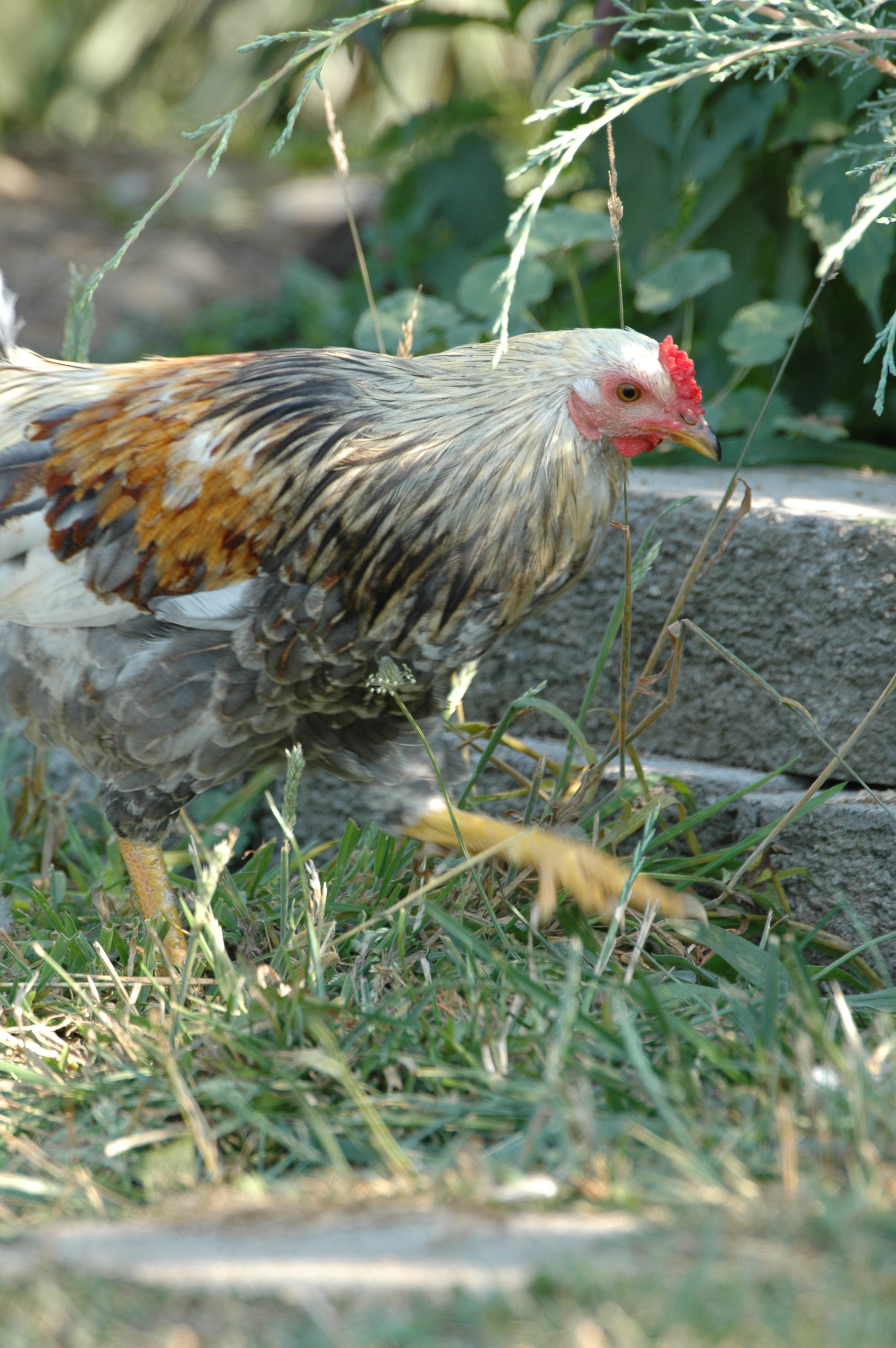
Factory farming—Whether cows, sheep, pigs, chickens or turkeys, the conditions animals are forced to withstand on modern day factory farms fall well outside even the narrowest circle of civilized human compassion. To call their situations overcrowded, inhumane or unnatural does not do justice to the fiendish cruelty that farmed animals endure each and every day of their lives.
Atrocious conditions are not confined to this continent. Chickens in China (the ancestral home of some new strain of bird flu just about every other week) are treated worse than inanimate objects. Bears, rhinoceros and any other animal whose body parts are said to have properties that will harden the wieners of hard-hearted humans are hunted like there’s no tomorrow. And let’s not forget the South Korean dog and cat slaughter, or Japan’s annual dolphin round up…
Far be it from me to belittle the use of chemical weapons—my Grandfather received a purple heart after the Germans dropped mustard gas on his foxhole during World War One. I just feel that if we’re considering responding to actions “outside the circle of civilized human behavior,” we might want to strike a few targets closer to home as well. Or better yet, reign in some of our own ill-behaviors so we can justifiably call ourselves “civilized.”
Text and Wildlife Photography ©Jim Robertson, 2013. All Rights Reserved
Was Your Chicken Nugget Made In China? It’ll Soon Be Hard To Know
September 5, 2013
Here’s a bit of news that might make you drop that chicken nugget midbite.
Just before the start of the long holiday weekend last Friday, the U.S. Department of Agriculture quietly announced that it was ending a ban on processed chicken imports from China. The kicker: These products can now be sold in the U.S. without a country-of-origin label.
For starters, just four Chinese processing plants will be allowed to export cooked chicken products to the U.S., as first reported by Politico. The plants in question passed USDA inspection in March. Initially, these processors will only be allowed to export chicken products made from birds that were raised in the U.S. and Canada. Because of that, the poultry processors won’t be required to have a USDA inspector on site, as The New York Times notes, adding:
“And because the poultry will be processed, it will not require country-of-origin labeling. Nor will consumers eating chicken noodle soup from a can or chicken nuggets in a fast-food restaurant know if the chicken came from Chinese processing plants.”
That’s a pretty disturbing thought for anyone who’s followed the slew of stories regarding food safety failures in China in recent years. As we’ve previously reported on The Salt, this year alone, thousands of dead pigs turned up in the waters of Shanghai, rat meat was passed off as mutton and — perhaps most disconcerting for U.S. consumers — there was an outbreak of the H7N9 bird flu virus among live fowl in fresh meat markets.
What’s more, critics fear that the changes could eventually open the floodgates for a whole slew of chicken products from China. As the industry publication World Poultry notes:
“It is thought … that the government would eventually expand the rules, so that chickens and turkeys bred in China could end up in the American market. Experts suggest that this could be the first step towards allowing China to export its own domestic chickens to the U.S.”
The USDA’s decision comes with a backdrop of long-running trade disputes over meat between the U.S. and China. In a nutshell: China banned U.S. beef exports in 2003 after a case of mad cow disease turned up in a Washington state cow. Then, when the bird flu virus broke out widely among Asian bird flocks in 2004, the U.S. blocked imports of Chinese poultry. China challenged that decision in front of the World Trade Organization, which ruled in China’s favor in 2010.
And, chicken lovers, brace yourselves: There’s more. A report suggests chicken inspections here in the U.S. might be poised to take a turn for the worse. The Government Accountability Office said this week it has serious “questions about the validity” of the new procedures for inspecting poultry across the country.
Basically, these changes would replace many USDA inspectors on chicken processing lines with employees from the poultry companies themselves. The USDA has been piloting the new procedures, which will save money and significantly speed up processing lines, in 29 chicken plants. As The Washington Post reports, the plan is to roll out the new procedures eventually to “most of the country’s 239 chicken and 96 turkey plants.”
The problem? According to the GAO, the USDA did a poor job of evaluating the effectiveness of the pilot programs it has in place.
As a result, the report concludes, it’s hard to justify the USDA’s conclusions that the new procedures will do a better job than current approaches at cutting down on the number of dangerous bacteria like salmonella that pop up on the birds that will later end up on our dinner tables.
Still, the USDA maintains that the changes will, in fact, boost food safety. In a commentary published on Food Safety News, USDA food safety and inspections administrator Alfred Almanza writes, “If finalized and implemented broadly, this new inspection system would enable [USDA inspectors] to better fulfill our food safety mission. Nothing in the GAO’s report contradicts this basic fact.”
Copyright 2013 NPR. To see more, visit http://www.npr.org/.
I am not a hate-filled person by nature, but I have what I consider a realistic view of Homo sapiens as a technologically over-evolved—yet morally under-evolved—ape that supersedes any blind allegiance to the species I might otherwise ascribe to. My disdain for humanity—hereby referred to as my misanthropy—knows no borders, boundaries, colors or cultures, aside perhaps from the emerging culture of do-no-harm veganism.
I’m not so enamored by the modest achievements and advancements we hear so much about that I don’t clearly see that mankind’s ultimate claim to fame is the “undoing” of the most incredible and diverse epoch in the history of life on earth.
My misanthropy is not aimed at individuals per se, but at an entire misguided species of animal with an arrogance so all-consuming that it views itself as separate—and above—the rest of the animal kingdom.
It’s not like humans can’t afford a little resentment once in a while, there are entire religions built specifically on the worship of mankind and its father figure—the maker made in the image of man. But sometimes someone needs to step back and see this species in perspective…
Ever since hominids first climbed down out of the trees and started clubbing their fellow animals, humanoids have been on a mission to claim the planet as their own. No other species could ever live up to man’s over-inflated self-image; therefore they became meat. Or if not meat, a servant or slave in one way or another. If their flesh isn’t considered tasty, they’re put to use as beasts of burden, held captive for amusement or as literal guinea pigs to test drugs and torturous procedures for the perpetual prolongation of human life. Those who don’t prove themselves useful are deemed “pests” and slated for eradication.
Because, for whatever rationale, the human species sees itself as the top dog—all others: the underlings. My misanthropy is not really about a hate of humanity. I just tend to root for the underdog.

Text and Photography ©Jim Robertson, 2013. All Rights Reserved
[This goes for observing animals in the wild as well.]
August letter by Robert Grillo, Free from harm.org
Visiting a sanctuary is a vastly different experience than visiting a farm. Farms value animals to the extent that they produce a profitable product via their flesh, mammary gland secretions or ovulation. Visiting animals on farms does not produce any “breakthrough” in our understanding of animals. On the contrary, most people simply walk away from a farm reaffirming what they have been taught: animals don’t object to being used as resources. It’s natural and sanctified by ancient traditions. Somehow, we rationalize, animals have passively accepted their lot in life. On farms, we view meek or fearful animals from a distance or on the other side of an electrical fence, typically in herds or flocks with ear tags (numbers instead of names), and under conditions which generally repress their ability to express themselves as individuals.
Yet, each animal is a self-aware individual with a unique personality – a complex of experiences, interests, emotions, thoughts, memories, likes, dislikes, desires, joys, fears, loves, families, friends, losses and pains. How do we know this? From sanctuaries and from science.
On a sanctuary, animals are individuals who, like human beings, have intrinsic value and who have no expectations placed on them. The owners are replaced by guardians who provide a caring environment that empowers them with the confidence to more authentically express their true selves. People can walk away from sanctuaries often with a “breakthrough” understanding. They recognize that these individuals are vastly more expressive, more sophisticated than their repressed counterparts on farms. They see much of themselves in these animals. They realize that the stereotypes they’ve come to believe all of their lives are based on prejudice.
Every animal-eating culture around the world has developed, over the course of centuries, a set of oppressive beliefs and traditions to deny animals – not only their identity as individuals – but also the right to exist itself, with the exception of their abbreviated lives as a human resource. Humans treated this way are appropriately called slaves. Humans killed in the manner in which animals are slaughtered is appropriately called an atrocity.
“Many who readily condemn human victimization as “heinous” or “evil” regard moralistic language as sensational or overly emotional when it is applied to atrocities against nonhumans. They prefer to couch nonhuman exploitation and murder in culinary, recreational, or other nonmoralistic terms. That way they avoid acknowledging immorality. Among others, Nazi vivisectors used the quantitative language of experimentation for human, as well as nonhuman, vivisection. Slaveholders have used the economic language of farming for nonhuman and human enslavement.” – Joan Dunayer, from her essay entitled English and Speciesism.
Many people will never have an opportunity to visit a sanctuary in person. The virtual visit we are developing for our online community is the next best thing to being there, providing a powerful way for potentially millions of people to reconnect with animals.
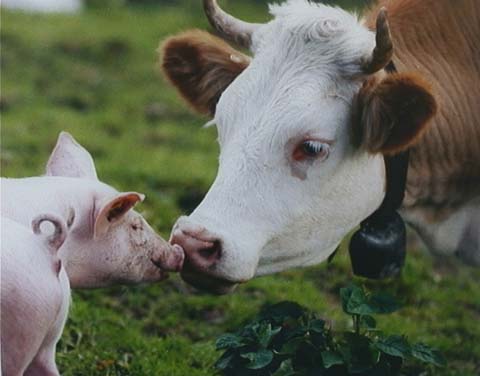
by Stephanie Theisen
Human society is doomed, I have come to that conclusion after many years, at least a couple of decades of watching the destruction of our planet for material objects, the extinction of Species because of human encroachment, overpopulation, development, invading and destroying natural habitats of other Earthlings with roads, housing tracts, malls, big box stores, mining, drilling, fracking, nuclear power, deforestation, hunting, over fishing our precious oceans & filling them with garbage, oil & radiation, poisoning our water supply & factory farming, all in the pursuit of money, cash, greed, redundancy intentional. I listen to people’s indifference, notice their apathy, lack of compassion for any other earthlings but their own, not even their own in many instances. Humans are famous for worshipping idols, royalty & celebrities, I find that repugnant, embarrassing & demeaning…. I wish humans would worship Mother Earth & Nature the way they do such superfluous shit as material possessions & phony icons, superstars, kings, queens etc….. Capitalism has peaked, we really can’t rape the planet any further without the imminent collapse of everything that keeps us alive. Mother Nature is going to vaccinate herself, it isn’t going to be pleasant. We are a burden, a cancer, a virus on this planet, we are going to lose if humanity does not wake up out of their consumer induced comas. Oh never mind, I’m watching my taped episode of entertainment tonight! Beyonce was spotted in a restaurant draped in the fur of 3 dozen murdered animals stuffing her pie hole with foie gras & roasted duck! She is my IDOL, love her! She is such a ruthless, vapid cunt, but I just love her music & she is soooo pretty, wanna be just like her!

People were appropriately appalled at recent news that Syrian rebel leader, Abu Sakkar, ate part of a government soldier’s innards in a primitive display of human evil possibly unrivaled on film (aside from those clandestine videos taken in slaughterhouses to expose animal cruelty, or the footage wolf hunters themselves spread around the internet to impress their buddies and sicken wolf-advocates).
Cannibalism, an abhorrent, aberrant act practiced by carnivorous humans in one form or another the world over since the earliest of times (according to archaeological finds), has fallen out of fashion today for all but the most warped, serial killer-types.
In a new, almost apologetic article called Face-to-face with Abu Sakkar, Syria’s ‘heart-eating cannibal,’ BBC’s Paul Wood tells of his meeting with the Hannibal Lecter of the Mid-East (safely restrained in a straightjacket and hockey mask, one would hope)……
It sounded like the most far-fetched propaganda claim – a Syrian rebel commander who cut out the heart of a fallen enemy soldier, and ate it before a cheering crowd of his men. The story turned out to be true in its most important aspect – a ritual demonstration of cannibalism – though when I met the commander, Abu Sakkar, in Syria last week, he seemed hazy on the details.
“I really don’t remember,” he says, when I ask if it was the man’s heart, as reported at the time, or liver, or a piece of lung, as a doctor who saw the video said. He goes on: “I didn’t bite into it. I just held it for show.”
[A quasi-denial reminiscent of Bill Clinton’s bogus, “But I didn’t inhale” defense.]
The video says otherwise. It is one of the most gruesome to emerge from Syria’s civil war. In it, Abu Sakkar stands over an enemy corpse, slicing into the flesh.
“It looks like you’re carving him a Valentine’s heart,” says one of his men, raucously. Abu Sakkar picks up a bloody handful of something and declares: “We will eat your hearts and your livers you soldiers of Bashar the dog.”
Then he brings his hand up to his mouth and his lips close around whatever he is holding. At the time the video was released, in May, we rang him and he confirmed to us that he had indeed taken a ritual bite (of a piece of lung, he said).
Now, meeting him face-to-face, he seems a bit more circumspect, though his anger builds when I ask why he carried out this depraved act.
“I didn’t want to do this. I had to,” he tells me. “We have to terrify the enemy, humiliate them, just as they do to us…”
Before the uprising, he was working as a labourer in Baba Amr. He joined the demonstrations when they started in the spring of 2011. Then, he says, a woman and child were shot dead at a protest. His brother went to help. He, too, was shot and killed.
Abu Sakkar seems unsure how to respond to his notoriety. He is, by turns, sheepish, nervous, angry and bitter. He definitely has the look of a man who has seen too many bad things. At the end of our interview he says he is an “angel of death” coming to cash in the souls of the enemy.
It is possible that Abu Sakkar was mentally disturbed all along. Or perhaps the war made him this way. War damages men – and Syria is no different.
As the poet W H Auden wrote: “Those to whom evil is done, do evil in return.”
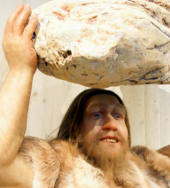
………………………….. 
Where will it all end? Eating human organs (whether heart, lung or liver) out of hatred, rage, to steal another’s life force or to terrify one’s enemies, definitely amounts to evil in my book.
With very few exceptions, most animal species don’t eat others of their own kind. (Some species of gulls will scavenge on the remains of another washed up on the beach; on the other hand, wolves may kill wolves from other packs, but will not eat them.) But cannibalism is not such a stretch for a species like Homo sapiens which eats or has eaten everything that creepeth, swimeth or otherwise moveth on the Earth—from snails to whales and everyone in between.
Indeed, if ancient humans had video cameras, Abu Sakkar’s stunt would seem like small potatoes.
As recently as the early 1800s, New Zealand’s Maori people practiced warfare-related cannibalism, such as the type Sakkar resurrected. New Zealand was blissfully human-free until only a thousand years ago. The Maori were the first settlers of the islands, arriving by canoe several centuries before Europeans. Known for practicing cannibalism in the heat of “battle rage,” the Maori made it onto the list of the Top Ten cases of human cannibalism:
In October 1809 a European convict ship was attacked by a large group of Maori warriors in revenge for the mistreatment of a chief’s son. The Maori killed most of the 66 people on board and carried dead and alive victims off the boat and back to shore to be eaten. A few lucky survivors who were able to find a hiding spot inside the mast of the boat were horrified as they watched the Maori devour their shipmates through the night until the next morning.
North of Australia, an anthropologist studying the Mianmin, a mountain-dwelling tribe in Papua New Guinea, witnessed them carrying off the dead of a neighboring tribe, the Atbalmins, after a successful lethal raid and asked them, “Why?” The Mianmins told the scientist they considered them “good meat.” The Atbalmins were outsiders, different from the Mianmins, who thought of them as “game.”
Also in New Guinea, during the 1950s and ’60s, How Stuff Works tells us: anthropologists studying the Fore people of Papua New Guinea documented an outbreak of kuru, a degenerative spongiform brain disease. The Fore contracted the disease by consuming the brain of their relatives as part of a funerary ritual. Kuru, which is the human version of mad cow disease, is highly contagious.
The only reason cows ever acquired “mad cow disease” is that “beef” producers began the capitalistic ritual of grinding up animal flesh and mixing it with their feed to produce a high protein gruel, thus creating unwitting cannibalistic cattle (possibly the only thing more bizarre than human cannibalism itself).
Ted Turner (the T.V mogul, oldies colorizer, big-time bison-flesh-peddler and former hubby to fellow activist Jane Fonda) predicted in 2008 that unless we drastically curb global warming, by 2040 “…none of the crops will grow. Most of the people will have died and the rest of us will be cannibals,”
Turner also said the population is another problem that must be handled. “We’ve got to stabilize the population,” he told PBS interviewer, Charlie Rose, “We’re too many people. That’s why we have global warming. We have global warming, because too many people are using too much stuff. If there were less people, they’d be using less stuff,” he said.
He also launched verbal offensives against the U.S. war on terror, describing war as senseless and suggesting a cutback in military budgets. “Right now the U.S. is spending $500 billion a year on the military, which is more than all [other] 190 countries in the world put together.
The timing of Turner’s prediction might be a bit off the mark as far as complete crop failure, mass starvation and rampant cannibalism, but one thing’s for certain: as long as people continue to feed their taste for the flesh of others—whether hunted venison, free-range bison, grass-fed beef or factory-farmed pig meat—the thought of moving laterally to include their fellow man in their bill of fare will be much easier to swallow.
It certainly stands to reason that starving humans in future decades might eventually turn to the most numerous flesh foods available—other humans—for survival. But the vegan diet cuts out the middle man (so to speak), allowing for more plants and grains to go to feeding human beings themselves, rather than cows, pigs and chickens. The only solution to avoid a nightmarish future that includes the depravity of cannibalism and is to move beyond the evils of animal exploitation.

In addition to fireworks and Budweiser, hot dogs make up the third element of the traditional trifecta of American freedom, based on Fourth of July celebrations in recent years. And some people like to really go all out.
Just today, 29 year old Joey Chestnut (known in hot dog eating circles as “Jaws”) broke his own record of 68 franks and scored his 7th straight win at Nathan’s Coney Island hot dog eating contest, choking down 69 of the putrid meat-pups.
(Chestnut is not expected to reach 30.)
According to the Huffington Posts’ Weird News, “In the world of competitive eating, the Nathan’s hot dog eating contest is the gut-busting and artery-clogging equivalent of the Super Bowl. It’s by far, the most coveted eat-off.”
Only in America.
Seasoned spectators in the standing room only crowd watched from just out of range of any potential projectile vomitter in the competition.
Huff Post goes on to say, “Chestnut was expected to easily defend his title. Supporters carried him to the stage before the event in a mustard-yellow chair like an Egyptian pharaoh.”
(No doubt he was carried away on a stretcher.)
Here’s what 69 hot dogs looks like:
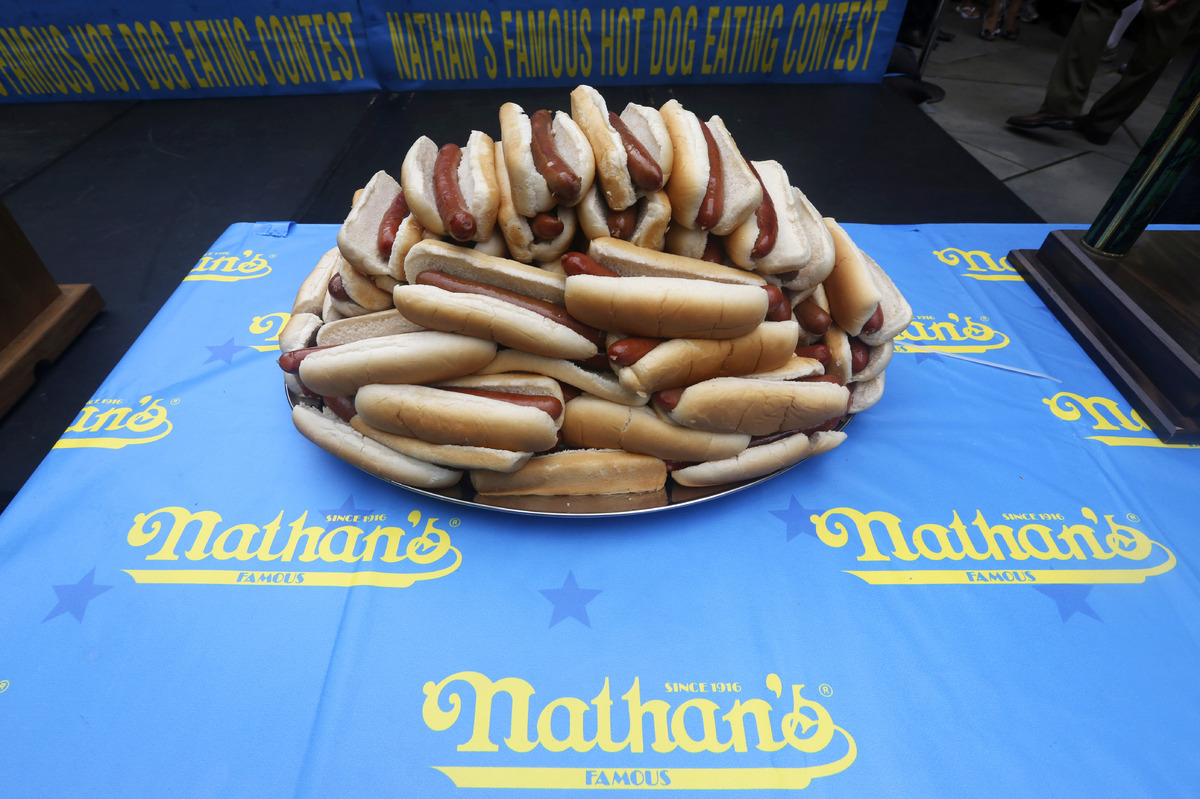
Now that’s a fuck of a lot of wieners! I mean, where does he put it all? The guy must be the carrion-eaters’ equivalent of Linda Lovelace.
Still want to know more about hot dogs?
Treehugger.com’s Melisa Breyer tells us: What’s Really Inside? Shocking Anatomy of a Hot Dog
Last year, Americans purchased more than 700 million packages of hot dogs at retail stores (and that’s excluding sales from Wal-Mart, which doesn’t report numbers). Figure in restaurants, food carts, circuses, ballparks and the like, and that’s a lot of dogs. In fact, the National Hot Dog and Sausage Council estimates that Americans consume 20 billion hot dogs annually.
The country’s most beloved tube of meat is Sara Lee’s Ball Park brand, which eclipsed sales of Oscar Mayer in 2010. Other media outlets have pulled back the curtain on hot dog ingredients in the past — and since we’re at the start of prime hot dog season, it seems as good a time as any to take another look at the who’s who of hot dog ingredients.
So without further ado, before the Fourth of July grills are aflame, here’s the skinny on America’s winning wiener, the Original Ball Park frank:
Mechanically separated turkey: Looking more like strawberry frosting than blended meat and bone bits, the USDA defines mechanically separated poultry (MSP) as “a paste-like and batter-like poultry product produced by forcing bones, with attached edible tissue, through a sieve or similar device under high pressure to separate bone from the edible tissue.” Hot dogs can contain any amount of mechanically separated chicken or turkey.
Pork: According to 1994 USDA rules, any meat labeled as the meat it is can be taken off the bone by advanced meat recovery (AMR) machinery that “separates meat from bone by scraping, shaving, or pressing the meat from the bone without breaking or grinding the bone.”
Water The USDA states that hot dogs must contain less than 10 percent water.
Corn syrup: A combo of cornstarch and acids, corn syrup is used as a thickener and sweetener, as MSNBC notes — it contains no nutrients but does add extra calories.
Beef: In 2004, to protect consumers against Bovine Spongiform Encephalopathy (mad cow disease), mechanically separated beef was considered inedible and prohibited for use as human food, so be glad you won’t be finding it in your dog.
Salt: Hot dogs are salty, that’s part of their job. And in fact, each one has about 480 milligrams, the rough equivalent of 20 percent of your recommended daily allowance.
Potassium lactate: This hydroscopic, white, odorless solid is prepared commercially by the neutralization of lactic acid with potassium hydroxide. The FDA allows its use as as a flavor enhancer, flavoring agent, humectant, pH control agent, and for inhibiting the growth of certain pathogens.
Sodium phosphates: Any of three sodium salt of phosphoric acids that can be used as a food preservative or to add texture — because texture is important when you’re eating a tube of meat paste.
Flavorings: Under current FDA guidelines, most flavoring agents allowed to be listed as “flavor” rather specified individually, so, this remains a bit of a mystery.
Beef stock: You know the drill: Boiled water with pieces of muscle, bones, joints, connective tissue and other scraps of the carcass.
Sodium diacetate: This is a molecular compound of acetic acid, sodium acetate, and water of hydration. The FDA allows its use as an antimicrobial agent, a flavoring agent and adjuvant, a pH control agent, and as an inhibitor of the growth of certain pathogens.
Sodium erythorbate: A sodium salt of erythorbic acid, it is often used as a preservative and helps meat-based products keep their rosy hue. Side effects have been reported, such as dizziness, gastrointestinal issues, headaches and on occasion, kidney stones.
Maltodextrin: Basically, a filler and/or thickening agent used in processed foods, it’s a compound made from cooked starch, corn, or wheat.
Sodium nitrate: This common preservative helps preserve the red color of cured meat — although studies have shown that consuming sodium nitrite may increase cancer risk and trigger migraines. Animal studies have linked sodium nitrates to an increased risk of cancer.
Extractives of paprika: An oil-based extract from the paprika plant — natural ingredient! — used for color and longer shelf life.
For natural, organic hot dogs that have a minimal ingredient list, try hot dogs from Applegate Farms or other all-natural meat makers.
I watched the movie The Unbearable Lightness of Being last night, hoping it included this classic quote found in the original novel by Milan Kundera…
“True human goodness, in all its purity and freedom, can come to the fore only when its recipient has no power. Mankind’s true moral test, its fundamental test (which is deeply buried from view), consists of its attitude towards those who are at its mercy: animals.”
Unfortunately, the film version, while still a great flick throughout its 3-hour running time, did not make room for that or these other timely quotes (also found in the book) about dog and god and death and shit, which (aside from shit) have been the topics of some of my recent posts (my emphasis add in bold)…
“Dogs do not have many advantages over people, but one of them is extremely important: euthanasia is not forbidden by law in their case; animals have the right to a merciful death.”
“The very beginning of Genesis tells us that God created man in order to give him dominion over fish and fowl and all creatures. Of course, Genesis was written by a man, not a horse. There is no certainty that God actually did grant man dominion over other creatures. What seems more likely, in fact, is that man invented God to sanctify the dominion that he had usurped for himself over the cow and the horse.”
“…Nietzsche leaving his hotel in Turin. Seeing a horse and a coachman beating it with a whip, Nietzsche went up to the horse and, before the coachman’s very eyes, put his arms around the horse’s neck and burst into tears.
“That took place in 1889, when Nietzsche, too, had removed himself from the world of people. In other words, it was at the time when his mental illness had just erupted. But for that very reason I feel his gesture has broad implications: Nietzsche was trying to apologize to the horse of Descartes. His lunacy (that is, his final break with mankind) began at the very moment he burst into tears over the horse.”
“Spontaneously, without any theological training, I, a child, grasped the incompatibility of God and shit…either man was created in God’s image – and has intestines! – or God lacks intestines and man is not like him.
“The ancient Gnostics felt as I did at the age of five. In the second century, the Great Gnostic master Valentinus resolved the damnable dilemma by claiming that Jesus “ate and drank, but did not defecate.
“Shit is a more onerous theological problem than is evil. Since God gave man freedom, we can, if need be, accept the idea that He is not responsible for man’s crimes. The responsibility for shit, however, rests entirely with Him, the creator of man.”
“The river flowed from century to century, and human affairs play themselves out on its banks. Play themselves out to be forgotten the next day, while the river flows on.” ― Milan Kundera, The Unbearable Lightness of Being

 Exposing the Big Game