Animal Farming Does Not Support “Ethics” Assurances

United Poultry Concerns <https://www.UPC-online.org>
10 November 2020


A November 2020 article, published by *HoneySuckle Magazine*, promotes a
particular “humane” animal farm, while sharing alternative perspectives by
Karen
Davis of United Poultry Concerns and Alex Hershaft of Farm Animal Rights
Movement:

“Even high standards for animal care do not meet the demands of many animal
rights groups. For example, Dr. Karen Davis from United Poultry Concerns
(UPC)
preaches a vegan and cruelty-free lifestyle. When asked about safe farming
practice, such as that of Seven Sons, she finds that ‘when you get into the
details of animal farming, the word humane and ethics just don’t apply, not
compared to how you would want your dog, or your cat, or yourself to be
treated.'”

“‘I should caution you that we are abolitionists, in the sense that we are
less
concerned with how animals are treated on factory farms than that they are
raised for food altogether. We oppose all oppression of all sentient beings,
however gentle,’ was the warning I received by email before interviewing
Alex
Hershaft, co-founder and president of Farm Animal Rights Movement (FARM),
a vegan blogger <https://theveganblog.org/> and holocaust survivor.”

*Read the article and feel free to add a comment:*
The Monopolization of the Meat Industry
<https://honeysucklemag.com/farmers-and-activists-unite-against-the-monopolization-of-the-meat-industry/>

___________________

Louie B. Free Interview

Today, I was a guest on the Louie B. Free Show: Brainfood from the
Heartland out
of Ohio. Louie and I discussed the emotional life of turkeys and chickens
and
what turkeys suffer in being raised and slaughtered for food. We then
turned our
attention to all the wonderful animal-free “meat and dairy” products that
are
now readily available so that no animal needs to suffer and die for the
dinner
plate. Thank you, as always Louie, for a great interview!
– Karen Davis, United Poultry Concerns

Watch the Video
<https://www.facebook.com/louiebfree/videos/3517409228302549>


United Poultry Concerns is a nonprofit organization that promotes
the compassionate and respectful treatment of domestic fowl.
Don’t just switch from beef to chicken. Go Vegan.
https://www.UPC-online.org/http://www.twitter.com/upcnews
https://www.facebook.com/UnitedPoultryConcerns

View this article online
<https://upc-online.org/alerts/201110_animal_farming_does_not_support_ethics_assurances.html

Enes Kanter On Switching To Plant-Based Diet For Human And Animal Rights

Enes Kanter Plant-Based
Boston Celtics center Enes Kanter (11) stands on the court during the first half of an NBA basketball game against the Washington Wizards, Monday, Jan. 6, 2020.

By Hannah UebeleOctober 26, 2020Boston Public Radio

https://www.wgbh.org/news/local-news/2020/10/26/enes-kanter-on-switching-to-plant-based-diet-for-human-and-animal-rights

Boston Celtics center Enes Kanter is now shifting to a plant-based diet, adding animal rights to his advocacy with an emphasis on factory farming. Being in the NBA bubble granted Kanter free time to do his homework on intensive animal farming, he told Boston Public Radio on Monday.

“When they put us in the NBA bubble, we had nothing to do but just stay in our room, so it was the first time I became very curious about where our food comes from,” he said. “I started to research about all the factory farms where our meat comes from, and learning that animals are abused and workers are abused just shocked me.”

Kanter drew inspiration from fellow pro athletes who are vegans, like New England Patriots quarterback Cam Newton and the Williams sisters, he added. “[Many] trainers say if you don’t eat meat you’re not going to get faster, you’re not going to get stronger, or heal faster,” he said. “But everything was just so wrong, I learned after all the studying I did, and there’s been so much inspiration out there.”

While he’s not a full-on vegan yet, Kanter says he’s working hard to lessen his meat consumption. “Once you do your research, you see it’s not just about not eating meat, but you learn how factory farms abuse animals and workers,” he said. “Three times a day, you get to vote what kind of world you want to live in.”

Ingrid Newkirk’s new book “Animalkind” argues that animals’ individuality is underestimated

Up Next

PETA president Ingrid Newkirk explains to Salon how animal abuse is embedded in the economy and society

 https://www.salon.com/2020/10/31/ingrid-newkirk-book-animalkind-interview-peta/

MATTHEW ROZSA
OCTOBER 31, 2020 6:00PM (UTC)

Ifeel a great deal of remorse admitting that I am an animal lover who still eats animals.

I tried to put this shameful feeling out of my mind as I interviewed Ingrid Newkirk — the president of PETA (People for the Ethical Treatment of Animals), perhaps the world’s most famous animal rights group — about her new book, “Animalkind,” which she co-authored with writer Gene Stone. Certainly the book deserves a good read, regardless of one’s stance on animal rights; and it may recall strong feelings in other readers, too. In a sense, it is really two books: The first half is a tribute to the diversity and complexity of animals ranging from charismatic animals like dogs, pigs and chickens, all the way down to snails and slime molds. The second half condemns the way society exploits animals for food, clothing, scientific study and our own entertainment.Advertisement:https://23e0f90b20991356a7b8ffb87a0e1ec5.safeframe.googlesyndication.com/safeframe/1-0-37/html/container.html

If you support animal rights, “Animalkind” is a handy bible, an easy go-to resource for all of the intellectual arguments and poignant anecdotes you’ll require when making your case to others. If you oppose animal rights, “Animalkind” is a must-read for no other reason than intellectual honesty. From a moral perspective, no one has the right to support acts of cruelty without being fully aware of what they are doing, and why.

I strongly suspect that I am not alone in feeling guilt about the animals that I’ve indirectly hurt in my life. All of us who eat meat or wear leather think at some point in our lives about the animals that brought us these things. If people didn’t know on some visceral level that eating meat was wrong, we wouldn’t have factory farms go out of their way to stop journalists from documenting what they do. It wouldn’t be common for carnivores to mock vegetarians and vegans not by pointing out any flaws in their logic or morality, but simply because the meat-eater feels a little more comfortable, a little less uncertain than they did before.

That is why, when my editor suggested that I interview Newkirk about “Animalkind,” I felt compelled to say yes. I do not claim to be a good person, at least when it comes to this issue. But I hope I am at least good enough to realize that I should, and could, be better. And I was curious to hear what Newkirk had to say about these moral questions about animals that linger in the back of our minds every day.Advertisement:https://imasdk.googleapis.com/js/core/bridge3.419.0_en.html#goog_1695448922https://imasdk.googleapis.com/js/core/bridge3.419.0_en.html#goog_578263414https://imasdk.googleapis.com/js/core/bridge3.419.0_en.html#goog_945155448https://imasdk.googleapis.com/js/core/bridge3.419.0_en.html#goog_1403356993Chelsea Handler, Kathy Griffinand more on finding resilience with comedyGo To Video Page

This interview has been lightly edited and condensed for clarity.

You quoted Charles Darwin, who says that animals are emotional beings and feel the same range of emotions as us. Of all the stories in your book covering those themes of animal emotions, which ones really stand out to you? 

Of course we are one animal among many, and all the animals experience all the emotions. They are great emotional beings. They’re not robots or tables or chairs.Advertisement:https://23e0f90b20991356a7b8ffb87a0e1ec5.safeframe.googlesyndication.com/safeframe/1-0-37/html/container.html

I’m very taken with the love, the fidelity, the protectiveness, particularly of birds who tend to have a 95% separation rate. And I say “separation” because separation usually comes from accidents or being shot. Compared to our 45% or higher divorce rate among human beings.

And I’m particularly interested, not in the exotic species so much — because people understand them or respect them more — but in the denigrated species like pigeons, who are devoted parents. Both the male and the female pigeon make milk for their baby in their crop. And so if you see a pigeon with their bill down another pigeon’s bill, they could be feeding their baby — they take turns doing that — or they could be kissing, because they’re incredibly romantic. And in fact, years ago, when I was protesting the Hegins pigeon shoot — where these pigeons are rounded up in cities, taken out and shot — I noticed that some pigeon mates and friends would come and sit beside an injured wing-shot pigeon, even at great danger and peril to their own lives.Advertisement:https://23e0f90b20991356a7b8ffb87a0e1ec5.safeframe.googlesyndication.com/safeframe/1-0-37/html/container.html

So their loyalty and so on really strikes me. But almost everything about animals is undervalued when we should be in awe of them.

Your book warns against anthropomorphizing animals. Why do you feel this way?

It actually isn’t so much against anthropomorphizing. I think it makes a different point. The people anthropomorphize, meaning put animals’ feelings, emotions, reactions into other animals that they feel themselves. And for years, scientists warned us not to do that in the same way that they don’t want people to give names to animals caged in laboratories who are going to be experimented on because it personalizes them. It makes them real to you as other individuals.Advertisement:https://23e0f90b20991356a7b8ffb87a0e1ec5.safeframe.googlesyndication.com/safeframe/1-0-37/html/container.html

But I think it’s anthropocentric not to recognize that love and joy and all the things you previously just said, these emotions of shared emotions. They are not peculiar to the human animal. We all value our young and hope to protect them unless we’re psychotic. We all do the same things. These are shared traits, shared emotions. And so the days of anthropomorphism need to, or the word “anthropomorphism” needs to disappear from our vocabulary. 

I have a peculiar question, about “cuteness.” I know a lot of us think of animals as being cute. On the one hand, I think that finding animals cute is a positive because it does breed empathy, and it’s an emotion that involves love. At the same time, one could argue that finding animals cute is patronizing and allows us to not see them as our full equals, and excludes the rights of animals that may not be “cute.” A frog may not be considered cute by many, but it doesn’t it have the same rights as a dog. What are your thoughts? 

This is a wonderful question! I often say we infantilize animals. As we see them as accoutrements to our own lives or toys. They have to match our drapes or suit our personalities. So as you say, it is unlikely in the main that anyone would do anything horrific to an animal they considered cute. You do find people picking up a baby dolphin, who is about to be stranded on a beach, or messing around with another cute animal to their detriment, sometimes even causing their deaths while they take selfies with them and what have you, because they want to be so close that “cuteness.”Advertisement:https://23e0f90b20991356a7b8ffb87a0e1ec5.safeframe.googlesyndication.com/safeframe/1-0-37/html/container.html

I’ll give you a little story, if I may. I have a one-footed crow, a mother crow with one foot who comes onto my window sill every morning for breakfast. And she’s just phenomenal. She has to deal with traffic, with winter, with ice. She has to balance on her one foot, on cables and fire escapes, and what have you. She has to find food every day, not just for herself. She has two children. And I know that they’re her offspring because one of them has been extremely noisy and she’s had to deal with them. But they come with her and she has to look after them. She has to shelter them herself. I couldn’t do what she does. And yet one day someone puts their head around the corner of my office and saw her on the window sill and said, “How cute!” Just like that.

And I thought, this is a disabled individual who is caring for a family without a supermarket or a physician, without any of the things that we have, and so “cute” would not be the word I would use to describe her, any more than it’s the word I would use to describe a person living on the street trying to eke out an existence.

In your book, you mention the “three Rs” of humane animal research. I was wondering if you could explain how implementing them would not impair research.

The three Rs are reductionreplacement and refinement, and no one could argue that even if they support the use of animals in experiments, that those three things shouldn’t be done. Why would you use more animals? Why would you not replace them when you should? And why would you not reduce the amount of pain and suffering and so on by refining the experiment?Advertisement:https://23e0f90b20991356a7b8ffb87a0e1ec5.safeframe.googlesyndication.com/safeframe/1-0-37/html/container.html

But I’ll go one step further. What we need now, in this era of high-technology and of high-speed computers programmed with human data, with organs on a chip, with whole human DNA on the internet, with all this wonderful state of the art advancement, is we need to replace. Get rid of animal experiments, swap them out for these wonderful advances that we have made.

Unfortunately, in many laboratories, we have career animal experimenters who are not working on anything to do with human health. They’re working on psychology experiments and they are interfering with the brains of monkeys and rats and frightening them with rubber spiders and snakes and swimming them to exhaustion, just to see what happens. And these are not unusual goings-on in laboratories. We need to change all that now.

I want to ask you a slightly personal question about eating meat and being kind to animals. A lot of cruelty towards animals is embedded in the economy. And for a lot of people, habits are hard to break. What is your advice on changing our behavior to respect animals? 

Well, I think we’re all grown up now and we all understand the concept of personal responsibility. And so we need to be brave and we need to be disciplined and we need to do our best. Nowadays it is so easy, because there are what I call ‘taste alikes’ for every single thing, from steak to shrimp. There is cavi-art instead of caviar and faux gras instead of foie gras.Advertisement:https://23e0f90b20991356a7b8ffb87a0e1ec5.safeframe.googlesyndication.com/safeframe/1-0-37/html/container.html

From the most exotic to the most basic, like the Beyond Burger, I challenge anybody not to satisfy their taste buds while making the switch. So if we do object to the transport, the factory farming, the horrors of the slaughterhouse, the horrors of the laboratories, and so on, we can change easily enough. We’ve got 5,000 companies on our cruelty-free cosmetic and household products list. It’s not hard to find them if you just spend a second or two looking.

So I would say, if there’s an animal in the equation, we have to remember that they’re not volunteers. They didn’t give up the skin on their back or their flesh or volunteer to be an experiment and be killed, or be used in confinement. 

Put yourself in their shoes. What we were taught as children is the golden rule: Do unto others as you would have them do unto you. And if I was in that position, would I wish somebody to pay money for myself or no? So I would say, look, we’ve made it so easy at PETA. We have lists of everything you could possibly imagine: alternatives to dissection. I mean, you name it. Wonderful fashionable shoes. Practical jackets. you can climb Mt. Everest in. Anything you want, there is a vegan version these days. So it really doesn’t take much except a little bit of self-discipline, a little decision that I’m going to do my best.

Animalkind: Remarkable Discoveries about Animals and Revolutionary New Ways to Show Them Compassion,” by Ingrid Newkirk and Gene Stone, is out now from Simon & Schuster. 

What philosopher Peter Singer has learned in 45 years of advocating for animals

In his new book Why Vegan?, the pioneering philosopher of animal rights takes stock of the movement’s progress — and why there’s so much work left to doBy Kelsey Piper  Oct 27, 2020, 8:30am EDT

https://www.vox.com/future-perfect/2020/10/27/21529060/animal-rights-philosopher-peter-singer-why-vegan-book

Peter Singer, outdoors with the bare branches of trees behind him.
Philosopher Peter Singer’s newest book, Why Vegan? returns to questions he’s spent 45 years writing about.

This story is part of a group of stories called

Finding the best ways to do good.

Forty-five years ago, Australian philosopher Peter Singer published the book Animal Liberation. The arguments it made— that animals can suffer; that it is morally wrong to inflict extraordinary suffering upon them; and that we consequently haveto rethink our farming and food systems — are ones that many consumers today will have heard.

At the time, however,Singer’s perspective was a deeply unusual one. There were animal advocacy groups,certainly, but they tended to focus on the plight of abandoned pet animals, like cats and dogs, with no major organization working on the plight of farmed animals (more on this below).

In a 1999 New Yorker profile, journalist Michael Specter wrote thatSinger “gave birth to the animal-rights movement.” Singer’s book, activist Ingrid Newkirk wrote, “was a philosophical bombshell. It forever changed the conversation about our treatment of animals. It made people — myself included — change what we ate, what we wore, and how we perceived animals.” Simply put, the animal welfare movement would not be where it is today without Singer and his book.

Now, 45 years later, he’s revisiting the topic in a new book — a collection of his essays called Why Vegan?, released for sale in the US last week. I spoke with Singer about the history of the animal welfare movement, what progress we’ve made since Animal Liberation came out, and what it will take to change the world he’s been criticizing for nearly half a century now.

This transcript has been edited for clarity and brevity.

Kelsey Piper

You first wrote about the case for caring about animals 45 years ago. What has changed?

Peter Singer

A lot has changed, really. There has been a huge amount of change in awareness. Quite frankly, there is an animal movement now, which is concerned about all animals, not just about dogs and cats and horses.

And there really wasn’t in 1975. It’s not that thereweren’t sort of tiny organizations. There were so many vivisection organizations [which work to combat the practice of animal vivisection for research], actually. But in terms of farm animals, there was really nothing going on. There was a small organization called Compassion in World Farming in the UK when I got into it, which is now a sort of quite large global organization. But it was run by one guy out of his home, I think, at the time, and there was no legislation to protect the welfare of farm animals.

Now, the entire European Union has prohibited some of the worst forms of confinement that I described in Animal Liberation. And so has the state of California. And I think six or seven other states in the US also have legislation protecting farm animals. So that’s a big change.

Then there’s a huge change in the availability of vegetarian and vegan food. Nobody would have known what vegan meant in 1975. There was this very small British organization that was founded in the late ’40s, called the Vegan Society. That was probably pretty much all of the vegans in the UK. And virtually none in the US either. There’s been a huge growth of awareness — organizations like People for the Ethical Treatment of Animals, to courses in animal law being taught at Harvard. There was none of that happening at all [in 1975].

So that’s an immense amount of change. But there hasn’t been nearly enough change in the way we treat animals.

Kelsey Piper

There’s change, maybe, in people’s interest in the issue and how we think about it, but still a pretty bad situation on the ground, and in some ways getting worse, right? Because we have more automation, we have more technology. We’ve bred birds differently.

Peter Singer

Yeah, the breeding of chickens in particular is a really bad aspect of it. They grow faster, they put on weight faster, and they seem to be in more pain just standing up now. That’s one difference, which you’ve written about.

RELATED

Farms have bred chickens so large that they’re in constant pain

The other thing that I would say is — it isn’t bad that China and a lot of other countries are more prosperous. That’s great because there are fewer people in extreme poverty. But there are also hundreds of millions more people wanting to eat meat, [previously] unable to afford to eat meat. And China, in particular, has no national laws about animal welfare at all. The multiplying factory farms, what conditions the animals undergo — they’re pretty terrible. When you go to China, you see [animal abuses] that are pretty horrible you wouldn’t see here in the US.

Kelsey Piper

I’m also curious about the philosophy side of this. Are the arguments that you put forward 45 years ago still what you see as some of the strongest arguments for animals?

Peter Singer

I think the arguments that I put forward in 1975 are still the basic arguments, which seemed to me the most cogent. So what happened after I wrote Animal Liberation is that a number of different philosophers use different approaches.[American philosopher]Tom Regan’s animal rights argument, for example, wasn’t really in the literature beforehand, not in the form that Tom put it in, and a variety of other different views. [Regan argues that from a Kantian perspective, at least some animals have intrinsic rights as humans do, because they are what he called “subjects-of-a-life.”]

So there is more pluralism about different approaches, philosophically, that lead to somewhat similar conclusions. But I remain a consequentialist. [There are] rights-based approaches — for those who like that approach … [they] are out there, and that’s a good thing. Martha Nussbaum’s capabilities approach comes to a similar conclusion as well. [Nussbaum’s approach argues that ethics should be focused on the freedom to achieve well-being, and understood in terms of how many real opportunities to do that someone has.]

Kelsey Piper

I have seen it said that animals mattering, and being of moral significance — and accordingly, factory farming being very bad — is something of a rare area of agreement in moral philosophy.

Peter Singer

Yeah, absolutely. And even people who disagree on some of the points, like Roger Scruton, who died recently, was a conservative, British philosopher. Some sort of religious bent, I think, because hetalked about [how] we should have piety towards animals. He certainly continued to eat them, and even champion eating them, but he certainly opposed factory farming.

Kelsey Piper

I’m curious what you see as the strongest, simply put argument for being vegan.

Peter Singer

I think that it removes you completely from complicity in practices that are not morally defensible about the raising and killing of animals for food.

There are more complicated arguments about whether you’re justified in bringing animals into existence who would not otherwise have existed and have a good life, about animals raised in suitable conditions and humanely killed. So you know, there are arguments for defending some forms of animal consumption. I don’t know what the impact of that is on attitudes to animals and whether it reinforces the idea that animals are still things for us to use.

Kelsey Piper

Are you personally vegan?

Peter Singer

Strictly speaking, no. For example, I don’t think that bivalves — mussels and clams — I don’t think they can suffer, so I eat them. I would certainly eat cellular-based meat, once it was available. And I’m not really strict about avoiding free-range eggs.

Kelsey Piper

That’s been one of the struggles in our family, finding eggs that we are confident come from chickens who were well-treated.

Peter Singer

Yes, that’s right. I think it’s somewhat easier to get genuinely free-range eggs in Australia [where Singer lives] than in big American cities anyway. It’s not always that easy to sort out which are labeled free range, but actually kept in big warehouses with small patches where they can go outside. In Australia they report the stocking density.

Kelsey Piper

In 2020, of course, there’s lots of old arguments about animal farming that are still relevant. But there’s also some new sorts of concerns on everybody’s horizon — like the potential for pandemics and the potential for contributing to climate change.

Peter Singer

The last essay in the collection is a 2020 essay about the origins of the coronavirus pandemic, flu, and whatnot. It talks about wet markets, and the combination of cruelty and health risk that involves.

When I published Animal Liberation, I was focused entirely on the animal aspect of it. Then, during the ’80s, I became aware of the climate change issue, and of the role of animal production in that. So there was a second major argument for avoiding animal products. When I talk to people who’ve become vegan in the last few years, I find climate has played quite a significant role.

And then in recent years, I’ve become aware of the risk of pandemics coming out of factory farming. So what I say in the book is — there’s now this third reason: animals, climate, pandemics.

In Memory of Animal Rights Activist Shimon Shuchat

AUGUST 4, 2020 BY DONNY MOSS — LEAVE A COMMENThttps://www.facebook.com/plugins/share_button.php?href=https%3A%2F%2Ftheirturn.net%2F2020%2F08%2F04%2Fin-memory-of-animal-rights-activist-shimon-shuchat-tribute%2F&layout=button&size=small&appId=560935960731324&width=67&height=21https://platform.twitter.com/widgets/tweet_button.3c5aa8e2a38bbbee4b6d88e6846fc657.en.html#dnt=false&id=twitter-widget-0&lang=en&original_referer=https%3A%2F%2Ftheirturn.net%2F2020%2F08%2F04%2Fin-memory-of-animal-rights-activist-shimon-shuchat-tribute%2F&size=m&text=In%20Memory%20of%20Animal%20Rights%20Activist%20Shimon%20Shuchat%20-%20Their%20Turn&time=1597011391241&type=share&url=https%3A%2F%2Ftheirturn.net%2F2020%2F08%2F04%2Fin-memory-of-animal-rights-activist-shimon-shuchat-tribute%2FShare on TumblrSave

The News

Shimon Shuchat, a 22-year-old animal rights activist from Brooklyn, died on Tuesday, July 28th. In spite of being so young, Shimon was one of the most wise, humble, ethical, empathetic and hard-working activists in New York City. He was also extraordinarily smart. No tribute, including this one, could do justice to Shimon.

Animal rights activist Shimon Shuchat

Shimon’s story is different than most. He was raised in an ultra-Orthodox Jewish home in Brooklyn. According to his Uncle Golan, he learned how to read when he was two years old, and he showed unusual signs of empathy when he was a little boy. For instance, he somehow figured out that a leather jacket was made from a cow, and he asked his parents why people would wear that. When he was a teenager, he came across animal cruelty videos that shook him to the core. He became an atheist, and he made the decision to chart his own course in life.

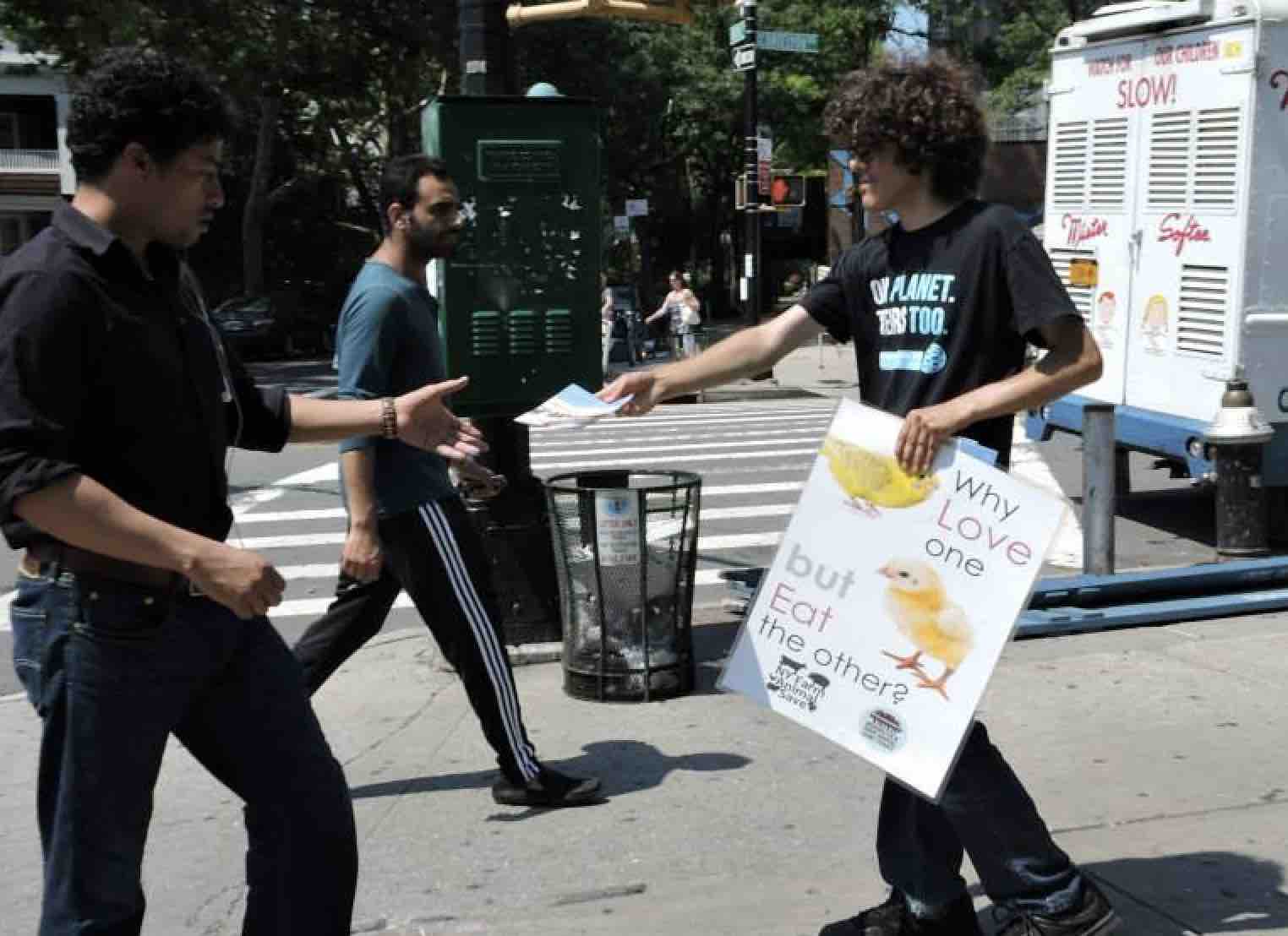
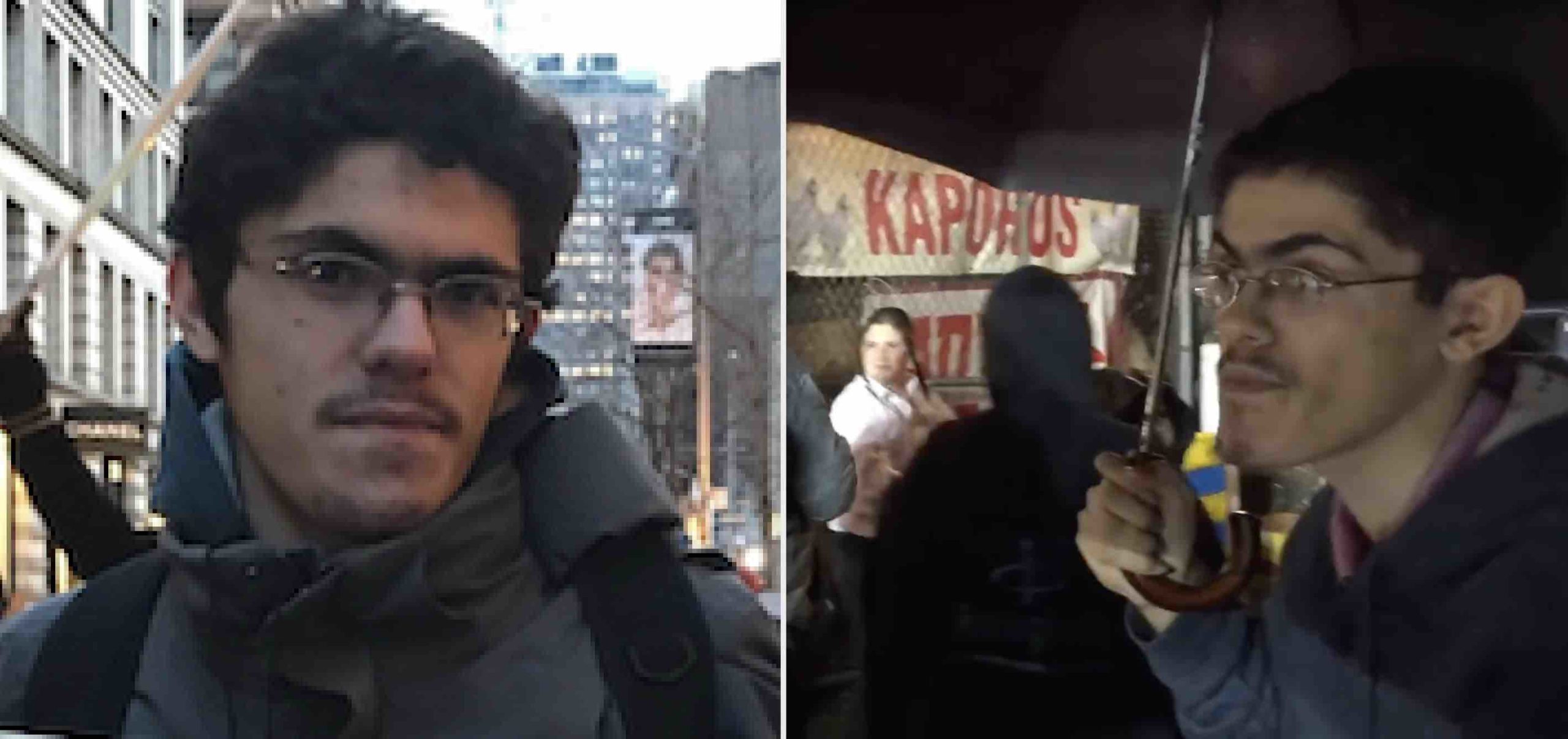
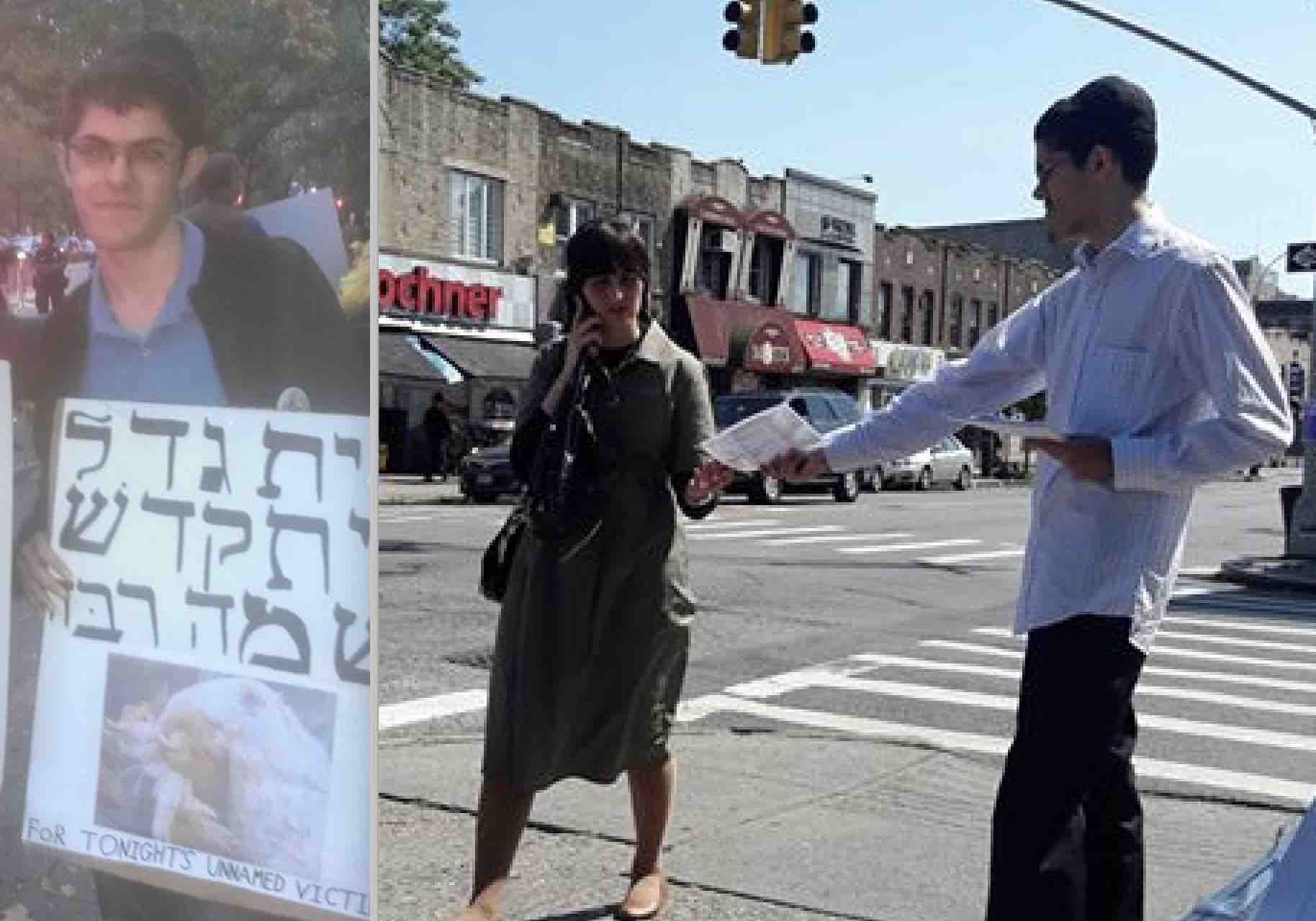
Leaving the insular ultra-Orthodox Jewish community is not easy for anyone, especially a teenager, but Shimon found the courage to transfer from his yeshiva, which was familiar, to secular high school, where he didn’t know anyone. He also immersed himself in the NYC animal rights community, participating in multiple events every week. Ironically, among the first acts of cruelty that he protested was Kaporos, a ritual animal sacrifice performed by the very community in which he was raised.

Shimon Shuchat bears witness to chickens languishing in transport crates

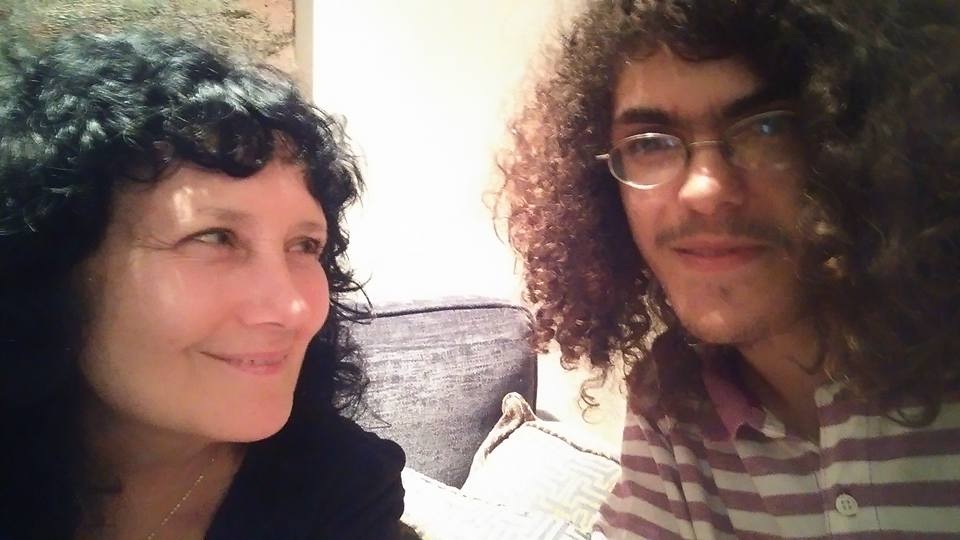
Throughout his childhood, Shimon had a close relationship with his father, Velvel. According to Shimon’s relatives, “Velvel validated and loved Shimon, and always supported him. He would frequently take him on trips, despite tight finances, often using Greyhound buses to bring him to different states to visit animals. Velvel advocated for Shimon when his yeshiva was unprepared to answer Shimon’s difficult questions. His father always lovingly took the time to listen and support Shimon in any way he could.” His extended family said that Shimon “is a shining light and a blessing to this world, and may his memory also be for a blessing.”

In 2015, Shimon was accepted to Cornell, and he brought NYC-style activism to a reserved animal rights club on campus. After college, he returned to NYC and worked in the animal rights movement until he passed away. He talked about going to law school one day.

Animal rights activists Shimon Shuchat and Rina Deych

Shimon was a quiet, shy, and anxious person, but, according to his fellow activists, he stepped far outside of his comfort zone in order to advocate for the animals. Rina Deych, an activist in NYC who mentored Shimon when he joined the movement, fondly recalls a Kaporos protest during which she offered Shimon a bullhorn to lead the chants. “He shyly refused,” Rina said, “But when he didn’t like the accent I used to pronounce a Hebrew phrase, he grabbed the megaphone from me and led the chants for the duration of the protest. His willingness to prioritize the animals over his anxiety demonstrated just how committed and compassionate he was.”

Shimon Shuchat advocating for captive animals and showing his support for LGBTQ equality

His colleague Nadia Schilling, who also served as a mentor to Shimon, said, “Shimon’s work for animals was unmatched by any person I’ve ever worked within the animal rights movement. It’s easy to lose hope and feel defeated in this line of work, but I honestly believed that, with Shimon by my side, we could make this world a better place.”

Shimon Shuchat participates in an Direct Action Everywhere disruption at Whole Foods, protesting the Company’s “humane meat” advertising.

Unaware of Shimon’s anxiety, Nadia asked him to testify in front of the NYC Council in support of legislation to ban the sale of ban foie gras. “He intentionally waited until after he delivered his remarks to confess that public speaking exasperated his anxiety. He knew I wouldn’t have asked if I had been aware of his fear, and he didn’t want to let down me or the animals. That’s how selfless he was.”

Shimon set the bar high for his activist colleagues with his impeccable work ethic and selflessness. He was singularly focused on reducing animal suffering, and he had no interest in the material world or even the basic comforts that most of us take for granted. One summer during college, Shimon asked if he could do an internship with TheirTurn. “I was reluctant because he was so serious and had such high standards, but I wanted to support him,” said Donny Moss. “He worked so efficiently that he completed his assignments more quickly than I could create them. If I didn’t force him to take a break for lunch by putting the food on top of his keyboard, then he would not have eaten.”

Shimon Shuchat phone banking for Voters for Animal Rights (VFAR) in support of the NYC bill to ban the use of wild animals in circuses

Shimon’s asceticism was stunning at times. “One day, while running an errand, Shimon and I walked into Insomnia Cookie, which had just added a vegan cookie to its menu. When I offered to buy him one, Shimon asked me to donate the amount of money I would have spent on the cookie to PETA. Even after explaining that I could buy him a cookie AND make a contribution to PETA, I practically had to use force to get him to eat the cookie, which I knew that he secretly wanted.”

Shimon Shuchat advocating for the use of coins instead of live chickens during a religious ritual called Kaporos

Shimon was painfully humble for someone who contributed so much. “People like Shimon, who work so hard behind the scenes with no public recognition, are the pillars of our movement,” said Nadia.

Perhaps more than anything, Shimon was empathetic. His uncle Golan said that he “felt things extraordinarily deeply” from a young age. One year during a Kaporos protest, Donny witnessed this firsthand when he found Shimon off to the side weeping. “In the face of so much cruelty and suffering, Shimon practically collapsed from a broken heart.”

While delivering his testimony at the foie gras hearing at City Hall, Shimon made a plea that should, perhaps, be his parting message to those he left behind. “Regardless of our ethnicity, race, religion, or political affiliation, we should be unanimous in opposing and condemning cruelty directed at animals, who are among our society’s most vulnerable members.”

Shimon Shuchat participates in an animal rights protest in NYC

Shimon’s father Velvel, Uncle Golan, Aunt Leah, Cousin Debbie, Rina, Nadia, Donny and others who cared about Shimon hope that Shimon, who made a lifetime of contributions in his short, 22 years, is resting in peace in a kinder place.  “Shimon was a shining light and blessing to this world,” according to his family, “May his memory also be for a blessing.”

Shimon Shuchat (bottom right) volunteers at Safe Haven, a sanctuary for rescued farm animals

Why we eat meat without guilt, but hate seeing animal slaughter

In her book ‘For A Moment of Taste’, former PETA CEO Poorva Joshipura writes about how categorising an animal as ‘food’ changes our view of it. Until we see it being killed.

POORVA JOSHIPURA 6 August, 2020 12:50 pm ISThttps://www.facebook.com/plugins/like.php?href=https://theprint.in/pageturner/excerpt/why-we-eat-meat-without-guilt-but-hate-seeing-animal-slaughter/476120/&layout=button_count&show_faces=false&width=105&action=like&colorscheme=light&height=21

Representational image | RawPixel

Text Size: A- A+

When I ate meat, if someone were to have asked me if I loved animals, I would have said an enthusiastic ‘yes!’ After all, I adored playing with dogs and cats I would come across, enjoyed feeding squirrels and birds with my grandmother and liked watching wildlife documentaries with my father. 

However, eating animals requires someone ripping them from their families and butchering them—this is something everyone knows, even if they do not know the details of how it is done, and I knew that much too. Yet, I ate meat anyway. What allowed me to do so? What might allow others to do the same?


Also read: Will more people turn to vegetarianism in a post-coronavirus world?


The Brazilian Supermarket Prank 

Scientists have been studying this conflict, between caring for animals and killing them to eat them. This phenomenon has been labelled ‘the meat paradox’ by University of Kent and Université Libre de Bruxelles researchers Steve Loughnan, Boyka Bratanova, and Elisa Puvia. 

And we generally do care for animals. That’s why countries have laws protecting animals, why societies for the prevention of cruelty to animals (SPCAs) and other animal protection groups exist, why there was such national outrage when tigress Avni was killed, why the global horror when Cecil the lion and later his son Xanda were killed by trophy hunters in Zimbabwe, and it is likely why you are reading this book. In fact, many of us find what has to happen to animals to produce meat wrong, at least in principle, what little we may know about it, even if we eat meat. 

A prank that was set up at a supermarket in Brazil, in which a man pretending to be a butcher offered samples of free fresh pork sausages to the store’s customers, proves this point. Shoppers would visit the counter, eat and admire the pork. Then, the butcher would offer to make more, but to do so he would bring out a live piglet and put the animal in a machine that appeared to instantly grind her up and turn her into fresh meat. In reality, another prankster was sitting in the machine safely collecting each baby pig. Although customers had just readily eaten pork, they were aghast when they thought a live pig was about to be killed. One woman spat out pork from her mouth, others pleaded with the butcher not to kill the young pig and even tried to physically stop him from doing so. None of them picked up another piece of the free fresh pork that they had eagerly eaten before seeing the live pig. If you were one of the customers, what would you have done?


Ranking Species on Worthiness of Moral Concern 

While many of us are perturbed by the thought of slaughter of any animal, several studies found people who choose to eat animals are inclined to reject the thought that animals are capable of complex emotions and are likely to draw a further line between the emotional capacities of animals usually used for food (such as chickens) versus those who are not typically eaten by humans (like parrots). Both are birds, but the findings of these scientists indicate that people who eat meat are prone to believe parrots can feel more deeply than chickens, even though there’s no scientific support for such a view. Refusing to acknowledge animals, especially animals used for food, have the ability to experience deep emotions, appears to let many of us dismiss what happens to them in the production of food. 

Through studies conducted by Loughnan and his colleague Brock Bastian of the University of Queensland, the pair describes how vegetarians tend to compare with meat eaters in thinking about the mental faculties of animals when told they will be killed. Vegetarians did not alter their view of that animal’s acumen when told an animal, such as a lamb, was set for slaughter. When meat eaters were told the same thing, it was found that they generally reduced their view of the animal’s mental abilities. This, the researchers surmise, may be a ‘defensive way’ to allow us to consume animals without much guilt or remorse.

Another experiment shows merely categorizing an animal as ‘food’ effects how most people perceive the animal’s rights. In this study, researchers introduced a tree kangaroo to participants—an animal the participating individuals were not familiar with. They were given general information about tree kangaroos and then some were told that the animals were for eating while others were not. Those individuals who were told the species was food considerably regarded tree kangaroos as less deserving of concern than the other participants. 

Labelling an animal ‘friend’ has an effect too, but an opposite one—doing so tends to increase our respect for the friend species. This labelling of animals as ‘friend’ versus ‘food’ and the psychological effect it has on how we then view them is surely what helped me, when I consider it in hindsight, to simultaneously love animals like dogs and cats and eat animals like cows, chickens and pigs.


Also read: A Dutch butcher is winning hearts by making plants taste just like meat


If this is the effect one study had on people’s minds, imagine the result of being told repeatedly, like we usually are from a young age, that certain animals are for ‘food’ by authority figures, like our parents, or members of our community or people we want to be accepted by, like our friends. What if these individuals would have instead categorized those same animals as ‘friend’? Would we have thought differently? 

Today there are many vegetarians and vegans in the United States, but in the ’80s and early ’90s, the repeated messaging to me as a youngster from most people was speciesist: Animals like cows, sheep, pigs, chickens and fish merely existed to be eaten and animals like dogs and cats are friends. In other words, particular species are worthier of respect than other animals just by way of being. Indeed, though I happily ate what I considered to be the ‘food’ members of the animal kingdom, I would have eaten my own foot before I ate a dog. If we are raised in a meat-eating family, or if our families engage in rituals or customs that involve killing or eating certain animals, something similar is usually the repeated messaging we hear too. 

This excerpt from A Moment of Taste by Poorva Joshipura has been published with permission from HarperCollins India.

Subscribe to our channels on YouTube & Telegram

News media is in a crisis & only you can fix it

You are reading this because you value good, intelligent and objective journalism. We thank you for your time and your trust.

You also know that the news media is facing an unprecedented crisis. It is likely that you are also hearing of the brutal layoffs and pay-cuts hitting the industry. There are many reasons why the media’s economics is broken. But a big one is that good people are not yet paying enough for good journalism.

We have a newsroom filled with talented young reporters. We also have the country’s most robust editing and fact-checking team, finest news photographers and video professionals. We are building India’s most ambitious and energetic news platform. And we aren’t even three yet.

At ThePrint, we invest in quality journalists. We pay them fairly and on time even in this difficult period. As you may have noticed, we do not flinch from spending whatever it takes to make sure our reporters reach where the story is. Our stellar coronavirus coverage is a good example. You can check some of it here.

This comes with a sizable cost. For us to continue bringing quality journalism, we need readers like you to pay for it. Because the advertising market is broken too.

If you think we deserve your support, do join us in this endeavour to strengthen fair, free, courageous, and questioning journalism, please click on the link below. Your support will define our journalism, and ThePrint’s future. It will take just a few seconds of your time.

The idealistic life and violent death of Hamilton animal rights champion Regan Russell

By Jon WellsSpectator Reporter

Sun., Aug. 2, 2020timer12 min. read

On her last evening alive, on the cusp of summer, Regan Russell sat in her backyard under a towering maple worthy of the Garden of Eden.

This was off Locke Street South, around the corner from St. John the Evangelist church, where as a girl she had asked the minister if animals had souls, and why they were sacrificed to God in the Bible.

Russell felt a weariness, and also foreboding, at what lay ahead.

She planned to attend her latest animal rights protest the next morning, June 19, outside Fearmans Pork on Harvester Road in Burlington.

Activists call the weekly demonstrations “vigils,” at which they “bear witness” to pigs hauled in trucks for slaughter, talk to the animals through gaps in the ventilated trailers, and squirt water into their mouths, as drivers pause before entering the facility.

She felt despair about a law passed two days earlier in the Ontario legislature — Bill 156 — that she knew would make it harder, even dangerous, to fulfil her calling to advocate for the pigs’ living conditions and work toward stopping the killing of animals altogether.

In her backyard, Russell, who had recently turned 65, sipped a glass of wine and talked with her spouse Mark Powell.

She had been active in animal rights for 40 years.

YOU MIGHT BE INTERESTED IN…

She cared for rabbits, raccoons and wounded squirrels; she protested at Marineland in Niagara and a sled dog breeding operation in Quebec.

She pushed the envelope in her activism and was arrested nearly a dozen times.

“Maybe it’s time for you to pass the torch to the younger generation,” Powell told her. “We can still support them any way we can.”

He was worried for her safety more than usual.

But he also knew there was no stopping her. All he could do was say his piece.

The next afternoon, a woman stood at his door.

“There’s been an accident,” she said, tears in her eyes.

“Slaughterhouse,” Powell said.

“Yes.”

“It’s not good, is it?”

“No.”

One of the trucks carrying pigs had hit and killed Russell.

Her body had been taken to hospital for an autopsy.

The ripple effect of her death was about to be felt far beyond Hamilton.

The 28-year-old driver of the truck has been charged with careless driving causing death by Halton Regional Police under Ontario’s Highway Traffic Act, and police say “there were no grounds to indicate this was an intentional act.” But questions remain about exactly what happened that morning.

The answer to the deeper question of why Regan Russell took her final breath standing athwart a truck loaded with farm animals, moments from their inevitable end, is both simple and complicated.


The notion that farm animals like pigs are sentient — that they feel pain, at least as acutely as a dog, cat or an infant child — is the philosophical bedrock on which activists stand.

And it’s not mere faith, suggests University of Guelph behavioural biologist Georgia Mason.

“Pigs are considered sentient by the European Union and the National Academy of Science, and every animal welfare research group in the world,” she says.

The Ontario Federation of Agriculture recently issued a statement questioning animal sentience, adding: “We simply don’t know if animals are capable of reasoning and cognitive thought.”

But cognition — the ability to understand and acquire knowledge — is distinct from the ability to feel, and it’s a red herring to raise it, Mason says.

“Most recognize that animals are sentient, and it’s not the same as saying they have cognition like humans. It just means they have feelings.”

She says the issue of sentience is more controversial when considering animals such as reptiles, fish, and mammals in a developmental stage — including humans.

“There are questions about at what point a fetus becomes sentient.”

The belief that animals deserve rights in line with humans was popularized 45 years ago in the book “Animal Liberation” by Australian philosopher Peter Singer.

He argued that if one accepts that unequal treatment between humans due to differences in race, gender or intelligence is immoral, then so too is poor treatment of animals, who are physically different from people, but “morally equal.”

It would be “speciesism” to think otherwise, he wrote, and: “We have to speak up on behalf of those who cannot speak for themselves.”

Regan Russell read the book in her early 20s. Its message found a hungry mind and open heart.

And then, in 1977, she read about the seal hunt in the Gulf of St. Lawrence, that had attracted international attention including a visit from French film star Brigitte Bardot, who condemned “Canadian assassins” clubbing the animals.

Russell had always loved animals but now the spark was lit.

She was living in Winnipeg at the time and made a sign and stood on a street corner.

“I thought, I’ll make a sign and protest and it will all stop,” she said to a journalist in a documentary. “I thought, when everyone knows, how could it possibly continue?”

Russell was idealistic, driven, and just getting started.

She grew up in west Hamilton in the 1960s. Bill and Pat Russell named their first of two children after one of the daughters in Shakespeare’s “King Lear” — a rare name for a girl then.

Bill, a music teacher at Regan’s elementary school, took a political science degree at McMaster University on the side, during the ascendance of feminism and civil rights.

There was always lots of conversation around the dinner table.

Regan read on subjects from Socrates to Gandhi and Roman history, but did not attend college or university after graduating from Westdale high school.

She married at 19, and when her husband’s job took him out west, she followed, and worked modelling for Eaton’s. (She refused to model fur, and was ultimately arrested at a fur protest in a department store in Toronto, along with her father.)

The “Animal Liberation” book is a gateway for many activists; a “moral shock” according to Emily Gaarder, an anthropologist at the University of Minnesota-Duluth, who wrote a book about the predominance of women in the animal rights movement.

But, she adds, there are other influences, as well.

Russell married twice before meeting Mark Powell in 2001. They knew each other as kids; she was six years older and had taught him Sunday school at church.

She chose to never have children. Powell says she talked of her fear that she would never develop a strong enough connection with a child.

Instead, he says, she directed her nurturing instinct toward animals.

One of Powell’s two sons from his first marriage called Russell, his stepmother, “Snow White,” after watching her talking to animals.

Ideology is another influence on activists. Gaarder says women emboldened to vigorously advance their cause are “political thinkers making political choices.”


That was true for Anita Krajnc, who joined Russell at many animal rights protests.

Krajnc earned several university degrees including a doctorate in political science.

Into her 20s, Krajnc says she was still a meat eater who “salivated at pig roasts.” She converted to veganism after reading “The Sexual Politics of Meat,” but an incident in her early 40s flipped a switch to her calling.

She lived near a slaughterhouse in Toronto and one day, walking her dog, she came across pigs on a truck. Later that year, she helped found Toronto Pig Save.

“I never took action until I saw the pigs,” she says. “I couldn’t believe how scared and sad they were. It looked like they were in a dungeon. A pig looked at me, and I promised him three vigils a week. And we kept that promise.”

In 2015, Krajnc was charged with criminal mischief for giving water to pigs. She was found not guilty, with Regan Russell offering moral support in the courtroom.

The pair campaigned against Bill 156, the Security from Trespass and Protecting Food Safety Act. Activists believe it is a draconian “ag-gag” measure that will prevent them from exposing inhumane animal treatment.

While the vigils at Fearmans are held just outside the property, at other times, including last summer, Russell and fellow activists entered the grounds to give water to pigs, as workers yelled at them to leave.

In other incidents in Ontario, members of the group “Direct Action Everywhere” have broken into animal breeding barns to retrieve ducks and pigs.

Supporters of the bill say that when activists give water to pigs or trespass on private property, it creates dangerous situations for workers and farmers and is potentially harmful to the food supply.

newsletter.

Sign Up Now

Ernie Hardeman, Ontario’s minister of agriculture, told The Spectator the bill will not prohibit demonstrations, “but it will be illegal to interact with livestock. It’s dangerous when they put things in the trucks, whether it is water or something else.”

He says the bill won’t prevent whistle-blowing, and if anyone at a farm or meat processing plant “sees something inappropriate, we want it reported. I have no tolerance for animal cruelty.”

Activists believe that not only are pigs and other animals mistreated prior to killing, but that eating meat is wrong.

Camille Labchuk, executive director of Animal Justice, says the food system needs to “undergo a massive shift away from eating animals and toward eating plants, to spare billions of animals from unimaginable suffering, to tackle the climate crisis, and because eating animals is a serious risk to public health.”

In an email to The Spectator, she added: “Most people are shocked to learn animal welfare on farms is almost completely unregulated in Canada, and the government doesn’t inspect or monitor the conditions the animals like pigs are kept in … The industry gets to police itself; the figurative fox is guarding the literal henhouse.”

“That is an inaccurate statement,” counters Cameron Newbigging, a spokesperson with Agriculture and Agri-Food Canada, who says the Canadian Food Inspection Agency enforces regulations for the humane transport and slaughter of animals, and “provincial inspectors go onto farms where irregularities are suspected or complaints are received.”

What constitutes humane treatment is spelled out in Ontario’s Provincial Animal Welfare Services Act passed in 2019, and the federal Health of Animals Act.

One example is regulations for herding animals. Activists lament the use of electric prods to force pigs off trucks; the regulations say prods are permitted on pigs at least three months old, so long as “it is not applied to a sensitive area including the belly and the anal, genital and facial regions of the animal.”

Another regulation is that pigs and other animals cannot be trucked when the shipping time is longer than 12 hours.

Sofina Foods, owner of Fearmans Pork since 2012, said in a statement to The Spectator that its pigs come from farms within a three-hour radius of the plant, “well below the travel time permitted and recommended by regulators.”

For Regan Russell and other activists, the point of opposing Bill 156 was to ensure they remain free to comfort farm animals, and keep a close eye on transport and killing techniques in the industry.

On her Facebook page on June 18, Russell called the bill “evil.”


The protest on June 19 was different than the routine vigils. In addition to bearing witness, it was intended to draw attention to the bill.

That morning, just after 10 a.m., one of the trucks hauling pigs stopped on Harvester Road before it reached the gates of Fearmans.

Activists waited on the sidewalk for their chance to give water to the pigs.

Enforcement under the new law had not yet come into effect; they could still interact with the animals as usual.

Activists say that in the past, drivers have mostly co-operated with the vigils, but occasionally have confronted protesters.

Krajnc, who was not present that day, says she was told by witnesses the truck idled further away from activists than usual, disrupting traffic, “and creating a sense of chaos.”

At the same time, she said, Russell stood apart from the others, in the driveway closer to the gates of the property, and at some point the truck started to move again.

A news release from Pig Save Toronto says Russell “tried to jump from the path of the truck before it plowed into her.” Halton police said in a news release that it was not an “intentional act.”

video documentary about Russell, posted on the Pig Save Facebook page, says she was hit and dragged by the truck and her body mangled underneath.

“One of our activists has been killed,” says a man filming the aftermath on his phone. “Jesus Christ. It finally f—ing happened.”

Within days, animal rights activists held tributes in Russell’s honour, from Argentina to the U.K. and Italy, and in Germany, where protesters hung a banner on a slaughterhouse in Berlin bearing Russell’s likeness.

In Los Angeles, actor Joaquin Phoenix held a sign at a rally that read “Save Pigs 4 Regan,” and said in a statement: “Regan Russell spent the final moments of her life providing comfort to pigs who had never experienced the touch of a kind hand.”

PETA (People for the Ethical Treatment of Animals) announced it had acquired two six-week old pigs from a farm in Iowa, and took the rare step of naming them after an activist: One is named Regan and the other, Russell. They will live in an animal sanctuary in upstate New York.

A march was held in Toronto, where activists called on the province to implement “Regan’s Law,” a bill of rights to protect farm animals.

Powell was among the speakers.

“It is a horrible, life-changing tragedy, for everyone she knew and touched,” he says.

One of her oldest friends, Katherine Wightman, who Russell met through modelling in Winnipeg, says Regan used to talk about being ready to die for her cause.

“She died a martyr,” says Wightman. “She could have worked until she was 100 and never accomplished what this tragic death has.”

Russell’s death has become one of those moral shocks: her face a symbol, her alliterative name a rally cry.


At a pig vigil held three weeks after the incident, flowers from a tribute to her remained hanging on a fence outside Fearmans, having wilted and dried in the heat.

About 18 activists were there, and for some it was their first time.

Nancy Robertson drove 40 minutes from Cambridge where she works as a nurse, wearing a shirt with Russell’s likeness on it.

“(Russell) opened my eyes to doing more for the animals, being in public, having a united front and speaking up for them … Seeing the animals in distress deeply affected me. I’ve never seen one up close before. We would never treat a dog or cat or human that way.”

Jessie Watkinson drove an hour to attend, also inspired by Russell. She cried after offering water to the pigs.

“They were too hot and exhausted to even drink. You connect with one, they look at you, and in that two minutes you show them the compassion. I just wish we could do more.”

At her final protest, Russell had taken her turn spraying water into the mouths of the pigs. And she held a sign that read: “The truth should never be illegal.”

After she was killed, pigs in the truck that hit her were herded onto another, while police officers investigated.

There had been so much commotion in the moment: blood, sirens, and screams from an activist recorded on a phone: “No! No!”

If what Regan Russell believed to her core is true, that pigs feel and have perception beyond our understanding, then it was not just the humans who felt it deeply that morning: that something gentle and beautiful had been lost, on the road to slaughter.

Jon Wells is a Hamilton-based reporter and feature writer for The Spectator. Reach him via email: jwells@thespec.com

  • SHARE:
  •  


The idealistic life and violent death of Hamilton animal rights champion Regan Russell
https://www.thestar.com/news/insight/2020/08/02/the-idealistic-life-and-violent-death-of-hamilton-animal-rights-champion-regan-russell.html?utm_campaign_id=

Joaquin Phoenix and Rooney Mara are passionate about spreading knowledge about a vegan lifestyle

VegNews.RooneyMaraJoaquinPheonix

New film The End of Medicine—created by award-winning British filmmaker Alex Lockwood and What the Health co-director Keegan Kuhn—aims to spotlight the role of animal agriculture in the rise of zoonotic diseases such as COVID-19. 

by ANNA STAROSTINETSKAYA

AUGUST 1, 2020


https://thebeet.com/joaquin-phoenix-and-rooney-mara-to-produce-documentary-on-factory-farming/

Vegan actors and couple Joaquin Phoenix and Rooney Mara have signed on as executive producers of new vegan documentary The End of Medicine. The new documentary, which began filming pre-COVID-19 in October 2019, is directed by Alex Lockwood (the award-winning British director behind 73 Cows and Test Subjects) and is produced by Keegan Kuhn (co-director of vegan documentaries What the Health and Cowspiracy). Through poignant interviews with world-renowned scientists, The End of Medicine aims to expose the culpability of the animal agriculture in creating massive public health threats such as antibiotic resistance, swine and bird flu, food-borne illness, MRSA, and, the current pandemic COVID-19, which is thought to have started at a wet animal market in Wuhan, China late last year.

“We hope that The End of Medicine is an eye-opening call to action and ignites a spark of willingness to change our habits. The science is irrefutable,” Phoenix and Mara said in a joint statement. “Modern animal agriculture will continue to make us sick if we don’t radically change our patterns of consumption.”

The feature-length documentary is expected to wrap production by the end of 2020.

Please support independent vegan media and get the very best in news, recipes, travel, beauty, products, and more.
Subscribe now to the world’s #1 plant-based magazine!SUBSCRIBE