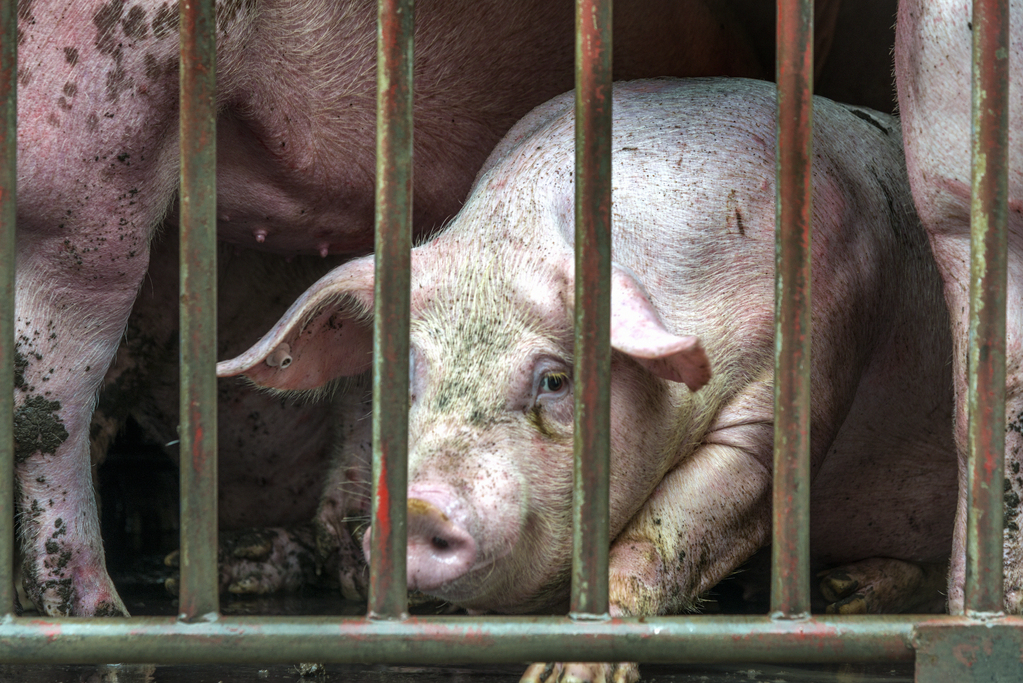
The company will also eliminate any pork produced through locking mother pigs in gestation crates from its supply chain. Photo by iStock.com
Ahold Delhaize, the company that owns some of the largest grocery chains in the United States, including Food Lion, Giant Food, the GIANT Company, Hannaford and Stop & Shop, has announced it will only sell eggs from cage-free chickens across all its stores by 2025 or sooner. The company will also eliminate any pork produced through locking mother pigs in gestation crates from its supply chain.
This is incredible news, coming as it does from what is the nation’s fourth-largest grocery retailer, with more than 2,000 locations. The company’s new animal welfare policy, which comes after dialogue with the Humane Society of the United States, eliminates two of the most heinous forms of intensive animal confinement in cages and crates. Cages used to confine egg-laying chickens are so small that the animals cannot express natural behaviors like running, exploring or even extending their wings. Each chicken is given less space than a sheet of paper on which to live. Gestation crates, used to confine mother pigs, are about the same width and length of the animal’s body, leaving them with no room to even turn around.
The announcement from Ahold Delhaize is the latest in a series of similar pledges that the HSUS, Humane Society International, and other animal protection organizations have secured from hundreds of major food companies over the last decade, including Kroger, Nestle and Unilever. With our Food Industry Scorecard, we are keeping track of the progress these companies are making toward achieving their cage-free goals.
In addition, we have helped secure the passage of a dozen state laws to end the cruel cage confinement of farm animals, including in Massachusetts where Ahold Delhaize is based.
While cage-free doesn’t equate to cruelty-free, thanks to the headway we’re making, tens of millions of animals will never know the misery of being locked in tiny cages for their entire lives. Let’s take a moment today to celebrate this incredible win for egg-laying hens and mother pigs even as we continue our work to dismantle the cruelty of cage confinement in the United States and abroad.
A transport truck driver has avoided criminal prosecution in connection with the death of animal advocate Regan Russell. Regan was violently run over and killed last month by a truck taking pigs to slaughter outside Fearmans Pork slaughterhouse in Burlington, Ontario.
The Halton Police <https://www.haltonpolice.ca/about/media/view_release.php?releaseID=6575> announced that they laid one provincial Highway Traffic Act charge against the 28-year old truck driver-careless driving causing death. The police did not release the name of the truck driver, or the video of the incident.
Provincial charges are considered far less serious than criminal charges. The provincial offence of careless driving causing death carries with it a penalty of $2,000 to $50,000 and up to two years in jail, and no criminal record. A comparable criminal offence, such as dangerous driving causing death, would be punishable by large fines and up to 14 years in prison, plus a criminal record.
Regan Russell was a member of the Animal Save Movement, and was at the slaughterhouse on the day she was killed to document the condition of pigs trucked to slaughter in sweltering heat, and to help provide water to them. She was also there in protest of Bill 156, dangerous so-called “ag gag” legislation <https://www.animaljustice.ca/media-releases/ontario-passes-ag-gag-law-to-co ver-up-animal-abuse-on-farms> passed two days earlier by the provincial government. Bill 156 aims to cover up animal cruelty in the farming industry, and interferes with the Charter-protected rights of citizens and journalists to protest and document animal abuse at farms, slaughterhouses, and in transport. Animal Justice intends to <https://www.animaljustice.ca/blog/animal-justice-to-continue-the-fight-agai nst-bill-156-in-court> challenge the constitutionality of Bill 156 in court.
Although the police did not lay criminal charges against the trucker, they rarely extend this leniency to animal advocates. Law enforcement authorities regularly give preferential, slap-on-the-wrist treatment to industries responsible for animal suffering, while pursuing serious criminal prosecutions against people who expose and take action to stop animal cruelty.
For instance, advocates have gathered extensive footage depicting illegal pig suffering in transport trucks outside Fearmans Pork, including pigs suffering from heat exhaustion and frostbite, and pigs arriving injured, dead, or dying. Federal authorities generally refuse to prosecute Fearmans or truckers for this suffering. Yet in 2015, the Halton Police charged Animal Save Movement founder Anita Krajnc with criminal mischief for giving water to thirsty pigs trapped inside a truck outside Fearmans Slaughterhouse on a sweltering day. She was <https://www.theglobeandmail.com/news/national/judge-acquits-woman-in-pigs-w ater-case/article34893404/> acquitted following a much-publicized trial.
Police also regularly lay trumped-up criminal charges against animal advocates for acts that are not a criminal offence, such as going onto private property to expose hidden animal suffering on meat and fur farms. But law enforcement often goes easy on farmers responsible for abuse. Farms and slaughterhouses caught on hidden camera viciously abusing animals have never faced a single Criminal Code charge for animal cruelty in Ontario. Authorities generally don’t bother to prosecute at all, even when there is clear video evidence. On the rare occasions when charges are laid, they are always less serious provincial charges.
Regan Russell’s family is also <https://www.cbc.ca/news/canada/hamilton/regan-russell-1.5653593> calling for a coroner’s inquest into her brutal death. A coroner’s inquest is typically used to uncover broader, systemic issues responsible for a death. In the case of Fearmans Pork, the slaughterhouse had for years refused to negotiate a safety agreement with the Animal Save Movement to allow for safe and peaceful protests, and truckers who created safety risks had never been prosecuted.
A transport truck driver has avoided criminal prosecution in connection with the death of animal advocate Regan Russell. Regan was violently run over and killed last month by a truck taking pigs to slaughter outside Fearmans Pork slaughterhouse in Burlington, Ontario. The Halton Police announced that they laid one provincial Highway Traffic Act charge against.
Regan’s viewpoint, known as intersectionality, is the theory that all forms of oppression, discrimination, domination etc., intersect and influence each other.byFiona Roossien
Regan Russell, the Toronto Pig Save activist who was killed by a truck carrying pigs to slaughter. (Photo: Agnes Cseke)
On June 19, a protester was killed. Perhaps her death was obscured by the din of headlines that Friday—it was Juneteenth, a day marking the end of slavery.
Protests against systemic racism catalyzed by the death of George Floyd juxtaposed with a Trump rally scheduled on the anniversary and in the location of the worst incident of racial violence in the U.S. Tensions were high.
Her name was Regan Russell and while participating in a scheduled vigil outside of Fearmans slaughterhouse in Burlington, she was run down by a transport truck carrying pigs on their way to slaughter.
In the news covering this event, and in conversations I’ve had with friends and family, it seems the significance of a protester being run down by the very thing she was protesting has been missed. It seems many wonder what she was doing there.
A local news story gives the following account from someone who witnessed the event from a distance: “Then I saw a woman … I assumed the truck driver thought he was clear to go and didn’t see that last protester.”
Ironically, being seen is an important goal of the vigils held by animal rights groups at slaughterhouses—one way to create more visibility in an industry that would prefer to keep its practices hidden. And Regan was unignorable.
But she was also there that day to protest Bill 156—a new ag-gag law that had been passed two days earlier. Criticized as unconstitutional, Bill 156 is handcrafted to stifle damning evidence of the cruelty that is endemic to animal agriculture, with provisions that are distinctly anti-whistle-blower and anti-free-speech.
Like its counterpart, Bill 27 in Alberta, Bill 156 represents the influence of a powerful farming lobby desperately trying to limit exposure of something that can harm their bottom line — visibility into how the animal agriculture industry works. These sections don’t serve to protect the animals or reinforce biosecurity; they serve the sole purpose of controlling information.
The day before she died, Regan wrote on social media: “Bill 156 has passed. Now anytime an animal is suffering on a farm in Ontario, no one, not even an employee, has the right to expose it. This decision is evil. Animal ag is evil. Cancel animal agriculture.”
I’m so sorry that you didn’t get a chance to meet Regan Russell yourself. You would have loved her. I only hope that, in clearing up some of the questions about vigils, I can do her justice.
Regan didn’t look like what I suppose you’d expect a vegan to look like. At 65, Regan still possessed the qualities that decades earlier had made her a model — that is to say, her outer beauty was undeniable. But on the inside — well, that was truly special. She was funny and fast-witted, kind and patient.
She vibrated on a high frequency, if you are familiar with the concept. She was cynical, in a wise way, yet optimistic enough to try to make a difference. For 40 years, she had tried to make a difference. A week prior to her death, she had marched at a Black Lives Matter rally.
You see, Regan’s viewpoint, known as intersectionality, is the theory that all forms of oppression, discrimination, domination etc., intersect and influence each other. One of the signs she frequently brought to vigils read: “If you were in this truck, we’d be here for you too.” And you know what? She would have.
Personally speaking, up until two years ago, I wouldn’t have considered being an activist myself, despite being vegan for several years. It was my then 10-year old son — frustrated because he had been forbidden to talk about animal agriculture at school, who begged me and his dad, also vegan, to take him to a vigil. It became our church. Every Sunday morning we went to bear witness at Fearmans — sometimes with just a handful of people, sometimes in a group of 20 or more. Regan was almost always there too.
This leads me to an important point about Regan’s experience — as an activist, and specifically attending vigils at Fearmans, which she had done for years. This translates to hundreds of vigils, stopping thousands of transport trucks, bearing witness to the final moments of hundreds of thousands of pigs.
Regan understood the risks — after all, rogue aggressive drivers had been encountered in the past. In fact, this issue was the impetus for a petition created by Toronto Pig Save on change.org urging Michael Latifi, the CEO of Fearmans/Sofina Foods Inc., to create a safety agreement allowing activists to safely protest. Although the request has been ignored to date, other efforts had been made by both Toronto Pig Save and another activist group, New Wave Activism, to liaise with police, work with security and establish rapport with drivers.
Safety protocol is reviewed regularly with the group. Every vigil is timed. Roles are assigned to protestors to improve safety. Regan had one of those roles that day — standing at the entrance, just on the other side of the pedestrian sidewalk, with her now iconic bright neon sign that read ALL ANIMALS NEED PROTECTION UNDER THE LAW.
Although, thanks to the newly passed Bill 156, the ability to legally protect animals would soon be more difficult. It is a bill that exemplifies prioritization of commerce over our rights as Canadians and specifically seeks to punish animal activists. This reality was certainly top-of-mind for Regan and the other activists there that day — as much as it was likely on the radar of those who profit from animal agriculture.
As you can imagine, losing Regan has been a devastating loss to the activism community, to Toronto Pig Save and New Wave Activism and to the many individuals who Regan touched with her beauty, wisdom and compassion. Personally, there hasn’t been a day since that I haven’t cried a tear or two hundred — for the loss of a friend, and the loss of innocence, as I see for the first time just how unforgiving the machine we stand against can be.
And in the wake of Regan’s death, we are emboldened to articulate our demands in her name:
Justice for Regan Russell; the creation of a universal safety protocol for all future vigils; the repeal of Bill 156; greater visibility into farms where animals are kept and slaughterhouses via 24/7 video; monitoring that can be accessed by the public; the conversion of Fearmans Pork into an exclusively plant-based facility focused on the manufacture of plant protein; and the defunding of animal agriculture.
On the captivity, Regan said: “They say we’re breaking the law by storming? How do you think women got the right (to vote)? How do you think slavery was abolished? People stood up and broke the laws! Because they’re stupid laws.”
Let’s stand up to this stupid law.
Fiona Roossien wrote this article on behalf of Toronto Pig Save.
Sign up for our free email newsletter. Unsubscribe anytime or contact us for details.ShareTweetSave this Article
Hundreds of animal rights advocates marched through the streets of Toronto this afternoon to demand justice for Regan Russell, the activist who was killed by a pig transport truck while protesting at Fearman’s slaughterhouse in Burlington.
Russell was dragged by the truck for more than 15 metres during the incident, and charges against the driver have not yet been pressed as Halton Police are still investigating.
“The Bill is intended to protect farm animals, the food supply, farmers and others from risks that are created when trespassers enter places where farm animals are kept or when persons engage in unauthorized interactions with farm animals,” reads theexplanatory note at the beginning of the bill.
The law states that activists, media and any other trespassers could receive fines of up to $25,000 for entering a farm property for a number of reasons, including to document the animals’ living conditions or to simply interact with them.
“Activists are demanding that Bill 156, the ag-gag law passed by the Ontario legislature just two days before Regan was run over, be converted into Regan’s law, which protects farmed animals from abuse as well as the whistleblowers who expose the suffering of animals,” reads a statement from protestors.
“Doug Ford and the members of the Ontario legislature need to know what Regan Russell stood for and how Bill 156 has failed her!!!”Lead photo by
PETA Will Praise Shoppers Who Save Animals and Protect Slaughterhouse Workers by Buying Vegan Foods
For Immediate Release: July 15, 2020
Contact: Brooke Rossi 202-483-7382
Seattle – Slaughterhouse Shame Month continues on Thursday with a PETA protest outside QFC, where the group’s supporters will stand with paper bags over their heads that read, “Meat Shame,” and shirts that say, “I Bought Meat and a Slaughterhouse Worker Died From COVID-19” or “I Bought Meat and an Animal Was Killed for It.”
When: Thursday, July 16, 12 noon
Where: QFC, 1401 Broadway, Seattle
Other PETA supporters will offer shoppers a choice of two bags: a nice tote sporting the words “I Care About Animals and Workers. I Buy Vegan Foods” or a paper bag that states, “I Don’t Care About Animals or Workers. I Buy Meat.” The group notes that confining and killing animals for food has been linked to SARS, swine flu, bird flu, and COVID-19—and a new strain of swine flu with “pandemic potential” is now spreading from pigs to humans in China.
“Anyone who is still supporting slaughterhouses, where animals’ throats are slit and more than 35,000 workers have tested positive for COVID-19, should be ashamed,” says PETA Executive Vice President Tracy Reiman. “PETA is urging everyone to practice compassion by choosing only delicious, healthy, and versatile vegan foods that never caused a pandemic.”
PETA—whose motto reads, in part, that “animals are not ours to eat”—opposes speciesism, which is a human-supremacist worldview. For more information, please visit PETA.org.
A 12-year-old asked, after his mother told him animals don’t have feelings.
Posted Jun 24, 2020
Names and labels used for “food animals” are psychological ploys to distance people from their meals and reduce cognitive dissonance.
A few weeks ago I received an email from a 12-year-old boy (Erwin) who was concerned and confused about the names and labels that are used to refer to so-called “food animals.” He asked, “Why are cows meat, pigs pork, turkeys turkey, and tunas tuna?” The COVID-19 pandemic is calling attention to the lives and plight of a wide variety of nonhuman animals. He had read about the horrific conditions at pork-producing meatpacking plants and, while he knew that what we call pork had previously been a sentient pig, he hadn’t really thought much about it.1 I reminded him that the meat and pork industries are more appropriately called the cow and pig industries, that a bacon, lettuce, and tomato sandwich is really a pig, lettuce, and tomato sandwich, and that the real question at hand is “Who’s for dinner?” rather than “What’s for dinner”? A few other email exchanges showed me he clearly understood what I was writing.
Erwin also mentioned that when he asked his mother this same question, she casually told him that animals don’t really have emotions or feelings, and “These words are used are for marketing and people don’t want to come to terms with the fact they are eating a cow or a pig.” Erwin wondered, rightfully, why birds, fish, and invertebrates who are eaten usually called by name, for who they are—chicken, turkey, goose, tuna, halibut, lobster—and wanted to know more about the names and labels that are used to refer to nonhumans who are regular features on countless humans’ meal plans. He also wondered why lamb chops are a popular food item, and I couldn’t say much about it given that it’s well known that sheep are fully sentient beings just like cows, pigs, and other mammalian “food animals,” but I was pleased he asked. I once asked a hunter why deer meat is called venison, but people freely talk about elk steaks. He said something like, “Many people don’t want to face the fact they’re eating a cute deer like Bambi.”
Why are cows meat, pigs pork, sausage or bacon, chimpanzees bushmeat, turkeys turkey, chickens chicken, tunas tuna, and lobsters lobster?
Of course, there are many other examples of misleading speciesist names and labels used to refer to “food animals.” Indeed, they have become global memes. In my emails to Erwin I mentioned a few things that are easy to summarize. I began by writing that his mother was right on the mark—most people don’t want to know they’re eating cows or pigs, but don’t really think about who they’re eating when birds, fish, or some invertebrates are on the menu. Numerous people think that animals whose species’ identities aren’t hidden or disguised aren’t really sentient or emotional and they’re all the same. This couldn’t be further from the truth, given what solid science has shown us about birds, fish, and numerous invertebrates.2,3 We also know that mammals, birds, and fish don’t like being caged and brutally abused in ways that defy any compassion or empathy at all, that birds and fish don’t necessarily suffer less than mammals, and that they have unique personalities. Animal sentience isn’t science fiction and animal suffering isn’t an enigma.
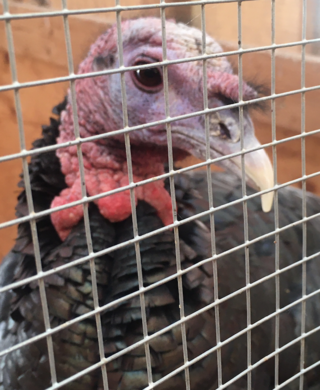
Walter, a rescued turkey, at Luvin’ Arms Animal SanctuarySource: Tito White, with permission
I also mentioned that the words and labels that are used are very effective psychological ploys that distance people from their meals and reduce cognitive dissonance for those who fully know—or should know—who they’re consuming, but want to forget about it. He fully understood what I meant. Also, some people know the animals suffer and still can’t stop themselves from eating them—eating misery—and can’t resolve the “meat paradox” by not doing what they well know causes pain, suffering, and death.
The 3 Ds that influence meal plans: How denying and distancing work to reduce dissonance.
I went on to tell Erwin that his mother was incorrect in saying that nonhumans don’t have emotions or feelings. I wondered if she really meant this or if it was her way of denying and distancing herself from who she was eating. As incredible as it sounds, there still are people who deny that nonhumans are sentient and emotional beings. They’re clearly stuck in the darkest of dark ages and maintain that we don’t really know if other animals have emotions. These denialists go on to falsely and inanely claim that there’s no science to support the idea that other animals are sentient and emotional beings, so therefore they’re not. I won’t belabor the crude logic here, but it really does exist. For example, recently, The Ontario Federation of Agriculture made this absurd claim, despite clear scientific evidence that numerous nonhumans have rich and deep emotional lives.4 I told Erwin that the real question at hand is why emotions have evolved, not if they have evolved, and that they matter very much to the individuals experiencing them. article continues after advertisement
I also explained to Erwin that the vast majority of “food animals” produced by massive industries are numbered, rather than named. This is another way for people to distance themselves from who the animals—each and every individual—truly are. Animals on sanctuaries, such as turkey Walter (above), are invariably named, and this helps to establish close and enduring relationships and recognize every single one as the unique individual they are. Of course, unnamed animals aren’t less sentient than named individuals. All should be referred to as “who,” rather than “it,” “which,” or “that.”
Finally, I mentioned to Erwin that many people who choose to unmind “food animals” and falsely rob them of their emotional lives don’t hesitate to attribute rich and active minds and a wide variety of emotions to companion animals with whom they share their homes. Uminding is a ruse by which some people claim certain animals such as cows, pigs, sheep, and others who wind up on humans’ plates are dumb and don’t have feelings, and this ploy allows them to eat and otherwise use and abuse them without a care in the world. While many people don’t like to admit it, in terms of harms, pain, suffering, and death, dogs and cats don’t really suffer more than individuals who find themselves on humans’ meal plans. When people ask me how can I work in China helping to rescue moon bears from the bear bile industry knowing that people there eat dogs and cats, I usually respond by politely saying something like, “Well, I live in the United States where people eat cows, pigs, sheep, and other fully sentient animals, and I dislike both practices. What’s the difference?”
While it may sound strange or heartless, there really isn’t a difference between eating traditional “food animals” and companion animals, because they’re all sentient and deeply suffer on the long and pain-filled journey on their way to peoples’ plates.5 Along these lines, in her book Why We Love Dogs, Eat Pigs, and Wear Cows: An Introduction to Carnism, Melanie Joy “explores the many ways we numb ourselves and disconnect from our natural empathy for farmed animals.” She came up with the term carnism “to describe the belief system that has conditioned us to eat certain animals and not others.”
Youngsters offer hope and we must listen carefully to them.
I’m pleased that Erwin wrote to me. He raised a lot of issues, many of which he was unaware were so salient, current, and on the minds of numerous people. I’m also happy that he understood what I wrote to him, or came to understand it after a few exchanges. Along the way, his mother thanked me and said she was revising her ways of thinking about animal sentience and animal emotions. I was pleased that she and Erwin could have further conversations about who we eat, how they’re labeled, and why. I thanked her and noted it was a win-win for all.article continues after advertisementhttps://4a194d60cc7be2e2f602ef76b092b970.safeframe.googlesyndication.com/safeframe/1-0-37/html/container.html
I’ve written a number of other essays motivated by great questions from curious youngsters.6 These discussions give me hope. We really need to listen carefully to what they’re are saying and asking. We must do the very best we can to leave future generations a more compassionate and friendlier world in which humane education and peaceful coexistence are high on the agenda.
On June 17, 2020, the Ontario government passed Bill 156, an ag-gag law that criminalizes whistleblowing on factory farms.
Under this law, it is now illegal for anyone to photograph animals in transport or to approach trucks to offer water to animals that have legally been transported without food, water, or rest for up to 36 hours in sweltering conditions. The new legislation also targets journalists, whistleblowers, and investigators, preventing them from exposing animal cruelty on farms and in slaughterhouses.
Without the cruelty unveiled by undercover investigators and whistleblowers, animals will continue to live in squalid conditions and be subjected to inhumane treatment without repercussions for the farm owners or workers committing these acts.
Following the video’s release, we chatted with Soranno about Ontario’s new ag-gag law and what the further criminalization of on-farm activism in Canada means for the rest of the animal protection movement.
“The animal agriculture industry wants to scare animal activists away from escalating their tactics or taking part in direct action because they recognize that these actions are highly effective,” Soranno states. “My hope is that Bill 156 (and other ag-gag laws) will have the opposite effect, lighting a fire within activists to fight even harder, challenging Bill 156 in court, and fighting for animals to be protected under the law.”
The Importance of Whistleblowers and Undercover Investigators The meat and dairy industries’ unsavory practices are upsetting and unprofitable, so companies do what they can to “humane wash” their marketing strategies—giving the illusion that their products come from happy, well-treated animals. Undercover investigators, activists, and whistleblowers continue to risk their mental and physical health to expose the truth. In June of 2019, Animal Outlook—formerly Compassion Over Killing—and the Public Justice Food Project brought suit on behalf of a whistleblower following a hidden-camera investigation inside the Superior Farms lamb slaughterhouse conducted in Dixon, California from May to November 2016. In a first for the animal agriculture industry, Superior Farms entered a consent decree with the USDA to reform its killing methods and other inhumane and otherwise misleading practices that Animal Outlook’s investigation brought into question. In July of 2019, Animal Recovery Mission’s (ARM) investigation at Natural Prairie Dairy stands as the first-ever cruelty investigation into an organic dairy farm in the United States, and the third installment of the largest dairy investigation of all time into Fairlife and Select Milk Producers, Inc. The first two investigations released by ARM were Operation Fair Oaks Farms and Operation Fairlife. After the investigations gained media attention, Fairlife milk and Natural Prairie Dairy products were pulled from grocery store shelves across the country. In October of 2019, Animal Outlook released the first-ever undercover footage of a salmon aquaculture farm—Cooke Aquaculture. The farm is a massive salmon hatchery whose subsidiary, True North, has partnered on a new seafood brand with Martha Stewart. The footage reveals heinous scenes of animal abuse, giving consumers a first look into the highly secretive salmon farming industry. Animal Outlook submitted their evidence to authorities, and after being contacted about the investigation, Cory Baker, COO of Marquee Brands—which owns the Martha Stewart True North Line—replied promptly. Booker stated that the company will be opening its own investigation immediately and is committed to “sustainability and of course ensuring cruelty free practices.”
Similar ag-gag laws are being introduced and implemented into provinces across Canada, including Alberta and British Columbia.
“These bills would increase penalties for people who attempt to rescue animals from harm and would implement higher charges for those who trespass onto farm properties, like hundreds of thousands of dollars in fines or years in jail…This is for entering a business and taking out your phone to record. These new Bills are one of the biggest threats to Canadian farmed animals right now. Not only are the animals being silenced, but now so are their advocates.”
Getting our facts right is vital in journalism. Join us Thursday, July 23rd at 9am PT to learn from author, researcher, and lecturer Christopher Sebastian how to fact check effectively. Sign up here.
Covering COVID-19 With the worst global pandemic we’ve seen in over a century, it’s more important than ever to make sure the truth is reported in its entirety, not just what’s convenient.
Help us share the facts during these uncertain times and make sure the world knows our species cannot survive if we continue our exploitation of the planet and nonhuman animals.
Joaquin Phoenix honored Regan Russell, an animal rights activist who was killed outside of a slaughterhouse in Toronto, CanadaBy Alexia Fernandez June 26, 2020 10:02 PMhttps://7df0782deefdfbba75c64735113f71eb.safeframe.googlesyndication.com/safeframe/1-0-37/html/container.htmlhttps://7df0782deefdfbba75c64735113f71eb.safeframe.googlesyndication.com/safeframe/1-0-37/html/container.htmlADVERTISEMENTFBTweetMore
Joaquin Phoenix and Michelle Cho; (inset) Regan Russell BOBBY SUD
Joaquin Phoenix paid tribute to an animal rights activist after she died giving pigs water outside of a Canadian slaughterhouse.
The Oscar-winning actor, 45, joined more than 100 animal rights activists for a vigil to commemorate Regan Russell outside of the Farmer John slaughterhouse in Vernon, California, on Thursday night.
Phoenix, who has been an outspoken proponent for animal rights and veganism, stood outside of the slaughterhouse in a black hoodie reading “LA Animal Save,” a mask, and a sign that read, “#SavePigs4Regan.”
Standing beside him was his friend, Michelle Cho, with a sign that read, “Rest in power Regan.”
In a statement obtained by PEOPLE, Phoenix said, “Regan Russell spent the final moments of her life providing comfort to pigs who had never experienced the touch of a kind hand.”
“While her tragic death has brought upon deep sorrow in the Animal Save community, we will honor her memory by vigorously confronting the cruelties she fought so hard to prevent by marching with Black Lives, protecting Indigenous rights, fighting for LGBTQ equality, and living a compassionate vegan life,” he said.
Regan Russell died on June 19 GOFUNDME
“The Ontario government can attempt to silence us with the passage of its Ag-Gag bill -Bill 156 – but we will never go away and we will never back down,” he said. “My heart goes out to the Toronto Animal Save community and to Regan’s lifelong partner, Mark Powell.”
Part of Russell’s fight was to repeal a new bill passed in Ontario, Bill 156, that will soon make it illegal for anyone to be on private property such as farms where animals intended for slaughter are usually held.
Russell died on the morning of June 19 outside of the Fearman’s Pork Inc. when she was hit by a transport truck as she was attempting to give water to pigs headed to slaughter.
A spokesperson for the Halton Regional Police Service did not immediately respond to PEOPLE’s request for comment, although an investigation into her death is being conducted, a spokesperson told CBC.
Russell’s partner, Powell, told The Hamilton Spectator shortly after her death he didn’t know how she ended up underneath the transport truck, but that he was willing to continue her legacy of fighting for animal welfare.
Below is a timeline of vegan activists who died speaking out for the animals.
When possible I have posted pictures of the slain individuals so they can be more than just words on a page.
1976, January 6th: William Sweet, LACS member Anti-hunting activist, Murdered after an altercation with a man who was shooting birds. His murderer was jailed for life but was later released.
1985 October 7th: Fernando Pereira a Greenpeace photographer was murdered by the French Secret Service when the vessel “Rainbow Warrior” was sunk by two explosions in Auckland Harbor, New Zealand.
The Photographer Fernando Pereira (right) and Rongelap Islander Bonemej Namwe ride ashore in the ‘bum bum’. Born on Kwajalein, Namwe, 62, has lived most of her life on Rongelap. The Rainbow Warrior is in Rongelap to assist in the evacuation of islanders to Mejato. Rongelap suffered nuclear fallout in 1954, making it a hazardous place for this community to continue living in. Eyes of Fire: p49
1988, December 22nd: Chico Mendes an anti-deforestation activist was murdered in his own home after an assassination order by a cattle rancher. He was the 19th Brazilian rainforest activist murdered that year.
1991, February 9th: Mike Hill an 18 year old hunt saboteur was deliberately run over and killed during a meet of the Cheshire Beagles. Death is deemed “accidental”. No charges are brought against the driver Allan Summersgill.
1993, April 3rd: 15-year-old hunt saboteur, Tom Warby, is deliberately run over and killed by a fox hunter as other huntsmen stand and laugh, proclaiming a “victory”. The driver, Alan Ball, is not prosecuted.
1995, February 1st: Jill Phipps was a 31-year-old British activist and mother, who was crushed to death under the wheels of a veal transporter truck carrying live animals for export at a protest at Coventry airport. The Crown Prosecution Service decided not to bring any charges against the driver.
1995, March: Dr. Karel Van Noppen was a Belgium veterinarian who was assassinated in 1993 by hitmen after exposing mafia connections to the meat industry. Dr. Van Noppen was the victim of a powerful, international mafia who violently imposing its rule on the meat business, ruthlessly bullying anyone daring to stand in its way. In 1995, a few days before his murder, Van Noppen was explicitly threatened by people linked to the “hormone black mafia” underworld.
Dr. Karel Van Noppen
1998, September 17th: David “Gypsy” Chain was an American eco-activist who was crushed to death after an irate logger fell a tree on him in California’s redwood forest. On September 17, 1998, the 24-year-old environmental activist was crushed to death by a falling tree at the Headwaters Forest in Northern California.
Activists from Earth First! accused loggers of deliberately cutting down trees in their direction, part of escalating violence against activists condoned by the Pacific Lumber Company and the Humboldt County Sheriff’s Department.
Gypsy was part of an action to stop PL from destroying one of the last ancient redwood forests in the world.
The logging operation was illegal as a survey had yet to be done for the marbled murrelet, an endangered species of bird. PL attempted to portray the death as a “freak accident” and even tried to blame the victim as well as Earth First! According to PL spokesperson, Mary Bullwinkle:https://tpc.googlesyndication.com/safeframe/1-0-37/html/container.html
“Despite all our precautions, a trespasser was apparently killed by a falling tree at one of our logging sites on our private property.”
On September 18, Earth First! released a videotape revealing that loggers not only knew that demonstrators were in the area, but were angrily threatening them shortly before Gypsy was killed.
A logger shown shouting profanities and threats was, according to Earth First!, the very same logger who felled the tree that struck David. The video also showed activists scrambling up a steep hillside to escape falling trees. According to a witness statement:
“Gypsy’s death is not an isolated incident of violence. In the last several months trees have been intentionally felled at nonviolent activists at the Luna tree sit and in the Mattole watershed in Humboldt County. This is part of an escalation of violence against nonviolent forest defenders in the Northwest and all over the world.”
On September 18, the Humboldt County Sheriff’s Department issued preliminary findings concluding that the death was “accidental”. According to an Earth First! activist speaking at a press conference, “Police have routinely refused to file charges against anybody who assaults a forest activist.” In 1999, Mr. Chain’s parents filed a wrongful death lawsuit against PL. The company settled out of court in October of 2001, just three days before the trial was set to begin.
A collage of David “Gypsy” Chain made by a morner
2003: Animal rights activist Jane Tipson is murdered in an alleged contract killing after protesting against the construction of a dolphin aquarium in St Lucia. To this day, her killers have not been found or prosecuted.
2005: 73-year-old anti-deforestation campaigner, Dorothy Stang, is approached in the Amazon by 2 armed men working on behalf of an animal agriculture organization. Asked if she has any weapons, she produces her Bible and says that’s all she has. She is shot in the stomach, then fatally shot 5 more times as she lays on the ground.
2006: Joan Root, a conservationist, and activist against poaching and illegal fishing is murdered by 4 gunmen in her own home. To this day, her killers have not been found or prosecuted.
Joan Root and Alan Root
2010, May 12th: Elvio Fichera a volunteer for the Association of Abandoned Animals was murdered while trying to serve a warrant with police on Renzo Castagnola for cruelty to animals. Renzo Castagnola shot Elvio dead.
May 12, 2010: Paola Quartini, animal activist for LIPU (Italian League for Bird Protection – UK) from Genoa, Italy was murdered whilst trying, with police, to serve a warrant on Renzo Castagnola for cruelty to animals. Renzo Castagnola shot him dead.
2011: Two anti-deforestation activists, Jose Claudio Ribeiro da Silva and Maria do Espirito Santo, are shot dead by hired thugs, after years of constant death threats from cattle ranchers. The main suspect is acquitted. No other prosecutions.
2013: Jairo Mora Sandoval, a sea turtle activist, is bound, beaten, then fatally shot in the head by sea turtle poachers, after being kidnapped along with 4 other activists.
2020, June 19th: Regan Russell, an activist with the Animal Save Movement was murdered by a slaughterhouse truck driver that by all accounts did so on purpose.
We remember our fellow fallen friends by continuing on with the activism they died for. Any single one of their deaths could easily have been ours and that’s one reason their deaths hit so hard.
Every time we go to a vigil, protest, shutdown, undercover investigation, or any form of protest we place our lives at risk so that we can help change the world.
Never forgetting those who have sacrificed everything for a more just and equal world is the least we can do but it’s even better if we remember on the days we are too tired, or sick to go to an event.
In the end we are all brothers and sisters in this together fighting for what’s right. We are all in this together.
Help Vegan News continue to get the news that matters to our community and help us move forward in these hard times.
You can help us continue creating and telling the stories of animals and activists by becoming a Patreon supporter at: https://www.patreon.com/vegannews
Or with a one time donation through:
Venmo: @VeganNews
CashApp: @VeganNews
Paypal: PayPal.Me/vegannewsHelp keep Vegan News Independent by becoming our Patron!








 Exposing the Big Game