Exposing the Big Game

Forget Hunters' Feeble Rationalizations and Trust Your Gut Feelings: Making Sport of Killing Is Not Healthy Human Behavior

Exposing the Big Game

YOUR NEW KITTEN

Your New Kitten

by Jethro Tull’s singer/songwriter/flautest/guitarist Ian Anderson

Tis the time of the season for new kittens, born in the later months of the year to be ready to leave home and join their new owners. Here, below, is the advisory material which I sent out recently with some orphaned kittens which we had been rearing.

Your new kitten was found under a garden logpile by Lucinda in Buckinghamshire, just over two weeks ago. Perhaps their mother had abandoned them or was killed in a road accident. Or, perhaps, some misguided human hand was involved in dumping the kitties, hoping that they could fend for themselves.
They couldn’t.

They were barely five weeks old and just beginning to walk about. They could lap liquids and eat solid food, suggesting that they had come from a household environment and were at least partly weaned, but wouldn’t have survived long without Lucinda’s intervention. They were nervous, hissed and spat a bit but seemed to have had some prior human contact. Definitely not feral (“wild”) farm cats. We have reared several litters of feral kittens over the years and we needed stout leather gloves to pick them up for the first few days – whereas this little band of brother and sisters were happy enough to be handled and after two or three days of special care, would soon come when called and be quite relaxed around adults, children, other cats and even respectful dogs.

But, as a rule, kittens should be ideally kept together to learn playing and social skills for 8 – 10 weeks before going off to their new homes. Pedigree kittens don’t go until they are 12 weeks of age after they have been wormed, received the second of their injections, and matured enough to be able to adjust to a new human family.

Your kitten was probably born around the 15th of November, 2002 and is now still only about 7 weeks of age. The litter contained four females and one male. He/she has had an attentive human surrogate mum and dad here in Wiltshire for two weeks and will cuddle, purr and do all the things which kittens are supposed to do – including tearing around the place and climbing on furniture.

But, still being a little on the young side to venture forth without its brothers or sisters, your kitten will need extra attention to help settle down in its new environment. She/he will be best kept in one room for a few days but will be adventurous enough to soon visit other parts of the house under supervision. Existing pets should be gradually introduced to their new pal (stroke, praise and re-assure both equally) but they should not be left alone together until you are absolutely sure of their reliable behaviour to each other.

The kitten is already (dare I say completely?) reliable in the use of a cat litter tray and anyway far too young to let outdoors yet. The best cat litter trays are those with a roof over – rather like a cat carrying basket. With this type the kitten, as it gets older, is less likely to kick cat litter around the room when covering its pees and poos. We have already given her/him three days of worming treatment following a preliminary veterinary visit for a general inspection to confirm sex and basic good health. A second worming treatment (the second of many to come) should be carried out two weeks after the first. At this stage we are talking about round worms. Palatable wormers can be mixed with food. Tapeworm treatment will probably be necessary as the cat gets older and hunts wild prey.

The diet has been Whiskas Kitten food three times a day with high-protein dry pelleted kitten food (Hills Kitten Science Diet) available for “snacking”. A powdered mother’s milk substitute (Cimicat, available from your vet) mixed with water has been fed as liquid. No regular cow’s milk should be given to kittens (or cats) since it contains far too much lactose and is harmful to them. These specially formulated feeds are available from veterinary practices and good pet stores. Whiskas Kitten food should be found at all large supermarkets. We are supplying a “starter pack” of Cimicat and Hills diet, and a tin of Kitten Whiskas to get you over the first day. (The kitten will be ravenous when it arrives home with you.)

All of our grown-up cats are fed regular adult Hills Science Diet and this is their staple food with occasional treats of fish (frozen coley fillets are quite cheap and much appreciated), Whiskas or similar moist canned foods. IAMs solid foods are also good. The dried food at supermarkets is not such a good bet. Semi-moist pelleted foods are OK but Hills and IAMs are the best. They keep longer, can be left out for snacking on demand, and probably work out cheaper in the long run. Decanting the bag into a container with a lid is best. The food keeps longer that way. Household scraps are no substitute for balanced cat diets. Your kitten/cat may enjoy raw chicken or turkey (mince or pieces) as it gets older but only as an occasional treat. Reliance on such luxuries could be seriously damaging to your bank balance and not much good as a balanced diet.

Young kittens should stick mainly to one food type plus milk substitute until they have settled down. If you vary the diet too much their tummies have difficulty coping and diarrhoea will result. One of the little guys seems to have a sensitive tummy and needs extra care in feeding. If your kitten has persistent diarrhoea for two or more days, a vet visit is necessary. After a few weeks, the kitten can progress to weaker solutions of milk substitute and then to water alone. At six months of age, “big boys” foods are fine – no need to have the slight extra cost of high protein kitten diets.

Injections for potentially lethal cat diseases are necessary at eight and twelve weeks of age. Call your vet next week to arrange. Worming and de-flea-ing are an ongoing reality for kittens and cats once they are out and about in the outdoor world. Any fights with other cats resulting in a puncture wound (not always easily visible) can turn quickly septic, requiring antibiotics.

A modern each-way lockable cat-flap is a big help to owner and cat alike. They are available at pet stores and quite easy to fit in most doors.

Picking kittens (or cats) by the scruff of the neck may seem to some like the traditional way to handle your pet. This is really not a good idea. They hate it! Kittens (and cats) prefer to be picked up with a hand under their chests and with the other hand under their back feet so they can “sit” upright and stable. These kittens have all been held that way during the last two weeks and are relaxed and comfortable being held. We have not encouraged them to sit on our shoulders or to climb our legs but they do try!

When your kitten ventures out for the first time in the Spring some supervision is necessary. Ponds or other water features in your garden could be lethal if the kitten should fall in. The kitten will swim like a fish if need be but has to be able to scramble out. A steep sided pond should have some wire or plastic netting at the edge, held down by bricks or stones, trailing into the water so the kitten can climb out.

At around 6 – 8 months of age you should seriously consider neutering your cat. Un-neutered males will spray, wander and be a nuisance to neighbours. Females will become pregnant with maybe two litters per year from the age of 11 months onwards. According to some national statistics, 40% of cats die on our roads before they are two years of age. Neutering will help to discourage them from wandering. No guarantee, but better done than not. It is rarely practical to keep your cat indoors permanently but you may wish to consider that option if you live close to a road, unsympathetic neighbours or have no enclosed garden.

It is kinder to cats, and to you, if you have them neutered sooner than later. It will prove less traumatic for the younger cat and it will probably be home the same afternoon, have forgiven you by the next day and forgotten about it completely the day after. Especially if you have been the bringer of Waitrose Frozen Coley.

Pet insurance is really worth considering. It is relatively cheap – especially for young “moggies” – given that cat fights, road accidents or illness can cost hundreds or even thousands of pounds in vet’s bills. But your new pal will likely cost you £8 – £12 per week for life in food, health care and new furniture. Scratching posts and cat toys are a good investment.

Sorry to sound bossy on all these topics, but if you haven’t had a young kitten before, or just forgotten how to be mum, a visit to the bookshop would be in order to pick up a copy of any decent book on caring for your cat. Some of the writers are even more bossy than me – but you see we all are a bit nuts about cats, and can’t help but want to give them the best start in life.

Your new kitten will hopefully be with you for the next fifteen years, or so, and be a loyal and loving companion. When we had to say goodbye to our old and ill black cat three weeks ago, it reminded us of the value of such relationships and we appreciate all the more the enjoyment of having played a part in the bringing up of these young kittens. We have kept one to live here at home with her two new older buddies TJ and Bhajee.

If you have any problems or questions regarding your new kitten settling in, don’t hesitate to call Ian or Shona Anderson on *************** – in fact, please call us anyway. Having been temporary mum and dad to these little guys over the Christmas period, we – like any proud ex-guardians – would like to know how they are getting on in their new homes.

If the worst should happen and you change your mind or don’t feel up to looking after your new charge after a week or two, we can help re-home it or maybe find it a home here. Understandably, it is harder to find homes for adult cats.

Kind regards and good luck with the new addition,

Ian Anderson.

Cory Booker was asked about veganism at the debate. He missed an opportunity

.

Why didn’t he seize the chance to talk about his animal welfare plan?

Sen. Cory Booker (D-NJ) speaks during the third Democratic primary debate of the 2020 presidential campaign.
 Robyn Beck/AFP/Getty Images

“You are a vegan since 2014, and that’s obviously a personal choice,” moderator Jorge Ramos said to Sen. Cory Booker during the Democratic debate. “Should people follow your diet?”

It was a question that seemed to come out of nowhere. Booker looked surprised by it, which makes sense — when’s the last time you remember veganism getting airtime in a presidential debate? But he quickly recovered and gave his answer: No.

Then, very briefly, he talked about the factory farming system that supplies most of the meat we eat, a system that subjects animals to such cruel conditions that there are laws to keep the mistreatment hidden from public view. In the US, a small number of corporations controls most of our meat production and squeezes out small farms.

“One of the reasons that I have a bill to put a moratorium on this kind of corporate consolidation is because this factory farming is destroying and hurting our environment, and you see independent family farmers being pushed out of business because of the kind of incentives we are giving that don’t line up with our values,” Booker said. “That’s what I’m calling for.”

And that was it. “But I want to switch,” he continued, and turned the discussion to US war veterans, making the inarguable point that they deserve better care.

It’s understandable that Booker didn’t dwell too long on the veganism question; perhaps he didn’t want to risk alienating voters by coming off as preachy. Telling everyone that they should give up all animal products would probably not have played well, especially since the debate took place in Texas, which raises more cattle than any other state in the country.

But Booker missed a golden opportunity to talk about his animal welfare plan. If you haven’t heard about it, you’re not alone — the plan appears on Booker’s website, but he hasn’t really been hyping it.

By contrast, last month Julián Castro rolled out his own plan for animal welfare — which is much more comprehensive than Booker’s — and he savvily framed it as a way of sticking it to President Trump. “This groundbreaking plan will undo Donald Trump’s damage,” Castro said. His Protecting Animals and Wildlife plan would strengthen the Endangered Species Act, which Trump has weakened. And it would stop Americans from importing animal trophies that result from big-game hunting — something Donald Trump Jr. is known to love.

It’s good policy as well as smart politics. Americans are increasingly concerned with animal welfare. The incredibly rapid embrace of plant-based meat products like Impossible Burgers and Beyond Meat is, in part, attributable to a growing sense that we can and should be inflicting far less suffering on animals.

A 2015 Gallup poll found that 62 percent of Americans said animals deserve some legal protections. Another 32 percent — nearly one-third — expressed an even stronger pro-animal stance, saying they believe animals should get the same rights as people. In 2008, only 25 percent voiced that view.

It seems more and more Americans are coming to see animals as part of our moral circle, the boundary we draw around those we consider worthy of ethical consideration. Castro, aware of that trend, is leveraging it to the advantage of animals — and his candidacy.

Booker should’ve done the same. After all, he has a strong record on animal welfare issues. As his own website says:

Cory has led his colleagues in the Senate in blocking appropriations riders that sought to undermine the Endangered Species Act and delist vulnerable species such as Grey Wolves and Grizzly Bears, and he has introduced legislation that would require federal facilities to comply with the minimum standards of care in the Animal Welfare Act.

When Cory helped write a major update to our federal chemical safety law, Cory worked for over a year to include new limits on animal testing in the bill — and it is estimated that these protections will save hundreds of thousands of animals from needless suffering. Cory has also introduced a bill to extend federal prohibitions on animal fighting to the U.S. territories and got it passed into law in the final 2018 farm bill, saving thousands of animals every year from suffering and dying.

Plus, Booker’s animal welfare plan contains some worthy ideas, any one of which it would have been great to mention. Here are a few notable examples from his website:

  • Make extreme acts of animal cruelty a federal crime and establish an animal cruelty crimes enforcement unit within the Department of Justice
  • Create millions of new acres of wildlife habitat, restoring and protecting ecosystems that will provide a lifeline for species facing the threat of extinction
  • Immediately end all animal testing for cosmetics and develop scientifically reliable alternative methods in order to end all animal testing by 2025

Booker could’ve helped bring mainstream attention to these ideas by devoting even a minute or two to them during the debate. Had he leaned into the moderator’s question, he also could’ve presented himself as a leader on an issue that’s increasingly attracting American voters’ concern. Unfortunately, he shied away from the moment.

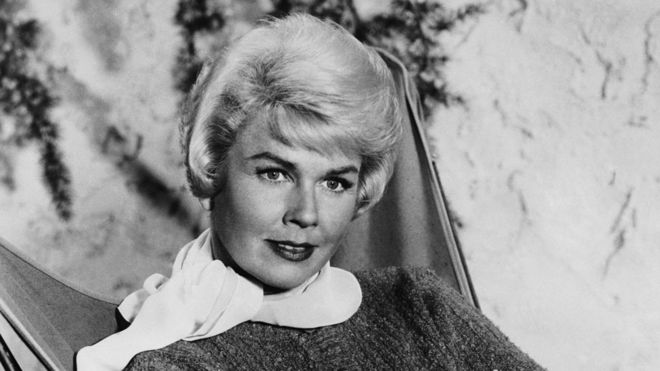
Doris Day, Hollywood actress and singer, dies aged 97

Media captionDavid Sillito looks back at Doris Day’s illustrious career

Hollywood legend Doris Day, whose films made her one of the biggest stars of all time, has died aged 97.

The singer turned actress starred in films such as Calamity Jane and Pillow Talk and had a hit in 1956 with Que Sera, Sera (Whatever Will Be, Will Be).

Her screen partnership with Rock Hudson is one of the best-known in the history of romantic movies.

In a statement, the Doris Day Animal Foundation said she died on Monday at her home in Carmel Valley, California.

It said she had been “in excellent physical health for her age, until recently contracting a serious case of pneumonia”.

“She was surrounded by a few close friends as she passed,” the statement continued.

Born Mary Ann Von Kappelhoff in April 1922, Day originally wanted to be a dancer but had to abandon her dream after breaking her right leg in a car accident.

Instead she began her singing career at the age of 15. Her first hit, Sentimental Journey, would become a signature tune.

Her films, which included Alfred Hitchcock’s The Man Who Knew Too Much and That Touch of Mink, made her known around the world.

But she never won an Oscar and was nominated only once, in 1960, for Pillow Talk, the first of her three romantic comedies with Hudson.

Honours she did receive included the Presidential Medal of Freedom in 2004 and a lifetime achievement Grammy in 2008.

Her last release, the compilation album My Heart, went to number one in the UK in 2011.

Doris DayImage copyrightGETTY IMAGES
Image captionDay’s real life was not as upbeat as her on-screen persona

Day’s wholesome, girl-next-door image was a popular part of her myth that sometimes invited ridicule.

“I’ve been around so long, I knew Doris Day before she was a virgin,” the musician Oscar Levant once remarked.

Day herself said her “Miss Chastity Belt” image was “more make-believe than any film part [she] ever played.”

Her life was certainly not as sunny. She married four times, was divorced three times and was widowed once.

She also suffered a mental breakdown and had severe financial trouble after one husband squandered her money.

In the 1970s, she turned away from performing to focus her energies on her animal foundation.

According to the organisation, she wished to have no funeral, memorial service or grave marker.

Doris Day in 1985Image copyrightGETTY IMAGES
Image captionIn later life she became an advocate for animal welfare

Star Trek actor William Shatner remembered Day on Twitter as “the World’s Sweetheart,” saying she was “beloved by all”.

Fellow Star Trek cast member George Takei said she was “synonymous with Hollywood icon“, while Spanish actor Antonio Banderas wrote: “Thank you for your talent.”

Novelist Paulo Coelho marked her passing by quoting lyrics from Secret Love, one of her numbers in Calamity Jane.

“We’ve lost another great Hollywood talent,” tweeted Family Guy creator Seth MacFarlane, while actor Luke Evans said he had “always loved” her voice and “beautiful” songs.

Changing our diets to save the world

https://www.newsroom.co.nz/2018/03/31/100859/changing-our-diets-to-save-the-world

IN-DEPTH: Can we grow enough food to feed us all in a changing climate? And can New Zealand thrive as a dairy exporter without worsening climate change? Eloise Gibson spoke to IPCC food security and farming experts and found them surprisingly upbeat.

If we’re honest, the question on New Zealanders’ lips at a meeting of top scientists in Christchurch before Easter was a variation of that Kiwi classic: what do you think of New Zealand?

Newsroom specifically wanted to know what the experts thought of New Zealand’s prospects of thriving as a meat and dairy-exporting nation, in a future where people eat less meat and milk.

We talked through the issues with five experts, whose readiness to answer suggested we were not the first to raise it since they reached our shores.

As the rest of New Zealand prepared to gorge on marshmallow and chocolate eggs, they were here with more than a hundred other agriculture and climate scientists considering the much less sweet task of how to feed the world without worsening climate change.

It’s the second meeting of the 120 researchers, who are now about a quarter of the way through drafting the Intergovernmental Panel on Climate Change Special Report on Climate Change and Land.

The report, scheduled for August 2019, will cover desertification, land degradation, food security, sustainable land management and greenhouse gas emissions.

The authors can’t discuss in any detail what the final tome will say, but they can talk about their own research.

Based on their research in climate modelling, food security and farming methods, all of them agreed that eating and farming patterns need to change a lot if we’re to feed more people in our new and altered climate. That means raising fewer livestock and sharing the meat and milk we still eat more fairly between nations.

Right now, people in rich countries over-consume, despite the hefty climate impact of their livestock-heavy habits, says Pete Smith, a climate change and soil professor at the University of Aberdeen. “We can’t have nine or ten billion people consuming the way people do in the Western world,” he says. “But that’s not to say we don’t still have livestock in the system, we certainly do. But we can’t continue at the rate we are,” he says. “Although consumption has to come down, there are still going to be global markets.”

To supply those, choosier markets, New Zealand’s milk and meat must be not only carbon-neutral but meet other standards of human health (including responsible antibiotic use) and not polluting the environment, he says.

Our products must be very good, because they’ll be expensive. A changing climate will raise food prices across the board, but it may hit animal products worse by forcing countries to include the true environmental costs of growing food, our experts said. Still, New Zealand shouldn’t be afraid to boost its price tags.

BEYOND CUTTING COW BURPS

Holding the pre-Easter IPCC meeting in Christchurch signaled global recognition of what most Kiwis know already – that, among developed nations, our greenhouse gas emissions are uniquely skewed towards farming.

Our problem is mostly cows, with their methane-laced burps and gas-producing urine, both of which New Zealand spends millions trying to solve.

But when these researchers talk about the climate costs of food growing; they’re looking much wider than reducing cow burps.

They’re discussing wholesale changes to the food system. “This is first time really that the IPCC has tackled food, as opposed to agriculture, in a big way,” says Tim Benton, who studies food security in his job as Dean of Strategic Research Initiatives at the University of Leeds. “I’m really hoping that, for the first time, people will start to pay attention to the impact our food systems have on climate and the impact climate has on our food systems.”

Globally, agriculture ranks second only to fossil fuels as a source of greenhouse gases.

Smith, from the University of Aberdeen, lists the numbers: “Direct emissions from crops and livestock are about 14 or so percent of global emissions, if you include deforestation it’s 24 percent, and if you add things like transport for moving food around and the embedded emissions in the agri-chemicals, you’re probably talking 30 per cent,” he says. “We can’t meet the Paris targets without it.”

Farming faces a circular problem. Growing food creates a lot of greenhouse gases, and greenhouse gas is threatening the world’s food-producing capability. “If we don’t tackle climate change, the impacts on the food system will be such that there’s no guarantee we could feed 11 billion people at the end of the century,” says Benton.

Even cows are not immune. “Dairy cows really do not like warmer temperatures, it decreases milk production and fertility,” says Cynthia Rosenzweig, a senior climate scientist at the NASA Goddard Institute for Space Studies.

Rosenzweig founded a project called AgMIP, which collates and improves the models researchers use to project climate change’s impact on farming, as well as farmers’ options for adapting. “We add climate models, crop and livestock production, and economists to bring in the demand side from consumers,” she says.

“When we do these rigorous multi-model projections, what we find is that in the mid- and high- latitudes, things could get better for some decades, as those regions warm. But in the lower latitudes, where primarily the developing countries are, food production is projected to decrease. When we take these results and feed them into the economic models, we find that, overall, globally, there’s a decline in production and an increase in food prices,” says Rosenzweig. “We look at the 2020s, 2050s and 2080s and it basically gets progressively worse. It just gets hotter and we get more heavy rainfalls and more droughts, all of which affect agriculture.”

AgMIP used its models to test whether adaptation methods, like planting heat- or drought-tolerant varieties, changing crops, or increasing irrigation or fertilizer could make up for lower yields from climate change in various regions of the world. The answer was usually no, even assuming farm technology keeps improving. “Mostly when you look at different regions the adaptation can compensate for some of the climate effects but not all,” says Rosenzweig. “That means we need mitigation.”

Mitigation, Rosenzweig, Smith and Benton each explained, has to include rearing less livestock, especially our burping cows. “We need to think about what we’re eating and how much. Because large-scale animal production, especially industrial animal production, has a very large carbon footprint,” says Rosenzweig.

None of them suggests everybody goes vegan, because most of us will not, they say.

“It’s just unrealistic to think that everybody is going to give up meat tomorrow,” says Rosenzweig. “So we need to realise there’s probably a pathway of healthy diets that is not no meat at all, but reduced meat consumption.”

Dairy has a lower greenhouse footprint than beef, but it remains considerably higher-emitting than producing vegetable products. Still, no-one expects a quick switch. “New Zealand has an important livestock sector and I don’t think these people are about to start growing carrots tomorrow. It’s about finding pathways to sustainable production,” says Rosenzweig.

Benton agrees. “On an existential basis, I don’t think any country needs to be particularly worried, because we’re talking about changes over a number of years,” he says. “If you look back 30 years, our agricultural industry was very different to what it is today and in 30 years’ time it will be different again.”

Major change is certainly needed, says Benton. Trade rules, subsidies and other policies serve many people too much low-nutrient food, artificially cheaply, he says. “$590 billion dollars around the world is spent on agricultural subsidies that largely support the eight major crops that make up the bulk of our food, and those crops are pretty low in nutrition – rice, maize, soya, sugar, palm oil…,” he says. “Food is easily available, it’s cheap, it’s economically rational to over-consume and throw it away. Increasingly, influential bodies like the UN are coming to the conclusion that our food system’s not working.”

The savings to health and the environment could counterbalance any cost of producing nutritious food more cleanly, says Benton. For example, he says, by 2025 the cost of treating Type 2 diabetes alone is projected to be higher than the economic value in GDP generated by producing all food. “When you consider malnutrition in all its forms through to obesity, cardiovascular disease and various cancers that come from eating the wrong sort of food, about half the world’s population are not a healthy weight,” he says. “We’ve got to the point where we have a super-abundance of food but…calories are really cheap and nutrition is not,” says Benton. “It doesn’t make any sense that the price of food doesn’t reflect the cost of growing food or the healthcare costs caused by food,” he says. “In the long-run, if your crop has an impact on, say, water, that cost needs to be somehow internalized. If food wasn’t subsidized by the environment and health systems, it would be more expensive and then people wouldn’t be able to waste so much and eat so much.”

Benton knows that rising costs will raise an inevitable question, which is, what about poor people, who are already under-nourished? That can be dealt with in other ways, he says.

“[UK] research has found that subsidizing the cost of food through unsustainability amplifies costs so much in the long-run that the correct thing to do is support the poor so they can afford to buy food, it doesn’t make sense to support food systems as a whole to support the poorest in society,” he says.

Another hope is that growing a greater diversity of crops, with less waste, will help build resilience to climate change in countries where sufficient food is hard to come by. But Rosenzweig warns of the need to go slowly, to avoid hurting food supplies. Unlike Benton, she doesn’t believe the world’s mega-food-producers are likely to go anywhere or be pushed out by artisan farmers. But, she says, the giants will get more sustainable, as will medium and small producers. Rosenzweig and Benton agree that food is going to cost more, and that people will eat less livestock products.

“For producing countries like you and Brazil that raises the question of…what you would lose from people buying less produce,” says Benton. “In the long-run, my feeling is that the economics of food production will change so that producing less is still profitable. In the long-run, the food system has to become more transparent and that should make it easier for people to say, ‘I value food that is very healthy or high animal welfare’…and it will be easier to find,” says Benton. “The digital revolution will allow you to visit a farm virtually from anywhere in the world and say ‘I like what that farmer is doing.’”

MARKETING TACTICS

That leaves the question of what people will enjoy sufficiently to spend a small fortune on it.

Smith, from the University of Aberdeen, doesn’t accept the argument sometimes made on behalf of the United States’ feedlot industry (and supported by a few prominent U.S. agricultural scientists) that feedlot meat and dairy is preferable to pasture farming, because of its greater greenhouse efficiency. It’s true, if somewhat counter-intuitive, that products, especially meat, from cows fed grain in feedlots are typically lower in greenhouse gases.

But that’s not the whole story, says Smith. “The feedlot systems need to get their food from somewhere and about 30 per cent of all crops grown on the planet go into livestock feed,” he says. “The more feedlot systems you have, the more land you need to produce those crops. And while it’s true that the greenhouse gas per unit of product is lower for those feedlot systems, that’s as a result of forcing the animal up to slaughter weight much quicker so they’ve had less chance to emit methane. Climate change is not the only game in town, and the over-use of growth hormones and antibiotics [needed to fatten animals faster] is not accepted in many countries,” says Smith.

Annette Cowie, a principal research scientist at the New South Wales Department of Primary Industries, believes that there will always be a place for livestock that can forage for food, such as grass, that people can’t eat, on land where crops can’t grow.

Ruminants like cows have this unique ability. Cowie also sees huge potential for new technologies such as biochar, which can trap emissions in the soil, though she is wary of overblowing the advances farms could make.

But, as Smith explains, New Zealand doesn’t need to eliminate cow burps to claim to be cleaner. He puts only a little store in gas-squashing technologies, like the methane-inhibiting feed supplements New Zealanders are working on, because they’ll never reduce emissions to zero. “The only way is to offset emissions by planting more trees or creating carbon sinks. In the future, you might say, ‘for this litre of milk we made this many greenhouse gases but we’ve created a forest offsetting it domestically’,” says Smith. “You’ve got a great climate, great soil for producing pasture,” he says. “It’s not perfect, at the moment you’ve got over-fertilization and other stuff, but if you can get those issues addressed…New Zealand could be putting its stuff on the international market as the most environmentally-benign dairy products there are,” he says.

Long-term, we shouldn’t be afraid to have fewer cows, producing less, says Smith. “The push toward productivity has not necessarily moved us in the right direction on other measures,” he says. “One of the big issues is, we currently don’t pay farmers enough, and we’ve come to expect very low food prices. When you’re not squeezing every last litre of milk out of the land by over-fertilizing, you can step back and accept maybe 5 percent less milk for a massive environmental benefit,” says Smith. “We, as a society, might decide to pay farmers the difference.”

NEW WORKING ENVIRONMENT

Such a move would be a mighty relief to the farmers Mark Howden works in Australia, where he’s the director of the Climate Change Institute at Australian National University. In a food system that favours maximum production and reliability, climate change is already proving a major headache, he says. Some Australian farmers are doing it tough, though not in every location, says Howden. “What farmers are seeing now in terms of changes in rainfall is different depending where you are. Some farmers are having to, say, move out of wheat farming and into mixed farming with livestock that can handle the dry conditions. “Their options are shrinking and they’re feeling significantly stressed,” he says. “And what farmers are seeing now is very much in line with the projections for the future.”

Meanwhile, at supermarkets: “The demand is for very reliable foodstuffs, with no variation in quality, so the supermarkets can employ their marketing strategies,” he says. “Both of those things are challenged with the increased variability and extremes of climate that we’re already seeing and that will increase in future, so the pressure from the value chain is in the opposite direction to the pressure from climate. That increases stress on farmers,” says Howden.

One tactic that’s already been employed by a few Australian farmers is “hedging” their climate risk by buying farms in at least two different micro-climates. “They can have more than one farm in different regions, so in New Zealand maybe you’d have one in the South Island and one in the North, so it’s unlikely both will be affected in the same way and you can buffer your supply system.” Another strategy is educating consumers “about why there is variability in produce and the importance of seasonal cooking, and that just because an apple has a spot on it, doesn’t mean it’s not okay,” says Howden.

One of the biggest things that Howden recommends that farmers do to reduce stress might not come easily. It involves changing farmers’ minds, not their farming systems. Howden says his work shows it is easier to cope with changes when farmers accept that climate change is happening. “In Australia, farmers are about four times more likely than the average Australian to say they don’t believe in climate change [the figures are 32 per cent versus 7 percent]. Yet when you actually look at what farmers are doing, the vast majority are changing their practices to adjust to a changing climate. There’s a discrepancy between what they’re saying and what they’re doing, and those sorts of discrepancies actually cause stress in their own right,” says Howden. “It stops effective strategic decision-making, because if you’re thinking this is just a few bad years, you’re expecting it to get cooler and wetter again. What we find is that those who take climate change seriously have lower stress levels, because they are empowered to take action.”

When Howden talks to farmers about adapting, their approaches change over the course of a few meetings. “Often they are initially focused on the technical options, so, say, they’re still growing wheat but different varieties. But after a few discussions on climate change, where they end up is that the important thing is having much better strategic business capability and the ability to juggle trade-offs,” he says.

Rosenzweig, the impact modeler, sums up those trade-offs and farmers’ tricky conundrum. “The challenges for agriculture everywhere are to simultaneously be reducing their emissions of greenhouse gases and be adapting to a changing climate,” she says. To do it, they will need our help, and that includes changing our diets. “That’s why there’s a role for people changing what we eat. Because as we go from 6 or 7 billion people to 9 or 10 billion, how are we actually going to do that?” she says.

Born Free USA Sues Administration Over Lack of Transparency on Newly Appointed Council that Promotes Trophy Hunting

http://www.bornfreeusa.org/press.php?p=6340&more=1

Leading nonprofit animal rights organization files complaint against the U.S. Fish and Wildlife Service over neglected Freedom of Information Act (FOIA) request regarding the recently formed International Wildlife Conservation Council (IWCC)

Washington, D.C. — Born Free USA, a global leader in animal welfare and wildlife conservation leading the charge against the outdated and brutal sport of trophy hunting, today filed a complaint against the U.S. Fish and Wildlife Service. The suit, filed over a neglected Freedom of Information Act (FOIA) request about the newly formed International Wildlife Conservation Council (IWCC), also argues that the council was formed under the guise of conservation with no balanced perspectives on the negative impact of international trophy hunting.

The IWCC, which was announced on November 8, 2017, was created, to “… advise the Secretary of the Interior on the benefits that international recreational hunting has on foreign wildlife and habitat conservation, anti-poaching and illegal wildlife trafficking programs, and other ways in which international hunting benefits human populations in these areas.” Born Free submitted a FOIA request seeking information related to the duties of the IWCC, the circumstances under which it was established, and under what criteria its members were to be selected. To date, the U.S. Fish and Wildlife Service has not provided a single piece of information, ignoring a deadline imposed by the law and its own self-extended deadline.

“In creating the IWCC to advise on the ‘benefits’ of Americans going abroad to hunt, the Department of the Interior is operating under the premise that trophy hunting has significant benefits for wildlife conservation,” said Prashant Khetan, CEO and general counsel for Born Free USA. “In truth, trophy hunting does virtually nothing to aid conservation efforts. It appears this administration is set on pushing a pro-hunting agenda, apparent not just in the aims of the IWCC, but also evident in its membership. The vast majority, if not all, of the IWCC members represent pro-hunting organizations.”

The IWCC will hold its first public meeting this Friday, March 16, just days after the administration lifted trophy hunting bans put into place during President Obama’s tenure.

The FOIA submitted by Born Free was an active step towards finding out more about the IWCC’s formation and purpose. According to the complaint, “… the members of the IWCC have now been made public, which includes officers of Safari Club International and National Rifle Association. Given these entities’ close relationship with Secretary Zinke, including support during campaigns, it is perhaps not surprising that FWS [U.S. Fish and Wildlife Service] has been pushing a pro-hunting agenda, including the creation of the IWCC. It also is not surprising that FWS has chosen not to be transparent about the IWCC prior to its first public meeting.”

“We will have a representative in attendance who, with several other groups, intends to read a statement to the IWCC challenging its purpose,” Khetan said. “In addition, we reached out to our base for their comments/questions about the IWCC and, in a span of days, received over 600 responses, which we collated and submitted on their behalf – the central theme being that hunting does not constitute compassionate conservation. We believe, and have the facts to support the idea, that killing is not conservation. The species that will be most affected, including lions, elephants and white rhinos, are already in such decline that hunting them under the guise of conservation is no longer a valid excuse.”

About Born Free USA
Born Free USA, a national 501(c)(3), believes that every individual animal matters. Inspired by the Academy Award®-winning film Born Free, the organization works locally, nationally, and internationally on the conservation frontlines, in communities, classrooms, courtrooms, and the halls of Congress, to end wild animal cruelty and suffering, and protect threatened wildlife.

Launched in 2002, Born Free USA was inspired by Virginia McKenna and her (late) husband Bill Travers, who, along with their son, Will, founded The Born Free Foundation (UK) in 1984. Their experience in Kenya filming the classic 1966 Academy Award®-winning film Born Free, the story of Joy and George Adamson’s fight to successfully return Elsa the lioness to a wild and free life, launched the couple’s “compassionate conservation” movement, aimed at keeping wildlife in the wild. This movement continues to motivate millions of followers and activists across the globe. In 2007, Born Free USA merged with the Animal Protection Institute.

To support Born Free USA and make a donation, visit http://bit.ly/WildlifeDonation.

Follow or friend us at: www.bornfreeusa.orgwww.twitter.com/bornfreeusawww.facebook.com/bornfreeusawww.instagram.com/bornfreeusaorg.

It’s Official: Fish Feel Pain

The verdict is in. But will our oceanic friends ever get the same legal protections as land animals?

image: https://thumbs-prod.si-cdn.com/c86on9yeBmn5_G7b4ng_ZQWjiII=/800×600/filters:no_upscale()/https://public-media.smithsonianmag.com/filer/d6/93/d6939718-4e41-44a8-a8f3-d13648d2bcd0/c3npbx.jpg

C3NPBX.jpg

Whether or not fish feel pain has been debated for years. But the balance of evidence says yes. Now the question is, what do we do about it? (redbrickstock.com / Alamy)
SMITHSONIAN.COM

When Culum Brown was a young boy, he and his grandmother frequented a park near her home in Melbourne, Australia. He was fascinated by the park’s large ornamental pond wriggling with goldfish, mosquitofish, and loaches. Brown would walk the perimeter of the pond, peering into the translucent shallows to gaze at the fish. One day, he and his grandmother arrived at the park and discovered that the pond had been drained—something the parks department apparently did every few years. Heaps of fish flapped upon the exposed bed, suffocating in the sun.

Brown raced from one trash can to another, searching through them and collecting whatever discarded containers he could find—mostly plastic soda bottles. He filled the bottles at drinking fountains and corralled several fish into each one. He pushed other stranded fish toward regions of the pond where some water remained. “I was frantic, running around like a lunatic, trying to save these animals,” recalls Brown, who is now a marine biologist at Macquarie University in Sydney. Ultimately, he managed to rescue hundreds of fish, about 60 of which he adopted. Some of them lived in his home aquariums for more than 10 years.

As a child, I too kept fish. My very first pets were two goldfish, bright as newly minted pennies, in an unornamented glass bowl the size of a cantaloupe. They died within a few weeks. I later upgraded to a 40-liter tank lined with rainbow gravel and a few plastic plants. Inside I kept various small fish: neon tetras with bands of fluorescent blue and red, guppies with bold billowing tails like solar flares, and glass catfish so diaphanous they seemed nothing more than silver-crowned spinal columns darting through the water. Most of these fish lived much longer than the goldfish, but some of them had a habit of leaping in ecstatic arcs straight through the gaps in the tank’s cover and onto the living room floor. My family and I would find them flopping behind the TV, cocooned in dust and lint.

Should we care how fish feel? In his 1789 treatise An Introduction to the Principles of Morals and Legislation, English philosopher Jeremy Bentham—who developed the theory of utilitarianism (essentially, the greatest good for the greatest number of individuals)—articulated an idea that has been central to debates about animal welfare ever since. When considering our ethical obligations to other animals, Bentham wrote, the most important question is not, “Can they reason? nor, Can they talk? but, Can they suffer?” Conventional wisdom has long held that fish cannot—that they do not feel pain. An exchange in a 1977 issue of Field & Stream exemplifies the typical argument. In response to a 13-year-old girl’s letter about whether fish suffer when caught, the writer and fisherman Ed Zern first accuses her of having a parent or teacher write the letter because it is so well composed. He then explains that “fish don’t feel pain the way you do when you skin your knee or stub your toe or have a toothache, because their nervous systems are much simpler. I’m not really sure they feel anypain, as we feel pain, but probably they feel a kind of ‘fish pain.’” Ultimately, whatever primitive suffering they endure is irrelevant, he continues, because it’s all part of the great food chain and, besides, “if something or somebody ever stops us from fishing, we’ll suffer terribly.”

Such logic is still prevalent today. In 2014, BBC Newsnight invited Penn State University biologist Victoria Braithwaite to discuss fish pain and welfare with Bertie Armstrong, head of the Scottish Fishermen’s Federation. Armstrong dismissed the notion that fish deserve welfare laws as “cranky” and insisted that “the balance of scientific evidence is that fish do not feel pain as we do.”

image: https://public-media.smithsonianmag.com/filer/ea/a1/eaa14308-a056-4994-9e7f-f31563b888aa/cerkce.jpg

CERKCE.jpg

Despite the evidence that fish can suffer, animal welfare legislations and other legal protections often exclude them. (wonderlandstock / Alamy)

That’s not quite true, Braithwaite says. It is impossible to definitively know whether another creature’s subjective experience is like our own. But that is beside the point. We do not know whether cats, dogs, lab animals, chickens, and cattle feel pain the way we do, yet we still afford them increasingly humane treatment and legal protections because they have demonstrated an ability to suffer. In the past 15 years, Braithwaite and other fish biologists around the world have produced substantial evidence that, just like mammals and birds, fish also experience conscious pain. “More and more people are willing to accept the facts,” Braithwaite says. “Fish do feel pain. It’s likely different from what humans feel, but it is still a kind of pain.”

At the anatomical level, fish have neurons known as nociceptors, which detect potential harm, such as high temperatures, intense pressure, and caustic chemicals. Fish produce the same opioids—the body’s innate painkillers—that mammals do. And their brain activity during injury is analogous to that in terrestrial vertebrates: sticking a pin into goldfish or rainbow trout, just behind their gills, stimulates nociceptors and a cascade of electrical activity that surges toward brain regions essential for conscious sensory perceptions (such as the cerebellum, tectum, and telencephalon), not just the hindbrain and brainstem, which are responsible for reflexes and impulses.

Fish also behave in ways that indicate they consciously experience pain. In one study, researchers dropped clusters of brightly colored Lego blocks into tanks containing rainbow trout. Trout typically avoid an unfamiliar object suddenly introduced to their environment in case it’s dangerous. But when scientists gave the rainbow trout a painful injection of acetic acid, they were much less likely to exhibit these defensive behaviors, presumably because they were distracted by their own suffering. In contrast, fish injected with both acid and morphine maintained their usual caution. Like all analgesics, morphine dulls the experience of pain, but does nothing to remove the source of pain itself, suggesting that the fish’s behavior reflected their mental state, not mere physiology. If the fish were reflexively responding to the presence of caustic acid, as opposed to consciously experiencing pain, then the morphine should not have made a difference.

In another study, rainbow trout that received injections of acetic acid in their lips began to breathe more quickly, rocked back and forth on the bottom of the tank, rubbed their lips against the gravel and the side of the tank, and took more than twice as long to resume feeding as fish injected with benign saline. Fish injected with both acid and morphine also showed some of these unusual behaviors, but to a much lesser extent, whereas fish injected with saline never behaved oddly.

image: https://public-media.smithsonianmag.com/filer/0e/00/0e0095f9-7c68-4d1c-b82a-6496ceb3d276/b5t5cc.jpg

B5T5CC.jpg

Testing for pain in fish is challenging, so researchers often look for unusual behavior and physiological responses. In one study, rainbow trout given injections of acetic acid in their lips responded by rubbing their lips on the sides and bottom of their tank and delaying feeding. (arc F. Henning / Alamy)

Several years ago, Lynne Sneddon, a University of Liverpool biologist and one of the world’s foremost experts on fish pain, began conducting a set of particularly intriguing experiments; so far, only some of the results have been published. In one test, she gave zebrafish the choice between two aquariums: one completely barren, the other containing gravel, a plant, and a view of other fish. They consistently preferred to spend time in the livelier, decorated chamber. When some fish were injected with acid, however, and the bleak aquarium was flooded with pain-numbing lidocaine, they switched their preference, abandoning the enriched tank. Sneddon repeated this study with one change: rather than suffusing the boring aquarium with painkiller, she injected it straight into the fish’s bodies, so they could take it with them wherever they swam. The fish remained among the gravel and greenery.

The collective evidence is now robust enough that biologists and veterinarians increasingly accept fish pain as a reality. “It’s changed so much,” Sneddon says, reflecting on her experiences speaking to both scientists and the general public. “Back in 2003, when I gave talks, I would ask, ‘Who believes fish can feel pain?’ Just one or two hands would go up. Now you ask the room and pretty much everyone puts their hands up.” In 2013, the American Veterinary Medical Association published new guidelines for the euthanasia of animals, which included the following statements: “Suggestions that finfish responses to pain merely represent simple reflexes have been refuted. … the preponderance of accumulated evidence supports the position that finfish should be accorded the same considerations as terrestrial vertebrates in regard to relief from pain.”

Yet this scientific consensus has not permeated public perception. Google “do fish feel pain” and you plunge yourself into a morass of conflicting messages. They don’t, says one headline. They do, says another. Other sources claim there’s a convoluted debate raging between scientists. In truth, that level of ambiguity and disagreement no longer exists in the scientific community. In 2016, University of Queensland professor Brian Key published an article titled “Why fish do not feel pain” in Animal Sentience: An Interdisciplinary Journal on Animal Feeling. So far, Key’s article has provoked more than 40 responses from scientists around the world, almost all of whom reject his conclusions.

Key is one of the most vociferous critics of the idea that fish can consciously suffer; the other is James D. Rose, a professor emeritus of zoology at the University of Wyoming and an avid fisherman who has written for the pro-angling publication Angling Matters. The thrust of their argument is that the studies ostensibly demonstrating pain in fish are poorly designed and, more fundamentally, that fish lack brains complex enough to generate a subjective experience of pain. In particular, they stress that fish do not have the kind of large, dense, undulating cerebral cortices that humans, primates, and certain other mammals possess. The cortex, which envelops the rest of the brain like bark, is thought to be crucial for sensory perceptions and consciousness.

Some of the critiques published by Key and Rose are valid, particularly on the subject of methodological flaws. A few studies in the growing literature on fish pain do not properly distinguish between a reflexive response to injury and a probable experience of pain, and some researchers have overstated the significance of these flawed efforts. At this point, however, such studies are in the minority. Many experiments have confirmed the early work of Braithwaite and Sneddon.

Moreover, the notion that fish do not have the cerebral complexity to feel pain is decidedly antiquated. Scientists agree that most, if not all, vertebrates (as well as some invertebrates) are conscious and that a cerebral cortex as swollen as our own is not a prerequisite for a subjective experience of the world. The planet contains a multitude of brains, dense and spongy, globular and elongated, as small as poppy seeds and as large as watermelons; different animal lineages have independently conjured similar mental abilities from very different neural machines. A mind does not have to be human to suffer.

image: https://public-media.smithsonianmag.com/filer/d8/cc/d8cc47b4-01ff-4021-a4a2-a688abf9b7a5/blue-north-fish-feel.jpg

Fishermen Michael and Patrick Burns

Fishermen Michael and Patrick Burns practice humane fishing techniques on their vessel, Blue North. (Photo by Kevin J. Suver/Blue North)

Despite the evidence of conscious suffering in fish, they are not typically afforded the kind of legal protections given to farm animals, lab animals, and pets in many countries around the world. The United Kingdom has some of the most progressive animal welfare legislation, which typically covers all nonhuman vertebrates. In Canada and Australia, animal welfare laws are more piecemeal, varying from one state or province to another; some protect fish, some don’t. Japan’s relevant legislation largely neglects fish. China has very few substantive animal welfare laws of any kind. And in the United States, the Animal Welfare Act protects most warm-blooded animals used in research and sold as pets, but excludes fish, amphibians, and reptiles. Yet the sheer number of fish killed for food and bred for pet stores dwarfs the corresponding numbers of mammals, birds, and reptiles. Annually, about 70 billion land animals are killed for food around the world. That number includes chickens, other poultry, and all forms of livestock. In contrast, an estimated 10 to 100 billion farmed fish are killed globally every year, and about another one to three trillion fish are caught from the wild. The number of fish killed each year far exceeds the number of people who have ever existed on Earth.

“We have largely thought of fish as very alien and very simple, so we didn’t really care how we killed them,” Braithwaite says. “If we look at trawl netting, that’s a pretty gruesome way for fish to die: the barometric trauma of getting ripped from the ocean into open air, and then slowly suffocating. Can we do that more humanely? Yes. Should we? Probably, yes. We’re mostly not doing it at the moment because it’s more expensive to kill fish humanely, especially in the wild.”

**********

In some countries, such as the United Kingdom and Norway, fish farms have largely adopted humane slaughter methods. Instead of suffocating fish in air—the easiest and historically the most common practice—or freezing them to death in ice water, or poisoning them with carbon dioxide, they render fish unconscious with either a quick blow to the head or strong electrical currents, then pierce their brains or bleed them out. In Norway, Hanne Digre and her colleagues at the research organization SINTEF have brought these techniques onto commercial fishing vessels on a trial basis to investigate whether humane slaughter is feasible out at sea.

In a series of experiments, Digre and her colleagues tested different open-sea slaughter methods on a variety of species. They found that cod and haddock stored in dry bins on ships after harvest remained conscious for at least two hours. An electric shock delivered immediately after bringing fish onto a ship could knock them unconscious, but only if the current was strong enough. If the electric shock was too weak, the fish were merely immobilized. Some species, such as saithe, tended to break their spines and bleed internally when shocked; others, such as cod, struggled much less. Some fish regained consciousness about 10 minutes after being stunned, so the researchers recommend cutting their throats within 30 seconds of an electric shock.

In the United States, two brothers are pioneering a new kind of humane fishing. In fall of 2016, Michael and Patrick Burns, both longtime fishermen and cattle ranchers, launched a unique fishing vessel named Blue North. The 58-meter boat, which can carry about 750 tonnes and a crew of 26, specializes in harvesting Pacific cod from the Bering Sea. The crew works within a temperature-controlled room in the middle of the boat, which houses a moon pool—a hole through which they haul up fish one at a time. This sanctuary protects the crew from the elements and gives them much more control over the act of fishing than they would have on an ordinary vessel. Within seconds of bringing a fish to the surface, the crew moves it to a stun table that renders the animal unconscious with about 10 volts of direct current. The fish are then bled.

The Burns brothers were initially inspired by groundbreaking research on humane slaughter facilities for livestock conducted by Colorado State University animal science professor and internationally renowned autism spokesperson Temple Grandin. By considering the perspectives of the animals themselves, Grandin’s innovative designs greatly reduced stress, panic, and injury in cattle being herded toward an abattoir, while simultaneously making the whole process more efficient for ranchers. “One day it occurred to me, why couldn’t we take some of those principles and apply them to the fishing industry? Michael recalls. Inspired by moon pools on Norwegian fishing vessels, and the use of electrical stunning in various forms of animal husbandry, they designed Blue North. Michael thinks his new ship is one of perhaps two vessels in the world to consistently use electrical stunning on wild-caught fish. “We believe that fish are sentient beings, that they do experience panic and stress,” he says. “We have come up with a method to stop that.”

Right now, the Burns brothers export the cod they catch to Japan, China, France, Spain, Denmark, and Norway. The fact that the fish are humanely harvested has not been a big draw for their main buyers, Michael says, but he expects that will change. He and his team have been speaking with various animal welfare organizations to develop new standards and certifications for humanely caught wild fish. “It will become more common,” Michael says. “A lot of people out there are concerned with where their food comes from and how it’s handled.”

Meanwhile, the vast majority of the trillions of fish slaughtered annually are killed in ways that likely cause them immense pain. The truth is that even the adoption of humane slaughter methods in more progressive countries has not been entirely or even primarily motivated by ethics. Rather, such changes are driven by profit. Studies have shown that reducing stress in farmed and caught fish, killing them swiftly and efficiently with minimal struggle, improves the quality of the meat that eventually makes it to market. The flesh of fish killed humanely is often smoother and less blemished. When we treat fish well, we don’t really do it for their sake; we do it for ours.

**********

“I’ve always had a natural empathy for animals and had no reason to exclude fish,” Brown says. “At that park [in Melbourne], they didn’t have any concern that there were fish in there and they might need some water. There was no attempt to save them or house them whatsoever. I was shocked by that at that age, and I still see that kind of callous disregard for fish in people today in all sorts of contexts. In all the time since we discovered the first evidence for pain in fish, I don’t think public perception has moved an ounce.”

Lately, I’ve been spending a lot of time at my local pet stores, watching the fish. They move restlessly, noiselessly—leglessly pacing from one side of their tanks to another. Some hang in the water, heads tilted up, as though caught on an invisible line. A glint of scales draws my attention; an unexpected swatch of color. I try to look one in the eye—a depthless disc of obsidian. Its mouth moves so mechanically, like a sliding door stuck in a loop. I look at these fish, I enjoy looking at them, I do not wish them any harm; yet I almost never wonder what they are thinking or feeling. Fish are our direct evolutionary ancestors. They are the original vertebrates, the scaly, stubby-limbed pioneers who crawled still wet from the sea and colonized the land. So many gulfs separate us now: geographical, anatomical, psychological. We can understand, rationally, the overwhelming evidence for fish sentience. But the facts are not enough. Genuinely pitying a fish seems to require an Olympian feat of empathy.

Perhaps, though, our typical interactions with fish—the placid pet in a glass puddle, or the garnished filet on a plate—are too circumscribed to reveal a capacity for suffering. I recently learned of a culinary tradition, still practiced today, known as ikizukuri: eating the raw flesh of a living fish. You can find videos online. In one, a chef covers a fish’s face with a cloth and holds it down as he shaves off its scales with something like a crude cheese grater. He begins to slice the fish lengthwise with a large knife, but the creature leaps violently from his grasp and somersaults into a nearby sink. The chef reclaims the fish and continues slicing away both its flanks. Blood as dark as pomegranate juice spills out. He immerses the fish in a bowl of ice water as he prepares the sashimi. The whole fish will be served on a plate with shaved daikon and shiso leaves, rectangular chunks of its flesh piled neatly in its hollowed side, its mouth and gills still flapping, and the occasional shudder rippling across the length of its body.

Read more: https://www.smithsonianmag.com/science-nature/fish-feel-pain-180967764/#fJkT2xEm1ATPALrf.99
Give the gift of Smithsonian magazine for only $12! http://bit.ly/1cGUiGv
Follow us: @SmithsonianMag on Twitter

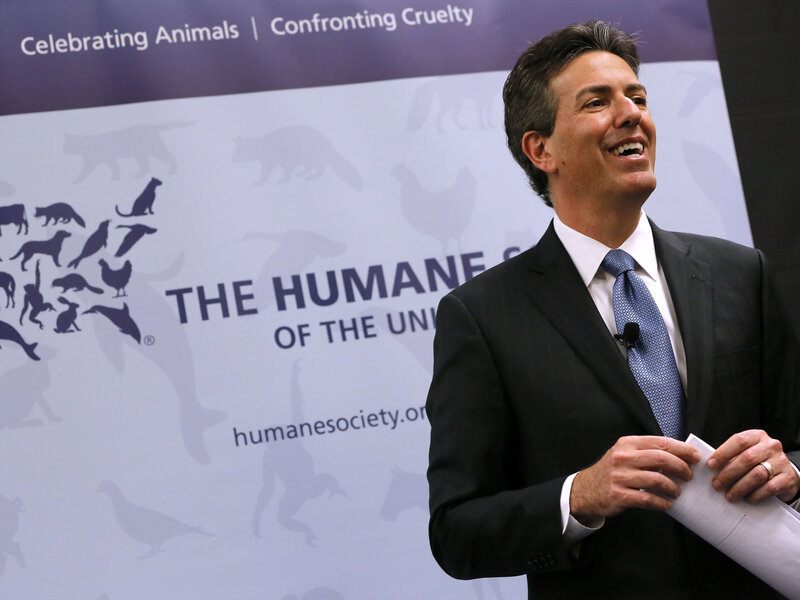
The Humane Society of the United States accepts the resignation of Wayne Pacelle as president and CEO

The Humane Society of the United States announced that it has accepted the resignation of Wayne Pacelle, as president and CEO, effective immediately.  Wayne has served in this capacity since 2004, and previously served for 10 years as the organization chief political and communications operative.

The HSUS has named Kitty Block as acting president and CEO. Ms. Block, an attorney, is currently president of Humane Society International, The HSUS’s global affiliate.

“The last few days have been very hard for our entire family of staff and supporters,” said Rick Bernthal, Chairman of the Board of The HSUS.  “We are profoundly grateful for Wayne’s unparalleled level of accomplishments and service to the cause of animal protection and welfare.”

“We are most grateful to Kitty for stepping forward to lead the organization as we continue to advance our mission, which has never been more important,” added Bernthal.

Ms. Block has served at The HSUS since 1992, first as a legal investigator to the investigations department, then to oversee international policy work related to international trade and treaties. In 2007, she was promoted to Vice President of Humane Society International, later to Senior Vice President, and last year became President of this affiliate overseeing all HSI international campaigns and programs. Ms. Block received a law degree from The George Washington University in 1990 and a bachelor’s degree in communications and philosophy from the University of New Hampshire in 1986.

Additionally, The HSUS announced the resignation of Board member Erika Brunson.

http://www.humanesociety.org/news/press_releases/2018/02/humane-society-of-the-united-states-accepts-wayne-pacelle-resignation.html?credit=web_hpfs1_020217?referrer=http://news.url.google.com/url?sa=j&url=http%3A%2F%2Fwww.humanesociety.org%2Fnews%2Fpress_releases%2F2018%2F02%2Fhumane-society-of-the-united-states-accepts-wayne-pacelle-resignation.html%3Fcredit%3Dweb_hpfs1_020217&uct=1508175977&usg=AUWVE-py-gbxUxBNkmibzDEk6-s.

CEO Of The Humane Society Resigns Amid Allegations of Sexual Harassment

 https://www.npr.org/sections/thetwo-way/2018/02/02/582904576/ceo-of-the-humane-society-resigns-amid-allegations-of-sexual-harassment

Wayne Pacelle, former CEO of the Humane Society of the United States, at a 2015 news conference. Pacelle resigned Friday.

Jonathan Bachman/AP Images for The Humane Society of the United States

The president and CEO of the Humane Society of the United States, Wayne Pacelle, has resigned effective immediately, the nonprofit group announced Friday.

Pacelle had been at the center of a controversy over allegations that he had sexually harassed three female subordinates at the Humane Society, one of the country’s largest animal charities.

The move came a day after the group’s board of directors had voted to keep Pacelle despite the allegations dating to 2005.

In a statement, Humane Society Board Chair Rick Bernthal said:

“The last few days have been very hard for our entire family of staff and supporters. We are profoundly grateful for Wayne’s unparalleled level of accomplishments and service to the cause of animal protection and welfare.”

Bernthal said that the president of the Humane Society’s international affiliate, Kitty Block, has been named as acting chief executive.

The development came just hours after Bernthal had defended the group’s decision yesterday to allow Pacelle to remain as CEO. In a statement, Bernthal said that after an investigation:

“The board reviewed the information assembled and determined that there was not sufficient evidence to remove Wayne Pacelle from his position as CEO.

“Many of the allegations were explosive in nature, and reading or hearing about them is a shock to anyone. It was to us, too. But when we sifted through the evidence presented, we did not find that many of these allegations were supported by credible evidence.”

Bernthal also denied that his group had offered settlements to three other workers who said they were dismissed or demoted after raising concerns about Pacelle’s alleged sexual misconduct. “The Board concluded that there was no motivation behind severance agreements to silence women who had spoken up or raised concerns,” he said.

After the board voted to retain Pacelle, the CEO acknowledged that the controversy was taking a toll.

Pacelle had told the New York Times earlier on Friday that he was assessing his future professional life:

“‘I’m going to take stock of everyone’s opinion and assess where I go and where the organization goes from here,’ he said. ‘I think leadership changes at organizations are often very healthy and renewing, and I’m going to talk with staff and board members and find the best course that [contributes] to our mission of fighting for all animals.’ ”

Yet pressure was building for Pacelle’s dismissal from both inside and out the organization, with major donors announcing that they were withdrawing their support from the group.

In a statement earlier Friday, the president of the National Organization for Women, Toni Van Pelt, had called for Pacelle’s firing:

“Like Donald Trump, the Humane Society is engaged in a cover up in plain sight. Instead of trying to enable a sexual abuser, they should dismiss him. Instead of making excuses, they should be making reparations. Instead of silencing or attacking women who’ve suffered abuse, and those who defend them, the Humane Society should change its own culture.

“The Humane Society needs to know this. Women are watching. We know when a charity deserves our support, and when it fails the most basic obligations of trust.

“The Humane Society has no humanity. Fire Wayne Pacelle. Do it now.”

The initial decision to retain Pacelle also had led to the resignation of seven protesting board members.

Stop HR 3599 & HR 2887: The States’ Rights Elimination Acts

Representatives Steve King (R-IA) and James Sensenbrenner (R-WI) have introduced two bills— HR 3599and HR 2887, respectively—we’ve dubbed the States’ Rights Elimination Acts. These bills would completely undermine the authority of states to pass laws to protect animals and their citizens.

A diverse and broad coalition of more than 60 groups opposes these dangerous bills. More than 50 of these organizations have signed a joint letter to Congress opposing HR 3599 and HR 2887) while other groups (such as Freedomworks) are speaking out against King’s bill on their own.


These bills could make it easy for animal abusers to skirt existing state laws on many important issues including puppy mills, factory farms, horse slaughter, cat and dog meat and shark finning.

Both HR 3599 and HR 2887 could roll back many hard-fought protections for animals and lead to additional suffering.

Please urge your legislators to stop the attack on animals by opposing the States’ Rights Elimination Acts»

Download the HR 3599 / HR 2887 Factsheet»

HR 3599

  • Rep. King’s bill is the same failed proposal he’s put forth for years. It aims to undo most existing state and local laws regarding agricultural products, including how animals are raised. It takes a lowest-common-denominator approach—if any one state tolerates the way a particular agricultural product is manufactured or produced, no matter how hazardous or unacceptable, every other state could have to do so as well.
  • This threatens laws already enacted by state legislatures and citizen ballot measures on a wide range of concerns including puppy mills, the sale of horse meat, dog and cat meat, eggs from battery-caged hens, and shark finning.
  • In addition to animal welfare laws, HR 3599 could subvert hundreds of state and local measures addressing food safety, food labeling, environmental requirements, child labor, alcohol, fire-safe cigarettes, and more.
  • While King has not yet succeeded in enacting his bill, he did get it added as a House committee amendment to the last Farm Bill, generating tremendous opposition across the spectrum (PDF). Thankfully, the catastrophic provision was left out of the final version of the last Farm Bill, but now King aims to insert it into the new Farm Bill.

“[HR 3599] would preempt vital state agricultural policies designed to protect the safety and well being of our farmland, waterways, forests and most importantly, our constituents…[It] not only violates the tenets of the Tenth Amendment, but would also have significant economic effects across the states.”
– The National Conference of State Legislatures

Download the HR 3599 California Factsheet »

HR 2887

  • Rep. Sensenbrenner’s bill prohibits states from taxing or regulating any activity in interstate commerce by any person (including a corporation) unless that entity is physically present in the state, for example by being there for 15 days or more in a calendar year. It would prevent states from regulating sales within their own borders of any product made in another state, no matter how hazardous the product or unacceptable the production process.
  • It would also prevent states from regulating professions and services within their borders. Short-term visitors would be able to sell otherwise prohibited goods and commit an untold number of otherwise prohibited acts without being subject to state standards or restrictions. This would put citizens at risk across a broad range of concerns and put in-state businesses at a competitive disadvantage with out-of-state operators who are free to evade state requirements.
  • State laws that could be nullified under HR 2887 include agriculture and animal-related laws threatened by the King bill and a multitude of additional laws related to interstate commerce, such as those governing opioid prescriptions, gambling, adult-oriented businesses, gun sales, water rights, price-gouging by car repair shops, and professional licensing requirements.

“This constitutionally questionable legislation would codify a radical federal overreach that would undermine the longstanding constitutional right of states to protect the health, safety, and welfare of their citizens and local businesses, as well as preempt countless laws in all 50 states. In short, this legislation would strip states’ ability to govern.”
– The National Conference of State Legislatures

Circus wins, anti-fur policies lead list of top gains for animals in 2017

by Wayne Pacelle,
December 21, 2017

This was a year of extraordinary gains on a wide set of issues, showing the power and reach of The HSUS, Humane Society International, and our affiliates. But along with it came some terrible setbacks at the federal level – with Congress unwinding federal rulesadopted in 2016 and in January 2017 to protect grizzly bears and wolves on national wildlife refuges in Alaska, loss of federal protections for Yellowstone-area grizzly bears, and with the U.S. Department of Agriculture delaying or dissembling rules on horse soring and farm animal protection (the Organic Livestock and Poultry Practices rule).

This was also a year that saw The HSUS announce a major, multi-million-dollar agreement with the New York Blood Center (NYBC) concerning more than 60 chimpanzees formerly used by the NYBC in medical experiments in Liberia. And hundreds of thousands of Americans donated to help animals and people in a series of intensely powerful disasters. Our emergency responders moved more than 2,000 animals from affected areas, and brought lifesaving animal services to animals and the people who care about them in low-income areas. We made short-term and long-term investments in Puerto Rico, with spay and neuter clinics, transporting animals, and rebuilding the animal welfare capacity in the Commonwealth, and delivered tens of thousands of pounds of supplies and food to people and animals in devastated areas.

Ending the era of wild animals in traveling circus acts

In the wake of Ringling Bros. first ending its elephant acts and then shuttering its entire operation in 2017, we’ve helped push the cause of ending wild animal acts in circuses throughout the United States and across the world. Just this week, the Pittsburgh city council banned wild animal acts, just the latest in a long list of communities, including New York City and Los Angeles. In August, Illinois became the first state to ban the use of elephants in circuses, and New York state followed in October. Italy, Scotland, and other nations banned wild animal acts in circuses. The outgoing interior secretary for France’s presidential administration announced a phase-out of the use of cetaceans in marine parks and facilities in that country. While Ringling Bros. is gone, a number of small circuses cart animals around and subject them to inhumane training techniques and grueling travel. In May, The HSUS released an undercover investigation of Ryan Easley’s ShowMe Tigers Act, that revealed the mistreatment of eight tigers. The Oklahoma-based act is contracted out to branded circuses, including Shrine Circuses.

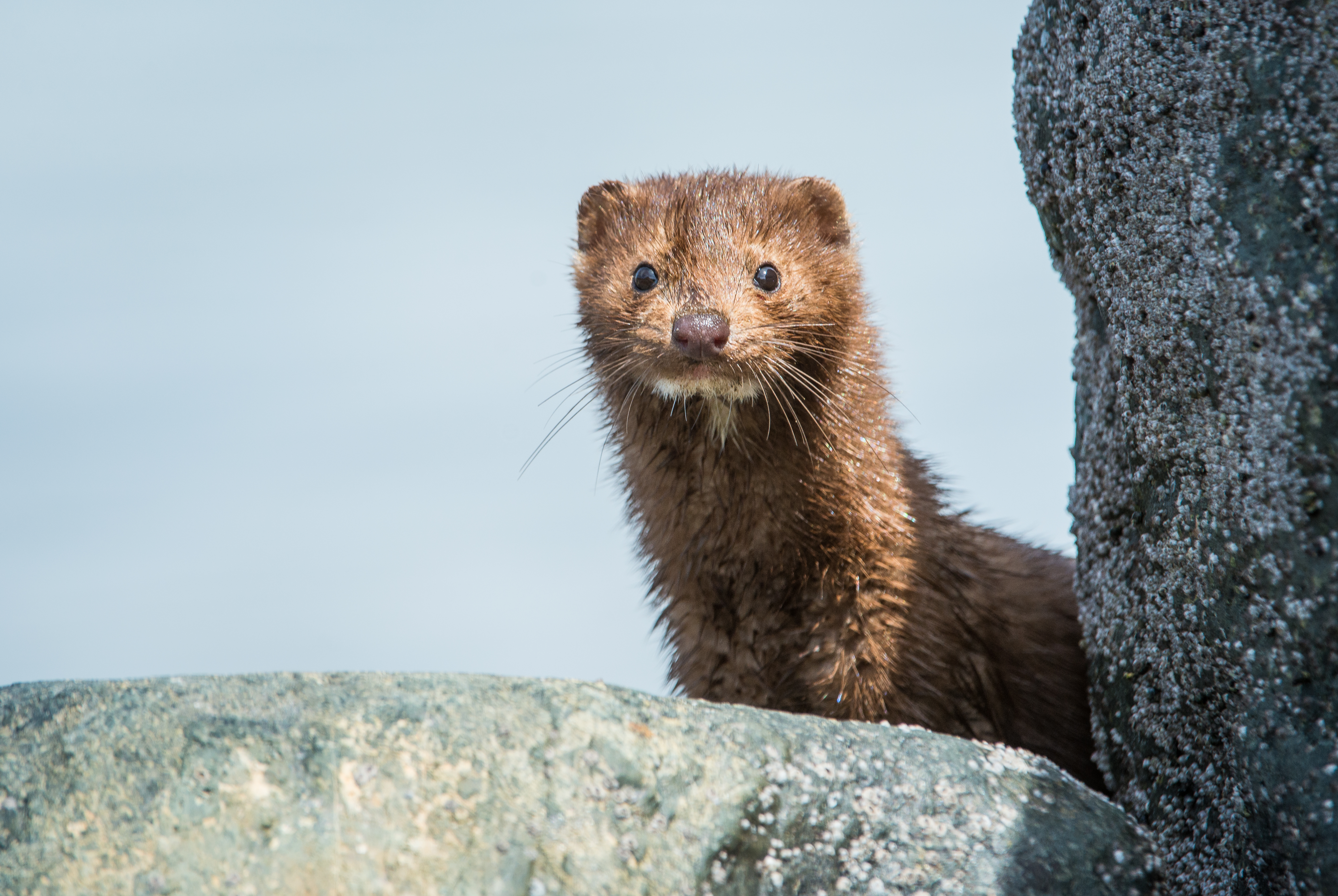
This was a remarkable year for fur-free fashion, with more high-fashion houses and retailers committing to a fur-free future. Photo by iStockphoto

The fur-free movement surges, with Gucci, Michael Kors and others going fur-free in banner year

This was a remarkable year for fur-free fashion, with more high-fashion houses and retailers committing to a fur-free future. This summer, Stein Mart, the U.S.-based department store chain found mostly in the South, VF Corporation, the parent company of more than two dozen popular clothing brands, including The North Face, Vans, Timberland, and Nautica, and Yoox Net-A-Porter, one of the world’s leading online luxury fashion retailers for brands like Burberry, Prada, Gucci, and Michael Kors, announced they will stop selling all items and accessories made with real animal fur. In October, Gucci announced it will go fur-free, followed by an announcement from Burlington Stores that it would remove fur from all of its nearly 600 stores. In mid-December, Michael Kors announced it will phase out all fur products by the end of 2018.

Farm animals gain in the U.S. and globally

After we launched our Nine Billion Lives campaign – calling for a set of minimum standards for the care of broiler chickens that dramatically improve their welfare – more than 70 companies have agreed to phase in purchasing practices consistent with the terms set forth, including Burger King, Sonic, Jack in the Box, and Subway. The HSUS partnered with Compass Group and Aramark—two of the world’s largest food service companies—on the most extensive plant-based work in the industry to date, including chef training and menu development. An HSUS undercover investigation exposed mistreatment at industrial chicken production and slaughtering facilities in Georgia and Texas connected to the factory farm giant Pilgrim’s Pride, the second largest chicken producer in the United States, producing more than a billion chickens a year. In September, the Ninth Circuit Court of Appeals issued a unanimous ruling reinstating California’s law banning the sale of foie gras. In May, the U.S. Supreme Court declined to hear an appeal by several state attorneys general and governors, including former Oklahoma Attorney General Scott Pruitt, seeking to overturn California’s landmark egg sales law, AB 1437, which requires eggs sold in the state come from hens not subjected to cruel confinement practices.

Our Humane Society International team worked with corporations around the world to improve conditions for egg-laying hens, from Brazil to Mexico to Colombia and Singapore. After working with HSI, Taco Holding, Mexico’s second largest restaurant operator with more than 550 restaurants across the country, announced that it will go 100 percent cage-free. Seventeen major Brazilian food companies, including JBS, Bunge, Casa do Pão de Queijo, and Sapore also announced cage-free egg policies. HSI also worked with major multinational companies, including Nestlé and Kraft Heinz, two of the world’s largest food manufacturers, to announce global cage-free egg policies, and garnered the first-ever cage-free egg commitments from Colombian, Chilean, and Asian companies. In Brazil, the fourth largest pig processor, Frimesa, committed to eliminating gestation crates, joining the country’s top three producers that have made similar commitments.

In Brazil, the fourth largest pig processor, Frimesa, committed to eliminating gestation crates, joining the country’s top three producers that have made similar commitments. Photo by iStockphoto

Major gains to stop cruelty to dogs, other domesticated animals throughout the world

Our HSI/Mexico team won a major victory this year when Mexico banned dogfighting nationwide and adopted felony-level penalties for dogfighting. Mexico City updated its constitution to recognize animals as sentient beings whose welfare must be protected. In Guatemala, the Congress passed sweeping anti-cruelty legislation, including a dogfighting ban, a prohibition on tail and ear docking of farm animals, and a ban on cosmetic testing on animals. The law creates the first-ever government entity in Central America that will deal specifically with animal cruelty. The Indian government announced sweeping new regulations that are expected to end the suffering of dogs bred indiscriminately and without basic needs like food, water, and shelter; improve conditions for animals sold in livestock markets; and ensure that fish sold in aquariums and fish stores are not caught using destructive fishing practices, or taken from protected areas. Our HSI/India team also succeeded in persuading authorities to ban the import of the skins of exotic animals and furs into the country. Earlier this month, the Nepalese Supreme Court banned all public cullsof street dogs using poisons, beating, and shooting, and directed the Nepalese government to introduce a nationwide humane management plan for homeless animals.

The world starts to show a tilt against trophy hunting

British Columbia’s newly-formed government announced a provincial ban on trophy hunting of grizzly bears, even if the hunters involved claim they eat the meat of the animal. President Trump in a tweet called trophy hunting “a horror show” and stated that decisions by his Fish and Wildlife Service to allow imports of elephant and lion trophies from Zambia and Zimbabwe would be placed on hold. The incoming governor of New Jersey said that there would be no more black bear hunting in New Jersey under his watch, the Connecticut legislature rejected attempts to open a black bear hunting season, and Florida Fish and Game Commissioners blocked bear hunting there for the second year in a row. A federal appeals court upheld California’s right to bar mountain lion trophies coming into the state.

In August, the Court of Appeals for the D.C. Circuit rejected the U.S. Fish and Wildlife Service’s decision to remove Endangered Species Act protection for wolves in the Great Lakes region.

Wildlife trafficking progress

China is in the final stage of shutting down its ivory carving and ivory trade operations throughout the nation, in one of the most extraordinary acts of disassembling a major industry. In the wake of our ballot initiative win in Oregon in 2016 and following the lead of numerous states, Nevada adopted strict new measures against the trade in shark fins, ivory, rhino horns, and other imperiled species. President Trump issued an executive orderstating that it shall be the policy of the executive branch to strengthen enforcement of laws against transnational crime and international trafficking, including wildlife trafficking.

HSUS, federal courts stave off mass wolf killing in northern Great Lakes region

In August, the Court of Appeals for the D.C. Circuit rejected the U.S. Fish and Wildlife Service’s decision to remove Endangered Species Act protection for wolves in the Great Lakes region, affirming the outcome by a U.S. District Court. We estimate that state agencies in Michigan, Minnesota, and Wisconsin would have shot and trapped approximately 1,000 wolves this fall if we hadn’t blocked the delisting of the wolves. We are now in a furious fight to prevent Congress from reversing that decision. The Sportsmen’s Heritage and Recreational Enhancement (SHARE) Act, which amounts to a grab bag of anti-wildlife provisions, including wolf delisting, may see action in Congress. We need every animal advocate to contact their lawmakers and urge them to oppose any effort by Congress to cherry-pick wolves from the endangered species list in order to placate trophy hunters, trappers, and ranchers who want to kill the forebears of our domesticated dogs.

The Indian government announced sweeping new regulations that are expected to end the suffering of dogs bred indiscriminately and without basic needs like food, water, and shelter. Photo by iStockphoto

Puppy mill victories

An HSUS undercover investigation revealed that puppies were being mistreated at Chelsea Kennel Club, a boutique pet store in Manhattan, generating investigations by the New York attorney general’s office and the mayor’s office. Under pressure, the store closed down within two months. California became the first state to ban the sale of puppies in pet stores, unless they come from rescues or shelters. We drove the number of local jurisdictions that ban the sale of puppy mill dogs at pet stores to almost 250. We helped close down a commercial breeding operation in a New Hampshire mansion, saving 84 Great Danes living there in deplorable conditions, and spurring the state to consider a new law to better regulate commercial breeders. The breeder was convicted on 10 counts of animal cruelty in December and was just sentenced and ordered to pay more than $790,000 in restitution to The HSUS and other groups. Through our Puppy Friendly Pet Stores Conversion Program – where we work to change the business models of pet stores to forgo puppy mill sales and instead work with shelters and rescues on in-store adoptions – we’ve converted a total of 21 stores and helped adopt out more than 12,000 dogs. Earlier this year, the Courts of Appeals for the Second and Seventh Circuits upheld laws restricting retail sales of companion animals from puppy mills and other unscrupulous breeders where animals are often raised in overcrowded and unsanitary conditions, leading to health and behavioral problems for the animals, and emotional and financial burdens on consumers.

After 30-year fight, international panel embraces dolphin protection standards for U.S.

Commercial tuna fleets won’t be able to flood the U.S. market with tuna caught by chasing dolphins and setting nets on the air-breathing mammals, after the World Trade Organization (WTO) ruled in October that the United States has not engaged in unfair trade practices with Mexico by placing restrictions on tuna imports. This has been a 30-year fight, and the WTO’s ruling may end an extraordinarily complex and multi-channel battle that has seen the debate move from the marketplace to Congress to the federal courts to the WTO.

Commercial tuna fleets won’t be able to flood the U.S. market with tuna caught by chasing dolphins and setting nets on the air-breathing mammals anymore, following a World Trade Organization ruling in October. Photo by iStockphoto

Progress on the End Dog Meat campaign

HSI continued its End Dog Meat campaign in Asia, particularly in China and Korea. The Yulin dog meat festival in China was conducted with much less fanfare this year than in past years, as HSI continued to keep the world’s eyes on this cruel spectacle, and work with local authorities to end it. Working on a tip from activists just two days before the “official” start of the festival, authorities seized a truck transporting more than 1,300 dogs and 100 cats to a dog meat market and turned them over to activists. In 2017, HSI China helped more than 3,000 dogs rescued from the meat trade and other abusive situations. In South Korea, HSI continued to close down dog meat farms, with 10 such farms closed so far. To date, 1,222 dogs have been rescued with many brought to the United States, the United Kingdom, and Canada for a chance at a better life. HSI and its partners launched a campaign in Indonesia to end the dog meat trade there. Taiwan banned the sale of dog and cat meat.