Push made for harsher penalties for killing hunting dogs in SC

Default Mono Sans Mono Serif Sans Serif Comic Fancy Small CapsDefault X-Small Small Medium Large X-Large XX-LargeDefault Outline Dark Outline Light Outline Dark Bold Outline Light Bold Shadow Dark Shadow Light Shadow Dark Bold Shadow Light BoldDefault Black Silver Gray White Maroon Red Purple Fuchsia Green Lime Olive Yellow Navy Blue Teal Aqua OrangeDefault 100% 75% 50% 25% 0%Default Black Silver Gray White Maroon Red Purple Fuchsia Green Lime Olive Yellow Navy Blue Teal Aqua OrangeDefault 100% 75% 50% 25% 0%After a Berkeley Co. man’s hunting dog was shot this month, he wants the public to be aware of what protections these animals face in South Carolina.

By Anna Harris

Published: Oct. 28, 2024 at 2:15 PM PDT|Updated: 16 hours ago

BERKELEY COUNTY, S.C. (WCSC) – After a Berkeley Co. man’s hunting dog was shot this month, he wants the public to be aware of what protections — or lack thereof — these animals face in South Carolina.

Hunter KJ Rhode says he was out hunting with his dogs Wednesday within the Francis Marion National Forest when his dog Highball chased a buck and crossed onto private property. He says that’s when Michael Trent Williams shot him.

Williams has been charged with one count of shooting and killing a hunting dog and two counts of removing dog collars, according to the South Carolina Department of Natural Resources. He has since been released from jail on bond.

Michael Trent Williams is charged with one count of shooting and killing a hunting dog and two...
Michael Trent Williams is charged with one count of shooting and killing a hunting dog and two counts of removing dog collars, the South Carolina Department of Natural Resources said.(Hill-Finklea Detention Center)

“If he would’ve let my dog go 50 more yards, I would’ve had my hands on him,” Rhode said.

But Rhode isn’t the only person affected. SCDNR says they’ve handed out 48 charges under the statute for dog hunting since Sept. 1, 2023. Four of them were for specifically killing or harming a hunting dog.

READ MORE: Dog owner seeks action for hunting dog laws in SC

A person who does this could face up to a $500 fine or up to 30 days in jail. However, attorney Stephan Futeral says there’s a minimum.

“It’s possible to get charged with it and suffer no penalty,” Futeral said.

He says the results are discretionary.

“You take the same case and put it in front of a different magistrate, well, you may get a completely different outcome,” Futeral said.

For example, Rhode says his friend lost his dog in an extremely similar incident in Sumter County last year. He says the person convicted was only fined $125.

“I feel like it should be the same for any dog, you know?” Rhode said. “No matter if it’s a house dog, a hunting dog, any of it I feel like should be straight up, across the board.”

Futeral says the only way to avoid this from being subjective is for South Carolina to sign a stricter law to make the harsh results mandatory.

“For magistrates to take sort of a hard stance, if you will, and be a little more uniform in their decision-making,” Futeral said.

Rhode says he just wants justice for Highball.

Williams’ court date is set for Dec. 2. For the charges for removing the electronic dog collars, he could also face up to a $500 fine or 10 days in jail for a first offense or up to a $1,000 fine or 30 days in jail for a second.

“They are not just hunting dogs,” Rhode said. “I mean, we care for these dogs every day.”

SCDNR says if anyone suspects hunting laws are being violated to contact them through their 24/7 Operation Game Thief Hotline at 1-800-922-5431 or submit an anonymous tip by texting 847411. Use the keyword SCDNR along with the tip information.

Chronic wasting disease: How will zombie-like deer impact Kentucky hunting season?

by: Allie Root

Posted: Oct 23, 2024 / 07:07 AM EDT

Updated: Oct 23, 2024 / 07:07 AM EDT

SHARE https://fox56news.com/news/kentucky/chronic-wasting-disease-how-will-zombie-like-deer-impact-hunting-season/

KENTUCKY (FOX 56) — A new case of chronic wasting disease (CWD) will likely throw a wrench in some people’s hunting plans. Signs of the disease are weight loss, brain lesions, and zombie-like behavior.

The illness is common in deer and was recently found in a dead one from a facility in Breckinridge County.

“And we’ve tried to put together the very best plan that we can to make these recommendations to mitigate the disease,” said Gabe Jenkins, deputy commissioner for the Kentucky Department of Fish and Wildlife Resources. 

Harris and Cheney stump in battleground states

volume_off

-00:00

sd

closed_captions

fullscreen

On Tuesday, the state approved a CWD surveillance zone in Breckinridge, Hardin, and Meade counties.

LATEST KENTUCKY NEWS:

While deer hunting is still allowed, hunters cannot bait deer with items such as corn, grain, or mineral blocks. Deer killed inside the zone cannot be taken outside of it.

Some meeting attendees were not happy with these restrictions, saying several local hunters have already put a lot of time and money into their hunting properties.

“A lot of hunters do not use woodsmanship anymore like they used to,” said one attendee. “They’re hunting straight over a feeder or some kind of mineral, and they’ve hung their stands there and everything. The concern now is if we stop that today, we’ve ruined them for the rest of the season.”

Kentucky Fish and Wildlife officials said an investigation is now underway that will allow them to check the deer population to determine if there are any other CWD cases, but some say banning bait won’t be effective.

“I think it’s going to potentially impact the underparticipation and harvest rates, which is going to be counterintuitive to getting more deer there to sample to see what the prevalence rate is,” said Matt Rhodes, the 3rd District Representative for the Kentucky Fish and Wildlife Commission.

Jenkins said this is necessary to limit the spread of the disease among Kentucky’s deer population.

https://285bc54a0092deb0ed20f762cfa00d03.safeframe.googlesyndication.com/safeframe/1-0-40/html/container.htmlRead more of the latest Kentucky news

“We know the disease is on the landscape and we know modes of transportation of that disease from an animal to an animal and how that looks. So, there’s a high probability it’s in the environment. It’s on there. And so, anything we can do right out of the gate to decrease the chances of infection and the spread of the disease is paramount for us.”

No CWD infections in people have ever been reported, but the CDC notes that if CWD could spread to humans, it would most likely be by eating meat from an infected animal.

Anyone with questions or concerns can attend a public meeting set for Nov. 7 at the Breckinridge County Extension Office.

NJ hunter who set state record by killing 770-pound bear clawed with backlash: ‘They hope the next bear kills me’

By 

Angela Barbuti

Published Oct. 19, 2024, 12:56 p.m. ET800 Comments

NJ hunter kills 770-pound black bear, setting state record: ‘Smartest animal I’ve chased’

0 seconds of 41 secondsVolume 0%

He is bear-ing the weight of his actions.

A New Jersey bow hunter who killed a 770-pound black bear this week, setting a state record, is getting pounced on for slaughtering the creature.

Brian Melvin, 39, told The Post on Saturday that people have found him on social media and even tracked down his phone number to express their hatred.

“I have received various messages and calls telling me how bad of a person I am and that they hope the next bear kills me,” he said.

“They hope another hunter mistakes me as a bear and shoots me. And people telling me they are going to string me up and gut me like the bear.”

Brian Melvin with the black bear he hunted
Melvin first saw the bear three years ago while he was hunting.Brian Melvin

Explore More

Kamala Harris

Christian students in Wisconsin speak out after Kamala Harris told them they were at the ‘wrong rally’

Donald Trump serves a drive-thru at McDonald's with two photos of news coverage below.

MSNBC dragged for desperate attempts to spin Trump’s McDonald’s appearance: ‘Drives the Left crazy’

Pamela Helmstadter was rescued last Thursday in the woods in Alexander in Washington County -- days after she and her husband, 82-year-old John Helmstadter, had set off on the walk and got disorientated when they veered off the trail.

Missing hiker, 72, found near her dead husband’s body in Maine woods kept alive after dog slept on her chest

Melvin, a licensed hunter who legally killed the animal on Tuesday in Kinnelon in Morris County, has gotten slammed on X, with users calling him a “coward and a loser,” “a waste of human space” and a “worthless piece of s–t.”

“Imagine the mental depravity of obsessing for years over killing a wondrous majestic black bear,” one said, referring to the fact that Melvin stalked the bear for two hunting seasons before the fatal encounter this week.

Many called the behemoth’s death “heartbreaking” and “disgusting.”

“Couldn’t we just let the big, majestic, successful bear live out its life in peace?” one asked.

But some praised Melvin for the act, saying it was beneficial to humans.

black bear killed in nj
Many sympathized with the bear, calling its death “heartbreaking” and “disgusting.”Brian Melvin

800

What do you think? Post a comment.

“That was a huge bear! Great job man. It’s important to keep a balance in nature,” one said.

“That is a Massive Bear and a once in a lifetime thing to achieve,” wrote another. “The Black Bear population has gotten crazy and that’s going to taste good and look great as a rug or wall piece.”

Melvin had this to say to all the haters.

“I am a staunch advocate for the freedom of speech and everyone has the right to voice their opinion. Although wishing harm on a person because one doesn’t agree with a legal action that was taken seems a bit contradictory of their views,” he said.

“I would urge people to do a little research and educate themselves before passing judgment. We can all learn from each other.”

Massive bear shot in the Poconos in 2010 caused controversy. See why

Mike Kuhns

Pocono Record

0:56

3:06

Editor’s Note: This story was written by the Pocono Record in 2010 about a controversial bear killed in Bushkill during hunting season.

For David Price, killing a record-setting black bear was supposed to be the event of a lifetime.

Instead, it has been a time of anger and bewilderment.

On Monday, Price, three brothers, a cousin and a friend killed a 17-year-old bruin that tipped the scales at an estimated live weight of 875 pounds, the largest ever on record in Pennsylvania.

Since then, many online forums have questioned the kill, accusing the hunting party of killing a beloved bear known as “Bozo” that was befriended by a Bushkill local, Leroy Lewis, who essentially raised it.

Bow hunter David Price bagged a 17-year-old black bear weighing 879 pounds the largest bear ever recorded in Pennsylvania near Fernwood Resort on Monday.

Bozo’s death sparked an uproar among animal lovers, locals and others who decried what they said amounted to the slaying of a wild-animal-turned-domesticated-pet.

“With all the bad publicity, I’m not feeling very good about myself,” said Price of Cresco, a 1986 Pocono Mountain High School graduate. “This may be the peak of my hunting career, and it’s tainted, it really is.”

On Monday, Price got a phone call at work from his younger brother and cousin who said they saw a large bear and wanted help hunting it on the Delaware Water Gap National Recreation Area land just north of Fernwood Resort.

“The end result was the bear came out and I shot it,” Price said. The bear was shot six times total, but Price’s arrow — he was hunting with a crossbow — killed the bear.

Price and his brothers had known of this large bear in the area for years, but had never seen it during hunting season. It was last tagged in New Jersey by game officers over the summer, but hadn’t been seen by either state’s officers since.

The Pennsylvania Game Commission believed the bear had traveled back and forth across the Delaware River but were not sure of its whereabouts because it had never been tagged in Pennsylvania.

Get the Daily Briefing newsletter in your inbox.

Start your day with the morning’s top news

Delivery: DailyYour Email

“When you go in the woods you don’t expect to see a Volkswagen bus coming through,” Price said. “I had to rub my eyes to believe what I was seeing.”

By 3:30 p.m. Monday, the bear was dead and the group of hunters was celebrating their kill. They had contacted the game commission, which sent out an officer to record the bear’s death.

Officer Mark Kropa took a scale from a check station and went to weigh the bear, Northeast Regional Director Steve Schweitzer said. Schweitzer said two different teams were at the site where the bear was killed, determining what happened during the course of the hunt.

“It was harvested legally, in our opinion,” Schweitzer said.

But PoconoRecord.com reader comments weren’t so forgiving.

This bear was well known for getting into garbage bins near Fernwood. It was also known by the game commission and many in the community that Lewis, 71, befriended the bear years ago, feeding it often. Lewis was given a written warning in October for feeding the bear, Schweitzer said.

Many posts on the Web accused Price of shooting a “tame bear.” The reaction sent Price and his hunting partners reeling.

“I’m definitely a little angry,” Price said. “I’m a little disappointed in everybody’s attitude. I enjoy hunting more than anything, and now this is tainted by it.”

Four Horrific Trophy Hunting Stories That Shook the World

6 hours ago

By Trinity Sparke

trophy hunter

Image Credit :Canon Boy/Shutterstock

 Add-Free Browsing

Subscribe to Newsletter

FoodMonster App

Support Us

Buy our Cookbooks

Sign Our Petitions

Help keep One Green Planet free and independent! Together we can ensure our platform remains a hub for empowering ideas committed to fighting for a sustainable, healthy, and compassionate world. Please support us in keeping our mission strong.Pay

Pay $49.99/Year + Go Ad-Free!

Trophy hunting, often framed as a controversial pastime, has long been a point of contention among wildlife enthusiasts and conservationists. While some argue that regulated hunting contributes to Conservation efforts, the grim realities behind certain hunts reveal a darker truth. Stories of creatures hunted for sport, often with little regard for their ecological importance or emotional impact, highlight the disturbing nature of this practice.

1. Cecil the Lion

Source: ABC News/Youtube

by Taboola

Sponsored Links

You May Like

AdYETI CoolersNever Watered Down

Take A Hot Plunge

Take It Stronger

Lasts Through Every Season

The ongoing global outrage over Walter Palmer’s killing of Cecil the lion highlighted serious ethical concerns regarding trophy hunting, particularly after investigations revealed he lacked a legal hunting permit. Critics argued that such practices, often defended as beneficial to Conservation, actually undermined efforts to protect endangered species and ecosystems. Palmer’s previous illegal hunting incident exemplified a troubling disregard for wildlife laws, suggesting that the purported Conservation funding from trophy hunting was often overstated.

2. Trophy Hunter Kills Sleeping Lion

Source: PETA/Youtube

According to this video, “many lions killed for “sport” in South Africa are captive-bred, making them habituated to humans and ultimately “easier” targets for trophy hunters.” PETA released video footage showing a group of hunters ambushing a captive-bred lion resting under a tree. After being shot and wounded by one of the hunters, the lion roared and charged, only to be met with four more shots from the hunter and his guides before he was finally killed.

3. Trophy Hunter Kills Giraffe

Source: CBS Evening News/Youtube

American trophy hunter Tess Talley faced significant backlash after posting a photo of herself with a giraffe she killed, prompting her to defend the image. In a segment titled “Trophy Hunting: Killing or Conservation,” Jim Axelrod explored the controversy surrounding her hobby of hunting big game, which often involves animals kept in captivity. Talley drew criticism after the photo of her killing the giraffe went viral on social media. She claimed that the pictures were part of her effort to display respect for the animals, attempting to justify her actions amidst outrage.

4. Girl Poses With Giraffe and Zebra

Source: ABC News/Youtube

A 12-year-old girl named Ariana Gordin ignited fierce outrage after posting photos of her trophy hunts on social media, revealing her passion for hunting exotic animals. Despite her young age, Ariana had already become a skilled sharpshooter and traveled abroad for big game hunts, including a recent safari in Africa with her father. While she defended her actions, expressing pride in her experiences, the online backlash was overwhelming, with many condemning her and even issuing death threats. Her father stated that they were offered the opportunity to hunt a problematic giraffe, which sparked further debate over the ethics of hunting.

The stories of trophy hunting show us the serious problems with this practice. They remind us how important it is to protect wildlife and the natural world. Each case highlights the need to rethink how we treat animals and work towards better ways to care for them. By standing against trophy hunting, we can help ensure that animals live freely and that future generations can enjoy the beauty of wildlife without the threat of unnecessary harm.

Being publicly-funded gives us a greater chance to continue providing you with high-quality content.

Florida python hunters get scary surprise while hunting for invasive predator snakes

By Alexa Cimino For Dailymail.Com

Published: 12:17 EDT, 11 October 2024 | Updated: 12:31 EDT, 11 October 2024

21shares

20

View comments

Top

+99Home

20

View comments

A Florida-based python hunter has shared a video of the heart-stopping moment a Burmese python lunged at him and his camera crew.

Invasive Burmese pythons are becoming a more frequent sight in the high grasses of South Florida, but a recent encounter shows these snakes are just as comfortable hiding in trees. 

On Wednesday, hunting guide Mike Kimmel, known as the ‘Python Cowboy,’ shared a video on Facebook capturing a tense interaction with one of the snakes.

javascript:false

javascript:false

javascript:false

javascript:false

javascript:false

javascript:false

The video, filmed earlier this year, shows a python turning aggressive and lunging to bite after its hiding spot was discovered by Kimmel’s hunting dog, Otto. 

‘We walked past this thing, like, three or four times,’ Kimmel said in the footage. ‘I would have walked right past it again if it were not for this (hunting) dog.’

A python hunter faces a heart-stopping moment as a Burmese python lunges at him

+6

View gallery

A python hunter faces a heart-stopping moment as a Burmese python lunges at him

Hunting guide Mike Kimmel, known as the 'Python Cowboy,' shared a Facebook video on October 9th of a tense encounter with a Burmese python that lunged aggressively after being discovered by his dog, Otto

+6

View gallery

Hunting guide Mike Kimmel, known as the ‘Python Cowboy,’ shared a Facebook video on October 9th of a tense encounter with a Burmese python that lunged aggressively after being discovered by his dog, Otto

TRENDING

Florida mans DIY strapped down house makes it through Hurricane Milton

397.3k viewing nowLieutenant Dan’s daughter warns: ‘Don’t give him money’68.6k viewing nowDisney World to reopen after ‘greedy’ response to Hurricane Milton10.5k viewing now

As the hunters, including a participant from the TV show Swamp People: Serpent Invasion, attempted to capture the snake, it lashed out several times and even tried to climb higher to evade capture. 

Kimmel eventually grabbed the snake by the head, revealing it to be a younger python, around four feet in length. 

‘The little guys are the tough ones (to catch) because where to grab them is so small and they’re quick,’ Kimmel added in the clip.

Read More

Hurricane Milton batters Florida leaving trail of death and destruction in its wake 

The Florida Fish and Wildlife Conservation Commission has called for the removal of Burmese pythons from the wild due to their devastating impact on the Everglades ecosystem. 

These nonvenomous snakes, which can grow up to 18 feet in Florida, prey on native wildlife, including deer, bobcats and alligators

Experts believe the species proliferated in the region after escaping captivity or being released by pet owners.

Officials recommend that Burmese pythons be humanely euthanized when captured in the wild to help control their growing population. 

The exact location of this particular hunt was not disclosed.

As the damage from Hurricane Milton is still being assessed, experts are warning of a potential increase in wildlife activity and advising residents to remain cautious and avoid interfering with animals.

As the damage from Hurricane Milton is still being assessed, experts are warning of a potential increase in wildlife activity

+6

View gallery

As the damage from Hurricane Milton is still being assessed, experts are warning of a potential increase in wildlife activity 

Animals such as alligators, bears, snakes and manatees may have been displaced or agitated by the storm

+6

View gallery

Animals such as alligators, bears, snakes and manatees may have been displaced or agitated by the storm 

Animals such as alligators, bears, snakes and manatees may have been displaced or agitated by the storm.

The Florida Fish and Wildlife Conservation Commission recommends staying alert and giving wildlife plenty of space. It’s important to avoid attempting to rescue or assist animals during or after a storm, as this could put you at risk.

Severe weather conditions, such as high winds and flooding, can displace and disorient wildlife, granting them access to unusual areas. 

The stress and confusion caused by storms and hurricanes often result in wildlife behaving differently, potentially exhibiting more aggressive tendencies than usual. 

While only six of Florida’s 44 snake species are venomous, the increased risk of encounters due to flooding makes it essential to maintain a safe distance. Snakes may seek shelter in debris or homes and can be found in unusual places. 

Christopher Gillette, who works at Bellowing Acres Sanctuary, an alligator and exotic animal sanctuary, has warned that snakes who are displaced can often blend in among the debris or be found washed up in unusual places. He tells people to ‘keep a sharp eye.’

'Keep in mind that the storm is going to send a lot of snakes on the move... there will be venomous snakes on the move as well. Watch your step, especially in those floodwaters,' said Gillette

+6

View gallery

‘Keep in mind that the storm is going to send a lot of snakes on the move… there will be venomous snakes on the move as well. Watch your step, especially in those floodwaters,’ said Gillette

During storms, snakes can often be carried by flooding waters or cause them to seek shelter in debris, homes, sheds or barns

+6

View gallery

During storms, snakes can often be carried by flooding waters or cause them to seek shelter in debris, homes, sheds or barns

‘Keep in mind that the storm is going to send a lot of snakes on the move… there will be venomous snakes on the move as well. Watch your step, especially in those floodwaters. If you’re doing your clean up after the storm, picking up branches, definitely watch where you put your hands – watch for snakes,’ he added.  

Snakes are not aggressive toward humans unless they feel threatened, and usually would much rather avoid encounters. To best avoid snakes, the FWC suggests avoiding tall grass and keeping hands and feet out of areas you can’t see. 

Displaced wildlife, although not all pose a threat to humans’ safety, it is important to not attempt to rescue or help injured, orphaned or dead animals during or after storms if it endangers you. 

Police hunt suspect who shot and killed 2-year-old sea lion lying on California beach

Police are offering a reward of up to $20,000 for information about the suspect.

ByJon Haworth ABCNews logo

Thursday, October 10, 2024 10:01AM

Sea lion fatally shot on Orange County beach

about:blank

A California sea lion was fatally shot on Bolsa Chica State Beach in Orange County, and a reward is now being offered to find the person responsible.

Federal officials are hunting for a suspect who they say shot and killed a 2-year-old sea lion while it was lying on a California beach, authorities said.

The National Oceanic and Atmospheric Administration’s Office of Law Enforcement is now offering a reward of up to $20,000 after the incident — which took place at Bolsa Chica State Beach in Orange County, California, on Aug. 7 — when the male California sea lion was found injured but alive between lifeguard stations 22 and 23 with a “fresh gunshot wound in its back,” according to a statement from the NOAA released on Wednesday.

“The Pacific Marine Mammal Center in Orange County rescued the male sea lion, but it died from its injuries the following day,” NOAA officials said.

Law enforcement is now actively seeking information on the person who shot the animal and any other details surrounding its shooting.

“The Marine Mammal Protection Act prohibits the harassment, hunting, capturing, or killing of sea lions and other marine mammals,” officials said. “However, the law allows for non-lethal methods to deter marine mammals from damaging private property, including fishing gear and catch, if it does not injure or kill an animal.”

Like all marine mammals, the California sea lion is protected under the Marine Mammal Protection Act which has helped their population to continue increasing since at least 1975, after protections were put in place under the MMPA.

“California sea lions are easy to view in the wild, but this puts them at higher risk of human-related injuries and death. Feeding or trying to feed them is harmful and illegal, because it changes their natural behaviors and makes them less wary of people and vessels,” the NOAA said. “They learn to associate humans with an easy meal and change their natural hunting practices-for example, they take bait catch directly off fishing gear. Sometimes they fall victim to retaliation (such as shooting) by frustrated boaters and fishermen.”

Anyone with information about the sea lion shooting should call NOAA’s 24/7 enforcement hotline at (800) 853-1964.

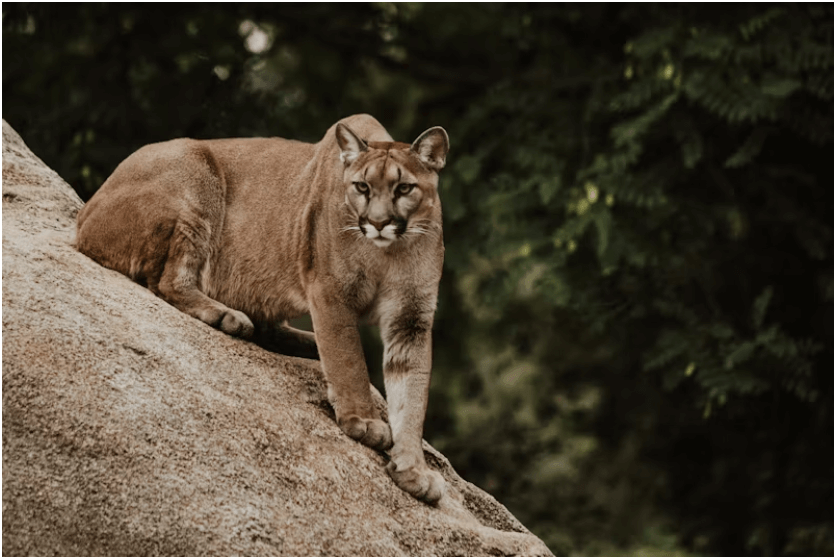
Proposition 127: Prohibit bobcat, lynx and mountain lion hunting

by Anne Landman • October 7, 2024 • 1 Comment

Propositions with three numbers (e.g., Proposition 127, Proposition 128, etc.) are measures amending state statutes.

Proposition 127 is a grassroots citizens initiative that would make it illegal to hunt, shoot at, or trap bobcats, lynx, and mountain lions in Colorado. The only exceptions are for the protection of human life, property and livestock. Violation would be a Class 1 misdemeanor punishable by a fine and limiting of the violator’s wildlife hunting privileges.

The measure is supported by Cats Aren’t Trophies, and is endorsed by animal welfare societies, wildlife sanctuaries and rescues, Audubon Societies, Wild Earth Guardians and the Sierra Club, among others.

Arguments in favor of Proposition 127 are that big cats aren’t hunted or used for food, but rather as trophies, and that hunting and trapping them is cruel. Researchers say the measure would not contribute to an explosion in the number of these wild cats. In 1971, California enacted a moratorium on killing mountain lions with a measure that was signed by then-Governor Ronald Reagan. The state then enacted a permanent ban on killing mountain lions in 1990, and the population is estimated to have decreased during that time owing to road kill accidents, poisonings, poaching and habitat destruction due to climate change and development.

Arguments against the measure are that ballot measures like this, initiated by citizens, undermine scientifically-based management of wildlife.

Recommended vote on Proposition 127: YES

Mountain lion caught in a leg hold trap in Wyoming. (Photo: Instagram)

12 cats found dead on Summerville property; $5K reward offered for information

by: Tim Renaud

Posted: Oct 7, 2024 / 09:23 AM EDT

Updated: Oct 7, 2024 / 09:23 AM EDT

SHARE https://www.counton2.com/news/local-news/berkeley-county-news/12-cats-found-dead-on-summerville-property-5k-reward-offered-for-information/

UPDATE: The Berkeley County Sheriff’s Office tells News 2 they are investigating this case. Anyone with information can call 843-723-3800.

SUMMERVILLE, S.C. (WCBD) – An investigation is underway in Summerville after more than a dozen animals were found dead on a recently sold property along Drop Off Drive.

Biden administration focuses on ‘climate resilience’ after Helene

close

volume_off

-00:00

sd

closed_captions

fullscreen

Pet Helpers said 12 cats and three possums, part of a monitored cat colony, were discovered scattered throughout the wooded area where they lived.

Lowcountry TNR and Feral Cat Network have been monitoring and caring for the animals. According to Pet Helpers, the groups are “committed to trap-neuter-return efforts” for feral cats in the community.

Stephanie Fauvelle, president and co-founder of the Charleston Animal Legislative Action League, said in an email to News 2 that the cats were found poisoned on the recently sold property. She said the previous owner agreed to sell the land with the “explicit condition that the colony of cats […] would be cared for.” She added that the previous owner was devastated upon learning about the deaths.

According to Pet Helpers, police are actively investigating the incident. The animal shelter is now offering a $5,000 reward for information that leads to an arrest and conviction of those responsible.

Members of the TNR group are monitoring the area to collect any surviving animals to protect them from further harm. So far, seven additional felines have been found and trapped.

Melissa Susko, executive director of Pet Helpers, called the incident a “heartbreaking and horrifying situation.”

“The cruelty inflicted on these innocent animals is beyond comprehension,” said Susko. “These cats were being cared for, loved, and looked after by volunteers who had committed their time to helping them. We are committed to seeking justice for these animals and will do everything in our power to ensure those responsible are held accountable. Our thoughts are with the caregivers of this colony, and we hope no more animals are harmed. We urge anyone with information to come forward to ensure that those responsible are held accountable.”

Anyone with information is asked to contact the Berkeley County Sheriff’s Office at 843-723-3800.

Dodo could be revived by 2028 after humans ATE them into extinction – and more long-extinct birds could follow

But anyone wanting to replace their turkey with a dodo for future Christmas’ will be sorely disappointed.

  • Published: 12:30 ET, Oct 5 2024

THE long-extinct dodo could be brought back from the dead by 2028, nearly 350 years after humans hunted them into extinction.

Either that, or the long-lost Tasmanian tiger, the CEO of a landmark gene-editing company told The Sun.

Sign up for The US Sun newsletterSign up

Your info will be used in accordance with our Privacy Policy

In an interview, CEO Ben Lamm said the woolly mammoth wouldn't be the first extinct species to be born by 2028
In an interview, CEO Ben Lamm said the woolly mammoth wouldn’t be the first extinct species to be born by 2028Credit: Colossal Biosciences
Dodos only lay one egg per year, which became food for new incoming species, and significantly accelerated their extinction
Dodos only lay one egg per year, which became food for new incoming species, and significantly accelerated their extinctionCredit: SWNS
Scientists hope to merge the genes of the woolly mammoth with its closest living relative, the Asian elephant
Scientists hope to merge the genes of the woolly mammoth with its closest living relative, the Asian elephantCredit: Getty
While these animals are expected to visually resemble the extinct species they're modelled on, they will be genetically engineered versions
While these animals are expected to visually resemble the extinct species they’re modelled on, they will be genetically engineered versionsCredit: Getty Images

Colossal Biosciences, understood to be the world’s first de-extinction company, is trying to bring the woolly mammoth, tasmanian tiger (thylacine) and dodo back from the dead.

Some 4,000 years after extinction, the woolly mammoth species is on track to have its first baby born via an artificial womb by 2028, thanks to a recent breakthrough.

But in an interview, CEO Ben Lamm said the woolly mammoth wouldn’t be the first extinct species to be born by that year.

“I don’t believe the mammoth will be the first species,” he said. “You know, it’s 22 months of gestation (incubation).”

READ MORE ON ANIMALS

SEA LEGS 

Incredible moment rarely seen bigfin squid with 13ft tentacles is caught on camera

Lamm, instead, reckons the dodo or the Tasmanian tiger might be born first, due to their shorter development times.

How is it done?

While these animals are expected to visually resemble the extinct species they’re modelled on, they will be genetically engineered versions.

For example, scientists hope to edit gene cells taken from a well-preserved woolly mammoth that was found frozen.

They will then combine those genes with the genes of an Asian elephant, the woolly mammoth’s closest living relative.

Scientists will also isolate the cold-resistant traits of a woolly mammoth, such as its thick hair, to insert into the Asian elephants genome.

Essentially, Colossal will create a cold-resistant version of the Asian elephant to exist in the Arctic Tundra.

Similar techniques will be used for the Tasmanian tiger and the dodo.

While there is some dispute over how exactly the dodo went extinct, the species thrived on the island of Mauritius until the arrival of settlers in the late 1500s.

The dodos were easy to catch because they had not yet learned to be afraid of humans, and lived together in small wooded areas of the island.

While accounts say they did not taste very nice, they were often caught and stewed by arriving sailors.

Most read in Science

TRAGIC END

Madonna’s younger brother dies aged 63 as tributes pour in for ‘talented’ artist

‘MURDER’ PROBE

Influencer, 36, found ‘murdered after she didn’t pick up son from nursery’

MEG, MYSELF & I

Meg makes surprise appearance without Harry – as they ‘live separate lives’

EXTREME PROTEST

Pro-Palestine protester sets himself on FIRE outside the White House

It wasn’t just humans that feasted on the dodo, but the rats, goats, pigs, deer and macaque that emerged there too.

Dodos only lay one egg per year, which became food for new incoming species, and significantly accelerated their extinction.

https://imasdk.googleapis.com/js/core/bridge3.670.0_en.html#goog_1224267667Play Video

Gruesome way humans killed 12-ton woolly mammoths in Ice Age finally revealed as scientists squash spear-hunting ‘myth’

But anyone wanting to replace their turkey with a dodo for future Christmas’ will be sorely disappointed.

Trophy hunting woolly mammoths in the Arctic Tundra, or Tasmanian tigers in Australia and the US will also be strictly prohibited.

“We aren’t bringing animals back to hunt them and we aren’t bringing animals back to eat them,” Lamm explained.

“It would be sad [if they were hunted], but we’d hope that the governments and partners that we’re collaborating with would help us in the enforcement of those protections.”

While just one dodo, tasmian tiger or woolly mammoth born in the 21st Century would be considered a triumph to any layman – Lamm’s vision goes further.

“I don’t define that as a success,” he said, adding “I think that you have to engineer in enough genetic diversity so you have small populations.”

Lamm doesn’t just want one or two of each species resurrected, but fully, self-sustainable populations across various different regions.

“Our conservation partners have found success in rewilding, or rebounding populations from as many as five to ten individuals (animals),” he said.

“I think that we will probably engineer small herds of mammoths, thylacine and dodos and others to help spur that.

Read More on The US Sun

DEADLY ATTACK 

Man, 55, mauled to death by bear as he picked mushrooms in horror attack

TAINTED LOVE 

I let my husband sleep with other women – then he moved his girlfriend in

“But then we probably have multiple different breeding populations would be the goal.

“So, you know, our goal isn’t to make one. I’ll tell you, the second one’s a lot cheaper than the first one. So, I think we’ll probably make as many as possible.”