It is the sad paradox of wildlife conservation that as soon as a species seems to make progress toward recovery from near extirpation, some people rally to be permitted to hunt and trap them again. This is exactly what’s happening in Indiana right now with the state’s only remaining native wildcat, the bobcat.
Earlier this year, a small but powerful group of recreational fur trappers helped push a bill through the state legislature that forces the Indiana Department of Natural Resources to establish a bobcat-trapping season by July 2025. And last week, the Indiana Department of Natural Resources proposed that trappers be allowed to kill 250 of them using horrific methods including strangling neck snares and steel-jawed leghold traps, even though these small wildcats are only starting to return to their native habitats in Indiana’s woods. But there is hope: concerned residents of the state still have time to prevent even one bobcat from being killed.
The new law mandating a bobcat season allows the Department of Natural Resources flexibility in setting the quota of bobcats that can be legally killed—the agency can even set this number as low as zero.
The Natural Resources Commission will take public comments into account before making its final decision, and they can still decide to set the quota to zero. For that to happen, though, the Commission needs to hear from Indiana residents now. The public comment period for Indiana residents is open and can be accessed by clicking “Submit Comment Here” under Bobcat Amendments at NRC: Rulemaking Docket.
This is not the first time that hunting and trapping groups in Indiana have tried to force the hand of the state to allow the killing of bobcats, but wildlife advocates have always managed to resoundingly defeat these misguided proposals. We celebrated a win in 2018, after a proposal to open a bobcat season was completely withdrawn by the Department due to overwhelming public opposition that we mobilized with strong allies in the state. A bill to open a bobcat season similarly failed in 2019.
Unfortunately, Senate Bill 241 passed in March 2024. Bobcat sightings on trail cameras, were touted as being justification for a bobcat season; misinformation and fearmongering abounded. One proponent claimed that simply seeing a bobcat meant that there were too many, and others stated that bobcats were eating too many turkeys, despite research by the Department of Natural Resources that did not document any consumption of turkeys by bobcats.
Powerful hunting and trapping groups lobbied hard for the bill, but Indiana residents who care about wildlife showed up in force, too. In a particularly inspiring move, students from Bloomington Montessori School traveled to the capitol to visit their state representative, respectfully telling him that they value bobcats and don’t want to see them trapped and killed. These young advocates were able to change his vote. Sadly, though, SB 241 became law despite their efforts.
Students from Bloomington Montessori School traveled to the state capitol building to convince their state representative to change his vote on a bill pushing to open a trapping season for bobcats in Indiana.
Anne Sterling
/
The HSUS
There are many reasons to oppose the bobcat-trapping season. The proposal allows the use of cable neck snares, which are intended to strangle an animal to death by slowly cutting off their air supply, leading to hours or days of suffering. These snares can also catch animals by their torsos or feet, and the cable can become deeply embedded in their skin. Snares hung on a bush or tree can be difficult for people out walking their dogs to spot. This is why snares have come to be referred to as “silent killers” of dogs; unable to cry out for help, dogs may hunker down and pass out before slowly and quietly suffocating to death without their owners being able to rescue them. And snares frequently catch nontarget wildlife such as eagles and deer fawns, as well.
The proposal would also allow the use of steel-jawed leghold traps, contraptions that trappers bury underground and that snap shut when an animal steps on them. Like snares, leghold traps don’t discriminate, jeopardizing wild and domestic animals alike. They can cut through skin causing lacerations, and animals can damage their teeth and gums as they desperately try to free themselves. Trappers are permitted to leave traps unattended for hours; an animal caught in a leghold trap can be left to struggle for up to 24 hours, without access to water, shelter or food, until the trapper arrives to kill them by bludgeoning, strangling suffocation or shooting.
Very few Hoosiers trap (less than 0.06%). Those who do largely “enjoy” the activity as a recreational hobby or to score animal trophies. Only some of that 0.06% sell the fur skinned from trapped animals overseas in the fur markets of Europe, China or Russia. But the fur market is declining in the U.S. and worldwide as consumers demand that retailers stop selling it, and designers all over the world increasingly reject using animal fur in their products.
Hunting, trapping and habitat loss nearly wiped out bobcats in Indiana. In the mid-1900s, the species was listed as endangered under state law, and bobcats retained this status until 2005. The protections from hunting and trapping that come with endangered species status allowed bobcats to slowly begin to recover, making their way back to landscapes that were missing the ecologically essential little carnivores.
Most Hoosiers celebrate the return of Indiana’s only remaining native cat. Shy and elusive, bobcats are essential members of North American ecosystems who contribute to overall biodiversity and ecosystem health. Their diet consists mainly of rodents, rabbits, and squirrels, and they help clean up carcasses, helping to recycle nutrients back into soils. They can even help mitigate zoonotic diseases and chronic wasting disease. Kittens, who are playful and curious, depend on their mothers until they are about a year old. Bobcats even purr! Conflicts with bobcats and people are very rare, but Indiana residents who experience conflicts can legally obtain a permit to kill the bobcat.
In addition to submitting written comments in the coming months, the public can address the Natural Resources Commission and the Department of Natural Resources directly. A public hearing is currently scheduled for November 14, at 5 pm EST at the Southeast-Purdue Agricultural Center in Butlerville (4425 East 350 North). It will also be livestreamed here. It is essential that Indiana animal advocates make their voices heard for bobcats. Trapping is cruel, and the only justifiable number of bobcats trapped and killed in Indiana is zero.
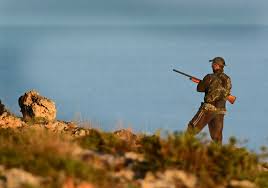
A flock of 5 short-toed eagles came under fire along the Victoria lines on Tuesday as members of BirdLife Malta followed the prized birds in an attempt to prevent them from being killed.
The organisation said in a statement the shots at these birds were fired as they attempted to find a resting place for the night, with one bird being filmed as it was shot down at Bingemma, while volleys of shots at these birds were fired along Tas-Santi, Dwejra and Mtarfa into the evening.
Video footage of the Bingemma incident was passed on to police with a hunter identified as being the same person involved in a separate illegal hunting incident during the closed season last August.
Information about a second, separate incident was also shared with police for further investigation.
The following morning, only two eagles were seen flying out of the northern part of the island, while searches undertaken by police are believed to have been futile.
“Despite peak migration, only two EPU units are currently operative around the island, with occasionally a single unit struggling to keep up with reports of illegal hunting by NGOs,” Birdlife said.
BirdLife Malta said such incidents are a direct consequence of the lack of proper governance of hunting whereby thousands of birds listed in taxidermy collections have gone unchecked for years, with recent allowances in transfers rekindling demand for such birds to become taxidermy specimens.
The organisation added that it was holding Minister Clint Camilleri politically responsible for allowing the opening of a hunting season without the necessary police resources and for allowing a system where a hunter who was caught red-handed hunting illegally is, a month later, persisting in more wildlife crime.
It also remarked on the continuing situation with hunting federations taking no responsibility for their members’ actions.
Short-toed Eagles only appear annually in few numbers between September and November, and they are highly prized for taxidermy.
“As was the case yesterday, hunters do not hesitate to use the opportunity of an open hunting season for game birds to target protected species. A 3pm hunting curfew to protect such birds of prey on arrival was changed to 7pm in 2015, effectively allowing hunting to coincide with the arrival of these highly protected species,” Birdlife said.
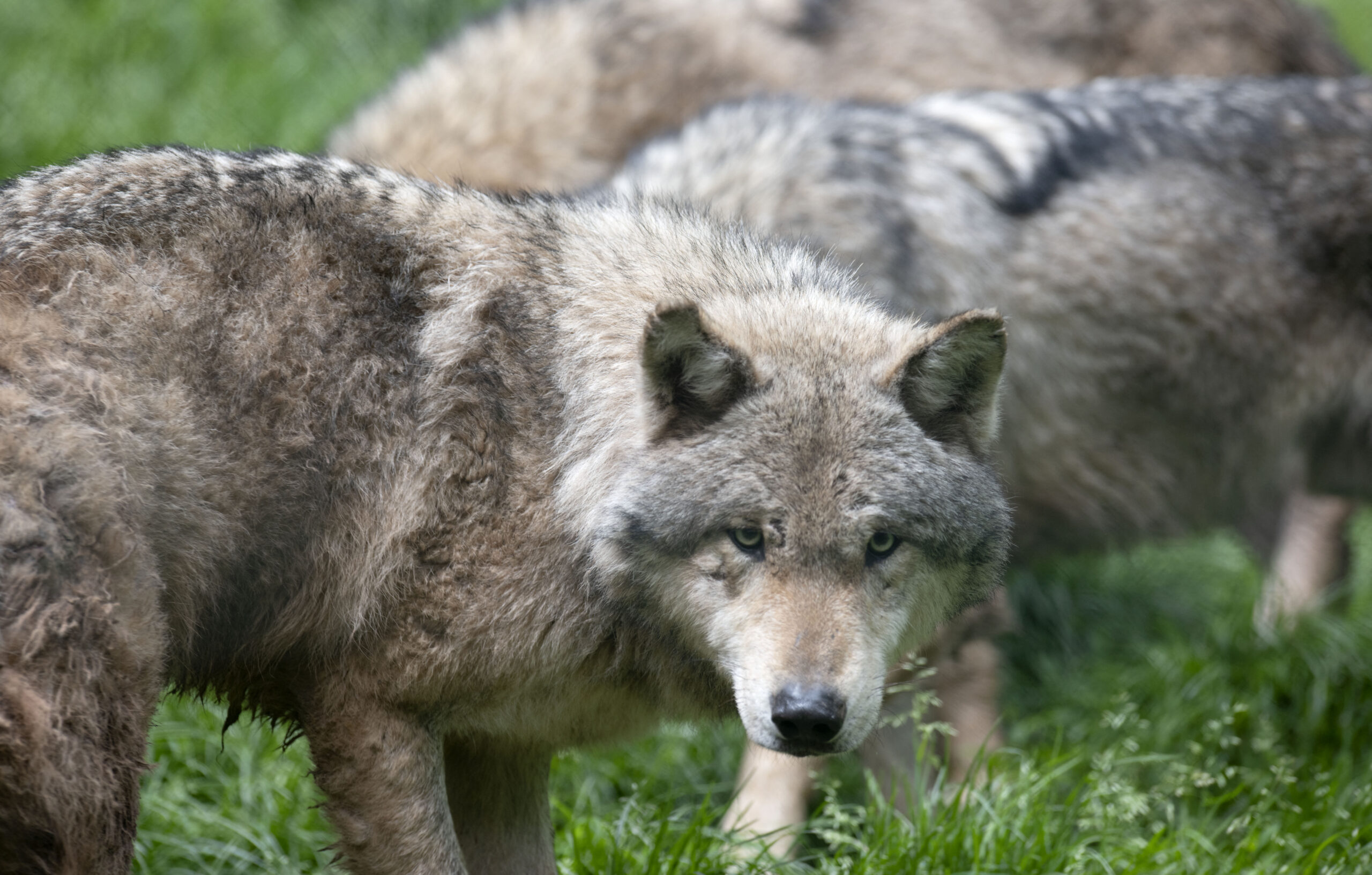
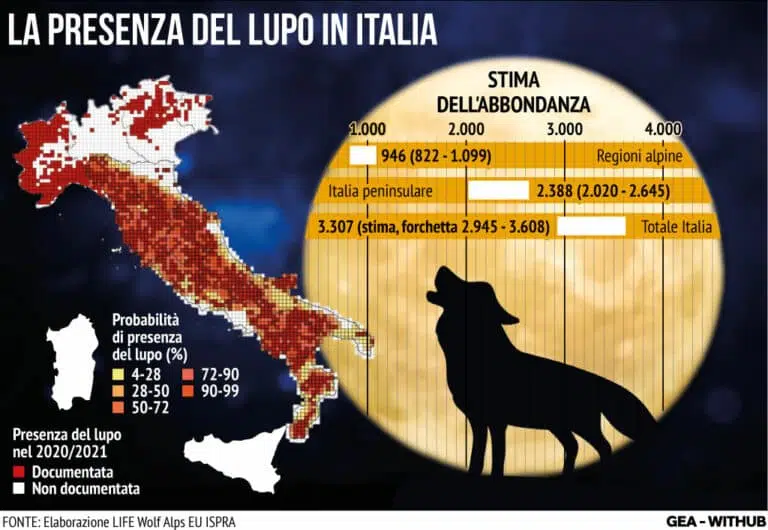
European Commission proposal to downgrade wolves from “strictly protected” to “protected” species approved in COREPER. It is expected to be formally approved tomorrow by the ministers of the 27, and then the EU will request an amendment to the international Bern Convention
Brussels – More than “Beware of the wolf,” “Wolf beware!” It is getting closer to revising the predator’s protection status proposed by the European Commission last December from “strictly protected” to “protected” species: member state ambassadors gave their green light today (Sept. 25). Now the confirmation by the ministers of the 27, meeting tomorrow for the EU Competitiveness Council, is a mere formality.
The adjustment of the protection status “will be an important step in addressing the challenges posed by the increasing wolf population while maintaining the goal of achieving a favourable conservation status for the species,” commented Adalbert Jahnz, spokesperson for the European Commission. With the downgrading to “protected species”, the now 20,000 wolves in Europe will move out of the inner circle of large carnivores protected by the Habitats Directive: the brown bear, the wolverine, the golden jackal, and the Eurasian and Iberian lynxes, for which there is a ban on deliberate killing and capture, as well as the deterioration or destruction of their breeding and resting sites in all EU territories.
European sources explain that member states will be given more flexibility to “deal with the most difficult cases of coexistence between wolves and communities in states that need it.” More room for trapping to culling, in any case already allowed by the Habitats Directive itself, allows derogating from obligations on large carnivores when measures to prevent or reduce predation risks are not enough. Reportedly, at COREPER (the body that brings together EU ambassadors), Italy supported the proposal, while only two countries opposed it, and four others chose to abstain. Not enough to block the decision made by a qualified majority. “We are waiting for formal approval by the Council, and then the EU will submit the proposal to the Standing Committee of the Bern Convention in time for the next meeting of the Committee, scheduled for the first week of December,” Jahnz announced.
Amending the international Bern Convention on the conservation of European wildlife and natural habitats, to which the EU and its member states are parties, is the “precondition for any change under EU law.” Only once the treaty has been amended can the European Commission amend the regime under the Habitats Directive.
The Convention is based on scientific data available at the time of the treaty negotiations in 1979. While the European Commission’s proposal is based on “requests that have been made to us by local and national authorities,” Jahnz pointed out, “as something necessary and useful to address the challenges posed by wolves. In September 2023, Ursula von der Leyen had invited the scientific community, local authorities, and all stakeholders to submit updated data on wolf populations and their impacts. On the basis of that “in-depth examination of the changing reality analysis,” Brussels proposed the downlisting of the species a few months later—in line with what the European Parliament called for as early as November 2022.
“A step forward that fills us with satisfaction. It is unacceptable that it has taken years to recognize a reality before everyone’s eyes,” commented the head of the Lega’s delegation in Brussels, Paolo Borchia. Fratelli d’Italia MEP Pietro Fiocchi reiterated the concept: “We are on the right track, and today’s result rewards the battles over downgrading that we have been conducting for a long time alongside Italian farmers.” The same Fiocchi who posed with a shotgun in posters for June’s European elections and former executive of the family company that produces ammunition.
Almost as playing defence, the European Commission spokesman pointed out that “the solution to all the problems posed by wolves also and above all lies in investment in appropriate damage prevention measures.” But according to WWF, the EU has taken “a grave decision that dangerously opens the door to wolf culls in Europe and ignores the call of more than 300 civil society organizations and hundreds of thousands of people who have urged governments to follow the recommendations of science and intensify efforts to foster coexistence with large carnivores through preventive measures.”English version by the Translation Service of Withub
A flock of 5 short-toed eagles came under fire along the Victoria lines on Tuesday, as members of BirdLife Malta chased the birds in an attempt to prevent them being killed.
Shots at these birds were fired as they attempted to find a resting place for the night with one bird being filmed as it was shot down at Bingemma, while volleys of shots at these birds were fired along Tas-Santi, Dwejra and Mtarfa into the evening.
The bird conservation group said video footage of the Bingemma incident were passed on to police with a hunter identified as being the same person involved in a separate illegal hunting incident during closed season last August.
Information pertaining to a second separate incident was also shared with police for further investigations.
Earlier this morning only two eagles were seen flying out of the northern part of the island, while searches undertaken by police are believed to so far have proven futile.
Despite peak migration, only two Environmental Protection Units within the Police Force are currently operative around the island, with occasionally a single unit struggling to keep up with reports of illegal hunting made by NGOs.
In a statement on Wednesday, BirdLife Malta said such incidents were a direct consequence of the lack of proper governance of hunting whereby thousands of birds listed in taxidermy collections have gone unchecked for years, with recent allowances in transfers rekindling a demand for such birds to become taxidermy specimens.
It also said it held Minister Clint Camilleri, an avid hunter himself, politically responsible for allowing the opening of a hunting season without the necessary police resources, and for allowing a system where a hunter who was caught red-handed hunting illegally, is a month after, persisting in more wildlife crime decimating highly protected species. It also remarked on the continuing situation with hunting federations taking no responsibility for such acts by their members.
Short-toed Eagles only appear annually in few numbers between September and November, and they are highly prized on taxidermy lists by hunters.
A 3pm hunting curfew to protect such birds of prey on arrival had been changed to 7pm in 2015, effectively allowing hunting to coincide with the arrival of these highly protected species.
(THE CONVERSATION) Hunting large carnivores is a contentious issue in wildlife management and conservation. It’s on the ballot in fall 2024 in Colorado, where voters will consider Initiative 91, a proposed ban on hunting and trapping of mountain lions, bobcats and lynx in the state. Wildlife agencies often use regulated hunting as a tool for controlling carnivore populations, reducing their impacts on vulnerable wildlife or minimizing the risk of conflict between carnivores and people, pets and livestock. But scientific studies have questioned how effectively recreational hunting achieves these goals. And public attitudes are shifting as participation in hunting declines. We direct Colorado State University’s Center for Human-Carnivore Coexistence and Animal-Human Policy Center. Together with our colleague Benjamin Ghasemi, we recently surveyed Colorado residents about their perceptions of hunting mountain lions and black bears in the state. We found that support for hunting depended on the purpose, with most Coloradans disapproving of hunting for trophies or sport. Gender, age and other demographic factors also played roles. Meet the neighbors Mountain lions, also known as cougars or pumas, live primarily in the western U.S. and are legally hunted in all western states except California. Black bears, which live mainly in mountainous and forested regions across the continental U.S., are hunted in the majority of states in which they are found. The Colorado Parks and Wildlife agency estimates that roughly 3,800 to 4,400 adult mountain lions and 17,000 to 20,000 black bears live in Colorado. They are found mainly in the Rocky Mountains, with the eastern edges of their ranges near more human-populated areas in the Front Range. According to state data, hunters in Colorado killed 502 mountain lions during the 2022-2023 hunting season and 1,299 black bears during the 2023 season. Both species come into conflict with people in the state. The most common situation is when bears wander into mountain towns in search of garbage or other foods left by humans. Mountain lions are occasionally sighted in urban areas, and on rare occasions have attacked people. Varying views of hunting Our study gathered responses from Colorado residents through two public mail surveys. Samples were weighted to be representative of state population demographics, including age, gender, urbanization level, geographical region and participation in hunting. Respondents’ views on legal and regulated hunting of mountain lions were evenly split, with 41% approving and 41% disapproving. This was also true for black bears: 46% approved of hunting them, and 46% disapproved. Large majorities disapproved of hunting either animal for trophies, hide or fur, or for recreation. For mountain lions, 78% of respondents disapproved of trophy hunting; for black bears, 86% disapproved of trophy hunting. People also generally disapproved of hunting either species for meat. Respondents were more supportive of hunts for other reasons. They approved of hunting mountain lions and black bears to protect human safety by 63% and 57%, respectively. And 56% approved of hunting mountain lions to reduce harm to livestock. Large majorities disapproved of hunting mountain lions with dogs (88%) or recorded electronic calls (75%). Most mountain lions hunted in Colorado are legally taken with the aid of dogs, which chase and then tree or corner the cats. Using electronic calls to attract the cats was permitted in some parts of western Colorado until 2024, when the practice was banned for hunting mountain lions. It remains legal for hunting other carnivores, such as bobcats and coyotes. Women, younger people, urban residents and people who identified as or leaned Democratic tended to be less supportive of hunting than men, older people, rural residents and Republicans. A study we published in 2022 on the reintroduction of wolves to Colorado found a similar political split, with stronger support for restoring wolves among people who identified as Democratic than among Republicans. How to coexist with carnivores? Although Coloradans were generally supportive of using hunting to reduce human conflict with black bears and mountain lions, studies suggest that it might not be the most effective tool to do so. For example, a recent experimental study in Ontario, Canada, concluded that increased hunting of black bears did not result in less conflict – particularly during years when the bear’s natural food sources, such as nuts and berries, were limited in the wild. A long-term study on bears in Durango, Colorado, also found that availability of natural foods in the wild, and the lure of human food within the city, were the main drivers of clashes with bears. Conversely, another study in New Jersey – which is more densely developed than Colorado, so bears may be more likely to encounter people – found that well-regulated hunting of closely monitored black bear populations could help reduce conflict. Similar to its policy with bears, Colorado uses hunting as a management tool for mountain lions. There is limited scientific evidence that hunting mountain lions may prevent conflict with them. A recent study found that juvenile mountain lions from a hunted site in Nevada tended to avoid developed areas. In contrast, young cats from a site in California without hunting did not show any preference for or against areas with people. Yet, other correlative studies in Washington, California and Canada have suggested that hunting may make the problem worse. According to these researchers, hunting might disrupt the social dynamics and age structure of mountain lion populations, causing young cats seeking new territory to roam into populated areas, increasing their chances of encountering people. Overall, we believe that more reliable scientific information is needed to guide carnivore management and test assumptions about how effective hunting is at addressing these problems. Continued focus on proactive, nonlethal strategies to prevent conflict is essential. Ultimately, promoting coexistence between humans and carnivores is often much more about managing people than about managing predators. Changing human behavior is key. For example, failing to store garbage securely attracts bears. So does filling bird feeders in spring, summer and fall, when bears are active. Steps to reduce encounters with mountain lions include hiking in groups and making noise; keeping dogs leashed in the backcountry; keeping pets indoors at home; and not landscaping with plants that attract deer, the cat’s main prey. Big cats on the ballot Colorado’s Initiative 91 would ban hunting and trapping of mountain lions, bobcats and lynx in the state. It would allow for lethal removal of problem animals to protect human life, property and livestock. Hunting and trapping of bobcats, mainly to sell their pelts in the fur trade, is currently legal in Colorado. On average, hunters and trappers have killed 880 bobcats annually over the past three years, the majority of which were trapped. Hunting and trapping are currently prohibited for lynx, which are listed as endangered in Colorado and threatened nationally, but the proposed ban would protect them if their populations recover. Coloradans have voted to limit carnivore hunting in the past. They passed a ballot initiative in 1992 to ban bait, hounds and a spring hunting season for bears, and another in 1996 to ban the use of leghold traps, poison and snares. Our research adds to growing evidence that public views toward hunting and carnivores are shifting. An increasing share of Americans believes humans should coexist with carnivores and opposes lethal control for human benefit. Studies also suggest that ballot measures like Initiative 91 may become more common as public attitudes evolve and more diverse groups seek to influence wildlife management. It will be challenging for wildlife managers to adapt to these changing values. Agencies may have to consider more participatory methods that engage diverse stakeholders in decision-making, develop new funding mechanisms that are less reliant on hunting and fishing license fees, and reexamine how and for whom they manage wild animals. This article is republished from The Conversation under a Creative Commons license. Read the original article here: https://theconversation.com/as-attitudes-toward-wild-predators-shift-colorado-voters-weigh-a-ban-on-hunting-mountain-lions-238265.
Saturday morning at approximately 6:15 AM near St. Germain, a young 19-year-old hunter from Sugar Camp had to make an instinctual decision to shoot and kill a wolf to protect himself and two younger hunters from a pack of brazen wolves.
“We pulled up to the spot at like 3:45 in the morning to get our spot because it was opening morning. We got to the spot we built our blind. A little bit before shooting light, we threw our decoy outs we had some goose silhouettes some mallards and some teal,” said Chase Melton the 19-year-old hunter.
But come daybreak, that normal opening morning quickly became a nightmare.
“The one kid next to me he was 14 years old said ‘hey you have a deer coming down on your left side,’ so I stood up and looked over at it was a wolf,” said Melton.
Melton said it was hard to identify at first whether it was a wolf or coyote.
“I tried making some noise, I was clapping, stomping, breaking some sticks, whatever. This wolf turned at me and we locked eyes, and it started to come at us not like a walk but like a jog almost and it was at about 40-50 yards. So, I started to panic a little bit they started panicking because they’re younger kids and they’re like oh my god we’ve got wolves around us,” said Melton.
“So, I grabbed my gun just in case something would happen,” said Melton. “Then, the 13-year-old who was two people down from me said ‘Chase right behind you!’ I looked, and we had a wolf at about five yards – I probably could have touched it with my hand, that was extremely scary. So now, we’re really panicking were like alright were surrounded we have a wolf charging us right now.” Said Melton.
A witness that was hunting 300 feet away reported seeing at least five wolves surrounding the young hunters’ blind and another four in the general area. The witness also reported hearing barks, growls and howls coming from the wolves surrounding the young hunters’ blind.
“This wolf got within 15 yards and I’m like he’s still coming, he’s still coming, he got withing 8-10 yards and it’s not what I wanted to do but to protect us and to protect them we felt harmed, so I pulled the trigger,” said Melton.
Melton fired one shot, close range at the wolf’s face using a 12-gauge loaded with non-toxic waterfowl load.
“This wolf that was five yards behind us went off into the woods, came down, and then grabbed this wolf that I shot by the neck and started dragging it off. I’ve never witnessed something like that.”
Melton said he’s witnessed wolves in this spot once before but never an encounter like this.
“So after this wolf grabbed the one that I shot by the neck, they were yipping super loud, beyond scary,” said Melton
Melton said he contacted the DNR immediately after the encounter occurred after the wolves retreated into woods. A DNR official confirmed the incident.
“They reported that incident to DNR right away that morning. A DNR conservation warden and biologist were able to follow up that morning to investigate and confirmed that it was a wolf. At this time the investigation remains open so unfortunately, I’m unable to share any more details at this time,” said Randy Johnson, Large Carnivore Specialist for the Wisconsin Department of Natural Resources.
As for Melton – an avid outdoorsman – it’s a day he won’t forget.
“Even just being out in the woods in the future it might have an impact on me its just hard to say,” said Melton.
Although scientists have been investigating the evidence of biological evolution for over a century, some parts of the fossil record remain maddeningly enigmatic, and finding evidence of Earth’s earliest animals has been particularly challenging.
Unbiased. Nonpartisan. Factual.
Our daily newsletter
Hidden evolution
Information about evolutionary events hundreds of millions of years ago is mainly gleaned from fossils. Familiar fossils are shells, exoskeletons and bones that organisms make while alive. These so-called “hard parts” first appear in rocks deposited during the “Cambrian explosion,” slightly less than 540 million years ago.
The seemingly sudden appearance of diverse, complex animals, many with hard parts, implies that there was a preceding interval during which early soft-bodied animals with no hard parts evolved from simpler animals. Unfortunately, until now, possible evidence of fossil animals in the interval of “hidden” evolution has been very rare and difficult to understand, leaving the timing and nature of evolutionary events unclear.
There is indirect evidence regarding how and when animals may have appeared. Animals by definition ingest pre-existing organic matter, and their metabolisms require a certain level of ambient oxygen. It has been assumed that animals could not appear, or at least not diversify, until after a major oxygen increase in the Neoproterozoic Era, sometime between 815 and 540 million years ago, resulting from accumulation of oxygen produced by photosynthesizing cyanobacteria, also known as blue-green algae.
It is widely accepted that sponges are the most basic animal in the animal evolutionary tree and therefore probably were first to appear. Yes, sponges are animals: they use oxygen and feed by sucking water containing organic matter through their bodies. The earliest animals were probably sponge-related (the “sponge-first” hypothesis), and may have emerged hundreds of millions of years prior to the Cambrian, as suggested by a genetic method called molecular phylogeny, which analyzes genetic differences.
Based on these reasonable assumptions, sponges may have existed as much as 900 million years ago. So, why have we not found fossil evidence of sponges in rocks from those hundreds of millions of intervening years?
Under the right conditions, soft sponge tissue made from spongin fibres can create a distinctive fossil. (Elizabeth C. Turner), Author provided
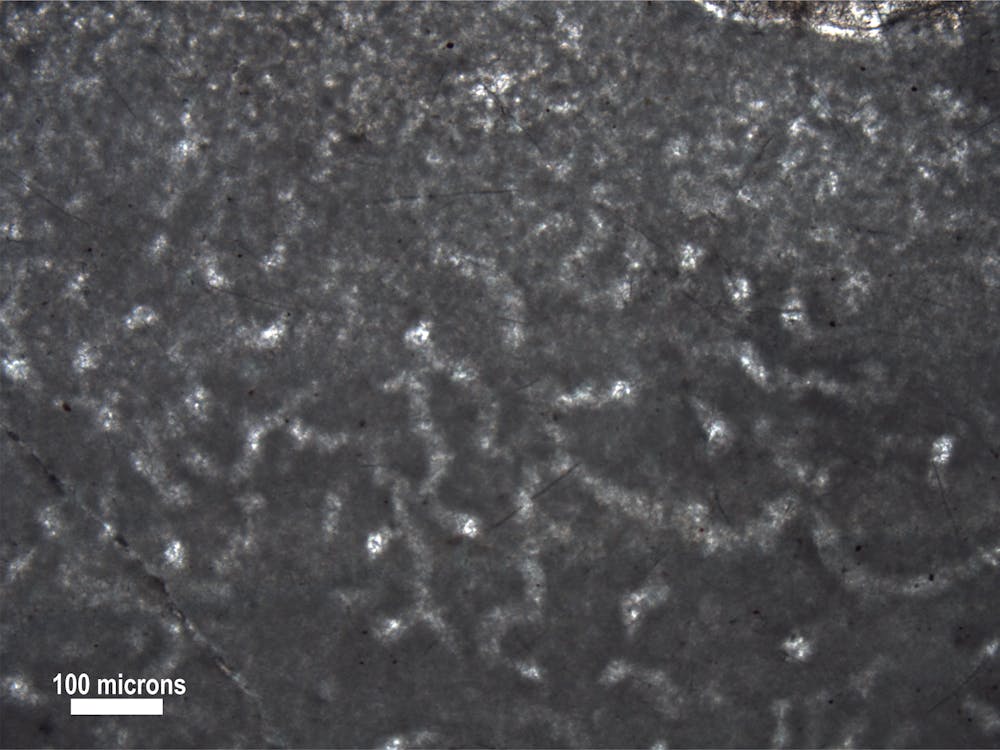
Work on modern and fossil sponges has shown that these sponges can be preserved in the rock record when their soft tissue is calcified during decay. If the calcified mass hardens around spongin fibres before they too decay, a distinctive microscopic meshwork of complexly branching tubes results appears in the rock. The branching configuration is unlike that of algae, bacteria or fungi, and is well known from limestones younger than 540 million years.
This may be an 890 million year old sponge fossil. (Elizabeth C. Turner), Author provided
Although my proposal may initially seem outrageous, it is consistent with predictions and assumptions that are common in the paleontological community: the new material seems to validate an extrapolated timeline and a predicted identity for early animals that are already widely accepted.
If these are indeed sponge fossils, animal evolution can be pushed back by several hundred million years.
The early possible sponges that I describe lived with localised cyanobacterial communities that produced oxygen oases in an otherwise low-oxygen world, prior to the Neoproterozoic oxygenation event. These early sponges may have continued living in similar environments, possibly unchanged and unchallenged by evolutionary pressure, for up to several hundred million years, before more diverse animals emerged.
The existence of 890-million-year-old animals would also indicate that biological evolution was not substantially affected by the controversial Cryogenian glacial episodes — so-called “snowball Earth” — that began around 720 million years ago.
My unusual fossil material may provide a new perspective on Darwin’s dilemma. However, radical new ideas are generally not fully accepted by the scientific community without vigorous discussion; I expect lively controversy to ensue. At some point, probably years in the future, a consensus may develop based on further work. Until then, enjoy the debate!
Two young chimpanzees groom each other at a rehabilitation center for orphaned chimps in Guinea. (Photo: Dan Kitwood/Getty Images)
Share
Twitter
Pinterest
Email
Mama briefly achieved international fame after her death in April 2016. The 59-year-old chimpanzee was an astute leader and diplomat who lived a fascinating life, and she could have been famous for many reasons, as primatologist Frans de Waal explains in his new book, “Mama’s Last Hug.” She ended up going viral, however, because of the way she embraced an old friend who had come to tell her goodbye.https://2dca08cd582e873dbdf042cfba66d931.safeframe.googlesyndication.com/safeframe/1-0-37/html/container.html
Mama died a week after this reunion. The video was then shown on national TV in the Netherlands, where viewers were “extremely moved,” according to de Waal, with many posting comments online or sending letters to van Hooff describing how they had wept. The same reaction later echoed around the world via YouTube.
People felt sad partly due to the context of Mama’s death, de Waal says, but also because of “the very human-like way she had hugged Jan,” including the rhythmic patting with her fingers. This common feature of human hugs also occurs in other primates, he points out. Chimps sometimes use it to soothe a crying infant.
Those connections are definitely worth seeing, and not just to help YouTube viewers empathize with a dying chimpanzee’s nostalgia. While “Mama’s Last Hug” offers some incredible anecdotes from its title character’s life, her final embrace is mainly a jumping-off point to explore the wider world of animal emotions — including, as the book’s subtitle puts it, “what they can tell us about ourselves.”
‘Anthropodenial’
Frans de Waal (center) speaks with members of the Eugène Dubois Foundation during a 2015 dinner the organization hosted at the International Museum for Family History in Eijsden, Netherlands. (Photo: Stichting Eugène Dubois/Flickr)
De Waal, one of the world’s best-known primatologists, has spent decades exploring the evolutionary links between humans and other animals, especially our fellow primates. He has written hundreds of scientific articles and more than a dozen popular science books, including “Chimpanzee Politics” (1982), “Our Inner Ape” (2005) and “Are We Smart Enough to Know How Smart Animals Are?” (2016).https://2dca08cd582e873dbdf042cfba66d931.safeframe.googlesyndication.com/safeframe/1-0-37/html/container.html
After training as a zoologist and ethologist under van Hooff in the Netherlands, de Waal received his Ph.D. in biology from Utrecht University in 1977. He moved to the U.S. in 1981, eventually taking joint positions at Emory University and the Yerkes National Primate Research Center in Atlanta. He retired from research a few years ago, and this summer he will retire from teaching, too.
For most of de Waal’s career, he has chafed under the way behavioral scientists have traditionally viewed the mental capacities of nonhuman animals. Justifiably cautious about projecting human traits onto other species — a habit known as anthropomorphism — many 20th-century scientists went too far in the other direction, according to de Waal, adopting a stance he calls “anthropodenial.”https://2dca08cd582e873dbdf042cfba66d931.safeframe.googlesyndication.com/safeframe/1-0-37/html/container.html
“Scientists have been trained to avoid the topic, even though we talk about power struggles and reconciliation behavior, emotions and feelings, internal states in general, cognition and mental processes — all the words we are supposed to avoid,” de Waal tells MNN in a phone interview. “I think it comes from a century-long indoctrination by behaviorists,” he adds, specifically crediting the American brand of behaviorism pioneered last century by psychologist B.F. Skinner, who saw nonhuman animals as driven almost entirely by instinct rather than intelligence or emotion.
Horses have some of the most expressive faces on Earth, de Waal notes, capable of conveying emotional subtlety almost on par with primates. (Photo: Mikail Brennan/Shutterstock)
De Waal cites one prominent neuroscientist who is so wary of anthropomorphizing that he stopped referring to “fear” in the rats he studies, instead merely speaking of “survival circuits” in their brains to avoid any parallels with subjective human experiences. “It would be like saying that both horses and humans seem to get thirsty on a hot day,” de Waal writes in his new book, “but in horses we should call it ‘water need’ because it is unclear that they feel anything.”
While this caution is rooted in scientific rigor, it has brought ridicule on scientists who study emotions and internal states of nonhuman animals. “We are very often accused of anthropomorphism as soon as you use ‘human’ terminology,” de Waal says. It’s true that we can’t be sure how other species feel when they experience an emotion, but we can’t be sure how other humans feel, either — even if they try to tell us. “What humans tell us about their feelings is often incomplete, sometimes plainly wrong, and always modified for public consumption,” de Waal writes. And we would need to ignore a lot of evidence to believe that human emotions are fundamentally unique.
“Our brain is bigger, true, but it’s just a more powerful computer, not a different computer,” de Waal says. To believe otherwise is “highly unreasonable,” he argues, “given how similarly the emotions manifest themselves in animal and human bodies, and how alike all mammalian brains are down to the details of neurotransmitters, neural organization, blood supply and so on.”
That feeling when
Capuchin monkeys like cucumbers, but they may reject this reward if a peer has unfairly been given something even better: a grape. (Photo: Rodrigo Cuel/Shutterstock)
De Waal draws a key distinction between emotions and feelings: Emotions are automatic, full-body responses that are fairly standard across mammals, while feelings are more about our subjective experience of that physiological process. “Feelings arise when emotions penetrate our consciousness, and we become aware of them,” de Waal writes. “We know that we are angry or in love because we can feel it. We may say we feel it in our ‘gut,’ but in fact we detect changes all over our body.”
Emotions can spark a variety of bodily changes, some more obvious than others. When humans are afraid, for instance, we may feel our heartbeat and breathing quicken, our muscles tense, our hair stand up. Most frightened people are probably too distracted to notice subtler changes, though, like their feet becoming cold as blood flows away from their extremities. This drop in temperature is “astonishing,” according to de Waal, and like other aspects of a fight-or-flight response, it occurs in mammals of all kinds.
Many people can accept that other species experience fear, but what about pride, shame or sympathy? Do other animals think about fairness? Do they “blend” multiple emotions together, or try to hide their emotional state from others?
In “Mama’s Last Hug,” de Waal offers a wealth of examples that illustrate the ancient emotional heritage we share with other mammals, in our brains and bodies as well as in the ways we express ourselves. The book teems with the kinds of facts and vignettes that stick with you long after you’ve finished reading, potentially changing your perspective on your own emotions and social interactions while shifting the way you think about other animals. Here are just a few examples:
Many ‘human’ emotions occur in all kinds of mammals, from apes to rats. (Photo: Ukki Studio/Shutterstock)
• Rats seem to have an outsized emotional range, experiencing not just fear but also things like joy — they emit high-pitched chirps when tickled, more eagerly approach a hand that has tickled them than one that has merely petted them, and make gleeful little “joy jumps” that are typical of all playing mammals. They also display signs of sympathy, not only improvising ways to rescue fellow rats trapped in a clear tube, but even opting to perform the rescue instead of eating chocolate chips.
• Monkeys have a sense of fairness, de Waal writes, citing an experiment he and a student conducted with capuchin monkeys at Yerkes. Two monkeys working side by side were rewarded with either cucumbers or grapes when they finished a task, and both were happy when they received the same reward. They much prefer grapes to cucumbers, though, and monkeys who received the latter showed signs of outrage when their partner got a grape. “Monkeys who’d been perfectly happy to work for cucumber all of a sudden went on strike,” de Waal writes, noting that some even threw their cucumber slices in apparent indignation.
• Blended emotions are less widespread, but still not unique to humans. While monkeys seem to have a rigid set of emotional signals that can’t be mixed, apes commonly blend emotions, de Waal writes. He cites examples from chimps, such as a young male schmoozing the alpha male with a mix of friendly and submissive signals, or a female requesting food from another with a medley of begging and complaining.
Nonetheless, scientists tend to label these and other displays of animal emotion very carefully. When an animal expresses what looks like pride or shame, for example, it’s often described with functional terms like dominance or submission. It may be true that a “guilty” dog is just being submissive in hopes of avoiding punishment, but are people really so different? Human shame involves submissive behaviors similar to those of other species, de Waal points out, possibly because we’re trying to avoid another kind of punishment: social judgment.
“More and more I believe that all the emotions we are familiar with can be found one way or another in all mammals, and that the variation is only in the details, elaborations, applications and intensity,” de Waal writes.
‘Wisdom of the ages’
Emotions can compel us to take action when necessary, but they also leave room for experience and judgment to inform the most effective kind of action — like protesting nonviolently instead of rioting. (Photo: Dan Kitwood/Getty Images)
Despite this trend of underestimating the emotions of other animals, de Waal also points to a seemingly contradictory habit among humans. We have traditionally looked down on our own emotions, seeing them as a weakness or liability.
“That emotions are rooted in the body explains why Western science has taken so long to appreciate them. In the West, we love the mind, while giving short shrift to the body,” de Waal writes. “The mind is noble, while the body drags us down. We say the mind is strong while the flesh is weak, and we associate emotions with illogical and absurd decisions. ‘Don’t get too emotional!’ we warn. Until recently, emotions were mostly ignored as almost beneath human dignity.”
Rather than some embarrassing relic of our past, however, emotions are useful tools that evolved for good reasons. They’re sort of like instincts, de Waal explains, but instead of simply telling us what to do, they’re more like the collective voice of our ancestors, who whisper advice in our ear and then let us decide how to use it.
Impulse control is vital for all kinds of animals, de Waal points out. A lioness, for example, must suppress her urge to pounce on prey until she sneaks close enough to catch it. (Photo: Peter Betts/Shutterstock)
“Emotions have the great advantage over instincts that they don’t dictate specific behavior. Instincts are rigid and reflex-like, which is not how most animals operate,” de Waal writes. “By contrast, emotions focus the mind and prepare the body while leaving room for experience and judgment. They constitute a flexible response system far and away superior to the instincts. Based on millions of years of evolution, the emotions ‘know’ things about the environment that we as individuals don’t always consciously know. This is why the emotions are said to reflect the wisdom of the ages.”
That doesn’t mean emotions are always right, of course. They can easily lead us astray if we simply follow their lead without thinking critically about the specific situation. “There is nothing wrong with following your emotions,” de Waal says. “You don’t want to follow them blindly, but most people don’t do that.
“Emotional control is an essential part of the picture,” he adds. “People often think animals are slaves to their emotions, but I don’t think that’s true at all. It’s always a combination of emotions, experiences and the situation that you’re in.”
We’re all animals
Pigs’ personal experiences can turn them into optimists or pessimists, research has found. (Photo: galitsin/Shutterstock)
It may seem harmless for humans to put ourselves on a pedestal, to believe we’re separate from (or even superior to) other animals. Yet de Waal is frustrated by this attitude not just for scientific reasons, but also because of how it can influence our relationship with other creatures, whether they live in our care or in the wild.
“I think the view of animal emotions and intelligence has moral implications,” he says. “We have moved on from seeing animals as machines, and if we acknowledge they are intelligent and emotional beings, then we cannot just do with animals anything we want, which is what we have been doing.
“Our ecological crisis at the moment, global warming and the loss of species, is a product of humans thinking we are not part of nature,” he adds, referring to human-induced climate change as well as our role in the mass extinction of wildlife. “That is part of the problem, the attitude that we are something else than animals.”
Climate change, biodiversity loss and similar crises may be getting worse, but as de Waal enters retirement, he says he’s optimistic about how our overall relationship with other species is evolving. We still have a long way to go, but he’s encouraged by a new generation of scientists who don’t face the kind of dogma he faced earlier in his career, and by how the public often welcomes their findings.
“I’m definitely not just hopeful, I think it is already changing. Every week on the internet you see a new study or surprising finding about how ravens can plan ahead, or rats have regrets,” he says. “Behavior and neuroscience, I think the whole picture of animals is changing over time. Instead of the very simplistic view we had before, we now have this picture of animals as they have internal states, feelings and emotions, and their behavior is much more complex also as a result.”
Mama the chimp celebrates her 50th birthday in 2007 at Burgers Zoo. (Photo: Vincent Jannink/AFP/Getty Images)
Mama had been the “longtime queen” of the chimpanzee colony at Burgers Zoo in the Netherlands, as de Waal puts it, and after she died the zoo did something unusual. It left her body in the night cage with the doors open, giving her colony a chance to view and touch her one last time. The resulting interactions resembled a wake, de Waal writes. Female chimps visited Mama in total silence (“an unusual state for chimps,” de Waal notes) with some nuzzling her corpse or grooming it. A blanket was later found near Mama’s body, presumably brought there by one of the chimps.
“Mama’s demise has left a giant hole for the chimpanzees,” de Waal writes, “as well as for Jan, myself and her other human friends.” He says he doubts he’ll ever know another ape with such an impressive and inspiring personality, but that doesn’t mean such apes aren’t already out there somewhere, either in the wild or in captivity. And if Mama’s last hug can draw more attention to the emotional depth of chimps and other animals that are still with us, then we all have reason to feel hopeful.
Have you ever spoken to your pet thinking you went crazy? You can now calm yourself down since studies have shown that talking to your pet doesn’t mean you are nuts but smart.
Pet owners often talk to their beloved furry companions. Many who don’t own pets might think that people who talk to their pets should go check themselves. But it’s now official, people who speak to their pets are smarter than those who don’t.
Studies have shown that people who have conversations with their pets considered to be of higher intelligence. Anthropomorphizing is the act of attributing human characteristics and purposes to inanimate objects, animals, plants, etc.
Nicholas Epley, a professor of Behavioral Science at the University of Chicago said: “Historically, anthropomorphizing has been treated as a sign of childishness or stupidity, but it’s actually a natural byproduct of the tendency that makes humans uniquely smart on this planet,”.
The most common way humans anthropomorphize is giving pets human names. While Anthropomorphizing can also be attributing of human characteristics to inanimate objects, your brain would get confused for a second if you see human eyes on a door.
Anthropomorphism is a sign of intelligence and creativity and it higher your pet intelligence as well. Speaking to your pets, teaches them words and gestures, think about it, does your dog know when you are angry with him? As a by-product of anthropomorphism, they notice that you’re angry and manipulate you with a sad face.
*By Hope Bohanec, Projects Manager for United Poultry Concerns*
For many of us, spring is a time of community engagement filled with
VegFests,
MeetUps, potlucks, leafletings, and other activities to spread the message
of
animal suffering in our food system and the joys of living vegan. With all
spring events cancelled, the world seems to have come to a standstill. Yet
the
breeding, confining, and killing of sensitive chickens and other farmed
animals
continues, so our advocacy must continue as well.
As communities move to a virtual reality, so must our message. Here are six
suggested actions to take during our time of social distancing. We can’t be
together physically, so let’s find creative ways to bring the plight of
farmed
animals into the minds and hearts of people in their homes. Please stay
safe and
continue to speak out for chickens and for all animals. They need us now
more
than ever.
*1. Have a Streaming Party and Watch a Vegan Film or Documentary*
There are numerous films and documentaries with pro-animal and vegan
messages
available on Netflix, Amazon Prime, and other streaming services. You can
watch Okja, Cowspiracy, Forks Over Knives, and Game Changers on Netflix,
while Amazon Prime has Food Choices, The End of Meat, The Invisible
Vegan,
and Plant Pure Nation among others. Have a watch-party with the people
who
share your home, or use Netflix Party <https://www.netflixparty.com> to
stream a movie remotely with friends
outside of your household and talk about it after.
*2. Get Hip with Social Media*
There has never been a better time to be an effective “armchair
activist.”
Social media is the way many people, and most young people, are getting
their
news, watching their entertainment, connecting with friends, and more.
Be an
influencer and help broadcast the vegan message across any and all
platforms.
You don’t even have to create your own content; there are lots of memes,
videos, recipes, and articles to share. Start with UPC’s Facebook
<https://www.facebook.com/UnitedPoultryConcerns> and Twitter
pages and share our content on your social media pages.
*3. Write a Letter to the Editor or an Online Article*
Do you like to write? Perhaps now you have some extra time to do it.
Write a
letter to your local paper about any aspect of veganism. A letter in
response
to a recent article is more likely to be published. Remember to praise
journalists or publications for any positive media coverage for animals.
Be
sure to adhere to the guidelines for length and other factors before
sending
your letter. There are also online forums for posting articles like
Medium <https://medium.com>
and Elephant Journal <https://www.elephantjournal.com>. Start with a
vegan or animal rights topic you are
passionate about and write!
*6. Donate to United Poultry Concerns*
Even as the world seems to have stopped, chickens, turkeys and other
farmed
animals continue to suffer, and we will continue to fight tirelessly for
them. Your contribution helps us do just that. You can also support us by
shopping on the UPC merchandise page
<https://www.upc-online.org/merchandise>.






 We believe in the free flow of information
:max_bytes(150000):strip_icc():format(webp)/__opt__aboutcom__coeus__resources__content_migration__mnn__images__2019__04__chimps-grooming-guinea-01-b9c94df4bfea4213b9a7b38dbb15dbfd.jpg)
:max_bytes(150000):strip_icc():format(webp)/__opt__aboutcom__coeus__resources__content_migration__mnn__images__2019__05__frans-de-waal-dinner-2015-02-57e7730ddb5849fc9e8a6779ae765183.jpg)
:max_bytes(150000):strip_icc():format(webp)/__opt__aboutcom__coeus__resources__content_migration__mnn__images__2019__05__horse-eye-closeup-portrait-black-e7847a28737f4aa3a05c938be76c617d.jpg)
:max_bytes(150000):strip_icc():format(webp)/__opt__aboutcom__coeus__resources__content_migration__mnn__images__2019__05__capuchin-monkey-grape-23b5fbc9321a49aea65e0e0be7b5bc59.jpg)
:max_bytes(150000):strip_icc():format(webp)/__opt__aboutcom__coeus__resources__content_migration__mnn__images__2019__05__rats-affection-nuzzling-01-ff2ed0cdae7b4d8d9665056e4c346b49.jpg)
:max_bytes(150000):strip_icc():format(webp)/__opt__aboutcom__coeus__resources__content_migration__mnn__images__2019__05__extinction-rebellion-protest-london-2019-d4ff7e8edfd74d7c92ab8363c76569dc.jpg)
:max_bytes(150000):strip_icc():format(webp)/__opt__aboutcom__coeus__resources__content_migration__mnn__images__2019__05__lioness-hunting-stalking-prey-7589326099db410292ae11c06692eadc.jpg)
:max_bytes(150000):strip_icc():format(webp)/__opt__aboutcom__coeus__resources__content_migration__mnn__images__2019__05__piglet-petted-by-kids-815577d877e5434ea40330d77a0e8df8.jpg)
:max_bytes(150000):strip_icc():format(webp)/__opt__aboutcom__coeus__resources__content_migration__mnn__images__2019__04__mama-chimp-50th-birthday-01-b3597e84f3534806a1d93f3611a3786a.jpg)


 Exposing the Big Game

