Kazakhstan saiga population has more than doubled in last two years

A new population census from Kazakhstan has revealed an increase in saiga
antelope numbers from 152,600 to 334,400 within just two years, offering a
glimmer of hope for a critically endangered species that has been in
freefall for decades.

The weird and wonderful saiga – distinguished by its large, bulbous nose –
once roamed the steppes of Central Asia in vast nomadic herds, millions
strong, a spectacle said to have rivalled the modern-day wildebeest
migration in East Africa.

It is superbly adapted to the harsh conditions of the remote wilderness
areas that it favours, but has no defence against the threats posed by
humans. In the 19th century, it was almost annihilated by the kind of
unbridled hunting spree that drove the bison to virtual extinction in North
America.

Legal protection ensured its survival, but the respite was only temporary,
and a poaching free-for-all triggered by the break-up of the former Soviet
Union in 1991 caused a near-catastrophic fall in numbers, leading to an
unprecedented loss of more than 95% of the global population in the
following decade – one of the fastest recorded declines for a mammal.

In recent years, the saiga population has also been decimated by a number of
mass die-off events resulting in the loss of hundreds of thousands of
antelopes, with disastrous consequences for a species already pushed to the
brink by hunting and habitat loss.

The saiga’s natural resilience, buoyed by a suite of well-directed
conservation measures, has led to a series of mini-recoveries, but the
species is still in grave danger, with some groups struggling for survival.

Three of the world’s five remaining populations of saiga are found in
Kazakhstan – the others are in Russia and Mongolia.

Fauna & Flora International (FFI) is a partner in the Alton Dala
Conservation Initiative, which aims to protect and restore Kazakhstan’s
steppe, semi-desert and desert ecosystems and the species they harbour,
including the critically endangered saiga. This broad coalition includes the
Association for the Conservation of the Biodiversity of Kazakhstan (ACBK),
the Committee of Forestry and Wildlife of the Ministry of Agriculture of
Kazakhstan, Frankfurt Zoological Society and RSPB.

With support from the US Fish and Wildlife Service, the Species Fund and
Restore Our Planet, FFI is focusing its conservation efforts on the
smallest, remotest – and most threatened – of the country’s three saiga
populations, on the Ustyurt Plateau. This vast transboundary desert – shared
with Uzbekistan and Turkmenistan – covers an area of roughly 200,000 square
kilometres.

The Ustyurt saiga population is a prime target for poachers, particularly
the male antelopes, whose horns are among the myriad animal parts hoovered
up in industrial quantities for use in traditional Asian medicine.

Working with ACBK and the Kazakhstan government, FFI is monitoring the
distribution and movement of saiga, and has supported the establishment and
training of a new ranger team, and the deployment of sniffer dogs, to help
deter and foil illegal trade in saiga horn within Kazakhstan and across the
border, as well as raising awareness of the antelope’s importance within
communities through educational activities and the promotion of an annual
‘saiga day’.

Those efforts are now being rewarded. The use of satellite collaring and
telemetry to monitor saiga movements has not only helped combat the poaching
threat, but also enabled rangers to pinpoint the antelopes’ calving grounds
for the first time in many years.

Aerial surveys that ACBK conducted in the course of the national saiga
census revealed dramatic increases across all three Kazakhstan sites, but
the Ustyurt Plateau has enjoyed a particularly strong resurgence; numbers
have risen to 5,900, an increase of almost 130% since 2017.

ACBK rangers pictured during the 2019 aerial survey. (C Albert
Salemgareyev/ACBK )

Although relatively small, this population has a disproportionately
significant role to play in the long-term survival of the saiga. Such
metapopulations, as they are known in the trade, have a wider value that
transcends their actual size, particularly in the context of the
unpredictable – and, to date, unpreventable – mass-mortality events that
pose an ever-present threat to the species as a whole.

In May 2015, the largest saiga population in Kazakhstan – and the world –
suffered a devastating mass die-off, precipitated by an outbreak of
haemorrhagic septicaemia, which wiped out an estimated 70% of the global
adult saiga population in less than a month.

In the context of such cataclysmic events, which can virtually obliterate an
entire subpopulation in one fell swoop, the Ustyurt Plateau saiga subset
assumes even greater importance.

The latest survey results are a real shot in the arm for saiga conservation,
but everyone involved is painfully aware that the next setback could be just
around the corner. Eternal vigilance is the name of the game, a point
emphasised by Bakhtiyar Taikenov, head of the Ustyurt ranger team: “This is
fantastic news, especially for the Ustyurt population, which many in
Kazakhstan had already given up. When we all work together with the right
approach, we can achieve a lot. But there are still various threats and
disaster can strike at any time, so we have to be prepared. The more we can
do about poaching and other threats to saiga, the better the chances of
population recovery in the event of another natural disaster.”

<https://www.fauna-flora.org/> Fauna & Flora International
July 2019

Here’s why 60 percent of the world’s saiga antelopes were wiped out in 2015

A burial ground for dead saiga antelopes in Kazakhstan, in 2015.
 Photo: courtesy of the Joint saiga health monitoring team in Kazakhstan (Association for the Conservation of Biodiversity, Kazakhstan, Biosafety Institute, Gvardeskiy RK, Royal Veterinary College, London, UK)

In May 2015, researchers in central Kazakhstan witnessed something really strange: thousands of saiga antelopes began acting a bit weird, becoming unbalanced, and then just plopping on the ground within a few hours — dead. Over the course of just three weeks, more than 200,000 saigas died, or about 60 percent of the global population.

“I had never seen anything like it,” says Richard Kock, a wildlife veterinarian and professor at the Royal Veterinary College in the UK. “It was very concerning because it was so unnatural, outside of the realm of my experience.”

Dead saiga antelopes in the steppes of Kazakhstan, in 2015.
 Photo: courtesy of the Joint saiga health monitoring team in Kazakhstan (Association for the Conservation of Biodiversity, Kazakhstan, Biosafety Institute, Gvardeskiy RK, Royal Veterinary College, London, UK)

The saiga antelopes were later found to be infected with a bacterium that causes blood poisoning and internal bleeding, or hemorrhagic septicemia. Now, a new study shows that unusually wet and hot weather played a key role in causing the outbreak. How exactly that happened, though, remains a bit of a mystery.

Researchers analyzed historical data related to other mass die-offs of saigas from the 1980s, and found that when the outbreaks occurred, it was warmer and more humid than normal, according to a new study published today in Science Advances. That doesn’t bode well for the future of this critically endangered species. A warmer world could make such outbreaks more likely, and if that happens, the saiga antelopes could go extinct.

Saiga antelopes, whose bulbous noses recall the tauntaun creatures in Star Wars, live in the grasslands of central Asia, from Hungary all the way across Mongolia. They’ve been around for thousands of years, since the time of the mammoths, but they’re now at risk of disappearing because of hunting and habitat loss. “Extinctions took out other animals, but the saiga persisted through modern time,” says Kock, one of the authors of the study. With thick furs and unusual noses that warm up cold air before it gets to the lungs, the animals are highly adapted to extreme environments, and being able to survive harsh winters.

A saiga calf.
 Photo: courtesy of the Joint saiga health monitoring team in Kazakhstan (Association for the Conservation of Biodiversity, Kazakhstan, Biosafety Institute, Gvardeskiy RK, Royal Veterinary College, London, UK)

In 2015, as the antelopes got together in the spring to give birth, a sudden disease outbreak wiped out an enormous number of saigas in central Kazakhstan, almost 90 percent of the local population. Such die-offs aren’t unheard of when it comes to mammals called ungulates: the Mongolian gazelle, wildebeest, and white-tailed deer have all experienced mass deaths. But what happened in 2015 was unprecedented, says Kock. In affected herds, 100 percent of animals deceased — an insanely high percentage. “If everything dies, the bacteria doesn’t benefit, the host doesn’t benefit. It doesn’t make biological sense,” Kock tells The Verge.

Conservation scientist Eleanor Jane Milner-Gulland, who’s worked with saiga antelopes for 25 years, says the die-off was traumatic for field biologists. She remembers seeing photos of the lifeless animals spread over the steppes of Kazakhstan: “It was horrible,” Milner-Gulland says. The antelopes had succumbed to a bacterium called Pasteurella multocida, which lives in their tonsils. But somehow, the bacteria seemed to have proliferated to a point where the animals got sick and died.

To understand whether environmental factors were to blame, Kock, Milner-Gulland, and their colleagues analyzed troves of historical data on saiga antelopes, including satellite images and weather records. The animals had died en masse before, with symptoms similar to the 2015 event. In 1981, 70,000 saigas went heels up, or about 15 percent of the population in the Kazakh region of Betpak-Dala. In 1988, 270,000 died, or 73 percent of the regional population. The data showed that in the days leading up to all outbreaks, the humidity was higher than usual, over 80 percent, and the average minimum daily temperatures were also higher than normal, particularly in 2015.

Dead saigas.
 Photo: courtesy of the Joint saiga health monitoring team in Kazakhstan (Association for the Conservation of Biodiversity, Kazakhstan, Biosafety Institute, Gvardeskiy RK, Royal Veterinary College, London, UK)

How exactly those conditions sparked the outbreak isn’t clear, Kock says. It could be that bacteria spread when it’s hot and wet, but to be sure, more research is needed. It’s also not clear whether climate change can be blamed for the 2015 outbreak, according to Kock. Climate models aren’t precise enough to determine whether changes in climate are affecting weather in a very specific region, but the trend is obviously pointing toward the world becoming a hotter place — and that’s concerning.

Global temperatures have already increased by roughly 1.53 degrees Fahrenheit (0.85 degrees Celsius) since 1880, and saiga antelopes are already being affected, Milner-Gulland tells The Verge. In the last 40 years, the areas where the animals go to give birth have already shifted north. And since there seems to be a connection between weather and the outbreaks, more die-offs are expected in the future, Kock says. “The question is, will it cause extinction?” he says. “I think that’s a risk.”

One way to protect saigas is to make sure their populations are strong and healthy, so that if there is an outbreak, more animals can survive. That means limiting poaching, and giving the antelopes enough space to migrate across the grasslands. But saigas are also “really good at recovering,” Milner-Gulland says, and their populations can bounce back quickly: females can have babies when they’re only one year old, and newborns are large enough that they can run and migrate quickly.

So, for these mythological-looking creatures, there’s hope for survival.

https://www.theverge.com/2018/1/17/16900590/saiga-antelope-2015-die-offs-kazakhstan-humidity-heat-climate-change

FoA challenges Congress’ betrayal of endangered antelope

Today international animal protection organization Friends of Animals filed
a Complaint challenging the constitutionality of a provision that was buried
in the 2014 Federal Budget by Congressman John Carter of Texas that seeks to
eliminate Endangered Species Act protection for three species of African
antelope held captive on U.S. sport-hunting ranches.

“After the better part of a decade on the losing end of Friends of Animals’
efforts to protect these amazing antelope, private hunting ranch operators
that profit on the killing of these animals chose to show their disrespect
for our justice system by turning to their Congressional pawn,
Representative John Carter,” said Priscilla Feral, president of Friends of
Animals. “Fortunately for the antelope, Friends of Animals won’t let them be
killed so easily and will continue to fight on their behalf in the
courtroom.”

Mike Harris, director of Friends of Animals’ Wildlife Law Program, explains
that the provision in the Federal Budget, Section 127, purports to undo
Friends of Animals’ 2009 victory in which a federal judge told the U.S. Fish
and Wildlife Service that it could not exempt these hunting ranches from theHuntingTrophiesJamieKripke600
permitting requirements in Section 10 of the Endangered Species Act. Section
127 also seeks to interfere with Friends of Animals’ 2013 lawsuit
challenging whether USFWS’s permitting of more than 100 of these hunting
ranches violated the Endangered Species Act’s conservation purposes.

“Representative Carter’s attempt to strip legal protections for these
endangered animals reeks of special interest favoritism,” Harris said. “His
budget rider is not only harmful to the antelope, but also to American
democracy. It is now up to the court to stop this misuse of Congressional
power.”

Today, addax and dama gazelles are nearly wiped out in Northern Africa due
to hunting, war, desertification of habitat, human settlement and
agribusiness. FoA has facilitated the reintroduction of the antelope within
Ferlo National Park in northwest Senegal. Through member support, FoA funds
habitat restoration efforts at Ferlo National Park. For example, in fiscal
year 2013, $66,000 went toward expanding the Oryx Fence Project, which
includes dama gazelles. One hundred and 20 oryx and 20 dama gazelles
benefitted, along with other animals, from these funds. FoA has also
collaborated with European and Middle Eastern specialists in captive
breeding of arid ecosystem gazelle species to restore these animals to the
wild.

The full Complaint can be viewed on the Friends of Animals’ website:

http://friendsofanimals.org/sites/default/files/kcfinder/files/Antelope_Ride
r_Complaint%20FINAL.pdf

Dallas Safari Club Lauds Obama Admin Decision on Antelope

http://www.gilmermirror.com/view/full_story/24425321/article-Three-Amigos–Becomes-Law–DSC-Lauds-Move-for-Rare-Species?instance=home_news_bullets

Three Amigos’ Becomes Law; DSC Lauds Move for Rare Species

WASHINGTON (Jan. 21, 2014)—President Obama has signed into law the 2014 Omnibus Bill, which includes a Dallas Safari Club (DSC)-backed provision to ensure the future of three antelope species nearly extinct in their native countries but flourishing on ranches in Texas.

The “Three Amigos” provision, for which DSC has lobbied over the past several years, exempts U.S. populations of scimitar horned oryx, Dama gazelle and addax from Endangered Species Act protections. The exemptions clear the way for ranchers to maintain herds of these exotic game animals and to offer hunts without federal intervention. Hunting revenue incentivizes ranchers to ensure that populations will continue to thrive.

Author of the provision, Rep. John Carter (R-TX-31), said, “This legislation gets big government out of the way so that ranchers can begin working to bring these rare antelope populations back to former levels. This has been a long time in coming, but we got it done.”

Rep. Pete Sessions (R-TX-32) and Rep. Ken Calvert (R-CA-42) also were key supporters.

“I’m pleased that the House and Senate were able to reach an agreement that allows American sportsmen to continue conserving the ‘Three Amigos,’” said Sessions. “Despite the onerous and unnecessary federal regulations that have recently threatened the ongoing work to preserve the existence of these endangered antelope, this Omnibus Bill takes important steps to protect the ‘Three Amigos’ and preserve a rich sporting heritage.”

The antelope were exempt from the Endangered Species Act from 2005 until 2012. During that time, populations experienced dramatic growth in the U.S. However, the U.S. Fish and Wildlife Service was forced to remove the exemptions due to legal action that prompted a cumbersome and lengthy permitting process, all of which led to a dramatic population decreases. For example, scimitar horned oryx numbers in Texas are now at nearly half of 2010 levels.

“We’re very grateful to Congressman Carter for offering ‘Three Amigos’ legislation, and to Congressman Pete Sessions and Senator John Cornyn for insisting that it be part of the Omnibus Bill. This conservation measure wouldn’t have happened without their dedicated leadership. Senator Cornyn also played a big role behind the scenes in securing Senate support for this specific legislative fix,” said Ben Carter, DSC executive director. “Thanks to our DSC team and the Exotic Wildlife Association (EWA) reps in Washington for helping to make this happen.”

Organizations partnering with DSC on this legislation include the EWA, Congressional Sportsmen’s Foundation, National Rifle Association, Safari Club International and North American Deer Farmer’s Association. DSC’s Washington representative Glenn LeMunyon and EWA’s Liz Williams and John Blount also played vital roles in the process.

About Dallas Safari Club (DSC)

Desert bighorns on an unbroken landscape, stalking Cape buffalo in heavy brush, students discovering conservation. DSC works to guarantee a future for all these and much more. An independent organization since 1982, DSC has become an international leader in conserving wildlife and wilderness lands, educating youth and the general public, and promoting and protecting the rights and interests of hunters worldwide.

Read more: The Gilmer Mirror – Three Amigos Becomes Law DSC Lauds Move for Rare Species

“Ditch the Bitch, Let’s go Hunting!”

That insolent motto was the message of a bumper sticker displayed on the back window of a beater pickup truck parked at my local store yesterday. The words read above and below the outline of a trophy four-point buck (with his body turned sideways, presenting the kind of “perfect shot” that hunters have wet dreams about). If you’ve been through a rural American town during hunting season, you’ve probably noticed this popular line of window decals—many of which show the animal within the crosshairs of a rifle scope—on about every truck and SUV around, often accompanied by the ubiquitous NRA sticker.

The telltale idiom, “Ditch the bitch, Let’s go hunting,” calls into question the average sport hunter’s oft-professed “respect,” not only for deer, but also for women—both of whom are equally objectified.

It also brings up the question, how can a woman who loves animals be with a hunter?

The polite answer must be, with much internal conflict.

Depending on how much and how heartily a woman loves animals, they would have to be willing to accept hunter’s feeble rationalizations and disregard their own gut feelings. If they really loved animals, surely they’d be saddened by a bloody carcass hanging in the garage, and uncomfortable knowing that it was the product of their significant other’s murderous intent.

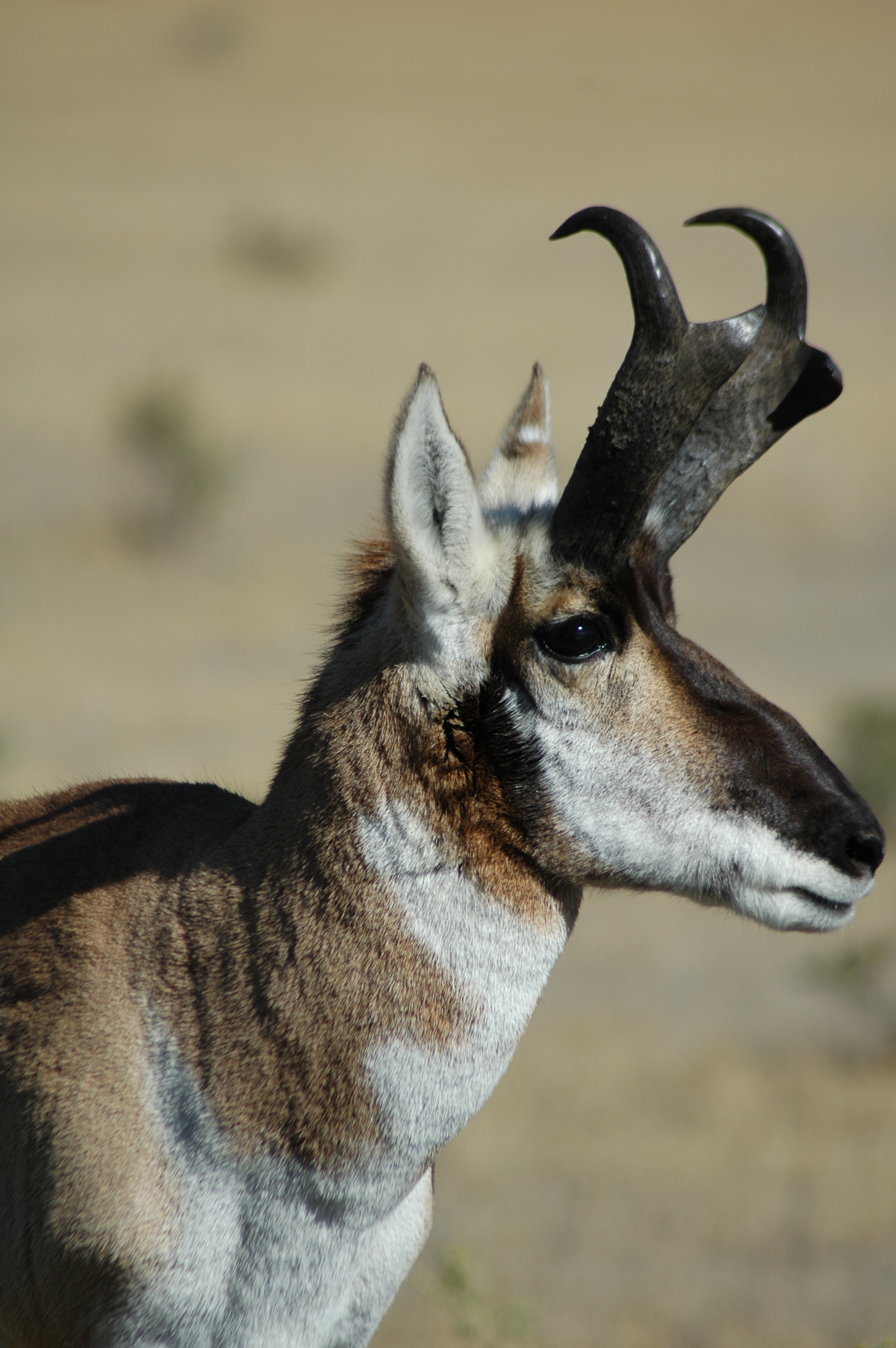
Some women adapt by retreating into their shell, denying their own principles. Others go even further, actually becoming hunters themselves—which is really schizo when you think about it. No, actually schizophrenia is too tame a word for whatever disorder they must be suffering from. Boasting rap sheets that include the pre-meditated murders of such victims as deer, elk, caribou, pronghorn antelope and polar bear (not to mention untold African trophy animals), some of these monsters make Sarah Palin look like a choir boy.

These confused women are so into it they write articles about their exploits for kill magazines or participate in wildlife snuff films for the sportsmen’s channels. One of them tells her readers, in an article she calls “Antelope Addiction”: “Feeling a little defeated anyway, I decided to call it a day… [Phil] was determined for me to get my antelope. Day after day he put me in great places and I just couldn’t get it right. Back in camp, I went straight to our room and cried in frustration.” Typical of a psychopath, her tears are not shed for her victims, but for herself. We never hear of her crying for the animals she causes to suffer and die—only when she doesn’t get her way by making a successful kill.

On a “better” day, she boasts of impaling a female black bear with an arrow: “The beautiful sow carefully approached my bait area from behind my stand…she finally approached my shooting lane…I sent my arrow through the air for a perfect hit. She jumped and growled and ran off for a short distance of fifty yards before I heard what most people call the ‘death cry’. That’s when I realized I had made the perfect shot!” The perfect shot?!? The bear struggles for FIFTY YARDS before dying, and she calls it a “perfect shot”???!!

As an example of how these lady-nimrods are duped into thinking that their actions don’t result in the misery of a sentient being, she goes on to say, “Hearing the death cry didn’t disturb me, because my husband had told me that the death cry is just the air being released from the lungs after the animal has expired.” How convenient. Knowing that women may have a bit more compunction about the torment they’re inflicting, their male counterparts are quick to draw from the hunters’ volumes of validations, or dream up all new justifications on the spot, to quell any concerns for the animals that members of the fairer sex might have.

For a more in depth examination of animal thrill-killers, visit Shannon Wright’s great blog and list of the 12 Most Vile: http://shannonwright1.wordpress.com/

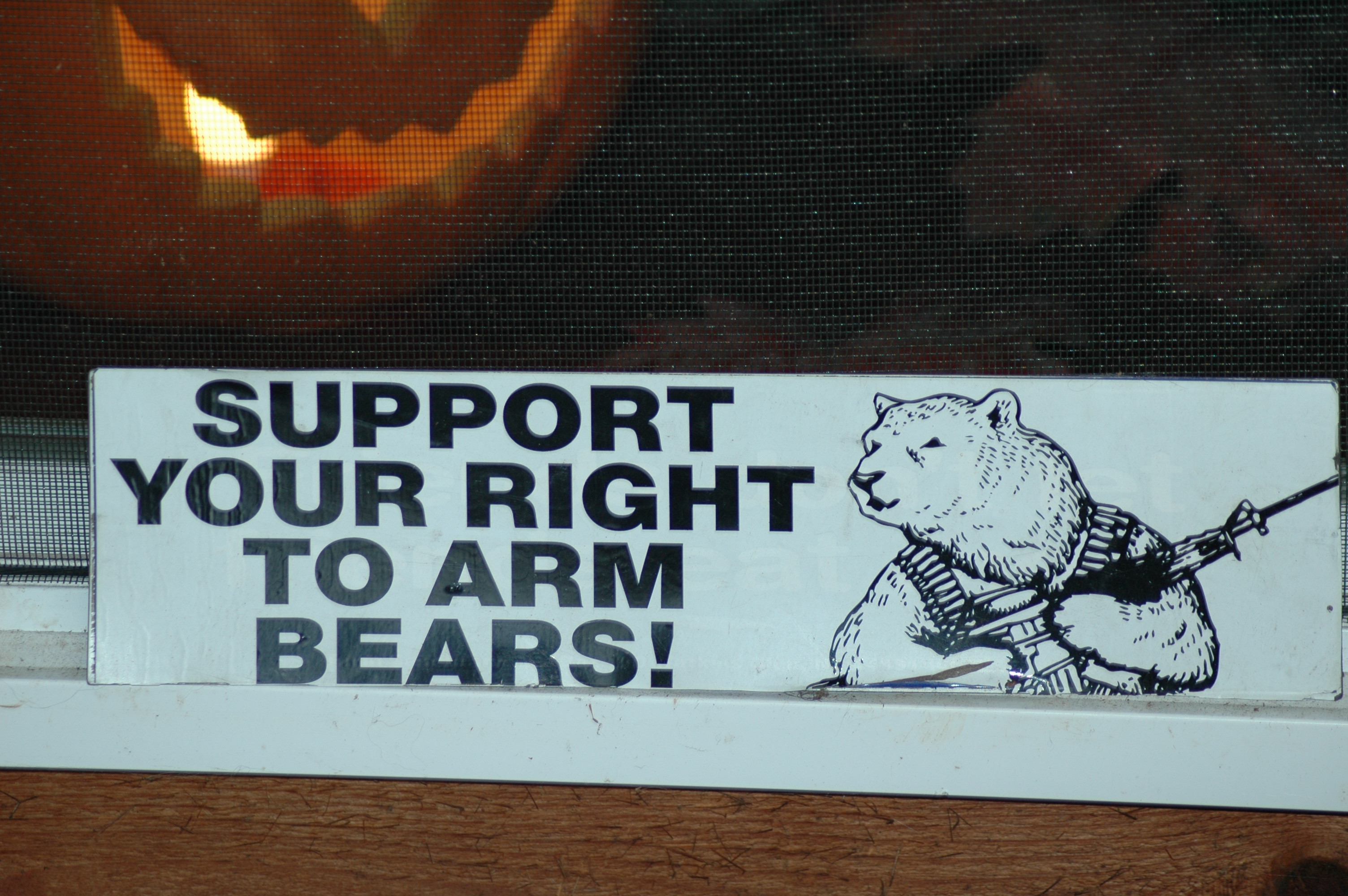
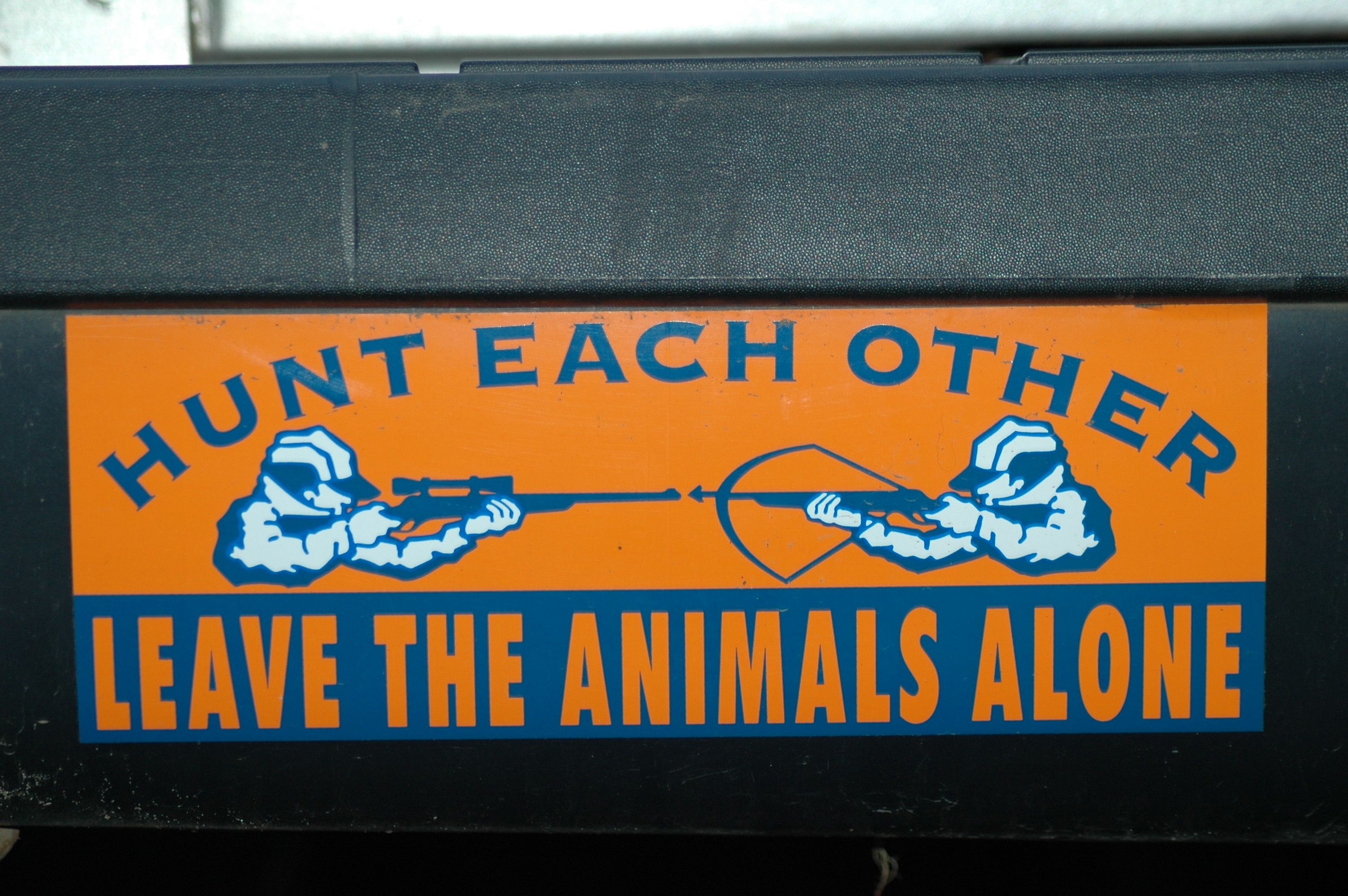
Hunters aren’t the only ones clever enough to come up with catchy slogans for bumper stickers. How about: “Ditch the Bastard, Let’s Stop Hunting!” Got another idea for a sticker? Feel free to post them to the Comments section. Here are a couple of my favorites: