Exposing the Big Game

Forget Hunters' Feeble Rationalizations and Trust Your Gut Feelings: Making Sport of Killing Is Not Healthy Human Behavior

Exposing the Big Game

PETA Protests Canada Goose at Flagship Store and Saks Fifth Avenue in NYC

MARCH 10, 2021 BY DONNY MOSS — https://theirturn.net/2021/03/10/peta-protests-canada-goose-at-its-nyc-flagship-store-and-at-saks-fifth-avenue/

The News

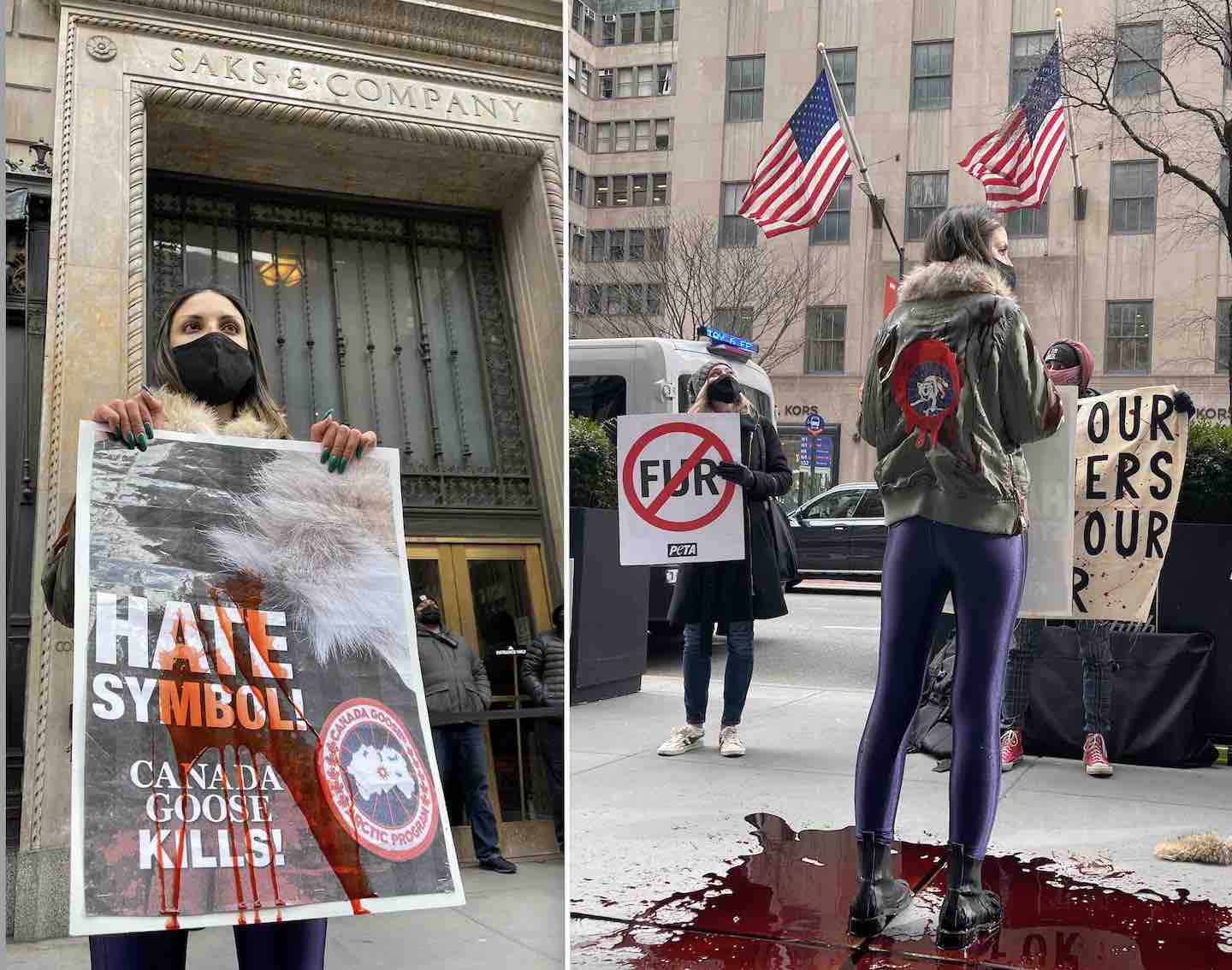
As part of a “Week of Action” targeting Canada Goose over its use of coyote fur and goose feathers, People for the Ethical Treatment of Animals (PETA) staged protests at the company’s flagship store in Soho and at the department store Saks Fifth Avenue, which sells Canada Goose apparel.https://www.youtube.com/embed/ywdwdd6JEso?feature=oembed

In a statement to the media, PETA wrote, “Cruelty can be found in every stitch of Canada Goose’s jackets and other clothing items. Coyotes used for the company’s fur trim can suffer in painful steel traps indefinitely before they’re killed. Mothers desperate to get back to their pups have attempted to chew off their own limbs to escape. Ducks and geese suffer for down as well—no matter their origin. Birds used for their down are inevitably sent to the slaughterhouse, where standard practice is to hang them upside down, stun them, and then slit their throats.”

Canada Goose traps and kills coyotes for their fur and plucks and slaughters geese for their feathers.

On April 22, 2020, the New York Times reported that Canada Goose would stop buying fur from trappers starting in 2022. It would instead use reclaimed fur, which the company describes as fur that “already exists in its supply chain and the marketplace.”  As part of its plan, Canada Goose said it would buy back the fur trim from its customers’ coats and recycle it.  In a public statement, the company said that its decision was made to reduce the company’s carbon footprint, not in response to the demands of PETA and other animal rights groups.

In April 2020, the New York Times reported that Canada Goose would stop selling “new” fur in 2020.

The announcement, which was met with skepticism and confusion by the animal rights community, did not stop the protests at Canada Goose. After the initial pandemic lockdown in NYC, grass roots animal rights groups resumed protesting at the store.  In October 2020, the Coaltion to Abolish the Fur Trade (CAFT) began protesting at Saks Fifth Avenue over its refusal to stop selling Canada Goose and other other fashion labels that use real animal fur.

Animal rights activists with PETA protest at the Canada Goose store in NYC

“Hundreds of major retailers, including Paragon Sports and KITH in NYC,  have announced that they would stop selling fur,” said Rachel Levy, an organizer of the Week of Action Protests. “Canada Goose, however, has stated that it will continue to sell it. In 2021, when so many fashionable, functional alternatives exist, no clothing manufacturer should be using real fur.”

Animal rights activists with PETA and the Coalition to Abolish the Fur Trade (CAFT) stage an anti-fur protest at Saks Fifth Avenue

PETA stops traffic in front of Saks Fifth Ave. as part of an anti-fur protest targeting the store.

Mick Barry TD questions Agriculture Minister about upcoming fur farming legislation

PETITION UPDATE

Irish Council Against Blood Sports ICABSIreland, Ireland

https://www.change.org/p/ban-fur-farming-in-ireland/u/27393155?cs_tk=AiK39gzH5vAXAP8FI18AAXicyyvNyQEABF8BvHTQ1tEdghkRs-ltTsquPMo%3D&utm_campaign=c102a16d7de74500986e50879657e2e1&utm_content=initial_v0_4_0&utm_medium=email&utm_source=petition_update&utm_term=csJUL 27, 2020 — 

Thanks to Mick Barry TD (Cork North Central, Solidarity) for asking Agriculture Minister Dara Calleary about “the progress on legislation regarding the prohibition of fur farming”.

Responding, Minister Calleary said that the Department of Agriculture “is in the process of preparing a Bill to provide for the phased introduction of a ban on fur farming which will include a prohibition on mink farming”.

ACTION ALERT

Contact Minister Calleary and tell him that you want fur farms shut down now (instead of being phased out). Remind him that an 80 per cent majority want fur farming banned.

Email: dara.calleary@oireachtas.ie
Tel: (096) 776 13 OR (01) 618 3331
Facebook: http://www.facebook.com/daracalleary
Twitter: http://www.twitter.com/daracalleary

Dail Question, 21 July 2020

Mick Barry (Cork North Central, Solidarity): To ask the Minister for Agriculture, Food and the Marine his views on prohibiting fur farming; the progress on legislation regarding the prohibition of fur farming; and if he will make a statement on the matter. [17062/20]

Dara Calleary (Mayo, Fianna Fail): My Department is in the process of preparing a Bill to provide for the phased introduction of a ban on fur farming which will include a prohibition on mink farming.

Along with animal welfare considerations, social and economic aspects in relation to the industry need to be taken into account. The Bill will make it illegal for any new fur farms to be established and will put in place phase-out arrangements for the small number of current operators. This will allow for an orderly wind down of the sector and allow time for employees to find alternative opportunities.

The Programme for Government 2020 contains a clear commitment regarding the prohibition of fur farming and Department officials are currently preparing the appropriate draft heads of a Bill to facilitate the achievement of this objective with a view to seeking Government authority at an early date.

https://www.kildarestreet.com/wrans/?id=2020-07-21a.1401


  • Share

Queen will no longer wear clothes with real fur, Her Majesty’s dresser reveals

The Queen will no longer be wearing fur in any of her new garments
The Queen will no longer be wearing fur in any of her new garments CREDIT: POOL/TIM GRAHAM PICTURE LIBRARY

She has long enjoyed wrapping up in a long fur coat, with a particular favourite that has been on rotation for decades.

But Buckingham Palace has signalled that the Queen is finally ready to move with the times, acknowledging that attitudes towards fur have shifted.

Any new garments made for the monarch from now on, including coats, hats and ceremonial robes requiring fur, will be made with the fake variety.

Angela Kelly, the Queen’s long time dressmaker and confidante, reveals in her new memoir: “If Her Majesty is due to attend an engagement in particularly cold weather, from 2019 onwards fake fur will be used to make sure she stays warm”.

In the book, The Other Side Of The Coin: The Queen, The Dresser And The Wardrobe, Ms Kelly notes that a coat worn by the Queen in Slovakia in 2008 has since been altered, the mink trim replaced with fake fur.

A Buckingham Palace spokesperson confirmed: “As new outfits are designed for the Queen, any fur used will be fake.”

However, sources confirmed that the change in direction will only concern new garments.

The Queen in a fur-trimmed robe at her coronation
The Queen in a fur-trimmed robe at her coronation CREDIT: DEUTSCH COLLECTION/GETTY

The monarch will continue to wear the existing pieces in her wardrobe made with fur, from coats and hats to ceremonial robes.

The Queen has repeatedly been criticised by animal rights charities for continuing to wear fur, despite multiple high-fashion houses abandoning use of the “cruel” product.

Her new approach was welcomed by activists.

Claire Bass, executive director of Humane Society International said: “We are thrilled that Her Majesty has officially gone fur-free.

“Queen Elizabeth’s decision to ‘go faux’ is the perfect reflection of the mood of the British public, the vast majority of whom detest cruel fur, and want nothing to do with it.

“Our Head of State going fur-free sends a powerful message that fur is firmly out of fashion and does not belong with Brand Britain.

“The UK banned fur farming almost two decades ago because it was deemed too cruel, now we must finish the job and ban fur sales too.

The Queen in her much-worn fur coat in 1969
The Queen in her much-worn fur coat in 1969 CREDIT:  EVENING STANDARD/GETTY/ HULTON ROYALS COLLECTION

“We are calling on the British Government to follow Her Majesty’s example and make the UK the first country in the world to ban the sale of animal fur.”

The Duchess of Cambridge wears fur, but ensures it comes from ethical sources.

One of her favourite items, in which she has been seen multiple times, is a brown hat made from the pelts of alpacas which died of natural causes.

She is such a fan of the Fairtrade brand Peruvian Connection that she has many of their alpaca hats in different colours.

The UK was the first country in the world to ban fur farming on ethical grounds, although it still allows animal fur to be imported from other countries including Finland, Poland and China.

Many fashion houses have banned real fur after protests from animal rights organisations, including Gucci,  Calvin Klein, Stella McCartney, Vivienne Westwood, Tommy Hilfiger, Versace, Armarni and Hugo Boss.

However, the British Fur Trade Association (BFTA) has warned against banning the item, arguing that it is sustainable, plastic-free and lasts a long time.

A BFTA spokesperson said: “The Royal Family have been at forefront of championing animal welfare and conservation efforts across the globe for many years something that aligns fully with responsibly sourced fur.

“Natural fur is one of the most sustainable and long lasting natural products available, so despite what animal rights groups would claim, we are sure that the Royal Family will continue wear responsibly sourced fur as many on the high street continue to do.”

Student Activists Raise Awareness About Cruel Canada Goose Practices

The Cornell Vegan Society demonstrated on Ho Plaza to bring awareness to the animal cruelty involved in producing Canada Goose products.

Courtesy of Isabel Lu

The Cornell Vegan Society demonstrated on Ho Plaza to bring awareness to the animal cruelty involved in producing Canada Goose products.

18 hours ago

PRINTMORE
On Ho Plaza, Lucy Contreras ’21 defiantly faced the Thursday afternoon passersby with the words “Fur Kills” painted across her abdomen and an apparently blood-drenched Canada Goose jacket wrapped around her body.

The blood was fake, as was the jacket — an imitation with a “Canada Douche” sticker where one would normally find the coat’s iconic sleeve patch.

Contreras, who is a Sun opinion columnist, and her fellow demonstrators aimed to raise awareness about the animal cruelty involved in making the products of the ubiquitous winter-time brand. The coats use goose feathers, most commonly obtained by plucking live geese without any painkillers, and leaving open wounds before they are killed, according to Contreras, president of Cornell Vegan Society and Sun opinion columnist.

The detachable fur trim around the hood of the coat is made of coyote fur, Contreras said. This fur is obtained by capturing wild coyotes in steel traps, where they are often left to agonize for days — suffering from gangrene, dehydration, or attacked by other predators before the trapper returns, according to PETA. If still alive at this point, they are bludgeoned, stomped, or strangled to death, said Contreras.

The demonstrators hoped that those who currently own Canada Goose products never buy from them again and donate the detachable coyote-fur trim of their coats. Several organizations, including PETA and the Wildlife Rescue League, accept donations of furs and redistribute them to rehabilitating animals in shelters or homeless people.

And for those who don’t own Canada Goose products, the demonstrators want them to consider animal cruelty when they buy products such as coats, pillows and comforters.

Chloe Cabrera grad, a participant in the demonstration, called for people to make more responsible consumer choices.

“Each Canada Goose jacket requires seven birds and two coyotes. That’s nine animals dying for virtually no reason, for an overpriced coat that works just as well as any vegan coat,” Cabrera said.

Ultimately, Contreras said, geese and coyotes suffer and die on behalf of the market demand for Canada Goose.

The demonstration was “eye-opening,” Paul Agbaje ’22 said after speaking with a protester.

“No matter how you feel about it, people seem to just mindlessly buy these Canada Goose jackets, without ever considering the ethical implications,” he said.

Other onlookers were less keen, making hostile comments about the demonstration as they walked by.

Contreras is understanding of negative responses like these. “I feel like this shame and this frustration is the beginning of a process of acceptance and of actually taking action against Canada Goose,” she said.

“We’re not blaming them,” Contreras said. “We just want them to know, in the future, to buy jackets that don’t have down or fur.”

Contreras declared the demonstration a success, describing it as one step towards a better public understanding of the relationship between everyday expenditures and animal exploitation.

She encourages friends and peers of Canada Goose wearers to engage them in dialogue. On campus, conversations about ethical consumption are on the rise — Cornell Vegan Society has risen from just a handful of members twoyears ago to about twenty five today, according to Contreras.

She wants them to know that, “with that social status, you are hurting a lot of beings in the process. And it’s not worth it.”

https://cornellsun.com/2019/10/28/student-activists-raise-awareness-about-cruel-canada-goose-practices/

PETA’s Secret Weapon In Fur Ban Fight: A Coyote Trap

The animal-rights group is showing lawmakers how brutal the traps are as the City Council considers a ban on fur sales.

By Noah Manskar, Patch Staff |  | 
NEW YORK — Hooded faces ringed with fur seem to cross every New York City block in the winter months as Canada Goose parkas have grown popular. But the high-end outerwear’s trim comes from coyotes, which often find themselves caught in small but powerful metal traps, animal rights activists say.

As the City Council considers banning fur sales, Dan Mathews, a senior vice president at People for the Ethical Treatment of Animals, has been snapping pencils with one of those traps to show lawmakers just how brutal the fur trade is.

“Some of the shards of the pencil fly eight feet across the room and they imagine that being an animal’s bone — it puts a visceral face on a talking point,” said Mathews, who has met over the last several weeks with half a dozen Council members, including Speaker Corey Johnson.

The trap is a powerful visual aid in PETA’s quest to make New York the nation’s largest city to ban fur sales, according to Mathews, who is also demonstrating it for fashion designers and model agencies ahead of a May 15 hearing on the Council bill.

PETA is training its activists to show the traps off more widely and producing a video featuring the designer Stella McCartney to educate consumers about them, Mathews said.

Subscribe

“People have commented that it looks like something out of a medieval torture museum,” Mathews said. “And I think when people realize that there are thousands of these in use today capturing animals — not just coyotes but all sorts of wildlife and family dogs — it becomes a very simple issue.”

The so-called leghold trap Mathews demonstrated for Patch on Thursday snapped in the blink of an eye. Food is used to lure coyotes to the devices, which go for as little as $10 online. But they inadvertently capture other creatures such as dogs, cats, songbirds and owls — which trappers call “trash animals,” Mathews said.

New York State is home to about 10,000 trappers. Leghold traps are used throughout the state, including just north of the city in Westchester County, Mathews said.

State law bans leg-gripping traps with teeth and requires trappers in most parts of the state to visit their traps every 24 hours. But such rules are hard to enforce, as only the trappers generally know where the traps are set, Mathews said.

Mathews expects a tough fight over the proposed fur ban despite Johnson’s support for it. The bill would bar retailers from selling fur apparel and fine those who get caught.

Johnson has argued the measure would help protect animals. But longtime Manhattan furrier Jerry Sorbara, whose store is on West 32nd Street, says it could put him out of business.

“It’s gonna escalate to that you cannot even walk in the street and they come and see what kind of shoes you (are) wearing, and they will kill you if you wear something that is not right,” said Sorbara, 80, who opened his custom fur business in 1975. “I think it’s really insane what they’re doing.”

While Johnson’s bill would let merchants sell used fur items, Sorbara said only “a handful” of people sell used fur coats. The ban could also hurt parts of the fashion industry that make other components of fur garments such as buttons and linings, he said.

Sorbara said he uses furs from farm-raised minks, chinchillas and sables — not trapped animals. He’s even made a miniature mink coat for a customer’s dog.

“You mean to say … that we don’t love animals? Are you kidding me?” Sorbara said.

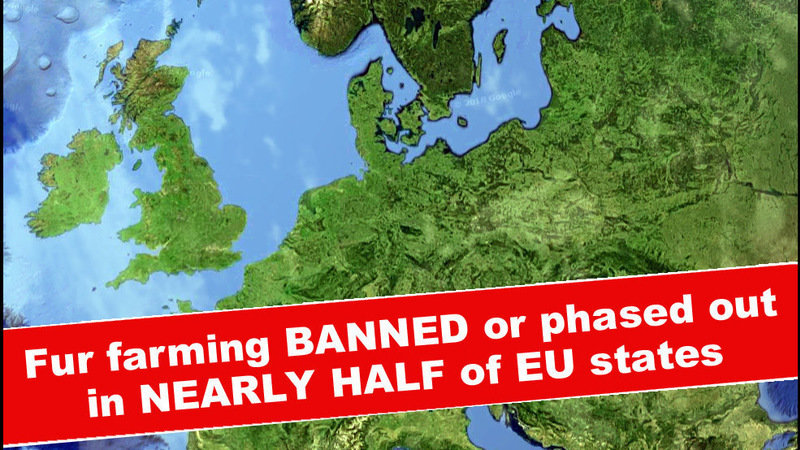
Fur farming banned or phased out in nearly half of EU states

PETITION UPDATE

Irish Council Against Blood Sports ICABS

Ireland, Ireland

JUL 27, 2018 — More and more countries in the European Union are ending fur farming. Contrary to a recent claim by Agriculture Minister Michael Creed that only “a small number of member states have imposed bans on fur farming”, the reality is that so far, there are full or partial fur farm bans or a phasing out of fur farming in nearly half of the EU states.

FULL FUR FARMING BANS

Belgium: The latest EU nation to announce a ban. The Flemish Government this month approved a decree that will make fur farming illegal from 1st December 2023.
England and Wales: Fur farming banned in 2000
Scotland: Fur farming banned in 2002
Northern Ireland: Fur farming banned in 2002 under the Fur Farming (Prohibition) (Northern Ireland) Order 2002
Austria: Fur farming banned in 2004
Croatia: A ban came into effect in 2018 after a 10-year phase-out
Czech Republic: In August 2017, the Czech Republic approved a ban on fur farming which will come into effect in 2019
Luxembourg: A law was passed in June 2018 that outlaws fur farming entirely from October 2018
Netherlands: Adopted a mink fur ban in 2012 and will phase out mink fur farming entirely by 2024
Slovenia: Banned fur farming in March 2013 with a three year phase-out for existing farms

PARTIAL FUR FARMING BANS

Denmark: Mink fur farming continues but from 2023, fox fur farming will be banned.

FUR FARMING PHASED OUT DUE TO STRICTER REGULATIONS

Sweden: Mink fur farming continues but fox fur farming has been phased-out following the introduction of animal welfare requirements stating that foxes could only be kept in such a way that they can be active, dig and socialise with other foxes. This effectively rendered fox farming economically unviable in Sweden. Chinchilla fur farming was also phased out.

Germany: In 2017, German politicians voted for stricter regulations that will bring fur farming to an end. Germany had adopted new regulations for fur farming in 2009, which required increased cage space for animals. The regulations also require the provision of swimming water for mink and an area for foxes and raccoon dogs to be able to dig. Fur farms would no longer be economically viable when complying with these regulations and therefore all German fur farms are expected to close down in 2023, after a 5-year phase-out period.

Spain: In 2015, Spain adopted stricter regulations to prevent ecological damage of escaping mink from fur farms. Spain no longer allows new mink fur farms to be built. Similar legislation led Japan to close down its last fur farm in 2016.

Poland: Proposed legislation to prohibit fur farming is currently being considered.

Bulgaria: 3 fur farms remain. On June 22 this year, 51,234 signatures were submitted to the Bulgarian Parliament by the National Citizens’ Initiative which is pushing for an amendment to the current legislation to “forbid the raising, killing and trade of animals for fur production in the Republic of Bulgaria”.

The remaining 13 countries in the EU – Cyprus, Estonia, Finland, France, Greece, Hungary, Italy, Latvia, Lithuania, Malta, Portugal, Romania, Slovakia – sadly continue to allow fur farming but campaigns to secure bans are ongoing.

Sources of information:
https://www.furfreealliance.com/fur-bans/
https://en.wikipedia.org/wiki/Fur_farming

ACTION ALERT

Please contact your TDs and urge them to support Solidarity’s upcoming Prohibition of Fur Farming Bill 2018. Contact details for TDs can be found at https://www.oireachtas.ie/en/members/tds/?term=/ie/oireachtas/house/dail/32 Also get in touch with the political parties to urge them to back the bill – find contact details at http://www.banbloodsports.com/parties.htm

Find out more about Solidarity’s Bill at
https://www.facebook.com/banbloodsports/videos/1750869355028615/

Join us in urging Minister Michael Creed and Taoiseach Leo Varadkar to put in place a long overdue ban on fur farming.

Email “Ban fur farming NOW” to Leo.Varadkar@oir.iemichael.creed@oir.ietaoiseach@taoiseach.gov.ieAnimalHealthAndWelfareAct@agriculture.gov.ie

Tel: +353 (0)1 6194000 (Leo Varadkar)
Tel: 01-607 2000 or LoCall 1890-200510 (Michael Creed)
Tweet: @campaignforleo @creedcnw Ban fur farming NOW
Comment on Facebook:
https://www.facebook.com/campaignforleo/
https://www.facebook.com/michaelcreedtd

VIDEOS

ICABS footage – Victims of Ireland’s cruel far farming
https://www.youtube.com/watch?v=artr7qwCLLk&index=2&list=PL43C1F00F38986C68

NARA footage showing caged mink in a fur farm in Donegal
https://www.facebook.com/NARAcampaignsIRELAND/videos/1694193503937318/

Mink pulled from cages and thrown into gassing box
https://youtu.be/m52k4aPXahU?t=3m6s

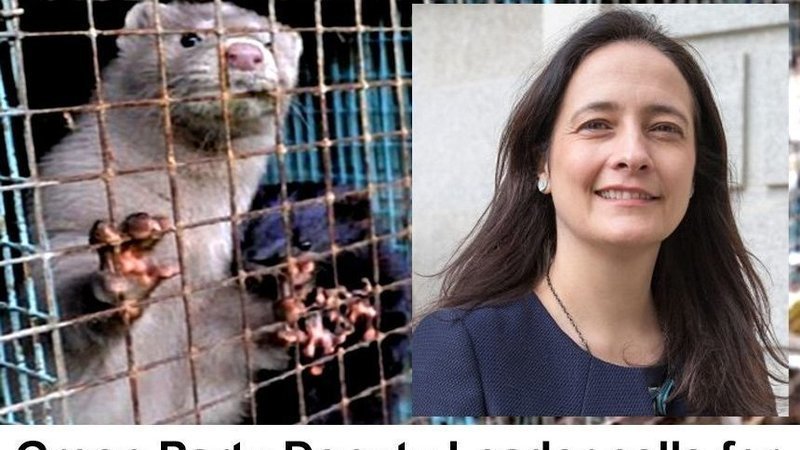
Cork Green Party joins calls for ban on fur farming

Irish Council Against Blood Sports ICABS

Ireland, Ireland

JUL 17, 2018 — “It’s shameful that the practice of fur farming takes place in Ireland”: Cork Green Party calls on Minister for Agriculture to ban fur farming. Read more in the Cork.ie report –https://www.thecork.ie/2018/07/15/cork-green-party-want-to-stop-fur-farming-in-ireland/

ACTION ALERT

Please contact your TDs now and urge them to support Solidarity’s forthcoming “Ban Fur Farming” bill. Contact details for TDs can be found at https://www.oireachtas.ie/en/members/tds/?term=/ie/oireachtas/house/dail/32

Watch ICABS video footage showing the cruelty of fur farming
https://www.youtube.com/watch?v=BvX1O9GvsQ4

Email “Ban fur farming NOW” to Taoiseach Leo Varadkar and Agriculture Minister Michael Creed – Leo.Varadkar@oir.iemichael.creed@oir.ietaoiseach@taoiseach.gov.ieAnimalHealthAndWelfareAct@agriculture.gov.ie

Tel: +353 (0)1 6194000 (Leo Varadkar)
Tel: 01-607 2000 or LoCall 1890-200510 (Michael Creed)
Tweet: @campaignforleo @creedcnw Ban fur farming NOW
Comment on Facebook:
https://www.facebook.com/campaignforleo/
https://www.facebook.com/michaelcreedtd

SAMPLE LETTER

Dear Taoiseach Leo Varadkar and Minister Michael Creed,

I support a total ban on fur farming and an immediate closure of Ireland’s fur farms.

In these hellholes, animals suffer a horrendous life of misery before being cruelly gassed to death. There is absolutely no justification for allowing this cruelty to continue.

Please ban fur farming now.

Yours sincerely,

[Name/Location]

Animals rights groups scent blood as fashion labels go fur-free

http://www.themalaymailonline.com/features/article/animals-rights-groups-scent-blood-as-fashion-labels-go-fur-free1

NEW YORK, April 3 — Is this the beginning of the end for fur?

With more and more fashion houses going fur-free, San Francisco banning fur
sales in the city and British MPs considering outlawing all imports of
pelts after Brexit, the signs do not seem good for the industry.

After decades of hard-hitting campaigning against fur, animal rights
activists believe they scent victory.

Last week Donna Karan and DKNY became the latest in a flood of luxury
brands to say they were planning to go fur free, following similar
announcements by Gucci, Versace, Furla, Michael Kors, Armani and Hugo Boss
in recent months.

US-based animal rights group Peta (People for the Ethical Treatment of
Animals), which is famous for its spectacular anti-fur protests, declared
that “2018 is the year that everyone is saying goodbye to fur”.

“Times are changing and the end of fur farming is within reach!” it told
its 687,000 Instagram followers.

The British-based Humane Society International said the tide turned when
Gucci declared it was going fur-free in October. Another hammer blow came
this month when Donatella Versace said that “I don’t want to kill animals
to make fashion. It doesn’t feel right.”

“Such influential brands turning their backs on cruel fur makes the few
designers like Fendi and Burberry who are still peddling fur look
increasingly out of touch and isolated,” said the society’s president Kitty
Block.

Fendi’s Karl Lagerfeld shows little sign of second thoughts, however, and
has said he will use real fur as long as “people eat meat and wear leather”.

*‘Leather is next’*

But Peta, which also campaigns for veganism, has warned the leather
industry that is also in its sights, saying “You are next…”

And Professor Nathalie Ruelle, of the French Fashion Institute, told AFP
that it was telling that the new fur-free brands “did not say anything
about exotic leathers (such as crocodile, lizard and snakeskin).”

Of the big designers, Stella McCartney, a vegetarian and animal rights
activist herself, has pushed the ethical envelope the furthest, refusing to
use fur, leather or feathers.

But vegans want to go further still, with a ban on all animal products,
which for some also means wool.

But the fur industry is not taking this lying down and has become much more
vocal in its bid to counter animal rights groups’ social media campaigns.

The International Fur Federation (IFF) took Gucci to task when it went
fur-free, asking if it “really wanted to choke the world with fake plastic
fur…”

Philippe Beaulieu, of the French fur federation claimed fur-free was a
marketing gimmick “trying to surf on emotion” to please millennials.

Fake fur, he said, was the real danger to the environment. “Brands who stop
fur push synthetic fur which comes from plastic, a byproduct of the petrol
industry, with all the pollution and harm to the planet that that entails.”

*China’s passion for fur*

In contrast, fur is natural and more and more durable and traceable, he
said.

Arnaud Brunois, of the Faux Fur Institute, which he set up to counter the
IFF, disputes this.

He insisted that “from an ecological point of view it was better to use a
waste product from oil… than farm 150 million of animals then skin them
and finally treat the pelts with chemicals.”

“It is part of the real fur industry’s marketing campaign to denigrate faux
fur,” he added.

These days imitation can sometimes pass for the real thing as the British
designer Clare Waight Keller proved in her fake fur-heavy Givenchy show at
Paris fashion week earlier this month.

Luxury brand expert Serge Carreira at Sciences Po university in Paris said
“fur was marginal for most of the fashion houses who have stopped using it.”

For instance, it only accounted for ‎€10 million (RM47.6) of Gucci’s
six-billion turnover in 2017, or 0.16 per cent.

While fur coats are now rarer on the streets of cities in the West, coats
with fur collars — either fake or real, and sometimes a mixture of both,
activists claim — are everywhere.

In China, however, the picture is very different.

Fur sales grew “phenomenally” there over the last decade, said IFF CEO Mark
Oaten, and despite levelling off still dwarfs all those elsewhere combined.

The world’s biggest fur consumer is now also far by its it largest producer
in a industry worth US$30 billion (RM116 billion) globally in 2017. — AFP

*If there are no dogs in Heaven, then when I die I want to go where they
went. (Will Rogers)*

*the wild, cruel beast is not behind the bars of the cage. he is in front
of it – axel munthe*

Fur is dead: Animal welfare groups cheer San Francisco ban

SAN FRANCISCO (AP) — San Francisco supervisors voted unanimously to ban the sale of fur, further burnishing the city’s animal-loving credentials as it becomes the largest U.S. city to approve the prohibition.

Animal welfare advocates around the world cheered news of Tuesday’s vote, applauding the city for its compassion and hoping that the legislation will catch on.

The ban takes effect Jan. 1 and applies to apparel and accessories featuring real fur, including coats, key chains and gloves. An amendment added Tuesday allows furriers and other retailers to sell current inventory until January 1, 2020.

Wayne Hsiung, co-founder of animal rights network Direct Action Everywhere, said in a statement that “this historic act will usher in a new wave of animal rights legislation across the globe.”

Retailers in San Francisco, however, balked at what they called another social mandate at the cost of their ability to make a living.

“It should be a citywide public vote, it shouldn’t be decided by the Board of Supervisors,” said Skip Pas, chief executive officer of West Coast Leather, which sells fur-trimmed items but deals largely in leather.

San Francisco, named for the patron saint of animals, has a reputation for a strong social conscience, often at a cost to businesses.

Its board banned the sale of menthol cigarettes and other flavored tobacco, which voters will consider in June. In 2016, San Francisco approved what was then a groundbreaking paid parental leave law, requiring private employers to offer six weeks of fully paid leave.

Katy Tang, the supervisor behind the fur ban legislation, has successfully pushed to prohibit performances by exotic animals and to forbid the sale of non-rescue cats and dogs from pet stores.

Mayor Mark Farrell said he plans to sign the legislation.

About 50 clothing and accessory retailers downtown will be affected by the legislation, said Jim Lazarus, senior vice president of public policy at the San Francisco Chamber of Commerce. Reselling vintage and used fur by outlets not usually in the business of trading fur, such as secondhand stores, pawn shops and nonprofits, will still be allowed.

The chamber estimates San Francisco fur sales account for at least $40 million a year. The city’s Office of Economic Analysis estimated fur sales at $11 million in 2012, based on census figures.

The city says even if sales numbers are much higher than its estimate a prohibition is unlikely to significantly harm the overall local economy.

The Fur Information Council of America and the International Fur Federation wrote to supervisors before the vote, seeking to partner with the city to launch a rigorous certification program that it said would ensure animal and environmental health.

The organizations did not have immediate comment on Tuesday’s vote.

The prohibition will hit retailers large and small, although smaller businesses will probably have a harder time adjusting. Luxury department stores Neiman Marcus and Saks Fifth Avenue both feature fur salons. Representatives for the stores did not respond to requests for comment.

Benjamin Lin, 72, owns B.B. Hawk in the South of Market neighborhood. His showroom features chinchilla, sable, fox, and Blackglama mink.

He is considering keeping his current location but selling fur at a smaller place nearby, outside San Francisco.

“I cannot fight it,” he said of the ban. “I will not win. I do not have the energy and the money.”

San Francisco joins two other California cities, West Hollywood and Berkeley, in saying no to fur.