Beaver saves doe from certain death by stealing hunter’s gun

http://now.msn.com/beaver-steals-gun-from-nathan-baron-maine-teen#scpshrjwfbs

Nathan Baron was relaxing over the weekend, sitting in a chair in the woods and tracking a doe with his Remington rifle when, suddenly, nature called. The Maine high school student left the gun resting against the chair, ran back home to do his business, and arrived just in time to see something he didn’t expect to see: a beaver stealing the rifle. “There was a stream … about 100 feet away from me,” he told Bangor Daily News. “I look and there’s a beaver hauling that gun into the water. There was nothing I could do … the beaver went under. That was it.”

Some of the kids at school don’t believe Nathan’s story, but he insists it really happened. “I’m trying to get my gun back,” he said. “If there are beaver marks on it, I’m going to hang it on the wall of my garage.”

Photo Copyright Jim Robertson

Photo Copyright Jim Robertson

New rule prohibiting octopus hunting in WA takes effect Sunday

By            Oct 3, 2013

New rule prohibiting octopus hunting takes effect Sunday

SEATTLE – A new rule making it illegal to hunt and kill giant Pacific octopuses at more than a dozen Puget Sound dive sites takes effect this weekend.

The Washington Department of Fish and Wildlife (WDFW) says the new rule provides more protection for the species and comes nearly a year after a scuba diver legally captured and killed one off Alki Point in West Seattle. That incident sparked a huge public outcry – prompting the WDFW to consider new harvesting regulations.

This past summer, the Washington Fish and Wildlife Commission voted to ban all recreational harvesting of giant Pacific octopuses at the following seven sites:

  • Deception Pass north of Oak Harbor
  • Seacrest Park Coves 1, 2 and 3 near Alki Point in West Seattle
  • Alki Beach Junk Yard in West Seattle
  • Three Tree Point in Burien
  • Redondo Beach in Des Moines
  • Les Davis Marine Park adjacent to the Les Davis Fishing Pier in Tacoma
  • Days Island Wall in Tacoma

The rule takes effect Oct. 6

America’s Top 10 Threats to Trapping; or, The enemy of my enemy is my friend

525140_440817092654544_311118433_n

http://www.ussportsmen.org/trapping/americas-top-10-threats-to-trapping-2/

Posted on August 22, 2012

Courtesy of the U.S. Sportsmen’s Alliance/ http://www.ussportsmen.org.

There are many forces in America working to end trapping and wise wildlife management. Here are a few of those anti-trapping groups:

1- Sierra Club—this group’s board of directors has let America know it opposes any and all trapping—period. The official Sierra Club statement reads: “The Sierra Club considers body-gripping, restraining and killing traps and snares to be ecologically indiscriminate and unnecessarily inhumane and therefore opposes their use.” This position earns this group a No. 1 spot.

2- PETA—best known for being wackos, this group opposes fur, trapping and anything non-vegan. PETA also wanted to “trap” and euthanize problem hogs in Florida to prevent them from being hunted.

3- Humane Society of the United States—this radical animal rights group lists trapping as wildlife abuse. This group is currently being sued for violation of federal racketeering laws.

4- American Society for the Prevention of Cruelty to Animals (alias ASPCA)—states openly on its website that “The ASPCA is against the use of leg-hold or body gripping traps to capture wild animals because of the pain and distress that they cause.” The group also opposes hunting.

5- Defenders of Wildlife—this group opposes wolf hunting and trapping, and launched an aggressive on-line campaign to skew an Idaho wolf trapping survey in its favor. D o W reported it had 39,000 followers overwhelm the Idaho Game and Fish Commission’s website.

6- Born Free USA—this radical animal rights group labels trapping as “barbaric” and has a trapping victims fund to help cover veterinarian costs for animals—including wildlife—caught in traps. It distributes a free “How to Organize an Anti-Trapping Campaign” booklet through its Animal Protection Institute group.

7- In Defense of Animals—opposes trapping and has created a “furkills” website to promote the group’s propaganda—and to collect funds. The group also encourages followers to create a display in their local public library to display leaflets, posters, and books about the cruelty involved in trapping or leg-hold traps.

8- Animal Welfare Institute: Opposes trapping and is pushing the Refuge from Cruel Trapping Act in Congress to end trapping on national wildlife refuges. Filed a lawsuit in 2008 to stop coyote and fox trapping in Maine under the guise of protecting Canada lynx.

9- Center for Biological Diversity: has campaigns underway to stop wolf trapping and hunting in Montana, Wyoming and Idaho, and another in New Mexico to save Mexican gray wolves. Some of the group’s “urgent letters of action” also includes requests for donations to end trapping.

10- Footloose Montana—works to oppose wolf trapping and the management of these large predators in Montana while other wildlife species, like elk, dwindle in numbers at the hands, or paws, of wolves. Also works to end trapping on public lands.

As you can tell, trappers and hunters need to work together to overcome these radical forces…

Hunt the Hunters

Here’s a classic vintage quote from the late Cleveland Amory, founder of the Hunt the Hunters Hunt Club…

“Our position is simply this: we want to do for the hunter what the hunter does for the animal–shoot him for his own good! Now, I admit that some hunters are so shortsighted they don’t realize we’re doing this just for them. It must be made clear that hunters are breeding like flies, overcrowding the fields, damaging the forests. But our club isn’t trying to exterminate them; we’re just trying to thin the herd.”

20130609-185147

Eddie Bauer Now Sells Women’s Hunting Garb

Longtime wildlife advocate, animal activist and follower of this blog, Louise Kane, shared with me the following…

“I just discovered that Eddie Bauer makes a line for hunting clothes. I’ll be boycotting this company from now on. I hope you will consider doing the same. They make a new line especially for women. The new vogue it seems to recruit women and children into the killing business. Gross.”
Below the link and photo is a letter she sent to the company (she encourages others to write them as well)…
m_28893_1000

Dear Eddie Bauer Company,

Today when I needed to buy some footwear, I was dismayed to see your new sports line to promote hunting clothing for women and men. In light of today’s commercialization of wildlife and the threats wild animals face from habitat loss and encroachment in their living spaces, trophy hunting is even more despicable than it was when animals were more numerous. The new push to engage women in trophy hunting, or what some deem as serial killing, is very disturbing to me. Trophy hunting has always been touted as a “sport”. There is nothing remotely sporting about going into a wilderness area with high tech gear and killing animals for fun. I hope you’ll consider a line of clothing that is more in keeping with an ethical use of wilderness and wildlife. Photography, hiking, climbing, are all sports that teach endurance and appreciation and understanding of wilderness and wild animals instead of the exploitation of wild animals for the thrill of killing.

Until then I won’t be buying any more clothing from your company in boycott of your new women’s line of hunting clothing. Trophy hunting is a despicable “sport,” I hope you’ll consider the majority of Americans who care for wildlife and our thoughts about this terrible sport.

I really despise killing for fun and that’s what most hunting is all about these days.

Louise Kane, JD

Signs I’d Like to See More Of

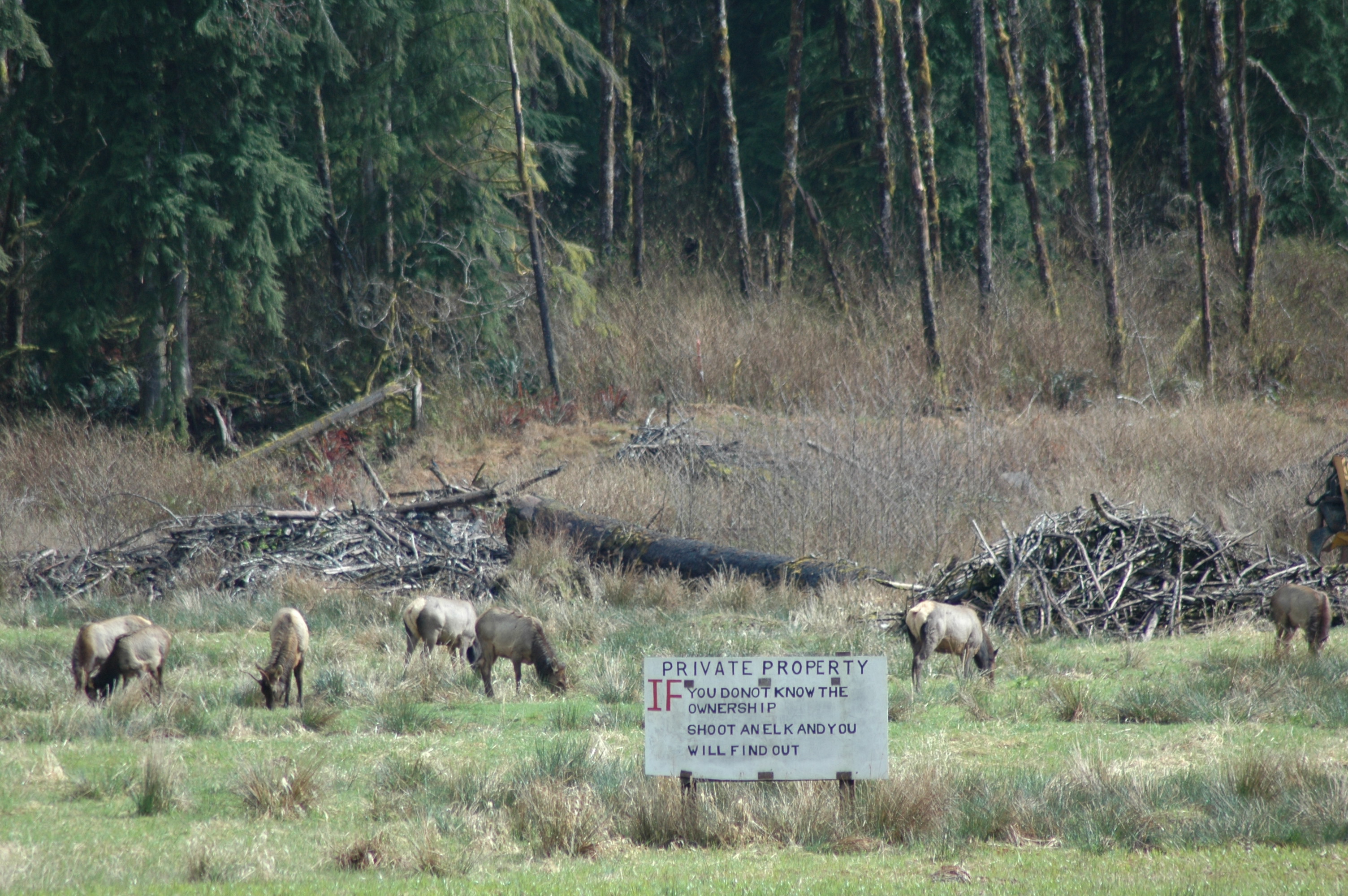
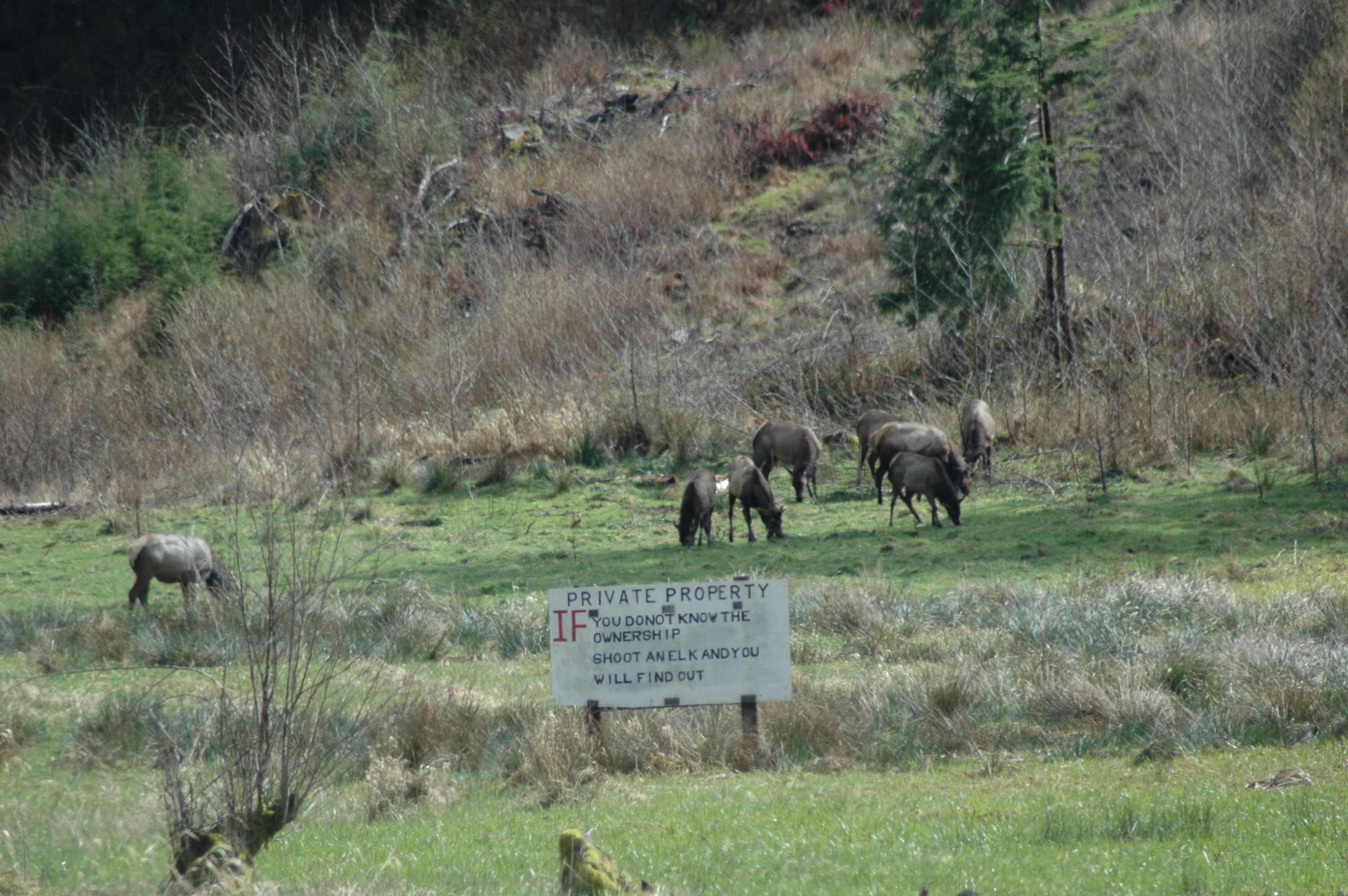
I know that some people have a problem with “Private Property” signs, but there’s no reason to suggest that property owners should not mark their land with “No Hunting” signs. I’d like to see all unnecessary fences taken down or modified so wildlife can pass safely through. But a well-marked piece of private land can serve as a de-facto refuge for our wildlife neighbors—as long as said landowner is not himself a hunter.

Here are some signs I’d like to see more of…DSC_0017

DSC_0026

and of course, this one

734503_607608749267357_1194895074_n

Anti-Hunt Q and A

The following are my answers to interview questions posed by a journalism student who so was moved after reading my book, Exposing the Big Game: Living Targets of a Dying Sport, that she decided to undertake a project on the psychology of hunting…

1. Have you come into contact with anyone (especially hunters) who has stated that your book changed their view on the game of hunting and the mistreatment of animals?

Answer: Yes, I’ve heard from several non-hunters who have thanked me for exposing the truth about big game hunting. No longer ambivalent about the unnecessary cruelty of sport hunting, they are now active anti-hunters.

But I have yet to meet a hunter introspective enough to allow anything to change their inbred, imbedded views on killing wildlife.

2. Have you received any ‘backlash’ since publishing this book?

Answer: For what, for urging hunters and trappers to be more compassionate to our fellow beings? No, and they haven’t received any backlash from me for tormenting and killing my friends the animals (aside from my book and blog).

Deep down hunters and trappers know what they are doing is wrong; they just hope we’ll continue to let them get away with it.

3. Are you friends with anyone who avidly hunts? Do any of your family members hunt?

Answer: Unfortunately.

4. In the beginning of the book, it states that you have always been a man of compassion towards animals. Why do you think that spreading the word of being kind to animals is important?

Answer: I’m going to answer that question with another question, a couple of other questions, actually: Why did the emancipators think freeing the slaves was important? My grandmother and great aunts were suffragettes, why did they fight for women’s right to vote? Why did people push to ban kiddie porn or crush videos? Why? Because speaking out for innocent victims of exploitation is the right thing to do.

5. What do you say to those who hunt for food and not sport? Many hunters believe that it is more humane to hunt for food than it is to buy meat from a slaughter house.

Answer: First of all, most people who claim to hunt for food not sport are living far above the poverty level. They are not starving and they don’t need to kill animals to survive. They do it because they want to—it’s “fun.” In many cases they spend far more on the hunt than it would cost them to get their food from the markets where they buy their beer, tobacco and Twinkies. They can boast all they want about “using the meat”—hell, even wolf or cougar hunters will claim that they plan to eat what they kill—but they’re just trying to make their trophy hunt seem palatable to the unwary public.

And the claim that hunting is more humane than what cows go through is exaggerated at best. While there’s absolutely no denying that what cows at the slaughterhouse are forced to endure is appallingly cruel, hunters conveniently forget that the animals they stalk are stressed out from the time they hear the first gunshots fired by someone sighting in their rifles for hunting season.

The myth of that “good clean shot” is a grim fairytale in most every case. Hunters expect to have to track down and finish off an animal they’ve shot or impaled with an arrow. In reality, “game” animals probably suffer longer than those at the slaughterhouse (though this is in no way meant to condone factory farming).

When it comes right down to it, hunters don’t give a shit about being humane, or they’d quit eating meat and join the millions of people who are living proof that human beings can live longer, healthier lives if they swear off flesh foods and get their nutrients from the plant kingdom.

Text and Wildlife Photography ©Jim Robertson, 2013. All Rights Reserved

Text and Wildlife Photography ©Jim Robertson, 2013. All Rights Reserved

Hope for a Humane and Environmentally Sane Future

The following is my review of a new book published by Earth Books

Often, over the years, I’ve thought about taking on the task of chronicling the ways in which humankind is destroying the Earth, and how we need to change to survive as a species. Now, equally sensing the dire need for such a book, long-time animal activist, Will Anderson, has risen to the challenge with his new book, This is Hope: Green Vegans and the New Human Ecology.

I have to admit, the title, This is Hope, sounded to me like it could be almost, well, overly-hopeful. But in fact the book takes a hard, realistic look at where we’re headed if we don’t make some major changes in our destructive ways, our eating habits and our view of non-human animals as commodities. For instance, Anderson doesn’t buy into the increasingly popular fallacy that hunting can somehow be sustainable in this rapidly growing human world. Not only does he take on hunting, and those groups who promote it, he employs the term “neo-predation” for the myriad of ways in which the modern world disrupts biodiversity—to the peril of all who share the Earth.

And the author does not fall prey to the politically correct notion that human overpopulation is an overstated myth. Instead we learn that as environmentally-conscious, green vegans who truly want to see a future for all life on the planet, addressing and reversing our overpopulation is a must.

If we are willing to embrace Will Anderson’s prescription for a “new human ecology,” there truly could be hope for the future. As Anderson puts it, “The new human ecology can be the transformation of human behavior all of Earth has waited for.” Some of the positive results he foresees from this transformation include:

• Vast landscapes subjected to grazing and growing food for livestock are released from animal agriculture.
• Some of that land will be banked and rotated with other croplands. Soil erosion and pollution are sharply reduced. Sustainably grown, organic food becomes more reliably available.
• Conceivably, fewer people on Earth and the efficiency of botanical agriculture will allow lower food prices and raise food availability.
• We will reduce our greenhouse gas emissions immediately by 18% to 51%.
• Other human pressures on ecosystems decrease and allow them to trend toward recovery.
• Vegan diets will create better human health. This should result in lower health care costs.
• We stop the intentional impregnation of billions of domesticated individuals from other species, the torment of their enslavement and denial of their innate needs, and their early, violent deaths.
• The science and implementation of wildlife and habitat management is transformed…control by the small minority of people who hunt, fish and trap is ended.
• Livestock fences will be removed. Wild herds of indigenous wildlife can reoccupy habitat and have room to migrate long distances. Ecosystem keystone species like black-tailed prairie dogs will not be cruelly persecuted on behalf of animal agriculture.
• There are no new ghost nets, those fishing nets that break away from vessels, drift with oceanic currents, and continue to trap fish, turtles, marine birds, and marine mammals.
• We stop bottom trawling that destroys sea bed marine ecosystems. Since vegan human ecology does not require fish, it ends the trashing of millions of tons of unwanted bycatch (non-targeted species), eliminates shark-finning that is decimating shark populations, stops the killing of octopi, and ends the drowning of dolphins and turtles.
• We finally create a moral code of behavior that is based upon biocentric innate value; it is more consistently applied to all individuals of all species and ecosystems.

Photograph ©Jim Robertson

Photograph ©Jim Robertson

Hunting Needs to be Part of the Gun Debate

The following OP-ED is by Anne Muller of Wildwatch, a division of the Committee to Abolish Sport Hunting

90823_Pred_ATACS

Hunting Needs to be Part of the Gun Debate:
Taking a Hard Look at the Pittman-Robertson Act

Hunting as a part of the gun debate appears to be inconsistent with the current goal of the White House, which is to fracture the monolithic power of the NRA. The common sense connection between hunting and violence has not merely been side-stepped, but the use of firearms to hunt has the explicit imprimatur of this administration. Although there is clearly a concerted effort to protect hunting from proposed gun control laws, the subject needs to be examined for its connection to the government’s role as both beneficiary and motivator of the use of firearms.

In a New York Times op-ed, Selling a New Generation on Guns, the author, Mike McIntire, stated that the US Fish and Wildlife Service (FWS) financed a study to explore attitudes toward guns in order to counteract the trend of declining hunter recruitment. Strategies were suggested for generating a greater acceptance of guns among children. As the question of why a government entity would have a strong interest in promoting firearms use among children was left unanswered, we would like to fill that gap. Not surprisingly, the reason is financial.

Mandated by the Pittman-Robertson (P-R) Act of 1937, an excise tax was placed on firearms and ammunition. The firearms and ammunition excise tax (FAET) is collected by the Alcohol and Tobacco Trade Bureau (TTB) within the US Department of Treasury. The tax is then turned over to the FWS. Eleven percent is retained by the FWS to cover administrative expenses. The rest is apportioned to all 50 states using a formula based on each state’s hunting license sales and state size. The P-R Act prohibited the taxes from being used for any purpose other than to generate more hunting and shooting opportunities, i.e., more use of firearms and ammunition. A galling aspect of this Act is that, in order to receive their federal share, states must match those funds with 25% from state coffers. Those who celebrate the P-R Act claim that matching funds can come from hunting license sales, but left unsaid is that they can also come from the general fund of the state.

To illustrate how aberrant the P-R excise tax is, let’s compare excise taxes collected on two other well-known products: alcohol and tobacco. Excise taxes on those products may be used for a variety of societal needs: education, health, housing, etc.

If the same government structure and financial mechanism that applies to firearms applied as well to alcohol and tobacco, the following would exist:

There would be two government agencies solely dedicated to the respective sale and use of alcohol and tobacco. They would collect excise taxes for the purpose of creating drinking and smoking opportunities, and pay their employees based on the number of people they motivate to drink and smoke.

They would not share their funds with the public, even with the direct or indirect victims of alcohol or tobacco.

Would we tolerate such government agencies? Not likely. Yet, that is precisely how the FWS and state bureaus of wildlife operate. The use to which the weapons and ammunition are put is irrelevant to the destination of the FAET. That means that firearms and ammunition used in drug-related or other crimes aid hunting and wildlife manipulation for hunting. The massacres at Jonesboro, Columbine, Aurora, Newtown, and thousands of individual murders in the urban areas of our country have, in fact, benefited wildlife management agencies. How can murder with a firearm and ammunition whose excise taxes pay only for wildlife management be justified? Are the victims merely “collateral damage”?

The FWS and the firearms industry are focused on youth hunting. Their studies have concluded that placing firearms in the hands of children will hook them on using weapons, thus ensuring sales well into the future. Mr. McIntire’s op-ed brought to light a suggested strategy for motivating disinclined children to hunt: “peer ambassadors.” In the 1990s, when the drop in recruitment of young people into the “shooting sports” became worrisome to the firearms industry and wildlife managers, hunters used another recruitment tactic that they called the “buddy program.” The industry had determined that the decline of hunting (use of firearms) was partially attributable to a rise in the number of families headed by single moms. Through hunting publications, hunters were encouraged to befriend these women in order to take their kids hunting.

While hunting is touted as a clean-cut pastime that allows rural traditions to be passed from generation to generation, it is actually quite an intimidating experience for those who encounter hunters on their property, have had property damaged, pets and livestock killed, and their children frightened. Rural citizens who wish to keep hunters off their property, or keep them from shooting near their property, are often harassed, abused, and ignored by hunters, while law enforcement officers and local judges too often back up the hunters. In particular, women living alone have been forced to pay fines, and spend time in jail and courts, having been charged with “Hunter Harassment.” Hunter Harassment laws, instigated by the NRA and others, now exist in every state, although they arguably violate the First Amendment.

Those who depend on the sale of firearms and their use are desperate to recruit children into the “shooting sports” to ensure profits and excise taxes well into the future. That is being done although studies have shown that for some there is but a fine line between killing animals and killing people, a line that can and has been crossed.

Recently, it was reported that a SEAL sniper attributed his indifference to killing people to having hunted in his youth. That came to light when he himself was killed by someone with a hunting background. Such news reports indicate and dictate that hunting has to become a part of the debate.

There are many responsible citizens, gun owners and voters among them, who are disgusted with the arrogant perspective that the recreational killing of animals is considered to be a justification for the purchase of firearms and ammunition.

One need not play video games to learn violence. Lessons in violence can be learned as readily from killing animals in the woods. Recently, a live squirrel shooting contest was sponsored by the fire department of Holley, NY. Their flier showed an adorable squirrel with cross-hairs covering his little face. The flier announced that the children who killed the fattest squirrels would win firearms, including a semi-automatic weapon. Who benefits? The firearms industry and wildlife management agencies. Who loses? The children who are taught that killing other living creatures can be fun. In the end, the society loses.

It is simply prudent to keep firearms out of the hands of some adults and certainly out of the hands of all children.

Anne Muller, President

Wildlife Watch Inc.

Committee to Abolish Sport Hunting is a division of Wildlife Watch.

http://www.wildwatch.org

http://www.abolishsporthunting.org

http://www.lohv.org

Who’s the Real Anti?

When it comes to hunting, I’m definitely an “anti.” As I point out in my book, Exposing the Big Game: “Not only am I anti-hunting, I’m avidly anti-trapping, anti-seal clubbing and anti-whaling. For that matter, I’m anti any form of bullying that goes on against the innocents—including humans. I am not an apologist for the wanton inhumanity of hunting in the name of sport, pseudo-subsistence or conservation-by-killing.”

Most of all, I’m pro-wildlife, pro-nature and pro-animal.

If you’re following this blog, you probably feel the same. According to hunters, you’re one of the “antis.” Hunters like to stereotype us all with a negative brush stroke, yet they are the real “antis.”

Hunters are anti-wildlife, anti-wilderness, anti-nature and when it comes down to it, anti-animal. Most of all, they’re anti-competition, i.e., they’re anti-cougar, anti-coyote and unquestionably anti-wolf. Just ask the Idaho Anti-Wolf Coalition, who tried to get an initiative on the ballot in 2008 calling for the removal of “all” of the wolves in their state, “by whatever means necessary.”

Now, you might be thinking, “Surely hunters aren’t always negative; they must be pro-something?” Well, you’d be right—they’re pro-killing, pro-death, and when it comes right down to it, pro-animal cruelty.

Let’s face it, you can’t kill an animal without being cruel; and therein lies the real reason I’m anti-hunting.

Text and Wildlife Photography ©Jim Robertson, 2012. All Rights Reserved

Text and Wildlife Photography ©Jim Robertson, 2012. All Rights Reserved