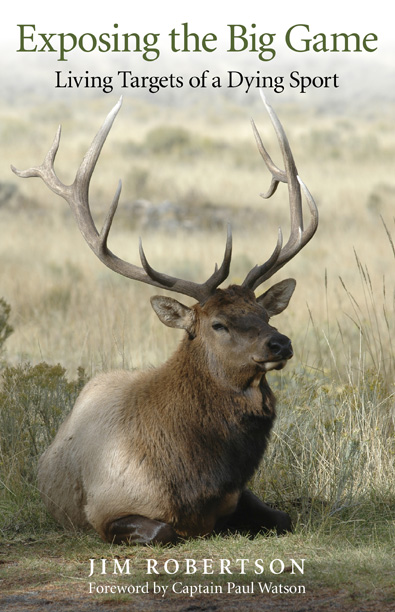
New Review of Exposing the Big Game

Veg News, January-February, 2013 (Thanks, Claudine, for spotting this!):

A September 24, 2012 article in USA Today proclaimed “Hunting, Fishing Rebound in US.” Not so fast. Nature writer and wildlife photographer Jim Robertson would beg to differ, and does, in Exposing the Big Game.

Robertson—along with Sea Shepherd Captain Paul Watson, who penned Big Game’s foreword—puts forth a scathing critique of hunters, whose numbers are now the same as anti-hunting activists, about 5% of the population.

Big Game is a thin though powerful volume, a quick study into all that’s wrong with hunting and hunters. Robertson’s stunning black and white photos grace nearly every page and one would hope that he expand both text and (color) photography into a larger, more robust work. The material is here.

______________

Author’s Note: As the purpose of Exposing the Big Game is to shed new light on the evils of sport hunting, incite outrage and spark a firm resolve to help counter these atrocities worldwide, I decided to go with the current paperback format to keep the purchase price down, in hopes of spreading the word for wildlife as far and wide as possible. My publisher has promised to print a full-color coffee table book, once sales of this edition reach 5,000 copies. We’ve still got a ways to go…

front-cover-low-res6

This Christmas, Show the Hunters that You Care

Judging by the frost on the grass and the ice on the birdbath, it’s time to start thinking about Christmas shopping. This year, your gifts can make a statement—they can show the hunters that you care.

Now don’t get me wrong, I don’t mean you should show hunters that you care about them—no, quite the opposite—I mean you can show the hunters that you care about wildlife. And what better way than purchasing a pro-wildlife/anti-hunting book, like Exposing the Big Game: Living Targets of a Dying Sport?

There’s a common misconception that hunters are the only ones who “care” about wild animals. For example, when I brought some of my framed wildlife photos (such as the trumpeter swan seen here) to a small-town art gallery, the owner said, “Well, you might be able to sell them to a hunter…” My first reaction was an under-the breath “What the hell?” quickly followed by a resolute, “Never mind, I’m not hanging them here.”
I don’t know if it’s a sign of the self-absorbed, economocentric times we live in, but it seems Black Friday is garnering more attention than Thanksgiving these days. Across the country, you’ll find headlines like, “2 seriously hurt as driver plows through crowd of shoppers,” “Massachusetts bargain hunter took home TV, left tot” or “Earlier Black Friday kicks off shopping season.”

That last article reports: “This year’s Black Friday shoppers were split into two distinct groups: those who wanted to fall into a turkey-induced slumber and those who’d rather shop instead.” I’m guessing (hoping, really) that readers of this blog fall into still another category altogether.

The article goes on to say: “Stores typically open in the wee hours of the morning on the day after Thanksgiving that’s named Black Friday because of retail folklore that it’s when merchants turn a profit for the year. But after testing how shoppers would respond to earlier hours last year, stores such as Target and Toys R Us this year opened as early as Thanksgiving evening. That created two separate waves of shoppers.

Lori Chandler, 54, and her husband, Sam, 55, were a part of the early group. By the time they reached the Wal-Mart in Greenville, S.C. early Friday, they had already hit several stores, including Target and Best Buy. In fact, they had been shopping since midnight.

‘It’s a tradition,’ Lori said as she looked at some toys she bought for her four grandchildren….”

I’m sure you get the idea.

You’re probably not the type to camp out in front of Wal-Mart for the best deals on Asian sweatshop-produced, future landfill-clogging plastic trinkets, or you wouldn’t be here reading this post. But don’t worry, you won’t have to stand in line and risk being “plowed through” by some crazed shopper driving a Humvee or lose your “tot” in a crowded superstore while attempting to purchase Exposing the Big Game. You can order copies online from the comfort of your own home. If you’re not a fan of Amazon or Barnes and Noble, feel free to email me at exposingthebiggame@gmail.com for signed copies sent directly to your doorstep. Or you can ask your local “brick and mortar” bookstore (which is more than likely on the verge of going out of business) to order in a copy or copies for you. And of course, Exposing the Big Game is also available in e-book form.

There are around a butcher’s dozen new pro-hunting books on the market this year, while Exposing the Big Game is the only anti-hunting book to come out in decades, and the only one still in print. Don’t let the hunters think you’re indifferent about this issue. Together we can put an end to the absurd misconception that they’re the only ones interested in wildlife. While we don’t have the kind of financial support that the hunting industry gets from the NRA or the Safari Club, here’s our chance to show them that we’re the ones with the passion!

Who Should Read Exposing the Big Game?

Imagine you’re a hunter and you just bought a copy of Exposing the Big Game to add to your collection of books and magazines featuring photos of prize bull elk, beefy bison and scary bears (the kind of animals you objectify and fantasize about one day hanging in your trophy room full of severed heads). This one also includes pictures of “lesser” creatures like prairie dogs and coyotes you find plain ol’ fun to trap or shoot at.

You don’t normally read these books (you’re too busy drooling over the four-legged eye candy to be bothered), but for some reason this one’s burning a hole in your coffee table. So you take a deep breath and summon up the courage to contemplate the text and its meaning. Several of the words are big and beyond you, and you wish you had a dictionary, but eventually you begin to figure out that Exposing the Big Game is more than just a bunch of exposed film featuring the wild animals you think of as “game.”

This book actually has a message and the message is: hunting sucks!

You don’t want to believe it—the notion that animals are individuals rather than resources goes against everything you’ve ever accepted as truth. But reading on, you learn about the lives of those you’ve always conveniently depersonalized. Finally it starts to dawn on you that animals, such as those gazing up at you from these pages, are fellow earthlings with thoughts and feelings of their own. By the time you’ve finished the third chapter your mind is made up to value them for who they are, not what they are. Now your life is changed forever!

Suddenly you’re enlightened and, like the Grinch, your tiny heart grows three sizes that day. The war is over and you realize that the animals were never the enemy after all. You spring up from the sofa, march over to the gun cabinet and grab your rifles, shotguns, traps, bows and arrows. Hauling the whole cache out to the chopping block, you smash the armaments to bits with your splitting maul. Next, you gather up your ammo, orange vest and camouflage outfits and dump ’em down the outhouse hole.

Returning to the book, you now face the animals with a clearer conscience, vowing never to harm them again. You’re determined to educate your hunter friends with your newfound revelations and rush out to buy them all copies of Exposing the Big Game for Christmas…

Or suppose you are a non-hunter, which, considering the national average and the fact that the percentage of hunters is dropping daily, is more than likely. Avid hunters comprise less than 5 percent of Americans, while you non-hunters make up approximately 90 percent, and altruistically avid anti-hunters represent an additional 5 percent of the population. For you, this book will shed new light on the evils of sport hunting, incite outrage and spark a firm resolve to help counter these atrocities.

And if you’re one of the magnanimous 5 percent—to whom this book is dedicated—who have devoted your very existence to advocating for justice by challenging society’s pervasive double standard regarding the value of human versus nonhuman life, the photos of animals at peace in the wild will provide a much needed break from the stress and sadness that living with your eyes open can sometimes bring on. As a special treat cooked up just for your enjoyment, a steaming cauldron of scalding satire ladled lavishly about will serve as chik’n soup for your anti-hunter’s soul.

So, who should read Exposing the Big Game? Any hunter who hasn’t smashed his weapons with a splitting maul…or any non-hunter who isn’t yet comfortable taking a stand as an anti-hunter. The rest of you can sit back and enjoy the pretty pictures.

______________________________________________________________

The preceding was an excerpt from the book, Exposing the Big Game: Living Targets of a Dying Sport.

Celebrate National Anti-Hunting Day

Forget Watergate, the worst crime committed by President Nixon was his proclamation commemorating the first annual National Hunting and Fishing Day in 1972. Since then all the successive presidents have dutifully followed suit, including Barack Obama, who has declared September 22, 2012, yet another National Hunting and Fishing Day (despite a steady slide in hunter participation since the ‘70s and a Change.org petition urging the President to end the misguided tradition).

In the spirit of fairness and equality, I, as the self-appointed dis-honorary president of the Cleveland Amory Memorial Hunt the Hunters Hunt Club, by virtue of the authority vested in me (by myself and I), hereby declare September 23rd, 2012, to be the first annual National Anti-Hunting and Fishing Day.

To commemorate this sacred occasion, a family-oriented affair will offer fun and educational hands-on activities that every non-hunter can enjoy. It will be a great way to introduce young people and newcomers to the pursuit of anti-hunting, while teaching them about the important role that anti-hunting plays in true wildlife protection.

A lively outdoor festival (held on an anti-hunting compound at an undisclosed location) will feature such activities as a “trap-shoot” (or, if you don’t have a gun, a trap-smash-with-a-heavy-object) event, and time trials to see who can dismantle duck blinds, tree stands and bait stations the fastest.

If you happen to have any old Ted Nugent albums or CDs that you bought before knowing what a rabid, frothing bowhunter he would turn out to be, bring them, along with a shotgun and we’ll use them in lieu of clay pigeons for a traditional skeet shoot.

Sign up for workshops on how to identify plain-clothed hunters during the off-season, and how to avoid them. You can also learn the best method to secure a freshly harvested trophy hunter to the hood or roof of your car, along with the fine art of flagrantly flaunting your hunter harvest for the benefit of your favorably-impressed fellow anti-sportsman or anti-sportswoman.

There will be fishing pole and arrow-breaking contests and a Tarzan movie marathon (sponsored by the NBRA*) where you’ll witness Tarzan-tested techniques for bending poachers’ and trophy hunters’ rifles around trees (*naturally, NBRA stands for the National Bent Rifle Association). And vegan body-builders will be on hand throughout the day to demonstrate their prowess at tearing Cabela’s catalogs in half.

Kids, be sure to bring your pink and purple paints for the color-over-the-camouflage-clothing contest. Other festivities for the young and young at heart include: pin the arrow on the bowhunter, throwing pies at the cammo-clad clown and the ever-popular bashing the life-sized, orange-vested nimrod piñata.

Taking Trophies

“You’re the last one there…you feel the last bit of breath leaving their body. You’re looking into their eyes and basically, a person in that situation is God! You then possess them and they shall forever be a part of you. And the grounds where you killed them become sacred to you and you will always be drawn back to them.”

The words of a hunter triumphantly reliving his conquest?

Well, if by hunter you mean a person who stalks and kills an innocent, unarmed victim, then yes.

The quote is from serial killer Ted Bundy, as he sat on death row and mused over his murders to the authors of The Only Living Witness. It seems that, whether the perpetrator is engaged in a sport hunt or a serial kill, the mentality is roughly the same.

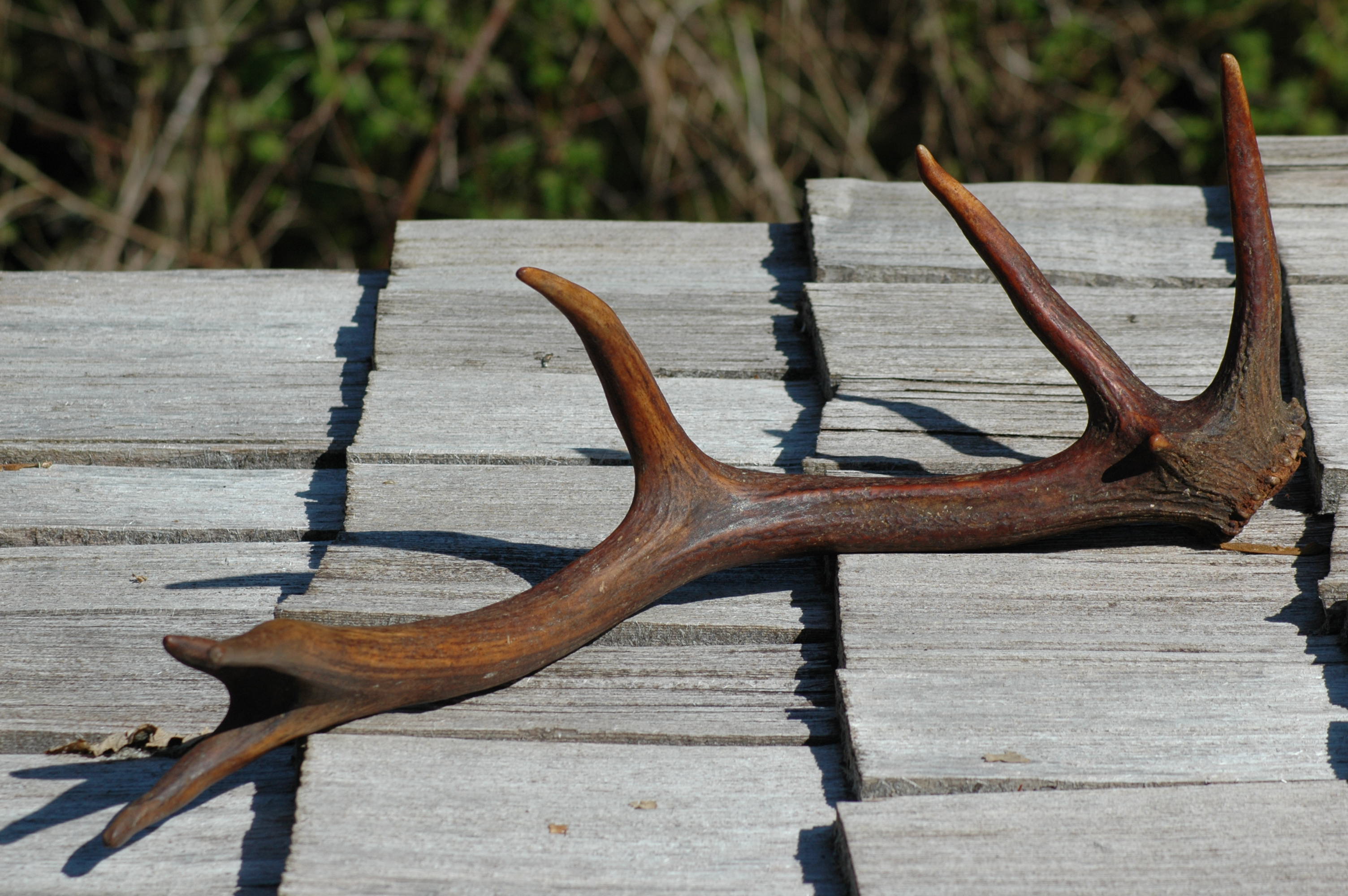
Try as I might, it’s a mindset I really can’t relate to. But this quote helped answer a question I’ve been pondering since I came across a freshly shed elk antler on a hike in the forest behind my place. It was thrilling to find a tangible sign of such a proud and noble soul, willingly discarded to make way for this year’s even larger adornment. I’ve experienced a similar feeling of exhilaration many times before when capturing images of wildlife with my camera. The key component for me is the knowledge that the animal is still roaming free.

Image

I hung the keepsake over my doorway. It serves as a reminder that the bull elk made it through another season alive. Conversely, when a hunter proudly displays a “rack” of antlers, they are the result of a killan animal’s life was taken so they could claim their trophy.

So why can’t hunters be satisfied with finding a naturally shed horn?

Clearly, they are after more than just a souvenir or symbol of a beautiful living creature. There’s something sinister about their motive—something akin to what drives a trophy-taking serial killer.

For the likes of Ted Bundy, a memento such as a pair of panties or a Polaroid photo helps them to recall the heightened state of arousal they felt while slaying their prey. As with the serial killer, the ultimate goal of a hunter is to play God over a helpless victim and to possess not just their image or their antler, but their very being.

Speak Up for Wildlife During National Park Week

On the twentieth day of April, in the year of our Lord two thousand twelve, President Obama declared this week National Park Week. Ironically, during this very week, the U.S. Senate is considering a bill that would allow hunting on our national parks! H.R. 4089, the so-called “Sportsmen’s Heritage Act of 2012,” passed the House of Representatives on April 17th and is now with the Senate. Once again the fate of our lands and waters—and the life that depends on them—has been cast into doubt. To paraphrase the president’s proclamation, as Americans and as inhabitants of this one small planet, it is up to us to preserve our national heritage for the generations (human and non-nonhuman alike) to come.

Lumped in with the “Sportsmen’s” Act are such abhorrent offerings as the Recreational Shooting Protection Act, which requires National Monument land under BLM’s jurisdiction to be open to access and use for “recreational” shooting (ground squirrels, and prairie dogs beware), and the Polar Bear “Conservation and Fairness” Act of 2012, which would amend the Marine Mammal Protection Act of 1972 to direct the Secretary of the Interior to issue a permit for the importation of any polar bear carcass killed during a sport hunt in Canada.

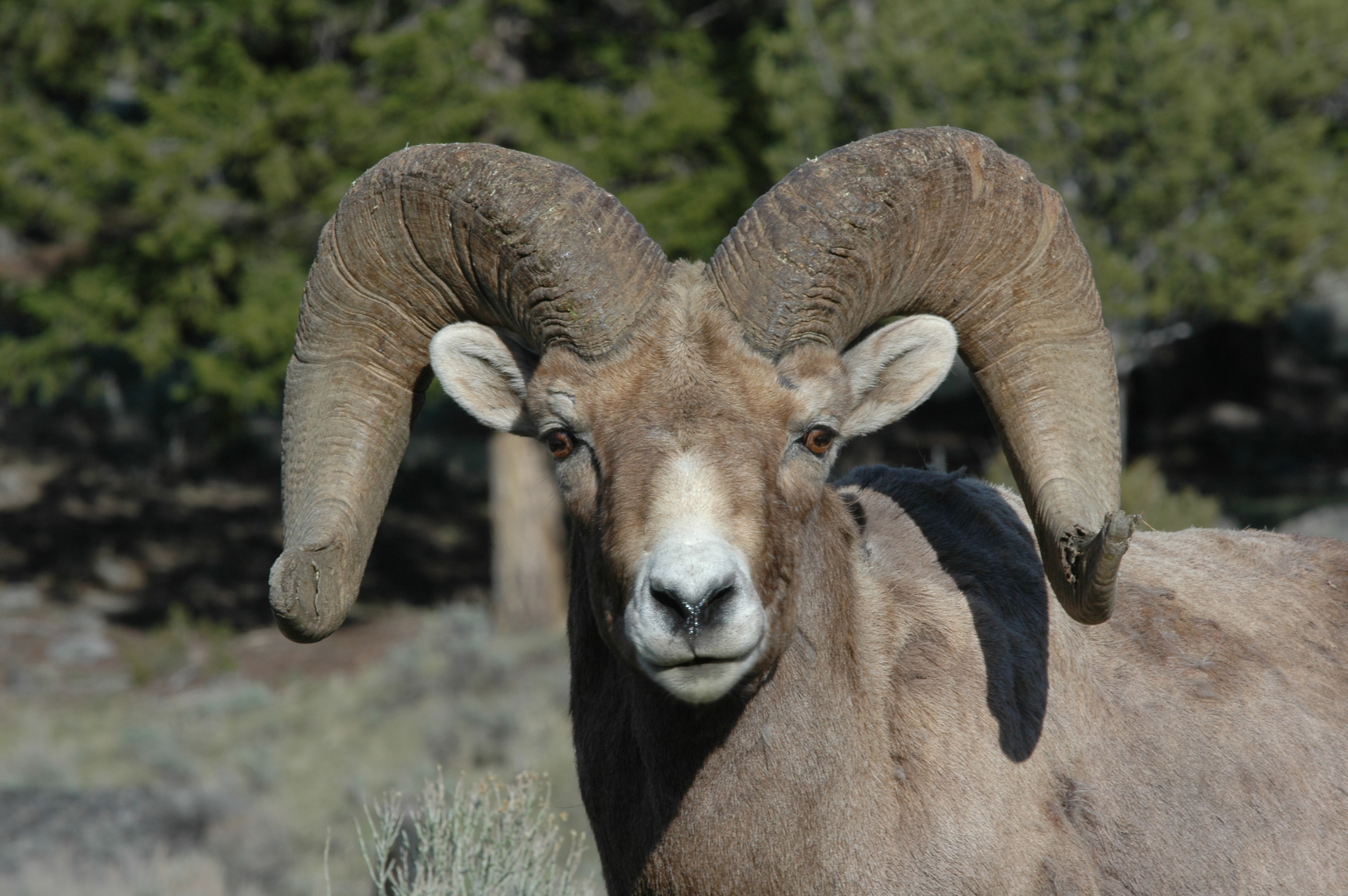
As long as they remain off-limits to hunting, our national parks are some of the best places for viewing and photographing wildlife without causing undue stress. Since they’ve learned they’re safe within park boundaries, animals are not so shy and distrustful of human presence—as long as said human maintains a polite distance. And because they’re protected, park moose, elk or bighorn sheep are allowed to grow the kind of impressive antlers or horns now rare in hunted populations.

Image

We can’t let the “Sportsmen’s Heritage Act” undermine the serenity of our last few protected places. Please contact your Senator and urge them to oppose H.R. 4089:  https://secure.humanesociety.org/site/Advocacy?cmd=display&page=UserAction&id=5507&s_src=shareonfb

Vegans—Not Hunters—Are the Best Environmentalists

You’ve probably heard the cliché, “Every day is Earth Day to an environmentalist.” Well, it’s true actually, at least to a true environmentalist—the kind of person who makes daily choices based solely on their concern for our planet and the life it supports. The gal, for example, who chooses not to eat farmed animals because of the enormous amount of abuse (not to mention gargantuan carbon footprint) inherent in those Styrofoam and shrink-wrapped packages that clog the sprawling meat isles across the country; or the guy who does not hunt because wild animals are a part of the living Earth he loves and respects.

Eager to look like the sensible ones, conventional environmentalists often assume the wobbly, half-hearted stance of dismissing, rather than embracing, the animal rights movement. On the other hand, dedicated animal rights advocates don’t shy away from calling themselves environmentalists. They know that only by adopting a vegan lifestyle can one truly be an environmentalist. Vegans understand that the Earth cannot sustain billions upon billions of hungry bipedal carnivores and they recognize that the surest way to ease suffering for all is to eat lower on the food chain—in keeping with our proven primate heritage.

Absurd as it sounds to folks who really do care for the planet, certain atypically adroit sportsmen have been caught spreading the dogma that gun-toting Bambi-slayers actually have a “love for the land” and a concern for the animals they kill—that murdering animals is a wholesome Earth Day activity. Proselytizing hunter-holy-men try to downplay the obvious lethal impacts hunting has on individual animals and entire populations, wielding one of the weariest—and wackiest—of all clichés, “Hunters are the best environmentalists,” despite well-documented proof that hunting has been—and continues to be—a direct cause of extinction for untold species throughout the world.

Over-zealous hunters completely eradicated the once unimaginably abundant passenger pigeon and the Eskimo curlew (both killed en masse and sold by the cartload for pennies apiece), the Carolina parakeet (the only species of parrot native to the US) and the great auk (a flightless, North Atlantic answer to the penguin).

Hunting is the antithesis of environmentalism. The very notion of the gas-guzzling, beer-can-tossing hunter as an environmentalist is laughable even to them. Show me a hunter who is not antagonistic toward the rights of animals and I’ll show you a rare bird indeed.

     ____________________________________________________

Portions of this blog were based on excerpts from the book, Exposing the Big Game: Living Targets of a Dying Sport: http://www.earth-books.net/books/exposing-the-big-game

Image