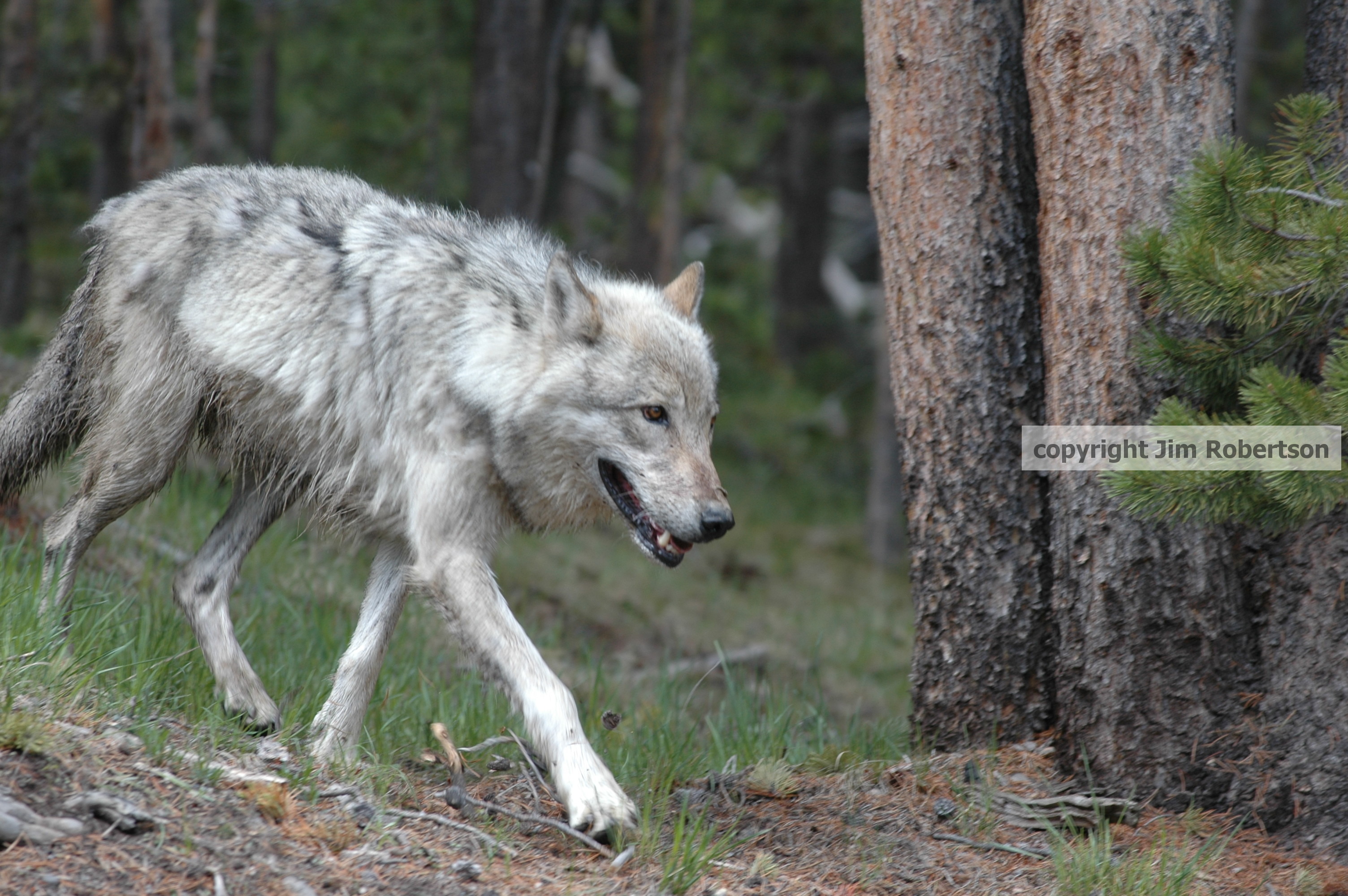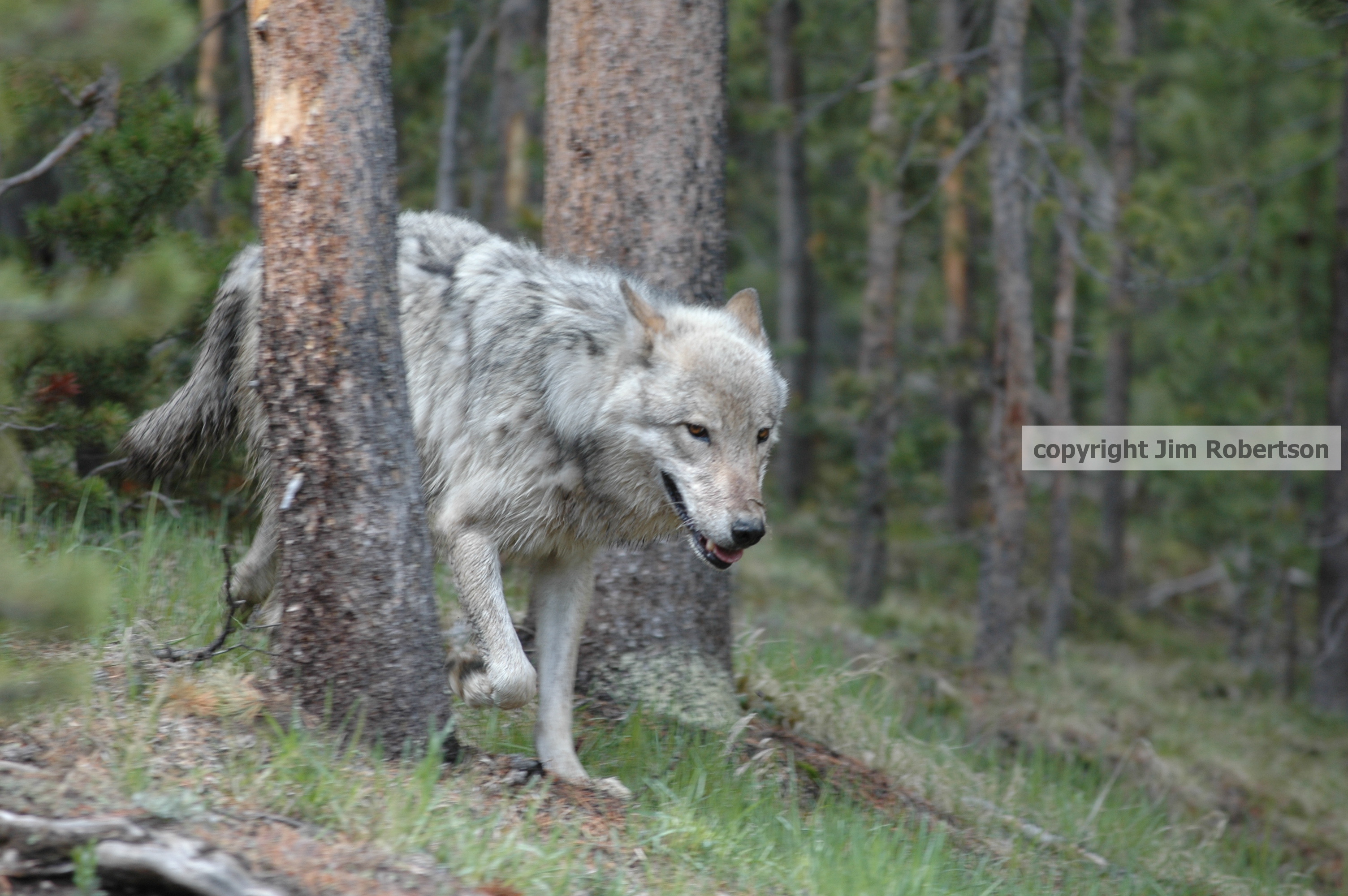
Why Wolves Need ESA Protection

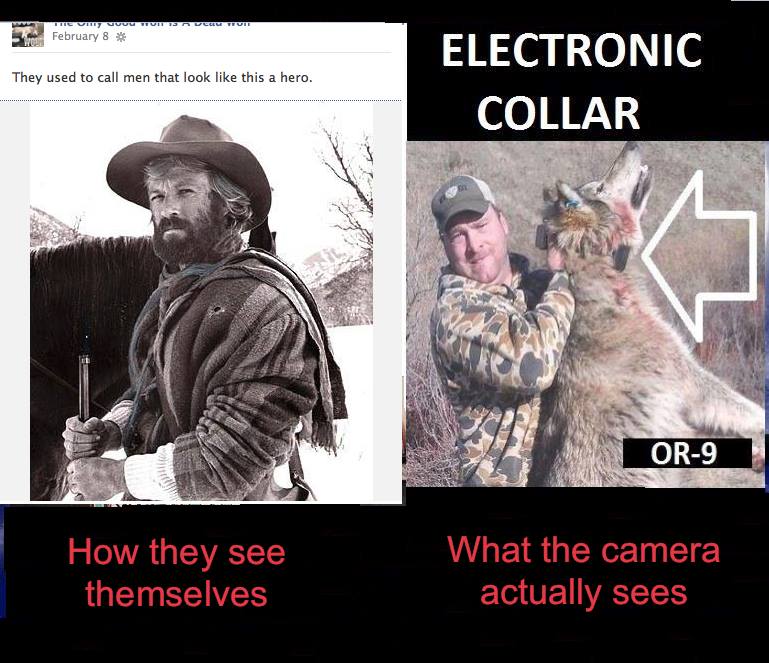
1509686_1453770291507881_1955386015_n

The sad story of OR9 is a prime example of why wolves need to remain on the federal Endangered Species list…

Sibling of famous OR-7 wolf killed by hunter in Idaho

Published: Friday, February 10, 2012

JOSEPH — A sibling of Oregon’s world-famous wolf OR-7 has been shot and killed in Idaho by a hunter whose wolf tag was no longer valid.

“What an amazing difference between how this wolf’s story evolved compared to his brother, OR-7, who is now in California and is an international celebrity,” said Suzanne Stone of Boise, spokeswoman for the 530,000-member Defenders of Wildlife environmental group.

The radio-collared male wolf identified as OR-9 was killed Feb. 2 near a cattle feedlot and winter calving area north of Emmett, between Boise and the Snake River, said Mike Keckler, spokesman for the Idaho Department of Fish and Game.

Like his famous brother, OR-9 was born into the Imnaha pack near the northeastern Oregon town of Joseph. He was collared Feb. 26, 2011, in the Grouse Creek area east of Joseph when he was about 1 1/2 years old and weighed 90 pounds then.

OR-9 departed Oregon in July two months before OR-7 began his epic 730-mile trek to Crater Lake and south into California earlier this winter. OR-9 headed east, swam the Snake River into Idaho at Brownlee Reservoir and traveled south toward Emmett.

His travel destination turned out to be dangerous. Unlike the Joseph area, where gray wolves are protected under Oregon’s Endangered Species Act, Idaho’s wolves are classified as big game animals and subject to regulated hunting rules.
More…http://www.oregonlive.com/pacific-northwest-news/index.ssf/2012/02/sibling_of_famous_or-7_wolf_ki.html

From Defenders of Wildlife:
You didn’t support it. We didn’t support it. Now it’s been shown that the best available science doesn’t support the plan to delist nearly all gray wolves in the Lower 48 either.

ACT NOW: Demand that Secretary Jewell abandon this reckless delisting proposal and allow for the full recovery of gray wolves!

An independent peer review board, commissioned to assess the quality and adequacy of the science underlying the U.S. Fish and Wildlife’s (FWS) delisting plan for gray wolves, just released their unanimous decision: that the proposal to strip gray wolves of Endangered Species Act Protection is not based on the best available science and contains numerous omissions and errors.

This is a major development in our efforts to stop this irresponsible proposal from going through.

Please speak out! Urge Secretary Jewell to direct the Fish and Wildlife Service to withdraw this proposal immediately!

Now that it’s been confirmed that this proposed delisting is clearly not based on the best available science, we are left wondering why FWS wants to turn its back on wolves.

In states like Idaho, we continue to see what happens when wolves are prematurely stripped of federal protection and left to be managed by states with deadly anti-wolf agenda’s – just recently they announced a proposal to kill off as many as 450 wolves statewide!

Wolves now serve as a scapegoat for anti-government extremists with a political agenda – and these groups will spare no expense to try and derail wolf conservation in America. We simply can’t allow politics and private interests to trump science – it’s irresponsible and unacceptable.
The Time to be Bold is Now

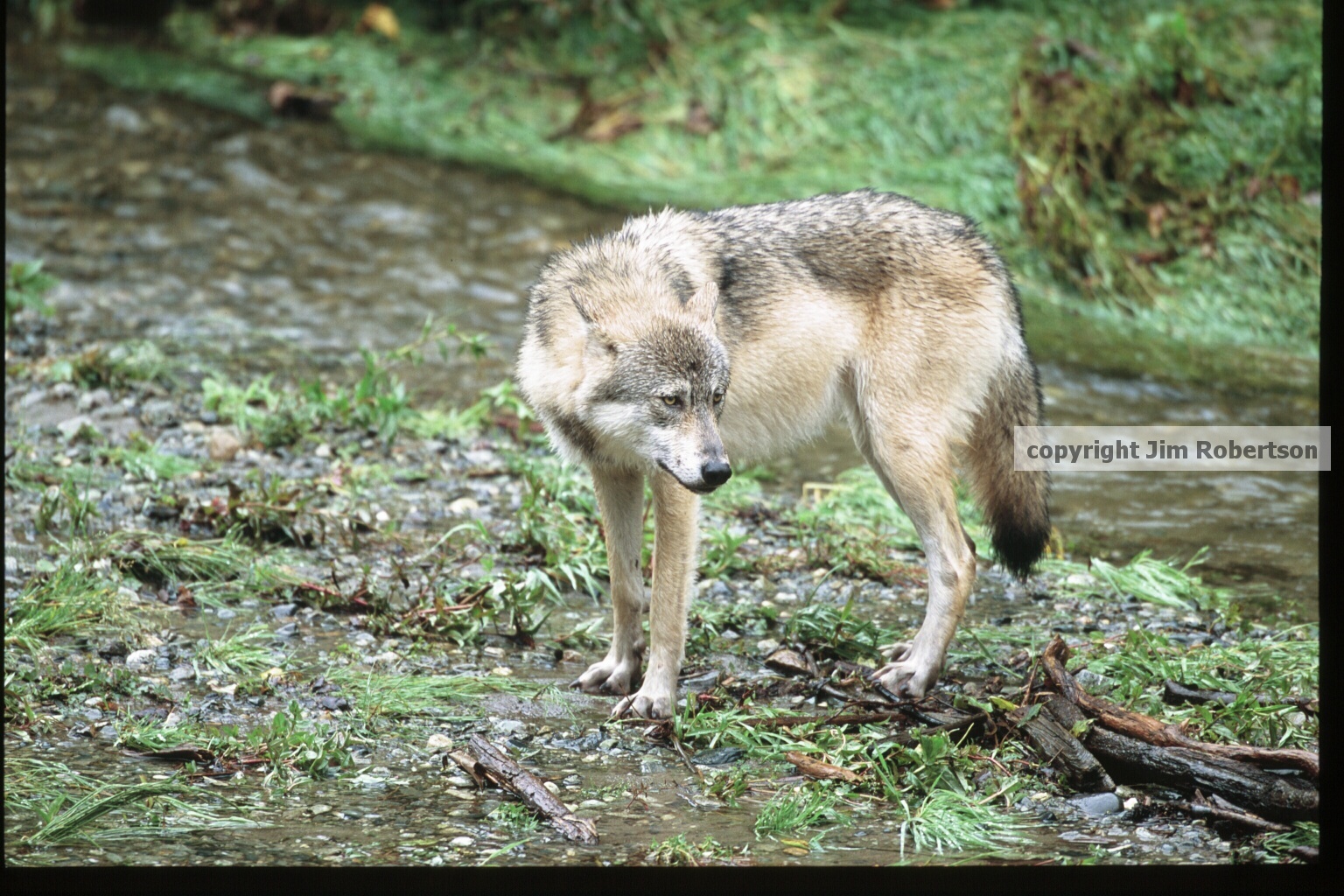
copyrighted wolf in river

The Time to be Bold is Now

By Brett Haverstick On February 8, 2014

Over the years, I have come to realize that the current wildlife management model in America, at the federal level, and particularly, the state level, is broken. The system is such, in which, politics trumps the best-available science, the special interest-minority overwhelms the democratic-majority and the almighty dollar is more powerful than ethics, heritage and legacy. Can this be found throughout the American political landscape? Of course, the answer is yes. But when applied to the current wolf slaughter taking place in the West, and in the Great Lakes, it fits perfectly. In fact, it embodies it.

During my brief time working in the conservation community, I have sadly concluded that both grassroots and national conservation groups, and every-day citizens, are limited to the degree, in which, they can enforce public lands laws, ensure that the best-available science is used and entrust that public sentiment is reflected in wildlife policy and management decisions. Recent examples of this include–with all, unfortunately, taking place in Idaho–are the Wolf-Coyote Derby in Salmon, the killing of two wolf packs in the Frank-Church River of No Return Wilderness by a 21st Century bounty hunter and the efforts of Governor C.L. “Butch” Otter to launch a predominantly tax-payer funded, $2-million dollar independent wolf control board to wipe out another 500-grey wolves. If this were to occur, wolves would be reduced to the bare-minimum of 150-wolves in Idaho (federally mandated), would not be able to fulfill their ecological niche, and most importantly, could be on the precipice of yet, another extinction.

The conservation community, and the American people at-large, is now approaching the crossroads. Do we continue to take the band-aid approach (attending public meetings, issuing action alerts, circulating petitions, and filing appeals/lawsuits) or do we step out-of-the-box and confront the root causes of the problem? While some may respectfully disagree with me, or question the feasibility of such a challenge, I advocate for the latter.

So what solutions do I offer? The 5 Keys to Reforming Wildlife Management in America, are as follows:
1.Restructuring the way state Fish & Game departments operate. Politics: western governors appoint agency commissioners, which essentially, tell the state departments what to do. This is cronyism at its worst. Economics: state departments are mostly funded by the sale of hunting/fishing tags or permits. These agencies are bound into serving the interest of “sportsmen” because it’s the hand that feeds them. Modern funding mechanisms, the application of best-available science and genuine public involvement are sorely lacking in these institutions and it must be addressed. Another option would be to empower the federal government to manage wildlife on federal public lands.
2.Removing grazing from all federal public lands. The “management” or “control” of native wildlife to benefit the livestock industry is ground zero. It is also well documented the damage that grazing causes when livestock infests wildlands. Livestock are non-native and largely responsible for soil compaction, a decrease in water retention and aquifer recharge, erosion, destruction of wetlands and riparian areas, flooding and a net-loss of biodiversity. Grazing enables invasive plant species to proliferate, which greatly affects the West’s historic fire regime.
3.Abolishing Wildlife Services. Hidden within the US Department of Agriculture, is a rogue agency that is essentially the wildlife killing-arm of the federal government. For over 100-years, this federal tax-payer supported agency has largely worked on behalf of the livestock industry and is responsible for the death of tens-of millions of native wildlife. Methods of killing include trapping, poisoning and aerial gunning. Conservation efforts are currently culminating into a potential Congressional investigation of this corrupt agency.
4.Banning trapping/snaring on all federal public lands. We must evolve as a society and move away from this barbaric, unethical, cruel and tortuous method(s) of killing native wildlife. Leg-hold traps, conibear traps and other devices are indiscriminate killers. Over the past couple years, there has been an increase in the number of dogs caught/killed by traps when recreating with their owners on public lands. When is an adult or child going to step into a leg-hold or body-gripping trap? Some states currently require individuals to check their traps every 72-hours, while other states only recommend that trappers check them, at all.
5.No killing of predators, except for extreme circumstances. For example, an aggressive and/or habituated bear may need to be killed after non-lethal measures have failed. Otherwise, non-lethal measures should be implemented in rare instances where there are actual human/predator conflicts. The best available science suggests that predators, including wolves, are a self-regulating species. In other words, predators don’t overpopulate. Instead, their populations naturally fluctuate, as do prey or ungulate populations. We need to better understand and embrace the trophic cascade effect predators have within ecosystems.

How do we take that ever-so-important first step, you may ask? We embark on this journey, together, on June 28 – 29, 2014 at Arch Park in Gardiner, Montana.

Speak for Wolves: Yellowstone 2014 is an opportunity for the American people to unite and demand wildlife management reform. It’s about taking a critical step towards stopping the grey wolf slaughter. It’s about hope, our collective-future and restoring our national heritage and legacy. The weekend-long event is family friendly and will feature prominent speakers, live music, education and outreach booths, children’s activities, food and drink vendors, video production crews and the screening of wildlife documentaries.

On June 28-29, 2014, Americans from all walks-of-life will converge at Arch Park in Gardiner, Montana to tell the government we need to reform wildlife management, at both the state and federal level. With your support and participation, this will be the event of the year in the northern Rockies. Together, we can make history and embark on restoring our wild national heritage. The time to be bold is now.

Bill to Fund Killing up to 500 Wolves Survives Committee

http://magicvalley.com/news/local/govt-and-politics/bill-to-fund-killing-up-to-wolves-survives-committee/article_1dbf6eec-87dd-11e3-bbcb-0019bb2963f4.html

January 28, 2014
By Kimberlee Kruesi –

BOISE • Gov. C.L. “Butch” Otter’s proposed $2 million fund to kill as many as 500 wolves barely passed its preliminary vetting Monday by the House Resources and Conservation Committee.

Committee members quizzed sponsors state Sen. Bert Brackett, R-Rogerson, and Rep. Marc Gibbs, R-Grace, on the effectiveness of creating a separate fund — which would come with a five-member oversight board — when the state already funds a predator damage board.

Bracket and Gibbs responded that the proposed expense would keep the focus on wolves instead of splitting resources on the state’s Animal Damage Control Board.

Federal support to control wolves will stop in 2016, Brackett said. In Fiscal Year 2013, the federal government provided $650,000 of the state’s $1.4 million wolf management budget.

If the bill passes, the $2 million would be a one-time appropriation with the livestock industry and hunting license fees contributing $110,000 each year.

“The priority of this whole effort is to keep the wolves delisted,” Brackett said.

Idaho’s wolves were taken off the endangered species list in 2011. Today, the state’s wolf population is estimated to be around 680 animals, according to the Idaho Department of Fish and Game. If it falls below 150, the species will be once more classified as endangered by federal regulators.

The committee repeatedly questioned the need for two boards dedicated to killing predator animals that cause damage to livestock or Idaho’s elk population.

“How is this a more cost-effective approach to start a new board than to put a little more money into Idaho Fish and Game?” asked state Rep. Illan Rubel, D-Boise.

Gibbs countered that a separate board allows the state to be flexible.

The new wolf fund would not pay for livestock killed by wolves but to kill wolves that cause damage, Gibbs said.

“There are no new ways to control wolves being projected or being created by this bill,” Gibbs said. “They are simply subject to the tools we have today, which is sport hunting, trapping and aerial gunning.”

The committee voted 9-8 to move the legislation forward, with the chairman initially declaring the bill failed before Gibbs speaking out he hadn’t voted and provided the “yes” needed for the bill to be printed.

This is the second consecutive year lawmakers have tried to secure funding dedicated wolf control. Last year, Otter vetoed a bill that would have diverted money from Fish and Game to a wolf management fund. The bill was sponsored by Rep. Judy Boyle, R-Midvale, who voted against Brackett’s and Gibbs’ proposal.

Boyle said committee recommendations from the summer of 2013 supported added money to the Animal Damage Control Board for wolf damage.

“I feel like this is a breach of contract of what was promised in that committee,” she said.

Brackett said that while a committee may have submitted recommendations, their bill was based on what the governor wanted.

Idaho’s wolf control management strategies have received criticisms recently after Fish and Game hired a trapper for the first time to kill two packs in the Middle Fork of the Salmon River.

Wolf activists also spoke out against Idaho’s elk management plan during a recent public hearing updating the document.

copyrighted wolf in river

Never Mind, Idaho Does Suck–Worse Than Ever

[Drop those champagne glasses, Idaho doesn’t deserve praise just yet. Although an Idaho judge decided to halt the slaughter of two packs in the Frank Church wilderness area, some of their lawmakers won’t be satisfied until they’ve killed most of the wolves in the rest of the state!!]…

http://www.nbcmontana.com/news/lawmakers-2m-aimed-to-kill-more-than-500-wolves/24142924

Lawmakers: $2M aimed to kill more than 500 wolves

             Associated Press
POSTED: 3:29 PM Jan 27 2014

BOISE, Idaho –

Republicans promoting Gov. C.L. “Butch” Otter’s proposed $2 million fund to kill wolves say they hope the cash helps eliminate more than 500 of the predators in Idaho, reducing numbers to 150 animals in 15 packs.

Rep. Marc Gibbs of Grace and Sen. Bert Brackett of Rogerson Monday told the House Resources and Conservation Committee the cash set aside with Otter’s proposal will bolster Idaho’s predator arsenal.

Idaho now has about 680 wolves, according to state Department of Fish and Game estimates.

Brackett says the priority is to keep wolves delisted, even with these proposed killings.

He said provided Idaho still has 150 wolves – the minimum required in a 2002 plan approved by the Idaho Legislature – “we’ll have a defensible line of defense” against renewed federal protections.

copyrighted Hayden wolf walking

With 9 wolves now dead, Fish and Game meeting provides outlet for supporters, detractors

http://www.idahostatesman.com/2014/01/16/2976203/with-9-wolves-now-dead-fish-and.html#storylink=cpy

by Rocky Barker
Stabe Hedges of Boise spoke quietly before a crowd of 150 people and the Idaho Fish and Game Commission on Wednesday.

But he spoke for hunters across Idaho who no longer find it relatively easy to find elk in the place where they have hunted since their youth.

“I know what we used to have here and I know what was lost,” Hedges said.

As Hedges looked around the room, most of the people were there to protest Fish and Game’s elk management plan authorizing the agency to hire a hunter-trapper to eliminate two packs of six wolves in the Frank Church-River of No Return Wilderness. John Robison, public land director of the Idaho Conservation League, asked the people filling the Washington Group Center auditorium for a show of hands for people angry about the killing.

The majority raised their hands.

“Its upsetting to me that so many people support an animal that has decimated the state,” Hedges said.

Despite the great differences in opinions, hunters and animal lovers passionately expressed their feelings about wolves and elk but also listened to each other. The hearing was a far cry from the angry confrontations that have marked past hearings on wolves in Idaho and perhaps reflected the shift since the animal was removed from federal protection and opened to hunting.

“Restoration must include predator harvest on a consistent basis as research indicates that wolf populations can withstand human-caused mortality of 30 to 50 percent without experiencing declines in abundance,” said Grant Simonds, executive director of the Idaho Outfitters and Guides Association.

Boise resident Pam Marcum told the commission to “please have some grit to cancel the wolf eradication.”

And Jen Pierce, a geology professor at Boise State University, read a statement from 15 scientists, including professors at the University of Idaho and Idaho State University, protesting the killing.

“We feel your decision to hire a professional hunter to exterminate two wolf packs in the Frank Church Wilderness does not demonstrate informed management, both economically and ecologically, and contradicts the mission statement of the Idaho Fish and Game,” Pierce said. “Sending in the hunter-trapper prior to the IDFG state elk management meeting on January 16th is also perplexing.”

So far the agency’s hunter-trapper has killed nine wolves in the wilderness area, said Jon Rachael, Fish and Game’s big game manager.

Read more here: http://www.idahostatesman.com/2014/01/16/2976203/with-9-wolves-now-dead-fish-and.html#storylink=cpy

Idaho Wolf Hunting Contest Highlights Ongoing Divide Between Hunters And Advocates

coyote contest kill

By

A group of hunters in Salmon, Idaho is being criticized for a two-day “coyote and wolf derby” its sponsoring next week.

Idaho for Wildlife’s organized hunt is December 28 and 29. The event is focused on young hunters. Sponsors have put up two $1,000 prizes for teams that kill the biggest wolf and the most coyotes.

The contest has once again highlighted the divide between wolf hunters and wolf advocates.

Christine Gertschen is a wildlife advocate in Sun Valley. She says she’s been a critic of hunting derbies in the past.

“Then when this one came up, I just kind of lost it,” she says. “I started writing Fish and Game, and the commissioners. It sends such a poor message of how we feel about wildlife. That we just throw their carcasses in a pile and count them?”

The event has drawn sharp criticism from all across the country. A Change.org petition to stop the derby had 12,500 signatures as of Friday morning.

The statewide director of Idaho for Wildlife, Steve Alder, says the hunt won’t yield stacks of dead wolves. He says he’s not sure hunters will kill any of the animals. But he does regret the way his group has marketed the derby.

Hear our conversation with Steve Alder of Idaho for Wildlife.

“I would have removed the wolf’s name out of it and just called it a ‘predator youth derby’,” he says. “That would have hopefully circumvented some of the radical [environmentalists’] emotional rubbish about the killing of all these wolves that [they claim] we’re gonna do.”

On Thursday, the Humane Society of the United States issued one of the strongest rebukes of the event so far. It called the contest a “wolf massacre” and labeled organizers as “ruthless”. It urged those who feel the same to write Idaho’s Fish and Game commissioners.

….
“Hunting is the tool that Idaho Fish and Game uses to manage, and this is a tool for management,” he says.

Copyright 2013 Boise State Public Radio

Full Story: http://boisestatepublicradio.org/post/idaho-wolf-hunting-contest-highlights-ongoing-divide-between-hunters-and-advocates

Back to the Dark Ages: What’s Next, Bald Eagle Blasting?

The New York Times’ editorial, “Wolf Haters” (December 29, 2013), brought up two prime examples of how anti-wolf fanatics in states like Idaho are trying to drag us back to the dark ages of centuries past, when predators were hunted and trapped to extinction by ignorant people claiming all of nature’s bounty for themselves.

Most Americans nowadays understand natural processes well enough to know that apex species, like wolves, will find equilibrium with their prey if given a chance. Perhaps the only ones who won’t accept that fact are trophy hunters who still claim the elk in Idaho’s wilderness areas as a commodity exclusively for them. It goes beyond the absurd that the US Forest Service would permit a state game department to bring in a bounty hunter because the land is too rugged for the average wolf hunter. To me that seems like the perfect kind of place for predator and prey to return to some semblance of the order that existed before the spread of Manifest Destiny.

I’m sure the enlightened lawmakers who crafted the Endangered Species Act (exactly 40 years ago) never imagined recovering species would be used as targets for some hair-brained “hunters’ rights” groups’ “derby hunt,” as is going on in Salmon, Idaho. Yet this brand of disregard is not without precedence—endangered prairie dogs are routinely targeted by “shooting sports” enthusiasts across the West. What’s next—contest hunts on Yellowstone Bison reminiscent of Buffalo Bill’s reckless era? Or, perhaps a Sunday afternoon of blasting bald eagles?


Text and Wildlife Photography ©Jim Robertson, 2013. All Rights Reserved

Text and Wildlife Photography ©Jim Robertson, 2013. All Rights Reserved

Wolf Haters

First, please re-read this–it’s supposed to be a piece of satire–please read it carefully. It says Trophies for how many coyote-HUNTERS shot, etc.. People are confusing it with the original poster and saying things like, “this is terrible…” No, no, this is a good thing. Please read it again with that in mind: https://exposingthebiggame.wordpress.com/2013/12/28/1st-annual-coyote-and-wolf-hunter-derby/

Also, here’s a New York Times editorial about the “Wolf Haters

by Lawrence Downes

The federal government removed the gray wolf from the endangered list in the Northern Rocky Mountains in 2011, essentially leaving wolves’ fates in the hands of state fish-and-game departments, hunters and ranchers. The predictable happened: hunting resumed, and the wolf population fell. In states like Idaho, Montana and Wyoming, an age-old antipathy to wolves flourishes, unchecked.

In Idaho, two recent developments have alarmed those who want to protect wolves and see them not as vermin, but as predators necessary for a healthy ecosystem.

First was the hiring, by the Idaho Department of Fish and Game, of a hunter to travel into federal wilderness to eliminate two wolf packs. The reason: wolves kill elk, and humans want to hunt elk. Normally the agency would just rely on hunters to kill the wolves, but because the area where these packs roam — in the Frank Church-River of No Return Wilderness — is remote, the agency decided it would be more efficient to bring in a hired gun. A photo last week in The Idaho Statesman showed the hunter, Gus Thoreson, astride a horse, with three pack mules, looking like a modern-day Jeremiah Johnson.

Advocates for wolves are angry at the United States Forest Service for giving a state agency free rein to practice predator eradication on protected federal land — meaning, of course, our land — without public comment or review and in apparent violation of well-established wilderness-management regulations and policies. They point out, too, that it’s not clear how many wolves are there for Mr. Thoreson to wipe out, and little evidence that wolves in that area have done any damage to elk herds or livestock.

The other example of wolf-animus will be on display this weekend outside Salmon, Idaho, at a Coyote and Wolf Derby sponsored by a group called Idaho for Wildlife. A not-too-subtle poster for the event shows a wolf with its head in the cross hairs of a rifle scope and announces $2,000 in prizes to defend “our hunting heritage” against “radical animal-rights groups.” Organizers say they want to raise awareness of the potential risk to humans from a tapeworm that wolves — as well as elks and dogs — can carry. State officials say there are no known cases of people contracting tapeworm from wolves.

Environmentalists sought a court order to block the event, saying the Forest Service violated federal law and failed to follow its own procedures in allowing the killing contest. But a judge on Friday said it could proceed. The derby’s ugly depiction of wolves as diseased predators is a throwback to the bad old days when wolves, like coyotes, were vilified and bounty-hunted nearly to extinction.

It’s a sad coincidence that this weekend is also the 40th anniversary of the Endangered Species Act, which was signed into law on Dec. 28, 1973. That act sought to enshrine sound science and wise ecosystem management over heedless slaughter and vengeful predation. Idaho is showing what a mistake it was to lift the shield from wolves too soon.

copyrighted Hayden wolf in lodgepoles

Missing Idaho hiker found dead after government shutdown hinders search

Here’s the real story regarding the fairy tale, “Liberals’ Wolves Murder Two Women.”  No wolf attack mentioned–No surprise there.

Jo Elliott-Blakeslee, 63, was found in Craters of the Moon National Monument and Preserve about a mile from where searchers found her hiking partner, Amy Linkert, in September. The pair went missing on Sept. 24.

By      / NEW YORK DAILY NEWS

Thursday, October 24, 2013

http://www.nydailynews.com/news/national/idaho-hiker-found-dead-gov-shutdown-hurt-search-article-1.1495407#ixzz2mchZizYU

A missing hiker turned up dead in a national park on Tuesday after the government shutdown forced many rescuers to postpone their search for her.

The body of Jo Elliott-Blakeslee, 63, was found in Craters of the Moon National Monument and Preserve in central Idaho just a mile from where the body of her hiking partner, Amy Linkert, 69, was discovered late last month, park rangers said.

RELATED: GOVERNMENT SHUTDOWN HINDERS HUNT FOR MISSING HIKER

The pair was reported missing Sept. 24, but the federal government shutdown, which went into effect Oct. 1, hindered the search. Unpaid yet undeterred, ten park service rangers continued to look for Elliott-Blakeslee on foot without access to government resources, such as search helicopters, dogs or planes, reported ABC News.

RELATED: SHUTDOWN ENDS: FEDERAL EMPLOYEES RETURN TO WORK, NATIONAL PARKS AND MONUMENTS REOPEN AFTER 16 DAYS

Elliott-Blakeslee’s body was finally located in the lava fields northwest of the Tree Molds Trail during a helicopter search. Authorities are awaiting autopsy results to determine the cause of her death. It is believed that Linkert died of exposure, and she showed signs of dehydration.

Read more: http://www.nydailynews.com/news/national/idaho-hiker-found-dead-gov-shutdown-hurt-search-article-1.1495407#ixzz2mcdnyaE2

“Liberal’s Wolves ‘murder’ 2 women hikers”

Take cover–here comes a wolf-poodle hybrid!

I’m not going to vouch for this source (as you can see by the title and the attitude throughout the article, “badassberry” is pretty much a wacko), but here’s the word from the white-sheet-over-the-face ant-wolf fanatics. Interestingly, he uses the word “murdered” in the title, even though hunters reject when we use it for what they do to non-humans. Italics are added to denote examples of extremist anti-wolf hyperbole …

http://polymontana.com/liberals-wolves-murder-2-women-hikers/

Liberal’s Wolves murder 2 women hikers

December 2, 2013

by Dr. Ed Berry, aka badassberry

Let’s cut the politically correct crap. But for the mentally defective, wolf-loving liberals, these 2 women would still be alive. Against the objections of common sense conservatives, the environmentalist-controlled US Department of Fish and Wildlife forced non-indigenous Canadian Wolves on several states in America.

These wolves have decimated Montana’s elk herds, killed cattle on ranch lands, killed hunting dogs, and now they have killed 2 women who were hiking in Idaho’s Craters of the Moon National Monument.

Now, to protect the liberal agenda for America, government agents are hiding evidence that might clarify the horrific event.

Wolf populations, now far larger than the so-called federally required minimums, have inundated the states of Montana, Idaho, Oregon, and Washington. The feds are still adding wolf populations in Arizona, New Mexico, California, Colorado, Utah, and Texas. Wolves mate with other dog species. Dangerous wolf-hybrids have been sighted in Illinois, Missouri, North Dakota, South Dakota, Ohio, and Pennsylvania.

I recommend the feds put wolves in Golden Gate Park in San Francisco. This is the dominant area of the Sierra Club and other eco groups who are behind the federal placement of the large Canadian wolves in America. Some day, a pack of wolves will devour a Sierra Club hiking group, armed with bear spray useless against wolves.

copyrighted Hayden wolf in lodgepoles