Pure Propaganda: N.M. students take refuge in bus stop ‘kid cages’ as gray wolf population soars

Kid cage at school bus stop.Kid cage at school bus stop.

    By Valerie Richardson

The Washington Times

Thursday, November 28, 2013

DENVER — Canadian gray wolves are by all accounts thriving in the Northern Rocky Mountains and Great Lakes region, but getting the wolf’s removal from the Endangered Species List won’t be easy.

Even as children in rural New Mexico take refuge from wolves in “kid cages” at school bus stops, wildlife lovers and environmentalists are fighting tooth and nail the proposal by the Fish and Wildlife Service to delist the species.

Read more: http://www.washingtontimes.com/news/2013/nov/28/wolves-no-longer-endangered-but-friends-fight-thei/#ixzz2mFO57EJI Follow us: @washtimes on Twitter


Unfuckingbelievable… New Michigan group seeks to protect future wolf hunts

New Michigan group seeks to protect future wolf hunts with citizen-initiated legislation

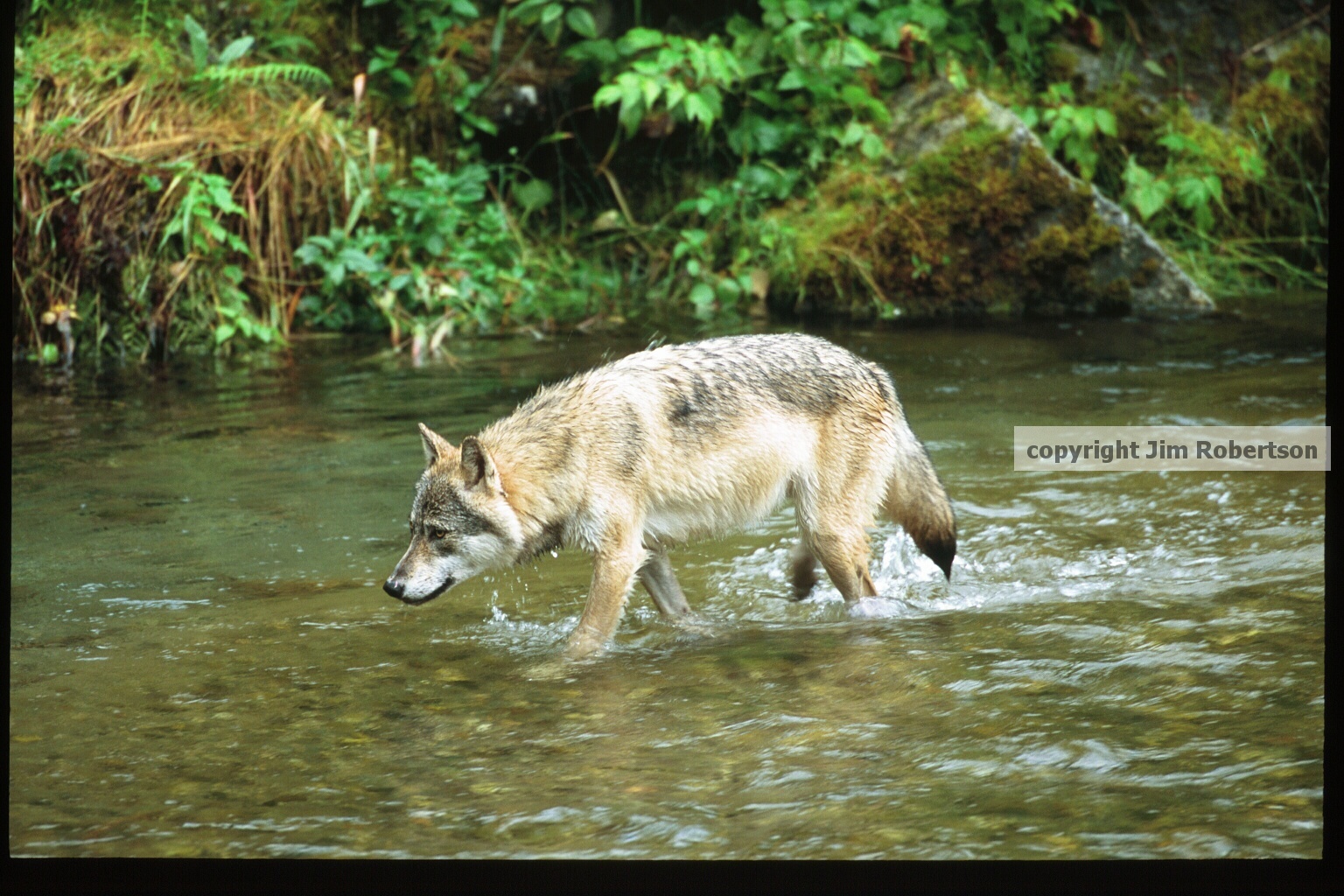
copyrighted wolf in riverLANSING, MI — With Michigan’s first-ever wolf hunt well underway, a new coalition of conservationists and sportsmen is seeking to protect future hunts from a planned voter referendum.

A group calling itself Citizens for Professional Wildlife Management on Tuesday announced plans to launch a petition drive for citizen-initiated legislation that would affirm the Michigan Natural Resource Commissions’ ability to designate game species and issue fisheries orders.

Full story: http://www.mlive.com/politics/index.ssf/2013/11/new_michigan_group_seeks_to_pr.html

Understanding the Great Divide

http://boldvisions.businesscatalyst.com/opinion.html

Stephen Capra

Another week has passed and we have lost more wolves. Not really a surprise, but we also lost a beloved malamute while its owner was hiking. Shots were fired, screams persisted and a beautiful dog lay dead with seven bullets penetrating his body. This is becoming the mantra from Montana on a daily basis. When walking a family canine, a dog must always wear blaze orange and the master must say his prayer of protection when on a trail. The killing of wolves has become a sickness for the depraved and wicked.

This past week in Albuquerque we had a hearing on the Mexican wolf, with ideas the Fish and Wildlife Service has about expanding their range, what the count will be when they are deemed no longer endangered and perhaps easing the means of killing for ranchers. Perhaps 300-400 people showed up for the hearing in a large meeting room at the Comfort Inn. Clearly the pro wolf people held the majority, but there remained plenty of ranchers and county commissioners and other wolf haters who spoke out with rage about the wolf.

Several things struck my mind as they talked. First, why do ranchers not understand it’s rude to leave your hat on at such hearings? It is clearly designed to show their personal arrogance and sense of control. Yet, to me it just shows ignorance. Then there is this obsession with the constitution. Since when did the people that robbed, killed and destroyed our public lands have such a deep feeling about the constitution? The answer is only when it seems politically viable to their own good. Not for any other more altruistic goal.

Then it was time for the fear game rhetoric-Our children……Their safety……We are losing our entire herds…..We are being wiped out…….Poor me……….

It was the usual regurgitation of lies and their dream of an antiquarianism way of life, circa 1870.

What makes this issue so frustrating and demoralizing are the people- the killers, who seem to glee in the chance to steal life. This is the group I characterize as the “angry mob.” They are collectively the people that best define Obama haters, anti-tax loathers, people, who feel that issues like Gay marriage, Climate Change, Health Care are things that liberals like the President have brought to their doorstep and they must fight back, with pride and furry. They do this by collecting an arsenal of weapons, ammo, scopes, night vision equipment. They speak in chat rooms and share their rage against this new America.

They seek in their twisted way a chance to have power and control. The victim of this demented mind-set is wolves. Wolves represent freedom and the power of true spirit. Wildness is at their core, but also love and a sense of family. Yet, for those who feel they have lost control, this animal and its demise makes them feel a sense of power, a place of control, the means to settle their rage. To allow themselves a sense of freedom and spirit, they must kill and steal it from the very symbol of that, which they seek. It also allows them to show their disdain for conservation. Ignorance it seems is truly bliss.

However, there is another aspect to this fight which is often overlooked and it stems from the conservation side. First, as we have said many times, groups like Defenders of Wildlife, tried to find common ground with ranchers from the start. In fact, even when it was clear it was not working, they simply kept doubling down on a flawed strategy. But some of their rational for this stems from the reality of dealing with foundations.

Foundations in America today define how we work in Conservation. They are the funding, which is the lifeblood of any campaign and any organization. Foundations like much of America tend to be more conservative in how they give. By this I mean they do not tend to like direct conflict or issues that cannot fit into a nice collective ending. Therein lies the problem with wolves. This is a fight that is not likely to have a happy, feel good ending; one side will lose. Right now unless we as a community say, we refuse to lose and we will not compromise any longer, all will be lost. But the pressure on many conservation groups is to find a road to compromise. That in turn has led to hunting seasons and other such destructive outcomes.

The opposition has rallied under one voice, which is to say no to all wolf recovery; to push as hard as possible to fight expanded ranges, to create longer hunting seasons, and to say repeatedly that our children and the livestock industry are threatened! The conservation community by contrast seems to have twenty positions and no clear unified strategy. Instead, wolf recovery has turned into an endless fund-raising opportunity, with little success to speak of.

Bold Visions Conservation stands by its 10-point wolf recovery proposal. It is designed to rally support from urban areas to dwarf that which comes from the rural hot spots. It means changing our rhetoric and understanding we are truly in a war, not just to save wolves, but a war of culture which will define the future of the West.

During the hearing a rancher from eastern Washington got up to thank Fish and Wildlife for not creating a sub-species category for wolves in eastern Washington, meaning they can be killed. My first thought was why was he here in Albuquerque? The answer, I believe, is that the ranching community is sharing strategy, working in a unified manner to take what has worked in Montana and bring it to New Mexico, Colorado or any place that could harbor wolves. They are funded to fight and fight they will.

There comes a time in conservation, as David Brower clearly understood, when you fight for what you believe, and when you do so, people respect you. In order to protect and expand wolf recovery we cannot be cute, or speak in only scientific jargon, rather we must get in the trenches and fight, this is a battle we can surely win, it’s for the heart and soul  of the America we want to be a part of and the future of our western heritage.

Wolves define the freedom and spirit that is the West of my soul. Join us in the trenches. Victory is ours, when we cross that great divide, united.

“I am he and you are me, and we are all together.”

 -John Lennon and Paul McCartney

Another Red Wolf Found Shot!

Red wolf found shot Nov 18 2013

An FYI to red wolf advocates, friends and family. We are in a crisis with the ongoing illegal killing of wild red wolves. Please be aware that the photo is wrenching. Do not view it unless you are prepared to see what a bullet can do to a red wolf. Check out our Facebook page for updates and also our web site at http://www.redwolves.com.

Neil

Red Wolf Coaltion – Board of Directors, Chair

USFWS NEWS RELEASE

U.S. Fish and Wildlife Service
Red Wolf Recovery Program
P. O. Box 1969
Manteo, North Carolina 27954

Contact: David Rabon, 252-473-1132 , david_rabon@fws.gov

November 20, 2013

Photo available at http://www.flickr.com/photos/usfwssoutheast/10961117113/

Red wolf found shot in Washington County, N.C. on Nov. 18, 2013. This is
the fifth red wolf killed or missing in less than a month. Photo by USFWS.

*Federal Officials Request Assistance Regarding Latest Red Wolf Killing*

*Reward for Information now up to $26,000*

The U.S. Fish and Wildlife Service is requesting assistance with an
investigation involving the suspected illegal take of a fifth red wolf in
the last month. In the latest death, the federally protected wolf’s body
was recovered from private property north of the town of Creswell, in
Washington County, North Carolina, on Monday, November 18, 2013. The red
wolf’s body had an apparent gunshot wound.

Anyone with information that directly leads to an arrest, a criminal
conviction, a civil penalty assessment, or forfeiture of property on the
subject or subjects responsible for the suspected unlawful take of a red
wolf may be eligible for a reward.

Pledged contributions from the North Carolina Wildlife Federation, Red Wolf
Coalition, Humane Society of the United States, and the Center for
Biological Diversity have increased the reward amount for information on the
suspected illegal take of the five radio-collared red wolves that were found
dead in the last month in Washington and Tyrrell counties, North Carolina.
A person providing essential information that directly leads to an arrest, a
criminal conviction, on the subject or subjects responsible for the
suspected unlawful take of one of these red wolves may be eligible for a
combined reward of up to $26,000. Individual organizations pledging
contributions will determine eligibility for payment of any reward.

Red Wolf

Hateful A-holes Kill Wolves in Mine Shaft

Thanks to William for this information:

Two wolves were killed in Granite County, Montana. The older male was wounded and tracked down for over a mile, at the end of which he had desperately sought escape in a mine shaft. The husband who killed a puppy, videoed his wife LeRee (both of Royal Tine Outfitters) and himself crawling in, killing, and dragging out the older packmate’s body.

Here’s how the killers describe the incident on “Hunting Washington Forum:”

Got a couple wolfs off a kill last week.  Mine was a 60 pound male pup and my wifes was a 90 pound male.  Had to get hers out of a mine shaft….

And here are a sampling of the comments they received:

–great job!!!!

You followed a wounded wolf into a mineshaft…

That’s a whole ‘nother level of crazy than I’m used to seeing on here.  Way to get it done, though  :tup:

You wanna adopt me for a week or so ? I want to kill a wolf more than anything I’ve ever shot.  Good job by the way……

If it ain’t dead, shoot it again at a 1000 yards !!                                               

–Kudos to you and your wife sir! 

–That there is SWEET!

7d547853b294cf28b7b6c4ff5a69dda1

What Sort of Dweeb Needs an AR15?

90823_Pred_ATACS


Back in December of 2012, while America was reeling in shock over the senseless shootings at Sandy Hook Elementary School and mourning those lost in a volley of peacetime machine gun fire, I asked the question, “Who the Hell Hunts With a Machine Gun Anyway?” While the papers were rehashing the same questions they pose whenever a mass killing makes the news: “Why did this happen?” and “How can we prevent this kind of thing in the future?,” we did not hear any mention in the mainstream media of the leading role that sport hunting plays in promoting guns and perpetuating violence.

So, who the hell hunts with a machine gun? The shocking answer is, more people than ever before. Okay, for you hair splitters out there, assault rifles are not technically considered machine guns because you have to hit the hair-trigger with each shot—but they still send out bullets at a damn high rate. The .223 semi-automatic for example (the rifle used by school shooter, Adam Lanza, and the D.C. Beltway snipers, John Mohammad and John Malvo, can fire 6 rounds per second. But what makes it so deadly is the way the bullet reacts on impact: it’s designed to bounce around inside the body once it makes contact with bone.

Why is such a lethal attack rifle legal for non-military civilians to own? According to the manufacturer, they are intended to be used for hunting animals. As the NRA well knows, hunting has been used to justify the private ownership of some of the most destructive weapons ever invented.

Assault rifles are not big on accuracy—their sole purpose is to send out a rapid-fire hail of bullets in the general direction of whatever they’re pointed at. Those who mass murder coyotes seem to feel entitled to the deadliest of armaments they can

Text and Wildlife Photography ©Jim Robertson, 2013. All Rights Reserved

Text and Wildlife Photography ©Jim Robertson, 2013. All Rights Reserved

get their hands on. A recent “contest hunt” offered up a free shotgun or a pair of semi-automatic rifles to whoever murdered the most canines. The terms of the competition were simple: hunters in New Mexico had two days to shoot and kill as many coyotes as they could; the winner got their choice of a Browning Maxus 12-gauge shotgun or two AR-15 semi-automatic rifles. (The AR-15 is the civilian version of the military’s M16 that has been in production since Vietnam.) “Nothing’s gonna stop me,” said Mark Chavez, the hunt’s sponsor, and the owner of Gunhawk Firearms “This is my right to hunt and we’re not breaking any laws.”

Bushmaster describes their .223 as a “Varmint Rifle.” Oh really? That shines new light on what some of these politicians really mean when they say they only hunt “varmints.” I’ve never been an invited guest at George W. Bush’s ranch in Crawford Texas; therefore I can only guess that this is the type of weapon the self-proclaimed “varmint” hunter uses when he goes up against a family of scary ground squirrels, marmots or a town of talkative prairie dogs.

Larger caliber Bushmaster models are categorized, ominously, as “Predator Rifles.”

Why are more and more people using military style weapons for hunting lately? I don’t know offhand, but I have a theory. If someone were to look into it, I’d bet they’d find a marked increase in assault rifles since Barack Obama was elected president. Not only are people trying to get themselves a semi-automatic or two before a feared government ban on assault weapons, but at the same time, they see wolves as a symbol of the government they fear and loath.

Now that the federal government has handed wolf “management” over to hostile states, we’re seeing a war on wolves, with AR 15s, .223 “Bushmasters” and the like being the new weapons of choice.

“This is What Happened” when Montana Wolf Hunter Shot a Dog

UPDATE on Shooting of dog near Lolo. In his own words, this is the account of the tragedy posted on Facebook by Layne Spence, owner of the dog:

“What is on my mind is the tragedy that has taken place and the miss quotes from the media and the Sheriffs dept. So I am setting the record straight. This is what happened….

I went crosscountry skiing up at Lee Creek campground where I have gone in the past. Knowing it was hunting season I put the bright lights that are on all three of my dogs collars.

After skiing for about 200-300 yards I here “tat”, my dog in front of me, his rear leg is blown off. I scream “no,no,no,stop stop” and as I near my dog who was 15 yards in front of me I hear “tat,tat,tat,tat.”

I look up and there is the “hunter” and I screamed “what have you done?” Screaming hysterically, the man says ” I thought it was a wolf.”

I said “You just killed my dog, you killed one of my kids.”

I started screaming “noooooo.” He started to say something like “can I do something,” not I am sorry.

I said “Do you know what a wolf looks like? You killed my dog.”

The man took off, I just screamed “noooooooo” and tried to put him back together but his leg was torn off and yes 15 yards in front of me and yes he was shot with an ASSAULT rifle, I know I have seen them it was either an AR 15 or AR 14. It was all black had a sound supressor and that was why no big BOOM BOOM semi automatic.

I know guns, I don’t have any but I have shot them before, and yes I have hunted both Bow and Rifle. It is the irresponsible hunters who think they can shoot any animal they see if they are in the woods.

The MT Fish and Wildlife said they couldn’t press any charges because it wasn’t a game animal on the road, it was a domestic animal. What???? Bullshit, So I left my skiis and poles there, put my Little Dave’s bloody and broken body on my shoulder and hiked out to also get my other dogs to safety.

So no charges, I call the police dept who gives me examples of people getting hurt because of the public outcry and are afraid of vigilante violence. But the truth is still one of our rights and so is freedom of speech. I don’t want this guy to get hurt , but something needs to be done…I am heart truly heart broken, everything I do is for my dogs, from where I live, to what I drive, and what I do is predicated on the lives of my dogs…Thank you to everyone who has wished myself and my other dogs Frank and Rex well…Layne”

Layne Spence's Malamutes Rex and Frank sit waiting and watching over Little Dave, front, who was killed by a hunter with an assault rifle

Layne Spence’s Malamutes Rex and Frank sit waiting and watching over Little Dave, front, who was killed by a hunter with an assault rifle

A Hastings-led howl against protecting wolves

http://blog.seattlepi.com/seattlepolitics/2013/11/15/a-hastings-led-howl-against-protecting-wolves/

Friday, November 15, 2013 by: Joel Connelly

Seventy-five members of Congress are demanding that the Obama administration end all protection of the gray wolf as “endangered” or “threatened” under the federal Endangered Species Act, in an effort organized by Rep. Doc Hastings, R-Washington.

The U.S. Fish and Wildlife Service has already de-listed wolves in the Northern Rocky Mountains — leading to big, officially encouraged wolf kills, particularly in Idaho — and in the Great Lakes States.

Wolves have moved south from protected lands on the U.S.-Canada border to repopulate the Washington Cascades.  e Teanaway wolf pack in the Cascade Mountains. (Photo courtesy of Conservation Northwest).

The gray wolf has moved south from protected lands on the U.S.-Canada border to repopulate the Washington Cascades, including the Teanaway Valley. (Photo courtesy of Conservation Northwest).

In Washington, wolves are still under federal protection in the Cascades, but not in the Kettle Range and Selkirk Mountains of Northeast Washington. There, they receive state protection, which is under attack by conservative state legislators.

The lawmakers’ letter uses age-old arguments for removing protection so that wolves can be killed.

“Since wolves were first provided protection under the ESA, uncontrolled and unmanaged growth of wolf populations has resulted in devastating impacts on hunting and ranching and tragic damages to historically strong and healthy herds of moose, elk, bighorn sheep and mule deer,” they wrote in the letter to Dan Ashe, director of the U.S. Fish & Wildlife Service.

Mitch Friedman, executive director of Conservation Northwest, a Washington-based group that has championed wolf recovery, scoffed at the letter’s assertions.

“It’s surprising Little Red Riding Hood isn’t mentioned,” said Friedman.

“The letter acknowledges that ‘federal policy must be based on best available science,’ then goes on to make the false and hyperbolic claim about ‘devastating impacts’ on fishing and ranching,” Friedman added. “Throughout wolf territory, game populations are generally at or above levels desired by state managers.

“These Tea Party legislators have so proven Congress that they’ve resorted to attempting policy by press release.  Their letter is off enough on matters of law, science and facts.”

Rep. Doc Hastings, R-Wash.: Bipartisan legislation to expand the Alpine Lakes Wilderness and protect the Middle Fork-Snoqualmie River, in eastern King County, can't get the time of day in his committee..

Rep. Doc Hastings, R-Wash.: He is lead on a letter, signed by 75 members of Congress, demanding an end to all federal protection of wolves under the Endangered Species Act.

Hastings is chairman of the House Natural Resources Committee.  Rep. Cathy McMorris-Rodgers, R-Wash., who also signed the letter, is a member of the House Republican Leadership.

The gray wolf has returned to Washington’s mountains in recent year.  A killing spree by three Okanogan County residents — who were caught and prosecuted under federal law — nearly destroyed one pack that had established itself in the upper Methow Valley of the North Cascades.

Other packs have located in the upper Teanaway Valley, in the Cascades north of Cle Elum, as well as in northeast Washington.  A majority of the state’s wolf population has the misfortune to live in congressional districts represented by Hastings and McMorris Rodgers.

The letter asking for de-listing of wolves is signed by a who’s-who of Tea Party members in Congress, including such luminaries as Rep. Michele Bachmann, R-Minnesota, Sen. Mike Lee, R-Utah, Rep. Steve Stockman, R-Texas and Rep. Raul Labrador, R-Idaho.

A pair of conservative House Democrats, Reps. Collin Peterson of Minnesota and Jim Matheson of Utah, signed the letter.

The letter also opposes a proposal to list the rare Mexican wolf, found in the Southwest, as a subspecies under the Endangered Species Act. Such a listing would have a “Severe impact on private landowners, including ranchers” in Arizona and New Mexico, the lawmakers claim.

“We believe that state governments are fully qualified to responsibly manage wolf populations and are better able to meet the needs of local communities and wildlife populations,” said the letter.

Friedman argued the reverse, saying that Hastings and his allies are grandstanding and doing nothing to encourage cooperation between local communities and conservation groups.

“Real ranchers and communities — including in Eastern Washington — are stepping up to work with groups like ours on practices that allow wolves and livestock to share the land,” he said.

“There are ways that Doc Hastings and Cathy McMorris Rodgers could help, but I’m still waiting for their call.”

Former USFWS Whistleblower Says Wolves Illegally Introduced

Just FYI, so you know this is out there…

Non Native Wolves Illegally
Introduced, Says Whistleblower
Former USFWS Official Speaks of Malfeasance, Misappropriated Funds, and Transplanting Wrong Subspecies to Yellowstone

11/04/13

BY QUINCY ORHAI

Half a century after the last native Northern Rocky Mountain Timber Wolf, Canis lupus irremotus, was said to be hunted to extinction locally by public and private efforts, the U.S. Fish & Wildlife Service, in 1995, under then Director Mollie Beattie, presided over the introduction of the Canadian Gray Wolf, Canis lupus occidentalis, into the Northern Rocky Mountain eco-system.

According to whistleblower Jim Beers (former USFWS Chief of National Wildlife Refuge Operations), after Congress denied funding for his agency to carry out the Northern Rockies Wolf Recovery Project, the agency acted illegally as it brought the Canadian wolves into the Yellowstone ecosystem.

Speaking in Bozeman in May 2010, at the Gran Tree Inn, before Congress on wolf recovery issues in 1998 and 1999, and in October 2013 to the Montana Pioneer, Beers insisted that, after Congress denied USFWS funding for wolf recovery, the agency illegally expropriated Pitman-Robertson funds (federal excise taxes required by law to be distributed to the states as reimburse-ments), helping themselves to tens of millions of dollars.

When contacted by the Montana Pioneer for this article, Beers further stated, “The General Accoun-ting Office verified that at least $45 to $60 million was taken, diverted, by USFWS from P-R funds.”

Beers went on to say that the Pittman-Robertson excise taxes, by law, could only be used by State wildlife agencies for their wildlife restoration projects. “These funds were then used primarily…to pay bonuses to top USFWS managers that had no right to such funds [and] to trap wolves in Canada, import them, and release them into Yellowstone National Park.”

Beers, a 32-year veteran USFWS biologist, whose job included overseeing the Pitman-Robertson funds, alleges that the agency misapprori-ated monies for the trapping and transportation of Canadian wolves into the U.S. To conceal its misuse of the funds spent on the project, the true number of wolves imported, and the subspecies brought in, USFWS intentionally did not file mandatory paperwork, according to Beers, that would have established a paper trail. Or, he speculates, somehow that paperwork mysteriously disappeared.

Beers also alleges USFWS failed to file an appropriate and accurate Environmental Impact Statement. In recent comments to the Montana Pioneer, he elaborated, saying, “The EIS was and remains a document of lies, misinformation and woefully incomplete coverage of the matter.”

In print and in public speaking engagements, Beers has claimed the Wolf Recovery Project deliberately dismissed established wolf science and research, including known wolf depredation impacts on livestock and wildlife, and ignored the dangers parasites and diseases carried by wolves present to wildlife, livestock, pets, and humans.

The Canadian Gray Wolf, introduced into Yellowstone Park by USFWS 18 years ago, is widely described in scientific literature as thirty to fifty percent larger than the said-to-be extinct local native timber wolf. The initial 14 and subsequent transplanted wolves were captured in Canada, although wolves that were more genetically similar were available from surplus populations in Minnesota, as reveal-ed by the Smithsonian Institution, in a scholarly work titled: Physiological Basis for Establishing a Northern Rocky Mountain DPS [Distinct Population Segment Area].

The importation of Canadian Gray Wolves was criticized at the time by American biologists who believed the larger wolves would kill more elk, a position many now say has proved correct, and that the introduction of a non-native sub-species was of questionable legality when the smaller-sized native populations were beginning to recover naturally, on their own, positions similar to those advanced by the Farm Bureau’s of Idaho, Wyoming and Montana.

Although the official position of the government is that native wolves were locally extinct, according to Dr. Ralph Maughan, professor emeritus of political science at Idaho State University, with specialties in natural resource politics and public opinion, USFWS reported 48 native wild wolves in Montana in 1994, the year before the controversial introduction of the Canadian Gray Wolf into Yellowstone National Park—mostly timber wolves traveling down from Canada.

On his website, The Wildlife News, Maughan writes: “It’s reasonable to assume that without reintroduction, wolves would have naturally reestablished themselves in most of Montana [under the protection of the Endangered Species Act], but migration would have been slow with a lot of wolves up north before they made it to Yellowstone and Wyoming. Because these wolves were fully ‘endangered,’ rules governing them would have been a lot more strict than with those finally reintroduced in 1995.”

However, the larger and more aggressive central and northern Alberta, Canada wolves USFWS introduced here eliminated any survival chance of native wolves [as a result of competition or elimination], as USFWS knowingly violated the Endangered Species Act, according to Maughnan.
It was and is common scientific knowledge that the native male wolf (Canis lupus irremotus) of the Northern Rockies averaged 90 to 95 pounds at maturity. The wolf USFWS brought in as a replace-ment was a noticeably larger wolf (Canis lupus occidentalis) from north-central Alberta, with mature males topping 140 pounds, and some specimens weighing up to 175 pounds.

According to the Smithsonian study, the native wolf, which local residents claimed existed in small pockets in wilderness areas in the 1990s, generally roamed an area of about 100 square miles, hunting alone or in small groups of 4 or 5 at most. The non-native Canadian gray wolves USFWS introduced to the region typically hunted 300 or more square miles back in their home range, with packs often numbering 20 or more.

Under the direction of Mollie Beattie, USFWS developed the Environmental Impact Statement for the reintroduction of wolves. That EIS made a number of assumptions about bringing wolves back to Yellowstone and the Northern Rockies. Almost none of those assumptions has proven to be correct, according to Toby Bridges of the Montana Chapter of Sportsmen for Fish and Wildlife. Writing in 2010, on the group’s website, Bridges says: “Instead of getting just the 150 wolves Montanans agreed to back in the mid 1990s, the state is now home to likely 1,000 to 1,200 wolves… This year a minimum of 43,500 elk will be eaten alive or killed and left behind by wolves in the Northern Rockies…”

Bridges also states that “The U.S. Fish and Wildlife Service manipulated science, and replaced the native wolf of this region with a totally non-native…larger…and more aggressive wolf, and has consistently underestimated wolf numbers by half or one third of actual numbers.”

According to USFWS, “As of December 31, 2012, the most recent minimum wolf population size determined for Montana was 625 wolves in 147 packs, 37 of which were confirmed breeding pairs.”

Those numbers are inaccurate, says Bridges, because for the annual wolf count USFWS typically ignores wolf sightings by anyone except agency biologists, who are understaffed. Also, wolves typically are active in timbered areas where they are impossible to count from the air, says Bridges. Thus, the deceptive wording of the report: “minimum wolf population size determined.”

Norm Colbert, a veteran wildlife tracker who lives near Nye, Mont., in the area of the Rosebud wolf pack, told the Pioneer in February 2012 that at least several wolves comprised the nearby local pack, based on his repeated sightings of tracks and wolf related activity, while the official count listed the Rosebud pack as having consisted of only two wolves, a discrepancy, accoridng to Colbert’s estimates, that may fall 300 percent short of the actual number of wolves in the pack.
According to Bridges, writing on LoboWatch, in an article titled Voodoo Math Still Haunts Montana Wolf Control: “Other well respected wolf biologists have claimed that ‘real wolf biology’ and ‘real wolf reproductive rates,’ and allowing for natural and man induced mortality, puts the current wolf population somewhere much closer to the 2,000 mark. The sportsmen of this state, based on the degree of damage done to elk and other big game populations, say it’s even higher—perhaps as many as 3,000 wolves.”

One thing is clear to local ranchers losing livestock, and to local big game guides losing elk-hunting clients—the northern Yellowstone elk herd has declined by 80 percent from the 19,000 elk of 1995 (according to a Feb. 2013 aerial survey by the Montana Department of Fish, Wildlife and Parks and the National Park Service), that 1995 number of elk having been part of the justification for bringing wolves to Yellowstone in the first place.

What was not made clear at the time of the Canadian Wolf introduction, according to wolf critic Bridges, writing on Lobo Watch, was that “The reality of living with wolves is that wolves are extremely non-discriminating predators, killing just about anything that gets in front of them—the young, the healthy, the pregnant and the prime…the sick and weak.”
Bridges charges that “agenda driven biologists” within wildlife agencies avoid acknowledging that each “average” wolf accounts for the loss of some 25, or so, big game animals (or head of livestock) annually, just for sustenance, that each “average” wolf also kills just about as much game, known as “surplus killing,” without eating the kill, and that wolves are the primary carrier of the Echinococcus granulosus tapeworm, a parasite that infects game, pets, and humans with Hydatid cysts “that in turn makes these living things sick and weak.”

In the recent documentary film Crying Wolf, Exposing the Wolf Reintroduction to Yellowstone National Park, David Allen, President of the Rocky Mountain Elk Foundation, takes the issue a step further, stating, “The Northern Yellowstone elk herd was the showcase herd in the world…I believe that the reintroduction of wolves is, in many ways, an assault on the sportsmen and hunting culture. The North American model of wildlife conservation is built around the sportsman, since the days of Teddy Roosevelt. We have the most bountiful, successful wildlife resources in the world.”

With Crying Wolf, filmmaker Jeffrey King depicts the introduction of non-native Canadian gray wolves into the Northern Rockies ecosystem as destroying the livelihood of back-country residents by deva-stating free range ranching. According to the ranchers interviewed in the documentary, it is fast becoming uneconomical to raise livestock in areas where wolf packs range, and big game hunting and guiding opportunities and occupations are quickly disappearing from the rural Northern Rockies.

Veteran wolf biologist, John Gunson, formerly with the Alberta Fish and Wildlife Division, and also featured in Crying Wolf, echoed the concerns of sportsmen regarding elk hunting, saying, pointedly, “Really, there isn’t any room for harvest by man if you have a healthy wolf population.”

Regarding the introduction of wolves to the Northern Rockies, Ed Bangs, former Northern Rockies Wolf Recovery Coordinator for the U.S. Fish and Wildlife Service, is quoted as saying the following on the Montana Fish, Wildlife and Parks website, separating wolf science from wolf ideology: “Wolves and wolf management have nothing to do with wolves. I think the folks who didn’t like them still don’t like them, and the folks who did like them still do. Wolves are mainly a symbolic issue that relates to core human values…I think the only reason wolf reintroduction finally happened was that people with different values moved to Montana and diluted the strong agricultural influence. Plus, the economy changed from straight agriculture and natural resource consumption to areas such as tourism.”

Idaho Wolf Kill Numbers

Associated Press, January 11, 2007: “Idaho’s governor [Butch Otter] said Tuesday he will support public hunts to kill all but 100 of the state’s gray wolves after the federal government strips them of protection under the Endangered Species Act…. ‘I’m prepared to bid for that first ticket to shoot a wolf myself,’ Otter said earlier Thursday during a rally of about 300 hunters…copyrighted wolf in waterThe hunters, many wearing camouflage clothing and blaze-orange caps, applauded wildly during his comments.”

Since 2009, 887 Idaho wolves have been killed by licensed hunters, with many hundreds more killed in official “control” operations.  It is estimated that there were fewer than 500 wolves remaining in the state by August, 2013. The 2013-2014 Idaho wolf season began August 30 and will continue in most of 13 state zones until the end of June 2014. The current 2013-2014 wolf season will constitute a mop-up operation by the state’s ferocious anti-wolf mob.

The Idaho political apparatus, controlled absolutely by the hunting and agricultural lobbies, is a vigorous proponent of trap-torture for Idaho wildlife. It has thus encouraged, trained and deployed an army of trappers, both amateur and professional, to prolong the suffering of Idaho wolves since 2011.

Idaho wolf trapping season opened November 15, 2013, and will continue across nine game zones until March 31, 2014.  Thus, Idaho wolves continue to be subjected to the terror and cruelty of steel foothold traps and choking snares. Many of these animals, including the youngest of pups, are routinely forced to await their violent death for up to 72 hours while suffering terror, pain, hunger and dehydration.

Zone 1–Idaho Panhandle Zone:  (12) Idaho wolves gunned with rifles or hand guns.  One animal shot with a handgun was a tiny black pup so young that it had no teeth visible.  A bow hunter in this zone also arrowed a gray puppy, a particularly painful way for a canine to die.  Two others wolves were killed on private property in August before the season officially began. Licensed wolf kill is legal year round in the Panhandle zone as long as the carnage takes place on private property.  These two pre-season wolves were seen together and shot at the same time.  Their bodies were retrieved days later, indicating that they were able to run while wounded and therefore suffered for an unknown number of hours or days before dying.

Note: One of our three selected wolf packs for adoption, the Bumblebee Pack, resides in Zone 1. Adoption bracelets are available [link]. Your donations will help sustain our website so that volunteers can monitor and report activities by state, federal and private interests bent on reducing wolves to a genetically unsustainable population. Adoption bracelets are available.

Zone 2–Palouse-Hells Canyon Zone: (1)  wolf  arrowed. This was a gray animal listed as a pup.

Zone 3–Lolo Zone:  (1) Idaho wolf gunned.

Note:  One of our three packs selected for adoption is the Kelly Creek Pack, which undoubtedly lives a perilous existence in the Lolo “hot” zone. Lolo wolves have been among the hardest hit in the great Idaho wolf purge. Government agents in helicopters gunned-down some of the wolves killed in this zone during 2011-2012. Adoption bracelets for survivors are available. Adoption bracelets for survivors are available.

Zone 4–Dworshak-Elk City Zone:   (3)  wolves gunned, one wolf arrowed.  One of the wolves, listed as a puppy, was blasted with a hand gun.  The arrowed animal was listed as a yearling.

Zone 5–Selway Zone:   (3)  wolves gunned.  Two of the three were listed as pups.

Zone 6–Middle Fork Zone:   (3) wolves gunned.   Two of the three were listed as pups.

Zone 7–Salmon Zone:   (2)   gunned.  One animal was listed as a pup, the other a yearling.

Zone 8–McCall-Weiser Zone:  (3)  wolves gunned.  One animal was listed as a young of year pup.

Zone 9–Sawtooth Zone:   (1)  wolf arrowed.

Zone 10–Southern Mountain Zone:  (5) wolves gunned. Three of these animals  were listed as yearlings.  Another was listed as a  pup terminated by a hand gun.

Note:  One of our three packs up for adoption is the Red Warrior Pack, located in the Sawtooth Mountains within this zone. Adoption bracelets are available. Adoption bracelets are available.

Zone 11–Beaverhead Zone:   (0)  wolves gunned.

Zone 12—Island Park Zone:  (3)  wolves gunned.

Zone 13—Southern Idaho Zone:  (0) wolves gunned.

Of the 38 wolves obliterated during this time period, 15  (39%) were listed as puppies or yearlings.

– See more at: http://adoptawolfpack.org/summary-of-2013-2014-big-game-mortality-reports/#sthash.xjOOXuKF.dpuf