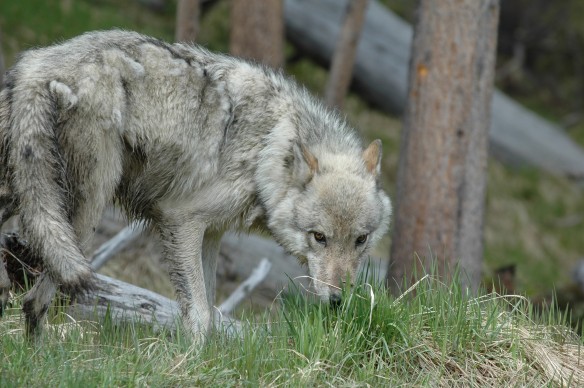
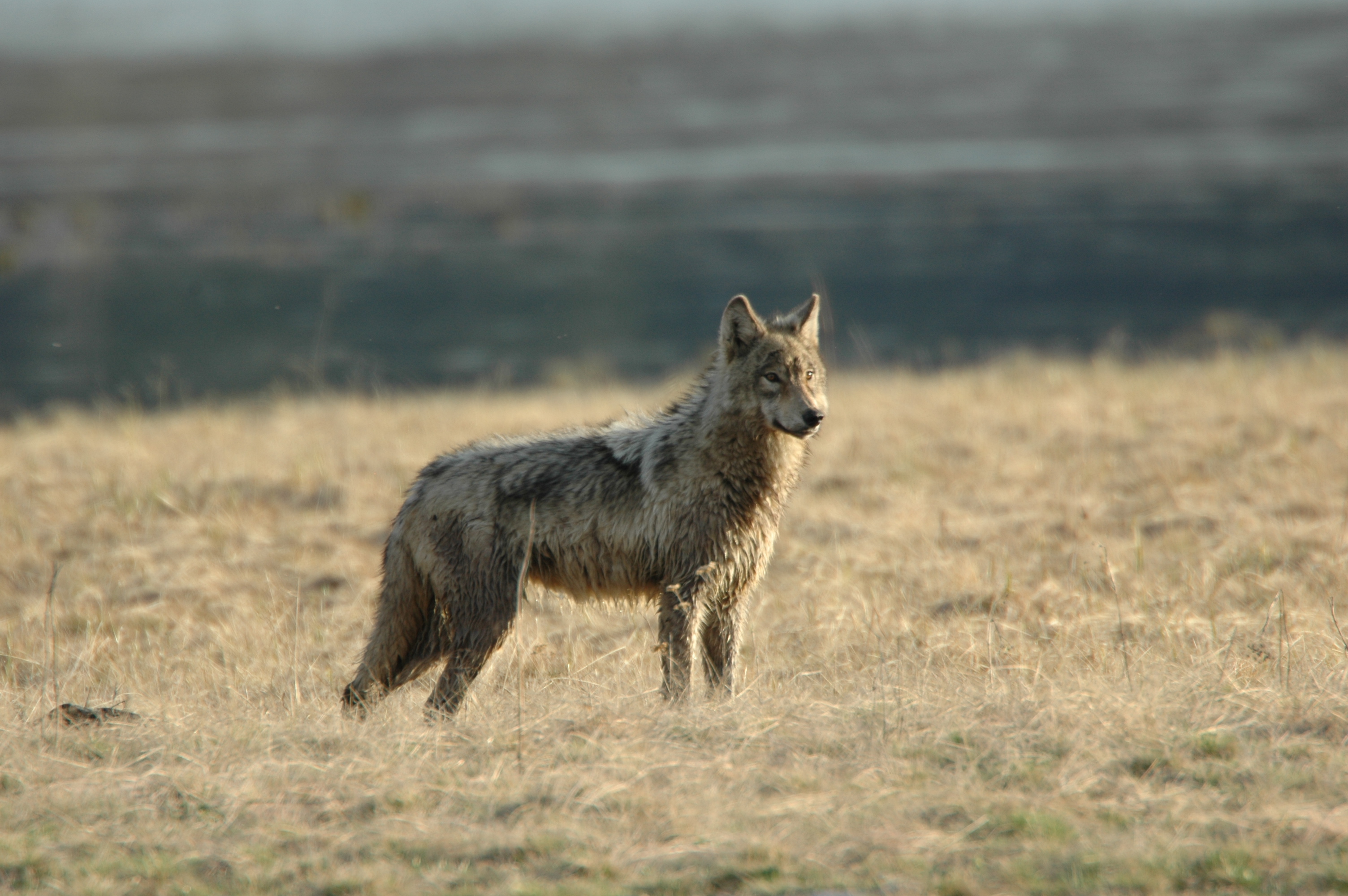
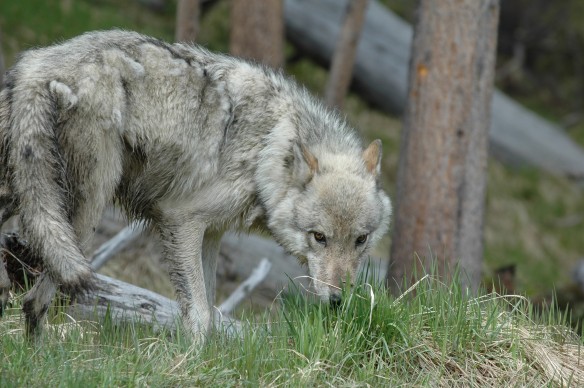
One-third of Montana’s wolves dead‏

From Defenders of Wildlife:

Last year more than ONE-THIRD of Montana’s entire wolf population was killed — and with a number of new and deadly hunting and trapping provisions, the death toll is expected to rise this season.

Anti-wolf forces are determined to drive the wolf population down to the bare minimum, and Montana is adopting more extreme wolf management tactics – making it cheaper and easier to kill wolves.

We need YOU to help us stop this relentless killing before it’s too late.

The killing has resumed.

Montana’s hunting season began in earnest on September 15th. Last year hunters and trappers killed off more than one-third of the state’s entire wolf population.

With a host of new and deadly hunting and trapping provisions, Montana is set to become a wolf tragedy in the making. We can’t let that happen.

Anti-wolf forces are determined to drive wolf populations down to the bare minimum. Earlier this year, they introduced a shameful batch of anti-wolf measures in the Montana legislature.

And they could spell disaster for Montana’s wolves:
•The cost for out-of state-hunters to purchase MT hunting licenses to kill wolves dramatically dropped from $350 to only $50, thus encouraging hunting of more wolves by out-of-state hunters;
•It’s now legal this season to use electronic devices to lure wolves to their death;
•The number of wolves a person can kill during hunting and trapping season has increased from one wolf in 2011 to five wolves this season; and
•As of now, hunters can now walk right up to the Yellowstone National Park border and shoot any wolf that crosses the invisible park boundary – even if it’s just for a minute.

Montana is adopting more extreme wolf management tactics, making it cheaper and easier to kill wolves.

With your help we’re fighting for the wolves.
1.We’re fighting against proposed bills that would put a shockingly low cap on the wolf population instead of maintaining healthy numbers like other wildlife species;
2.We’re on the ground in local communities to dispel misconceptions and anti-wolf propaganda ; and to build political opposition to the host of crazy anti-wolf bills sure to come with the start of the state legislative session in January;
3.And we’re working with ranchers, private landowners and others to pioneer non-lethal strategies so that wolves and livestock can peacefully coexist.

The war to save wolves now spans the country…from the Northern Rockies, where the killing has claimed nearly 1,200 wolves since 2011…to the Southwest, where the Mexican gray wolf is struggling to survive…to Washington, D.C., where anti-wolf forces are driving a misguided delisting proposal through the federal bureaucracy.
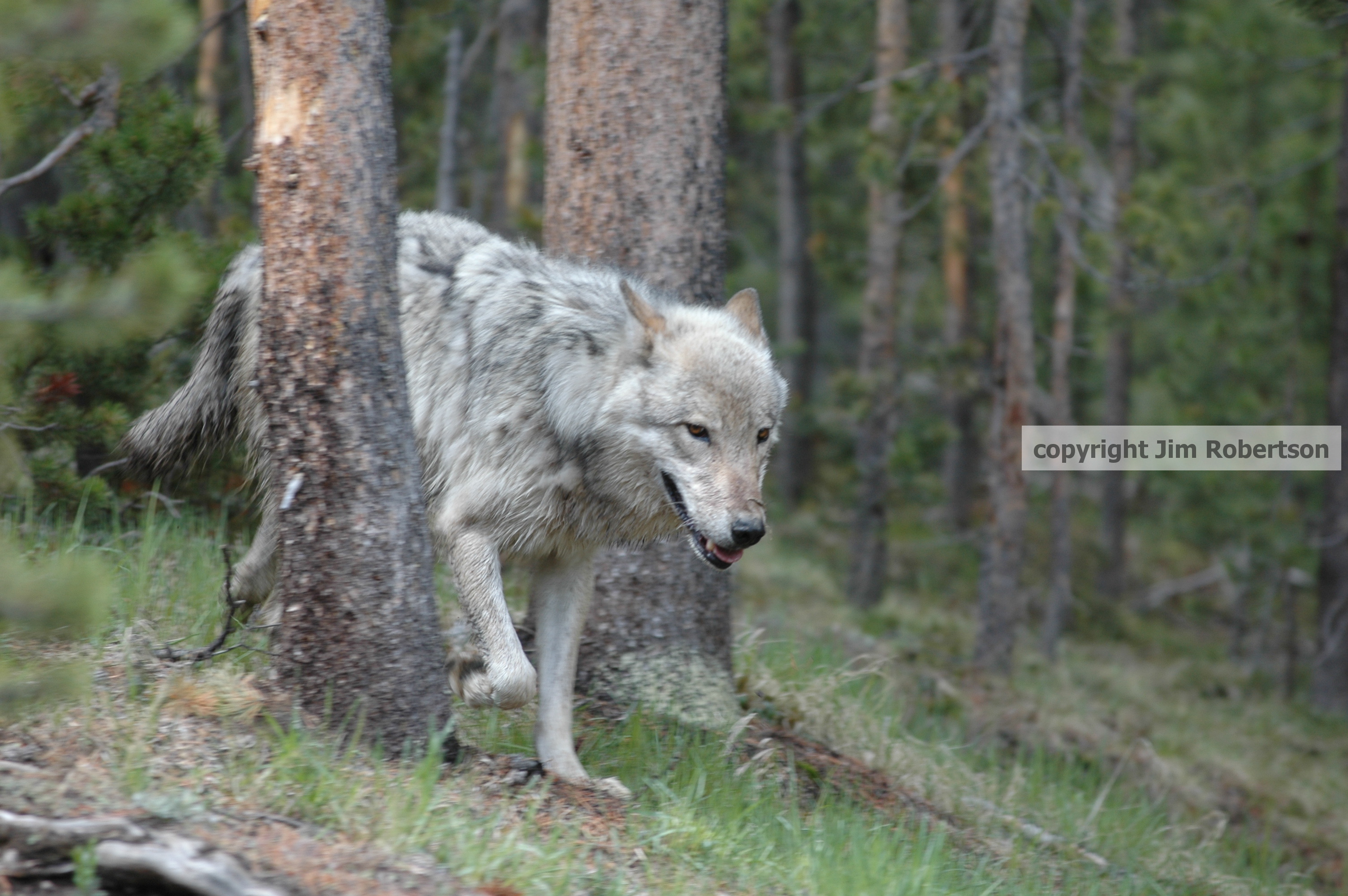
copyrighted Hayden wolf in lodgepoles

Twenty-first Century Swastikas

For over half a century the Nazi swastika—that all too familiar symbol of hate—has been relegated to the dark corners of extremism, never to be openly displayed on a flag or uniform again. The Nazi credo was perhaps as confusing as it was complex, but generally, it was the definitive case of one group vilifying and scapegoating another.

Today, a similar type of blind hatred rules in areas where exploitive or extractive animal industries are considered a way of life. One can hardly drive a mile in parts of rural America without seeing emblems of extremism in the form of hateful bumper stickers touting selfish anti-wolf slogans like, “Smoke a Pack a Day” or, in areas where wolves are still extinct, “Did the coyotes get your deer?” Another popular hate-symbol adorning the back of all too many rural pickup trucks is simply a silhouette of a wolfNT wolf bumpr stickr inside a red circle with a slash through it.

In certain towns along the Pacific Northwest coast, where commercial fishing is a dying “way of life” (because dams and overfishing had nearly wiped out the salmon), the trendy stickers of ignorance and intolerance feature a sea lion with a fish inside a red circle and slash. The message is clear, sea lions can starve and die off, the humans have claimed the fish for themselves.

And although sea lions are indeed starving and dying off, it isn’t happening fast enough for some small minded, self-serving fishermen who shoot them, in defiance of the Marine Mammal Protection Act, just as the wolves in the tri-state and Great Lakes regions become victims of those who claim all land animals as “resources” and can’t stand the competition from those natural predators. Blatant Nazism may be a thing of the past, but speciesist extremism is alive and well all across America.

DSC_0131


Don’t roll back federal protections for wolves

Don’t let the government remove Endangered Species Actcopyrighted wolf in river protections for wolves in the Lower 48 states, argues guest columnist Amaroq Weiss.

By Amaroq Weiss
Special to The Seattle Times

AS Washington state lawmakers and wildlife managers fine-tune the state’s wolf conservation and management plan, they need only look to the nation’s capital for some tips on what not to do.

The U.S. Fish and Wildlife Service is considering dropping Endangered Species Act protections for wolves across most of the Lower 48 states even though wolves have recovered to only a fraction of their past range and numbers. Wolves face aggressive hunting and trapping in all of the states where protections have already been removed.

The anti-wolf policies in our nation’s capital and many western states stand in sharp contrast to what most voters and top wolf scientists are calling for.

A 2011 Colorado State University report showed that 3 in 4 Washington residents wanted wolves protected. Across the nation, almost 2 out of 3 people surveyed opposed federal plans to drop protections for wolves, according to a report by Public Policy Polling this summer.

The nation’s leading wolf researchers concur that wolves need continued protection to sustain the recovery of a genetically robust population.

Yet there’s mounting evidence that bureaucrats in the nation’s capital have been actively working to muzzle some of those scientists. Earlier this month the U.S. Fish and Wildlife Service excluded three wolf researchers from participating in the scientific peer-review of the proposal to drop federal protections for wolves in the continental U.S.

The scientists were excluded because they signed a letter calling out the service for mischaracterizing the scientists’ own research to justify dropping federal wolf protections. After public outcry, the agency backtracked.

Wildlife managers in Washington have lots of evidence about what Washingtonians want and what scientists think.

Over a five-year period, Washington residents funded and participated in a broad collaborative effort to develop the Washington’s Wolf Conservation and Management Plan, which was enacted in 2011. The compromise plan underwent careful review by 43 scientists and more than 65,000 members of the public commented.

It is now up to the Washington Department of Fish and Wildlife, with oversight by Gov. Jay Inslee, to ensure that Washington’s wolf plan is faithfully implemented with the best interest of wolves in mind.

Last year the department authorized killing the entire Wedge Pack in response to livestock depredations in Eastern Washington. These wolves were killed though the rancher who lost cattle was using risky husbandry practices that involved spreading a small breed of cattle over a large area of public lands with known wolf activity.

The state Fish & Wildlife should not be in the business of killing wolves to benefit ranchers who do not use proven methods to protect their cattle.

The state department also recently enacted an emergency rule that allows permitless killing of wolves caught in the act of attacking livestock. Like the authorization to kill the Wedge Pack wolves, such a rule has the potential to provide incentives to those ranchers with long-standing anti-wolf biases to do even less to avoid conflicts with wolves in order to see them killed.

Whether Washington’s wolves, and those across most of the continental U.S., will once again be pushed to the brink of extinction, is yet to be seen.

What’s clear is this: Politicians and bureaucrats considering critical wolf-management decisions are more than willing to ignore the facts and broad public opinion whenever the voters tolerate it.

And when it comes to the future of our wolves, there’s never been a better time than right now for Washingtonians to speak up.

Public-comment periods are under way on both the federal plan to delist wolves and on new Washington state proposals on wolf management.

Comments on the federal delisting proposal must be submitted by Oct. 28, at http://seati.ms/opwolfcomment . Comments on Washington’s proposals must be submitted by Sept. 20 at Wildthing@dfw.wa.gov

Amaroq Weiss, a biologist and former attorney, is West Coast wolf organizer for the Center for Biological Diversity. Email: aweiss@biologicaldiversity.org

And We Call Ourselves Civilized?

In agreeing with President Obama’s plan to strike Syria, Representative Nancy Pelosi was quoted as saying we must respond to actions “outside the circle of civilized human behavior.” Nice to hear that the U.S. Government thinks it has the moral authority to respond to such actions. While they’re at it, I can think of a whole lot of other actions which should be considered “outside the circle of civilized human behavior” that are desperately in need of responding to.

I’m referring, of course, to the innumerable abuses of non-human animals by humans—many that go on every day right here in the U.S. of A. I’m afraid if I were to try to list all the instances of human mistreatment of other animals which should fall outside the “circle of civilized human behavior,” the pages would fill the halls of justice, spill out onto the streets and overflow the banks of Potomac River in an unending tsunami of savagery.

So here’s just a partial list…

Wolf Hunting—No sooner did grey wolves begin to make a comeback in the Lower 48 than did the feds jerk the rug out from under them by lifting their endangered species protections and casting their fate into the clutches of hostile states. Now, hunters in Wyoming have a year-round season on them while anti-wolf fanatics in Montana have quadrupled their per person yearly kill quota.

Trapping—Only the creepiest arachnid would leave a victim suffering and struggling for days until it suits them to come along for the “harvest.” Yet “law abiding trappers” routinely leave highly sentient, social animals clamped by the foot and chained to a log to endlessly await their fate.

Hound-Hunting—“Sportsmen” not content to shoot unsuspecting prey from a distance of a hundred yards or more sometimes use hounds to make their blood-sport even more outrageously one-sided.

Bowhunting—Those who want to add a bit of challenge to their unnecessary kill-fest like to try their luck at archery. Though they often go home empty-handed, they can always boast about the “ones that got away”… with arrows painfully stuck in them.

Contest Hunts—Prairie dogs, coyotes, and in Canada, wolves, are among the noble, intelligent animals that ignoble dimwits are allowed to massacre during bloody tournaments reminiscent of the bestial Roman Games.

Horse Slaughter—After all that our equine friends have done for us over the centuries, the administration sees fit to send them in cattle trucks to those nightmarish death-camps where so many other forcibly domesticated herbivores meet their tragic ends.

Factory farming—Whether cows, sheep, pigs, chickens or turkeys, the conditions animals are forced to withstand on modern day factory farms fall well outside even the narrowest circle of civilized human compassion. To call their situations overcrowded, inhumane or unnatural does not do justice to the fiendish cruelty that farmed animals endure each and every day of their lives.

Atrocious conditions are not confined to this continent. Chickens in China (the ancestral home of some new strain of bird flu just about every other week) are treated worse than inanimate objects. Bears, rhinoceros and any other animal whose body parts are said to have properties that will harden the wieners of hard-hearted humans are hunted like there’s no tomorrow. And let’s not forget the South Korean dog and cat slaughter, or Japan’s annual dolphin round up…

Far be it from me to belittle the use of chemical weapons—my Grandfather received a purple heart after the Germans dropped mustard gas on his foxhole during World War One. I just feel that if we’re considering responding to actions “outside the circle of civilized human behavior,” we might want to strike a few targets closer to home as well. Or better yet, reign in some of our own ill-behaviors so we can justifiably call ourselves “civilized.”

Text and Wildlife Photography ©Jim Robertson, 2013. All Rights Reserved

Text and Wildlife Photography ©Jim Robertson, 2013. All Rights Reserved

Sears Sells Wolf Hunting T-Shirts!

http://www.sears.com/search=wolf?catalogId=12605&storeId=10153&levels=Clothing&autoRedirect=true&viewItems=50&redirectType=CAT_REC_PRED

THAT’S IT! I’ve officially lost all hope for humanity!! I’ve had it with this sociopathic society that has no regard or respect for the animal world! This is the lowest the human creature has ever crawled! If there were ever a time to drop completely out and go on the war wagon…

What’s driving me to these depths, you ask? Sears now sells “I Love Wolf Hunting T-Shirts”!! What are they trying to do, start a war?! Don’t they know that there’s a lot of folks out there who are only about a heartbeat away from going ballistic on the first person they see wearing a “Wolf Hunting Rocks” T-shirt?

Forget those beautiful, artistic images of wolves Sears used to sell, now they carry a solid black shirt with a red heart that simply states: “I (heart) wolf hunting” (how fucking clever, not to mention original).

If that’s too simplistic for your tastes, they also have dull brown shirts, in all shapes and sizes, ignorantly declaring “I have a Masters in Wolf Hunting.” One says, “Life without wolf hunting? I don’t think so” (to which we’d gladly oblige), while another idiotic shirt features a life-sized human heart over the words, “Wolf hunting, wolf hunting, wolf hunting, wolf hunting” as though it’s all the asshole wearing it has to live for.

Meanwhile, one bright-red shirt just says USA Wolf Hunting (like it’s something our country should be proud of?) Oh, and there’s one that just says, “Smile, life is wolf hunting.”

Well, if that’s all life is for some people, then they don’t deserve it.


460033106


Montana increases bag limit for next wolf hunt

The bastards!!

http://www.seattlepi.com/news/article/Montana-increases-bag-limit-for-next-wolf-hunt-4657694.php          

 By MATT VOLZ, Associated Press Wednesday, July 10, 2013

HELENA, Mont. (AP) — Montana Fish and Wildlife commissioners on Wednesday increased the bag limit from one to five wolves per person and extended the state’s next hunting season, but they also set new restrictions in areas adjacent to Yellowstone National Park.

The commission voted to loosen hunting regulations during its meeting in Helena in an attempt to further decrease the state’s wolf population. They amended their plans and set new quotas around Yellowstone after park administrators expressed concern over the effects on the wolf population there.

Hunting and trapping wolves next to Yellowstone, which is a no-hunt zone, flared as an issue after several Yellowstone wolves wearing radio tracking collars were shot last year by hunters in Montana, Idaho and Wyoming.

Commission Chairman Dan Vermillion said the limits are the result of an attempt to reach a middle ground.

“It’s not going to cause a long-term threat to the wolf population there,” Vermillion said.

There is no statewide quota limiting the total number of wolves that can be killed during the season, but in two special wolf-management units north of Yellowstone, the commission limited the total number of wolves that can be killed to seven.

Hunters and trappers will only be allowed to take one wolf each in those areas.

To the west of Glacier National Park, a quota of two wolves has been set in that management unit, the same as last year.

The rifle season for wolves will run from Sept. 15 to March 15, giving hunters a six-month season this year. The trapping season, the state’s second, will again run from Dec. 15 through Feb. 28.

Archery season will be from Sept. 7 through Sept. 14.

Opponents of the new regulations wanted an even lower quota around Yellowstone, saying the combined effects of Montana’s and Wyoming’s hunts would likely hurt the park’s wolf population. They also objected to lengthening the rifle season beyond February, saying that is the time when female wolves are pregnant.

“Yellowstone’s wolf packs are the foundation for the ecosystem’s wolf population and must be provided special considerations,” said Bart Melton of the National Parks Conservation Association. “It’s imperative that we protect this iconic species adjacent to the park as well as the vibrant wolf-related tourism that benefits our local economy.”

Wolf opponents argued the animals’ burgeoning population hurts other big-game animals and results in more livestock being killed. Blake Henning of the Rocky Mountain Elk Foundation said the National Park Service’s lack of wildlife management creates problems for hunters and ranchers outside the park.

“We don’t believe the park needs special protections or designations for its wolves,” Henning said.

In all, nearly 25,000 people submitted comments on the plans to loosen regulations for the upcoming hunt since the commission first announced the proposal in May.

A total of 225 wolves were killed by hunters and trappers last season. Montana Fish and Wildlife estimated the state’s wolf population at 625 at the end of 2012, a decline of about 4 percent from 2011.

Congress lifted federal protections of wolves in Montana and Idaho in 2011, handing management over to those states and allowing them to hold hunts. Wyoming held its first hunt last year.

Montana’s management plan calls for a population of at least 150 wolves and 15 breeding pairs within its borders.

copyrighted-wolf-argument-settled

Montana Mulls Upping Hunter “Harverst” Limit to FIVE Wolves

HELENA — Montana wildlife commissioners may extend the hunting season for wolves and the number of predators that can be killed by a hunter or trapper.

“We’ve always had a philosophy of incrementally increasing harvest rates and opportunities,” FWP Wildlife Management Chief George Pauley said in an article in today’s Great Falls Tribune entitled, “FWP proposes extending wolf hunt, kill limit.” The changes would allow hunters more opportunities and reduce the wolf population,
he said.

Well that’s just fucking great; more hunter “harvest” opportunities, fewer wolves–what a philosophy!!

The agency also is proposing allowing hunters and trappers to take up to five wolves each, the Independent Record reported Wednesday.

Last year, hunters and trappers could take only one wolf. The state Legislature this year passed a bill that allows the agency to increase that limit.

The commission takes up the proposal at its May 9 meeting in Helena….

copyrighted-wolf-argument-settled

Intolerance is Sometimes the Only Humane Stance

There’s been a lot of talk about tolerance these days, but sometimes it seems only the Left side really takes the concept of peaceful acceptance to heart. Fair-minded folk are encouraged to politely tolerate each other’s differences in order to get along. But lately the anti-wolf faction has hijacked the word to justify the killing of wolves.

For example, ten Washington state legislators recently urged their Fish and Wildlife Commission to enact a policy of allowing the unpermitted killing of wolves, “to maintain social tolerance for gray wolves in northeast Washington.” And a wolf-hunter/wildlife snuff film producer told NPR News, “Having these [wolf] hunting seasons has provided a level of tolerance again.” Sorry, but I just don’t see how killing wolves promotes tolerance for them; sounds more like enmity than tolerance.

The only way I can relate is from a converse perspective: doing away with a few wolf hunters might provide some level of tolerance for them.

Still, tolerance should not be just a catchall catchword to be bandied about whenever the mood strikes—some things don’t deserve to be tolerated. No caring person should be expected to tolerate the mistreatment of others. Anyone with a sense of right and wrong should eventually come to the conclusion that intolerance is sometimes the only humane stance to take.

Intolerant is what Japanese whalers label anti-whaling groups or non-whaling nations when they question the “right” to harpoon and butcher whales or trap and slaughter dolphins. South Koreans, who literally torture dogs to death and boil cats alive in the belief that doing so makes them taste better or improves their medicinal value, call humane activists intolerant when they oppose those barbarous customs. And European and American producers of foie gras scream cultural intolerance when animal advocates work to end the bizarre practice of shoving a pipe down the throats of geese and force feeding them until their livers swell or their stomachs burst, whichever comes first.

Meanwhile hunters and trappers expect us to tolerate the torment they unleash on wolves and other wildlife. Members of a civilized society should not hesitate to take a stand against cruelty to other sentient beings—who are fully capable of suffering—in the same way they oppose cruelty to human victims.

This post includes an excerpt for the book, Exposing the Big Game; Living Targets of a Dying Sport.

Text and Wildlife Photography ©Jim Robertson, 2013. All Rights Reserved

Text and Wildlife Photography ©Jim Robertson, 2013. All Rights Reserved

Letter-length Answer to an Anti-Wolf Extremist

Dear Editor,

It was bad enough to read another damning letter from an anti-wolf extremist asking, “Is the wolf an animal we want protected in our area?” as though it’s our birthright to pick and choose which wildlife species are welcome and which are not—that kind of human arrogance is always unwelcome. But since the letter was full of hyperbole aimed at striking fear into the hearts of sport hunters, by suggesting that wolves are completely wiping out the elk in Montana, someone has to set the record straight.

Having recently lived in Montana, I’ve seen and photographed my share of wolves, but also thousands of elk and mule deer. According to a 2012 Montana Fish, Wildlife and Parks Department survey, there are 141,078 elk in the state, 55% over their “management objective” of 90,910; but rather than allowing wolves to solve their elk “problem,” they want to continue to reduce the number of both elk and wolves. That policy is not only flawed, it’s downright kill-happy.

And an alleged threat to the cattle industry is no excuse for today’s rampant killing of these important predators either. Out of the approximately 2.6 MILLION cows in Montana, only 74, or 0.0003%, were taken by wolves in 2011.

But if there has been any drop in business for Montana’s trophy elk hunting industry, it’s because wolves keep elk on the move (thus doing their job of preventing over-grazing). With elk in Montana now wilder and less complacent, the common complaint you hear from hunters is not that they’re disappearing, but that they’re gettin’ “harder to hunt.”

Text and Wildlife Photography ©Jim Robertson, 2013. All Rights Reserved

Text and Wildlife Photography ©Jim Robertson, 2013. All Rights Reserved


An Answer to an Anti-Wolf Extremist

Here’s a letter to a local Washington state newspaper from a budding anti-wolf extremist, followed by my response letter…

“Damage wolves do”
Dear Editor:
I am writing in response to Lorna Smith’s column (April 3), “Why are we so afraid of wolves?”
It’s not the wolf itself, it’s the killing they do to our deer and livestock that I’m afraid about.
I have a friend who lives in Arlie, Mont., where the wolves are abundant. He states that the wolves have completely destroyed the elk herds in his area – and are now preying on the deer.
He also states that the economy has really suffered in the area as the sportsmen are not coming to hunt anymore.
Also, there was an article in the April 2013 Western Horseman magazine. One of the featured articles was “Range Riders of the Upper Green.” The story is of Doc Foster – his main job was caring for the cattle. He states that dealing with the predator-livestock conflict took most of his time – that the wolves attack the cattle herd in a pack and focus on dragging the cattle down by the back and hindquarters. “They are killers,” Foster says. “They [wolves] eat the heart, liver and lungs and then go on.”
Is the wolf an animal we want protected in our area?
Seems like several new wolf pairs have just “arrived” in Washington state lately.
Betty Wagoner
And my response?…

Dear Editor,

It’s bad enough to read a damaging letter from an anti-wolf extremist (“Damage wolves do”) who asks, “Is the wolf an animal we want protected in our area?” as if it’s our birthright to pick and choose which species are welcome and which are not. But when the main thrust of the letter seems to be to spread disinformation—aimed at striking terror in the hearts of hunters—that “wolves have completely destroyed the elk herds” in Montana, well, someone has to set the record straight.

Having recently lived in Montana, I’ve seen and photographed my share of wolves, but also thousands of elk; and some of the mule deer herds were nearly a hundred strong in places. According to a 2012 Montana Fish, Wildlife and Parks Department survey, there are 141,078 elk in the state, 55% over their management “objective” of 90,910; but rather than allowing wolves to solve their elk “problem,” they want to reduce the number of both elk and wolves. That policy is not scientific; it’s downright kill-happy.

Meanwhile, there are currently fewer than 600 wolves in that state (hunters and trappers killed nearly 200 last season). Yet Montana wildlife officials say they are hoping to reduce the wolf population to around 450. Of course, that number does not even come close to representing a recovered state wolf population by any historical standards when you consider that 10,261 wolves were destroyed between 1884 and 1886 in Montana alone after a bounty was first initiated there—or that 380,000 wolves once roamed the lower 48.

An alleged threat to the cattle industry is certainly no excuse for today’s rampant killing of these important predators. Out of the approximately 2.6 million cattle in the state, only 74, or .0003%, were taken by wolves in 2011.

But if there has been any drop in business for the trophy elk hunting industry, it’s because wolves keep elk on the move; wilder and less complacent. In one of their most telling remarks, Montana hunters have complained that wolves make elk “too hard to hunt.” Ever their lackeys, state game managers have used that claim as an excuse to promote wolf hunting, rather than sticking up for wolves by pointing out that they are just doing their job of preventing elk from over-grazing.

So next time you hear hunters complaining about wolves, remember, it’s not because they really think wolves are going to eliminate all “their” elk—they just don’t want to have to walk too far from the pickup truck to make their kill.

Text and Wildlife Photography ©Jim Robertson, 2013. All Rights Reserved

Text and Wildlife Photography ©Jim Robertson, 2013. All Rights Reserved