Exposing the Big Game

Forget Hunters' Feeble Rationalizations and Trust Your Gut Feelings: Making Sport of Killing Is Not Healthy Human Behavior

Exposing the Big Game

Scientists “speechless” after fox makes 2,176-mile, 76-day trek from Norway to Canada

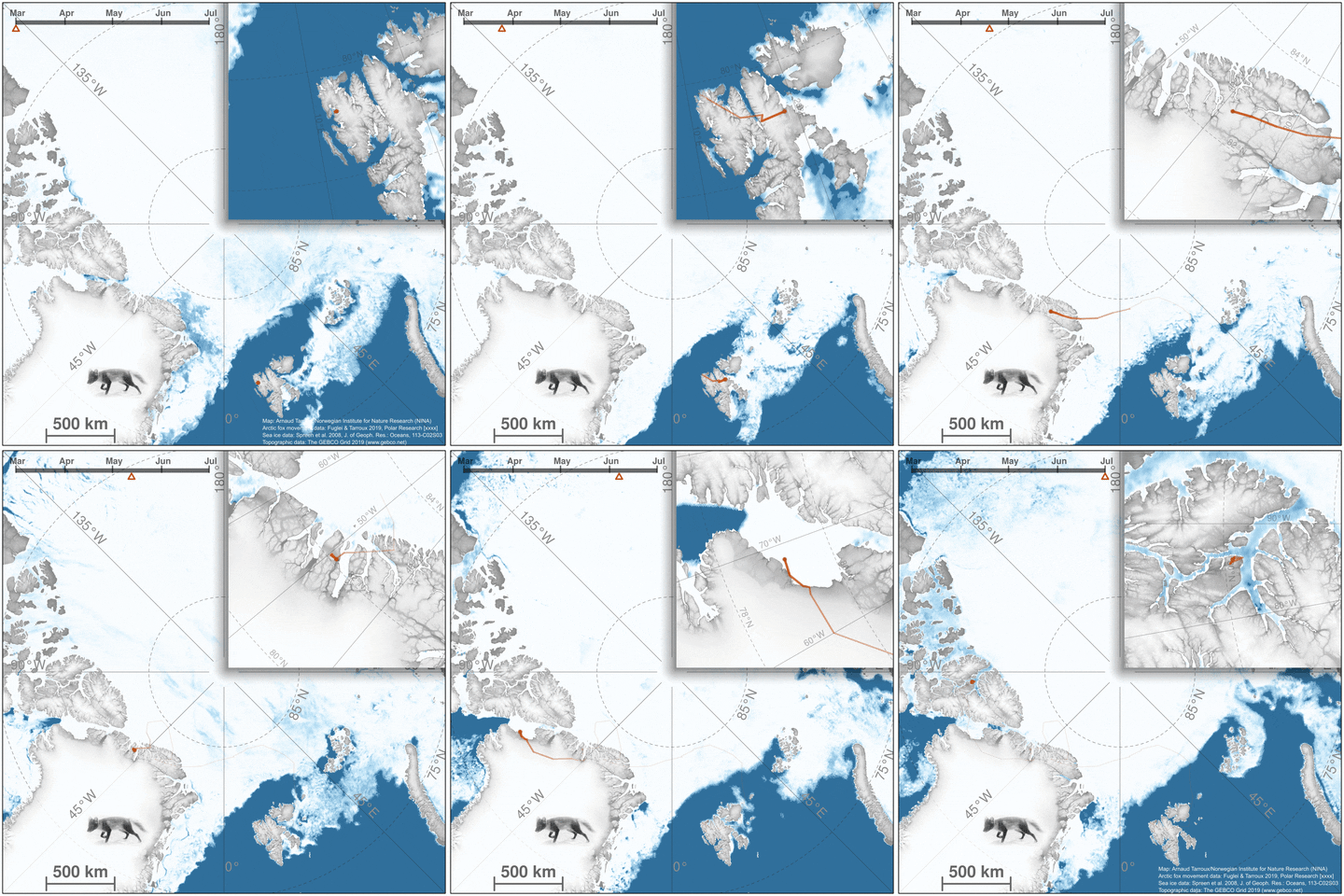
A 1-year-old explorer made an epic journey from Norway to Canada, covering 2,176 miles in 76 days. That young explorer was an Arctic fox.

The fox started her journey in March, at just under a year old. She walked nearly 1,000 miles from the archipelago near the North Pole to Greenland. She completed this leg in just 21 days, then began the second part of her trek.

The fox then walked about 1,242 miles farther to Canada’s Ellesmere Island. The whole trek took her just 76 days, averaging about 28.4 miles a day. Some days, however, the ambitious fox walked over 96 miles.

ap-18278571138868.jpg
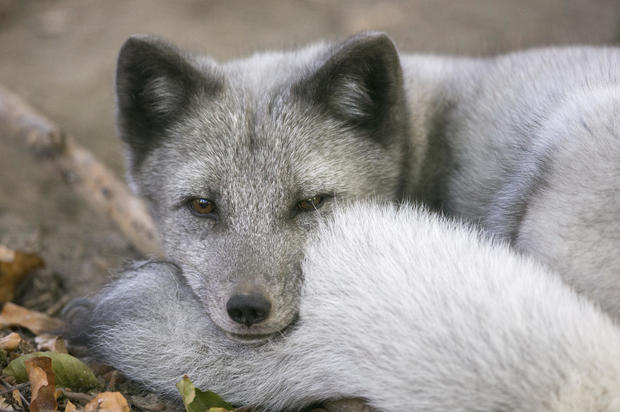
Researchers believe the fox curled up in the snow to brave the weather, much like this arctic fox lying in its enclosure at Osnabrueck Zoo.FRISO GENTSCH

Eva Fuglei, a research scientists at the Polar Institute, spoke to Norway’s NRK public broadcaster about the fox’s unlikely journey. “We couldn’t believe our eyes at first,” she said. “We thought perhaps it was dead, or had been carried there on a boat, but there were no boats in the area. We were quite thunderstruck.”

Fuglei has been tracking how foxes cope in with the dramatic changes of the Arctic seasons, BBC News reports. No fox has been recorded traveling that far, that fast before.

“There’s enough food in the summer, but it gets difficult in winter,” Fuglei told NRK. “This is when the Arctic fox often migrates to other geographical areas to find food to survive. But this fox went much further than most others we’ve tracked before – it just shows the exceptional capacity of this little creature.” Researchers think the fox curled up in the snow to sit out the bad weather.

The Polar Institute created a gif that shows the two parts of the fox’s journey across Greenland.

giphy.gif
Researchers made a gif of the fox’s travels across Greenland. She walked close to the North Pole for over 2,100 miles to Canada.POLAR INSTITUTE

The fox could have traveled even farther, but scientists stopped tracking her when she reached Canada in February, because her transmitter stopped working, the Polar Institute said.

The adventurous fox may have a hard time finding food in Canada, since she ate a mainly marine diet in Svalbard. Foxes in Canada’s Ellesmere Island eat mostly lemmings, which are small rodents.

Global Warming Pushes Microbes into Damaging Climate Feedback Loops

Research is raising serious concerns about climate change’s impact on the world’s tiniest organisms, and scientists say much more attention is needed.

Diatoms under a microscope. Credit: NOAA Corps Collection

Microbiologists issued a statement warning about the climate feedback loops they’re already seeing and called for more research to understand the potential impact. Credit: NOAA Corps Collection

https://insideclimatenews.org/news/18062019/climate-change-tipping-points-microbes-health-soil-oceans-viruses-bacteria


All life on Earth evolved from microorganisms in the primordial slime, and billions of years later, the planet’s smallest life forms—including bacteria, plankton and viruses—are still fundamental to the biosphere. They cycle minerals and nutrients through soil, water and the atmosphere. They help grow and digest the food we eat. Without microbes, life as we know it wouldn’t exist.

Now, global warming is supercharging some microbial cycles on a scale big enough to trigger damaging climate feedback loops, research is showing. Bacteria are feasting on more organic material and produce extra carbon dioxide as the planet warms. In the Arctic, a spreading carpet of algae is soaking up more of the sun’s summer rays, speeding melting of the ice.

Deadly pathogenic microbes are also spreading poleward and upward in elevation, killing people, cattle and crops.

So many documented changes, along with other alarming microbial red flags, have drawn a warning from a group of 30 microbiologists, published Tuesday as a “consensus statement” in the journal Nature Reviews Microbiology.

The microbiologists, in their statement, warned about changes they’re already seeing and called for more research to understand the potential impact. The statement “puts humanity on notice that the impact of climate change will depend heavily on responses of microorganisms, which are essential for achieving an environmentally sustainable future,” they wrote.

“Microbes literally support all life on Earth,” said Tom Crowther, an environmental scientist with ETH Zürich, who was among the signers of the statement. “Maintaining and preserving these incredible communities has to be our highest priority if we intend to maintain the existence that we want on this planet.”

What’s known is that global warming increases microbial activity, driving global warming feedback loops, Crowther said.

His research has showed that accelerated microbial activity in soils will significantly increase carbon emissions by 2050. In another study, he showed how global warming favors fungi that quickly break down dead wood and leaves and release CO2 to the atmosphere.

Other warning signs from the microbial world include spreading crop diseases that threaten food security, microbial parasites that threaten freshwater fish, as well as the fungal epidemic wiping out amphibians world wide.

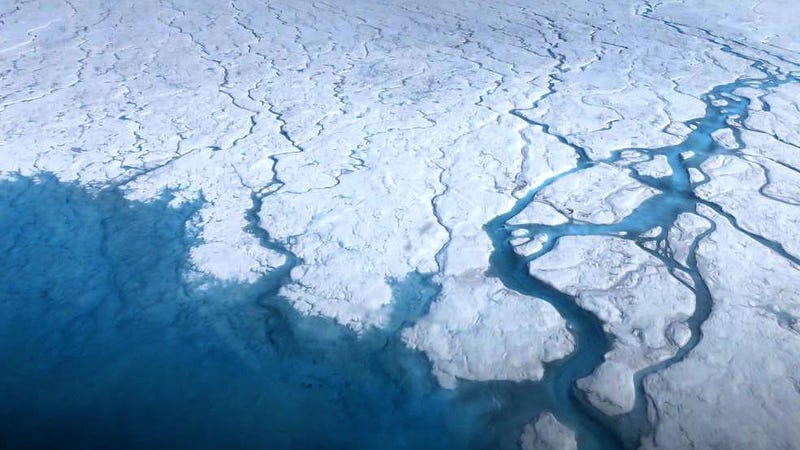
In the Arctic, a spreading carpet of algae is soaking up more of the sun's summer rays, speeding melting of the ice.

On mountain glaciers and in Greenland, algae is soaking up more of the sun’s summer rays, speeding melting of the ice. Scientists here collect samples of dark microbes for the Black Ice project. Courtesy of Birgit Sattler/University of Innsbruck

A better understanding of the dynamics would not only help make better global warming projections, but that knowledge also is integral to efforts to reduce CO2 levels in the atmosphere with climate-friendly soils, forest and agriculture, said University of Vermont climate researcher Aimée Classen.

“We know microbes are important for the way the way plants grow,” she said. “Can we harness some of that to help plants be more resistant to changing climate and to sequester more carbon in the soil?”

It’s a Health Issue, Too

There are beneficial microbes, and there are pathogens that are deadly to plants and animals. Global warming is making it easier for some of those killers to spread, reproduce and persist in the environment, said MatthewBaylis, a health researcher at the University of Liverpool who joined the consensus statement.

“We’re seeing a remarkable rate of emergence with new and spreading diseases that are affecting our food production, plants and animals, and our own health,” he said.

It’s not all due to climate change. Some of the spread of disease is simply due to people moving around more and moving plants from place to place in commerce and agriculture.

But there is compelling scientific evidence that global warming has brought malaria to higher elevations in Africa even as its being eradicated in other places, and that it has enabled the spread of bluetongue, a livestock disease that affects sheep, Baylis said.

Millions more people will face the risks of these diseases as the climate warms, he said.

“As the environment warms, pathogens can proliferate in new habitats that were previously too cold, and thereby infect humans in these new habitats,” said Kenneth Timmis, an environmental microbiologist at the Technical University Braunschweig, Germany.

Warming oceans are also changing currents and extreme events like El Niño, which disperses pathogens to new habitats where they cause disease, Timmis said. “This is the case for Vibrio, the cause of cholera and related diseases, of which there has been a series of outbreaks in recent years. In general, water-borne infections increase with increasing temperature,” he said.

Microbes Changes Affect Ocean Food Chain

Charges are also being documented in the Southern Ocean around Antarctica, where marine microplankton take in some 40 percent of all the carbon sequestered by all the oceans and sink it to the seafloor, partly mitigating the buildup of greenhouse gases.

About 90 percent of the world’s ocean biomass is microbial, making it a thick, living soup at a microscopic scale, and global warming brewing up some biological storms with as-yet unknown consequences, said Antje Boetius, a marine microbiologist at the Max Planck Institute in Germany.

Various tiny plankton under a microscope. Credit: NOAA Fisheries Collection

Various tiny ocean plankton are studied under a microscope. Credit: NOAA Fisheries Collection

The widely reported extreme low Arctic sea ice extent in the summer of 2012 rippled through the ocean’s ecosystems. Huge amounts of microbial life, in the form of diatoms floating in sea ice east of Greenland drifted to the bottom. Boetius said she measured a noticeable change in ocean chemistry as the dead diatoms and associated bacteria piled up at the bottom of the ocean. The research didn’t trace a direct link to harm to marine animals, but it showed how sudden and dramatic extreme climate events can be.

“In the very deep sea, which everyone thinks is protected, we see the velocity of climate change,” she said.

The breeding and feeding cycles of many other Arctic species are closely linked to the timing and location of plankton blooms, so a disruption of the ocean microbe cycles can fundamentally affect the whole food chain, from birds to whales.

Boetius also warned of other tipping points that haven’t been studied yet, including the erosion of organic permafrost soil to the ocean, where aquatic bacteria could digest the material and release huge amounts of methane and CO2 to the air, as well as a potential increase in toxic algae blooms in the Arctic, where they are now still uncommon.

“For everyone that studies ocean microbiology,” she said, “it’s really scary.”

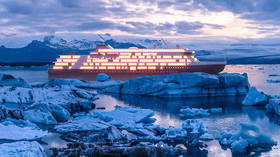
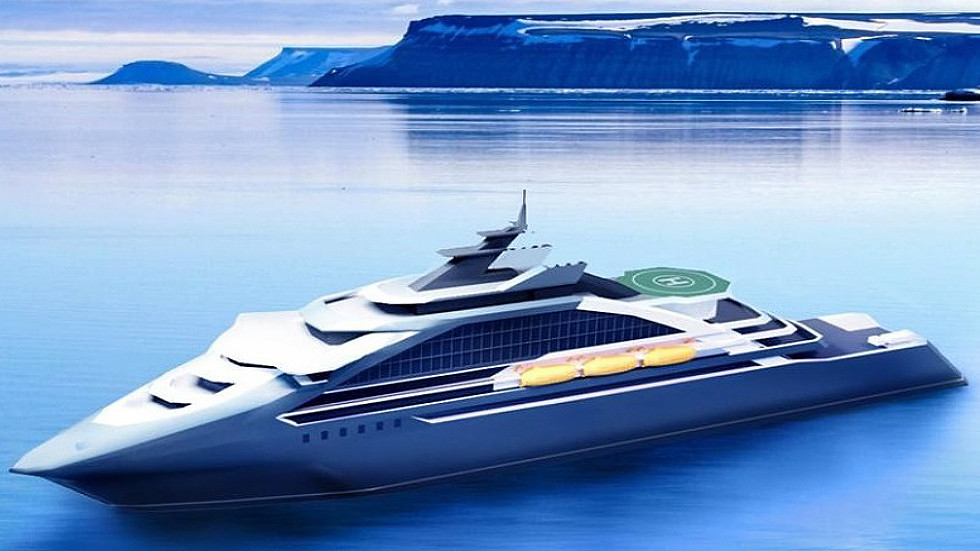
All decked out: Russia’s shipbuilding major unveils its plans for Arctic cruise liners

All decked out: Russia’s shipbuilding major unveils its plans for Arctic cruise liners

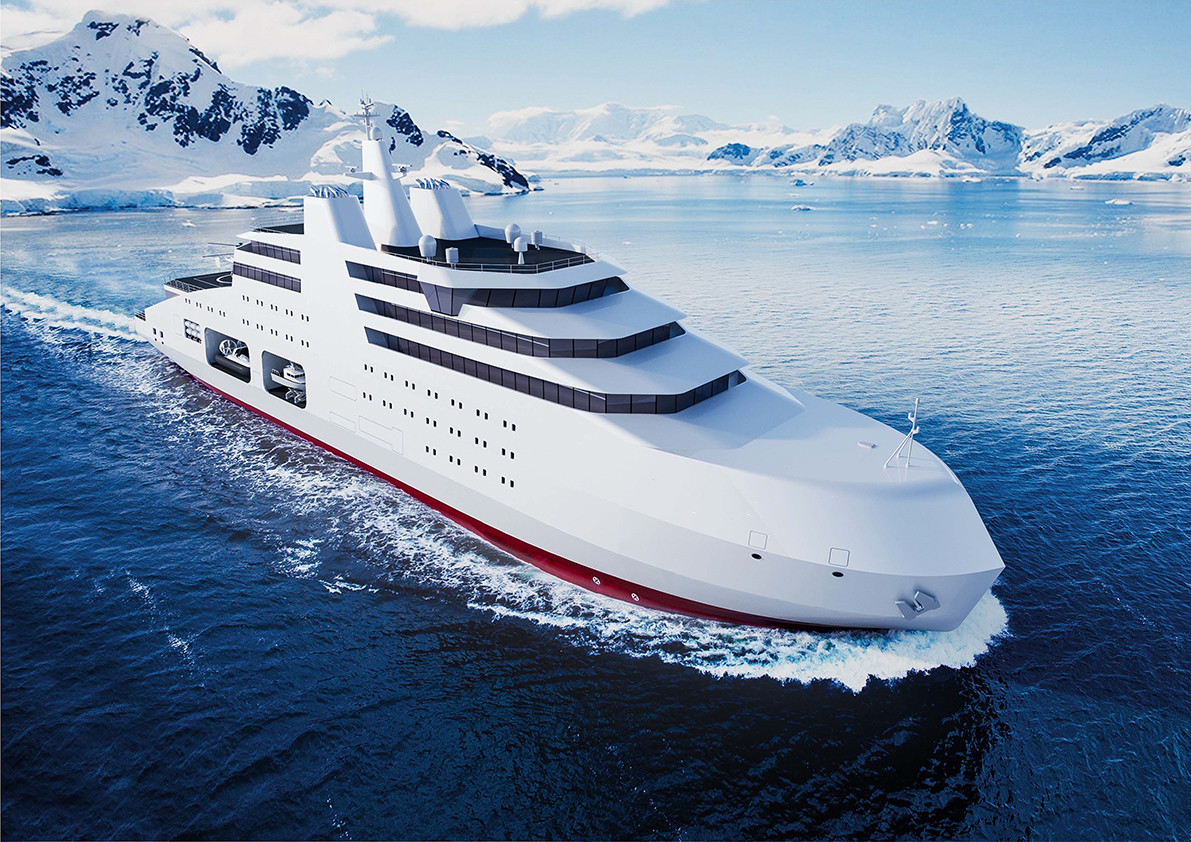
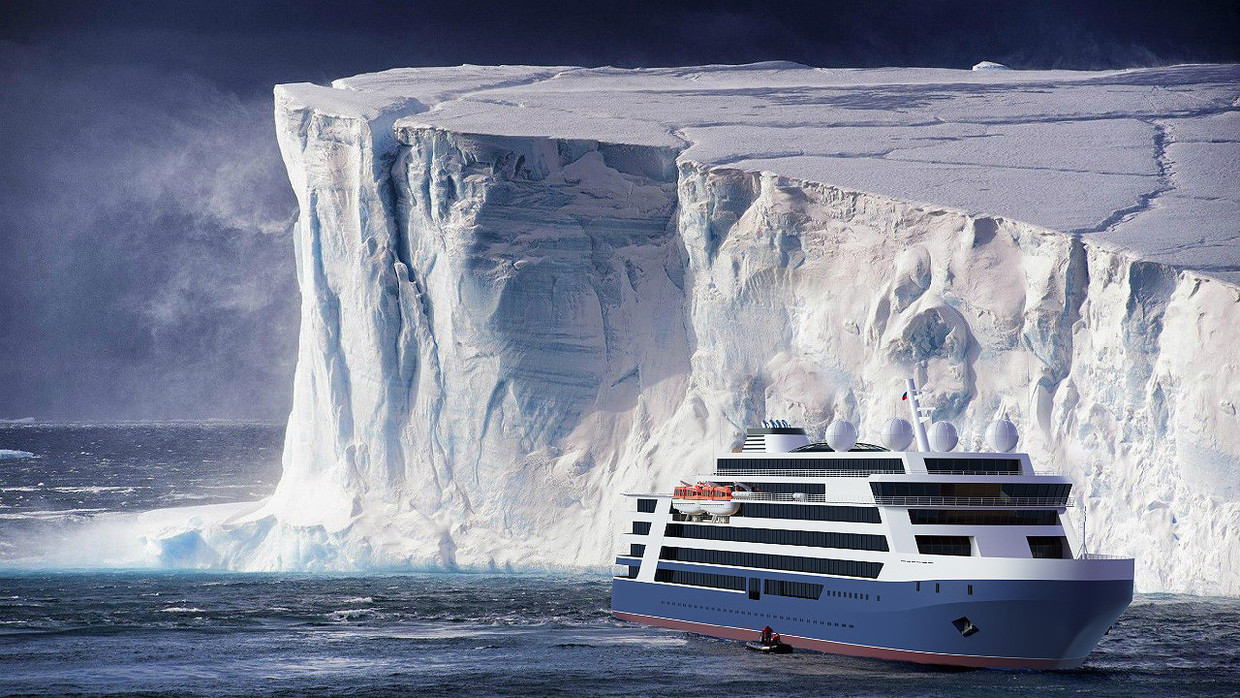
The company sees the development of Arctic cruise ship-building a high priority objective for current market conditions. United Shipbuilding Corporation (USC) may offer potential contractors several types of holiday cruisers, including Almaz, Vimpel and Iceberg models, all designed by the company’s subsidiaries.

Valued at up to $300 million each, such liners could potentially be equipped with a helipad or its own on-board casino, according to the company’s CEO Aleksey Rakhmanov.

“The vessels will be able to boast a helicopter deck, an ice deflector, swinging propellers, as well as five-star interiors and public areas with casinos, if permitted by the current legal provisions,” the top executive said, stressing that casinos may boost the return on investments as they may attract markedly different people.

According to Rakhmanov, every cruise ship will be able to carry up to 350 passengers, providing the travelers with various entertainment options, from submersion in a diving bell to sports activities like jet-skiing. The CEO expects Russian companies to become potential contractors for USC’s unique vessels.

Half of Greenland’s Surface Started Melting This Week, Which Is Not Normal

lhttps://earther.gizmodo.com/half-of-greenlands-surface-started-melting-this-week-w-1835483363

Brian Kahn

Photo: NASA Goddard Space Flight Center (Flickr)

A major warm spell has caused nearly half the surface of the Greenland ice sheet to start melting, something that’s highly unusual for this time of year. And while this spike may pass, the gears could already be in motion for record-setting melt on the ice sheet’s western flank.

Greenland has been scorching (by Greenland standards) for the past few days, with temperatures rising 10-20 degrees Celsius (18-36 degrees Fahrenheit) above normal across the island. Ruth Mottram, a climate scientist with the Danish Meteorological Institute, told Earther that the weather station at the top of the ice sheet saw temperatures reach above freezing on Wednesday and they were headed that way again on Thursday. That puts them just a degree or so away from setting the all-time heat record for June, which is currently held by June 2012.

The spike in temperatures has caused a spike in melt. Roughly 45 percent of the ice sheet surface has been melting. Normally, less than 10 percent of the ice sheet surface is melting at this time of year. According to data from the National Snow and Ice Data Center, Wednesday set a daily record for the widest melt area on that date, with 275,000 square miles—an area bigger than Texas—of the ice sheet’s surface becoming a slushy, watery mess. Mottram said the much of the ice is likely to refreeze once the heat breaks, but it will be more primed to melt later in the season.

Indeed, there are a number of factors working against Greenland’s ice right now. A spurt of heat in April kickstarted the second-earliest start to the melt season on record. Mottram noted that the weather station on the summit of Greenland read minus-1.2°C [29.8 degrees Fahrenheit] on April 30, its warmest ever April recording. May continued a trend of warmer than normal weather.

That doesn’t look right.
Image: NSIDC

“In fact, one of my weather forecaster colleagues rather drolly remarked that you would have been more successful growing tomatoes outside in Kangerlussuaq [in western Greenland] than in most of Denmark this May, due to the very warm May without frosts there,” she wrote in an email.

This going-on-three months of warm temperatures comes after a very dry winter for Greenland, particularly on the ice sheet’s western edge. Ice sheets need snow to gain mass but also to act like a bright, white shield that reflects sunlight away, something scientists call the albedo effect. The low snowpack means the ice sheet’s protection is much weaker than normal. Greenland’s ice also has all sorts of schmutz on it as wildfire soot and other forms of black carbon that darken its surface and absorb more of the sun’s energy. Xavier Fettweis, a Greenland researcher at the University of Liege, called this situation “exceptional.”

“Due to a lower winter accumulation than normal, the bare ice area has been exposed very early in this area enhancing the melt due to the melt-albedo feedback,” he told Earther. “Therefore, at the beginning of the melt season, the snowpack along the west coast is now preconditioned to break records of melt.”

And unfortunately, record melt is likely to be in Greenland’s future due to the weather. The Arctic is warming twice as fast as the rest of the world, but certain natural climate patterns can enhance that warmth over Greenland. In particular, the North Atlantic Oscillation (NAO), a seesaw of high and low pressure areas, can really crank up the heat on Greenland when it’s in a negative phase. In that setup, higher than normal pressure plops itself over Greenland and parts of the Arctic and can lock in warm weather and sunny skies. The NAO is negative right now and forecasts indicate it’s like to stay negative all summer.

Which means this is almost certainly not the last heat wave Greenland will see. It remains to be seen if we’ll get a meltdown like July 2012 when the entire ice sheet’s surface destabilized, but regardless, it’s a disconcerting June for an ice sheet that, if it completely melted away, would raise sea levels by about 24 feet.

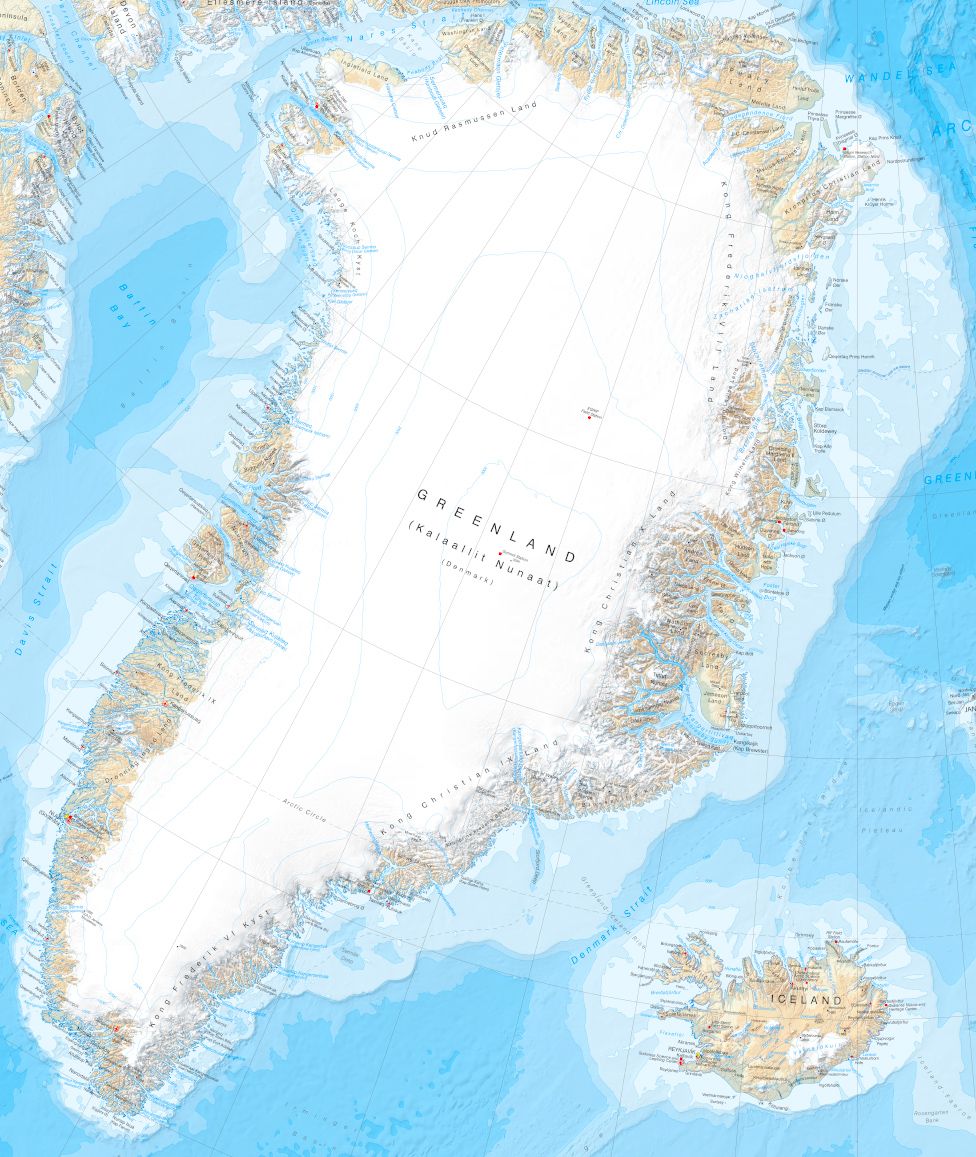
Greenland map captures changing Arctic in fine detail

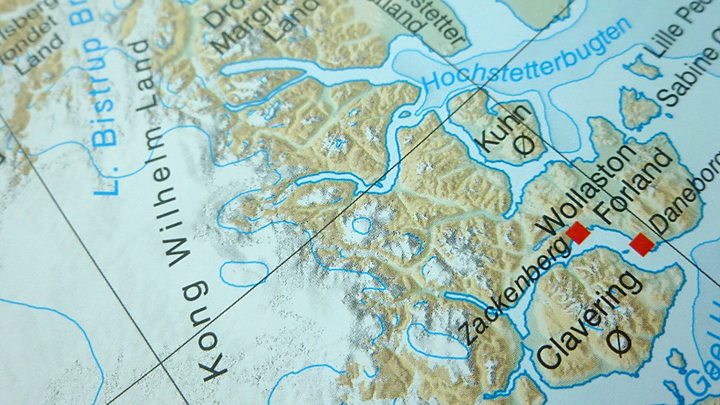
GreenlandImage copyrightBAS
Image captionThe printed sheet map is 1:4,000,000 scale (1cm = 40km; 1 inch = 63 miles)
Presentational white space

The Arctic is changing rapidly. It’s warming twice as fast as the rest of the planet.

The seasonal sea-ice is in long-term decline and the ice sheet that sits atop Greenland is losing mass at a rate of about 280 billion tonnes a year.

So, if you choose to make a map of the region, you start from the recognition that what you’re producing can only be a snapshot that will need to be updated in the relatively near future.

Laura Gerrish, a geographical information systems and mapping specialist at the British Antarctic Survey (BAS), knows this. Polar science and polar cartography are all about tracing change.

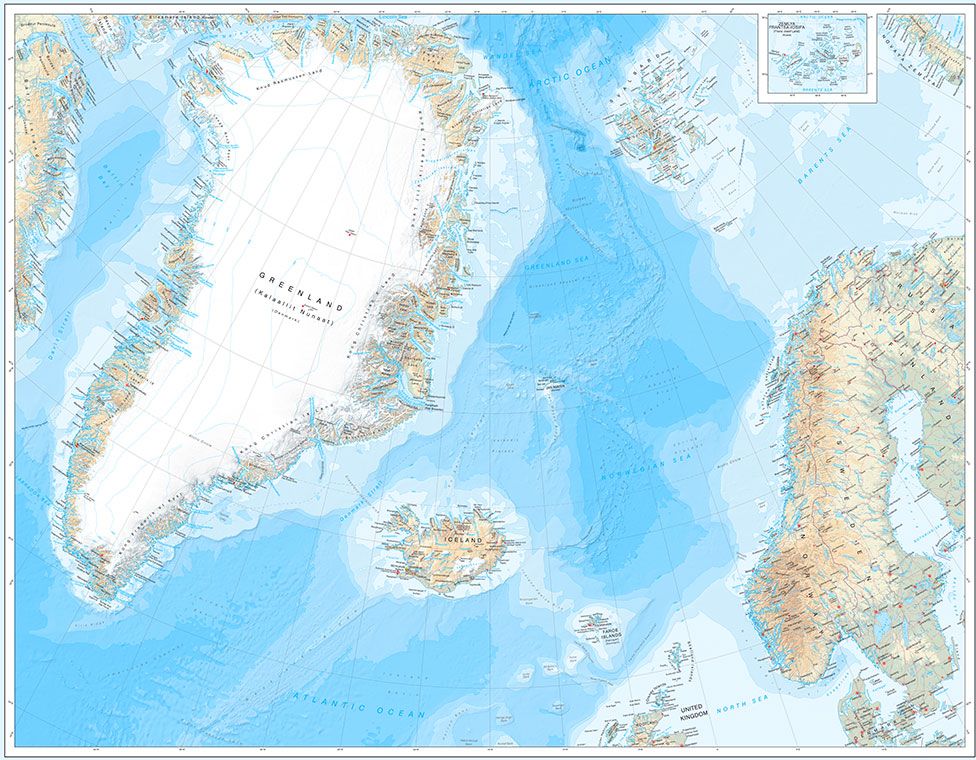
Laura has just finished making a exquisite new printed sheet map (1:4,000,000) of Greenland.

The detail is a delight – from the winding path of all the fjords and inlets, to the precise positioning of current ice margins, and the use of all those tongue-twisting Greenlandic names.

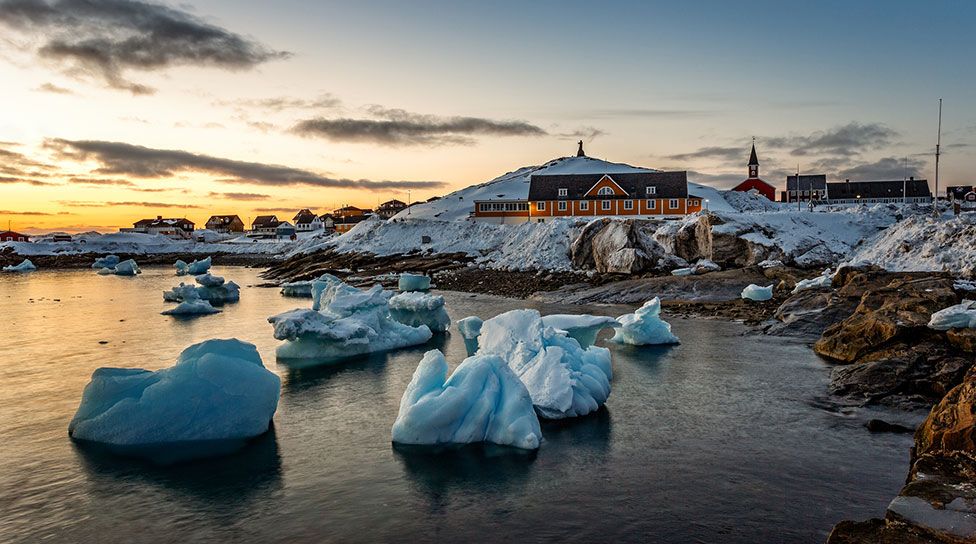
Nuuk city old harbourImage copyrightGETTY IMAGES
Image captionThe Arctic is one of the fastest warming places on Earth

“The map is a little unusual because the area has not been shown on one sheet like this before,” explains Laura.

ADVERTISEMENT

“We have good maps, obviously, of Europe, of Iceland, of Svalbard – but there is nothing that puts them all together on one sheet and shows their relationship like this.

“The map is aimed at scientists, clearly; BAS is a scientific organisation. But we hope tourists on cruise ships and any visitors to Greenland will find it useful, as well as schools or anyone with an interest in the Arctic.”

Media captionLaura Gerrish and Henry Burgess: “It’s aimed at scientists, tourists, visitors and schools”

Greenland And The European Arctic, to give the map its full title, has taken nearly two years to put together.

Laura has had to call on more than a dozen data-sets to get the shape of Greenland exactly right. These have been checked against the latest satellite imagery to ensure physical features are where they’re supposed to be.

One or two features, such as islands in the Qimusseriarsuaq (Melville Bay) region, are new because they’ve only recently been revealed by contracting ice fronts.

Full mapImage copyrightBAS
Image captionThe map renders Greenland in relation to northern Europe

Care has been taken in particular to plot the present extents of all the glaciers, including the big ice streams that sometimes hit the science headlines, such as Jakobshavn, Petermann, Zachariae Isstrom, and Helheim.

These glaciers have demonstrated some remarkable retreat behaviour. Although just to prove what a thankless task this business can be, they’ve also shown recently that they can slow and lengthen as well (the net area of 47 regularly surveyed glaciers essentially stood still last year).

You might wonder what the British Antarctic Survey is doing making maps of the polar north. Henry Burgess, the head of the NERC Arctic Office which is hosted at the survey’s HQ in Cambridge, has a simple answer.

“BAS is the national capability and logistics provider for the polar regions,” he told me. “It provides the ships and the planes and the expertise, and the BAS mapping department therefore has a responsibility in both the north and the south.”

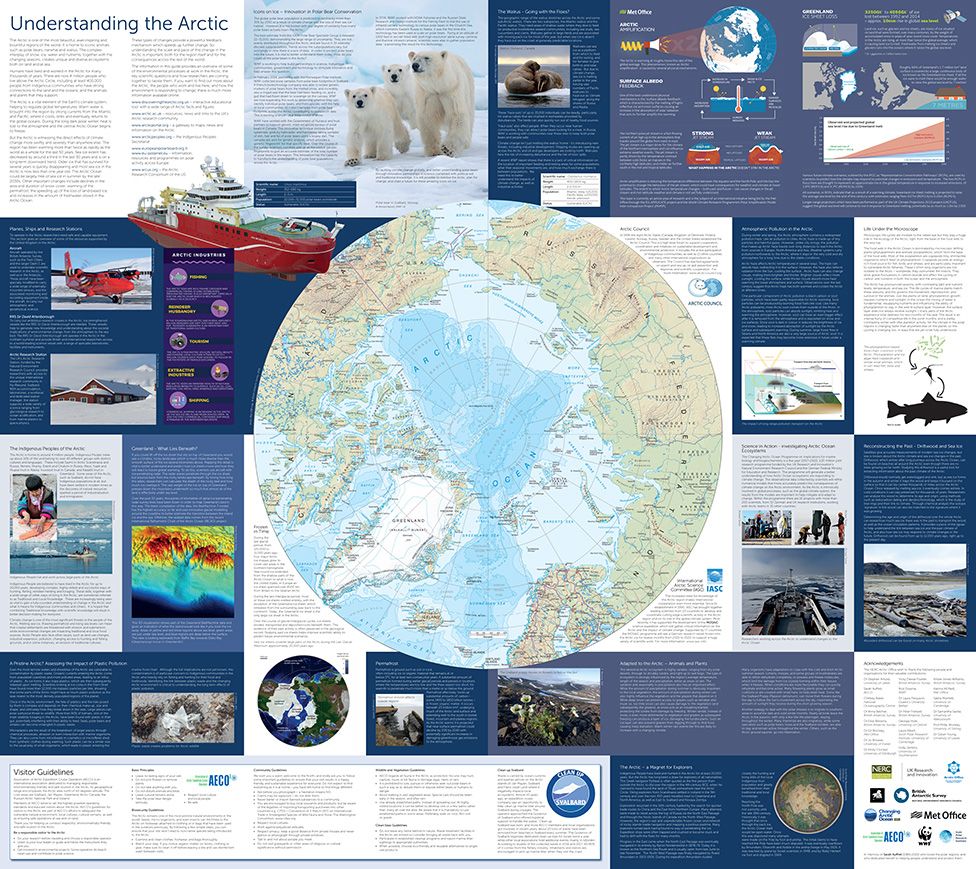
Henry is especially pleased with the flip side of the sheet map. This has a series of panels that attempt to put the cartography in a wider context.

Different organisations from the UK Met Office to WWF have provided small summaries on various issues that range from the effects that a warming arctic are having on frozen ground and on weather at mid latitudes, to the challenges climate change presents to indigenous peoples and endemic wildlife.

Hopefully, the new fold-out sheet map of Greenland And The European Arctic should be good for at least a few years, but says Henry: “We’re seeing dramatic changes in Svalbard for example where we have our Arctic station; the glaciers are pulling back by 10s of metres per year. So, yes, mapping is a constant process.”

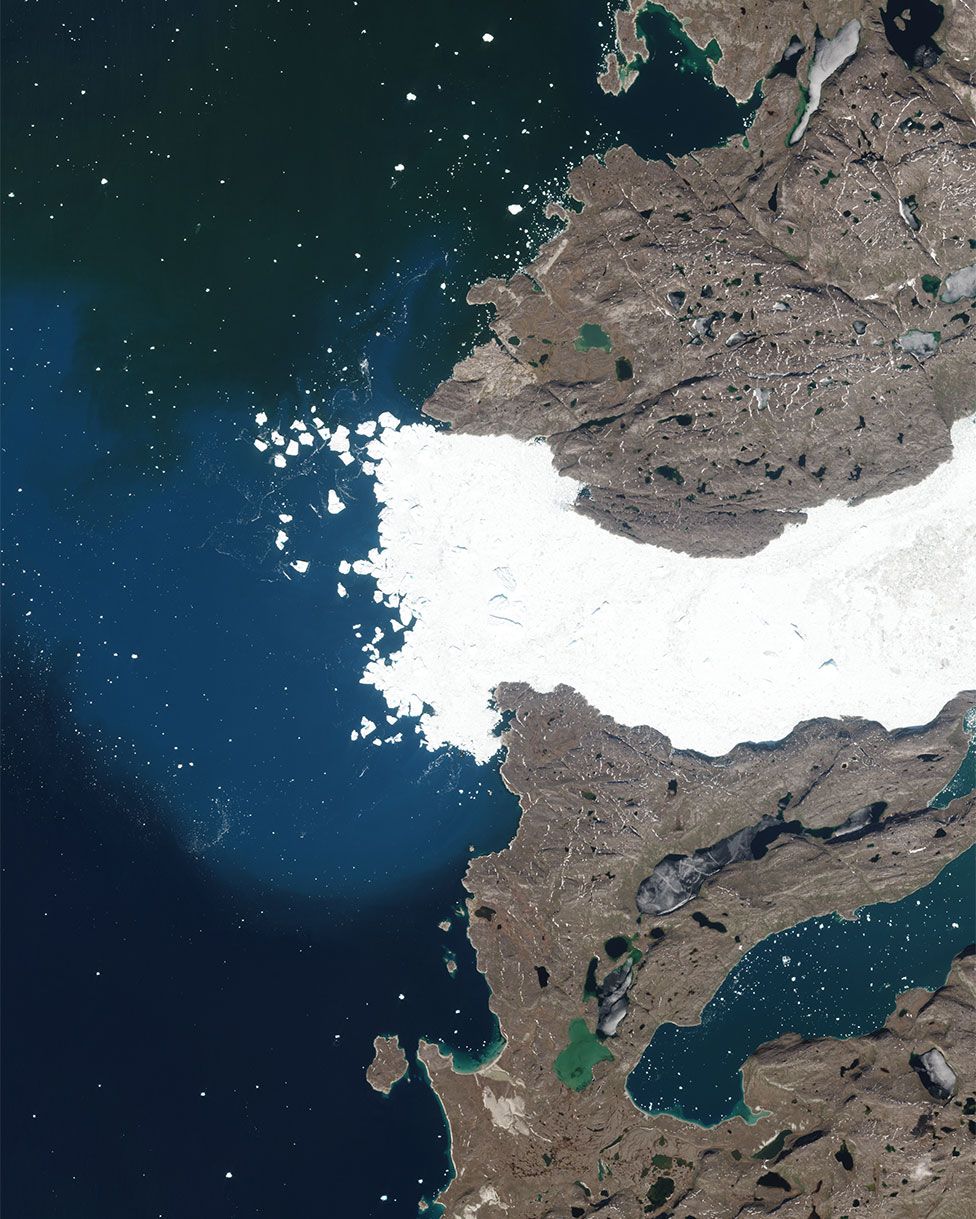
Jakobshavn GlacierImage copyrightSENTINEL HUB
Image captionJakobshavn Glacier spits out icebergs in Disko Bay on the west coast
Back sheetImage copyrightBAS
Image captionThe reverse of the sheet map puts changes in the Arctic in context

The Greenland and the European Arctic map is available for sale as either a flat wall map or a folded map at several outlets, including the Scott Polar Research Institute and Stanfordsmap store in London.

Ten Ways 2018 Brought Us Closer to Climate Apocalypse

The 20 warmest years ever recorded have been within the last 22 years, and the four warmest of those have been 2015, 2016, 2017 and 2018, according to the World Meteorological Organization (WMO). The WMO has stated that if these trends continue (and there is no reason to believe they won’t), global temperatures may rise from between 3-5 degrees Celsius (3-5°C) by 2100. The organization warned that if humans exploit all known fossil fuel reserves, “the temperature rise will be considerably higher” than even those catastrophic levels.

“It is worth repeating once again that we are the first generation to fully understand climate change and the last generation to be able to do something about it,” WMO Secretary-General Petteri Taalas announced in a recent WMO press release.

Yet even with this stark wake-up call, it may well already be too late, given that we are already living in the Sixth Mass Extinction. A study published earlier this year, conducted by an international team of researchers from 17 countries whose findings were published in Nature Geoscience, showed that global temperatures could eventually double those that have been predicted by climate modeling.

The vast majority of governments around the globe are responding in ways that range from laughable to pathetic, given the consequences that are upon us already.

2018 has been yet another year of records and alarming developments as runaway climate change continues apace. Here are ten significant climate-related phenomena from 2018.

1. Arctic Sea Ice

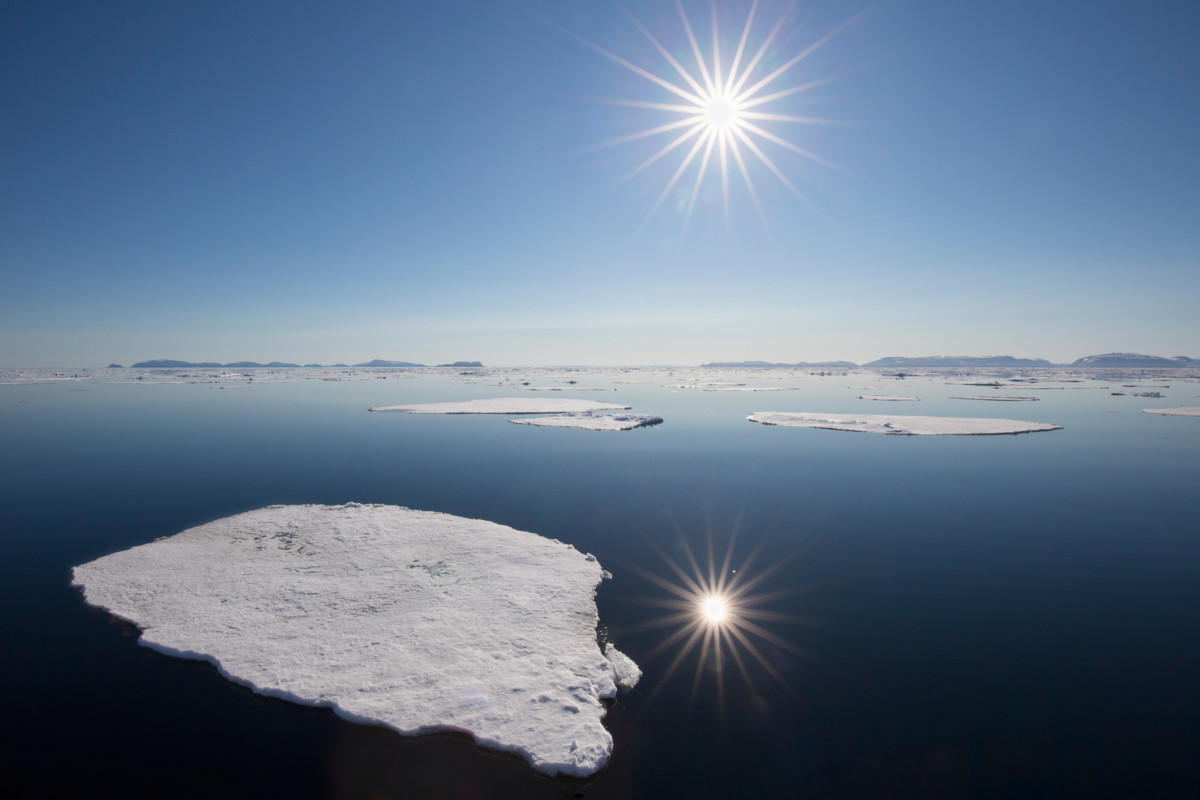
The Arctic sea ice is close to historic lows in both extent, volume, and mass. The annual minimum Arctic ice volume, based on observations (not projections), is following a trend that shows we should expect periods of an ice-free Arctic Ocean in the summer by 2023, and possibly sooner.

World-renowned Arctic Sea Ice expert Peter Wadhams predicted this during an interview with Truthout.

Warm temperatures have become the norm in the Arctic, so the now increasingly rapid loss of sea ice should come as no surprise. Some of the ground in the Arctic is not even freezing any more, even during the winter.

Militaries from around the world, particularly from the US and Russia, are racing to stake claims in the region and project their presences there in order to advantage of the fragile Arctic region for exploitation of oil and gas reserves, as well as those countries actively exploring shipping across the increasingly accessible region as the sea ice continues to melt away.

The loss of Arctic Sea ice will lock in several runaway climate feedback loops that will dramatically altar global climate, causing water availability and food-growing capacity to be severely diminished across large swaths of the planet.

2. Increasingly Warm Oceans

Earth’s oceans have already absorbed 93 percent of the warmth humans have generated since just the 1970s.

To give you an idea of how much energy that is, if you took all of the heat humans generated between the years 1955 and 2010 and placed it in the atmosphere instead of the oceans, global temperatures would have risen by a staggering 97 degrees Fahrenheit.

We continue pumping CO2 into the atmosphere, 25 percent of whichcontinues to be absorbed by the oceans, along with the heat the CO2 traps in the atmosphere.

2017 was the second warmest year ever recorded for the oceans, and according to NASA, the five hottest years ever recorded for the oceans have occurred since 2010. The oceans are thus becoming increasingly warmer and more acidic with each passing day.

And, according to the WMO, “For each 3-month period until September 2018, ocean heat content was the highest or second highest on record.”

And Australia’s Bureau of Meteorology warned this November the “chance of an El Niño forming in the coming months is 70 percent,” which would bring warmer than normal ocean temperatures.

3. Methane

One extremely worrying development in the Arctic came in the form of bubbling lakes. A report showed that large numbers of lakes across the region were leaking methane, a far more potent greenhouse gas than CO2.

In what is perhaps a harbinger of things to come, one lake in particular was found to be bubbling vigorously as methane from below escaped through the lake and into the atmosphere.

These lakes that are bubbling from methane being released from the thawing permafrost beneath them don’t completely freeze during the winters, which causes them release even more methane as the permafrost does not reach the cold temperatures it had prior to this phenomenon. Hence, another runaway climate feedback loop is born.

This distressing development comes on top of numerous other feedback loops in the Arctic that have already kicked in.

More bad news about methane came in the form of a report illustrating how large amounts of methane (up to 41 tons daily) were being released from a glacier in Iceland via its meltwater. This is an amount equal to the methane produced by more than 136,000 belching cows.

4. Wildfires

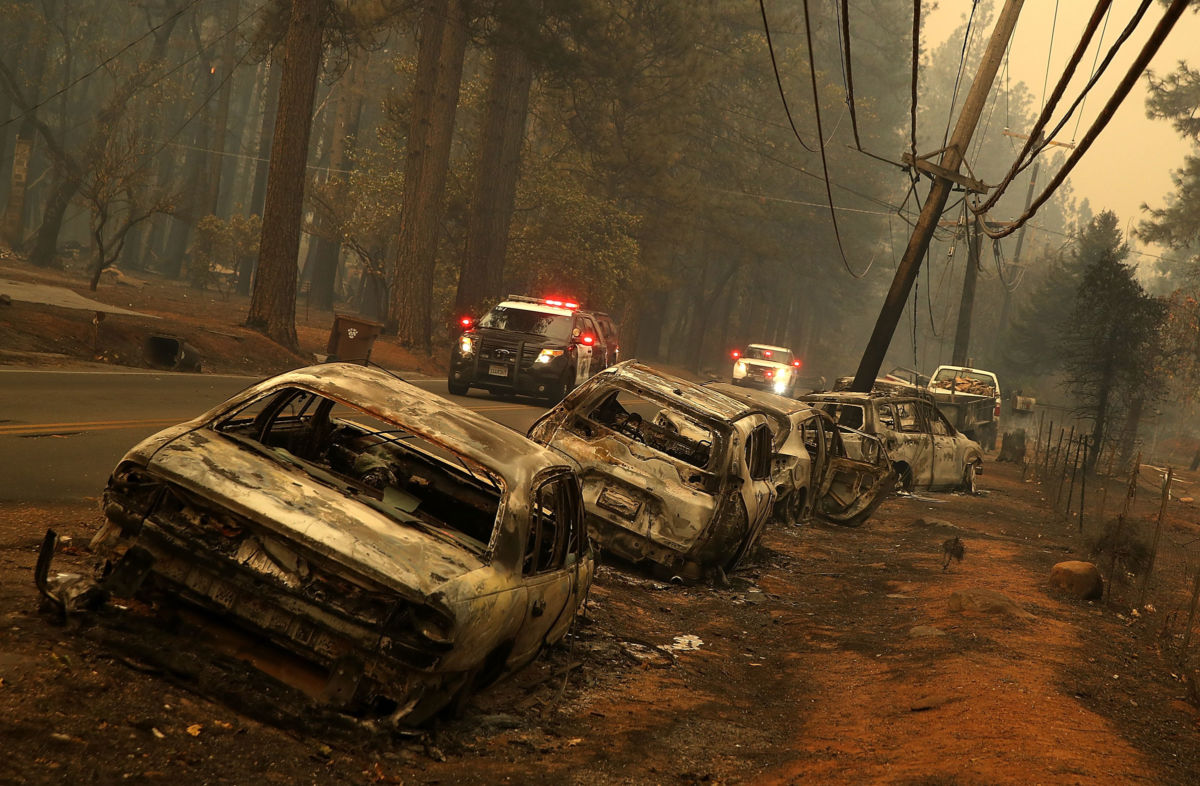
Wildfires, amped up by climate change, ravaged many regions of the world in 2018.

California saw its most destructive wildfire on record, surpassing the previous record set only the year before, as scores died from incineration that likely released radiation and toxic chemicals into the air in Southern California.

Wildfires across Canada’s British Columbia, as well as other parts of that country, were the largest ever for the second year in a row.

Wildfires across Queensland, Australia during November were unprecedented, given that the area is technically a rainforest, and it was springtime there.

Nearly 100 people died in wildfires in Greece, in what turned out to be Europe’s deadliest forest fire in over a century.

5. Insect Apocalypse

Insects, and hence the global food web, are in crisis, according to several studies, one of which was published earlier this year.

A study published this October in the Proceedings of the National Academy of Sciences (PNAS) showed how massive the collapse of insects is, and that it is far more widespread that previously known. Climate change is implicated as the leading cause.

This comes on the heels of a study from last year showing a 76 percent decrease in flying insects in the past few decades in nature preserves across Germany. This was a dramatic uptick from a 2014 study by an international team of biologists which estimated in the previous 35 years the abundance of invertebrates like bees and beetles had decreased by 45 percent.

Everywhere long-term data on insects is available, particularly across Europe, the numbers of insects are plummeting.

“This study in PNAS is a real wake-up call — a clarion call — that the phenomenon could be much, much bigger, and across many more ecosystems,” David Wagner, an expert in invertebrate conservation at the University of Connecticut, told the Washington Post. “This is one of the most disturbing articles I have ever read.” He added, “I’m scared to death.”

Without these pollinators, which are being annihilated, the already beleaguered global food production system is in even greater danger of collapse.

6. A Broken Global Food System

The global food system is already broken, according to the 130 of the world’s science and medicine academies.

Tim Benton, a professor of population ecology at the University of Leeds who was involved in the large report, told the Guardian: “Whether you look at it from a human health, environmental or climate perspective, our food system is currently unsustainable and given the challenges that will come from a rising global population that is a really [serious] thing to say.”

Staggeringly, nearly one billion people went hungry last year. This number is guaranteed to climb, due to worsening climate impacts as atmospheric CO2 content continues to increase and the nutritional value of crops decreases as the result.

As Truthout reported earlier this year, two studies investigating corn and vegetables warned of an increasing risk of food shocks around the world, along with malnutrition, if climate change continues unchecked.

Both studies, published in the Proceedings of the National Academy of Sciences, showed how climate change will increase the risk of simultaneous crop failures across the planet’s largest corn-growing regions, as well as sapping nutrients from critical vegetables. For example, an increase of 4°C — which is essentially the current mid-range trajectory we are on to reach by 2100 — could cut US corn production nearly in half. Meanwhile, the likelihood of simultaneous crop failures for the four biggest corn exporters (US, Argentina, Brazil, Ukraine) suffering yield losses of 10 percent or greater increases from 7 percent at 2°C warming to 86 percent at 4°C.

Another study warned of how climate change already poses a serious threat to the nutritional value of crops, and a lack of action could well have major global implications for both food security and global health. The same study showed that global crop yields could be reduced by nearly one-third with a 4°C temperature increase.

7. Uninhabitable and Permanently Altered Regions

Still suffering from the impacts of a devastating Hurricane Maria, Puerto Rico was officially left to its own devices to recover.

The country has been physically, socially, and psychologically devastated as tens of thousands of people have struggled to survive without electricity, health care or basic services long after the reconstruction of the island should have taken place.

Another example of this in the last year was Florida’s panhandle, portions of which were obliterated by Hurricane Michael. Government aid was slow to arrive.

Meanwhile, increasingly intense and extensive heat waves, coupled with broadening drought, and climate change forecasts showing more of all of these, revealed that countries across North Africa and along the Persian Gulf will become literally uninhabitable in the not-so-distant future. Rising seas infiltrating water tables, and thus contaminating many people’s drinking water source, are also going to be a large factor in this equation.

8. Great Barrier Reef

A record heat wave in Queensland, Australia, in November shattered the previous high temperature record by a stunning 5.4°C. The heat wave alarmed scientists, raising fears of another bleaching event that could further weaken the already beleaguered Great Barrier Reef, the largest coral reef in the world.

The heatwave increased already above-average marine temperatures, driving up the likelihood of the coral once again dying off in the overheated waters.

Marine heatwaves in 2016 and 2017 already killed off and/or damaged large regions of the Great Barrier Reef, as scientists worried about the fact that without breaks in the annual heatwaves, the coral will not have a chance to recover.

The scientific consensus shows that coral reefs typically need a minimum of 10-12 years to recover from bleaching events. However, climate change is causing the bleaching events to occur on nearly an annual basis now.

Hence, a 2011 NOAA report warning that the planet could lose most of its coral reefs by 2050 is looking increasingly like an over-conservative projection.

Additionally, with scientific institutions already warning the odds are high that another El Nino could occur next year does not bode well for Earth’s already overheated oceans.

9. UN Report: Only 12 Years Left to Limit Warming

A landmark UN report released in October served as an imminent warning that if governments fail to act swiftly and dramatically (and within the next dozen years), droughts, flooding, and increasingly extreme heat waves will increase drastically.

In the Paris Climate Change Agreement, global governments pledged to try to keep warming within a limit of 1.5°C above pre-industrial levels, in order to prevent increasingly catastrophic impacts.

In the recent UN report, experts stated that without urgent and unprecedented changes, meeting the 1.5°C limit would be impossible.

The report pointed out several important thresholds: just an extra 0.5°C of warming beyond 1.5°C would essentially completely annihilate corals and dramatically accelerate the loss of what is left of the Arctic sea ice, and the proportion of the global population exposed to water stress would be at least 50 percent higher.

Additionally, at 2°C warming, extremely hot days would become much more common, there would be more forest fires and the number of heat-related deaths would increase. Plants would be nearly twice as likely to lose half their habitat than they would at 1.5°C, and sea level rise would increase by at least 10cm.

10. Nowhere Near Meeting Climate Change Goals

While many world leaders met in Poland for the COP24 climate talks in December, it was already clear that we are nowhere near on track to attain the goal of limiting global warming to 1.5°C.

Given we are currently already at 1.1°C, the Paris climate agreement in 2015 was non-binding, and the majority of the planet’s countries are still nowhere near doing what would actually be necessary to curtail emissions radically, we are on track to see at least 3.5°C warming by 2100, and much more after that.

Yet it became known in 2017 that oil giants BP and Shell were already planning for global temperatures to increase by 5°C by 2050, even in the wake of the Paris climate agreement.

Numerous reports have shown that it is highly unlikely civilization is possible at 3.5°C.

Terrifying climate change warning: 12 years until we’re doomed

Earth is on track to face devastating consequences of climate change – extreme drought, food shortages and deadly flooding – unless there’s an “unprecedented” effort made to reduce greenhouse gas emissions by 2030, a new United Nations report warns.

The planet’s surface has already warmed by 1 degree Celsius – or 1.8 degrees Fahrenheit – and could see a catastrophic 1.5 C — 2.7 F — increase between 2030 and 2052, scientists say.

“This is concerning because we know there are so many more problems if we exceed 1.5 degrees C global warming, including more heat waves and hot summers, greater sea level rise, and, for many parts of the world, worse droughts and rainfall extremes,” Andrew King, a climate science academic at the University of Melbourne, said in a statement to CNN.

The stunning statistics were released Monday in a report by the United Nations Intergovernmental Panel on Climate Change, which warned that we must take “rapid, far-reaching and unprecedented changes in all aspects of society” in order to save our planet.

Scientists with the Nobel Prize-winning IPCC said in order to have even a 50-50 chance of staying under the 1.5 degree cap, the world must become “carbon neutral” by 2050. Any additional carbon dioxide emissions would require removing the harmful gas from the air.

If nothing is done, Earth can expect heat wave temperatures to rise by 3 degrees Celsius, more frequent or extreme droughts, an increase in deadly hurricanes and as much as 90 percent of coral reefs dying off — including the Great Barrier Reef in Australia, according to the report.

Countries in the southern hemisphere would see the most drastic effects.

“The next few years are probably the most important in human history,” IPCC co-chair Debra Roberts, head of the Environmental Planning and Climate Protection Department in South Africa, told Agence France-Presse.

Efforts to curb climate change must also extend beyond the 2015 Paris Agreement reached among 197 countries – which President Trump withdrew the US from in June 2017.

“The window on keeping global warming below 1.5 degrees C is closing rapidly and the current emissions pledges made by signatories to the Paris Agreement do not add up to us achieving that goal,” said King.

Staying within the 1.5 degrees C target, instead of 2 degrees C, would result in the global sea level rising 3.9 inches less by 2100, reducing flooding. It would also cut down on species loss and extinction and reduce the impact on various ecosystems.

“There were doubts if we would be able to differentiate impacts set at 1.5 C and that came so clearly. Even the scientists were surprised to see how much science was already there and how much they could really differentiate and how great are the benefits of limiting global warming at 1.5 compared to 2,” Thelma Krug, vice-chair of the IPCC, told Reuters. “And now more than ever we know that every bit of warming matters.”

With Post Wires

This story originally appeared in the New York Post.

How Feedback Loops Are Driving Runaway Climate Change

If you think this summer has been intense as far as record warm temperatures, wildfires, drought, and flooding events around the Northern Hemisphere, you haven’t seen anything yet — unless you happen to live in the Arctic.

According to the US National Oceanic and Atmospheric Administration (NOAA), air temperatures there are increasing at an “unprecedented rate” — twice as fast as they are around the rest of the globe. NOAA’s 2017 Arctic Report Card states unequivocally that the Arctic “shows no sign of returning to reliably frozen region of recent past decades.”

The Executive Summary of the report also adds, “Arctic paleo-reconstructions, which extend back millions of years, indicate that the magnitude and pace of the 21st century sea-ice decline and surface ocean warming is unprecedented in at least the last 1,500 years and likely much longer.”

recent report from National Geographic revealed that some of the ground in the Arctic is no longer freezing, even during the winter. Along with causing other problems, this will become yet another feedback loop in the Arctic, causing yet more greenhouse gasses to be released from permafrost than are already being released and impacting the entire planet.

The simplest explanation for a positive climate feedback loop is this: The more something happens, the more it happens. One of the most well-known examples is the melting of sea ice in the Arctic during the summer, which is accelerating. As greater amounts of Arctic summer sea ice melt away, less sunlight is reflected back into space. Hence, more light is absorbed into the ocean, which warms it and causes more ice to melt, and on and on.

One of his concerns about a feedback loop already at play in the Arctic is how the heating of that region is already being amplified by ocean currents that transport warmer, more southerly waters northwards into Arctic seabed waters where it can affect methane deposits in submerged permafrost and sub-seabed methane hydrates.

“The release of this methane contributes powerfully to overall warming – methane is a very potent greenhouse gas, which actually has a bigger effect [on] the atmosphere’s radiative balance than carbon dioxide on decadal timescales,” Dr. Leifer told Truthout.

Although climate is generally thought to occur on century timescales, human timescales and ecological adaptation timescales are measured in decades instead of centuries, and this is now how many climate processes are being monitored given the rapidity of human-forced planetary warming.

Dr. Peter Wadhams is a world-renowned expert who has been studying Arctic sea ice for decades.

His prognosis for the Arctic sea ice is grim: He says it is in its “death spiral.”

“Multi-year ice is now much less than 10 percent of the area of the ice cover; it was 60 percent or more before 2000,” Dr. Wadhams told Truthout. “[Sea ice] extent in summer is down to 50 percent of its value in the 1980s.”

Dr. Wadhams, who is also the President of the International Association for the Physical Sciences of the Ocean (IAPSO), noted that this primary feedback loop is much further along than most of us realize.

“I see the summer sea ice disappearing by the early 2020s,” Wadhams said. He noted that the change of albedo (a measure of reflection of solar radiation) due to the loss of sea ice and snowline retreat across the Arctic “is sufficient to add 50 percent to the warming effect of CO2 emissions alone.”

Alarmingly, on August 21, Arctic scientists told The Guardian that the oldest and strongest sea ice in the Arctic had broken up for the first time in recorded history. One of them described the event as “scary,” in part because it occurred off the north coast of Greenland, which is normally frozen year-round. The region has long been believed to be “the last ice area”: It was thought, at least until now, to be the final place that would hold out against the melting impacts from an increasingly warmer planet.

Abrupt Acceleration

Temperatures are rising most strongly in the Arctic, with some areas already showing an increase of as much as 5.7 degrees Celsius (10.26 degrees Fahrenheit).

Dr. Michael MacCracken, Chief Scientist for Climate Change Programs with the Climate Institute in Washington, DC, explained to Truthout how, now that the Arctic is warmer, the temperature gradient between the tropics and the traditionally cold Arctic is reduced.

With a reduced gradient, the movement of warmth from low to high latitudes is slowed. As Earth rotates, this leads to a wavier jet stream that can carry low latitude warmth up to Alaska and elsewhere in the Arctic, and the southward reach of cold air in the Arctic to lower latitudes. This explains why New Orleans, for example, has recently experienced unusual freezing winter weather.

“In addition, the waves in the jet stream that result are shifting to the east less rapidly, which means the unusual weather patterns that are more frequently occurring are moving eastward less rapidly,” Dr. MacCracken explained. “So both wet and dry periods are lasting longer, contributing to both excessively wet (e.g., flooding) and excessively dry (e.g., wildfire) conditions.”

Dr. Wadhams is concerned about this as well.

“The jet stream effect is because Arctic air is warming faster than tropical air, so the temperature difference is decreasing,” he explained. “This reduces the driving force on the jet stream, so it then meanders, which brings hot air to the higher latitudes (and cold air to some low latitudes).”

Summer weather patterns are now increasingly likely to become stalled out over places like North America, portions of Asia, and Europe, according to a recent climate study that showed how a warming Arctic is causing heatwaves in other places to become more intense and persistent due to a slowing of the jet stream.

Dr. Leifer warned that as these processes continue and the Arctic continues to heat up faster than the tropics, the pole-equator temperature difference that controls our weather and causes three major weather circulation “cells” — tropical, mid-latitude, and arctic — will merge into a single weather cell. A similar merging of weather cells occurred during the time of the dinosaurs.

“The jet stream, which controls seasonal storms in the midlatitudes, is a result of these three cells, and would disappear in a single weather cell planet, dramatically altering rain patterns and almost certainly heralding an ecosystem catastrophe,” Leifer explained. “The plants that underlie the food chain would be replaced by others that the local animals (insects to apex predators) could not utilize — in short, an abrupt acceleration of the current Great Anthropocene Extinction event.”

The diminishment of the jet stream also contributes to another potentially catastrophic feedback loop within the Arctic seabed: Changes to the jet stream are causing longer and more intense heat waves to occur across the Arctic, which of course causes the Arctic Ocean to warm further.

Kevin Lister, an associate with the Climate Restoration Foundation in Washington, DC, co-authored a paper with Dr. MacCracken for the United Nations that addressed the crisis in the Arctic, among other climate disruption-related issues.

Unlike the most commonly accepted idea that global temperatures should not be allowed to increase by more than 1.5°C, Lister told Truthout that the planet reaching 1.5°C above baseline “is fundamentally dangerous and that the rate of change we are seeing today means we will not even be able to stop the temperature at this level.”

Lister said this conclusion was reached, in part, due to initial observations from Dr. Wadhams regarding how the loss of sea ice was amplifying rates of change in the Arctic.

Lister told Truthout that “methane emissions [in the Arctic] are already a severe risk,” and that he and Dr. MacCracken’s UN paper shows that once temperatures started rising they would be largely unstoppable due to the interacting nature of the feedback mechanisms.

“Thus, one feedback mechanism, such as sea ice melting, can trigger another, such as methane releases, which then accelerates the first in a tightening spiral,” he explained. “In reality, there are many critical feedback mechanisms and the interlocking effects between them means that the climate is far more unstable and irreversible than we are led to believe, and the climate’s change is likely to follow a super exponential progression once the temperature rises above a certain level.”

Dr. Leifer, who has been studying Arctic methane for years, shares the same concern.

“There is the potential for seabed methane deposits off Greenland to be destabilized by the input of warm melt water and also heat transport,” he said, in addition to having pointed out that this process has been occurring in other areas around the Arctic for many years.

As I have written in the past, we are currently facing the very real possibility of a major methane release in the Arctic. Such a release would be a catastrophe for the global climate — and the survival of humans and other species.

Could a Dire Situation Lead to a “War for Survival”?

Lister and Dr. MacCracken both believe that the global focus on a maximum allowable temperature increase target of 1.5°C above baseline is both dangerous and unachievable. Most media and governmental attention has centered on keeping the Earth from warming 2°C over pre-industrial revolution baseline temperatures, and ideally limiting warming to 1.5°C. This is based on a politically agreed upon goal set forth during the 2015 Paris Climate talks, which were nonbinding.

“It reflects the way that intergovernmental climate change policy has been managed which has been to arbitrarily set a temperature target, which was firstly 2°C and then latterly 1.5°C, and then to see if economic and political policy can deliver an appropriate carbon budget,” Lister explained. “This is clearly not a rational way to develop climate change policy.”

Lister and Dr. MacCracken both believe that, in an ideal world, the process would be the other way round; governments would decide a safe temperature rise based on the best science and then set an appropriate climate change policy. But this is not the world we live in.

Mark Serreze, the director of the US National Snow and Ice Data Center at the University of Colorado, Boulder, recently pointed out how the Arctic climate system has entered uncharted territory, so that even computer models are “no longer providing a reliable guide to the future.”

Dr. Leifer said that even if we prepare for the inevitable sea level rise from Greenland melting alone, accelerated melting there is “very bad,” as it reduces the time to implement plans. However, he noted, most countries are not in preparation mode to begin with.

“For example, a forward-looking society would encourage relocation through, say, tax incentives and disincentives from, say, most of Florida, to higher ground — even purely on a hurricane insurance basis,” he said. “Sadly, forward-looking is incompatible with our political system’s biannual money festival, aka elections. Still, very few other countries are doing better — excepting some northern European countries, like Holland — despite differences.”

The impacts of climate disruption aren’t waiting for our preparations, or lack thereof. Dr. Leifer believes that, sooner or later, the sea levels will rise dramatically.

Once this happens, he believes coastal cities will have to be abandoned due to sea level rise and increasingly destructive hurricanes. He believes that the sooner that departure happens, the less destruction and loss of human lives we will experience.

Dr. Leifer also expressed concern about the changes to the Atlantic Meridional Overturning Circulation (AMOC), which is currently weakening and already at its weakest in at least the last 1,600 years.

Dr. MacCracken told Truthout that his greatest concern about Arctic feedback loops is that of the melting of the plateau of the Greenland Ice Sheet. He explained that the meltwater and warmth at the surface is penetrating down into the ice sheet, softening it enough that the glacial ice has started flowing outward, and as this happens, the surface of the ice sinks to lower altitudes.

This kicks in a feedback loop that ultimately causes warming to accelerate, which causes the ice to flow faster, which further accelerates the melting.

“The ice making up the Greenland Ice Sheet holds about the equivalent of 6-7 meters (~20 feet) of global sea level rise, and glaciological evidence makes clear that an order of approximately half of that melted during the last interglacial about 125,000 years ago, contributing significantly to the 4-8 meter rise in sea level at that time,” Dr. MacCracken said.

He pointed out that this rise was caused by a 1°C temperature increase, similar to the temperature increase Earth is experiencing right now (1.16°C above baseline).

“At that time, the atmospheric CO2 concentration was near 300 ppm and the warming was due to differences in the Earth’s orbit around the Sun; today, the orbital parameters are less favorable to significant warming, but the CO2 concentration is a good bit higher and growing,” Dr. MacCracken said. “And its warming influence acts all year long, making it not surprising that the loss of mass of ice from the Greenland Ice Sheet is going up rapidly with a stronger and stronger influence on sea level around the world.”

The rapidly melting Greenland Ice Sheet is precisely what is causing the AMOC to slow.

Moreover, an Arctic that is continuing to warm could lead to the failure of the Gulf Current, Dr. Leifer said.

“The resultant deep freeze that would hit Europe would destroy European agriculture and likely lead to a massive war for survival,” he warned.

A 300-foot high iceberg is approaching Greenland, and this photo is the latest sign that Mother Nature has had it

greenland iceberg
The giant iceberg, seen perched behind an Innaarsuit settlement in Greenland on July 12, 2018.
 Ritzau Scanpix / Karl Petersen / via REUTERS
  • This massive glacier is hovering over the tiny village of Innaarsuit in northwest Greenland.
  • Residents have been evacuated from the danger zone.
  • If it calves, the glacier could prompt a massive tsunami, swamping the town.

They’re used to seeing icebergs floating around in Greenland, but nothing quite this big.

A massive iceberg came just shy of one football field’s distance (100 meters) away from the shore there on Thursday, and some residents had to be evacuated to hillier spots.

Keld Quistgaard from the Danish Meteorological Institute told the Danish Broadcasting Corporation that the ‘berg weighs anywhere between eight and 10 million tons, and rises nearly 300 feet in the air above the water.

“We are used to big icebergs, but we haven’t seen such a big one before,” Susanna Eliassen, a member of the village council in Innaarsuit, told the Greenlandic Broadcasting Corporation (KNR).

Just 169 people live in Innaarsuit, according to The New York Times. At least 33 people have been evacuated so far, KNR reported.

On Saturday, the giant ice flow had moved out from the shore, and was sitting about 0.3 miles (500 meters) away from the village, but KNR was still calling it a “special situation,” and images showed the town is not out of the danger zone yet.

It’s part of a troubling trend in the Arctic, where global warming is happening twice as fast as it is elsewhere on the planet.

“The Arctic shows no sign of returning to the reliably frozen region it was decades ago,”the National Oceanic and Atmospheric Administration said when it released its 2017 Arctic Report Card.

Last year, at least four people were killed in Greenland when a huge wave washed ashore in June. F our houses were also flushed out to sea after a tsunami was prompted by a landslide.

Watch what happens as just a sliver breaks off from the giant iceberg hovering over the town, causing a giant wave to head towards the shore, and gently rocking the entire mass of ice:

Of course, Greenland isn’t the only place feeling the heat recently.

This summer, temperatures have sweltered across the US, with cities suffering through stifling heat waves from New York to LA. The Times reports that our steamy nights are warming nearly twice as fast as days, and it’s becoming a deadly problem across North America.

SEE ALSO: The Arctic is melting — and it shows no sign of returning to being reliably frozen

More: Policy Environment Greenland Iceberg

Melting Arctic Ice is Changing Whale Migration. How One Choice We Make Every Day Can Help

It seems that every day brings a new discovery regarding the impacts of climate change on our planet. From its contribution to the Sixth Mass Extinction to its threat to coral reefs worldwide, to its impact on animal migration patterns, the negative effects of a changing climate are being seen everywhere.

Not even the farthest reaches of the globe can escape climate change or the damage it brings with it. The melting of sea ice around the Arctic Circle may not exactly be news, but we are only now starting to understand just how destructive these changes can be to wildlife.

As ice disappears in the Arctic Circle, a passage is opening up where marine animals can move between the Pacific and Atlantic Oceans. The warming Arctic Ocean is also inviting new species to the area. The full impacts of this phenomena may yet to be seen, but the prognosis is not exactly a good one.

A New Passage in The North

The Northwest Passage is a pathway through the Arctic Ocean, north of Canada, that passes between the Atlantic and Pacific Oceans. Historically, it has been appealing to shippers and explorers as navigating the icy water could offer an alternate route around North America. However, given the strong presence of dangerous sea ice, the Northwest Passage has rarely been navigated. That is, until recent years.

Since the 1970s, Arctic sea ice has declined by 14 percent. And while the year 2012 set the most recent record summer low of sea ice levels in the Arctic, the region has been on an overall downward trend. November 2015 has shown a growth in sea ice. However, this is expected given the returned winter. The National Snow and Ice Data Center still reports that November 2015 data shows a rate of decline of sea ice at 4.7 percent per decade.

Melting Sea Ice Is Mixing Up WhalesNASA Goddard Space Flight Center/ Flickr
With the opportunity of ice-free sailing in this swath of the Arctic Ocean, 

With the opportunity of ice-free sailing in this swath of the Arctic Ocean, shippers are finding benefit in the unfortunate loss of our frozen habitat. And even a yacht race in the once frozen ocean has been proposed for 2017 based on the assumption the region will be hazard-free enough for the event. (Whaaaat?!)

Human activity around the Arctic Ocean is certainly changing along with the terrain, so it’s no wonder the animals in the region are also changing how they interact with their new environment.

Whales On the Move

The impact of climate change on Arctic sea ice has been pretty well documented over the last few years. The rising concern for loss of habitat for animals like polar bears and walruses has made the daily news on occasion, but these aren’t the only animals that are having their habitat changed under warming skies.

As the ice in the Northwestern Passage melts during the warmer months of the year in the northern hemisphere, the Passage is opening up. While an open sea lane free of thick ice may be appealing to shippers, marine mammals are also taking to exploring and utilizing the brand new path of ocean.

Take the gray whale, for instance. These animals went extinct in the Atlantic Ocean and were gone from sight 300- 400 years ago. Yet, in 2010, scientists documented a gray whale in the Mediterranean Ocean! A study released in the Marine Biodiversity Records the following year acknowledges that the chance that such an animal could go unnoticed by researchers for hundreds of years is pretty unlikely, and this animal most likely used the melting Northwest Passage to make its journey from the Pacific. Will more gray whales make this journey in the future? Will they reestablish a population of gray whales in the Atlantic Ocean?

Gray whales aren’t the only species of whale to show peculiar behavior changes as the result of melting Arctic sea ice. The altered habitat is inviting new visitors that compete with the Arctic’s year-round residents.

Bowhead whales make their home in the Arctic Circle all year. Not only would heavier ship traffic in the area be of concern, but new competition is also a worry as the sea ice in their homes melts away. Humpback and fin whales which tend to hang around the Arctic mainly in the summer may choose to stay longer, competing with bowhead whales for food.

Melting Sea Ice Is Mixing Up WhalesDay Donaldson/ FlickrAnd of concern to all baleen whales in the Arctic is the new presence of their natural predators: killer whales. The largest member of the dolphin family and a formidable threat to even large whales has been documented over recent years with increasingly frequent sightings in the cold waters of the Arctic. With the assistance of Inuit hunters in the area, scientists can confirm that killer whales are now appearing in the warming Arctic in numbers not ever seen before. Whereas their towering dorsal fin once made their navigation of icy waters difficult, the melting sea ice is now open territory for the animals to hunt. These charismatic black and white animals can now more easily prey on animals like bowhead whales, narwhals, and belugas in their new Arctic habitats.

The Take-Home Message

The fact that climate change is altering the habitats of animals not just in the Arctic, but all over the world is reason to be concerned. It’s also reason to take action!

Knowing what we do about the impact of climate change, it can be easy to feel defenseless or that this is a problem too large for us to even make a dent in. This, however, is hardly the case. While the carbon emissions of large industries like coal and oil need to be regulated, as an individual you have an incredible opportunity to start reducing your own carbon footprint. People are making small changes every day like choosing to walk or bike to work rather than driving, seeking out recycling bins for plastic waste, and even being mindful of the impact of their consumption choices. In keeping with this theme of doing small things, there is another solution that can have an enormously positive impact for the planet – and, it might just be the simplest one yet: changing the way you eat.

We all have the chance to lower our personal carbon footprints every time we sit down for a meal. By opting to eat fewer meat and dairy products in favor of plant-based alternatives, you can literally halve your own carbon footprint. How? Well, one of the largest drivers of greenhouse gas emissions is animal agriculture. The United Nations Food and Agriculture Organization (FAO) estimates that livestock production is responsible for 14.5 percent of global greenhouse gas emissions, while other organizations like the Worldwatch Institute have estimated it could be as much as 51 percent.

As the leading organization at the forefront of the conscious consumerism movement, it is One Green Planet’s view that our food choices have the power to heal our broken food system, give species a fighting chance for survival, and pave the way for a truly sustainable future.

To learn more about how you can use your food choices to fight climate change, join One Green Planet’s #EatForThePlanet movement.

Click on the graphic below for more information

BANNERplate