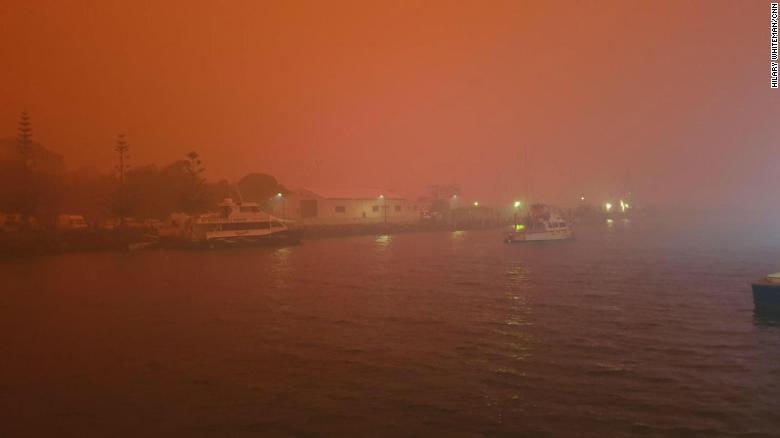
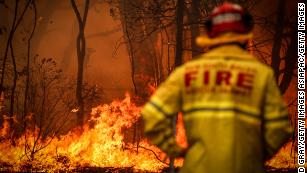
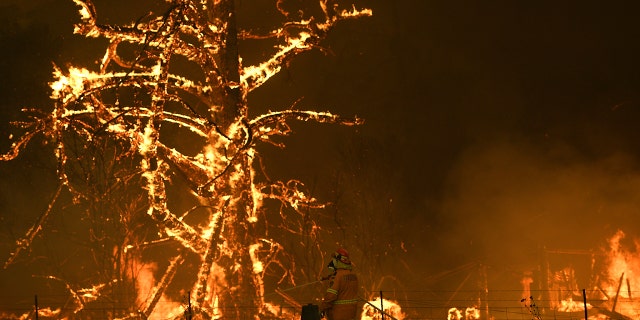
(CNN)Skies turned blood red above parts of southeast Australia on Sunday as residents sought refuge from deadly bushfires, and a senior firefighter described the previous 24 hours as “one of our worst days ever.”
Tag Archives: australia
Half a Billion Animals May Have Been Killed by Australia Wildfire

Ecologists at the University of Sydney are estimating that nearly half a billion animals have been killed in Australia’s unprecedented and catastrophic wildfires, which have sparked a continent-wide crisis and forced tens of thousands of people to flee their homes in desperation.
News Corp Australia reported Wednesday that “there are real concerns entire species of plants and animals have been wiped out by bushfires following revelations almost 500 million animals have died since the crisis began.”
“Ecologists from the University of Sydney now estimate 480 million mammals, birds, and reptiles have been lost since September,” according to News Corp. “That figure is likely to soar following the devastating fires which have ripped through Victoria and the [New South Wales] South Coast over the past couple of days, leaving several people dead or unaccounted for, razing scores of homes and leaving thousands stranded.”
Mark Graham, an ecologist with the National Conservation Council, told the Australian parliament that “the fires have burned so hot and so fast that there has been significant mortality of animals in the trees, but there is such a big area now that is still on fire and still burning that we will probably never find the bodies.”
Koalas in particular have been devastated by the fires, Graham noted, because they “really have no capacity to move fast enough to get away.”
As Reuters reported Tuesday, “Australia’s bushland is home to a range of indigenous fauna, including kangaroos, koalas, wallabies, possums, wombats, and echidnas. Officials fear that 30 percent of just one koala colony on the country’s northeast coast, or between 4,500 and 8,400, have been lost in the recent fires.”
The new normal, except it isn’t.
It’s going to get much worse.
And the longer we delay climate action, the worse it will gethttps://www.nzherald.co.nz/world/news/article.cfm?c_id=2&objectid=12297648 …#AustraliaBushfires #ClimateEmegency #ClimateChangeIsReal #ausfires #australianBushfires
Half a billion animals perish in Australian bushfires
A staggering 500 million animals are believed to have died in bushfires since September.
nzherald.co.nz
I am mourning the loss of wildlife and of the irreparable changes that are happening on the Australian continent. Entire species are being wiped out. #vicfires #VicBushfires #AustralianFires #NSWfires #wildlife https://www.news.com.au/technology/science/animals/half-a-billion-animals-perish-in-bushfires/news-story/b316adb4f3af7b1c8464cf186ab9f52c …
Fears entire species of plants and animals lost to bushfires
There are real concerns entire species of plants and animals have been wiped out by bushfires following revelations almost 500 million animals have died since the crisis began.
news.com.au
Australia’s coal-touting Prime Minister Scott Morrison has faced growing scrutiny for refusing to take sufficient action to confront the wildfires and the climate crisis that is driving them. Since September, the fires have burned over 10 million acres of land, destroyed more than a thousand homes, and killed at least 17 people — including 9 since Christmas Day.
On Thursday, the government of New South Wales (NSW) declared a state of emergency set to take effect Friday morning as the wildfires are expected to intensify over the weekend.
“We’ve got a lot of fire in the landscape that we will not contain,” said Rob Rogers, deputy commissioner of the NSW Rural Fire Service. “We need to make sure that people are not in the path of these fires.”
Half a Billion Animals May Have Been Killed by Australia Wildfire
Thousands of koalas feared dead in raging Australia wildfires, officials say
Thousands of koalas are feared to have died in the wildfires raging in parts of Australia, with officials saying they believe up to a third of the iconic marsupial population may have been lost.
The mid-northern coast of New South Wales was home to up to 28,000 koalas before the blazes began scorching the region last month.
Businesses in over 100 countries have documented 100,000+ training processes with Trainual. Are you ready to get your business out of your brain?
Sussan Ley, Australia’s environment minister, told the Australian Broadcasting Corporation on Saturday that “up to 30 percent of their habitat has been destroyed.”

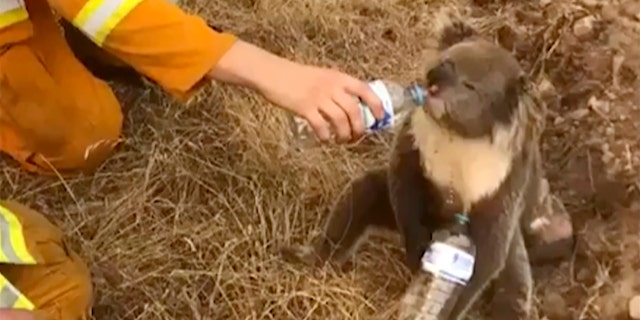
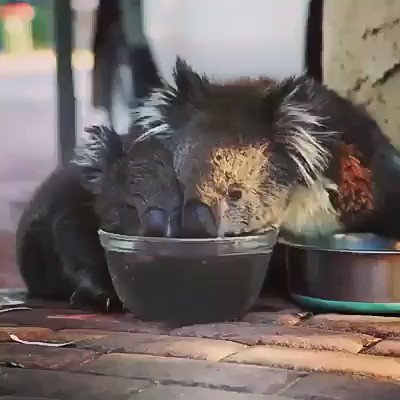
In this image made from video taken on Dec. 22, 2019, and provided by Oakbank Balhannah CFS, a koala drinks water from a bottle given by a firefighter in Cudlee Creek, South Australia. Around 200 wildfires were burning in four states, with New South Wales accounting for more than half of them, including 60 fires not contained. (Oakbank Balhannah CFS via AP)
“We’ll know more when the fires are calmed down and a proper assessment can be made,” she added. “In the meantime, I’ve convened experts, scientists, people who understand koala behavior, to work out how we build those corridors in the habitats and how best we reintroduce koalas from the hospitals.”
KOALA RESCUED FROM AUSTRALIA WILDFIRES DIES AFTER INJURIES WORSEN
Koalas are native to Australia and are one of the country’s most beloved animals. However, their natural habitat, Eucalyptus forests, has been threatened by wildfires and a years-long drought.
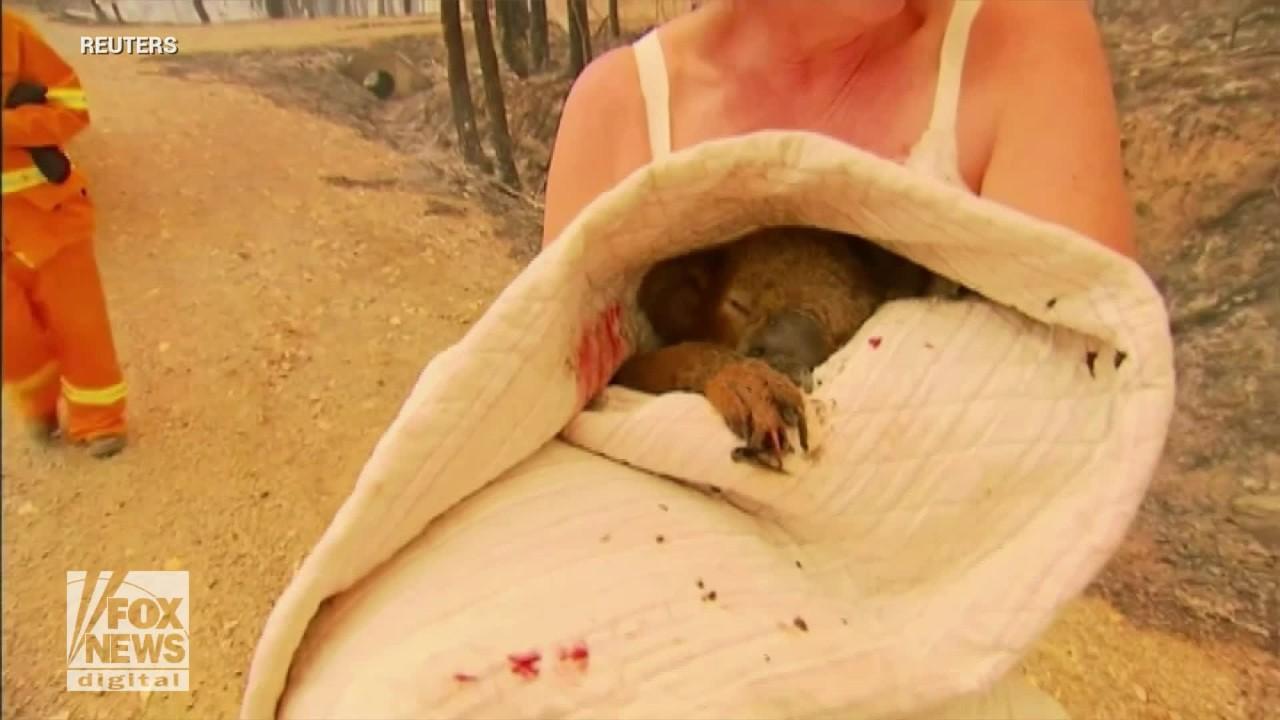
The dramatic rescue of a koala in New South Wales last month captured the hearts and attention of people around the world. A video of a woman pulling the badly burned, wailing koala from a brushfire and dousing it with water went viral.
But the severely injured koala, named Lewis by Port Macquarie Koala Hospital, woud die days later.
Images shared on social media in recent days showed koalas drinking water out of tubs and bottles after being rescued.
“I get mail from all over the world from people absolutely moved and amazed by our wildlife volunteer response and also by the habits of these curious creatures,” Ley said, adding that other native animals have also been heavily impacted by the fires.
AUSTRALIA WILDFIRES EXPECTED TO WORSEN AS ANOTHER ‘EXTREME HEAT WAVE’ LOOMS
Officials said more than 12.35 million acres of land have burned nationwide during the crisis. Nine people – including two firefighters – have been killed and more than 1,000 homes destroyed.
The fire danger in New South Wales – just north of Sydney – was upgraded to “severe” Saturday, as temperatures topped 100 degrees in parts of the region.

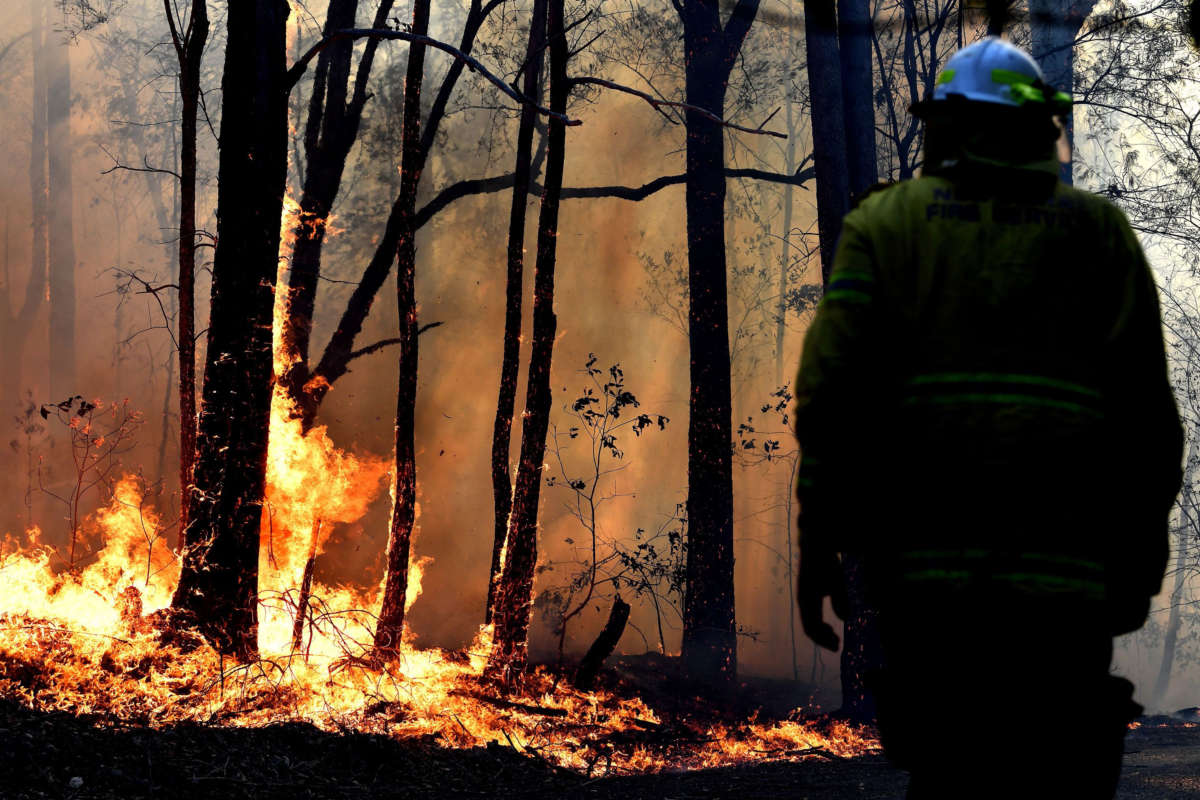
In this Saturday, Dec. 21, 2019, photo, NSW Rural Fire Service crew fight the Gospers Mountain Fire as it impacts a property at Bilpin, New South Wales state, Australia. Prime Minister Scott Morrison on Sunday, Dec. 22, apologized for taking a family vacation in Hawaii as deadly bushfires raged across several states, destroying homes and claiming the lives of two volunteer firefighters.(Dan Himbrechts/AAP Images via AP)
The high temperature in Sydney was expected to reach 88 degrees Sunday and 95 on Tuesday.
Canberra, Australia’s capital, peaked at 100 degrees Saturday, with more oppressive heat expected throughout next week.
CLICK HERE TO GET THE FOX NEWS APP
The hot weather, which has come in the first part of Au
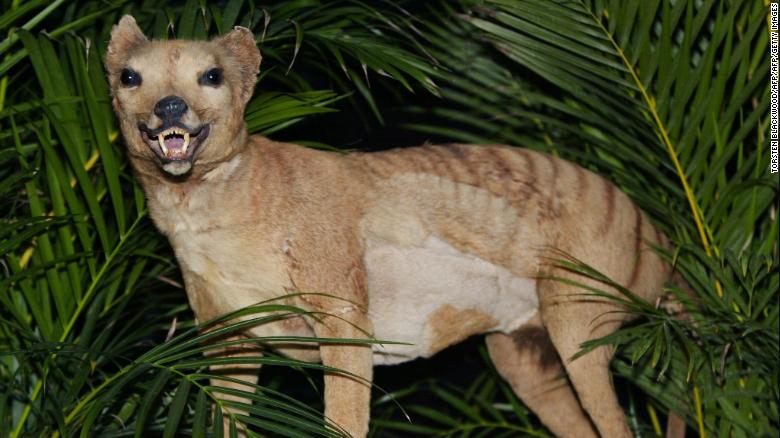
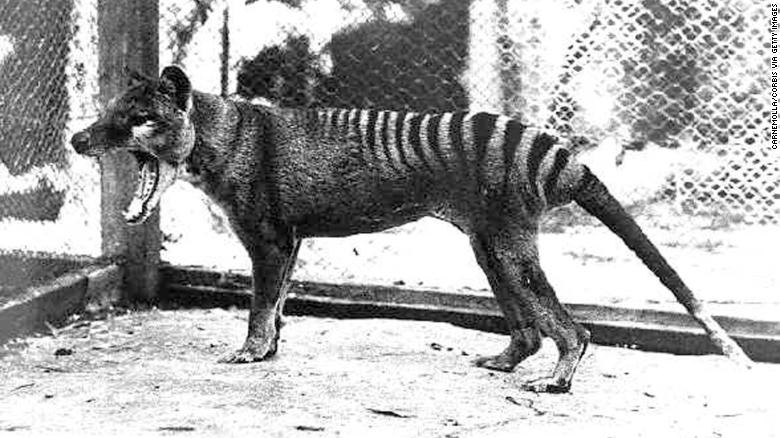
People are reporting sightings of the Tasmanian tiger, thought to be extinct

(CNN)The Tasmanian tiger, a large striped carnivore, is believed to have gone extinct over 80 years ago — but newly released Australian government documents show sightings have been reported as recently as two months ago.
Angry seal ‘helps’ Australian police bust drug smuggling ring
An international drug smuggling ring was busted in Australia — with the help of an angry seal.
The seal prevented the getaway of two foreign nationals from a small island off the Geraldton coast, according to reports.
“The guys basically had the choice of going through the seal or getting arrested and they ended up choosing getting arrested.”
The two foreigners were on a yacht that they ran aground on Sept. 2 before they attempted to flee in a dinghy, officials said. They were caught the next day after the seal interceded.
Cops seized one ton of illicit drugs after their arrests.
Two other foreign nationals and an Australian appeared in court in connection with the seizure on Thursday.
“We have disrupted a big international drug syndicate here,” Police Commissioner Chris Dawson said.
Bob Katter’s $2m plan for children to use rifles to hunt cane toads
Queensland MP Bob Katter wants children to become cane toad bounty hunters, armed with low-powered air rifles in the hunt for pocket money.
Under Mr Katter’s $2 million plan, young people would collect 40 cents for every toad they kill in a bid to save the environment from the introduced pest.
“It’ll give a bit of fun for our kids and a bit of pocket money for them as well,” the crossbench MP told reporters in Townsville on Thursday.
Under a $2 million plan, Queensland MP Bob Katter wants children armed with low-powered air rifles to hunt cane toads in a bid to save the environment. (9NEWS)
Asked whether it was appropriate for children to be using air rifles, Mr Katter stressed the weapons would be low power before breaking out in laughter.
“Some of my friends have tried to hurt people but that’s not going to happen – they’re pretty harmless,” he said.
He believes his solution will teach young people the value of earning money by improving the environment.
Asked whether it was appropriate for children to be wielding potential weapons, Mr Katter claimed the rifles are ‘pretty harmless’. (Getty Images)
“Up close it’s just squeeze the trigger – end of story,” Mr Katter said.
“That’s simple instead of running around with golf clubs and spades, plastic bags and suffocating and pouring stuff on them – it’s just not working.”
Mr Katter has significantly upped the ante on Pauline Hanson’s call for a 10c toad bounty, a day after the One Nation leader revealed her three-month plan to punish pests.
Mr Katter’s calls come days after One Nation leader Pauline Hanson called for a 10c cane toad bounty, also urging children to help reduce the numbers of the pest. (9NEWS)
“All those people out there, ‘Work for the Dole’ doing absolutely nothing, or even kids on holidays, put down the iPads, get out there, collect the cane toads, take them to your local council, put them in the freezer, get rid of them and clean up our environment,” she told the TODAY Show this week.
But the Queensland politicians’ competing cash-for-cane-toad schemes could struggle to get off the ground with state and federal governments unlikely to hop on board.
Experts have also expressed their doubts over the plans. Professor Rob Capon from the University of Queensland’s Institute for Molecular Bioscience told 9News a bounty on toads was simply “not practical”.
Cane toads have had huge impacts on native animals, particularly in Queensland, after being introduced from Hawaii in 1935 in a failed bid to eradicate beetles. (ACT Parks and Conservation Service)
“From an ecological point of view it’s unlikely to have an impact on the cane toad population. On a practical level there are all manner of problems,” he said.
Cane toads have had a huge impact on native animals since being introduced from Hawaii in 1935 in a failed bid to eradicate beetles infesting sugar cane and spreading across most of northern Australia.
Beef farmers bristle but methane’s hard to ignore
When high-flying global entrepreneur Richard Branson announced in 2014 he was giving up beef for the good of the planet, Australian Farm Institute director Mick Keogh couldn’t resist having a dig at his integrity and mental competence.
“Is Mr Branson a knave or a fool?” asked Keogh, now deputy commissioner of the Australian Competition & Consumer Commission, wondering whether the Virgin Airlines founder was perhaps deliberately deflecting public attention away from his own commercial activities by demonising meat and cattle production.
“If Mr Branson is truly concerned about this issue and not just seeking publicity, he should look at his own business first rather than pointing a finger at beef,” Keogh said.
Branson said he had been forced into vegetarianism by his concern that meat consumption — and so livestock farming — was causing global warming, environmental degradation, Amazonian jungle deforestation and water wastage. He also said keeping cattle in barns and intensive systems such as feedlots where they are fed grain were wasteful and worsening global warming.
Keogh pointed out that greenhouse gas emissions from global livestock production contribute between 5 per cent and 10 per cent of total human-related carbon emissions, which are leading to harmful global warming and climate change.
In contrast, the latest report from the Intergovernmental Panel on Climate Change found the transport sector worldwide — planes, cars and trucks combined — contributes a massive 22 per cent of carbon dioxide emissions (second only to power generation), a figure growing at the rate of 2.5 per cent a year.
Keogh also noted that a one-way flight between London and Sydney added 3500kg of carbon dioxide-equivalent greenhouse gases per person to the atmosphere, while CO2-equivalent emissions associated with producing a 100g beef hamburger were 1kg.
“The IPCC itself has stated that reducing travel distances, moving to energy-efficient vehicles and non-fossil fuels and avoiding unnecessary travel are (among) the most promising mitigation strategies to reduce global greenhouse gas emissions,” said Keogh, querying why Branson’s evangelism for reducing greenhouse gases did not extend this far.
This week, when the latest IPCC report came out on how the world could limit damaging global temperature increases to less than an average 1.5C — a target that needs to be achieved by 2050 if irreparable and lasting climate change is to be prevented — abandoning or limiting meat consumption was again listed as a top-10 mitigation strategy
It is also, worryingly for Australia’s $18.5 billion red meat industry and 82,500 sheep and cattle farmers, becoming a refrain that is accepted without question within the wider community: that eating meat is damaging the environment.
To western Victoria cattle and sheep farmer Mark Wootton, it doesn’t have to be this way.
Together with his partner Eve Kantor, Wootton farms 3500ha of lush green pastures in the western foothills of the Grampians north of Hamilton, where they run more than 25,000 merino sheep for their wool and meat lambs, and 800 cattle.
The couple, together with Kantor’s family, helped found the Climate Institute think tank and policy group — credited with encouraging changed business and community attitudes towards the urgent need to limit greenhouse gas emissions — and they believe climate change remains the biggest threat to their own, and Australia’s, agricultural activities.
“But that doesn’t mean you can’t do something about it,” says Wootton. “For us, that meant testing the theory that Australian farmers can run their properties and businesses in a way that is carbon neutral — or even positive — in terms of greenhouse gas emissions, but that is still about normal farming practices and highly productive.”
Since 2001, Wootton and Kantor have set about boosting the carbon stored on their Jigsaw Farms properties, while also working with Melbourne University professor Richard Eckard to measure — and endeavour to reduce — all the carbon emissions associated with their farming operations to the point where they became a zero carbon business.
For the couple, that meant planting thousands of trees on their farms while also investing in solar power, to offset the carbon emitted as methane by their livestock and their heavy use of pasture fertilisers and fuel.
Against expectations, Wootton says livestock-carrying capacity and returns have actually increased, while more than 37,000 tonnes of carbon was sequestrated in their growing trees in 14 years, putting the business well on the way to becoming carbon-neutral.
Such stories are music to the ears of Richard Norton, chief executive of Meat & Livestock Australia.
Rare among nations, industries or even agricultural producer groups, the MLA ambitiously decided more than a decade ago that it would commit Australia’s red meat industry to being carbon-neutral by 2030: a big ask given the large amounts of methane emitted daily by Australia’s 28 million cattle and 70 million sheep because of their rumen digestive systems.
“No one thought it was feasible but already we have reduced total emissions by the red meat industry by 45 per cent between 2005 and 2015, according to CSIRO, mainly by genetic improvements that mean the animals we farm today grow quicker and are more efficient converters of grass to meat,” Norton says.
There is no dispute in the academic and climate change world that livestock is one of the biggest contributors to carbon gas build-up in the atmosphere and total global greenhouse gas emissions, and therefore a key driver of global warming.
The latest report by the IPCC attributes 14 per cent of all emissions to agriculture. The bulk — contributing 10 per cent of harmful emissions — come from livestock production, mostly dairy and beef cattle belching and farting methane (a harmful greenhouse gas, like carbon dioxide).
While figures vary depending on farming systems and feed, numerous studies have shown beef cattle emit 50-90kg of methane a year, dairy cows 100-150kg a year and sheep about 8kg.
On the positive side, methane is a short-lived pollutant; it lasts in the atmosphere for 12 years after production while a kilogram of CO2 will linger for more than a century. But the harmful effect of 1kg of methane emissions on potential warming is 36 times worse than CO2 over a 100-year period.
Eckard, an animal production professor and director of the Primary Industries Climate Challenges Centre, says the magnified impact of methane on short-term global warming is the reason the IPCC report suggests cutting meat intake would be one of the biggest and best changes individuals and society can make.
“It’s low-hanging fruit — a get-out-of-jail card free, if you like, as far as the IPCC report goes,” he says. “Livestock is the biggest single easiest way to reduce methane emissions; each kilogram of methane produced now has 86 times the impact of a kilogram of carbon dioxide on global warming, so if you immediately start to cut methane emissions from one major source, it’s going to have a quicker impact on the IPCC aim of limiting global temperature increases to below 1.5 degrees by 2050.”
The big impact of animal farming on the warming atmosphere is made worse because, with estimates the world’s population will grow by nearly three billion by 2050, red meat consumption and demand is set to take off. Global meat production is projected to double from 229 million tonnes in 2000 to 465 million tonnes in 2050 to meet the new demand for red meat, while annual milk and dairy output is set to climb from 580 million to 1043 million tonnes.
The number of cattle needed to meet beef and dairy demand is expected to balloon from the present 1.5 billion to three billion, increasing calls for red meat consumption to be slashed to reduce the pace of climate change.
But Eckard argues that animal farming is being unfairly targeted.
“If, as an individual, you want to have an impact on climate change, do it in balance; there is no point in stopping eating red meat if you still drive a gas-guzzling 4WD and don’t have solar panels on your roof, because switching to a hybrid Prius and solar power will have just as big a benefit for the environment and world climate as turning vegetarian.”
Recent studies by Virginia Tech University also question whether plant-based diets equal sustainability and are the only route to reducing agriculture’s heavy global warming footprint.
As researcher Doug Liebe told this week’s BeefEx conference in Brisbane, it is easy for the impact of removing animals from the human food chain to be oversimplified and twisted.
The Virginia Tech studies show that if all animals were taken out of agricultural production — with the grain they had been fed directed to human consumption — the US could produce 23 per cent more human food. But the overall impact on greenhouse gas emissions would be significantly less — cutting US emissions by just 2.6 per cent — because animal-produced fertilisers used in farming would need to be replaced by synthetic ones.
Eight dead platypuses found in fishing trap in Werribee River
Updated
PHOTO: The platypuses were found dead in a fishing trap in the Werribee River. (Supplied: Werribee Riverkeeper)Eight dead platypuses have been found in a bait trap by a group of teenagers who were clearing rubbish from a river in Melbourne’s west over the weekend.
Three girls were kayaking down the Werribee River on Saturday morning when they pulled the net from the water near the Davis Creek junction.
“They came up to the side of the bank and pulled up the rope and were of course horrified by this,” riverkeeper John Forrester said.
“One or two of [the platypuses] had been in the water for quite a few days… and so some of the carcasses had lost quite some hair, so hence as you might see on the photo, some of them are white — that’s their flesh.
“We had [another platypus trap death] with four or five in one net two years ago… but nothing like eight, no eight is just simply staggering.”
Mr Forrester said he suspected the net may have been set up to catch yabbies in the public waterway.
“The yabbies might be the intention of the net fisher, but unwittingly of course, platypus come in chasing the yabbies and naturally once inside that small cone at the top of the net, the platypus can’t get out.
“And of course they drown — they can last up to about two minutes, much like a human being in the water, without breath — but they must get out and they just can’t because the surrounds of the net from inside are completely sealed of course.
“And platypus aren’t the kind of creature that can eat its way out or chew its way out as it has no teeth.”
PHOTO: The net was found in the Werribee River at the Davis Creek junction. (Supplied: Werribee Riverkeeper)Authorities urged to crack down on illegal fishing nets
Mr Forrester was concerned the type of net used was similar to one which is banned from use in public waterways.
Mr Forrester said the deaths were proof that greater enforcement is needed.
“Parks Victoria, or even local enforcement officers who have these powers such as fisheries and wildlife and so on, aren’t many on the ground,” he said.
“What we should be doing is having more and more of these people, these enforcement officers, on the ground with good and reasonable penalties, because at times these penalties are too minor.”
The Victorian Fisheries Authority has been notified of the deaths.
Kangaroos: The Latest Victims of a Climate Change Problem We Seem Unwilling to Address
http://www.bornfreeusa.org/weblog_canada.php?p=6404&more=1#more6404
by Barry Kent MacKay,
Senior Program Associate
Born Free USA’s Canadian Representative
Australian farmers in New South Wales (NSW) are being given permission to kill increased numbers of larger species of kangaroos. There is already a kangaroo product industry that sees numbers of the animals hunted down for meat and leather, but now drought has decreased herbage required by both cattle and kangaroos.
Global climate change has been identified as contributing to heat and drought around the world. Study after study identifies meat production as a major, perhaps the major, contributor to greenhouse gases. Between us, humans and domestic animals account for 96 percent of the world’s animal biomass. Meanwhile, meat and dairy production are increasingly identified as among the most significant contributors to climate change.
Long ago, it was recognized that market hunting – killing wildlife for profit – was a fast track to extinction and thus not sustainable within capitalism, which demands continued growth in profits to work properly. But, so insatiable is the gastronomic demand for parts of dead animals that wild animals were simply replaced by domestic ones, which in turn are major sources of greenhouse gases. Animal protectionists have sought to convince environmentalists, including scientists able to understand complex processes that seem to challenge the cognitive abilities of the likes of U.S. president Donald Trump (who is still mired in denial over climate change), that reducing consumption of meat and dairy in favor of a more, even exclusively, plant-based diet is one of the easiest and most effective ways we have to reduce greenhouse gases.
No matter. Instead of attempting to reduce the source of the problem, the meat industry is instead encouraged, and kangaroos must give way so folks won’t have to think twice about their steaks and burgers.
There already is a commercial kangaroo hunt, but with regard NSW, Niall Blair, NSW Minister of Primary Industries, claims that without massive slaughter of kangaroos the kangaroos themselves will first eat all the food, and then starve. Such “pre-emptive euthanasia” is a commonly provided rationale for such culls. Major die-offs, both “natural” and human-caused, do occur in wildlife and natural selection generates adaptation to changing conditions, which are inevitable if we are so unable to control our own contribution to the problem, and clearly that is the case.
Put another way, we, not kangaroos, are the problem. Australia is earmarking $141 million to assist farmers, not only with compensation for lost income, but for mental health support. It will, however, not contribute to the solution to those parts of the problem we can influence, if only we had the intelligence and will to do so.
Kangaroo strikes back against hunter with headbutt that breaks his jaw
Joshua Hayden, 19, was out with his brother when the animal attacked Handout
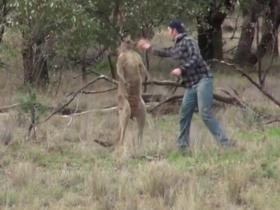
A hunter who had a kangaroo in his gun’s crosshairs had his jaw broken when the animal launched a pre-emptive strike.
Joshua Hayden, 19, was out with his brother looking for wild animals to shoot in Western Australia when the attack happened, according to Australia’s ABC News.
The pair initially spotted three kangaroos, but one disappeared and the teenager put his head out of the window of the moving car to target the other two.
The animal that had vanished then reappeared, charged at the car and attacked, reports said.
“It actually collided with the side of the car and smashed the front window,” Mr Hayden told ABC. “Then it bounced back onto me and headbutted me straight in the jaw.”
He said he believed he was unconscious for about 30 seconds after being hit.
“I woke up and my brother was trying to tell me what happened,” he said. He assumed his brother had hit him.
After going to local hospitals at Northam and Kellerberrin – 125 miles east of Perth – he was referred to the Royal Perth Hospital.
Doctors there said he would have to wait 10 days to allow the swelling to go down before surgery. A photograph showed him with a black eye swollen shut.
The brothers said they often go hunting for kangaroos but have never before witnessed the animals fighting back.
Experts say kangaroos are normally peaceful animals that rarely attack. This might happen if they feel threatened, behaviourists say.
A year ago a woman former body-builder was attacked by a kangaroo that “threw her around like a rag doll”. She needed surgery for her injuries.
British animal-rights group Viva! has branded the hunting of kangaroo for meat in Australia “the largest massacre of land-based wild animals on the planet today“.


Ⓥ


Photo by