
Autumn in elk country would not be complete without the stirring sound of solicitous bulls bugling-in the season of brightly colored leaves, shorter days and cooler nights. Nothing, save for the clamor of great flocks of Canada geese, trumpeter swans or sandhill cranes announcing their southward migration, is more symbolic of the time of year. And just as any pond or river along their flyway devoid of the distinctive din of wandering waterfowl seems exceedingly still and empty, any forest or field bereft of the bugling of bull elk feels sadly deserted and lifeless.
Yet there are broad expanses of the continent, once familiar with these essential sounds of autumn, where now only the blare of gunfire resounds. By the end of the nineteenth century, the great wave of humanity blowing westward with the force of a category five hurricane—leveling nearly everything in its destructive path—had cut down the vast elk herds, leaving only remnants of their population in its wake.
Nowadays, a different kind of rite rings-in the coming of autumn across much of the land. Following in the ignoble footsteps of their predecessors who hunted to extinction two subspecies, the Mirriam’s and the Eastern elk, nimrods by the thousands run rampant on the woodlands and inundate the countryside, hoping to relive the gory glory days of the 1800s.
On the way back from a trip early last evening I saw one such nimrod as I turned at the local mini-market on the final stretch home. I have no doubt in my mind that he was parked there just to show off his kill; the antlers of a once proud, now degraded and deceased bull elk were intentionally draped over the tailgate of the assassin’s truck—clearly on display.
I can’t say that I see just what the hunter was so proud of. It’s not like he personally brought down the mighty animal with his bare hands. Elk follow a pretty predictable path this time of year, and the bulls are distracted and preoccupied with escorting their harems around. Taking advantage of them during their mating season is about as loathsome as anything a human can come up with (and that’s saying a lot).
All a deceitful sportsman has to do is blow an imitation elk bugle to lure a competitive bull within range of their tree stand or wait in hiding above the herd’s traditional trail to the evening feeding grounds. When the procession passes by (right below the camouflaged killer’s perch), the most challenging thing for the sniper is deciding which individual animal to shoot or impale with an arrow.
The fact that they let groups of cows and young spike bulls pass by and wait for the largest, “trophy” bull is proof positive that they’re not hunting for food, but rather for sport—and for bragging rights.
____________________________
The first portion of this post was excerpted from the chapter, “The Fall of Autumn’s Envoy,” in the book, Exposing the Big Game: Living Targets of a Dying Sport
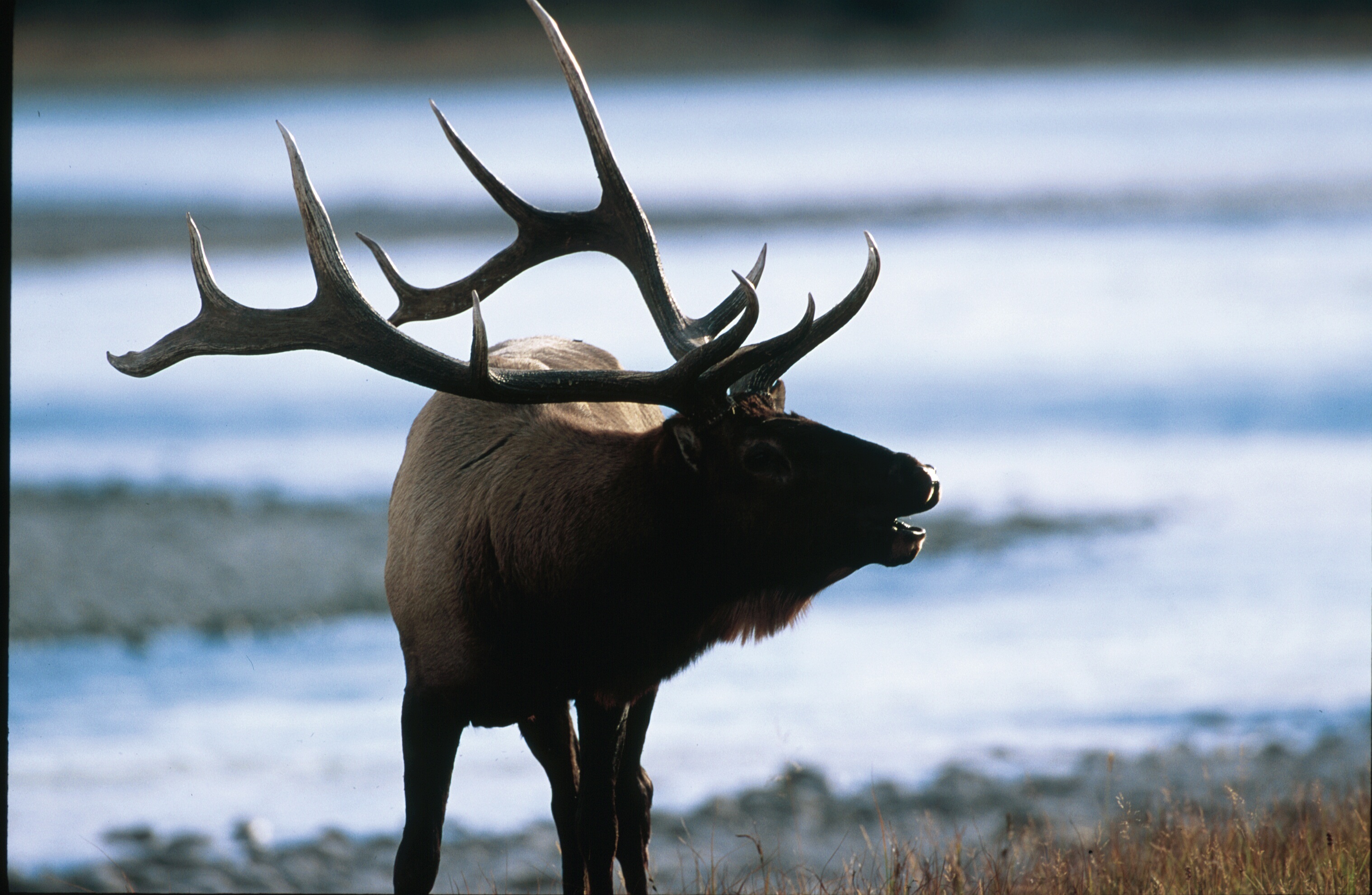
Text and Wildlife Photography ©Jim Robertson
 Exposing the Big Game