CDC confirms two people in Washington infected with bird flu

 Prev

Previous

Previous

Washington students scored high on ACT — but few take the test

Washington high school students continue to test better on the ACT college admis…

 Next

Next Up

Next Up

Democrats could decide Republican duel for central WA congressional seat

Democrats in central Washington never had as much love from Republicans as they …

Support Local JournalismIf you value these stories, please consider subscribing.
Subscribe

Federal health authorities have confirmed at least two people in Washington have contracted bird flu after working around poultry with the virus at a commercial egg farm in Franklin County.

State and local health officials on Sunday revealed four people in Washington were “presumptively” positive for the illness, based on initial testing at a state lab. Since then, the number of presumptive positive cases climbed to seven.

On Thursday, the state health department said that the U.S. Centers for Disease Control and Prevention had confirmed two of the positive tests announced over the weekend. Confirmation of other positive test results is still pending.

RELATED NEWS: Historical context of fascism in America, and the 2024 presidential race

close

volume_off

-00:00

sd

closed_captions

fullscreen

Staff from the CDC has been on site in Franklin County, in southeast Washington, since Wednesday. The federal agency, along with the state health department and the local health district for Benton and Franklin counties were working together on testing and other response efforts.

Roberto Bonaccorso, a spokesperson for the state Department of Health, said health agencies are working to test more than 100 people. Some people will be tested more than once.

Washington is one of six states where bird flu has spread to people. The CDC has so far counted 31 human cases of the disease during 2024 in those states, including the two confirmed in Washington.

There is no evidence of human-to-human spread of the disease at this time — all identified infections are among workers who had contact with infected birds or their environments, the Washington State Department of Health said Thursday morning.

The department also said that no patients have experienced severe illness or been hospitalized. Infected individuals had shown signs of mild upper respiratory illness, including runny nose, sore throat, and mild cough, as well as conjunctivitis — often referred to as “pink eye.”

For now, risks from the disease for people who are not around animals that can catch it are considered low. But health officials are keeping watch for signs the illness may be evolving in a way where it can spread between people or cause more severe symptoms.

People who have tested positive in Washington were exposed to the outbreak among poultry at the egg farm in Franklin County. There, a flock of about 800,000 birds became infected with what is formally known as highly pathogenic avian influenza.

Testing in mid-October showed poultry on the farm were infected. Health officials arranged for testing on Oct. 18 of workers showing symptoms. Presumptive positive tests for people came back the next day.

Washington’s Department of Agriculture is also reporting bird flu detections this month in two small backyard flocks — one in Kitsap County on Oct. 17 and another in Lewis County on Wednesday. The Lewis County incident is listed as “presumptive” by the department.

“Every backyard flock is at risk right now,” state veterinarian Amber Itle said in a statement. “Avian influenza is a very serious disease with serious implications for animal welfare. It’s crucial to stay alert for any sudden illness and deaths in your flock”

When poultry is suspected of having the virus, tests are run at the state level at the Washington Animal Disease Diagnostic Laboratory. Positive results are then confirmed by National Veterinary Services Laboratories.

Bird flu, which is relatively common in wild birds, spreads rapidly through poultry flocks, sickening and killing the animals. To stop the spread, birds are euthanized. Fall is a risky time of year for the disease in Washington as migrating birds pass through.

Since 2022, 48 commercial and backyard flocks in the state have been stricken with the virus, according to state department of agriculture figures. The three this month are the first ones recorded in 2024.

The agriculture department said Thursday that “humane depopulation” of the birds was complete at the Franklin County facility and that cleaning, disinfection, and disposal activities were underway. The plan was to destroy eggs on the farm as well.

Agriculture officials also said no infected birds or eggs have entered the food supply chain.

Monitoring of poultry in the area where the farm is located has been taking place. Dairy cows were being watched too since they’ve caught the virus in other states. On Thursday, the state agriculture department said there were no confirmed or suspected cases at Washington dairy farms.
Bird flu suspected in four Washington farm workers, CDC sends team

By Tom Polansek

October 21, 20241:59 PM PDTUpdated a day ago

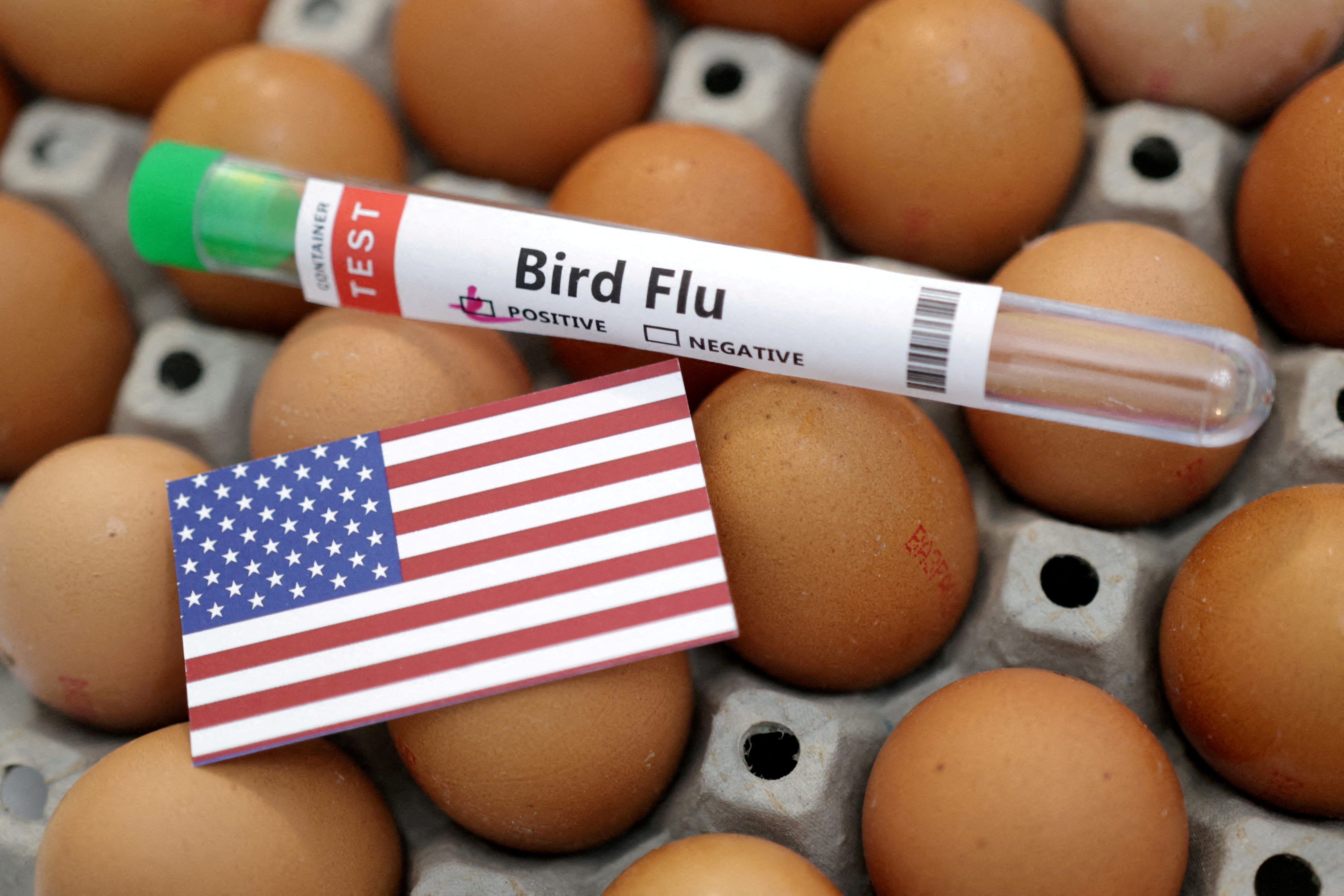
Illustration shows test tube labelled "Bird Flu", eggs and U.S. flag

CHICAGO, Oct 21 (Reuters) – The CDC is deploying a team to Washington state to assess the health of farm workers who culled poultry suffering from bird flu after four workers are presumed to have been infected by the virus, U.S. and state health officials said on Monday.

The infections would make Washington the sixth state to identify human cases this year.

The cases fuel growing concern among public health experts, as infections of U.S. dairy cattle and more than two dozen farm workers have worried scientists and federal officials about the risks to humans.

Advertisement · Scroll to continue

California and Washington have said they are seeking to administer seasonal flu vaccines to farm workers to reduce their risk of being infected with both bird flu and seasonal influenza.

Infections with both types of virus simultaneously could increase the risk of changes that could make bird flu spread more easily in people and potentially cause a pandemic, virologists say.

“We don’t have evidence yet of transmission between people,” said Roberto Bonaccorso, spokesperson for the Washington State Department of Health.

Advertisement · Scroll to continue

The Centers for Disease Control and Prevention is awaiting specimens for testing from Washington and sending a team to support the state’s assessment of farm workers, an agency spokesperson said. The risk to the public from the outbreak in cattle remains low, but those with exposure to infected animals are at heightened risk, according to the CDC.

The four tested presumptively positive after working at an infected egg farm, Washington’s health department said, adding their use of protective gear was inconsistent. The workers suffered mild respiratory symptoms and conjunctivitis, and were given antiviral medication, officials said.

The workers were removing carcasses and litter and cleaning facilities where about 800,000 chickens were culled, the health department said. The farm was hit by a strain of the virus from wild birds, according to Washington’s agriculture department.

Nationwide, 27 people had tested positive for the virus in 2024 before the cases in Washington. All but one had known exposure to infected poultry or dairy cattle.

Nearly 2 million chickens must be killed in Utah after major flock tests positive for the flu

The outbreak in northern Utah is the first the state has seen this year.

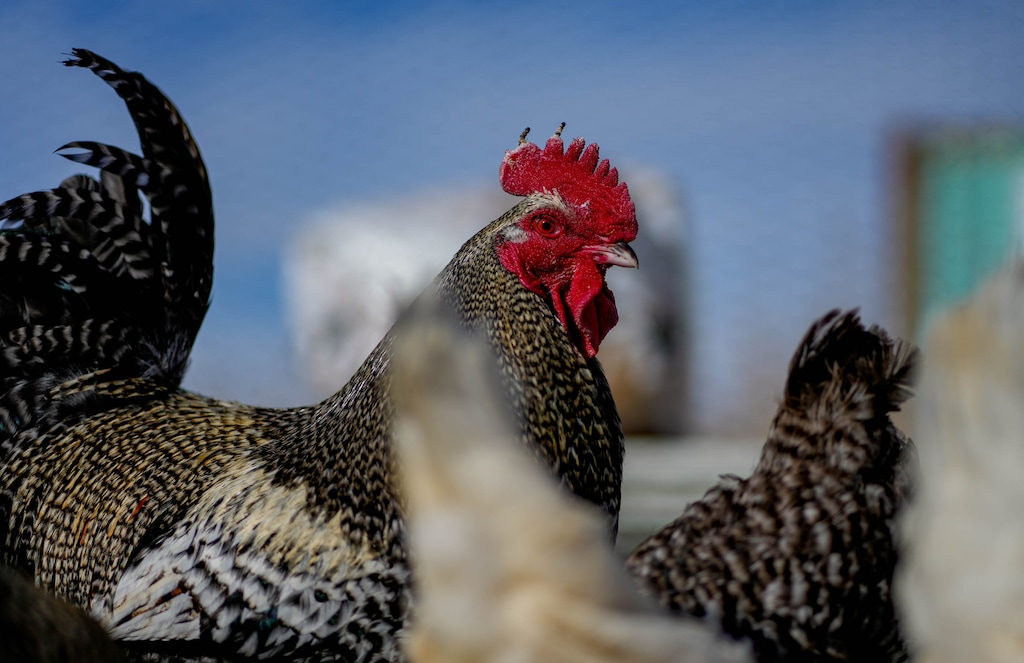
(Francisco Kjolseth  |  The Salt Lake Tribune) Chickens managed by Phillip Gleason on his 2 acre lot are pictured on Saturday, Feb. 17, 2024, as he works on his multi phase plan to be self reliant at Riverbed Ranch, a remote community he founded in the western desert of Utah.

(Francisco Kjolseth | The Salt Lake Tribune) Chickens managed by Phillip Gleason on his 2 acre lot are pictured on Saturday, Feb. 17, 2024, as he works on his multi phase plan to be self reliant at Riverbed Ranch, a remote community he founded in the western desert of Utah.

https://www.sltrib.com/news/2024/10/18/bird-flu-hits-utah-requiring/

By Clarissa Casper

  | Oct. 18, 2024, 5:00 a.m.

Comment

Cache Valley • The onset of fall has brought cooler temperatures and bright colors. It has also brought birds — flocks of migrating waterfowl that chant their calls to each other in the sky each evening.

But with the birds comes disease.

Highly pathogenic avian influenza has taken over a commercial poultry flock in Cache County, according to the Utah Department of Agriculture and Food. An estimated 1.6 to 1.8 million chickens have been quarantined and are in the process of being killed, according to state veterinarian Daniel Christensen, who said this is the biggest outbreak the state has seen in recent years.

Why Joseph Smith was slain and why it was about more than religion

“These poor guys,” Christensen said.

Subscribe To Top Stories Newsletter

Get the latest news by subscribing to our Top Stories newsletter. Enter your email below to receive more stories like these right to your inbox.

The illness was discovered last week after the poultry farm reported an unusually high mortality rate among its flock. Upon hearing this, the state agriculture department immediately tested the birds and quarantined the facility to prevent further spread.

freestar

Report this ad

Depopulation — the euthanasia of infected birds — is necessary in these cases, Christensen said, and it must happen as quickly as possible to prevent the spread of the virus while ensuring the animals don’t experience unnecessary suffering or stress.

The state did not name the facility affected by the outbreak.

The bird flu is spread by migratory waterfowl, such as ducks and geese, which are currently on their fall migration through Utah. Though the illness is often fatal to domestic poultry like chickens and turkeys, migratory birds typically carry the virus without showing severe symptoms, Christensen said.

“We were hoping we were going to make it through this year without an outbreak,” he said. “I don’t have a crystal ball, but it’s reasonable to expect that for a while, we’re going to be seeing stuff like this every fall.”

Christensen said the outbreak currently is limited to the one commercial poultry facility and does not pose an immediate public health risk. While the flu is devastating to poultry, the risk to people is low. Though a few people have reported mild symptoms in the past, like pink eye, after exposure to infected birds, Christensen said such cases are rare and not a major cause for concern.

freestar

Report this ad

What Utahns should be concerned about, however, is their backyard poultry. Christensen said it is crucial for poultry owners to have biosecurity measures in place. These include limiting access to their flock, practicing strict hygiene, quarantining new or sick birds, preventing contact with wild birds and monitoring the health of flocks daily.

“We see this from time to time,” Christensen said, “where someone will have a stream going through their property, and ducks get in the stream and then mix with their chickens, and then all their chickens die.”

Signs of a flu outbreak in poultry include a sudden high death rate in flocks, nasal discharge, decreased appetite or water consumption, and lack of coordination. If your birds show any of these signs, contact the state veterinarian’s office at statevet@utah.gov.

There’s an international bird flu summit in Arkansas this week, and this is why it is important

by Lara FarrarOctober 2, 2024 4:27 pm

Portrait of chicken close-up. Breeding chickens for meat

With the race on to investigate the first possible human-to-human infections of bird flu in the United States, avian flu experts from around the world are meeting in Fayetteville this week to contain the spread.

This is the second year for the International Avian Influenza and One Health Emerging Issues Summit, a four-day conference held virtually and in-person at the Don Tyson Center for Agricultural Sciences in Fayetteville, part of the University of Arkansas System Division of Agriculture.

The summit is significant because there are not many other conferences in the United States, or even globally, that bring together international experts to discuss the disease, which is increasingly alarming scientists as it spreads through poultry and infects other species. 

Yellow Rocket Concepts

“We decided to do this summit because the world is getting hit very badly by this virus that is now basically a pandemic,” said Guillermo Tellez-Isaias, the summit’s organizer and a research professor in the Center of Excellence in Poultry Science, a unit of both the Division of Agriculture and the University of Arkansas Dale Bumpers College of Agricultural, Food and Life Sciences. “It is present in all continents now, even Antarctica.” 

“We are facing a unique virus that has been able to adapt and infect other species that it traditionally did not used to infect,” Tellez-Isaias told Arkansas Times. (In Vietnam, 47 tigers, three lions and a panther died in zoos because of bird flu, Agence France-Presse reported Wednesday. In 2023, avian influenza killed tens of thousands of pelicans and more than 700 sea lions in Peru.)

In July, Reuters published a report based on interviews with more than a dozen disease experts who characterized the avian flu as a “pandemic unfolding in slow motion.” The experts said its rapid spread to more than 100 dairy herds in the U.S., as well as infections found in other mammals including alpacas and house cats, is an alarming indication that bird flu could soon be transmissible between humans.

MOAD-Digital-Banners-BIKE_300x250 (1) (1).gif

In fact, this scenario may already be unfolding in Missouri. The U.S. Centers for Disease Control and Prevention announced last week that seven people who came into contact with an avian flu patient in Missouri later showed symptoms of a respiratory illness. In humans, avian flu symptoms include fever, body aches, headache and shortness of breath. Officials are testing them for antibodies to the H5N1 avian flu strain, which would indicate they had been infected by avian flu.

Since April 2024, the CDC reports that there have been 14 human cases of avian influenza in the U.S. All but one were the result of direct contact with sick cows or poultry. The source of the most recent human case, the one in Missouri that may have resulted in human-to-human transmission, is still unknown. (Note, the CDC says the immediate risk to the general public from bird flu remains low.)

It would be prudent not to forget that a pandemic in 1918 that killed at least 50 million people globally, known as the Spanish flu, was caused by a virus “with genes of avian origin,” according to the U.S. Centers for Disease Control and Prevention. Although the origin of that influenza strain is not known, the 1918 outbreak was called the Spanish flu because it killed millions of people in Spain as it spread worldwide. About 500 million people, or half the world’s population at the time, contracted the Spanish flu, making it the worst pandemic in modern history. (Strains of the disease have continued to infect humans globally, with some outbreaks resulting in notably high fatality rates nearing 50% of those infected.) 

Though the data remains imprecise, estimates of global deaths from the COVID-19 pandemic range from about 7 million to close to 20 million, less than half of the death toll of the Spanish flu.  

While a great deal of the content presented at the International Avian Flu Summit this week is esoterically scientific in nature, and largely focusing on the risks the bird flu continues to pose to the poultry industry, the event is again notable in relation to COVID-19. 

The national and international response to the coronavirus pandemic was catastrophically disorganized and shockingly dysfunctional, revealing not just cracks, but gaping fissures, in unquestionably broken public and global health systems that led to countless unnecessary deaths.

The response to COVID was so bad, The Lancet labeled it a “massive global failure” in a 2022 report from the medical journal’s COVID-19 commission. The death toll from the coronavirus “is both a profound tragedy and a massive global failure at multiple levels,” the Lancet commission wrote. “Too many governments have failed to adhere to basic norms of institutional rationality and transparency, too many people – often influenced by misinformation – have disrespected and protested against basic public health precautions, and the world’s major powers have failed to collaborate and control the pandemic.” 

About 1,000 people representing 55 countries are taking part in the International Avian Flu Summit. Organizer Tellez-Isaias, the UA poultry professor, said the conference is intended to address some of the failures that occurred during COVID-19. 

“If this virus is able to adapt to humans, it will make COVID-19 look like a small cold compared to the mortality that the human race could see,” Tellez-Isaias said. “It happened before with the 1918 Spanish flu. It could happen again. We need to prepare ourselves and work together. This is serious.” 

Throughout the week, International Avian Influenza Summit participants will craft recommendations centered on the avian flu and global efforts, or lack thereof, to contain it and monitor its spread in commercial farming, wildlife and humans. The recommendations will be presented to the World Health Organization, the CDC, the Food and Agriculture Organization of the United Nations and the World Organization for Animal Health, among others, Tellez-Isaias said.

“This is something that is going to have to involve the collaboration of agencies that involve human and animal health at all levels in all countries,” Tellez-Isaias said. “What we are facing is a problem that needs to be controlled as soon as possible.” 

Undoubtedly the poultry industry in Arkansas and elsewhere has a vested interest in controlling bird flu. Infections in Arkansas have been sporadic and mostly isolated, but the industry has had to cull millions of birds.

The poultry sector engages in numerous unsavory business practices, but if it takes Big Chicken to get policymakers to pay attention to what could become another global pandemic in an instant, then kudos to Tellez-Isaias and his colleagues for making this very important summit happen.

Four more health workers show symptoms after contact with Missouri bird flu patient

Article

Close

ILO’s Houngbo Hopes Companies Avoid Port Strikes

FREE Breaking News Alerts from StreetInsider.com!E-mail Address

StreetInsider.com Top Tickers, 9/27/2024

1. COST
2. SPY
3. BMY
4. JNJ
5. BMEA

6. MTN
7. TVTX
8. ACN
9. REGN
10. ESTC

Top NewsMost ReadSpecial Reports

September 27, 2024 11:48 AM EDT

 Tweet  Share  E-mail

(Reuters) -Four additional healthcare workers in Missouri who were in contact with a bird flu patient developed mild respiratory symptoms but the virus was not confirmed in any of them, U.S. health officials said on Friday.

So far, six healthcare workers who came in contact with the Missouri patient have developed symptoms. Only one of them was tested negative for the virus via a PCR test, while the blood samples of the others have been sent for antibody testing, the Centers for Disease Control and Prevention said.

Trade Smarter, Not Harder

Execute your trades with swift order entry and seamless modification.

Sponsored By: Tradestation

Unlike the previous U.S. bird flu cases this year, the Missouri patient had no known contact with infected animals, raising concerns the virus may have mutated in a way that makes it spread more easily in people.

“These cases underscore the need to take this outbreak more seriously than it has been taken,” said Amesh Adalja, a senior scholar at Johns Hopkins Center for Health Security.

Results from the antibody testing need to be promptly obtained to assess the risk of human-to-human spread of the virus, Adalja said.

The Missouri case was the 14th person in the United States to be diagnosed with bird flu this year. The other 13 cases were among farm workers and linked to outbreaks on poultry or dairy farms.

Missouri is leading the state’s bird flu investigation with remote assistance from the CDC.

(Reporting by Mariam Sunny, Kashish Tandon in Bengaluru and Julie Steenhuysen in Chicago; Editing by Maju Samuel and Krishna Chandra Eluri)