Anti-Hunting Group Gathers 78K Signatures to Ban Bear Baiting in Maine

http://www.outdoorlife.com/blogs/newshound/2014/02/group-delivers-more-78000-signatures-ban-bear-baiting-maine

by Gayne C. Young

Mainers for Fair Bear Hunting, a group that vehemently opposes hunting bears over bait, with hounds, and by trapping, delivered more than 78,000 signatures to Secretary of State Matthew Dunlap’s office on Monday in an attempt to ban such methods on November’s ballot, The Bangor Daily News reports.

The group claims that the signatures were gathered in 417 cities and towns throughout the state over the last four months.

“This is a very important issue to Mainers across the state. Unfortunately, Maine has the notorious distinction of being the only state that allows all three of these inhumane, unsporting and unnecessary practices,” Katie Hansberry, Mainers for Fair Bear Hunting Campaign Director, said upon delivering the signatures.

The Maine Department of Inland Fisheries and Wildlife disagrees. According to a fact sheet put out by the agency, roughly 80 percent of bears taken in the state are done so over bait. Eleven percent are done so with hounds. Three percent by trapping. Despite the high percentages for baiting and hunting with hounds, the statewide success rate for hunting bears with these methods stands at only 30 percent.

Because of this, and because these hunt methods are vital to the management of Maine’s bears, the Department of Inland Fisheries and Wildlife, all three candidates for governor and the Maine AFL-CIO all oppose the ban.

Furthermore, David Trahan, Sportsman’s Alliance of Maine Executive Director, said banning these methods would not only reduce the number of bears killed by hunters but would lead to an increase in nuisance bears that would have to be killed by the state.

Maine has 30 days to certify the petition before it can be placed on the ballot. A similar ban was rejected by voters in 2004.

Wildlife Photography ©Jim Robertson, All Rights Reserved

Wildlife Photography ©Jim Robertson, All Rights Reserved

Jessica Lange to Governon: Halt wolf hunting in Minnesota

http://www.startribune.com/politics/statelocal/225371722.html

by Paul Walsh  September 26, 2013

The actress urges the governor to suspend the next wolf hunting season in the state; he said he can’t.

Jessica Lange

Hollywood actress and “Minnesota daughter” Jessica Lange is urging Gov. Mark Dayton to suspend the next wolf hunting season in Minnesota.

Lange cites the sharp drop in the state’s wolf population following the first of the newly reinstituted hunts last year and adds that hunters do this for no more than sport, fun or trophies.

“Nearly all Minnesotans believe the wolf is an asset that should be protected for future generations,” wrote Lange, who grew up in Cloquet, lived for a time in Stillwater and now counts a place in the woods near where she was raised as one of her homes.

In the letter released Wednesday by the Twin Cities-based advocacy group Howling for Wolves, Lange said the state’s reauthorization to resume the hunting of wolves was rushed by the Legislature and the Minnesota Department of Natural Resources (DNR) “to cater to particular groups, who for years had been clamoring for the chance to kill wolves.”

Dayton responded in a written statement, pointing out that he does not have the power to halt the hunt.

“Since Ms. Lange no longer lives in Minnesota, it is understandable that she is not familiar with all of the considerations in the Legislature’s decision to establish a wolf hunting season in Minnesota,” the statement began. “That decision was written into law; thus only the Legislature can change its terms.”

Maureen Hackett, founder and president of Howling for Wolves, said that Lange “contacted us and asked what she could do … to be of help to the wolf.”

Hackett said having Lange’s support for her group’s effort to halt the hunt is beneficial because “she’s a Minnesota daughter, so to speak … and lives in wolf country.”

The number of wolves that hunters can kill in Minnesota this fall will be slashed nearly in half, from 413 a year ago to 220. Also, only 3,300 hunters and trappers will be given permits this year to kill wolves, down from 6,000. The early season runs from Nov. 9 to Nov. 24.

The licensing reductions follow a survey last winter that estimated the state’s wolf population at 2,211 — a 24 percent decline from 2008, but a figure that didn’t include this year’s surviving pups.

In that first season since wolf hunting resumed in Minnesota, Lange contended that more than half of the wolves killed were less than 2 years old and almost a third were less than a year old.

“They were not problem wolves,” her letter said. “They were not in conflicts with people, livestock, or domestic animals. They were just wolves living wild and free in our North Woods.”

The state’s recent announcement of a nearly 25 percent drop in Minnesota’s wolf population “should compel action,” she said. “We haven’t had this few wolves in our state since 1988.”

Lange, whose Minnesota property is within one of the wolf hunting zones, also went after the “cruel methods” used to hunt and trap wolves, referring to “metal leg-hold traps that crush limbs, wire choke snares that cause painful brain bleeding, and bait like food and the calls of wolf pups in distress that lure adult protectors to their death.”

Maine’s bear hunting practices back in the crosshairs

Wildlife Photography ©Jim Robertson, 2013. All Rights Reserved

Wildlife Photography ©Jim Robertson, 2013. All Rights Reserved

Almost 10 years after failing to abolish baiting and other methods, animal-welfare activists want to revisit the debate: Are these cruel or are they viable wildlife management tools?

By  Deirdre Fleming dfleming@mainetoday.com Staff Writer

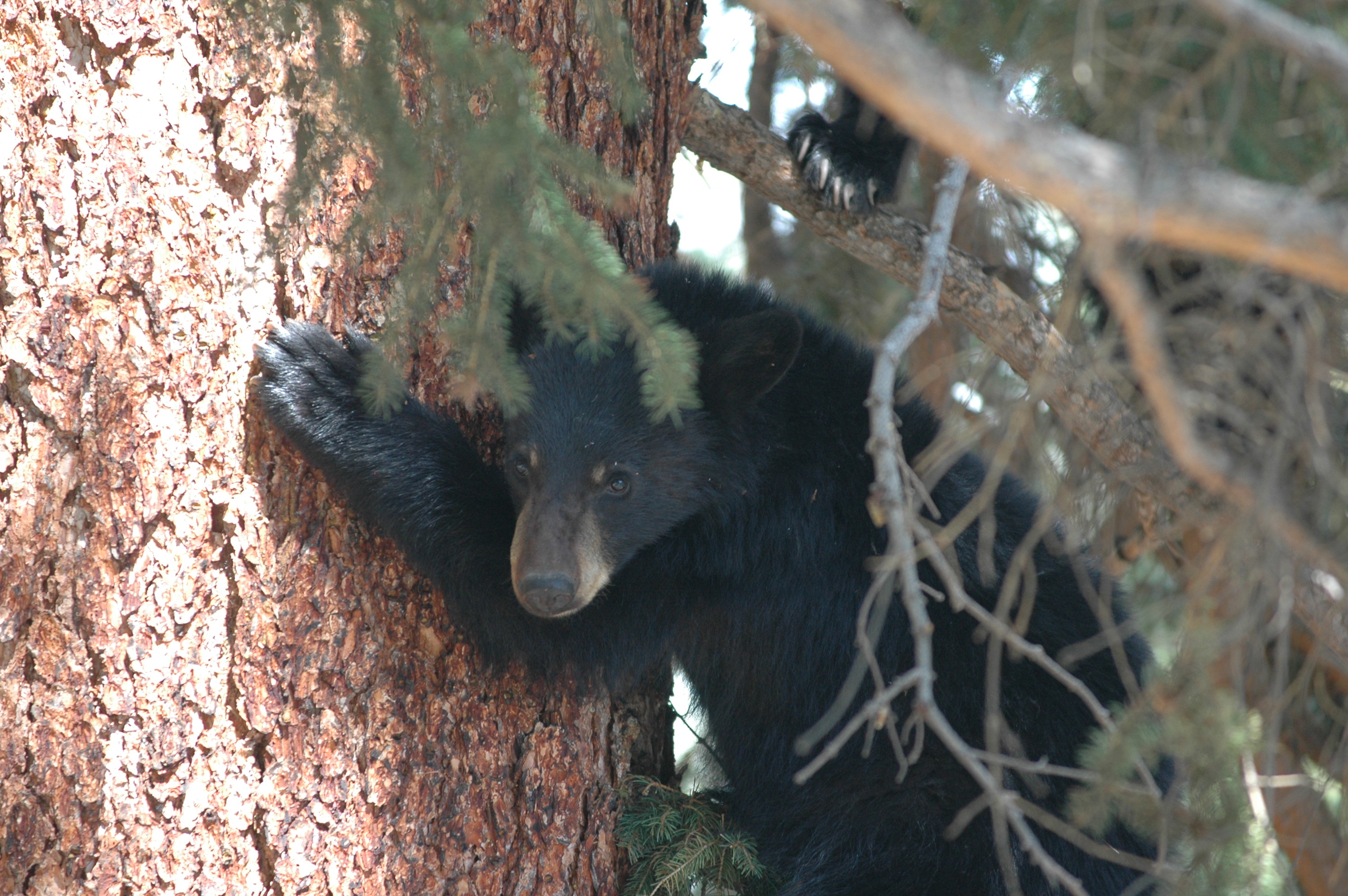
Bear hunters in Maine again find themselves in the sights of animal-welfare advocates who contend that some of their practices are inhumane.

Less than 10 years after Maine residents voted down a divisive referendum effort to abolish the use of bear hunting with bait, dogs and traps, the debate has re-emerged.

As hunters prepare for the first day of bear season Monday, sportsmen, politicians and animal-rights advocates are gearing up for a renewal of the referendum battle that spiked passions on both sides in 2004.

Bear-baiting involves placing food in the same location repeatedly for about a month before the season opens in hopes a bear will get in the habit of visiting the site regularly. Hunters also use dogs wearing radio collars to force a bear up a tree and keep it there until the hunter tracks it down electronically. Traps such as wire foothold snares are also used to hunt bears.

Supporters of banning the practices say they are cruel and give hunters an unfair advantage.

Opponents argue that the practices are vital to keeping the state’s bear population in check. If they are banned, the population will explode, and conflicts between bears and people will become commonplace, even in developed areas, they say.

Maine has one of the largest black bear populations in the lower 48 states, according to the Department of Inland Fisheries and Wildlife, and is the only state to allow all three controversial practices.

A coalition led by the Maine chapter of the Humane Society of the United States, called Mainers For Fair Bear Hunting, is behind the ballot initiative. It aims to collect as many as 80,000 signatures next month to get a referendum question on the 2014 ballot. The Secretary of State’s Office is still drafting language on the referendum question.

In 2004, voters rejected the referendum question seeking a ban on the three hunting practices by a margin of 53 percent to 47 percent. Each side spent more than $1 million on the campaign.

Those backing a ban on the practices said last week they think they’ll win this time.

“This is a last resort (after trying several times without success in the Legislature). But with the additional 10 years of experience, we’re confident we can win on the ballot,” said Katie Hansberry, director of the Maine chapter of the Humane Society.

Maine hunters expected the issue to resurface, and that it would involve another expensive ballot fight.

“I think we knew they’d be back,” said David Trahan, director of the Sportsman’s Alliance of Maine. “(The Humane Society is) a nationwide group. And (it) raises a lot of money.”

MAINE A FOCAL POINT

Proponents say the three controversial bear-hunting methods give hunters an unfair advantage and that trapping or shooting a bear over bait is inherently cruel.

Maine is a focal point in the debate over bear-hunting practices because it is the only state where all three are allowed.

Robert Fisk, director of the Maine Friends of Animals, which led the 2004 effort to ban the hunting practices, said the public is more familiar with the issues today, and that gives ban supporters an advantage.

“I believe we have an excellent chance of winning this time. The opposition’s alarmist strategies and scare tactics that were prevalent in 2004 can be exposed this time around. People are much more aware of animal protection issues than they were 10 years ago,” Fisk said.

Proponents say they have data and experiences from other states where the Humane Society successfully banned the use of these bear hunting methods, and that much of the Maine public was educated on the issue in 2004.

More: http://www.onlinesentinel.com/news/maines-bear-hunting-practices-back-in-the-crosshairs_2013-08-25.html



One Man’s Evolution

One of the most common lines of defense from people resistant to going vegan is: “But I was brought up that way—I was raised in a family of meat-eaters.” Well, so was I. My parents are big-time meat-eaters and they’ve got all the standard American health issues to prove it.

In college during the 1970s, I still proudly flew the flag of flesh-eating. I chose to join the “carnivores” camp cooking group on a quarter-long nature photography field course in the backcountry of Yosemite, rather than the ahead-of-their-time, health-conscious group of California falafel-eaters. I was fairly fascinated with the field of physical anthropology and could identify most of our earliest hominid ancestors by their Latin names. I even studied primitive buckskin tanning and stone tool making during an “aboriginal life skills” course in eastern Oregon.

But the allure of anthropology waned during the ensuing years after I moved to a remote wilderness cabin in the heart of the North Cascades. Living out where the resident nonhuman animals were my closest neighbors made untenable the notion of humankind as the center of the universe, or even the most interesting species to study on this planet. I discovered a new understanding of our fellow beings as unique individuals (as opposed to mere things to be objectified in paintings on cave walls), and I soon came to accept that meat was the product of their suffering.

It was ultimately my involvement in wildlife issues, such as the group efforts to oppose whaling and ban bear-baiting, hound-hunting and trapping in Washington State that led me to examine the cruelty inherent in the meat industry. I’d seen first-hand the look of fear on the face of a bear who’s being pursued by crazed hounds and technologically dependent human hunters, heard the cries of shock and agony when an animal first feels the steel jaws of a trap lock onto his leg and witnessed the look of despair in the weary eyes of a helpless captive who had been stuck in a trap for days and nights on end. I could tell that suffering is every bit as intense for the animals as it is for humans.

Almost overnight, I became what you might call an ethical vegetarian, or vegan. When I say “almost overnight,” it was actually a matter of several months of soul-searching, but it must have seemed like overnight to the rest of my family who knew me as quite a turkey addict at Thanksgiving.

When I allowed myself to hear the message of compassion for farmed animals, I didn’t hate the messengers or think of them as “party-poopers” or “food Nazis.” Instead, I was finally ready and willing to listen to how easily human beings can get by without eating meat.

That was 14 years ago; my only regret is that I waited so long.

Wildlife Photography Copyright Jim Robertson