New Study: Bats and Pangolins Weren’t Sold In Wuhan’s Wet Markets, But Other Mammals Were

New Study: Bats and Pangolins Weren’t Sold In Wuhan’s Wet Markets, But Other Mammals Were

By JIM GERAGHTY

June 10, 2021 12:58 PM

Customers select seafood at a wet market in Dandong, Liaoning Province, China, in 2017. (Philip Wen/Reuters)

Speaking of wet markets, a new research paper offers the results of an exhaustive review of the animals sold in the wet markets in Wuhan before the outbreak of COVID-19. Perhaps most surprisingly, the review of more than 36,000 animals of 38 species in 17 wet market shops concludes that pangolins and bats were not sold in the wet markets of the city. But the study cannot rule out that some other species of animal sold in the city’s wet markets was the source of the virus.

From May 2017 to November 2019 — long before anyone had heard of COVID-19 — Xaio Xaio, of the Lab Animal Research Center at the Hubei University of Chinese Medicine in Wuhan, conducted monthly surveys of all 17 wet market shops in the city selling live wild animals for food and pets. Xaio was attempting to trace a tick-borne virus, SFTS — severe fever with thrombocytopenia syndrome. (The paper calls Xaio’s detailed census of the animals sold in the markets “serendipitous.”)https://imasdk.googleapis.com/js/core/bridge3.464.0_en.html#goog_1076108420https://imasdk.googleapis.com/js/core/bridge3.464.0_en.html#goog_1765360566https://imasdk.googleapis.com/js/core/bridge3.464.0_en.html#goog_1554775109

The investigation of the animals sold sounds pretty thorough:

X.X. was granted unique and complete access to trading practices. On each visit, vendors were asked what species they had sold over the preceding month and in what numbers, along with the prices and origin of these goods (wild caught or captive bred/ farmed). Additionally, to substantiate interview data, the number of individuals available for sale at the time of each visit was noted, and animals were checked for gunshot wounds (from homemade firearms—gun ownership is strictly regulated in China) or leg-hold (snap) trap injuries, indicative of wild capture.

Across all 17 shops, vendors reported total sales of 36,295 individuals, belonging to 38 terrestrial wild animal species, averaging 1170.81 individuals per month Including species sold by weight inflated this total to 47,381 individuals. Notably, no pangolin or bat species were among these animals for sale.

But this information doesn’t completely slam the door on the wet market theory, because bats and pangolins are not the only species that could have carried the virus.

Almost all animals were sold alive, caged, stacked and in poor condition. Most stores offered butchering services, done on site, with considerable implications for food hygiene and animal welfare. Approximately 30 percent of individuals from 6 mammal species inspected had suffered wounds from gunshots or traps, implying illegal wild harvesting. Thirteen of these 17 stores clearly posted the necessary permits from Wuhan Forestry Bureau allowing them to sell legitimate wild animal species (e.g., Siamese Crocodile (Crocodylus siamensis), Indian Peafowl (Pavo cristatus), Common Pheasant (Phasianus colchicus) and Amur hedgehog (Erinaceus amurensis)) for food; four shops had no such permit. Species names were given in Chinese only, with no clear taxonomic binomial designation. None of the 17 shops posted an origin certificate or quarantine certificate, so all wildlife trade was fundamentally illegal. Notably, vendors freely disclosed a variety of protected species on sale illegally in their shops, therefore they would not benefit from specifically concealing pangolin trade or the trade in any particular species, and so we are confident this list is complete.

So which other animals have been found with SARS-CoV-2? This March, Nature listed  “cats and dogs, to pumas, gorillas and snow leopards in zoos, and farmed mink” as animals that have been infected with SARS-CoV-2 after encountering an infected human being.  Another study noted, “sporadic SARS-CoV-2 virus cases have been recorded in kept ferrets in Slovenia and in Spain.”

The new study reports that on average, each month the city’s wet markets collectively sold 38 racoon dogs, and ten minks. The original SARS virus was found in civet cat cages, and the markets sold about eleven masked palm civets per month. And if SARS-CoV-2 is contagious in a lot of varieties of small mammals… the markets sold on average of 332 amur hedgehogs, 168 Chinese hares, 43 Chinese bamboo rats, 30 red foxes, and a wide variety of others each month. That’s a long list of suspects.

And yet, so far, testing has not yet found any wild animals or livestock in China with SARS-CoV-2.

NOW WATCH: ‘Researcher Tied to Wuhan Lab Thanked Fauci for Dismissing Lab-Leak Theory’

The U.S. tried to win World War II with a bat bomb

https://www.msn.com/en-us/news/world/the-u-s-tried-to-win-world-war-ii-with-a-bat-bomb/ar-AAKKvY8?ocid=msedgdhp

Mike Vago  16 hrs agoLike|19


How a WWII Japanese sub commander helped exonerate a U.S. Navy…Turkey’s president vows to ‘save’ the country from the largest outbreak of ‘sea…

This week’s entry: Bat bomba person posing for the camera© Photo: Mondadori Portfolio (Getty Images)
What it’s about: Holy ordinance, Batman! During World War II, American scientists raced to develop crucial technology that would win the war: The B-29 bomber. Radar. The atomic bomb. And, a somewhat less crucial technology, the bat bomb: a bomb canister that contained live bats, each of which would carry an incendiary device and (in theory) start devastating fires across Japanese cities.https://www.dianomi.com/smartads.epl?id=3533

Biggest controversy: The part where we tried to defeat Imperial Japan with an army of bats. The idea came from a dental surgeon named Lytle S. Adams. An acquaintance of Eleanor Roosevelt, he wrote to the White House a month after Pearl Harbor suggesting the idea, which came to him during a trip to Carlsbad Caverns. Adams was “intrigued by the strength of bats” and believed they could carry an incendiary device, which could do serious damage to Japan’s largely wooden architecture.

With FDR’s approval, Adams led up an Air Force project to develop a bat bomb. His team for some wonderful reason consisted of a movie star (more on that later), an unnamed former gangster, an also unnamed former hotel manager, and chemist Louis Fieser, who developed the first synthetic vitamin K and cortisone, and more relevant to the war effort, napalm.

Their eventual prototype was a bomb-shaped metal canister with separate compartments for 1,040 Mexican free-tailed bats. The bomb would be dropped and then at 4,000 feet deploy a parachute, then open to release the bats. The bats would naturally roost in the eaves of buildings, but each one had a 15- to 18-gram payload of napalm (slightly heavier than the weight of the bat itself) on a timer. After several unsuccessful attempts at strapping the bombs to the bats, Adams’ team ended up gluing the devices directly to the bats.

Strangest fact: The only target destroyed by bat bombs was an American air base. Adams’ team made several tests of their bat bomb, but at Carlsbad Army Airfield Auxiliary Air Base in New Mexico, napalm-armed bats were accidentally released, roosted under a fuel tank, and set the base on fire. The project was then passed to the Navy and then the Marines and was renamed Project X-Ray.

Thing we were happiest to learn: America didn’t end up incinerating thousands of bats for the war effort. The Marines were surprisingly enthused about the bat bomb, believing the countless small fires the bats would start would be harder to fight and would spread more quickly than a smaller number of large fires caused by conventional bombing. But by mid-1944, with $2 million already spent on the project and at least another year until the bats would be combat-ready, the project was canceled. As for Fieser’s invention, the U.S. dropped napalm on Berlin and Tokyo without any animal intermediaries.

Bats are not to blame for coronavirus. Humans are

CNN)Reclusive, nocturnal, numerous — bats are a possible source of the coronavirus. Yet some scientists concur they are not to blame for the transfer of the disease that’s changing daily life — humans are.

Zoologists and disease experts have told CNN that changes to human behavior — the destruction of natural habitats, coupled with the huge number of fast-moving people now on Earth — has enabled diseases that were once locked away in nature to cross into people fast.
Scientists are still unsure where the virus originated, and will only be able to prove its source if they isolate a live virus in a suspected species — a hard task.
But viruses that are extremely similar to the one that causes Covid-19 have been seen in Chinese horseshoe bats. That has led to urgent questions as to how the disease moved from bat communities — often untouched by humans — to spread across Earth. The answers suggest the need for a complete rethink of how we treat the planet.
Bats are a possible source of the coronavirus, but some scientists say humans are to blame for the spread of the disease.

Bats are the only mammal that can fly, allowing them to spread in large numbers from one community over a wide area, scientists say. This means they can harbor a large number of pathogens, or diseases. Flying also requires a tremendous amount of activity for bats, which has caused their immune systems to become very specialized.
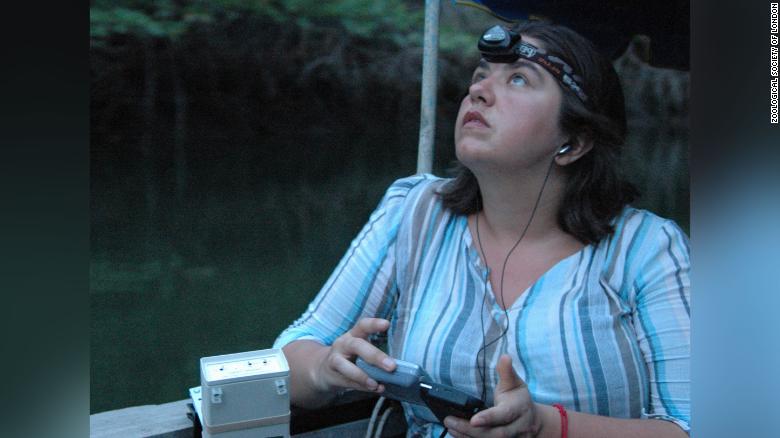
“When they fly they have a peak body temperature that mimics a fever,” said Andrew Cunningham, Professor of Wildlife Epidemiology at the Zoological Society of London. “It happens at least twice a day with bats — when they fly out to feed and then they return to roost. And so the pathogens that have evolved in bats have evolved to withstand these peaks of body temperature.”
Cunningham said this poses a potential problem when these diseases cross into another species. In humans, for example, a fever is a defense mechanism designed to raise the body temperature to kill a virus. A virus that has evolved in a bat will probably not be affected by a higher body temperature, he warned.
But why does the disease transfer in the first place? That answer seems simpler, says Cunningham, and it involves an alien phrase that we will have to get used to, as it is one that has changed our lives — “zoonotic spillover” or transfer.
“The underlying causes of zoonotic spillover from bats or from other wild species have almost always — always — been shown to be human behavior,” said Cunningham. “Human activities are causing this.”
When a bat is stressed — by being hunted, or having its habitat damaged by deforestation — its immune system is challenged and finds it harder to cope with pathogens it otherwise took in its stride. “We believe that the impact of stress on bats would be very much as it would be on people,” said Cunningham.
“It would allow infections to increase and to be excreted — to be shed. You can think of it like if people are stressed and have the cold sore virus, they will get a cold sore. That is the virus being ‘expressed.’ This can happen in bats too.”
Pathogens that have evolved in bats can withstand a high body temperature, so a human fever will not work as a defense mechanism.

In the likely epicenter of the virus — the so-called wet-markets of Wuhan, China — where wild animals are held captive together and sold as delicacies or pets, a terrifying mix of viruses and species can occur.
“If they are being shipped or held in markets, in close proximity to other animals or humans,” said Cunningham, “then there is a chance those viruses are being shed in large numbers.” He said the other animals in a market like that are also more vulnerable to infection as they too are stressed.
“We are increasing transport of animals — for medicine, for pets, for food — at a scale that we have never done before,” said Kate Jones, Chair of Ecology and Biodiversity at University College London.
“We are also destroying their habitats into landscapes that are more human-dominated. Animals are mixing in weird ways that have never happened before. So in a wet market, you are going to have a load of animals in cages on top of each other.”
Kate Jones, Chair of Ecology and Biodiversity at University College London, said increasing transport of animals and habitat destruction meant animals were mixing in ways they never had before.

Cunningham and Jones both pointed to one factor that means rare instances of zoonotic spillover can turn into global problems in weeks. “Spillovers from wild animals will have occurred historically, but the person who would have been infected would probably have died or recovered before coming into contact with a large number of other people in a town or in a city,” said Cunningham.
“These days with motorized transport and planes you can be in a forest in central Africa one day, and in a city like central London the next.”
Jones agreed. “Any spillover you might have had before is magnified by the fact there is so many of us, and we are so well connected.”
There are two simple lessons, they say, that humanity can learn, and must learn fast.
First, bats are not to blame, and might actually help provide the solution. “It’s easy to point the finger at the host species,” said Cunningham.
“But actually it’s the way we interact with them that has led to the pandemic spread of the pathogen.” He added that their immune systems are poorly understood and may provide important clues. “Understanding how bats cope with these pathogens can teach us how to deal with them, if they spillover to people.”
The cause of "zoonotic spillover,"  or transfer from bats or other wild species, is almost always human behavior, says Professor Andrew Cunningham from the Zoological Society of London.

Ultimately diseases like coronavirus could be here to stay, as humanity grows and spreads into places where it’s previously had no business. Cunningham and Jones agree this will make changing human behavior an easier fix than developing a vastly expensive vaccine for each new virus.
The coronavirus is perhaps humanity’s first clear, indisputable sign that environmental damage can kill humans fast too. And it can also happen again, for the same reasons.
“There are tens of thousands [of viruses] waiting to be discovered,” Cunningham said. “What we really need to do is understand where the critical control points are for zoonotic spillover from wildlife are, and to stop it happening at those places. That will be the most cost-effective way to protect humans.”
Jones said viruses “are on the rise more because there are so many of us and we are so connected. The chance of more [spillovers into humans] happening is higher because we are degrading these landscapes. Destroying habitats is the cause, so restoring habitats is a solution.”
The ultimate lesson is that damage to the planet can also damage people more quickly and severely than the generational, gradual shifts of climate change.
“It’s not OK to transform a forest into agriculture without understanding the impact that has on climate, carbon storage, disease emergence and flood risk,” said Jones. “You can’t do those things in isolation without thinking about what that does to humans.”

For These Vampires, A Shared Blood Meal Lets ‘Friendship’ Take Flight

Common vampire bats (Desmodus rotundus), such as this group day-roosting in a cave in Mexico, can form cooperative, friendship-like social relationships.

B.G. Thomson/Science Source

Vampire bats might have a nasty reputation because of the way they ruthlessly drink their victims’ blood, but these bloodthirsty beasts can be both generous and loyal when it comes to their fellow bats.

Captive common vampire bats will share their food with hungry bat companions, and forge such a bond that they continue to hang out with these buddies once they’re released back to the wild, according to a newly published study in the journal Current Biology.

“Bats are very maligned, and vampire bats are the most maligned of the bats,” says Gerald Carter of The Ohio State University, who is also a research associate at the Smithsonian Tropical Research Institute in Panama. “What I study about them often makes people think about them in a more positive light.”

Common vampire bats don’t actually suck the blood of their victims, which are usually livestock like horses or cows. Instead, the bats make little cuts with their razor-sharp incisors and lap at the bleeding wounds.

Bats need to lap up about a tablespoon of blood every night, Carter says. If they miss two nights, these small bats get very weak, and missing three nights might mean death.

A desperate vampire bat, however, can find help in its home roost, where neighbors who did manage to drink blood are often willing to share food by regurgitating some of their last blood meal.

“The females will do this for their offspring, but they also do it for adults, including unrelated adults,” Carter says. “What’s particularly interesting about this species is these non-kin food donations.”

Carter has been studying this in captive bats for years. “We don’t need to train them to cooperate with each other,” he says. “We can just take a bat, deprive it of food for a while, put it back. And then see who is willing to share food with it. And we can just do this repeatedly over time.”

This research has shown that bats can develop social bonds with certain individual bats based on reciprocal food sharing.

“We could see that during the time the bats are in captivity that some of their relationships are getting stronger,” Carter says. “Almost certainly, there were some bats that were forming new relationships in captivity.”

He and his colleagues wondered if these social bonds were real or just something that emerged in the artificial environment of the lab because these bats were forced to hang together.

They decided to do an experiment using 23 female bats that had been captured from a large hollow tree. These bats, and their social connections, had been closely observed for nearly two years in captivity. Over that time, social grooming and food sharing increased within the group. The scientists tagged the bats with special sensors and released them back into the wild, along with a control group of 27 female bats from the wild that were also given sensors.

A team of researchers took common vampire bats (Desmodus rotundus) that had been in captivity and from the wild and tagged them with tiny sensors. The bats’ social interactions were then tracked for eight days.

Sherri and Brock Fenton

The sensors, lighter than a penny, were stuck onto the bats using surgical glue, says Simon Ripperger, a visiting scientist at the Museum of Natural History in Berlin. “They do not report the exact location,” Ripperger says. “They do report who they are with.”

Every two seconds, he explains, the sensors searched for the presence and relative proximity of all the other tagged bats. This information got sent to shoebox-sized recording stations located at the roost and at a known foraging site. Researchers tracked the bats, and their social interactions, for eight days.

The sensors, which were attached to the bats using surgical glue, could determine how close the tagged bats were to other tagged bats.

Simon Ripperger

What they found is that bats with strong histories of cooperation in the lab continued to spend time together out in the wild. “These relationships that have been forming in captivity, they seem to persist,” Ripperger says.

“The relationships are in the animals’ minds, and they’re not just a byproduct of the environment,” says Carter, who adds that other animals such dolphins, elephants and nonhuman primates also seem to have “complex individualized relationships” with others.

Whether to call these relationships “friendships,” though, is controversial.

“I’m very reluctant to use that word to describe it, and I don’t even like it when it’s in in quotes,” says Joan Silk of Arizona State University, who has studied social bonds in primates. “The bats can’t tell us how they feel, which is a really big problem in trying to figure out what’s going on with the animals. So do animals have friends? I think the answer is, I don’t know.”

Still, in nature, some creatures clearly can form social bonds based on mutual preferences of the individuals. “These strong social bonds play an important role in the lives of these bats and probably in the lives of many social animals,” Silk says.

“I think animals probably do integrate many experiences over time and build up a kind of ‘trust’ with different individuals,” Carter adds.

His research team has been expanding its tracking studies using the special sensors, also putting them on cows to see whether the tagged bats share the bloody wounds they make on these animals with other bats.

“This is a whole aspect of the behavior of vampire bats that people have just sort of looked at anecdotally,” Carter says. “That’s pretty exciting for us right now.”

Changing climate may affect animal-to-human disease transfer

zoonotic diseases

Climate change could affect occurrences of diseases like bird-flu and Ebola, with environmental factors playing a larger role than previously understood in animal-to-human disease transfer, Australian researchers have found.

The team, a collaboration between The University of Queensland and Swansea University—and whose research is published in Trends in Parasitology—have been looking at how different environments provide opportunities for animal-to-human diseases, known as zoonotic diseases, to interact with and infect new host species, including humans.

These diseases are caused by pathogens—for example, viruses, bacteria or parasitic worms—that cross from animals to humans, including notorious infections like bird flu, rabies virus and Ebola.

“In the past, we’ve primarily looked at how many different types of animal species a pathogen infects—widely considered an indicator of its risk to shift between host species,” said Dr Nicholas Clark, from UQ’s School of Veterinary Science.

“This is just one factor, and we’ve found that how infected animals are related is also important.

“But importantly, our research also shows that different environments provide new opportunities for pathogens to interact with and infect new host species,” Dr Clark added.

Dr Konstans Wells, from Swansea University, led the team’s review of a growing number of research studies, demonstrating that this ‘host shifting’, where a pathogen moves between animal species, is linked to the environment.

“Now that we know that environmental conditions are key, the question is: how can we develop models to predict disease moving between species in times of global environmental change?” Dr Wells said.

“As a recent study that we published in Ecology Letters found, climate change may constrain or facilitate the spread of diseases like avian malaria, and this is just one example.

“We need to find out more information about how climate alters animal-to-human shifts, and this might help us build a new modelling framework, which could help us forecast disease spread.”

Vet Practice magazine and its associated website is published by Engage Media. All material is protected by copyright and may not be reproduced in any form without prior written permission. Explore how our content marketing agency can help grow your business at Engage Content or at YourBlogPosts.com.

Welcome to “What the Fuck Week”

What the fuck’s going on with humans’ cruel and sadistic treatment of animals these days? Has the world of man gone completely mad?

If you have the feeling there’s a kind of quickening—an acceleration of human evil—happening lately, you’re not alone. I’ve noticed it for a while now. From Sears carrying “I love wolf hunting” T-shirts to the Wildlife Services round up and gassing Canada geese, so many bizarre, shocking and downright malevolent deeds have come to light in the past few days that I hereby declare this “What the Fuck Week.” (WTFW will run from now until further notice.)

Early last evening the warm autumn air brought out a hatch of flying termites. Clumsy in flight, they lose their wings shortly after finding a suitable log or house to bore into. An entire industry was built around trying to exterminate them, when nature has long held the key to termite control—namely, bats. And last night there were more bats circling the house than I’ve seen all summer. Bats big and small were out in force, dodging each other to get to their temporarily-winged prey.

Much has come to light in recent years about the benefits of bats as managers of mosquitos and other undesirables.

But just today in my inbox I received the following petition about an absurd and sadistic reality show that caused me to let out a “What the Fuck?!” loud enough to rattle the termites out of their burrows:

                              ………..

The Discovery Channel: Stop showing videos of Bear Grylls mutilating, killing and eating innocent animals

This petition will be delivered to: Chairman, Discovery Communications, LLC, John S. Hendricks


In a clip from Man vs Wild (formerly on The Discovery Channel) Bear Grylls used smoke to flush bats from a cave and then struck the fleeing, terrified animals with a makeshift club and stomped on them with what seemed to be glee, jokingly referring to it as “bat tennis.”

Yes, this actually happened, and it is not an isolated incident. Aside from bats, Bear has killed alligators, monitor lizards, capybaras and even boas. None of these animals are killed in anywhere near a humane manner; they are simply beaten to death for the amusement of the viewing public.

 
This can’t be overstated enough: for those who care about animals, the videos available online showing his frequent atrocities are very, very difficult to watch.  If you seek them out to see for yourself, please be aware of this.

In replying to email complaints about the show, The Discovery Channel defended itself by saying that Bear was imparting valuable survival information and, unbelievably, that it was his Bear’s “style!” Such “stylistic” concerns as applied to people comprises much of the notoriety of serial killers.  As for the conveyance of vital survival tips, opting to beat, kill and eat whatever animals are near is very clearly a rash and inadvisable course of action. Real survival experts – the ones who actually survive in the wilderness rather than preen their sad macho survivalist fantasies on television – say that pretty much everything Bear Grylls does or says to do will get you killed. There is no worthwhile information whatsoever that can only be conveyed by filming oneself killing innocent, healthy animals, and terrorizing and bludgeoning sleeping bats right at their doorstep.  

Let us not forget that Bear Grylls was exposed for staying in hotels overnight while filming a show that falsely portrayed him as embattled by harsh wilderness.

Profiting from the utterly pointless killing of these bats – and all animals – is unilaterally unacceptable, and while the show may now be cancelled, Discovery still has the video and others like it up for viewing on their website, meaning that they as well as Bear are still profiting from engineering, perpetrating and showing the deaths of these innocent animals to audiences worldwide. 

Please contact those responsible for fouling our televisions with his presence. Please also feel free to join the Bear Barbaric Bear Grylls Facebook page to voice your opinion: https://www.facebook.com/BoycottBarbaricBearGrylls

magazine-fall-2010-bat-michael-durham