Florida’s Upcoming Bear Hunt: A Tragic Failure to Apply Solid Science, Public Opinion, and Compassionate Conservation

http://www.huffingtonpost.com/marc-bekoff/floridas-upcoming-bear-hu_b_8300882.html

by ,

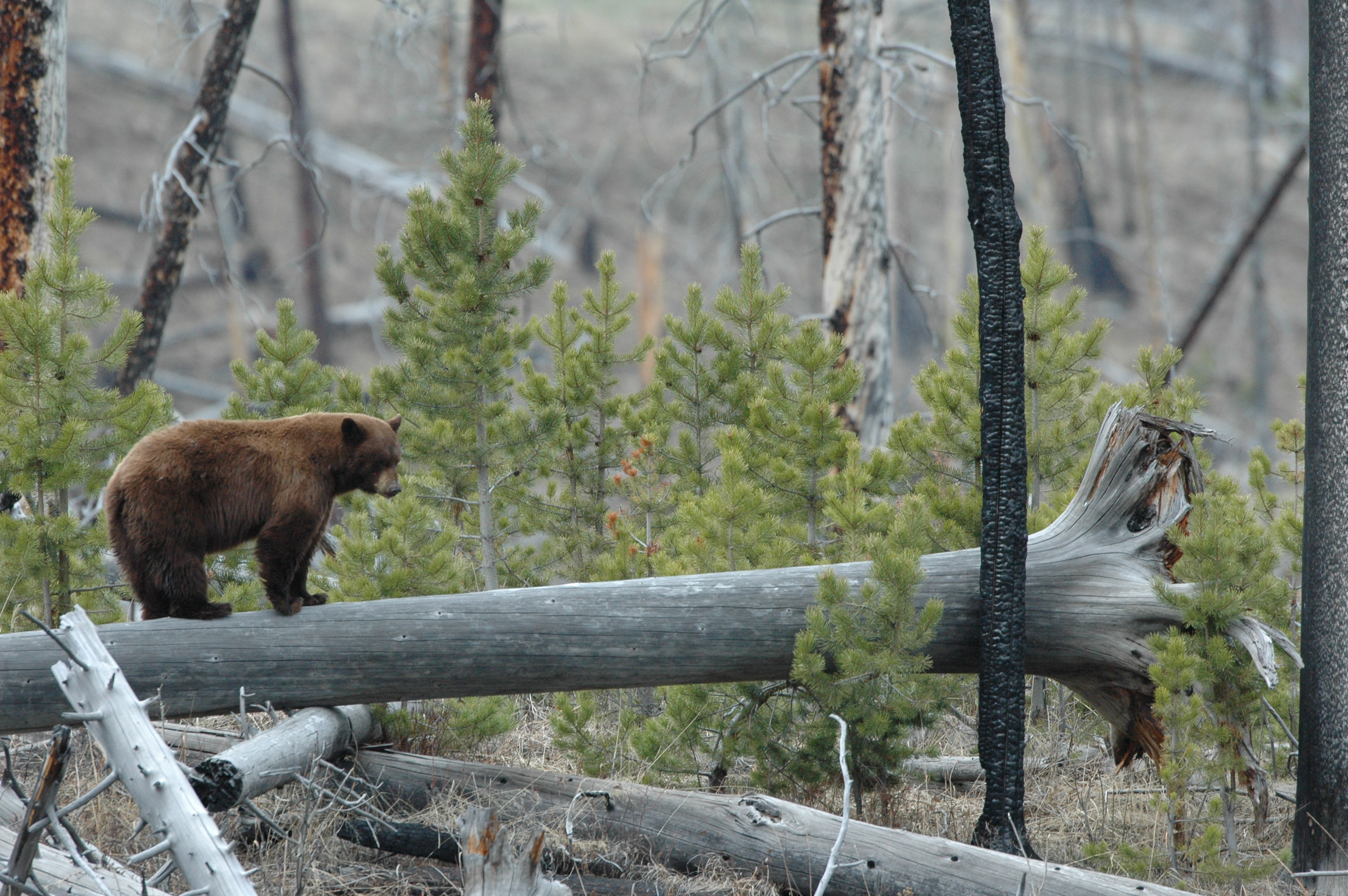
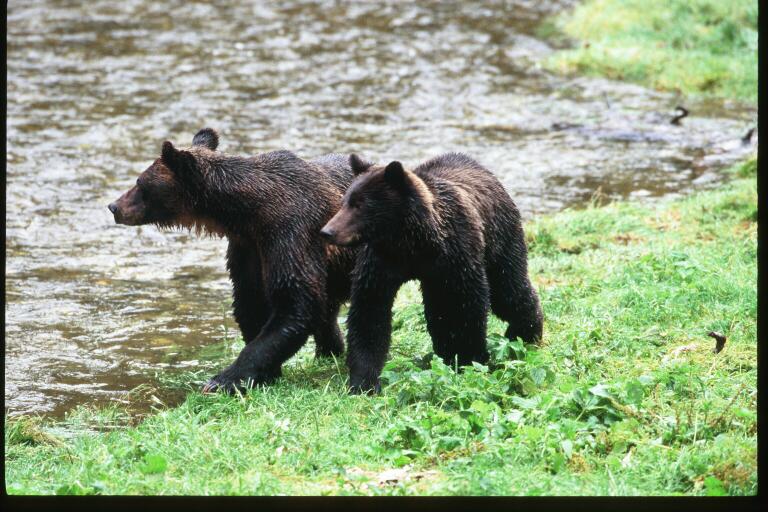
As evidence mounts around the globe that the emerging principles of compassionate conservation can succeed in resolving conflicts between human and nonhuman animals (animals) while respecting the needs of all stakeholders (see, for example, here and here), painful examples remain of cases in which human management of shared habitats completely fails to heed the lesson that killing is neither effective nor acceptable. In Canada’s western provinces, a ruthless war is being fought against wild canids, devaluing individual lives and disrupting families and social groups. In Florida, on October 24th, a similar war is about to commence, although its hapless victim, the Florida black bear, has never killed a human, is not accused (unlike wolves) of harming other wild animals or livestock, and is a vital umbrella species of great ecological concern.

2015-10-14-1444856710-5781873-images.jpeg

Florida’s decision to reinstate bear hunting after a 21-year hiatus ignores well-established science on human-bear conflicts and constitutes an appalling magnification of the ethical defects afflicting the killing of grizzly mother Blaze by officials at Yellowstone National Park and, more recently, the killing of Boulder Bear 317 by Colorado Parks and Wildlife. 320 black bears – 10% of the estimated statewide population – have been targeted by Florida’s Fish and Wildlife Conservation Commission (FWC) for killing by recreational hunters (you can see the hunt plan here), a lethal response that is massively disproportionate to the concerns that have been articulated by human stakeholders about property damage and a handful of relatively minor attacks on humans. The hunt’s quota is in addition to the increasingly routine practice of killing bears who have been deemed a nuisance and to high road kill rates (282 in 2012 alone). A combined mortality rate of 20% of the entire bear population has become Florida’s ghastly new definition of sustainability, while the human population of the state increases by more than the entire bear population every single week, a fact that human policy-makers regard as a source of pride, not a cause for grave concern.

Just as there was no science to support the assertion by National Park Service staff that a grizzly bear who killed, or was suspected of killing, a human, is more likely to kill another human, there is no science to support the proposition that a large-scale slaughter of black bears will have any effect on the occurrence of human-bear conflicts. On the contrary, the available science clearly demonstrates that the only dependable way to reduce human-bear conflicts is intelligent trash management and related behavioral changes by humans. Aware of its plan’s unscientific foundation, the FWC admits that the hunt is not expected to reduce human-bear conflicts. Instead, it asserts a need to “manage” or “stabilize” the black bear population. Yet when pressed in a recent court hearing (you can see the video here) to explain why, exactly, the bear population needs to be “managed,” Dr. Thomas Eason, Director of the FWC’s Division of Habitat and Species Conservation, ultimately returned to nuisance calls, property damage, and a few cases of minor injuries to humans as problems that would be mitigated if bear population pressures were reduced. Available scientific data do not support this claim.

It’s also important to note a majority of Florida’s human citizens appear ready to embrace the concept of compassionate conservation and let the bears be. About 75% of 40,000 public comments received by the FWC opposed the bear hunt. Were we to regard societies of nonhumans as Nations, we would be forced to characterize the State’s disposition as regrettably genocidal. As recently as three years ago, the black bear was still listed as threatened. In 2012, the FWC adopted new criteria for determining threatened status, delisting 15 other species along with the black bear (which is a genetically unique subspecies). And now, before a statewide bear-population survey has even been completed, the State’s human power structure is refusing, in the most lethal possible way, to accept responsibility for the undeniable impact of relentless human encroachment into the habitats of nonhumans. The third-most populous state in the country, its metropolitan areas dominating the list of the nation’s fastest-growing areas, Florida provides a tragic case of unrepentant, deadly anthropocentrism, literally bulldozing over the right of nonhumans to exist in an environment that allows them to be who they really are.

While the killing of Florida’s black bears will be carried out by recreational hunters, the State’s policy provides ample opportunities for FWC employees to emulate the noble example set by Bryce Casavant, a Canadian conservation officer who was suspended after refusing to kill two bear cubs. Florida’s bear hunting policy, although initiated by political appointees on the Commission, was drafted by FWC staff, defended by them in court hearings, and requires their participation (in the administration of permits, at check stations, in field enforcement efforts, during data monitoring, etc.) for its implementation. Staff at any point in this chain could, individually or collectively, refuse to facilitate a wholly unwarranted and grossly unethical and bloody killing spree. Especially for the bear biologists who spent five years developing the Florida Black Bear Management Plan released at the time of delisting, a plan that explicitly eschewed hunting and called for the enhancement of bear habitats, the decision to sit back and passively witness the slaughter of this magnificent animal ought to weigh heavily on their consciences for the rest of their lives. This is a great opportunity for these scientists simply to ask people not to hunt the bears.

Instead, Dr. Eason, for one, seems to be perfectly comfortable with Floridians repeating their familiar role as super-predators, killing adult bears in their prime reproductive years, imposing far-reaching collateral damage on family units and the bear population as a whole. Although Florida’s bear hunt forbids the “harvesting” — read, killing — of mother bears with cubs, this will inevitably happen, since mothers commonly “tree” their cubs up to 200 yards away, out of sight from hunters. Black bear cubs stay with their mother for up to two years, learning essential survival skills and enjoying her protection from male bears and other animals who may harm them. As orphans, their prospects for survival are grim. And, since we know that animals experience a wide range of emotions, including joy, love, empathy, and grief, it is beyond dispute that these cubs will suffer immense emotional, as well as physical, distress. Equally repugnant is the fact that the FWC knows that some female bears will be pregnant at this time of year (just prior to denning), and there is no way for hunters to discern the gender of their target until they’re killed. Far from apologizing for these horrific effects, Dr. Eason has matter-of-factly stated that this is all part of the plan.

Compassionate conservation asks us to do no harm to individual animals, their family units, and their social groups. It expects us to finally acknowledge the extent to which we have deprived nonhumans of their right to live free from human dominance or interference, and to accept these magnificent and fascinating beings as a wondrous part of the planet we all call home. For many humans, the gateway to compassionate conservation is the recognition, amply documented by the latest science, that animals are sentient beings with rich emotional lives, aware of themselves, their surroundings, and one another. Compassionate conservation does not elevate animals to a position of primacy over humans. Rather, it seeks to level the playing field, granting animals stakeholder status equal to that of humans who have controlled — dominated — their very lives for far too long.

Florida’s mass slaughter of its black bears violates every dimension of the compassionate conservation paradigm and ignores solid science and public opinion. It’s yet another example of wildlife managers claiming they use the latest science and public opinion and then ignore what is known. For future generations of conservationists and other people who choose to live in Florida because of its fascinating and magnificent animals, Florida’s ill-planned bear hunt will serve as an exemplary case study of why it should not have been done in the first place.

This essay was written with Adam Sugalski and Richard Foster.

Bear Hunt Trial Triggers Protest In B.C.

http://www.huffingtonpost.ca/2015/10/09/clayton-stoner-bear-trial_n_8271206.html?utm_hp_ref=green&ir=Green

clayton stoner bear protest

VANCOUVER — The case of an NHL player charged in the death of a grizzly bear has become a rallying cry for a British Columbia group against trophy hunting.

About a dozen members of Bears Matter gathered outside provincial court in Vancouver on Friday before a court date for Anaheim Ducks defenceman Clayton Stoner.

Stoner is charged with five counts under the provincial Wildlife Act, including two counts of knowingly making a false statement to obtain a hunting licence, hunting out of season, hunting without a licence and unlawfully possessing dead wildlife.

The bear, which local residents had named Cheeky, was killed in the Great Bear Rainforest on B.C.’s central coast in 2013.

clayton stoner bear

Bear Matters member Barb Murray said a growing number of people are against trophy hunting and that Stoner’s case should draw attention to the practice.

“We really need to make this case stand out above the others so that Premier (Christy) Clark cannot ignore our petitions, cannot ignore our letters and cannot ignore our voices,” she said.

Records from the Environment Ministry show dozens of charges in 2014 related to hunting without a licence and unlawfully possessing dead wildlife.

However, few other cases have been in the spotlight.

“Clayton Stoner, he’s recognized internationally, he’s an NHL hockey player, he makes millions of dollars,” Murray said. “He’s supposed to be an example of what a sportsman (embodies). And he’s not.”

Stoner has never denied the hunt, which sparked debate two years ago when pictures published in a Vancouver newspaper showed him holding a grizzly’s severed head.

Stoner, who is from Port McNeill on Vancouver Island, defended his hunting trip with his father, an uncle and a friend after the photos were publicized.

“I grew up hunting and fishing in British Columbia and continue to enjoy spending time with my family outdoors,” he said in a September 2013 written statement, adding he would continue those activities in the province.

Stoner should apologize for hunting bears, said Murray, her voice choked with emotion.

“I’m hoping they slap a very big fine, and he could also contribute to conservation in this province, big time.”

Stoner was not in court Friday. Ricky Bal, a lawyer who appeared on his behalf, said he does not know how the hockey player intends to plead.

The case was put over until Nov. 13.

Bear-hunting foes take case to appeals court

http://www.news4jax.com/news/bearhunting-foes-take-case-to-appeals-court/35745794

TALLAHASSEE, Fla. –

After a circuit judge last week refused to block Florida’s upcoming bear-hunting season, a Seminole County group has taken the case to a state appeals court, according to online dockets.

The group Speak Up Wekiva filed a notice of appeal Thursday at the 1st District Court of Appeal in Tallahassee.

The move came a week after Leon County Circuit Judge George Reynolds denied a request for a temporary injunction to block the bear hunt, which is scheduled to start Oct. 24.

The Florida Fish and Wildlife Conservation Commission this summer approved the state’s first bear-hunting season in more than two decades, angering animal-rights groups.

With a goal of reducing the bear population by 320, the hunt will last two to seven days in four regions of the state.

Speak Up Wekiva has argued, at least in part, that the bear hunt is not based on sound science and that the approval goes against the constitutional duties of the Fish and Wildlife Conservation Commission.

Wildlife Photography ©Jim Robertson

Wildlife Photography ©Jim Robertson

Program offers bear hunt to sick kids

They’re going to die, but why not kill a bear before it’s over? A “sick” kid in more ways than one…

http://wiat.com/2015/09/17/program-offers-bear-hunt-to-sick-kids/

(WBAY) — A program in Oconto County is assisting children with life-threatening illnesses by giving them a chance to hunt bears and spend more time outdoors.

“It’s very special, they get to bond,” said Bruce Watruba, Secretary of Oconto River Kids, “most people never expect to be able to bear hunt with their child.”

Bruce “Bearman” Watruba is part of Oconto River Kids, a program that brings kids with life-threatening illnesses into the woods, and gives them a chance to bear hunt.

“Most of these kids haven’t hunted before,” said Watruba, “and when they come up hunting, when they do tip a bear over, they are so excited.”

Kids like 16-year-old Lexie Joly, who has brain cancer.

“At first it [cancer] was scary,” said Lexie, “but now I just, go through every day and I fight. I’m all good.”

While she’s never been hunting until now, she’s glad she decided to head into the blind with her mom, and a guide.

“I came here first to bait, then we can here again to practice shooting the gun I’d be using,” said Lexie. “Now I’m here again for the bear hunt.”

Oconto River Kids is run completely on donations, and the generosity of local businesses.

“We’ve got area taxidermists that help us out,” said Watruba, “they give us discounts on the mounts, and we have a pretty good reputation in the area, with all the area businesses.”

This program wouldn’t be able to keep running if it weren’t for the 80-some volunteers and all the donations. Every bear tag used by one of the kids, has been donated by a hunter.

“In Zone B, it takes 10 years to get a tag,” said Watruba, “and yet, we’ve got these people that are giving us their tags to use to hunt.”

“They’re selfless, they don’t ask for anything,” said Robyn Joly, Lexie’s mom, “they just do it because they want to, and that’s the biggest thing.”

Lexie didn’t see a bear on her first day, but hopes to get one when she heads out with a guide later this week. She says, she’s grateful for the opportunity.

“It’s really cool that people just donate the bear tag, and all this, sponsors,” said Lexie, “I really thank them for this opportunity, I’ll probably never get this again.”

If you’d like to be part of Oconto River Kids, you can request information by sending a letter to:

Oconto River Kids
P.O. Box 288
Mountain, WI 54149

You can also visit their website at www.ocontoriverkids.org

 Wildlife Photography© Jim Robertson

Wildlife Photography© Jim Robertson

Guide: Walter Palmer knew Wis. black bear ‘was illegally shot and killed’

KMSP) – Before Cecil the lion, there was this unnamed Wisconsin black bear. Minnesota dentist Walter Palmer let his guides know he wasn’t interested in any bear, but the largest they could find. He paid his guides more than $2,500, but was allegedly willing to pay so much more if they would lie about where the kill went down.

http://www.fox9.com/news/19925713-story

Endangered Species Act Under Threat/Challenging New Mexico’s War on Wolves, Bears and Cougars

From Project Coyote Newsletter:

Wildlife Killing Contests Featured at Speak for Wolves Conference

In August at the Speak for Wolves Conference in West Yellowstone, Project Coyote Founder and Executive Director Camilla Fox led a team of panelists to discuss the pervasive and cruel practice of “wildlife killing contests” that award prizes to those who kill the most and largest animals including coyotes, bobcats, foxes and even wolves – often on public lands. Conference attendees also got a sneak peek of Project Coyote’s film trailer that will help expose this unconscionable practice and empower citizens to take action to end it.

Watch the Trailer »

Challenging New Mexico’s War on Wolves, Bears and Cougars

In late August, Science Advisor Dave Parsons spoke out on behalf of Project Coyote at a rally and a public hearing as part of a coalition opposing the New Mexico Game Commission’s new rule allowing increases in cougar trapping and bear hunting. The Commission also denied a federal request to release more Mexican Gray Wolves into New Mexico.

Watch the Video »

Federal Endangered Species Act Under Threat

The U.S. Fish and Wildlife Service has proposed draconian changes to the long standing regulations for citizen petitions for adding species to the Endangered Species Act’s list of threatened and endangered species. The proposed changes would make it difficult if not impossible for most citizens and conservation organizations to file petitions. Project Coyote will submit a comment letter endorsed by members of our Science Advisory Committee opposing the proposed changes. The deadline for comments is September 18.

Read the Comment Letter

Poacher Ted Nugent says: ‘Cecil the Lion story is a lie’

http://www.komonews.com/news/entertainment/Ted-Nugent-Cecil-the-Lion-story-is-a-lie-320074031.html

By WENN.com Published: Jul 30, 2015 at 9:46 AM

Ted Nugent has risked angering animal rights campaigners by branding the circumstances surrounding the shooting of Cecil the lion in Zimbabwe “a lie.”

Dentist Walter Palmer sparked outrage this week when it emerged he had shot and killed the popular beast during a $50,000 hunting trip at the Hwange National Park.

It is alleged the big cat had been lured out of a protected zone in the region, but Nugent is adamant the hunt was a legitimate form of animal population control.

In a post on Facebook.com, he writes, “The whole story is a lie. It was a wild lion from a ‘park’ where hunting is legal & essential beyond the park borders. All animals reproduce every year & would run out of room/food to live w/o (without) hunting. I will write a full piece on this joke asap. God are people stupid.” [Look who’s talking–stupid is as stupid say!]

When other users of the social networking site disagreed with his stance on the controversy, Nugent angered them further by branding them “ignorant.”

The controversial rocker was fined $10,000 in 2012 and banned from hunting in Alaska after pleading guilty to transporting an illegally killed black bear.

68439_10151399495155861_1116657731_n

Sometimes kids have Good Instincts

We just found out our niece’s 5 year old daughter has decided to go vegetarian. I wonder if it has anything to do with her recent 3-day visit with her vegan grand-aunt and uncle? Apparently she isn’t a big fan of meat anyway.

Sometimes kids have good instincts about that sort of thing.

Possibly under the delusion that he’d spawned the next Kendall Jones, her father wanted to take her, the 5 year old, bear hunting. Hopefully we’ve heard the last of that misguided notion…

Wildlife Photography ©Jim Robertson

Wildlife Photography ©Jim Robertson


A Trophy Hunt By Any Other Name

http://www.huffingtonpost.ca/chris-genovali/bc-bear-hunt-trophy_b_6913970.html

by 

Executive Director, Raincoast Conservation Foundation

Good intentions aside, Oak Bay-Gordon Head MLA Andrew Weaver has introduced a poorly thought-out private member’s bill requiring trophy hunters to pack out the “edible meat” from any grizzly bear they kill in British Columbia. In an interview with the Vancouver Observer, Weaver triumphantly claimed, “If this bill were to pass, it puts an end to [the] trophy killing of grizzly bears.”

But as Shannon McPhail, executive director of the Skeena Watershed Conservation Coalition, aptly summed up, Weaver’s bill would not impact the B.C. grizzly hunt “one bit.” Not only would the bill do nothing to stop, or even reduce, the recreational killing of grizzlies, it would end up providing cover for grizzly killers who would like nothing more than to be able to mischaracterize their trophy hunting of bears as a food hunt.

Doug Neasloss, elected councillor and stewardship director for the Kitasoo/Xai’xais First Nation, states: “Weaver’s bill is not in alignment with the position of Coastal First Nations who have unanimously banned the trophy hunting of bears in our traditional territories under tribal law. It does not matter what the end use of the bear is, killing them is prohibited in our territories. The Kitasoo/Xai’xais have made a significant investment in tourism centred around bear viewing and it is the second largest employer in our community; we need these bears alive.”

Weaver seems not to recognize that the motivation and desire of trophy hunters to bag a grizzly bear will certainly prevail over the relatively minor expense and annoyance of having to “pack the meat out.”

A renowned large carnivore expert and former member of the B.C. government’s grizzly bear scientific advisory committee, Raincoast Conservation Foundation senior scientist Dr. Paul Paquet states, “I have struggled to understand the logic underlying the unequivocal and resolute claims that, if enacted, this proposed legislation would end the hunting of grizzlies for trophies. Simply, Weaver’s assertions and declared facts sound authoritative but are dead wrong. The supposed effectiveness of this proposed legislation is scientifically naïve and irrelevant to the facts.”

Not surprisingly, the two most prominent trophy hunting lobby groups in the province, the Guide Outfitting Association of B.C. and the B.C. Wildlife Federation, enthusiastically support the “pack the meat out” concept.

Despite decades of strong opposition to this very policy, the GOABC and the BCWF now clearly see the benefit of camouflaging their recreational killing of grizzlies as something other than the gratuitous slaying of a trophy animal.

In fact, the GOABC, preceding Weaver’s bill, introduced the concept months ago during a radio debate with Raincoast on CFAX 1070, stating they would be petitioning the province to enact similar “pack the meat out” regulations. In what can only be described as a macabre act of charity, the GOABC had the gall to further state they intend to donate the grizzly remains to food banks, never mind the potential for contracting trichinosis and other pathogens, thank you.

Unfortunately, this is not Weaver’s first misstep with regard to the grizzly hunt and large carnivores of late. During the recent debate over Minister Steve Thomson’s decision on wildlife allocation, he echoed the BCWF’s talking points that gave the impression the policy gives more wildlife to foreign hunters than resident hunters.

The reality is that resident hunters have always, and will continue, to receive the great majority of allocated wildlife in the province. Parenthetically, Weaver has also endorsed the unscientific and unethical B.C. wolf cull, mirroring the BCWF once again.

Complaining about not getting enough wildlife to kill, as compared to non-resident hunters, was prominent in the BCWF’s calculated messaging. In contrast, provincial mortality statistics show that from 1978 through 2011, resident hunters killed 5,900 grizzlies while non-resident hunters killed 4,100. To those 10,000 bears it was no consolation whether the bullets ripping through their bodies, causing immeasurable pain and suffering, were fired from the guns of resident or non-resident hunters.

Why Weaver would choose to hitch his wagon to the BCWF’s misleading wildlife allocation campaign, and subsequently introduce a bill that would enable grizzly killers to adopt the façade of a food hunt, remains confounding, especially given the B.C. Green Party’s official policy goal to “eliminate sport and trophy hunting of grizzly bears.”

April’s arrival will see resident and non-resident trophy hunters fan out across the B.C. landscape in search of grizzlies to kill, while the bears in their sights are preoccupied with the greenery that will sustain them until the salmon and berries they seek are ready in the fall.

In the fall, these hunters will repeat the process, this time focusing on the salmon streams and berry patches where the bears must be in order to secure the nutrition they need. By the end of November, 300 to 350 grizzlies will be dead. More than 100 of them will be females.

If Weaver’s bill is somehow approved, most of the muscles of the bears will be transported out of the bush and dumped into landfills in B.C. and beyond, while their hides and heads will continue to be transformed into rugs for living rooms and prizes for trophy rooms. In other words, the killing will continue and the trophies will still be mounted, despite misguided attempts to proclaim the end of the grizzly trophy hunt by doing nothing more than renaming it.

This article was co-authored by Raincoast Conservation Foundation guide outfitter coordinator Brian Falconer.

A version of this article previously ran in the Victoria Times Colonist.

—Wildlife Photography©Jim Robertson

—Wildlife Photography©Jim Robertson

NJ State inflating bear population total to justify expanded hunt

DSC_0104

http://www.nj.com/sussex-county/index.ssf/2015/03/nj_bear_hunt_animal-rights_group_doubt_population.html

BySeth Augenstein | NJ Advance Media for
March 04, 2015
Opponents of a bigger, longer bear hunt charged today that the state is
artificially inflating the number of bruins in New Jersey to placate
hunters, and have vowed to fight a plan to kill more bears each year.

The state’s Fish and Game Council unanimously approved a bear
“management” plan Tuesday that would open the majority of North Jersey
to the hunt adding a total of 633 square miles of new hunting grounds.

The plan would also lengthen the hunt to as much as 16 days each year,
including a week in October, instead of just the current 6-day December
season. The use of bows and arrows would also be allowed.

The bear population is the big contention point, as it has been for more
than a decade of courtroom battles and public protests.

“We’ll be considering all our options — including legal options,” added
Doris Lin, director of legal affairs for the Animal Protection League of
New Jersey.

Before the annual hunt started in 2010, the bear population was
estimated by the state at 3,400. About 1,900 were killed over the course
of the five yearly hunts, held each December.The state said there were
2,500 bears prior to the December 2014 hunt, officials
said at the time.

But when the plan for future hunts was unveiled Tuesday, the population
estimate was revised to its highest total yet: anywhere from 3,500 to
4,000. State biologists said it was data collected during the December
hunt that showed an unexpected surge in the population.

“They have high reproductive rates,” said Tony McBride, a supervising
wildlife biologist with the Division. “It’s all habitat quality.”

Black bear litters are larger here than the average in other parts of
North America, the state scientists say. Females bears in New Jersey
produce three bears per litter — compared to one or two per litter in
the western United States, said McBride.

But five or six cubs have been counted in some New Jersey litters,
according to the new bear management plan. The Garden State has the
perfect mix of southern and northern forests that provide a variety of
acorns and other natural foods which lead to much higher reproductive
rates, said McBride.

But skepticism from the critics abounds. Animal-rights groups allege the
Division of Fish and Wildlife changes its estimates to suit its
hunter-first plans.

The latest population estimates are a way to drum up public support for
the hunt, they contend.

“Whenever it’s convenient for them, they say the bear population is
going up or going down,” said Lin. “Now that they want to expand the
hunt, they say they’re up.”

“It’s hard to know what to say,” added Susan Russell, the wildlife
policy director of the Animal Protection League. “The hunters wanted to
get bowhunting, and they got bowhunting. This is what they wanted — and
they’re going to get it.”

The public will have its say on the new hunt and management plan. The
DEP commissioner must approve the plan, it must be published in the New
Jersey Register, and the public will have 60 days to comment – including
a hearing. Bothwill be announced by the DEP

An NJ Advance Media analysis of statewide bear complaints conducted in
December showed that Category I incidents — the most-serious and aggressive incidents
— increased significantly after the 2013 hunt, as the population
approached pre-hunt levels, according to Department of Environmental
Protection statistics.Aggressive-bear complaints were initially pushed
down by the first hunts, but later made a resurgence.

Dave Chanda, the director of the Division of Fish and Wildlife, told NJ
Advance Media that the approval of the new plan would be too late to
open for the October season this year.